6 SIGNS YOUR BODY MAY BE LOW IN VITAMIN B12
Vitamin B12 is an essential nutrient that helps your body produce healthy red blood cells, maintain a healthy nervous system, and support normal brain function. Because your body cannot make vitamin B12 on its own, it must come from food or supplements. Over time, if your intake is too low or your body cannot absorb it properly, a deficiency can develop.
The challenge is that vitamin B12 deficiency often develops slowly. Many of its early symptoms are subtle and can easily be mistaken for stress, aging, or lack of sleep. Left untreated, however, a prolonged deficiency may lead to irreversible nerve damage and other serious health problems.
Recognizing the warning signs early and seeking appropriate medical testing can help prevent long-term complications.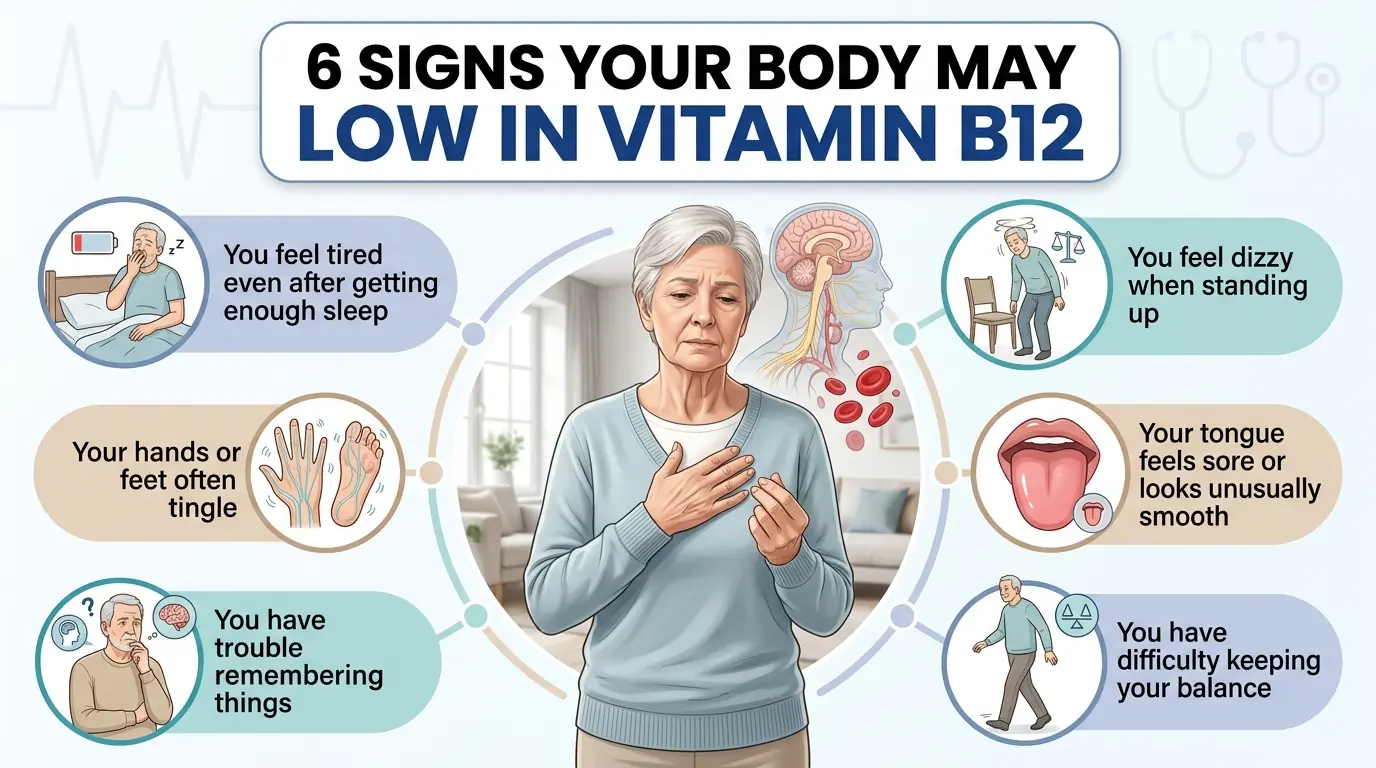
What Is Vitamin B12?
Vitamin B12, also called cobalamin, is a water-soluble vitamin found naturally in animal-based foods such as meat, fish, eggs, and dairy products. It plays several important roles in the body, including:
- Producing healthy red blood cells.
- Supporting normal nerve function.
- Helping make DNA, the body's genetic material.
- Maintaining healthy brain function.
Unlike some vitamins, B12 can be stored in the liver for several years. As a result, symptoms of deficiency often develop gradually rather than appearing suddenly.
1. You Feel Tired Even After Getting Enough Sleep
Persistent fatigue is one of the most common symptoms of vitamin B12 deficiency.
Vitamin B12 is necessary for producing healthy red blood cells, which carry oxygen throughout the body. When B12 levels become too low, the body may produce fewer or abnormal red blood cells, reducing oxygen delivery to tissues.
As a result, you may notice:
- Low energy throughout the day.
- Feeling exhausted after routine activities.
- Weakness.
- Difficulty concentrating.
Because fatigue has many possible causes, blood testing is needed to determine whether vitamin B12 deficiency is contributing.
2. Your Hands or Feet Often Tingle
Vitamin B12 helps maintain the protective covering around nerves, called the myelin sheath.
When B12 levels remain low for a prolonged period, nerves may become damaged, leading to symptoms such as:
- Tingling.
- Pins-and-needles sensations.
- Numbness.
- Burning feelings in the hands or feet.
These symptoms often develop gradually and may worsen if the deficiency is not treated.
Early diagnosis is especially important because nerve damage may become permanent if left untreated for too long.
3. You Have Trouble Remembering Things
Vitamin B12 is important for healthy brain function.
Some people with vitamin B12 deficiency experience:
- Memory problems.
- Difficulty concentrating.
- Mental fog.
- Slower thinking.
In older adults, severe vitamin B12 deficiency may sometimes be mistaken for dementia because the symptoms can overlap.
However, memory problems have many possible causes, including aging, medications, sleep disorders, depression, and other medical conditions. Proper evaluation is essential before assuming vitamin B12 deficiency is responsible.
4. You Feel Dizzy When Standing Up
Feeling lightheaded after standing may sometimes occur when vitamin B12 deficiency causes certain types of anemia.
When the body has too few healthy red blood cells, less oxygen reaches the brain during position changes, making dizziness more likely.
You may notice:
- Feeling faint when standing quickly.
- Brief blurred vision.
- Weakness.
- Shortness of breath during activity.
These symptoms are not unique to vitamin B12 deficiency but should be discussed with your healthcare provider if they occur frequently.
5. Your Tongue Feels Sore or Looks Unusually Smooth
One of the lesser-known signs of vitamin B12 deficiency involves the tongue.
Some people develop a condition called glossitis, in which the tongue becomes:
- Smooth.
- Red.
- Swollen.
- Tender or sore.
The tiny bumps normally covering the tongue may gradually disappear, giving it a shiny appearance.
You may also notice mouth soreness or difficulty eating spicy or acidic foods.
Although glossitis can have several causes, vitamin B12 deficiency is one possibility that healthcare providers may investigate.
6. You Have Difficulty Keeping Your Balance
Healthy nerves play a major role in maintaining balance and coordination.
Long-term vitamin B12 deficiency can damage nerves involved in movement and body position, making it harder to walk steadily.
You may notice:
- Unsteady walking.
- Poor coordination.
- Feeling off balance.
- Increased risk of falls.
These symptoms are more common in older adults and may improve with treatment if the deficiency is identified early.
Who Is Most at Risk?
Anyone can develop vitamin B12 deficiency, but the risk is higher for people who:
- Are over age 60.
- Follow a strict vegan diet without supplementation.
- Have had stomach or intestinal surgery.
- Have pernicious anemia.
- Have Crohn's disease or celiac disease.
- Take certain medications, including long-term metformin or acid-reducing medications such as proton pump inhibitors.
Regular screening may be appropriate for people with these risk factors.
How to Maintain Healthy Vitamin B12 Levels
Most people can obtain adequate vitamin B12 through a balanced diet.
Good food sources include:
- Beef.
- Fish.
- Poultry.
- Eggs.
- Milk and yogurt.
- Cheese.
- Fortified breakfast cereals.
- Fortified plant-based milks.
People who avoid animal products or have conditions affecting nutrient absorption may need vitamin B12 supplements, but these should be used under the guidance of a healthcare professional.
When Should You See a Doctor?
Schedule an appointment with your healthcare provider if you experience:
- Persistent fatigue.
- Tingling or numbness in your hands or feet.
- Ongoing memory problems.
- Frequent dizziness.
- A sore or smooth tongue.
- Problems with balance or walking.
A simple blood test can often determine whether vitamin B12 deficiency is present. Additional testing may be needed to identify the underlying cause.
Early treatment is important because neurological damage may become permanent if the deficiency continues untreated.
Key Takeaways
- Vitamin B12 is essential for healthy red blood cells, nerves, and brain function.
- Persistent fatigue is one of the most common early symptoms of deficiency.
- Tingling in the hands or feet may signal nerve involvement.
- Memory problems, dizziness, and balance difficulties can occur when B12 levels are low.
- A sore, smooth tongue may be an early physical sign of deficiency.
- If you suspect vitamin B12 deficiency, speak with your healthcare provider about appropriate testing and treatment.
Medical Disclaimer
This article is for educational purposes only and is not intended to replace professional medical advice, diagnosis, or treatment. If you have symptoms that could suggest vitamin B12 deficiency, consult a qualified healthcare provider for proper evaluation and blood testing. Early diagnosis and treatment can help prevent long-term complications, particularly those affecting the nervous system.