6 WARNING SIGNS YOUR KIDNEYS MAY NEED ATTENTION
Your kidneys quietly perform some of the body's most important jobs every single day. They filter waste from your blood, remove excess fluid, balance minerals, help regulate blood pressure, and even support the production of red blood cells. Because these organs are so efficient, kidney disease often develops gradually without causing obvious symptoms in its early stages.
In fact, many people don't realize their kidneys are becoming less effective until significant damage has already occurred. That's why paying attention to subtle warning signs—and getting regular health checkups—is so important.
While these symptoms don't always mean you have kidney disease, they should never be ignored, especially if they are persistent or occur together.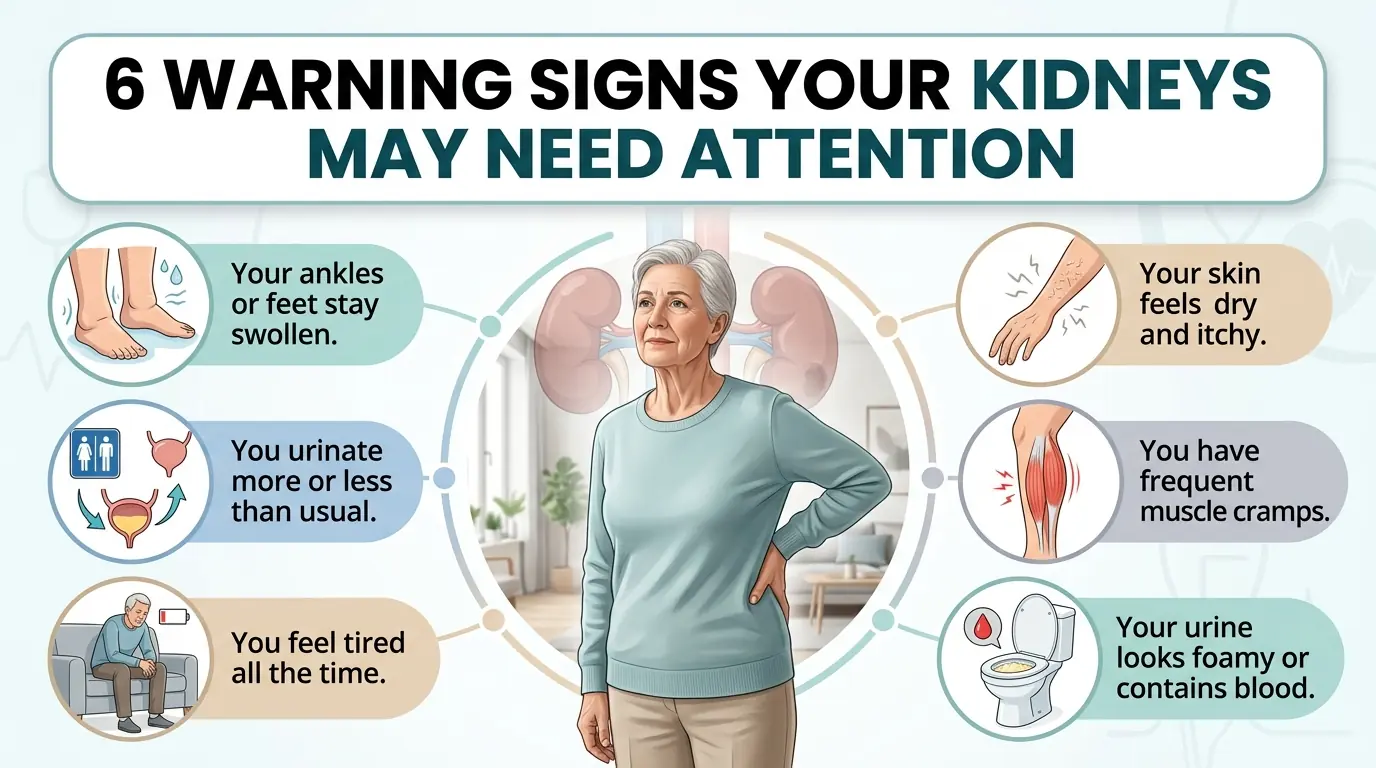
What Do Your Kidneys Do?
Most people have two kidneys, located just below the rib cage on either side of the spine.
Every day, your kidneys:
- Filter waste products from the blood.
- Remove extra water through urine.
- Balance electrolytes such as sodium and potassium.
- Help control blood pressure.
- Support healthy bones by activating vitamin D.
- Produce hormones that stimulate red blood cell production.
When kidney function declines, waste products and excess fluid can begin to accumulate, affecting many different parts of the body.
1. Your Ankles or Feet Stay Swollen
Persistent swelling in your ankles, feet, or lower legs may be an early sign that your kidneys are not removing excess fluid effectively.
Healthy kidneys carefully regulate the amount of sodium and water in your body. When kidney function decreases, fluid can accumulate in the tissues, leading to noticeable swelling.
You may notice:
- Shoes fitting tighter than usual.
- Socks leaving deep marks around your ankles.
- Swelling that worsens as the day goes on.
- Puffiness affecting both feet or lower legs.
Although swelling can also result from heart disease, liver disease, vein problems, or certain medications, persistent swelling should always be medically evaluated.
2. You Urinate More or Less Than Usual
Changes in urination are among the most common signs of kidney problems.
You might notice:
- Urinating more frequently, especially at night.
- Producing much less urine than usual.
- Difficulty passing urine.
- Feeling an urgent need to urinate.
Kidney disease doesn't always cause pain. Sometimes the only clue is a gradual change in how often or how much you urinate.
If these changes persist without an obvious explanation, your healthcare provider may recommend urine and blood tests to evaluate kidney function.
3. You Feel Tired All the Time
Persistent fatigue can have many causes, but reduced kidney function is one possibility.
When the kidneys are not filtering waste effectively, toxins may build up in the bloodstream, contributing to feelings of fatigue and reduced energy.
In more advanced kidney disease, the kidneys may also produce less erythropoietin, a hormone that helps the body make red blood cells. This can lead to anemia, which may cause:
- Constant tiredness.
- Weakness.
- Difficulty concentrating.
- Shortness of breath during activity.
Because fatigue has many possible causes, it's important not to assume kidney disease is responsible without proper medical evaluation.
4. Your Skin Feels Dry and Itchy
Healthy kidneys help maintain the proper balance of minerals and fluids throughout the body.
When kidney function declines, these balances may become disrupted, which can contribute to dry, itchy skin.
Persistent itching may occur because of:
- Mineral imbalances.
- Dry skin.
- Changes associated with more advanced kidney disease.
While dry skin is common and often harmless, ongoing itching without an obvious cause deserves medical attention, particularly if accompanied by other symptoms.
5. You Have Frequent Muscle Cramps
Muscle cramps can happen for many reasons, including dehydration, exercise, or certain medications.
However, kidney disease may also contribute because the kidneys help regulate important minerals such as calcium, potassium, magnesium, and sodium.
When these minerals become unbalanced, muscles may contract unexpectedly, causing painful cramps.
Frequent muscle cramps accompanied by swelling, fatigue, or changes in urination should be discussed with a healthcare provider.
6. Your Urine Looks Foamy or Contains Blood
Changes in the appearance of your urine should never be ignored.
Foamy urine may indicate that excess protein is leaking into the urine, a condition known as proteinuria, which can be an early sign of kidney damage.
Blood in the urine, called hematuria, may have many possible causes, including:
- Kidney disease.
- Kidney stones.
- Urinary tract infections.
- Certain cancers.
Even if blood appears only once or the urine simply seems unusually foamy, it's important to seek prompt medical evaluation.
Other Symptoms That May Occur
As kidney disease progresses, some people may also experience:
- Loss of appetite.
- Nausea or vomiting.
- Trouble concentrating.
- Difficulty sleeping.
- Puffiness around the eyes.
- High blood pressure that is difficult to control.
Because early kidney disease often causes few or no symptoms, routine testing is especially valuable for people at higher risk.
Who Is Most at Risk?
Your risk of chronic kidney disease is higher if you:
- Have diabetes.
- Have high blood pressure.
- Have heart disease.
- Are age 60 or older.
- Have a family history of kidney disease.
- Smoke.
- Are overweight or obese.
- Have a history of kidney stones or recurrent urinary tract infections.
Managing these conditions can help protect kidney function over time.
How to Support Healthy Kidneys
Healthy daily habits can reduce the risk of kidney disease and help preserve kidney function.
Consider these strategies:
- Keep your blood pressure within a healthy range.
- Manage blood sugar if you have diabetes.
- Stay physically active.
- Eat a balanced diet rich in fruits, vegetables, whole grains, and lean proteins.
- Limit excess sodium.
- Stay adequately hydrated unless your healthcare provider recommends fluid restriction.
- Avoid smoking.
- Use over-the-counter pain medications only as directed, since frequent or excessive use of certain medications may harm the kidneys.
Regular health screenings are also important, especially if you have risk factors.
When Should You See a Doctor?
Schedule an appointment with your healthcare provider if you notice:
- Persistent swelling in your legs or feet.
- Ongoing changes in urination.
- Constant fatigue without explanation.
- Frequent muscle cramps.
- Persistent dry, itchy skin.
- Foamy urine or blood in your urine.
Seek immediate medical attention if you experience severe swelling, are unable to urinate, pass large amounts of blood in your urine, or develop severe pain accompanied by fever.
Early diagnosis can help identify kidney problems before they become more serious.
Key Takeaways
- Your kidneys play an essential role in filtering waste, balancing fluids, and regulating important minerals.
- Swollen ankles or feet may indicate fluid retention related to reduced kidney function.
- Changes in urination should never be ignored.
- Persistent fatigue and dry, itchy skin may be associated with declining kidney function.
- Frequent muscle cramps can occur when fluid or mineral levels become imbalanced.
- Foamy urine or blood in the urine should always be evaluated by a healthcare professional.
- Because early kidney disease often causes few symptoms, regular checkups are one of the best ways to detect problems early.
Medical Disclaimer
This article is for educational purposes only and is not intended to replace professional medical advice, diagnosis, or treatment. If you have symptoms that could suggest kidney disease or are at increased risk because of conditions such as diabetes or high blood pressure, consult a qualified healthcare provider for appropriate testing and personalized guidance. Early evaluation and treatment can help protect kidney function and reduce the risk of complications.