6 WARNING SIGNS YOUR LIVER MAY NEED ATTENTION
Your liver is one of the hardest-working organs in your body. It performs hundreds of essential functions, including filtering toxins from the blood, producing bile for digestion, storing nutrients, regulating blood sugar, and helping your body process medications. Despite its remarkable ability to repair itself, the liver can become damaged over time by conditions such as fatty liver disease, viral hepatitis, excessive alcohol use, or certain medications.
One of the biggest challenges is that liver disease often develops silently. In its early stages, many people have few or no symptoms. As liver function begins to decline, however, the body may send warning signs that should never be ignored.
Recognizing these symptoms early and seeking medical evaluation can help identify liver problems before they become more serious.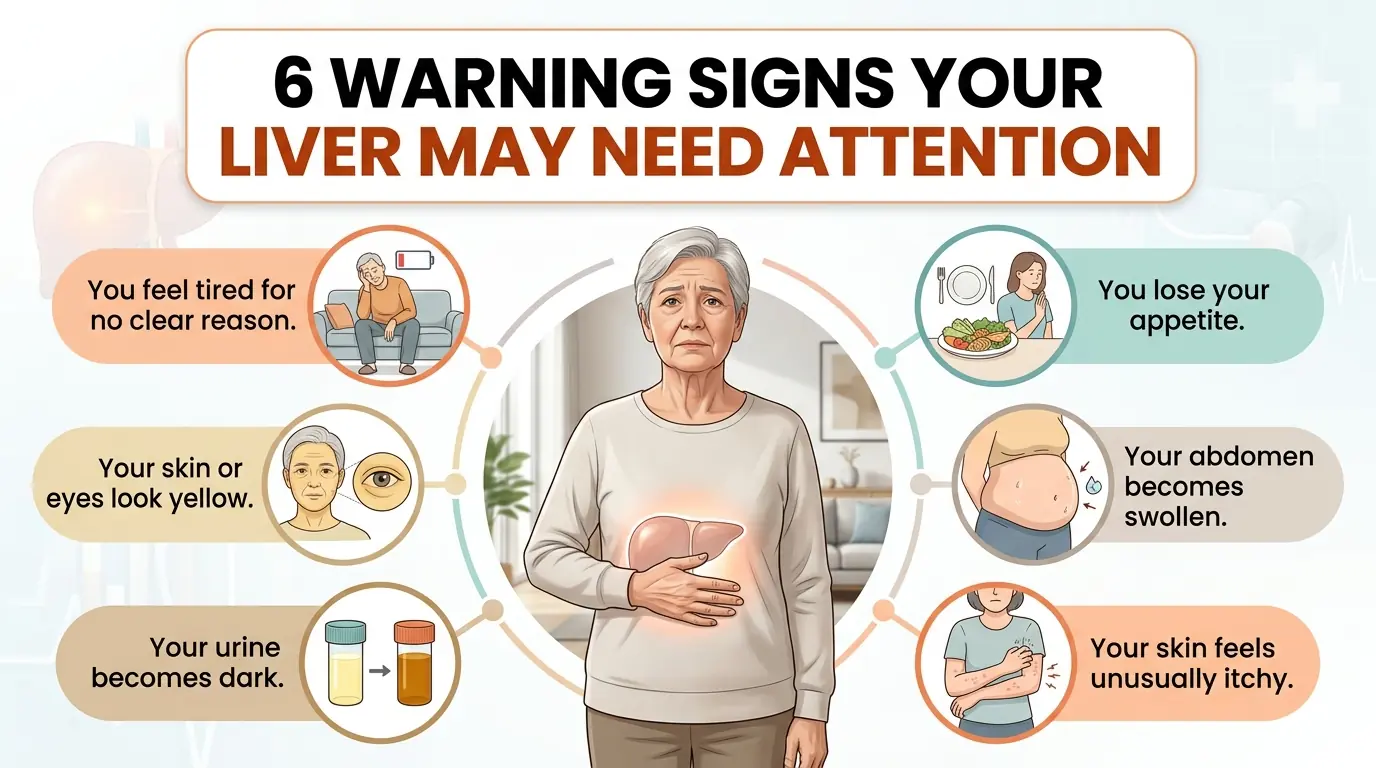
What Does the Liver Do?
The liver is the largest internal organ and is located in the upper right side of your abdomen.
It plays a vital role in maintaining overall health by:
- Filtering waste products and toxins from the blood.
- Producing bile to help digest fats.
- Storing vitamins, minerals, and glycogen for energy.
- Making proteins needed for blood clotting.
- Helping regulate cholesterol and blood sugar levels.
- Breaking down medications and alcohol.
When the liver becomes damaged, these important functions can gradually be affected.
1. You Feel Tired for No Clear Reason
Persistent fatigue is one of the most common symptoms reported by people with chronic liver disease.
Although researchers don't fully understand why liver disease causes fatigue, it may result from changes in metabolism, inflammation, and the body's reduced ability to process toxins efficiently.
You may notice:
- Low energy throughout the day.
- Feeling exhausted despite adequate sleep.
- Difficulty concentrating.
- Reduced motivation to complete everyday tasks.
Because fatigue has many possible causes, it should be evaluated along with other symptoms and your overall medical history.
2. Your Skin or Eyes Look Yellow
Yellowing of the skin or the whites of the eyes is called jaundice.
Jaundice develops when bilirubin, a yellow pigment produced during the normal breakdown of red blood cells, builds up in the bloodstream because the liver cannot process or eliminate it properly.
You may notice:
- Yellowing of the eyes before the skin.
- Skin appearing yellow or golden.
- Yellowing that gradually becomes more noticeable.
Jaundice is never considered normal and always requires prompt medical evaluation.
3. Your Urine Becomes Dark
Dark urine may be another sign that bilirubin levels are elevated.
Instead of the usual pale yellow color, urine may appear:
- Dark yellow.
- Amber.
- Brownish or tea-colored.
Dark urine can also result from dehydration, certain medications, vitamins, or foods, but if it persists—especially alongside jaundice—it should be evaluated by a healthcare professional.
Drinking more water will not correct dark urine caused by liver disease.
4. You Lose Your Appetite
Many liver conditions can affect appetite.
People with liver disease may notice:
- Feeling full quickly.
- Reduced interest in food.
- Unintentional weight loss.
- Nausea after eating.
Poor appetite may occur because liver disease affects digestion, metabolism, and the body's normal response to food.
If appetite loss persists for more than a few weeks or leads to significant weight loss, medical evaluation is recommended.
5. Your Abdomen Becomes Swollen
A swollen abdomen may occur when fluid builds up inside the abdominal cavity, a condition called ascites.
Ascites most commonly develops in advanced liver disease or cirrhosis, when increased pressure in the liver's blood vessels and reduced protein production allow fluid to leak into the abdomen.
You may notice:
- Your stomach becoming noticeably larger.
- Clothes fitting more tightly around the waist.
- A feeling of fullness or pressure.
- Rapid weight gain from fluid retention.
Although abdominal swelling has many possible causes, new or worsening swelling should always be evaluated promptly.
6. Your Skin Feels Unusually Itchy
Persistent itching without an obvious rash can sometimes occur in people with liver disease.
The exact cause isn't completely understood, but changes in bile flow and the buildup of certain substances in the bloodstream may contribute.
The itching may:
- Affect large areas of the body.
- Become worse at night.
- Persist despite using moisturizers.
- Occur without visible skin changes.
While many skin conditions cause itching, ongoing unexplained itching should be discussed with your healthcare provider, particularly if it occurs with jaundice or dark urine.
Other Symptoms That May Occur
Depending on the underlying liver condition, additional symptoms may include:
- Nausea or vomiting.
- Easy bruising or bleeding.
- Swelling in the legs or ankles.
- Pale or clay-colored stools.
- Confusion or difficulty concentrating in advanced liver disease.
- Pain or discomfort in the upper right side of the abdomen.
Some liver diseases remain completely symptom-free until they become more advanced, making routine medical care especially important for people at increased risk.
Who Is Most at Risk?
Your risk of liver disease may be higher if you:
- Have obesity or overweight.
- Have type 2 diabetes.
- Drink excessive amounts of alcohol.
- Have chronic hepatitis B or hepatitis C.
- Have high cholesterol or metabolic syndrome.
- Have a family history of liver disease.
- Take certain medications that may affect the liver.
- Have been diagnosed with fatty liver disease.
Managing these risk factors can help protect liver health over time.
How to Support a Healthy Liver
Although not all liver diseases are preventable, healthy lifestyle habits can reduce your risk.
Consider these strategies:
- Maintain a healthy body weight.
- Eat a balanced diet rich in vegetables, fruits, whole grains, and lean proteins.
- Limit alcohol consumption or avoid it if advised by your healthcare provider.
- Stay physically active.
- Get vaccinated against hepatitis A and B if appropriate.
- Use medications only as directed.
- Avoid herbal supplements or products that may harm the liver without discussing them with your healthcare provider.
- Manage diabetes, high cholesterol, and high blood pressure.
Regular checkups and blood tests may help detect liver disease before symptoms develop.
When Should You See a Doctor?
Schedule an appointment with your healthcare provider if you experience:
- Persistent fatigue.
- Loss of appetite.
- Ongoing itching without an obvious cause.
- Dark urine that doesn't improve with hydration.
- Unexplained abdominal swelling.
Seek immediate medical attention if you develop:
- Yellowing of your skin or eyes.
- Severe abdominal pain.
- Confusion or extreme drowsiness.
- Vomiting blood or passing black, tarry stools.
- Rapidly increasing abdominal swelling.
Prompt evaluation can help identify the cause and determine the most appropriate treatment.
Key Takeaways
- The liver performs essential functions that support digestion, metabolism, detoxification, and overall health.
- Persistent fatigue may be an early symptom of liver disease.
- Yellowing of the skin or eyes (jaundice) always requires medical evaluation.
- Dark urine and loss of appetite may indicate liver dysfunction.
- Abdominal swelling can occur when liver disease becomes advanced.
- Persistent itching without a rash may sometimes be related to liver disorders.
- Early liver disease often causes few symptoms, making regular medical checkups especially important for people at higher risk.
Medical Disclaimer
This article is for educational purposes only and is not intended to replace professional medical advice, diagnosis, or treatment. If you experience symptoms that could suggest liver disease, consult a qualified healthcare provider for appropriate evaluation and testing. Seek immediate medical attention if you develop jaundice, severe abdominal pain, confusion, vomiting blood, or other signs of a medical emergency.