The rain had turned the windows of the Transatlantic Meridian lounge at John F. Kennedy International Airport into long, wavering mirrors.
Beyond the glass, aircraft crept through a gray afternoon, their navigation lights blinking through the mist as ground crews worked beneath yellow rain jackets.
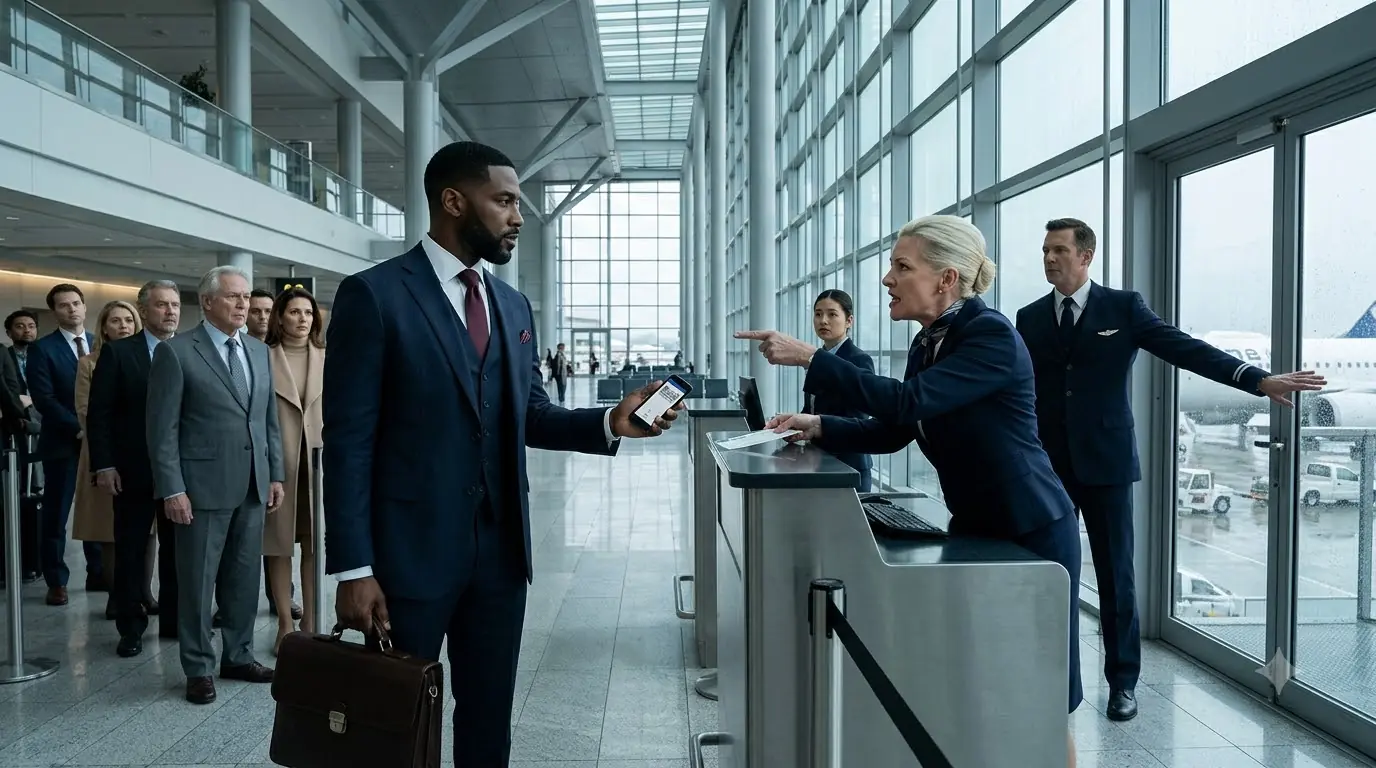
Inside, the chairs were deep, the carpet absorbed footsteps, and small lamps cast a honey-colored glow over tables that cost more than most families spent on groceries in a month. Marcus Whitaker sat alone beside the windows, a leather briefcase against his leg, watching the woman serving coffee pass him for the fourth time without asking whether he needed anything.
The woman was Susan Miller, a veteran lounge attendant with a neat brown bob and the carefully trained smile of someone who understood which passengers expected special attention. Marcus had seen her refill a man's cup before the man finished lifting his finger, then hurry to an older couple who wanted the pastries warmed rather than merely placed on a plate.
When Susan passed Marcus, her glance crossed the cuff of his charcoal jacket, his dark hands resting beside his tablet, and finally his face. Each time she looked away, her expression said the same thing: she had decided he did not belong, and she was waiting for somebody else to explain why he was still there.
Marcus had entered with a valid first-class boarding pass, just as every other guest had. The welcome agent at the entrance had scanned it without difficulty, yet even that small exchange had ended with a second glance at his photograph and a question about whether he was traveling with someone.
He had answered politely, taken a seat, and opened the tablet containing a review of airline integration reports prepared for his arrival in London. He was forty-one years old, the founder and chief executive officer of Apex Grid Systems, and his company provided the operational software that Transatlantic Meridian used to coordinate hundreds of daily decisions that passengers never saw.
If an aircraft had to be repositioned after an overnight maintenance delay, Apex Grid helped the airline compare crew availability, airport restrictions, ground resources, and passenger connections. If a baggage container missed its assigned flight, the platform helped employees identify where it had gone and which safe, approved routes could recover it. Marcus had spent sixteen years building the company from a borrowed room in Cleveland into an international business whose software formed part of the planning infrastructure used by carriers handling nearly a third of global scheduled passenger traffic. The company's influence was enormous, but Marcus disliked describing that influence in grand terms because the people whose work depended on the software were often exhausted dispatchers, station agents, mechanics, and flight crews trying to get strangers home.
For all its expensive calm, the lounge reminded him of rooms he had entered much earlier in his life. At seventeen, he had accompanied his mother to a bank where a clerk addressed questions about her own savings account to the white man standing behind her. At twenty-three, after winning his first software-development contract, he had watched an executive offer his younger white colleague the seat at the head of the conference table. At thirty-two, when his company was already worth hundreds of millions, a hotel employee had asked him whether he was there to carry someone's luggage. The insults changed shape, but the presumption behind them remained painfully familiar.