“Whoa. Get out of the way, you piece of trash. Who gave you permission to drive?”
“You hit my car. You ran a red light.”
“So what? Look at the rubbish car. You don’t deserve to be on the same street as me.” He spat on her windshield. “My dad’s a cop. A cop. Just one call and I’ll make sure you never drive again. They’ll drag you out of here in handcuffs.”
“Are you done?”
He stepped closer. “Oh, I’m just getting started, you stinky Black girl.”
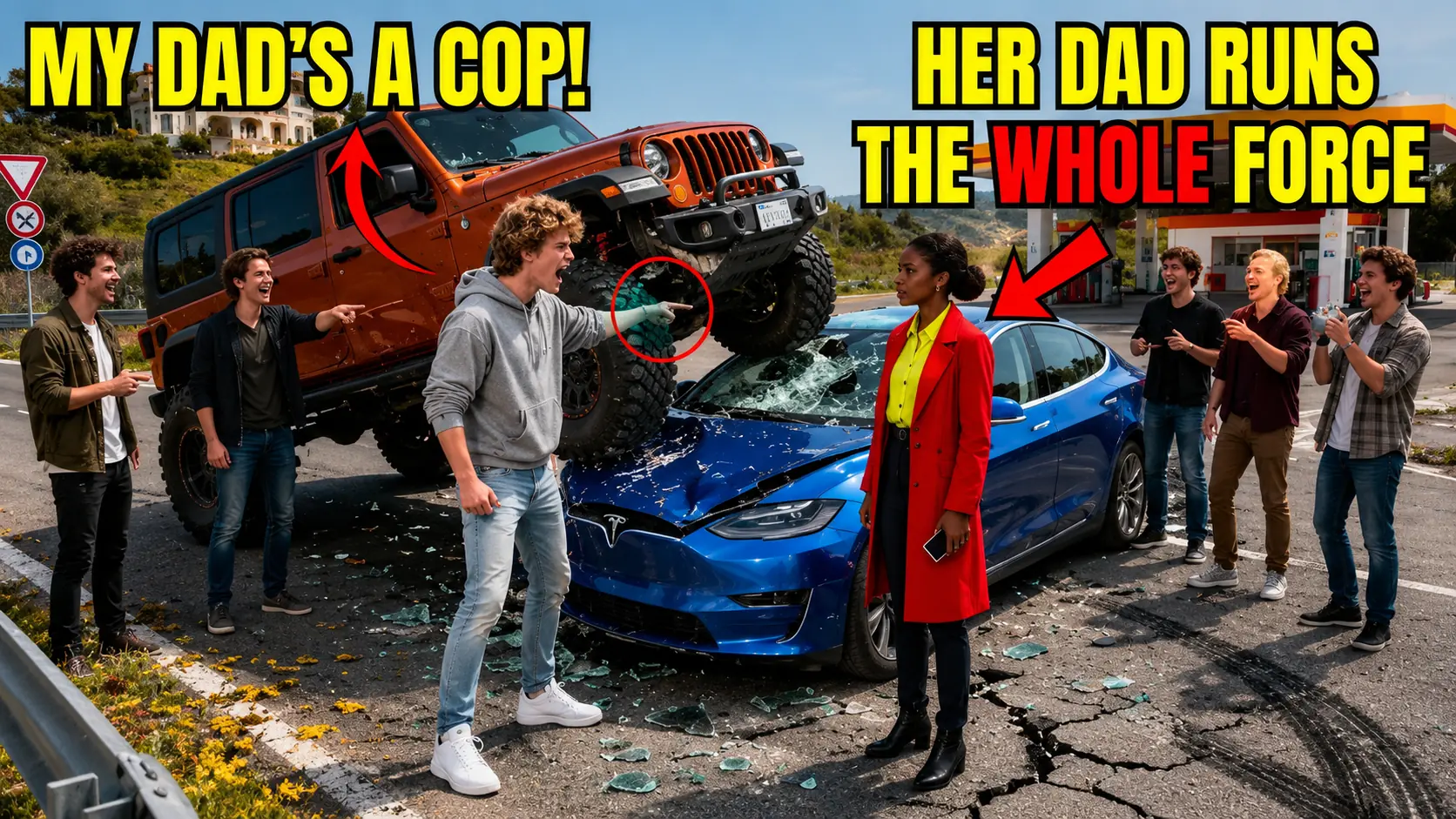
As if it were the strongest trump card he could use. But the girl was holding a trump card he couldn’t even imagine.
Saturday morning, mid-October. One of those crisp Virginia mornings where the leaves are turning gold and the air smells like damp earth and someone’s fresh-cut grass down the street. Celeste Moore was sitting at her kitchen table in a tiny off-campus apartment. LSAT prep books stacked in front of her. A half-empty mug of coffee going cold. A highlighter tucked behind her ear. She was twenty-two, pre-law, and the kind of student who color-coded her notes three different ways before an exam. Her phone buzzed. A text from her dad. It was a corny good-morning meme—a cartoon sun wearing sunglasses with the caption “Rise and grind, baby girl.” Underneath it, a second message: “Check your tire pressure this week. Love you.” She rolled her eyes, smiled, and texted back a single red heart.
That was Derek Moore—the kind of father who still sent memes like it was 2014, the kind of man who spent twenty-eight years climbing through the ranks of law enforcement and still reminded his grown daughter to check her tires every Saturday. Three months ago, Derek Moore was appointed State Police Superintendent. The highest-ranking badge in the entire state. First Black man to ever hold that position. It made headlines in the capital. Major outlets covered it. National press picked it up for a cycle. But in this small college town, barely a ripple. People here knew their local cops. They knew whose kid got out of a speeding ticket. They didn’t track state-level appointments. That gap between who Derek Moore was and who this town thought he was—that gap is where this whole story lives.
Celeste never mentioned her father’s title. Not to classmates, not to professors, not to anyone. She drove a ten-year-old Honda Civic. She wore thrift-store jackets. She split rent with a roommate. Nothing about her screamed power. And that was the point. She picked up her best friend, Dana Watkins, around nine. Dana climbed into the passenger seat with two breakfast burritos wrapped in foil and a playlist already cued on her phone. “You ready for Porter’s study group?” Dana asked. “Ready to survive it,” Celeste said. They laughed. Pulled out of the apartment complex, windows cracked, music low. A normal Saturday. Easy. Celeste drove the way she always drove. Both hands on the wheel. Signal at every turn. Two miles under the speed limit. She drove carefully—not because she didn’t know how to drive, but because she knew what could happen if she gave anyone a reason to look twice. Every Black driver in America knows that math. You learn it before you learn parallel parking.