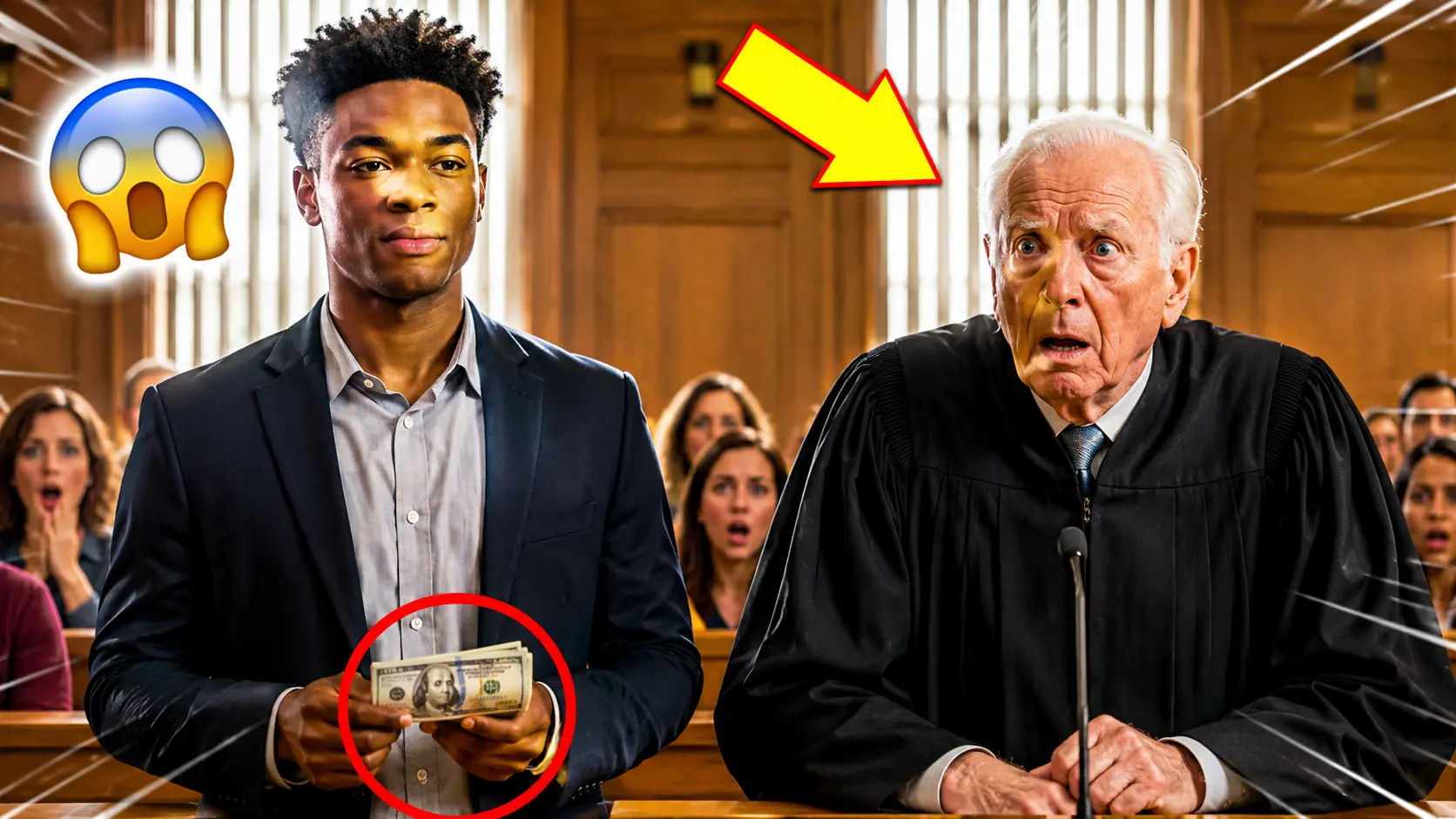
The courtroom froze. Richard Sterling, a partner at the city's most expensive law firm, smirked as he looked at the young man in the oversized gray hoodie standing at the defense table. Everyone, the bailiff, the clerk, and especially Judge Halloway, thought this was a joke. They thought he was a lost defendant from arraignment court, a thug who had wandered into a high-stakes corporate lawsuit. They were wrong. They didn't know that the man in the hoodie was holding a trap that would ruin them all. By the time he opened his mouth, it was already too late.
The air inside courtroom 4B of the Superior Court of Fulton County was stale, smelling faintly of floor wax and old paper. It was the smell of bureaucracy, or as Richard Sterling liked to call it, the smell of money. Richard adjusted the cuffs of his bespoke Italian suit. He glanced at his reflection in the screen of his iPad. At 55, he was the picture of legal dominance, silver hair perfectly coiffed, a jawline that had only softened slightly with age, and a reputation that terrified opposing counsel. He was the lead litigator for Sterling, Lockwood, and Pierce, the firm that handled problems for billionaires.
Today's problem was simple. It was an eviction case technically, but on a massive scale. His client, the Apex Horizon Development Group, needed to clear out a block of low-income housing in the historic West End to build a luxury condominium complex. They had crushed every homeowner in the area. Everyone had sold. Everyone had folded except for one, Mrs. Lucille Banks, an 80-year-old widow who refused to sign the deed to her dilapidated Victorian house.
Are we ready, Mr. Sterling? The young associate next to him whispered. Her name was Sarah, fresh out of Yale, and she looked nervous. Relax, Sarah, Richard said, his voice a smooth baritone. This is a formality. The woman doesn't even have a lawyer. She's claiming to represent herself pro se. It's like watching a toddler try to box with Mike Tyson. Judge Halloway will grant the summary judgment by lunch and we'll be eating steak at Chops by one.
Judge Frederick Halloway was a man who hated wasted time almost as much as he hated poverty. He sat on the bench flipping through the case file with aggressive impatience. He had a golf tee time at 3:00 p.m. and he intended to make it. Call the case, Judge Halloway barked. The clerk stood up. Civil action number 24 CV908, Apex Horizon Development versus Lucille Banks. Richard stood up, buttoning his jacket with a practiced grace. Richard Sterling for the plaintiff, your honor. We are ready to proceed with our motion for summary judgment. Very good, Mr. Sterling. The judge smiled. It was the smile of a conspirator.
And for the defendant? The courtroom was silent. The defendant's table was empty. Richard chuckled softly. It appears, your honor, that Ms. Banks has finally seen the light and decided not to waste the court's time. Typical, Halloway muttered. If the defendant is not present, I am inclined to rule in favor of the plaintiff. The double doors at the back of the courtroom swung open. Every head turned. Walking down the center aisle was not an 80-year-old woman. It was a young Black man, perhaps in his mid-20s. He was wearing faded jeans, scuffed Timberland boots, and a charcoal gray hoodie with the hood pulled partially up, obscuring his peripheral vision. He walked with a loose, rhythmic gait, his hands buried deep in his pockets.
The atmosphere in the room shifted instantly. The tension spiked. Richard Sterling's lip curled in distaste. The bailiff, a burly man named Officer Miller, who had been working this courtroom for 20 years, stepped into the aisle, his hand instinctively dropping to his belt. Hey, son, Officer Miller barked. Wrong room. Arrangements are downstairs in 2B. This is civil court. The young man didn't stop. He didn't even look at the bailiff. He kept walking, his eyes fixed straight ahead on the empty defense table. I said, hold it. Miller stepped in front of him. The young man stopped. He slowly pulled his hands out of his pockets. He wasn't holding a weapon. He was holding a stack of files held together by a rubber band and a beaten-up leather satchel.
I'm not looking for arrangements, the young man said. His voice was quiet, raspy, but clear. Judge Halloway slammed his gavel. Young man, remove that hood in my courtroom immediately, and explain why you are interrupting these proceedings before I have you thrown in a holding cell for contempt. The young man reached up and pulled the hood back. He had short-cropped hair and weary eyes, dark circles underneath them, as if he hadn't slept in a week. He looked at the judge, then at Richard Sterling. I apologize for the attire, your honor, he said. He walked around the bailiff, who looked too confused to stop him, and placed his battered satchel on the defendant's table. My suit is at the cleaners. I didn't expect the hearing to be moved up two hours without proper notice.