On the morning he was adopted, little Archie was led through the shelter hallway toward his new family. But before reaching the exit, the puppy stopped outside the kennel of Walter—the quiet senior dog who had comforted him every night since his arrival.
Archie pressed his nose through the chain-link fence, and Walter slowly leaned forward until their muzzles touched. The puppy’s tail stopped wagging as the two remained together in silence, while his new owner waited without pulling the leash.
Archie eventually left for his new home, but Walter returned alone to his blanket. Then, that evening, the shelter received an unexpected message from Archie’s adoptive family.
Archie and Walter had arrived at the shelter under very different circumstances.
Archie was a young stray found hiding beneath a parked vehicle. He was healthy but frightened, and the noise of the shelter overwhelmed him from the moment he entered.
Walter had already been there for several months.
The gray-faced senior had been surrendered after his elderly caregiver could no longer look after him. At approximately twelve years old, Walter suffered from arthritis, partial hearing loss, and several harmless growths on his skin.
He rarely barked or approached visitors.
Most days, Walter rested quietly on his blanket while younger dogs attracted attention elsewhere in the adoption wing.
When Archie was placed in the kennel beside him, the puppy spent his first night whimpering and scratching at the gate. Every bark from the surrounding dogs made him retreat into the corner.
Walter responded differently.
He slowly moved to the side of his kennel closest to Archie and lay down against the chain-link divider. The puppy eventually approached and curled up on the opposite side.
By morning, they were sleeping only inches apart.
Staff soon noticed that Archie became calmer whenever Walter was nearby. During supervised time in the shelter’s enclosed yard, the puppy followed the older dog everywhere.
Walter never played for long.
His stiff joints prevented him from running, but he allowed Archie to climb over his legs, pull gently at his ears, and sleep against his side whenever they rested beneath a tree.
The friendship also appeared to change Walter.
Before Archie arrived, the senior dog often refused to leave his bed in the morning. With the puppy waiting outside, Walter began standing as soon as a caregiver brought out the leashes.
He walked more slowly, but he always followed.
At mealtimes, Archie finished first and sat beside Walter’s kennel until the older dog had eaten. At night, they returned to their usual positions on opposite sides of the divider.
Several weeks later, a young couple visited the shelter looking for a small dog.
Archie greeted them eagerly and climbed into the woman’s lap during their meeting. They completed the adoption process and arranged to collect him the following morning.
The shelter staff were happy that the puppy had found a home, but they knew the separation would be difficult.
Before Archie left, his caregiver walked him down the kennel corridor one final time.
The puppy passed several barking dogs before stopping at Walter’s gate. He pulled gently against his leash and moved close to the fence.
Walter had been resting at the back of the kennel.
When he recognized Archie, he slowly stood and walked forward. The two dogs smelled each other through the chain links before touching noses.
For nearly a minute, neither moved.
Then Archie lowered his front body in the familiar invitation to play. Walter’s tail made several slow movements across the blanket, but the kennel gate remained between them.
Archie’s new family watched from the hallway.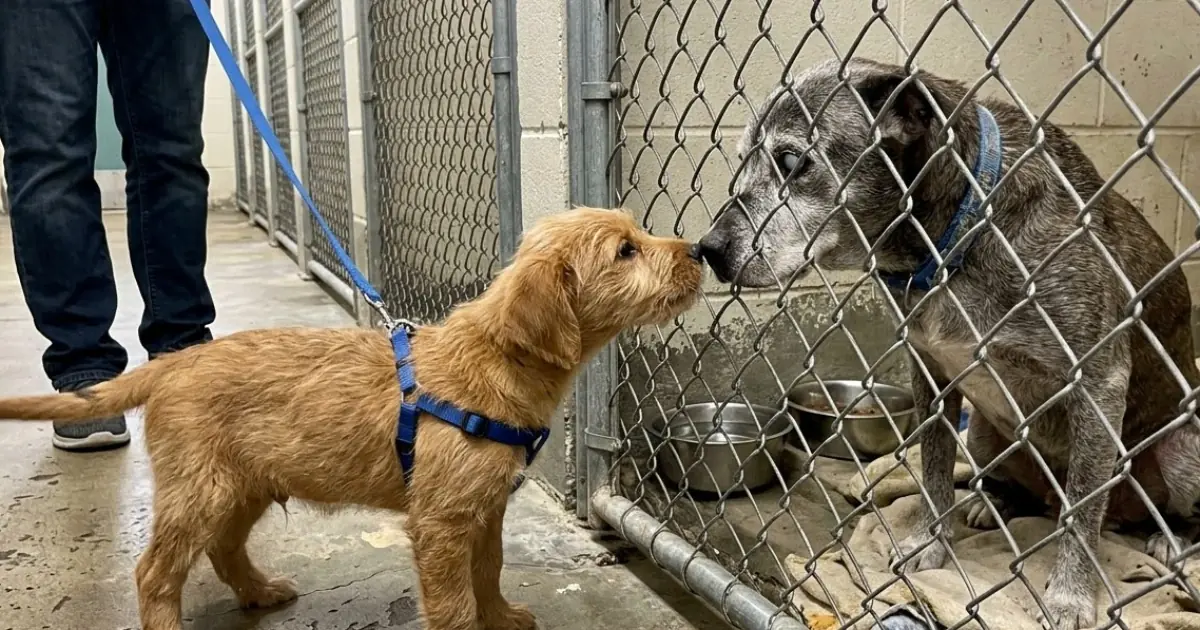
They had been told about Walter during the adoption meeting, but they had not understood how closely connected the two dogs had become.
When it was time to leave, Archie repeatedly looked backward. Walter remained at the fence until the puppy disappeared through the shelter doors.
Afterward, the senior dog returned to his bed.
He showed little interest in his afternoon walk and left part of his meal untouched. That night, caregivers found him sleeping against the empty side of the kennel divider where Archie had once rested.
The shelter placed one of the puppy’s old blankets beside him.
Walter smelled it for several minutes before lowering his head onto the fabric.
Archie also struggled during his first hours in the new home. He explored each room but began whining after sunset. Instead of sleeping in the bed his family had prepared, he settled beside a metal baby gate and pressed his body against it.
His adopters contacted the shelter that evening.
They asked whether Walter was still available.
Staff explained that adopting a senior dog involved additional responsibilities. Walter needed daily medication, gentle exercise, regular veterinary monitoring, and a quiet place to rest when Archie became too energetic.
The couple did not make an immediate decision.
Over the following days, they brought Archie back for two supervised visits. Each time, the puppy ran directly toward Walter.
During the second visit, Walter became more animated than staff had seen in weeks. He followed Archie through the yard, allowed the puppy to rest against him, and even briefly picked up a soft toy.
The couple then asked to foster Walter.
Before approving the placement, shelter staff visited their home and helped prepare a separate quiet space for the senior dog. Rugs were placed across the slippery floors, and a low orthopedic bed was positioned where Walter could rest without needing to climb stairs.
One week after Archie’s adoption, Walter left the shelter too.
This time, Archie was waiting outside.
The puppy pulled toward him the moment the kennel door opened. Walter moved slowly across the pavement, but his tail continued wagging until he reached the car.
His transition was cautious.
During the first night, Walter stayed close to the room’s entrance and appeared uncertain whenever Archie disappeared from view. The puppy eventually brought a stuffed toy to the senior dog’s bed and lay down beside him.
By morning, they were sleeping together again.
Walter’s placement began as a foster arrangement so the family could determine whether they could meet his long-term needs. After several weeks, they confirmed that he would not be returning to the shelter.
His adoption is now official.
Walter continues receiving medication for arthritis and takes short, slow walks with Archie every morning. The puppy has learned not to jump on him when he is resting, although he still carries toys to Walter’s bed and waits hopefully for him to play.
Some days, Walter responds.
Other days, he simply watches while Archie lies beside him.
The puppy’s goodbye at the shelter was real, but it did not become the end of their friendship.
Archie walked through those doors believing he was leaving his oldest friend behind. One week later, Walter followed him home—and neither dog had to sleep alone beside a chain-link fence again.