"Excuse me. I saw there's a million-dollar patch bounty. I'm here to try."
"We don't need some brainless kid touching our equipment."
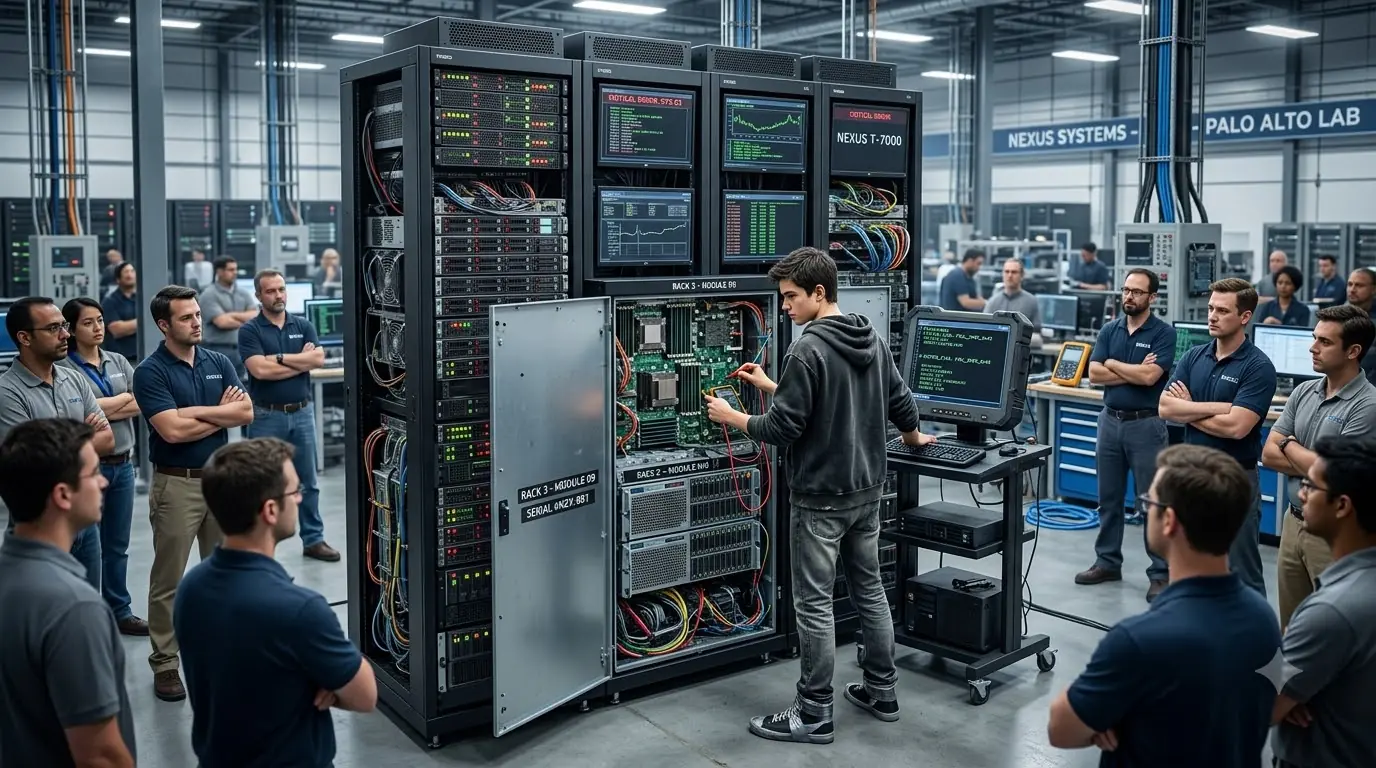
"The website says anyone can."
Grant Hollister stepped closer. He was the vice president of engineering. He looked the Black teenager, Terrence Walker, up and down like something stuck to his shoe.
"Do you even know how to use a keyboard?"
Terrence didn't move. "Five minutes. That's all I need."
Grant laughed. "Five minutes? Fine. Just to watch you embarrass yourself."
The lobby laughed with him. Grant rolled his eyes with amusement, crossing his arms as he watched the teenager in the worn hoodie. A sneer of contempt played on his lips, certain the boy could not possibly pull it off. He had no idea what Terrence would accomplish a few minutes later.
Three days before Terrence Walker walked into that lobby, the world stopped working.
It started at 2:14 a.m. on a Tuesday. A zero-day vulnerability tore through Nexus Systems' global cloud platform like a match through tissue paper. Within 90 minutes, every bank running Nexus infrastructure locked its customers out. ATMs went dark from Chicago to London.
Hospital networks crashed mid-surgery. Flight systems froze. Fourteen airlines grounded every plane on the tarmac.
Emergency rooms switched to paper records. Stock exchanges halted trading. Nexus Systems controlled 31% of the world's cloud infrastructure. When their system bled, everyone bled with it.
By sunrise, the Department of Homeland Security had called an emergency briefing. Cable news ran the same footage on a loop: empty ATM screens, stranded passengers sleeping on airport floors, doctors reading paper charts by flashlight. A dialysis center in Houston lost access to three machines. The ticker at the bottom of the screen read: global losses estimated at $4.2 billion and climbing.
Grant Hollister stood at a podium that afternoon. He announced the bounty with a smile designed for cameras. "$1 million, open to anyone. Find the vulnerability, patch it, walk away rich."
Within 48 hours, 216 of the world's best cybersecurity engineers had flown in. MIT graduates, NSA veterans, former black-hat hackers turned consultants charging $10,000 a day. They filled the ninth floor of Nexus headquarters with laptops, energy drinks, and ego.
One by one, they failed. The vulnerability was a ghost. It moved through the code base like smoke, reappearing in places they had already cleared. Every patch they wrote broke something else. Every fix created two new problems. After 72 hours, the best minds in cybersecurity had burned through 1,400 attempts and produced nothing but frustration.
Grant told the press they were making progress. Behind closed doors, he threw a chair across his office.
Six hundred miles south, in a phone repair shop on East 14th Street in Oakland, Terrence Walker watched the news on a cracked television mounted above the counter. He was 18. He had been fixing phones and tablets since he was 15, not because he loved it, but because his grandmother needed the money.
Evelyn Walker had raised him since he was four after his mother died and his father disappeared into a system that never let him back out. She worked two jobs until her knees gave out, then one job, then none. Now she was sick. The doctors used words Terrence had to look up: hepatocellular carcinoma, liver cancer, stage three.
Operable, they said, but the surgery cost $380,000. The insurance company sent a letter with four paragraphs of legal language that all meant the same thing: denied.
Terrence had $412 in a shoebox under his bed. He had called the hospital twice. Both times the billing department said the same thing. No payment plan, no extensions. Full amount due in 45 days, or the surgical consultation would be canceled.
Forty-five days. His grandmother had 45 days.