After 60, I Stopped Chasing These 5 Things—and Started Protecting What Actually Matters
Reader Theme:
Font Size:
24px
After 60, I Stopped Chasing These 5 Things—and Started Protecting What Actually Matters
There is something strangely exhausting about spending half your life trying to hold onto things that were never meant to stay exactly the same.
Relationships change.
Priorities change.
Bodies change.
The way we spend our time changes.
And yet many people reach their 60s still carrying expectations they picked up decades earlier: keep everyone happy, accept every invitation, repair every strained relationship, win every disagreement, and somehow keep looking and functioning exactly as they did when they were younger.
Eventually, that becomes a tiring way to live.
Healthy aging offers another possibility.
Instead of asking, "How do I get my younger self back?" you can begin asking, "What will help me enjoy the life and body I have now—and stay capable for the years ahead?"
That's not giving up.
In many ways, it's a much more demanding and meaningful goal.
Here are five things that may be worth chasing less after 60—and what deserves that energy instead.
1. People Who Make No Effort to Stay in Your Life
Relationships need effort, but healthy relationships generally aren't sustained by one person indefinitely doing all the work.
If you're always the one calling, arranging dinner, checking in, remembering birthdays, and trying to repair every period of distance, eventually you may wonder what would happen if you stopped.
Sometimes the answer is uncomfortable.
Nothing happens.
That doesn't necessarily mean anyone is a bad person.
Life changes. People move, retire, become caregivers, develop health problems, spend more time with grandchildren, or simply grow in different directions.
Not every friendship is supposed to remain equally close forever.
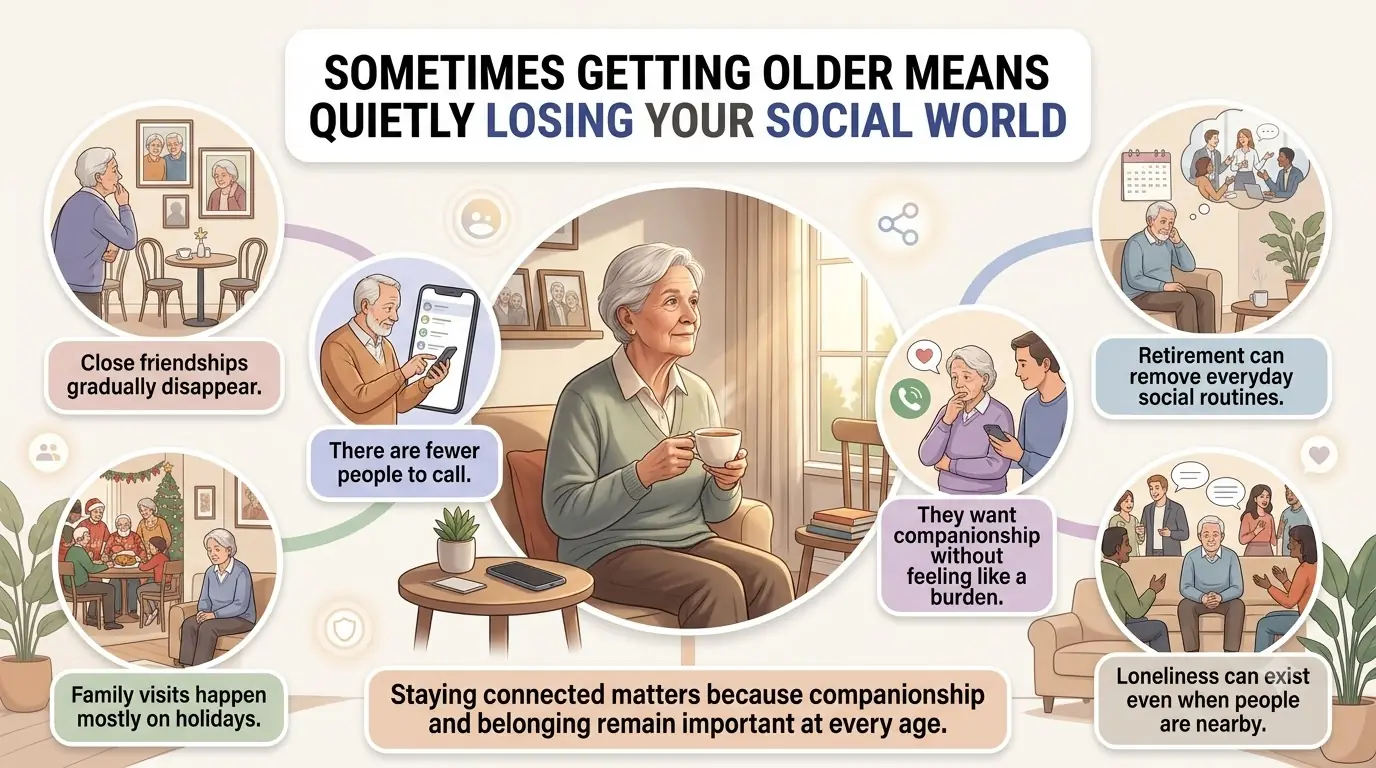
But don't confuse selectivity with isolation
There's an important health distinction here.
You don't need dozens of friends to age well, and there's no ideal number of social events you should attend each month.
But meaningful social connection matters.
Social isolation and loneliness have been associated with poorer physical and mental health outcomes. That doesn't mean loneliness directly causes every associated health problem, and being alone is not the same as being lonely.
Some people genuinely love solitude.
The better question is whether you have enough meaningful connection for you.
Do you have someone you could call when you've had a difficult day?
Someone who would notice if you suddenly disappeared from your usual routine?
Someone you can laugh with?
Someone you can help—and who would help you?
Those relationships may be more valuable than maintaining a large social circle out of obligation.
Put energy where there's reciprocity
After 60, time can feel different.
That doesn't mean life is nearly over. Many people have decades ahead of them.
But it does make spending years chasing indifferent relationships seem increasingly unnecessary.
Consider investing more intentionally in people who reciprocate.
Invite the friend who actually enjoys spending time with you.
Call the sibling who calls back.
Get to know the neighbor who checks in.
Join a walking group, volunteer organization, faith community, class, hobby club, or community organization if that genuinely appeals to you.
You don't have to chase everyone.
But don't stop reaching toward anyone.
There's a difference.
2. Invitations You Secretly Don't Want to Accept
How many times have you agreed to something while immediately wishing you hadn't?
Dinner when you're exhausted.
A crowded event you never enjoy.
Another committee.
Another obligation.
Another weekend surrendered because saying "no, thank you" felt impolite.
After decades of work, family responsibilities, caregiving, household tasks, and social expectations, becoming more protective of your time can feel liberating.
And sometimes saying no is exactly the right decision.
Rest is a legitimate need
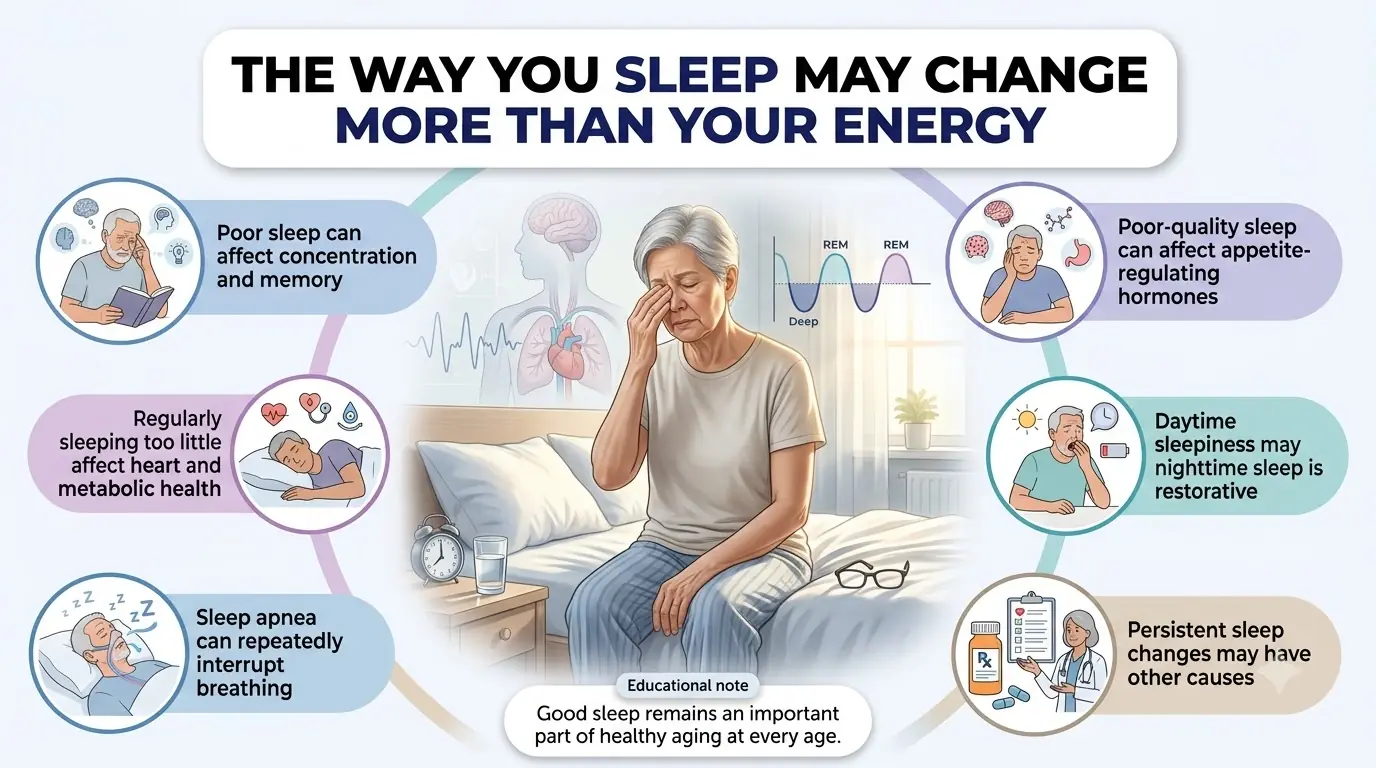
Sleep and recovery don't become optional because you're retired.
If anything, your body may make its preferences increasingly obvious.
An overloaded schedule can interfere with sleep, exercise, meal preparation, medical appointments, and simple opportunities to recover.
You are allowed to have an unscheduled afternoon.
You are allowed to read.
Garden.
Sit outside.
Cook slowly.
Watch a movie.
Take a nap when appropriate.
Spend an evening at home without turning it into a productivity project.
Rest doesn't need to be earned through exhaustion.
But ask why you're declining
There's another side to saying no.
Sometimes "I don't feel like going" really means:
My knees hurt.
I'm worried about the stairs.
I can't hear conversations well in restaurants anymore.
Driving after dark has become difficult.
I'm afraid I won't be able to keep up.
I fell recently and haven't felt confident since.
Those aren't personality flaws.
But they shouldn't automatically be accepted as an inevitable part of aging either.
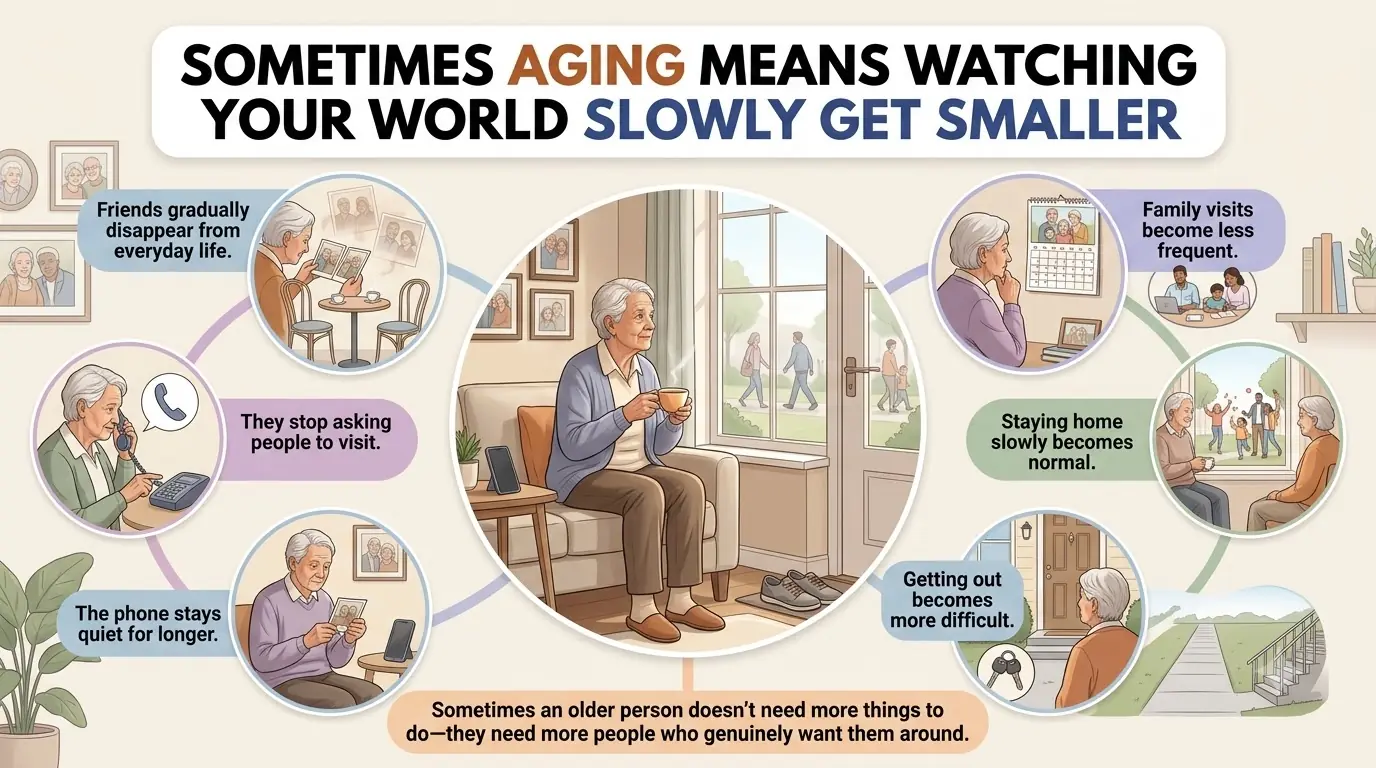
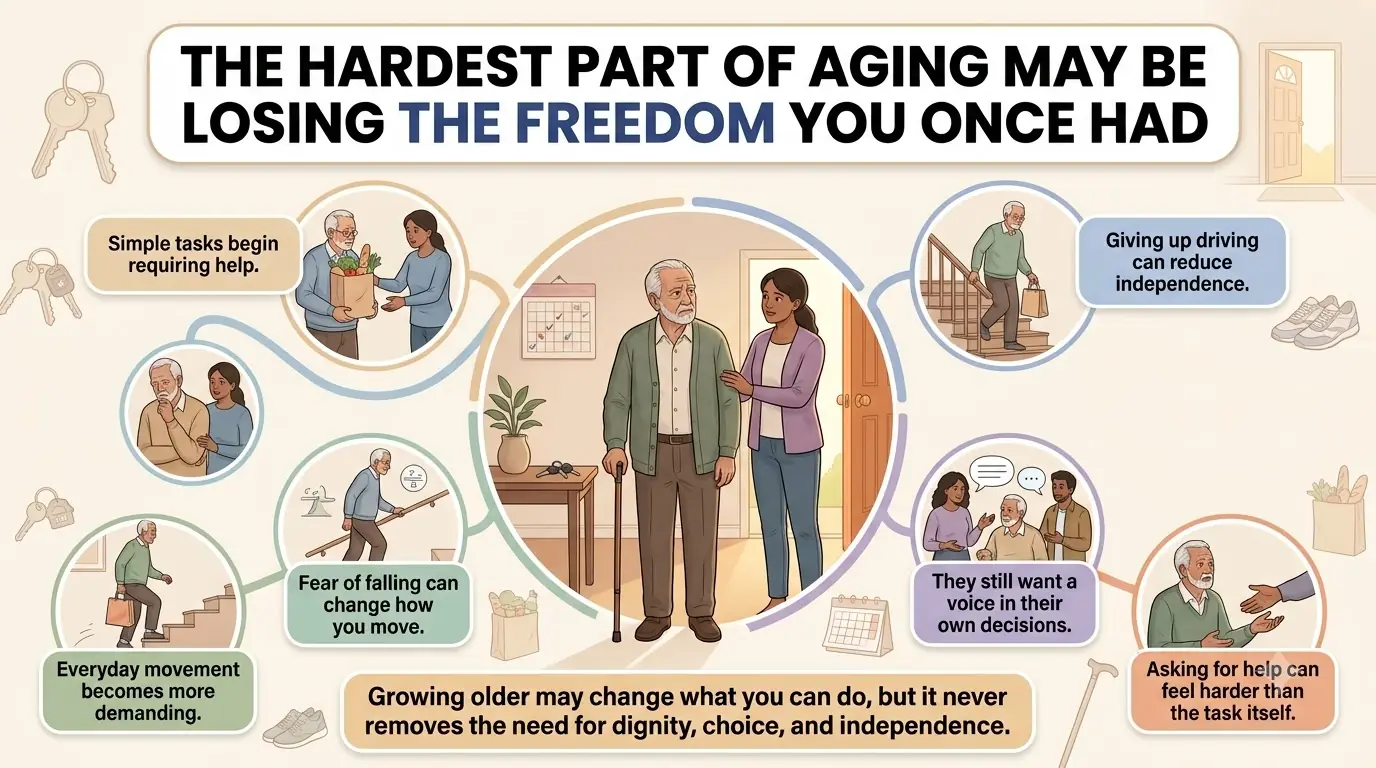
Pain, declining vision or hearing, reduced stamina, balance problems, and fear of falling can gradually shrink someone's social world.
The process can be so slow that it looks like preference.
A person stops traveling because airports involve too much walking.
Then restaurants become difficult.
Then large stores.
Then neighborhood walks.
Eventually, staying home becomes easier than almost everything else.
That's different from choosing home because you genuinely love being there.
Preserve the ability to choose
This is where physical health and personal freedom intersect.
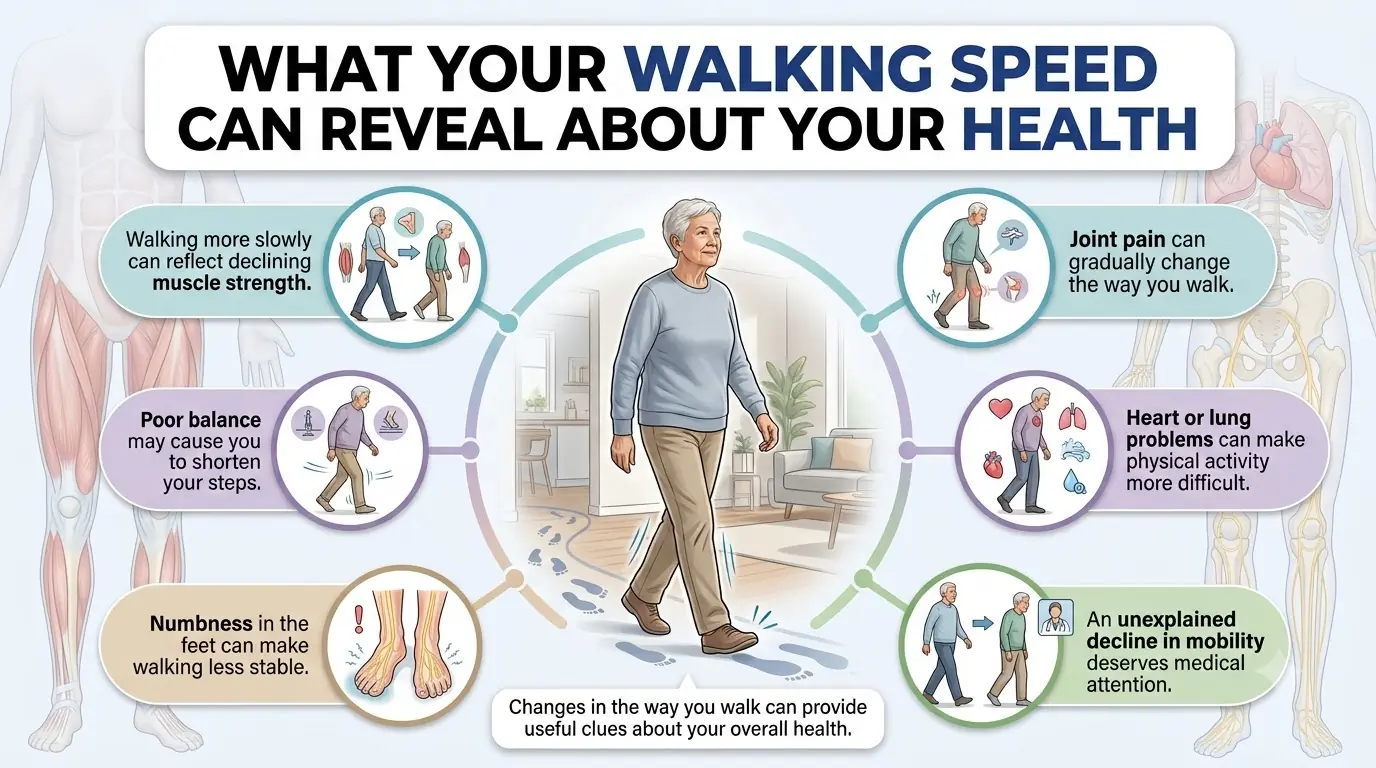
Strengthening your legs isn't only about muscles.
It's about stairs.
Balance training isn't merely an exercise category.
It's about feeling confident stepping off a curb.
Cardiovascular fitness isn't about winning races.
It's about walking through an airport or exploring a new city without every block feeling overwhelming.
Maintaining physical capacity gives you options.
Then when you decline an invitation, it's because you don't want to go—not because your body has quietly removed the choice.
3. Being Liked by Everyone
This may be one of adulthood's most expensive ambitions.
Trying to be universally liked can influence everything from how much work you accept to whether you're willing to express an opinion.
You say yes when you mean no.
You apologize for reasonable boundaries.
You avoid difficult conversations.
You spend time with people you don't particularly enjoy because you're afraid they'll think badly of you.
Eventually, you can become remarkably good at maintaining everyone's comfort except your own.
Healthy relationships can tolerate boundaries
You don't have to become cold or inconsiderate.
Kindness still matters.
So does compromise.
But kindness and constant compliance aren't identical.
Imagine a friend asks you to help with something on a day you've already planned to exercise and rest.
You could say:
"I'm sorry, I can't do it that day."
You don't necessarily need a ten-minute explanation.
Likewise, you can leave a gathering earlier than everyone else.
You can decline alcohol.
You can choose different foods.
You can stop discussing a subject that repeatedly creates conflict.
You can ask people not to call late at night.
People may not always like your boundaries.
Discomfort doesn't automatically make the boundary wrong.
Keep flexibility, too
There is a trap on the opposite side.
"I'm protecting my peace" can become a convenient phrase for refusing all compromise, feedback, or accountability.
Relationships sometimes require doing things we wouldn't independently choose.
You may attend a granddaughter's school performance even though you'd rather stay home.
You may visit a sick friend when your afternoon would have been easier without the trip.
You may apologize after realizing you were wrong.
Those choices aren't necessarily people-pleasing.
They can be expressions of love.
The goal isn't to eliminate inconvenience.
It's to stop organizing your entire identity around universal approval.
4. Arguments That Won't Matter a Week From Now
Some disagreements matter enormously.
Health decisions matter.
Financial boundaries matter.
Safety matters.
Respect matters.
How people treat you matters.
But other arguments consume far more energy than their consequences justify.
Someone made an irritating comment.
A stranger disagreed with you online.
A relative remembers an old event differently.
Someone cut you off in traffic.
A friend has an opinion you find ridiculous.
You could spend the next hour proving that you're right.
But what would winning actually change?
Stress isn't automatically harmful
It's important not to oversimplify stress.
The human stress response is normal and useful. Short-term stress helps us respond to challenges.
The problem is when stress becomes persistent or overwhelming and recovery rarely happens.
Arguments can keep us mentally activated long after the conversation ends.
You replay what someone said while trying to sleep.
You construct the perfect comeback in the shower.
You tell three other people about the disagreement.
The original five-minute argument occupies half your day.
That's a lot of attention to spend on something that may soon become irrelevant.
Use a simple filter
Before engaging, consider asking:
Will this matter next week?
Then:
Will it matter next year?
And perhaps most importantly:
Is there actually something useful I can accomplish by continuing this conversation?
Sometimes the answer is yes.
If someone repeatedly violates a boundary, avoiding the issue won't fix it.
If a family member is mishandling an aging parent's finances, that's not a trivial disagreement.
If a medical concern is being dismissed, speaking up may be important.
But if two people are arguing for the fifteenth time about something neither will change?
Walking away may be the more productive decision.
Not every disagreement needs a winner.
5. A Younger Version of Yourself
This may be the hardest one.
Our culture constantly encourages comparison with youth.
How to look younger.
Feel younger.
Eat younger.
Dress younger.
Move younger.
Reverse aging.
Turn back the clock.
But your body isn't a clock, and aging isn't something that can simply be reversed through a morning routine, supplement, food, or workout.
There are meaningful things you can influence.
Physical activity can improve fitness.
Resistance training can build strength.
Adequate nutrition supports health.
Sleep matters.
Blood pressure and cholesterol management matter.
Avoiding tobacco matters.
Preventive healthcare matters.
Social connection matters.
But none of those habits turns 63 into 33.
And that doesn't have to be the goal.
Your Body at 63 Has a Different Job Than It Did at 23
At 23, you may have cared about how fast you could run or what you looked like in a swimsuit.
At 63, a more useful question might be:
Can you get up from the floor?
Can you carry your suitcase?
Can you comfortably climb a flight of stairs?
Can you walk around on vacation?
Can you catch your balance after an unexpected step?
Can you keep doing the hobbies you love?
Can you live independently?
Those may not sound glamorous.
But they're extraordinarily valuable.
Muscle becomes increasingly important
Adults can lose muscle and strength as they age, particularly when they're physically inactive.
The medical term sarcopenia refers to age-related loss of muscle mass and function.
But aging does not mean strength training becomes pointless.
Quite the opposite.
Older adults can respond to resistance training, and appropriately designed strength exercise can help improve or preserve muscular strength and physical function.
That doesn't require becoming a bodybuilder.
Depending on ability and medical circumstances, resistance training might include exercises using machines, dumbbells, resistance bands, body weight, or movements such as controlled chair stands.
Progress should be gradual.
If you've been inactive, have significant medical conditions, or experience pain, dizziness, chest symptoms, or substantial balance problems, speak with an appropriate healthcare professional about safe ways to begin.
Train for the Life You Want to Keep Living
Exercise becomes much more meaningful when you stop treating it as punishment for aging.
Instead, train for your actual life.
If you want to travel, maintain enough endurance to walk comfortably.
If you love gardening, work on the strength and mobility needed to squat, kneel, carry, and stand.
If you want to play with grandchildren, maintain the ability to get down toward the floor and rise again safely.
If you live in a home with stairs, your legs need regular work.
If maintaining independence matters to you, balance deserves attention too.
For most adults, established physical-activity guidance includes a combination of aerobic activity and muscle-strengthening exercise. Older adults can also benefit from activities that challenge balance.
The exact program should reflect your health, experience, mobility, and medical needs.
The purpose isn't to prove that you're still young.
It's to remain capable.
Stop Measuring Health Only Through the Mirror
Appearance is an understandable concern.
There's nothing wrong with enjoying skincare, dressing well, changing your hairstyle, or wanting to feel attractive.
But appearance is a poor standalone measure of health.
Someone can look slim and still have low muscle strength.
Someone can have wrinkles and excellent cardiovascular fitness.
Gray hair tells you very little about whether someone can comfortably climb stairs.
Instead of asking only, "Do I look older?" consider asking better questions:
Am I moving regularly?
Am I maintaining strength?
How is my blood pressure?
Am I sleeping adequately?
Can I perform everyday activities comfortably?
Am I eating enough nutritious food, including adequate protein for my individual needs?
Am I keeping up with appropriate preventive healthcare?
Am I staying socially connected?
Can I do the things that give my life meaning?
Those questions tell you far more about healthy aging than whether your face resembles an old photograph.
Don't Chase Your Old Weight Without Context
Body weight can become another way of chasing a younger self.
People sometimes pick a number they weighed decades ago and decide that returning to it must automatically improve their health.
Not necessarily.
Body composition, muscle mass, medical conditions, medications, activity, nutrition, and overall health all matter.
For older adults, aggressive dieting can be particularly problematic when it contributes to inadequate nutrition or loss of lean tissue.
People who need to lose weight for health reasons may benefit from an individualized approach that considers nutrition and preservation of muscle.
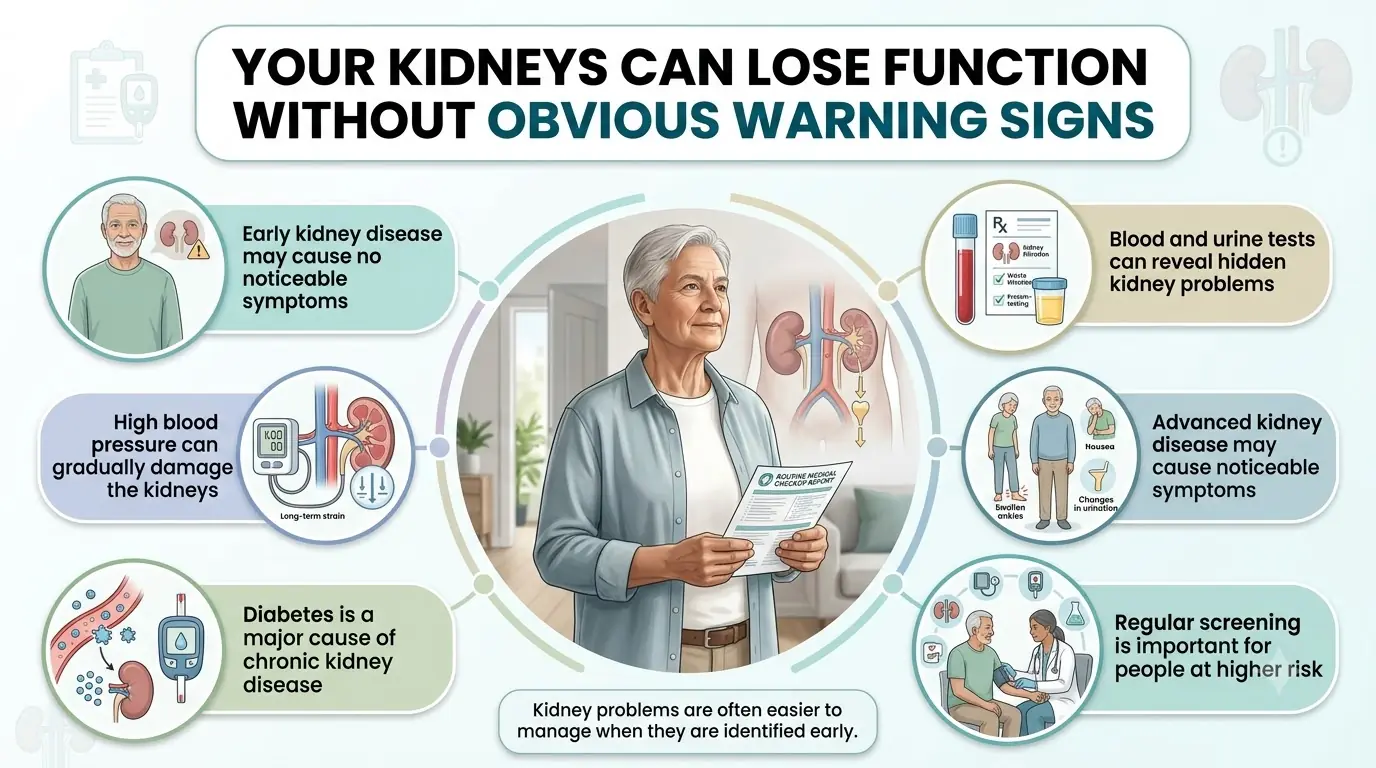
This is especially important for people with diabetes, kidney disease, cardiovascular disease, frailty, unintended weight loss, or other medical conditions that affect dietary needs.
A healthcare professional or registered dietitian can help determine an appropriate approach.
Your high-school weight is not automatically your ideal health target decades later.
What Should You Chase Instead?
If these five things deserve less energy, where should that energy go?
Not toward another anti-aging promise.
Toward capacity.
Chase strength
Strength supports everyday independence.
Train your major muscle groups appropriately and progressively.
You don't need impressive numbers.
You need useful strength.
Chase mobility
Maintain your ability to move comfortably through the ranges required by your daily life.
Persistent pain or significant limitations deserve evaluation rather than simply being written off as "getting old."
Chase balance
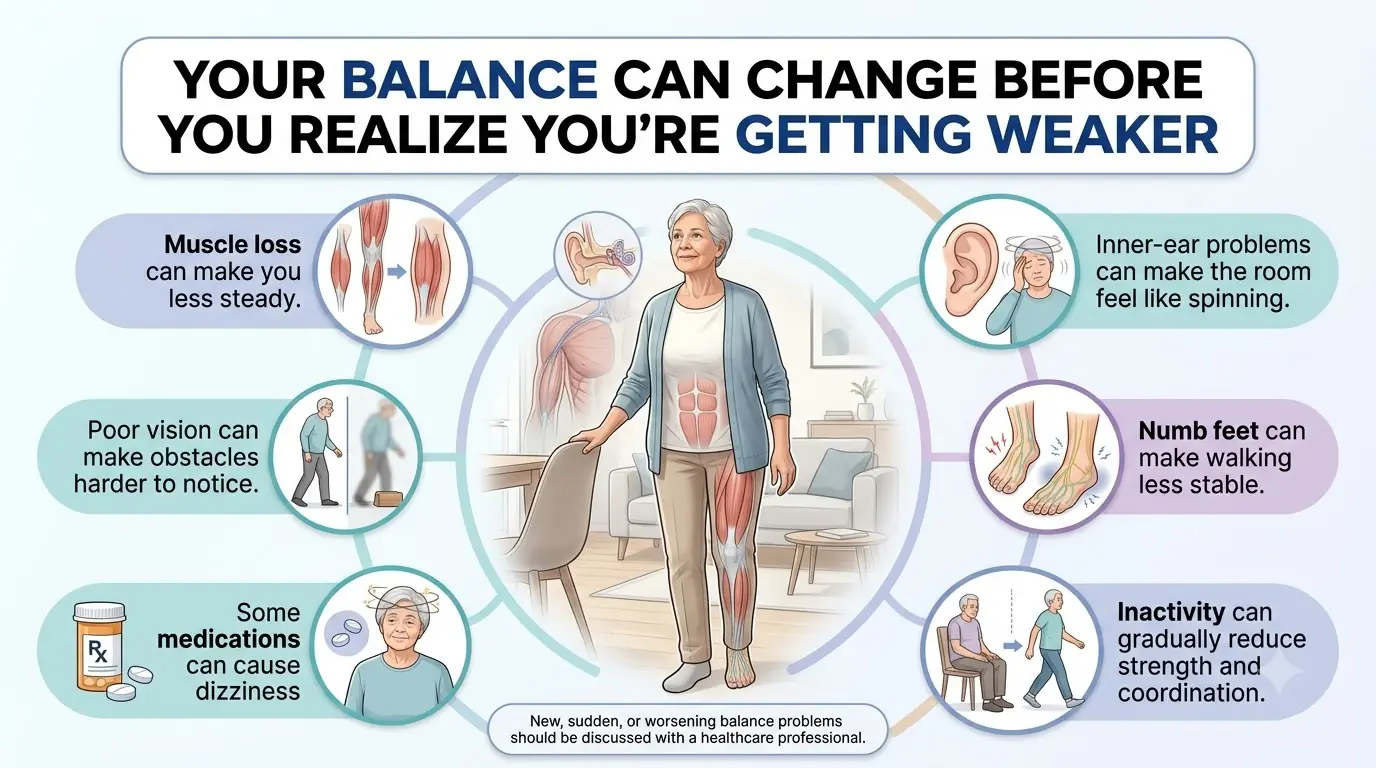
Balance involves multiple systems, including vision, sensation, the inner ear, muscle strength, and the nervous system.
If your balance is changing or you've fallen repeatedly, talk with a healthcare professional.
Chase cardiovascular health
Regular physical activity, appropriate medical care, avoiding tobacco, and managing cardiovascular risk factors can help support heart and vascular health.
Your individual targets for blood pressure, cholesterol, blood sugar, and other measures should be discussed with your healthcare team.
Chase meaningful relationships
You don't need everyone to like you.
You do need people who matter.
Invest in reciprocal relationships.
And if your circle has become smaller than you'd like, remember that new relationships aren't reserved for young people.
Classes, volunteering, community activities, hobby groups, faith communities, and exercise groups can create repeated opportunities for connection.
Chase experiences
Use your health.
Walk the beach.
Plant the garden.
Take the trip that's appropriate for your abilities.
Dance at the wedding.
Cook dinner with someone.
Learn something new.
Healthy aging isn't simply about accumulating good laboratory results.
It's about preserving enough health to participate in your own life.
Who Should Pay Extra Attention?
A change in priorities after 60 can be completely normal.
But significant changes in behavior or function deserve attention when they're accompanied by other symptoms.
For example, increasingly avoiding people and activities may warrant a conversation with a healthcare professional if it's accompanied by persistent sadness, anxiety, loss of interest, substantial fatigue, sleep changes, or other concerning symptoms.
Likewise, declining invitations because walking, balance, hearing, vision, or pain has become difficult may point to treatable or manageable barriers.
Unintentional weight loss deserves particular attention in older adults, especially when it is substantial or accompanied by weakness, reduced appetite, illness, or difficulty eating.
Falls should also be taken seriously.
A fall isn't simply an embarrassing moment to forget. Repeated falls or increasing instability may warrant assessment of medications, vision, balance, strength, blood pressure, footwear, environmental hazards, and other potential contributors.
When to Talk to a Doctor
You don't need medical permission to stop arguing with people or decline a dinner invitation.
But changes in physical or emotional function shouldn't automatically be attributed to age.
Bring gradual concerns to routine appointments, including changes in strength, stamina, balance, memory, sleep, mood, hearing, vision, appetite, or ability to perform everyday activities.
Seek more prompt medical evaluation when symptoms are new, worsening, or substantially interfering with your normal activities—particularly unexplained weakness, repeated falls, significant dizziness, unusual shortness of breath, or unexplained weight loss.
Some symptoms require emergency attention.
New chest pain or pressure, severe difficulty breathing, fainting, or sudden neurological symptoms such as facial drooping, weakness on one side, or difficulty speaking can represent medical emergencies and should not be treated as normal aging.
The principle is simple:
Growing older is normal. New symptoms aren't automatically normal just because you're older.
The Big Picture: You Don't Need Your Old Life Back
Perhaps one of the healthiest things about reaching your 60s is realizing that you don't have to keep auditioning for your own life.
You don't need everyone to approve of you.
You don't have to attend everything.
You don't need to win meaningless arguments.
You don't have to chase people indefinitely.
And you certainly don't need to spend the next twenty years trying to reconstruct the person you were twenty years ago.
Your younger self had advantages.
Maybe she recovered faster.
Maybe stairs were easier.
Maybe she could stay up until midnight and feel fine the next morning.
But your present self has something she didn't have.
Experience.
You know more about which relationships are worth keeping.
You understand that time has value.
You may finally recognize the difference between being needed and being appreciated.
And perhaps you're beginning to understand that healthy aging isn't about desperately preserving every feature of youth.
It's about protecting what allows you to live well now.
Your strength.
Your mobility.
Your balance.
Your heart and brain health.
Your relationships.
Your curiosity.
Your ability to participate.
Your independence.
You don't need your old life back.
You need a body that's supported well enough to live your current one, people who make that life richer, and enough confidence to stop spending your remaining energy on things that no longer deserve it.
The woman you were deserves gratitude.
But the woman you've become deserves your attention.
Medical disclaimer: This article is for educational purposes only and is not a substitute for individualized medical advice, diagnosis, or treatment. Consult a qualified healthcare professional about your personal health, symptoms, medications, exercise needs, nutrition, or significant changes in physical or emotional well-being.