After 60, My Circle Got Smaller—And I Finally Understood Which Friendships Were Worth Keeping
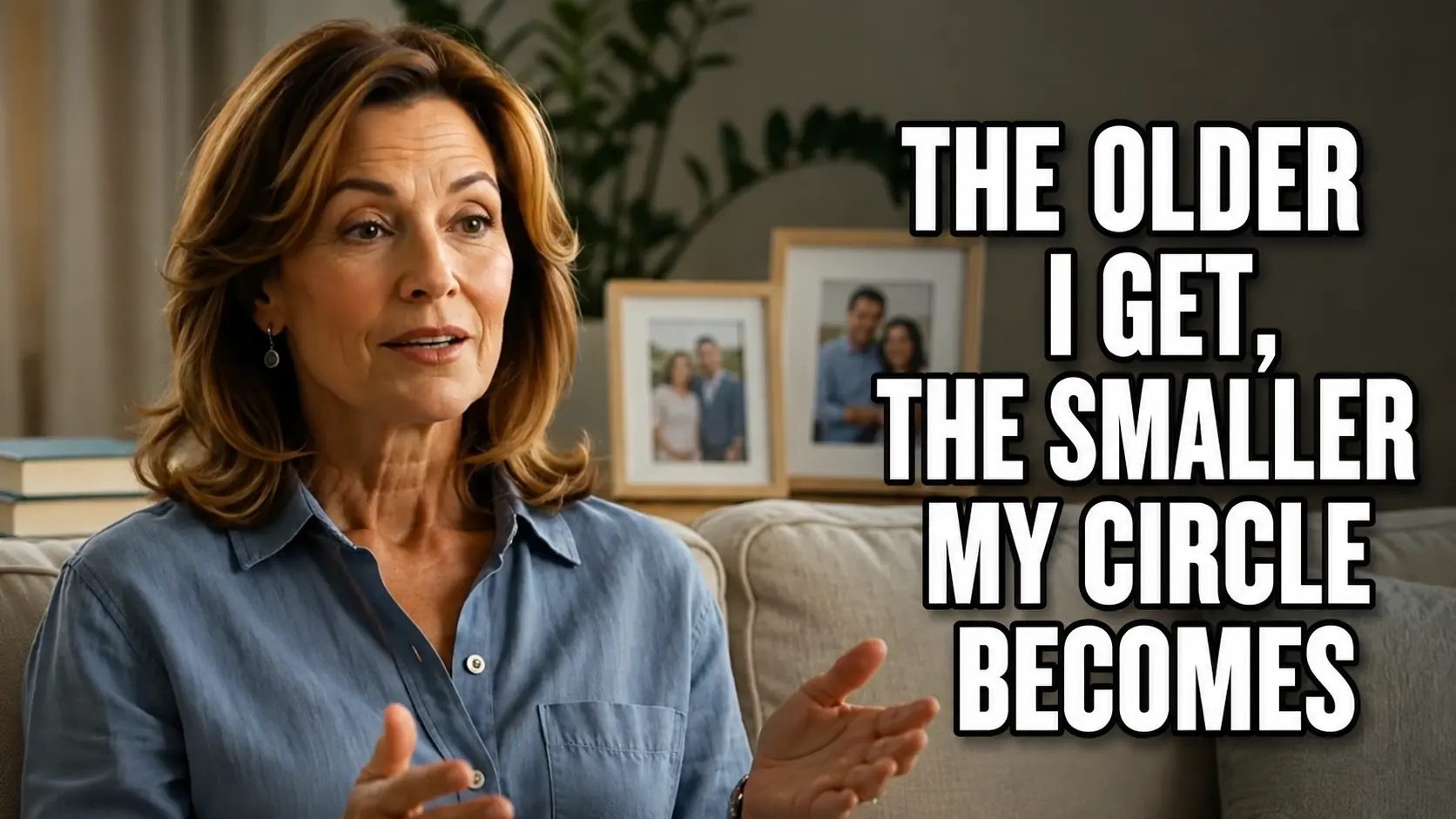
There’s a strange thing that happens as you get older.
Your contact list may stay long, but your real circle often gets shorter.
Some friendships fade quietly.
Some relationships become one-sided.
Some people remain in your life mostly because they have always been there.
And a few become more valuable than ever.
By the time many people reach their 60s, they stop measuring friendship by how many names they can list. They start paying more attention to something deeper:
Who actually feels safe, steady, and real?
That shift can be healthy.
But there is an important distinction between intentionally keeping a smaller circle and becoming socially isolated.
The first can bring clarity and peace.
The second can quietly affect emotional and physical well-being.
Understanding that difference matters more with age, especially as retirement, health changes, caregiving, relocation, and loss begin reshaping social life.
Why Social Circles Often Get Smaller With Age
A smaller social circle is not automatically a sign that something is wrong.
In many cases, it is simply the result of life becoming more selective.
When you were younger, friendships often formed automatically.
You had coworkers.
Neighbors with children the same age.
School communities.
Sports leagues.
Parent groups.
Churches.
Professional organizations.
Birthday parties.
Carpools.
Work trips.
Social interaction was built into the structure of daily life.
Later, those structures often change.
Retirement may remove daily contact with coworkers.
Adult children may move.
Friends may relocate.
Health problems can limit travel.
A spouse or partner may die.
Some people become caregivers.
Others become grandparents and spend more time with family.
Suddenly, maintaining friendships requires more intention.
That does not necessarily mean you're becoming less social.
It may simply mean social connection is no longer happening automatically.
A Smaller Circle Can Actually Be More Meaningful
Many people eventually discover that they do not need constant social activity to feel connected.
They need reliable people.
That might mean one sibling who listens without judging.
A longtime friend who shows up when things go wrong.
A neighbor who checks in.
A walking partner.
Someone who knows your history but still understands who you are today.
These relationships can offer something a large social network does not always provide:
emotional safety.
That matters.
You do not need to perform.
You do not need to explain every detail.
You can call when life becomes difficult.
You can sit in silence without feeling awkward.
You can disagree without assuming the relationship is over.
That kind of connection can be deeply valuable later in life.
But History Alone Is Not the Same as Friendship
This can be a difficult realization.
Maybe you have known someone for 30 years.
You attended each other's weddings.
Your children grew up together.
You shared vacations.
You know each other's families.
That history is real.
But history is not the same thing as current closeness.
Sometimes people grow in different directions.
Values change.
Priorities change.
Communication styles change.
One person may continue putting effort into the relationship while the other gradually stops.
You may realize that the friendship survives mostly through memory.
There is nothing wrong with honoring what a relationship once meant without pretending it still functions the same way today.
A healthy friendship usually involves some degree of reciprocity.
It does not have to be perfectly equal every week.
There are seasons when one person needs more support.
But over time, both people should generally contribute care, interest, honesty, and effort.
If every conversation depends on you initiating it, every plan depends on you arranging it, and every problem belongs to the other person, the relationship may no longer be giving you what it once did.
Why Social Connection Still Matters for Health
Even if your circle gets smaller, connection still matters.
Research has consistently linked loneliness and social isolation with poorer health outcomes, particularly in older adults.
That does not mean having fewer friends causes illness.
And it does not mean everyone needs a busy social calendar.
The more useful distinction is between solitude and loneliness.
Solitude can feel restorative.
Loneliness feels like something is missing.
You can live alone and feel deeply connected.
You can also be surrounded by people and feel lonely.
The important question is not:
"How many friends do I have?"
It is:
"Do I have enough meaningful connection for the life I want?"
Three Good Friends May Be Enough—If They’re Truly There
There is no medically correct number of friends everyone should have.
For some people, a small circle feels ideal.
Three dependable people may offer more meaningful support than twenty casual acquaintances.
The quality of social relationships often matters greatly.
Think about the people in your life.
Who can you call after a difficult medical appointment?
Who would notice if you stopped showing up?
Who listens without turning every conversation back to themselves?
Who encourages you to take care of yourself?
Who makes you laugh?
Who can tell you something difficult without humiliating you?
Those are powerful relationships.
You do not need dozens of them.
But having at least a few meaningful points of connection can support emotional resilience and make life's harder periods easier to manage.
Friendship After 60 Can Support More Than Mood
Friendship is often discussed as an emotional issue.
But it can influence everyday health behaviors too.
A friend may encourage you to walk.
A neighbor may invite you to a fitness class.
A sibling may remind you to schedule an appointment.
A walking partner can make exercise more enjoyable.
A social group may give structure to your week.
A friend may notice if you seem unusually tired, confused, withdrawn, or unsteady.
These are practical benefits.
Social activity can also involve physical activity without feeling like formal exercise.
Meeting a friend at a museum means walking.
Going to a farmers market means standing and moving.
Traveling with friends requires stamina.
Playing cards at someone's house may mean driving, climbing steps, or getting in and out of a chair repeatedly.
Connection and physical function often overlap more than we realize.
The Danger Is Not a Small Circle—It’s a Shrinking Life
This is where the distinction becomes important.
A smaller circle can be intentional.
A shrinking life often is not.
Suppose you stop attending large gatherings because you no longer enjoy them.
That may be perfectly healthy.
But suppose you stop going because your hearing has gotten worse and conversations are frustrating.
Then you stop walking with friends because your knees hurt.
Then you decline dinner because driving after dark feels difficult.
Then you stop visiting family because you are worried about falling.
Eventually, most of your week happens at home.
From the outside, it may look like you simply prefer solitude.
But underneath, physical barriers may be making decisions for you.
That deserves attention.
Mobility Can Quietly Shape Your Social Life
One reason healthy aging is so strongly connected to independence is that physical function affects almost everything.
If stairs become difficult, you may avoid certain homes.
If walking becomes tiring, you may stop shopping in person.
If balance declines, crowded environments may feel intimidating.
If carrying bags becomes difficult, travel becomes less appealing.
If getting out of low chairs is hard, restaurants and social gatherings can become uncomfortable.
Physical ability influences social opportunity.
This is why preserving strength, balance, mobility, and stamina matters beyond exercise itself.
It helps keep your world open.
Strength Is Social Freedom, Too
Many people think of strength training as something people do for appearance.
After 60, it can be much more practical.
Leg strength helps you rise from a chair.
Core and lower-body strength can support balance.
Upper-body strength helps with carrying groceries, luggage, or household items.
Grip strength helps with jars, bags, tools, and everyday tasks.
The goal does not have to be lifting heavy weights.
Appropriate resistance exercise can be scaled to almost any starting point.
That may include resistance bands.
Weight machines.
Dumbbells.
Body-weight exercises.
Supported squats.
Chair stands.
The right level depends on your current health, experience, and mobility.
If you have significant medical conditions, recent surgery, severe joint pain, or substantial balance problems, professional guidance may be useful.
The larger point is simple:
Maintaining strength helps you keep participating.
Walking Can Help Protect More Than Your Heart
Walking is one of the most accessible forms of physical activity.
It can support cardiovascular fitness, stamina, mobility, and mood.
It can also support connection.
Walk with a friend.
Walk your dog with a neighbor.
Meet someone at a park.
Explore a new neighborhood.
Walk through a local market.
The activity itself matters.
But so does the routine.
A weekly walk gives people a reason to stay in touch.
Sometimes maintaining friendships is easier when connection is built around an activity rather than endless phone calls or formal plans.
Retirement Can Create an Unexpected Social Gap
Retirement is often imagined as freedom.
And in many ways, it is.
No commute.
No office politics.
More control over your schedule.
But retirement can also remove dozens of small interactions that used to happen automatically.
A quick conversation in the hallway.
Lunch with coworkers.
Seeing the same people every morning.
Someone asking how your weekend went.
Those interactions may not have felt important at the time.
But together, they created social structure.
When they disappear, people sometimes feel unexpectedly disconnected.
This can happen even to people who were excited to retire.
That does not mean retirement is a mistake.
It means social life may need to become more intentional.
Build Connection Around What You Actually Enjoy
One of the best things about getting older is that you may finally stop forcing yourself into social settings that do not suit you.
You do not need to join a group simply because someone says you should socialize.
Instead, connect through things you already like.
If you enjoy walking, find a walking group.
If you like books, try a library discussion group.
If you enjoy gardening, look for a community garden.
If you like helping others, volunteer.
If faith is important to you, religious communities can provide connection.
If you enjoy learning, consider local classes.
If you prefer one-on-one conversation, invite one person for coffee instead of attending a crowded party.
Healthy connection does not have to look loud.
Learn the Difference Between Peace and Withdrawal
This may be the most important question in the entire conversation.
Are you spending more time alone because it feels peaceful?
Or because life feels harder to engage with?
Peace might look like:
Choosing quiet evenings intentionally.
Enjoying hobbies alone.
Keeping a small circle.
Declining events that drain you.
Feeling content after time by yourself.
Withdrawal may look different.
You may stop enjoying things you once loved.
Calls feel overwhelming.
Leaving home feels increasingly difficult.
You feel disconnected but do not know how to reconnect.
You stop caring whether anyone checks in.
You experience persistent sadness or low motivation.
That distinction is important.
The first may simply reflect preference.
The second may deserve attention.
When Loneliness Starts to Become a Health Concern
Loneliness happens to nearly everyone sometimes.
A lonely weekend after a friend moves away does not necessarily signal a problem.
But persistent loneliness is different.
If you repeatedly feel disconnected, unsupported, or emotionally isolated, it may be worth doing something about it rather than assuming it is simply part of aging.
Start small.
Call one person.
Attend one recurring activity.
Reconnect with someone you genuinely miss.
Invite a neighbor for coffee.
Join a local group.
Volunteer once a month.
Small repeated contact can matter more than occasional large social events.
If loneliness is persistent and affecting sleep, mood, appetite, motivation, or everyday functioning, mention it to a healthcare professional.
It deserves to be taken seriously.
Do Not Ignore Hearing Loss
One overlooked reason older adults sometimes withdraw socially is hearing difficulty.
Imagine sitting in a busy restaurant.
Everyone is talking.
Music is playing.
Glasses are clinking.
You hear sound, but not words.
You keep asking people to repeat themselves.
Eventually, you smile and nod.
Then you stop accepting invitations.
That can look like social withdrawal when the real issue is hearing.
Hearing changes are common with age and can interfere significantly with communication.
If conversations have become harder to follow, especially in noisy environments, consider discussing hearing evaluation with a healthcare professional.
Addressing communication barriers may help people stay connected.
Vision and Driving Matter Too
Driving often plays an enormous role in social independence in the United States.
When night driving becomes difficult, people may stop attending evening events.
Vision changes can contribute.
So can medications, reduced confidence, or other health issues.
Again, the goal is not to pressure someone into driving when it is unsafe.
Safety comes first.
But if transportation is becoming a barrier, consider alternatives.
Family rides.
Community transportation.
Rideshare services.
Senior transportation programs.
Daytime gatherings instead of evening plans.
A social life does not have to disappear because driving habits change.
Friendship Should Not Require Constant Access
Modern communication can make people feel permanently available.
Texts.
Calls.
Group messages.
Social media.
Video calls.
There can be an unspoken expectation that because someone can reach you, you should respond immediately.
That is not necessary.
You can have healthy relationships without being constantly reachable.
You may choose to silence your phone during dinner.
Return calls later.
Avoid large group chats.
Take breaks from social media.
These are reasonable boundaries.
Connection should support your life, not dominate it.
You Also Do Not Have to Keep Every Old Relationship
This can be especially difficult later in life because shared history feels powerful.
But time invested does not obligate you to keep every relationship forever.
If someone is consistently disrespectful, manipulative, cruel, or emotionally draining, reducing contact may be appropriate.
That does not mean every difficult friendship should be abandoned.
People make mistakes.
Long-term relationships can go through difficult periods.
Sometimes honest conversation repairs things.
But a relationship should not be preserved solely because it has existed for decades.
Longevity is not the same as health.
Who Should Pay Extra Attention?
A smaller social circle may deserve closer attention when it happens alongside other changes.
For example:
You are avoiding people because walking has become difficult.
You have stopped attending activities because of hearing problems.
You are afraid of falling.
You feel persistently sad or anxious.
You have lost interest in hobbies.
You feel exhausted most days.
You are sleeping poorly.
You have recently lost a spouse, partner, or close friend.
You moved to a new area.
You retired and lost most of your daily social contact.
You no longer have anyone you feel comfortable calling for help.
None of these situations automatically means something is medically wrong.
But they may increase vulnerability to isolation or emotional distress.
Recognizing the pattern early can make it easier to respond.
When to Talk to a Doctor
Social preferences do not need medical treatment.
If you genuinely enjoy a smaller circle and feel emotionally well, there is nothing inherently unhealthy about that.
But consider discussing changes with a healthcare professional if social withdrawal is accompanied by persistent sadness, loss of interest, anxiety, unusual fatigue, changes in sleep or appetite, or difficulty managing daily activities.
Gradual physical changes also deserve attention.
Mention worsening balance, repeated falls, increasing weakness, new mobility problems, hearing changes, or vision difficulties at appropriate medical visits.
Seek prompt evaluation when symptoms are new, significant, or rapidly worsening.
Emergency symptoms such as chest pain, severe shortness of breath, fainting, or sudden stroke-like symptoms require urgent medical care.
Do not assume a serious symptom is simply part of getting older.
The Big Picture: Count the People Who Feel Like Home
By your 60s, you may finally understand that friendship is not a popularity contest.
You do not need twenty people asking what you are doing this weekend.
You may need three people who will answer when the weekend falls apart.
That is different.
A smaller circle can bring clarity.
You can stop chasing relationships that no longer fit.
You can stop forcing yourself to maintain connections based only on history.
You can invest more deeply in the people who are present, reciprocal, kind, and real.
At the same time, healthy aging means protecting yourself from the other extreme.
Do not let pain, hearing loss, fear, declining mobility, depression, or loneliness quietly turn a small circle into no circle at all.
The goal is not to collect people.
It is to stay connected enough to feel supported while keeping enough independence to choose how you spend your time.
Friendship after 60 may become less about quantity and more about reliability.
Less about who has known you longest.
More about who understands you now.
Less about who appears in old photographs.
More about who would sit beside you on a difficult day.
You do not have to count friends anymore.
Count the people who make you feel safe.
Count the people who make you laugh.
Count the people who call back.
Count the people who respect your boundaries.
Count the people who encourage you to stay engaged with life.
Those may be the relationships worth carrying forward.
And if only a few truly feel like home, a few may be enough.
Medical disclaimer: This article is for educational purposes only and is not a substitute for individualized medical advice, diagnosis, or treatment. Talk with a qualified healthcare professional about persistent loneliness, mood changes, hearing or vision concerns, mobility problems, falls, or other health changes affecting your ability to stay connected and independent.