At 72, I Thought My Best Years Were Behind Me—Then I Changed These 8 Ordinary Habits
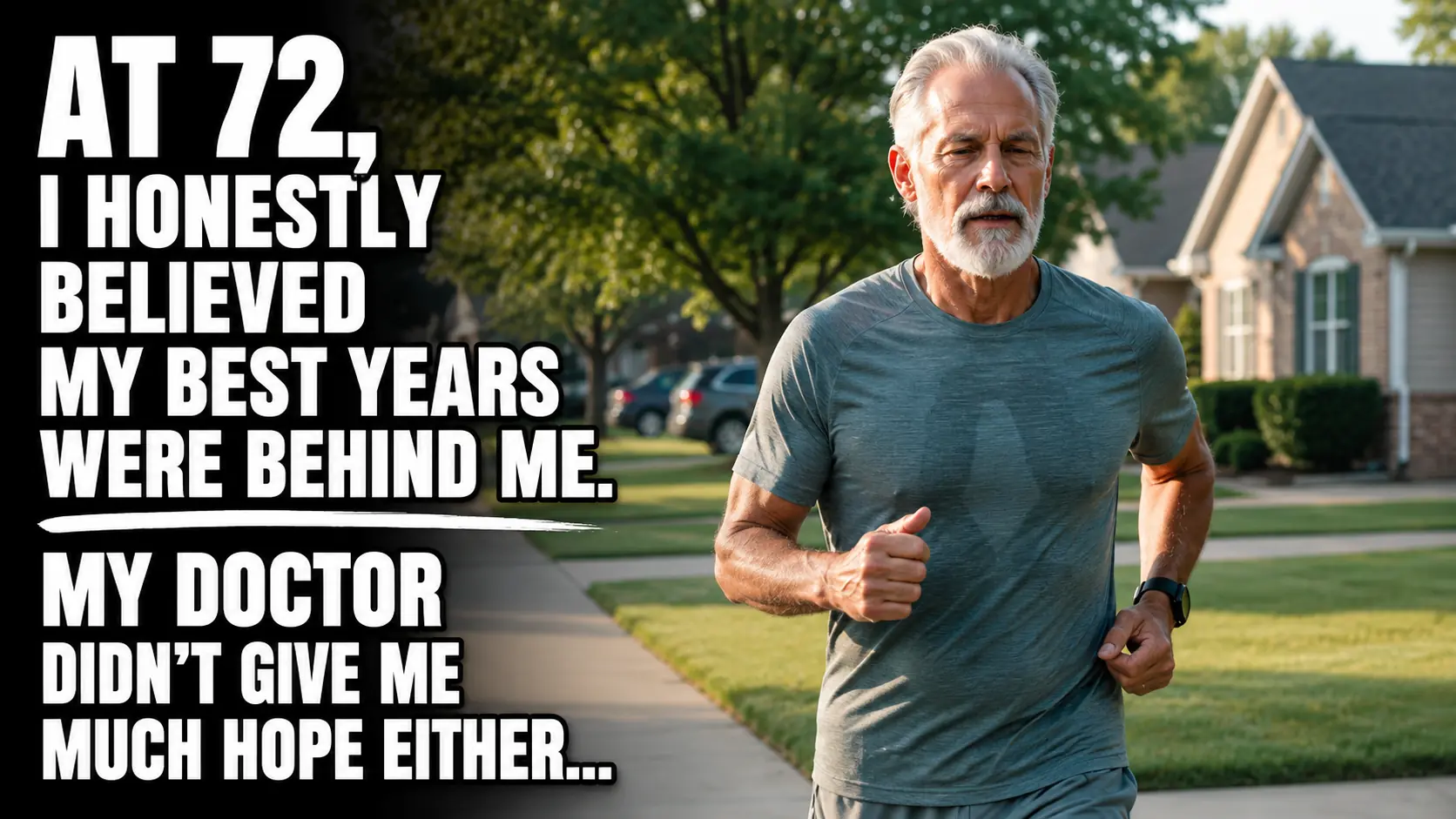
At 72, I honestly believed my best years were behind me.
Not because one dramatic event had suddenly changed everything.
It happened gradually.
Stairs started looking less inviting. I thought twice before carrying something heavy. If an outing involved a lot of walking, I wondered whether there would be somewhere to sit.
Getting onto the floor was easy enough.
Getting back up was another matter.
I started making little accommodations without really noticing them.
Take the elevator.
Carry one grocery bag instead of two.
Skip the evening walk.
Ask someone else to lift the box.
Stay home because going out sounds tiring.
Eventually I started thinking this was simply what 72 was supposed to feel like.
That's where my thinking went wrong.
Aging involves genuine biological changes. Muscle strength and power can decline. Cardiovascular capacity can decrease. Balance, bone health, vision, hearing, and recovery can change. Chronic diseases also become more common.
No responsible health professional should promise that a particular routine can reverse those realities.
But there's an enormous difference between acknowledging aging and assuming that every decline in physical function is inevitable and irreversible.
At 72, I didn't need a promise that I'd become young again.
I needed a better goal.
I wanted to become more capable.
These eight ordinary habits helped me understand what that goal actually looks like.
1. I Started Walking Like My Independence Depended on It
Walking seems almost too simple to qualify as exercise.
That's one reason people underestimate it.
But think about how much of an independent life depends on your ability to walk.
Grocery shopping.
Going through an airport.
Visiting a museum.
Walking from a parking lot.
Exploring somewhere on vacation.
Attending community events.
Walking around the neighborhood.
Simply moving through your own home.
Walking isn't just exercise.
It's access to life.
So instead of waiting until I felt motivated to “work out,” I made walking part of my normal routine.
Some days that means a purposeful brisk walk.
Other days it means shorter walks spread throughout the day.
I walk after a meal when practical. I move around instead of sitting through every phone call. I park at a reasonable distance from an entrance when conditions are safe.
None of this is extreme.
That's precisely why I can repeat it.
Start With the Distance You Can Actually Handle
Someone who hasn't exercised in years doesn't need to immediately chase 10,000 steps or another arbitrary target.
If five or ten minutes of walking is currently manageable, that's a starting point.
Gradually increasing duration, frequency, or pace can provide additional challenge as fitness improves.
The objective is not to exhaust yourself.
It's to expand what your body can comfortably do.
And if walking suddenly becomes unusually difficult because of chest discomfort, significant breathlessness, dizziness, weakness, or another unexplained symptom, that deserves medical attention rather than simply pushing harder.
2. I Stopped Thinking Strength Training Was for Young People
This was one of my biggest misconceptions.
I associated lifting weights with younger people trying to build bigger muscles.
Then I began looking at strength differently.
Muscle helps you stand from a chair.
It helps you climb stairs.
It helps you carry groceries.
It helps you lift luggage.
It helps stabilize your joints and move your body through everyday tasks.
When you look at it that way, strength training stops being cosmetic.
It becomes practical preparation for aging.
Age-related reductions in muscle mass and strength can contribute to declining function. Resistance training can improve strength and physical function in older adults when appropriately prescribed.
That doesn't mean every 72-year-old should start performing heavy barbell exercises.
Strength training can take many forms.
Chair sit-to-stands.
Resistance bands.
Weight machines.
Dumbbells.
Step-ups.
Rows.
Pressing movements.
Appropriate body-weight exercises.
The right version depends on your health, experience, mobility, joints, and balance.
I Especially Pay Attention to My Legs
Your legs are involved in an astonishing number of independence-related activities.
Think about standing from a toilet without assistance.
Getting out of a low chair.
Climbing a staircase.
Stepping into a bathtub.
Getting out of a car.
Recovering after a stumble.
These movements require lower-body strength.
That's why I stopped judging strength only by what I could lift with my arms.
Federal physical activity recommendations generally encourage adults to perform muscle-strengthening activities involving the major muscle groups on at least two days per week.
The goal isn't daily punishment.
Muscles also need recovery.
The goal is regular, progressive resistance.
3. I Practiced the Movements I Was Quietly Avoiding
This habit taught me something uncomfortable.
My life had gradually become easier because I was removing difficult movements from it.
I stopped squatting down.
Stopped kneeling.
Rarely sat on the floor.
Reached for the railing automatically.
Avoided carrying anything heavy.
Each adjustment made sense individually.
But there was a problem.
When you stop doing something, you stop practicing it.
And physical abilities that aren't used can become increasingly unfamiliar or difficult.
So I began paying attention to the movements I wanted to preserve.
Getting Out of a Chair
When safe and comfortable, I let my legs do the work instead of automatically pushing myself upward with both hands.
A sit-to-stand is essentially a functional strength exercise hidden inside everyday life.
Getting Onto and Off the Floor
For someone capable of doing this safely, floor transfers combine strength, mobility, coordination, and balance.
I use support when necessary.
There's no prize for making the movement harder than it needs to be.
People with substantial balance problems, severe arthritis, recent surgery, significant osteoporosis, or other relevant medical limitations may need professional guidance.
A physical therapist can help identify safer progressions.
Carrying Things
I don't deliberately make grocery shopping dangerous by overloading myself.
But appropriately carrying objects is useful physical work.
Strength needs a purpose.
Everyday life provides plenty of them.
4. I Started Eating to Protect Muscle, Not Just Control Weight
For much of adulthood, diet advice seems to revolve around eating less.
Less fat.
Less sugar.
Fewer calories.
Smaller portions.
At 72, there's another question worth asking:
Am I eating enough of the foods my body needs to maintain function?
Protein is particularly important because it provides amino acids used to maintain and repair tissues, including muscle.
Older adults may need to pay particular attention to adequate protein intake, especially when physically active.
Useful protein sources can include fish, eggs, poultry, lean meat, dairy foods such as Greek yogurt or cottage cheese, beans, lentils, and soy foods.
But I don't turn every meal into a protein competition.
My overall diet still matters.
Vegetables.
Fruit.
Whole grains.
Legumes.
Nuts and seeds.
Foods that provide fiber, vitamins, minerals, and other nutrients.
The goal is nourishment, not dietary perfection.
Unintentional Weight Loss Isn't Always Good News
This becomes particularly important in older adults.
If you're losing weight without trying, don't automatically assume that's beneficial.
Reduced appetite, dental problems, medication effects, digestive conditions, depression, thyroid problems, chronic diseases, and other medical issues can contribute to unintended weight loss.
Losing substantial muscle along with weight can also undermine physical function.
Unexpected or persistent weight loss deserves discussion with a healthcare professional.
And people with kidney disease or other conditions affecting protein needs should seek individualized dietary advice rather than dramatically increasing protein on their own.
5. I Began Practicing Balance Before a Fall Forced Me To
Balance is invisible until it isn't.
Most of the time, your nervous system quietly makes constant corrections.
You step on uneven pavement.
Your ankle adjusts.
Your body shifts.
Your muscles respond.
You keep walking.
But balance can become more challenging with age for many reasons, including changes involving strength, vision, sensation, reaction time, medications, or health conditions.
That's why I decided not to wait until I had a serious fall to think about it.
Depending on ability, balance practice can include carefully standing on one leg near sturdy support, heel-to-toe walking, controlled stepping exercises, or activities such as tai chi.
Strength training helps too.
If you lose balance, you need enough muscular strength and power to respond.
Don't Turn Balance Training Into a Fall Risk
This is important.
Balance practice should challenge you without putting you in unnecessary danger.
If you're already falling, experiencing persistent dizziness, suddenly becoming unsteady, or noticing new weakness or numbness, don't simply perform harder balance exercises alone.
Get evaluated.
Falls aren't always caused by “getting older.”
Vision, medications, blood pressure changes, neurological conditions, inner-ear problems, muscle weakness, and other factors can contribute.
Finding the cause matters.
6. I Started Protecting My Sleep Instead of Accepting Exhaustion
“I guess I'm just getting old.”
That sentence can hide a lot.
Sometimes you are experiencing normal age-related changes.
Sometimes you're chronically sleep deprived.
Most adults still need at least seven hours of sleep, although individual needs vary.
Sleep supports attention, mood, physical recovery, immune function, cardiovascular health, and metabolism.
So I started treating sleep like part of my health routine.
I keep my schedule reasonably consistent when possible.
I give myself enough time in bed to actually sleep.
I try not to turn bedtime into another hour of stimulation.
Most importantly, I stopped assuming that every persistent sleep problem was something I had to tolerate.
Habitual loud snoring, gasping during sleep, witnessed pauses in breathing, persistent insomnia, morning headaches, or excessive daytime sleepiness can deserve medical evaluation.
Sleep apnea, for example, is a medical condition that can occur without someone realizing what is disrupting their sleep.
Being 72 doesn't mean you should automatically accept feeling exhausted every day.
7. I Started Training My Heart and Lungs Too
Strength is essential.
But strength alone doesn't get you through an afternoon of sightseeing.
You need endurance.
Cardiorespiratory fitness affects your ability to sustain physical activity.
For many adults, moderate-intensity activities can include brisk walking, cycling, swimming, dancing, or other movements that elevate heart rate and breathing.
Federal guidelines generally recommend at least 150 minutes of moderate-intensity aerobic activity each week, 75 minutes of vigorous activity, or an equivalent combination, plus muscle-strengthening activities.
Those numbers don't mean someone who has been inactive must immediately hit the full target.
Some activity is better than none.
You can build gradually.
I Train for Real-Life Endurance
My goal isn't winning a race.
I want to walk through an airport without immediately searching for a chair.
I want to go sightseeing.
I want to handle stairs.
I want enough endurance for errands, family activities, and travel.
That's cardiovascular fitness translated into real life.
People with known cardiovascular or lung disease, significant medical conditions, or concerning symptoms during exercise may need individualized medical advice about appropriate activity and intensity.
8. I Started Putting Things on My Calendar That Made Health Worth Protecting
This habit isn't performed in a gym.
It may be just as important to my idea of aging well.
I make plans.
Lunch with someone.
A walk.
A family gathering.
A hobby.
A trip.
A class.
Something that gets me out of the house.
Social isolation and loneliness are associated with poorer health outcomes, particularly among older adults.
Retirement can make social connection harder because a major source of everyday interaction suddenly disappears.
Other changes can make the problem worse.
Friends move away.
People become ill.
Driving becomes difficult.
Hearing loss makes conversations exhausting.
Mobility problems make leaving home harder.
The result can be a shrinking world.
I don't want physical health merely so my laboratory numbers look good.
I want enough health to remain part of that world.
The Mistake I Made About Aging
My biggest mistake wasn't getting older.
It was changing my expectations too quickly.
I started assuming that because some decline occurs with age, every decline should simply be accepted.
Those aren't the same thing.
Aging isn't optional.
Inactivity often is.
We cannot control every disease, injury, genetic risk, or biological change.
But many people can influence aspects of strength, fitness, balance, nutrition, sleep, and daily activity.
This is not a promise of perfect health.
It's a reason not to surrender physical capacity unnecessarily.
Don't Compare Yourself With a 30-Year-Old
This was another lesson I needed.
Social media can make healthy aging look absurd.
You see older adults performing extraordinary feats and begin thinking that's the standard.
It isn't.
Your objective doesn't have to be a six-pack at 72.
It doesn't have to be running marathons.
It doesn't have to be lifting enormous weights.
Your goals can be wonderfully ordinary.
Stand from a chair confidently.
Carry your groceries.
Walk for an hour when you're traveling.
Climb stairs.
Get off the floor.
Maintain your balance.
Keep gardening.
Keep golfing.
Keep dancing.
Keep doing whatever makes your life feel like yours.
Function is not a consolation prize.
It's the point.
Who Should Pay Extra Attention to Declining Strength?
Some loss of physical capacity may occur gradually with age, but certain changes deserve closer attention.
Pay particular attention if you've become substantially less active, recently experienced prolonged illness or hospitalization, are unintentionally losing weight, have fallen repeatedly, or notice that normal daily activities are becoming progressively harder.
Medication changes can matter too.
Some medications may contribute to dizziness, fatigue, blood pressure changes, or balance problems.
Medical conditions affecting the heart, lungs, nervous system, joints, muscles, or metabolism can also influence physical ability.
Don't diagnose yourself based on age alone.
A meaningful change in function can be valuable medical information.
When to Talk to a Doctor
Bring up persistent or progressive weakness, repeated falls, new balance problems, unexplained weight loss, persistent fatigue, unusual shortness of breath, substantial changes in appetite, or a noticeable decline in your ability to perform normal activities.
New exercise intolerance also deserves attention, especially if you previously tolerated similar activity.
Some symptoms require more urgent evaluation.
Seek emergency medical care for signs such as sudden one-sided weakness, facial drooping, difficulty speaking, severe or sudden shortness of breath, fainting, or concerning chest pain or pressure.
Don't try to “walk it off.”
And don't assume serious symptoms are simply another birthday showing up.
What If You're Starting at 72?
Then start at 72.
Not at the fitness level you had at 40.
Not at the level of someone you saw online.
Start with the body you have today.
Maybe that's five minutes of walking.
Maybe it's learning to stand from a chair more confidently.
Maybe it's supervised physical therapy.
Maybe it's two carefully designed resistance-training sessions each week.
Maybe it's finally getting a persistent health problem evaluated so you understand why activity has become difficult.
Your starting point isn't a judgment.
It's information.
Progress from there.
The Big Picture: Your Best Years Don't Have to Be Your Youngest Years
At 72, I've stopped asking whether I can become young again.
I know the answer.
That's not how biology works.
I ask better questions now.
Can I become stronger than I am today?
Can I improve my balance?
Can I walk more comfortably?
Can I protect the muscle I still have?
Can I improve my cardiovascular fitness?
Can I eat in a way that supports my health?
Can I sleep better?
Can I remain connected to people?
Can I keep enough physical capacity to participate in my own life?
Those are goals worth pursuing.
Healthy aging isn't about denying age.
It's about refusing to define aging entirely by loss.
Your best years don't necessarily have to be the years when you had the youngest face, the fastest legs, or the fewest wrinkles.
A great year can be one in which you're still strong enough to carry your suitcase.
Still mobile enough to explore somewhere new.
Still confident enough to make plans.
Still connected enough to have people worth making those plans with.
And still capable enough to say yes when life gives you somewhere to go.
At 72, that's the kind of “younger” I'm interested in.
Not turning back the clock.
Keeping as much life as possible in the years still ahead.
Medical disclaimer: This article is for educational purposes only and is not a substitute for individualized medical advice, diagnosis, or treatment. Exercise, nutrition, and preventive-care needs vary according to medical history, medications, physical ability, and other factors. Consult a qualified healthcare professional about significant symptoms and before making major changes to your health or exercise routine when appropriate.