Chapter 2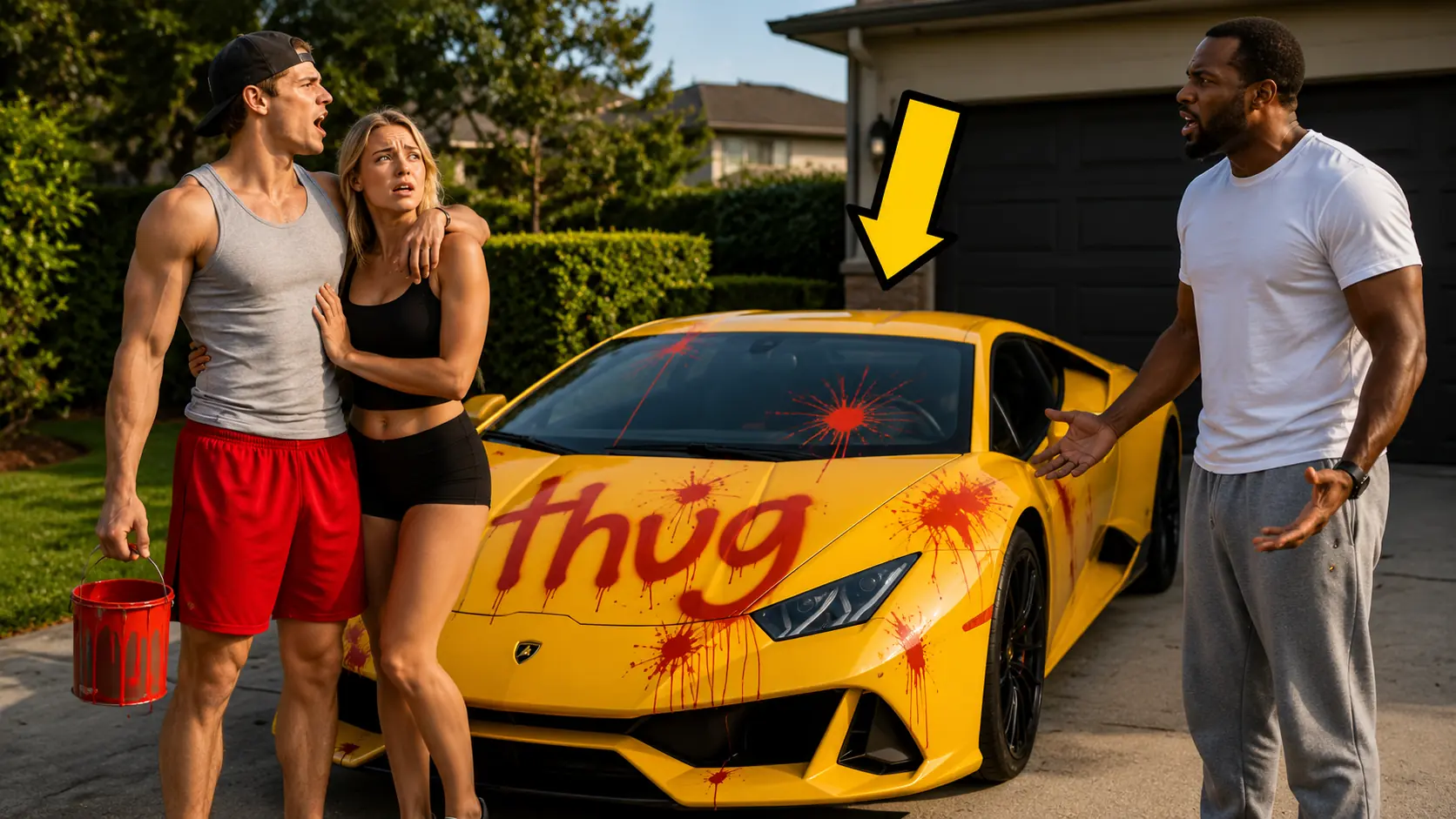
The officers arrived and separated us. The street felt suddenly smaller with the patrol cars parked at angles, lights still flashing. The son claimed he had found the paint can near my driveway. His girlfriend repeated the lie, but she forgot her own phone was still recording. One officer asked to see the video. She refused, clutching the device tighter. The officer looked past all of us toward the houses and asked whether anyone had cameras. That question changed the neighborhood.
People emerged slowly, one by one. First from behind curtains, then from porches, then from garages. Suddenly there was doorbell footage, garage-camera footage, and even a delivery driver’s dash camera from the road. The silence that had protected the family for so long began to crack under the weight of recorded evidence. Every angle showed the same thing. The son walking toward my Lamborghini with paint in his hands that morning. The footage was worse than I expected. He had not acted impulsively. He had spent almost ten minutes damaging the car, painting the hood with deliberate strokes, kicking the side mirror hard enough to crack the housing, and posing for his girlfriend’s camera like he was creating content instead of committing a crime. At one point he turned toward his mother’s porch and grinned, as if seeking approval. His mother had watched from her porch. At one point, she clapped.
When the officer replayed the footage on a tablet in the driveway, she shouted that the video was misleading. Nobody answered her. There was nothing to answer. The camera had done what people were too afraid to do. It had spoken plainly. Her son’s face went pale when the officers placed him in handcuffs. The metal clicked shut with a finality that seemed to echo down the quiet street. He finally stopped laughing when they told him the charge could become a felony because of the repair value. His mother tried another threat. She said she would ruin my reputation, contact my customers, and tell everyone I had framed her son. Her voice rose again, sharp and desperate. I looked at the officer and asked whether he had heard her. He nodded once. My attorney, still on speakerphone, advised me not to respond. That silence infuriated her more than any argument could have. She screamed while her son was placed in the cruiser, but the neighborhood had changed. People had stopped hiding behind curtains. Now they were openly filming her. Phones were raised from sidewalks and doorways. The power dynamic on the street had shifted in real time.
The repair estimate came back at approximately one hundred eighty-four thousand dollars. The paint had seeped into vents, damaged sensors, stained carbon-fiber trim, and ruined the custom protective coating. The kick had cracked the mirror housing and dented the door. Parts had to be ordered from overseas, panels had to be removed with extreme care, sensors recalibrated by specialists, and the finish rebuilt from the base up under controlled conditions. The shop manager called me personally to walk through every line of the estimate. Each number felt like another reminder of how much work had been undone in minutes. My insurer covered the repair, but they made one thing very clear. They intended to recover every dollar. Their adjuster was already preparing the subrogation file. The son’s family was now facing a claim larger than their mortgage.
His mother called me that evening. She did not call to apologize. She called to demand that I immediately withdraw every charge and every claim. Her voice was controlled at first, almost polite. I recorded the call. At first, she offered five thousand dollars if I told the police it had all been a misunderstanding. When I refused, she changed tactics. She cried. She said her son’s future was being destroyed. She accused me of being heartless, of overreacting, of not understanding young people. The performance was polished, the kind that had probably worked on other people before. I reminded her that she had watched him destroy something I had spent years earning. I kept my voice even. Her tone dropped. “You don’t know who you’re dealing with.” My attorney heard every word. The threat sat in the recording like a stone. The next morning, we filed for a protective order and added her call to the intimidation report. The case was no longer only about damaged property. It was now about threats, pressure, and a pattern of trying to silence anyone who stood up to that family. The judge who signed the order did so without hesitation after reviewing the evidence.
Then the family secrets started resurfacing. The son had been expelled from a private school for vandalizing a teacher’s car, but his mother had paid to keep it quiet. He had also damaged rental properties, harassed delivery drivers until companies stopped servicing certain addresses, and threatened a former classmate so severely that the other student’s parents moved him to a different school. Each time, she had pressured victims into silence with a mixture of money, social pressure, and quiet threats about “making things difficult.” My case became the first one they could not bury. As the news spread through local channels and neighborhood groups, two former victims contacted police. Then four more came forward with messages, photographs, repair bills, and recordings. Each story sounded different on the surface—a scratched truck, a broken window, a series of anonymous complaints that cost someone a contract—but underneath, the pattern was the same. He caused harm. She covered for him. People were frightened, paid off, embarrassed, or exhausted until they chose silence. This time, there was too much evidence. The investigators began connecting cases that had previously sat in separate files.
The criminal hearing was where the old version of their power finally started collapsing. His mother entered the courthouse in designer clothes, acting offended that anyone would question her. Her posture was perfect, her expression one of mild indignation. Her son looked smaller without the backwards hat, the smirk, and the girlfriend laughing beside him. He kept his eyes down and his shoulders tight, as if he still expected his mother to fix it somehow. The courtroom was quiet enough that the scrape of chairs sounded loud. The prosecutor played the girlfriend’s video. The courtroom watched him laugh while damaging my car. They heard him mock my business. They saw him pose beside the ruined hood. Then the audio caught his mother telling him to make the letters bigger. Her voice was clear, almost encouraging. Her lawyer objected, standing quickly. The sound was clear. The judge overruled. I did not look at them. I watched the judge’s face harden as every second erased their excuses and exposed deliberate cruelty. The room felt colder.
The girlfriend changed her story before trial. Her parents hired a lawyer and made her cooperate. She admitted the vandalism had been planned after the son saw my car online and became angry that I owned it. He wanted to impress friends by humiliating me. He wanted to prove I did not belong. The planning had started days earlier with texts that were now in evidence. Then she revealed the part that broke their defense entirely. His mother had suggested the word painted on the hood. The son turned toward his mother in disbelief. For the first time, he seemed to understand that she could not protect him anymore. The shield he had hidden behind his whole life had cracked in public. The silence that followed her testimony was thick. The judge denied leniency. He said the attack involved planning, intimidation, prejudice, and extraordinary financial harm. The son received time in custody, years of probation, mandatory counseling, hundreds of community service hours, and a restitution order that would follow him long after release. His license was suspended, and he was banned from contacting me or entering my street. The conditions were read carefully, each one a new restriction on the freedom he had once taken for granted. His mother was charged separately for conspiracy, intimidation, and helping conceal prior offenses. Her confident expression vanished when deputies approached her courtroom chair. The change in her face was sudden and complete.
>>>NEXT CHAPTER 3: Karen’s Spoiled Son Damaged My Lamborghini — Biggest Mistake of His Life<<<