CHAPTER 3: THE COMMUNITY THAT TOOK ITSELF BACK
For exactly 43 days between the August lawsuit filing and the September declaratory judgment, I had been the legal fee simple title holder of every mansion in Vintner's Crest. I had used the title to clean up the chain. I had then given it back. Cornelius Stoll drove out to my ranch the Saturday morning after the declaratory hearing.
He came alone in a silver Audi, in a quarter-zip Patagonia fleece, and the slightly rumpled face of a man who had spent the past 3 weeks not sleeping well. He parked at the foot of my driveway. He walked up. He knocked on my front door.
I opened the door. Ellis, "I'd like 5 minutes if you can spare them."Cornelius, "I'm not going to invite you in, but I'll come out on the porch."I poured a second coffee. I came out. We sat on the two wicker chairs.
He looked at me a long moment. Ellis, "I am not here on behalf of my wife. I am not here on behalf of the HOA. I am not here to negotiate.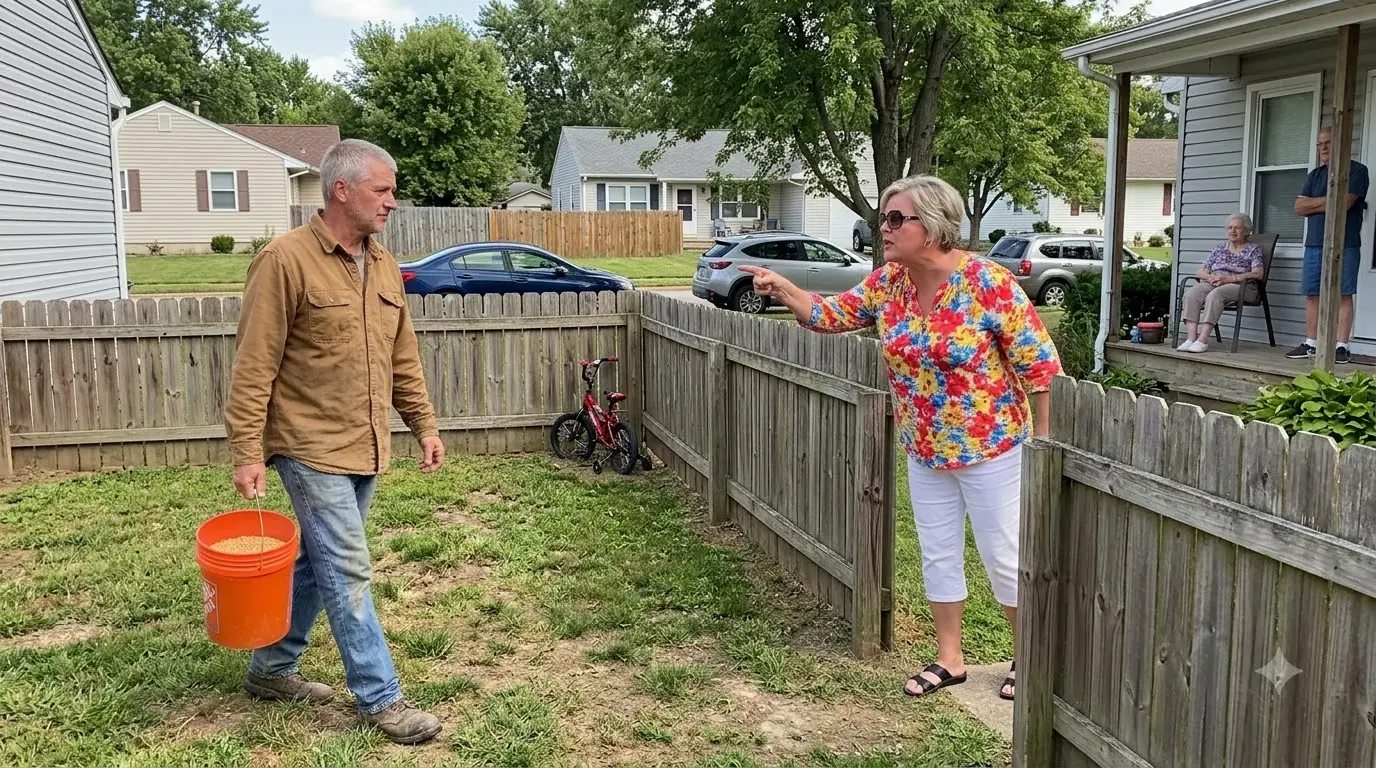
She told me, in her own words, that you needed to be, "made to understand, "that your land was, in the long run, going to become part of the community. I told her that was preposterous. She told me to stay out of it. I stayed out of it.
I should not have."He paused. I am not here to ask for anything. My wife is going to spend several years in federal custody. Our marriage is, by the end of the month, going to be in formal separation.
I have already retained a divorce attorney. I will be leaving Vintner's Crest by the end of the year. Before I leave, however, I wanted to come here personally and apologize. For the lawsuit, for the dinner party in August, for 5 years of not paying attention to what my wife was doing in our HOA.
I should have been a better neighbor. I was not. I am sorry. He took a sip of his coffee.
I was quiet a bit. Cornelius, I appreciate the visit. I appreciate the apology. I will not pretend it changes anything material between our families, but I appreciate that you came in person.
I had to. It was the small thing I could still do. He drank the rest of his coffee. He stood up.
He shook my hand. He walked back to the Audi. Before he got in, he turned and said, "Ellis, the chickens, they were never the problem. You know that.
I know that. The community knows that."He got in the car. He drove away. The federal indictment of Mary Lou Stoll came down on a Tuesday morning in late November.
The US Attorney's Office for the Northern District of California charged her with 12 counts of federal wire fraud, mail fraud, and false statements to a federal entity. The state of California separately charged her with grand theft by embezzlement, perjury on her 4 years of HOA annual reports, and three counts of barratry. She accepted a plea agreement in early February. 4 years federal custody, full restitution of $910,000 to the 38 homeowners, full restitution of $240,000 to me and Ophelia for the original lawsuit costs, permanent ban from HOA or nonprofit service in the United States, and surrender of her California real estate broker's license.
She reported to a women's federal facility in Dublin, California in late March. Cornelius Stoll was not charged. He filed for divorce in October. He sold the Vintner's Crest home in July of the following year under my recorded quitclaim and moved to a smaller property in Carmel.
The Vintner's Crest HOA, under Peter Halverson's leadership, used the $400,000 of federal restitution available immediately to make full reimbursement to each of the 38 homeowners for the 5 years of missing master insurance premiums. By April, every homeowner had received a check for approximately $23,900. By May, the new master insurance policy was in place. The HOA also, by quiet community vote in March, established a small community contribution to the Sonoma County Farm Bureau as a gesture of acknowledgement that the property they all lived on had been, before 1994, a working cattle pasture.
The contribution was $25,000 annually. Deborah suggested at the kitchen island that they name it the Pearl Carrington Memorial Agricultural Fund after my grandmother. Peter accepted the suggestion at the next board meeting by unanimous vote. Meanwhile, the chickens continued to lay eggs.
Deborah continued to trade and sell them. The movable coop continued to roll across the western pasture every 2 weeks. Quill continued to manage the daily ranch operations. The horses continued on their own slow, careful schedule to live and breed and run.
In late February, Captain Peter Halverson drove down to my ranch with a small wooden box. He had hand-carved it himself in his garage workshop over the previous month. He had inlaid the lid with a small mosaic of a hen in profile made from various dark and light woods. He set it on my kitchen island.
He said, "Ellis, the community wanted me to give you something. I asked the homeowners to decide what. They asked me to make this. It is a gift to you and to Deborah for the eggs.
I opened the box. Inside were 36 handwritten notes from 36 homeowners. Each one folded once, thanking us by name for our patience and for the resolution. I read them all that evening at the kitchen island while Deborah cooked dinner.
I did not, until then, fully understand how much my Uncle Reginald's small, forgotten 1996 oversight had given me back to him in the end. The big community clubhouse event was a year and a half after the original lawsuit had been filed. The community had, under Peter Halverson's continuing presidency, planned a small spring festival in the central rose garden for the first weekend of May. Peter called me in March and asked whether Deborah and I would come as the honored guests.
Deborah and I drove up the hill to the Vintner's Crest Clubhouse on the first Saturday of May in the late afternoon. The community had turned the central rose garden into a small festival with white tents, long pine tables, a four-piece bluegrass band from Santa Rosa, and a barbecue catered by a Healdsburg pitmaster who had grown up on a ranch that, by quiet coincidence, my father had often visited in the 1980s. The four-piece bluegrass band played for an hour. Children ran through the rose garden.
Peter gave a brief opening welcome. Then he invited me to the small stage. I had prepared notes this time. I stood at the small podium.
"Good afternoon. My name is Ellis Carrington. Some of you have met me. More of you have, in the last year and a half, read about me.
I'd like to thank Captain Halvorson and his board for inviting Deborah and me here today. I want to tell you about my Uncle Reginald Carrington, who built this community. My uncle was, by family agreement, the unsuccessful brother. My father, Stanton Carrington, fixed small engines at the Healdsburg Airport for 39 years.
He died with $12 in his checking account and a fully owned 200-acre ranch he had never mortgaged. My uncle Reginald was, by contrast, the brother who tried things. He was a real estate developer. He started three small companies.
He failed at two of them. The third one was Carrington Development Corporation, which he founded in 1992 at age 56 after both of his previous companies had collapsed, and after his only marriage had ended in divorce. Carrington Development Corporation was, by my uncle's own description in his journals, which I have in the last 16 months finally read, the project he was building because he wanted, in his words, "to leave behind something that was beautiful, ". He bought 410 acres of former cattle pasture on this hill in 1994.
He designed the original master plan himself at his kitchen table in his small Healdsburg apartment with a pencil and a roll of butcher paper. He hired the original architect from a small firm in Petaluma. He named every street in the community after a wine varietal because, in 1994, he had recently developed a deep enthusiasm for California wines that, by his own later admission, was more enthusiasm than expertise. He sold the first lot in 1996.
He sold the last lot in 2004. He retired in 2009. He died in 2010 at age 74 on Lake Sonoma in a small water skiing accident. He left no children.
He left only the company he had spent his last 15 years building, and the small box of papers in my barn loft that I did not, until last August, open. In the box were the recorded reservations on each of your homes. The reservations were a mistake. He intended to release them as each home closed.
He forgot to do so before he closed his company. He died before he could correct it. I would not, in any other circumstance, have noticed the reservations. They became visible because Mary Lou Stoll last August made the choice to sue me over chickens.
That choice did three things. First, it caused me to read every piece of paper in my uncle's box for the first time. Second, it exposed an embezzlement that had been hidden for 5 years. Third, it cleaned up a recorded chain of title that should have been cleaned up in 1996.
None of those three good outcomes was my doing. All three were the result of a series of small decisions made by people in this community. Thank you all for having Deborah and me today. The chickens send their regards.
The garden applauded. Peter Halverson handed me a small glass of bourbon. He raised his glass. The community raised theirs.
We drank. A year after the spring festival, on a warm afternoon in early September, I sat on my back porch with Deborah and watched two of our quarter horse mares grazing in the western pasture. The pasture, which had been the original subject of Mary Lou Stoll's August lawsuit and her sought-after view easement, was open to the western sun. The chickens were in their movable coop 200 yards off.
The cattle were in the south pasture. The bees were in their hives. The horses were quiet. Mary Lou Stoll was 18 months into her 30-month federal sentence.
She had become, in her second year, a stable and reliable inmate. She had completed two community college courses through the prison education program. She had begun, in February, a small chapel literacy program that taught reading to women who had not been taught. Cornelius Stoll was settled in Carmel.
He had not remarried. He sent a small Christmas card to Deborah and me each December. We had not replied. Peter Halverson was completing his second year as Vintner's Crest HOA president.
The community had, in those 2 years, reduced annual dues by 27%, established a proper master insurance policy, founded the Pearl Carrington Memorial Agricultural Fund that contributed $25,000 annually to the Sonoma County Farm Bureau and added a single new bylaw provision that prohibited the HOA from ever filing a lawsuit against an adjacent non-member landowner without a 2/3 homeowner supermajority vote. Linnea was promoted to senior deputy district attorney in January. She had married her partner Tomas in May in a small ceremony at our ranch. 40 people attended.
Holden gave a short brother-of-the-bride toast. Quill played the violin. Peter Halverson and Greta were on the guest list at Linnea's request. They came.
Peter brought a hand-carved cedar cake server he had made in his garage workshop. Linnea cried when she opened the small wooden box it came in. She has used it since then at every family dinner. Holden was in May accepted into the doctoral program in American history at UC Davis.
He plans to write his dissertation on the social history of California cattle ranching in the post-war era. He has been since January riding out to the ranch on Saturday mornings to interview Quill, who is 26 and a fourth-generation Healdsburg ranch hand, and who has, by Holden's report, been the best primary source interview Holden has yet conducted. We founded two things. The first is the Reginald Carrington Healdsburg Apprenticeship established at Santa Rosa Junior College in my uncle's name. $3,000 a year to a Sonoma County high school graduate going into real estate, land planning, or community development studies.
The first recipient is a 17-year-old young woman named Adrienne Bjornstad from Cloverdale, whose father is a vineyard manager and whose mother is a hospital nurse. The second is the Stanton Carrington Small Engine Apprenticeship established at Healdsburg High School in my father's name in the small engine repair shop where he had volunteered to teach Saturday morning classes for the last 14 years of his life. The first class graduated in June. The chickens continue to lay.
The eggs continue to flow into the tasting room, the volunteer fire department, the high school cooking program, and the homes of Vintner's Crest, which receive a half dozen weekly delivered by Quill on his Saturday rounds with the names of each household on small chalk labels. Peter Halverson receives, by long-standing arrangement, the brown ones. He says they taste better. They do not.
Here is what I learned. A box of papers in a barn loft left untouched for 15 years is sometimes waiting to do exactly the work it was always going to be called on to do. A small frivolous lawsuit against the man's chickens can, by the slow patient working of inherited title and California civil procedure, become the doorway through which a community discovers its own embezzlement and gets cleaned up. And the right thing to do when one is briefly the legal owner of 38 luxury mansions through an accident of probate is to give them back at $1 each and walk back to the kitchen island to drink coffee with one's wife.
END