Chapter 3: When the Dead Woman Returned
Now it was time. An empire does not collapse the moment its founder disappears. It weakens quietly the way a body does when the heart no longer keeps the rhythm. In the first months after Adisola Mensah's presumed death, Mensah integrated holdings looked stable from the outside. Offices opened on time.
Contracts were signed. Press releases spoke of continuity and confidence. Kunlay stepped forward as acting leader. His speeches polished his ambition loud. But those who had worked closely with Adisola felt the absence immediately. Decisions that once took a single phone call now dragged through endless meetings.
Small problems grew into delays. Delays turned into losses and losses once hidden began to surface. Kunlay believed boldness would prove his worth. He approved expansions into unfamiliar regions without proper groundwork. He ignored warnings from logistics managers who spoke of unstable routes and unreliable partners.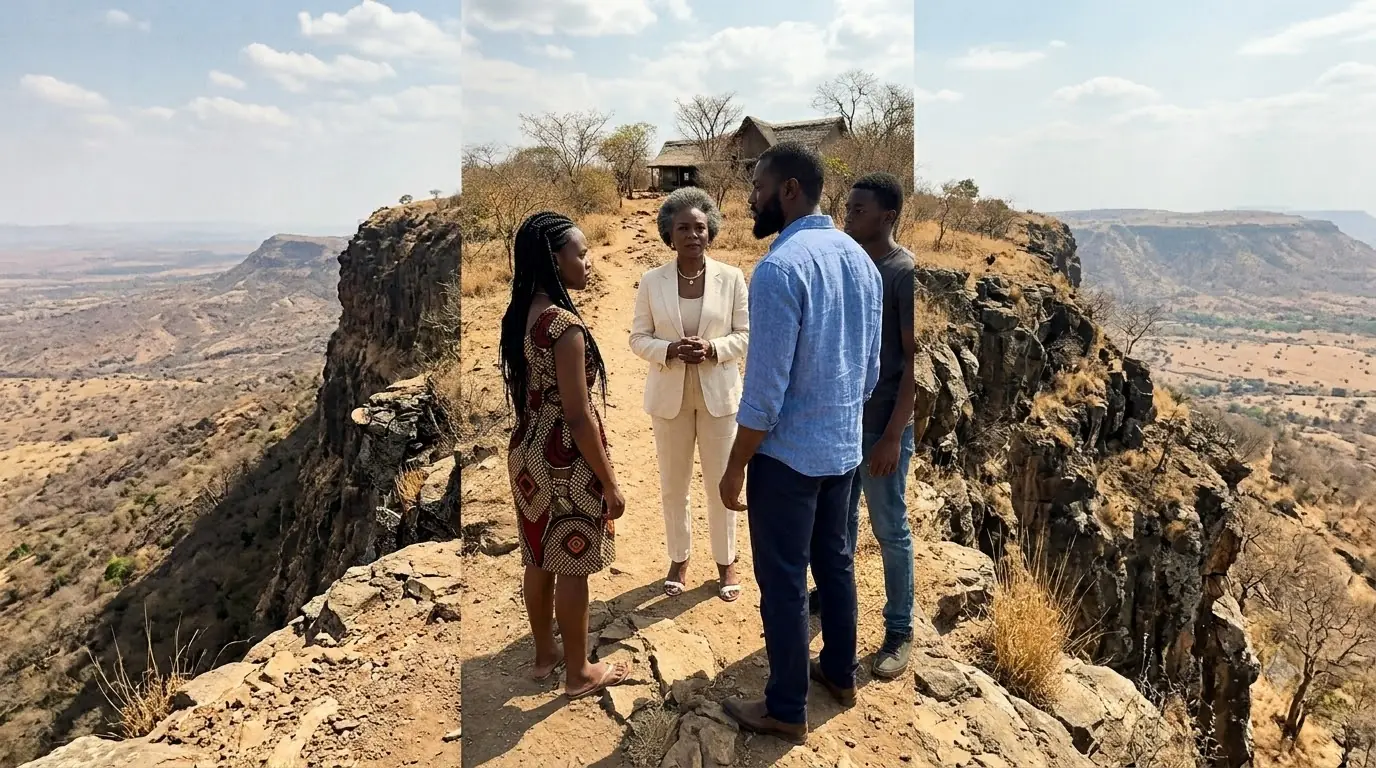
"We can't afford hesitation," he told the board. "Momentum is everything. " Adisala had once said, "The opposite momentum without direction is just speed toward disaster. " Sade took control of finances, or at least tried to. She understood spreadsheets better than people. And for a time, she managed to hide the cracks.
She shifted numbers, reclassified expenses, postponed reports. On paper, the company still breathed, but paper cannot hide truth forever. Suppliers complained of late payments. Farmers called regional offices angry and confused. Employees whispered about salaries arriving days late than weeks.
Tundaiai drifted between departments demanding authority without responsibility. He launched side projects fueled by company money. Each one promising innovation and delivering nothing. When questioned, he deflected blame. No one supports me, he complained. Mother would have.
The irony was lost on him. The board grew uneasy. Adisola had been their anchor. The one voice capable of cutting through noise and ego. Without her meetings became battlegrounds. Kunlay's aggression clashing with Sade's calculation.
Tundaiai's insecurity erupting at the worst moments. Outside the company, the foundation bearing Adisola's name flourished. That truth burned. The Mensah community trust protected by ironclad legal structure began funding schools, clinics, and training centers across rural regions. People spoke of Adisola with gratitude and reverence. Her name appeared in headlines tied to hope.
Meanwhile, the company associated with her children struggled under quiet scrutiny. She cared more about strangers than her own blood. Kunlay snapped one night, slamming a newspaper onto the table. Look at this. Sade read the article without expression.
She cared about responsibility, she said. Tundaiai scoffed. Easy to say when she's gone. The words lingered too long. Guilt crept in unexpectedly late at night in moments of silence.
Kunlay woke from dreams where his mother stood at the edge of the cliff, unafraid, watching him with disappointment rather than anger. Sad found herself rereading her mother's old notes, the margins filled with careful questions instead of commands. Tundaiai drank more, trying to drown the memory of hesitation the second he might have stopped everything and didn't. Still, none of them spoke of that day. They couldn't afford to.
By the 10th month, investors demanded answers. The board called for an external audit. Kunlay resisted citing timing and market perception. Transparency builds confidence, one director insisted. Transparency invites panic.
Numbers told stories she could not silence forever. At the same time, something else unsettled them. Rumors. A woman was being mentioned in circles. They did not control a consultant, a strategist, someone advising cooperatives and small enterprises with uncanny insight.
People spoke of her leadership style with words that felt uncomfortably familiar. She listens first. She asks the right questions. She builds systems, not dependence. Sade heard the whispers first.
She dismissed them as coincidence until a former executive approached her quietly after a conference. She reminds me of your mother, he said. Sade laughed too quickly. That's impossible. But the words lodged themselves deep. Kunlay brushed off the rumors. People love myths, he said.
They want to believe she's still guiding things. Tundaia said nothing. He felt watched in ways he could not explain. Behind the scenes, Adisola observed everything. She attended meetings under her adopted name.
She listened to farmers complain about delayed shipments from her own company. She spoke with employees who no longer recognized her, but still spoke of her with loyalty. They don't respect leadership anymore, one manager said bitterly. They fear it, Adisola took notes. She did not interfere. Not yet. When the audit results leaked partial, but damning the board had no choice.
Emergency sessions were called. Kunlay defended his decisions loudly. Sade argued for restructuring. Tundaiai stormed out twice. The empire did not fall, but it staggered.
Public trust eroded. Share value dipped. Partners hesitated. And through it all, Adisola remained unseen, gathering the final pieces. One evening, Kunlay stood alone in his office city lights flickering below. He stared at his reflection in the glass, adjusting his tie again and again.
This was supposed to be ours, he muttered. Across the city in a modest apartment, Adisola closed a folder filled with evidence, timelines, and witness statements. She looked at the date on the cover. Tomorrow. The empire without its queen had revealed everything she needed to know. And soon it would face her not as a memory, not as a legend, but as a living woman who refused to disappear under the name Amina Adisola learned what it meant to lead without power.
She moved quietly through communities that never appeared on balance sheets, villages where ambition was measured in school fees and harvest yields not profit margins. Here people did not care about titles. They cared about whether promises were kept. Amina arrived without announcements. She sat on plastic chairs under mango trees.
She listened while women spoke of loans that trapped them and middlemen who took advantage of desperation. She watched young men struggled to move produce without storage, losing weeks of work to rot and heat. She asked questions, not the kind meant to impress, but the kind that uncovered patterns. Who decides the price? Where does the truck stop? What happens when the rain comes early? The answers formed maps in her mind.
She began to help carefully, deliberately introducing systems that empowered rather than replaced. Savings groups that rotated leadership, cold boxes built from locally available materials, transparent ledgers kept by people who had never been trusted with numbers before. She insisted on training before funding accountability before expansion. At first, people were suspicious. "You're different," an elder told her.
"Most come with money and instructions. " Amina smiled. "Money leaves when it's done talking," she said. "Sade'stems stay. " Her reputation grew, not loudly, but reliably.
Cooperatives began sharing transport routes. Women negotiated prices together. Losses shrank. Confidence grew and with every success, Adisola felt a quiet reckoning inside herself. She had built an empire once through force of will and discipline.
Now she built something else through patience and shared ownership. The work humbled her. It reminded her that leadership was never about being needed. It was about making yourself unnecessary. At night, she wrote in a notebook lessons she had learned too late the first time.
Power reveals character. Silence teaches more than speech. If people fear you, they will hide the truth. She also prepared for her return. The retired judge reviewed timelines with care. The investigative journalist verified sources without shortcuts.
The former operations director cross-checked financial inconsistencies that aligned with the period after her disappearance. Everything pointed the same way. She didn't slip, the judge said finally. And they didn't just benefit, they orchestrated. Adisola nodded. I don't want a spectacle, she said.
I want the truth to stand. Truth always stands, the journalist replied. But it needs a stage. They planned it carefully. Not a dramatic confrontation at her mansion. Not a public accusation shouted into microphones. Instead, a moment that could not be dismissed, a return that forced accountability. Meanwhile, her children continued unraveling. Kunlay's bravado began to crack as lenders tightened terms.
He argued more, listened less. Sad grew exhausted, her careful calculations unable to keep pace with reality. Tundaiai's projects collapsed one by one, each failure sharpening his resentment. And then came the rumors again, stronger. Now, Amina had advised a regional cooperative that secured a landmark export deal. Amina had helped restructure a failing logistics route, one that Mensah Integrated Holdings had abandoned months earlier.
Amina's methods were being studied by universities. Who is she? Kunlay demanded during a board meeting. No one important, Sade replied too quickly. But when Sade attended a closed forum and saw Amina speak calm, incisive commanding without raising her voice, something inside her recoiled. The cadence, the questions, the way the room leaned in. It was impossible. That night, Sad opened her mother's old files, searching for comfort. Instead, she found notes, plans for community first logistics, cooperative ownership, models, safeguards against internal corruption, plans they had ignored, plans now being implemented by someone else.
By Amina, Sade slept poorly. Dreams returned of the cliff of daylight of silence. Adisola sensed the time drawing near. She visited Bisi and Lani one last time before her public return. They shared a simple meal.
Laughter came easily now, tinged with something like goodbye. You don't owe us anything, Bisi said softly. But you gave us more than you know. Adisolawa took Bisi's hands. You gave me my life, she replied. I will never forget that.
She placed documents on the table. Education funds, housing deeds, business support arranged through trusted intermediaries. This isn't charity, Adisola said firmly. It's partnership. Lani looked up at her.
Will people know who you are now? Adisola smiled. Some will, she said. Others will only know what I stand for. The next morning, she boarded a bus into the city, wearing a tailored jacket and no disguise.
She carried herself the way she always had quietly assured. The city did not recognize her at first. It never does when truth returns without warning. The event was scheduled for noon, a leadership forum on ethical enterprise attended by board members, investors, journalists. Amina was listed as a speaker.
Kunlay arrived irritated already, bracing for criticism. Sad took her seat near the aisle pulse quickening. Tundaiai hovered near the back, uneasy. When Amina stepped onto the stage, the room settled. She spoke plainly about governance, about trust, about what happens when leadership mistakes inheritance for entitlement. Her words were measured surgical, heads nodded, pens moved. Then she paused.
My name, she said, is Adisola Mensah. The room inhaled as one. Faces froze. Murmurs surged. Sade's hand flew to her mouth.
Kunlay stood halfway out of his seat, color draining from his face. Tundai felt the floor tilt beneath him. Adisola continued unflinching. One year ago, I was declared dead. I am not.
She did not accuse. She did not shout. She presented facts, dates, records, testimony. Each one a stone placed carefully into the truth. She spoke of survival, of silence, of preparation. And finally, she spoke of choice.
"I am not here for revenge," she said. "I am here because leadership demands accountability, especially from those closest to us. " The room erupted, not in chaos, but in clarity. Cameras flashed. Journalists leaned forward.
Board members exchanged looks that said, "It's over. " Adisola looked toward her children, not with anger, not with triumph, but with a calm that cut deeper than either. "A new name taught me a new purpose," she said. "Now the truth can do its work. " The room did not explode into noise the way people expected.
It froze. Cameras hovered in midair. Reporters holding their breath as if a sudden sound might shatter the moment. Board members stared at the woman on stage alive, composed undeniably real, while security staff glanced uncertainly at one another, unsure whether to move or stand still. Adisola Mensah remained where she was, hands relaxed at her sides, eyes steady.
She had not returned with drama. She had returned with facts. Kunlay was the first to find his voice. This this is impossible, he said, stepping forward, his tone wavering between outrage and panic. You were declared dead.
There was an investigation. There was an assumption, Adisola replied calmly. Not an investigation. Her voice carried without effort, cutting through the murmurs that had begun to ripple across the hall. Sade stood slowly, her chair scraping against the floor. Her face had gone pale, the carefully maintained composure cracking at the edges.
Mother, she said the word sounding unfamiliar on her tongue. Why are you doing this here? Adisola turned to her. Because truth belongs where decisions are made, she said. And because silence has already cost too much. Tundaiai did not stand. He could not.
His hands trembled in his lap, memories crashing over him. The shove the fall the way he had looked away. Tears welled before he could stop them. The moderator attempted to regain control. "Madame Mensah," he said cautiously.
"Perhaps this session. " "No, Adisola interrupted gently. " "This session is exactly where it should be. " She nodded to the retired judge seated near the front. He rose his presence commanding respect without spectacle.
What you are witnessing, the judge said, is not a performance. It is a disclosure. Evidence has been submitted to the appropriate authorities. This form was chosen to ensure transparency, not accusation. Files appeared on the screen behind them.
Timelines, call records, financial transfers, inconsistencies in lodge reports. Each slide landed like a quiet verdict. Kunlay shook his head violently. You're twisting things, he said. We loved you.
It was an accident. Adisola's gaze did not leave him. If it was an accident, she asked softly. Why did no one come looking for me? The question hung unanswered. Sade's voice broke.
We thought we thought you were gone. Adisola said, "You decided I was gone. " The audience shifted the weight of the moment, pressing down. Journalists typed furiously. Phones buzzed with messages spreading the news faster than any official statement ever could.
Adisola took a step forward. I am not here to reclaim titles, she said. I am here to reclaim truth. She turned to the board. Mensah Integrated Holdings does not belong to my name alone.
It belongs to the people who trusted us, farmers, workers, partners. They deserve leadership guided by responsibility not fear. The board chair cleared his throat. Madame Mensah, he said, choosing his words carefully. The board will convene immediately.
Adisola nodded. As it should. Security moved not toward her, but toward the exits. The authorities had arrived quietly summoned long before the forum began. They did not grab or shout. They observed.
They documented. Kunlay backed away slowly, his confidence evaporating. "You planned this," he whispered. "Yes," Adisola replied. "Because chaos helps no one.
" Sade sank back into her chair, face in her hands. For the first time since childhood, she looked small. Tundaiai finally stood. He walked toward his mother, each step heavy. I should have stopped it, he said, tears spilling freely.
Now, I didn't push you, but I didn't stop them. Adisola looked at him for a long moment. That she said quietly is something you will have to live with. The words were not cruel. They were honest. As the forum adjourned, the hall erupted not into anger but into urgent motion. Reporters rushed for statements.
Lawyers whispered into phones. Board members clustered together. Adisola stepped away from the stage, escorted not by guards, but by those who recognized authority when they saw it. Outside, the sun was high. Life continued.
Kunlay was questioned. Sade was questioned. Tundaiai was questioned. No handcuffs yet. Just facts meeting daylight.
By evening, the story dominated every channel. Billionaire mother returns from the dead truth emerges in attempted murder case. Empire faces reckoning. Adisola did not give interviews. She returned to a modest apartment prepared for her, surrounded by files and silence.
The city buzzed, but she felt calm. That night, she slept without dreams. The next morning, she visited the foundation offices, not as a symbol, but as a worker. She spoke with staff reviewed programs, approved expansions rooted in accountability. When asked about her children, she answered simply, "The law will do its work. " Days later, the board announced interim leadership experienced ethical independent. Kunlay was suspended pending investigation.
Sade stepped down voluntarily. Tundaiai entered counseling as part of a cooperation agreement. The mansion remained quiet. Ada Sola visited once briefly. She walked through rooms filled with echoes and paused at the family photo on the wall.
She did not remove it. She did not add to it. Some stories she knew must remain unfinished. As she left, she locked the door behind her, not out of anger, but acceptance. Her return had not been about reclaiming a throne. It had been about restoring balance. And for the first time since the cliff, Adisola felt something close to peace.
Truth does not arrive all at once. It advances document by document, voice by voice, until denial has nowhere left to stand. In the days following Adisola Mensah's return, the city shifted into a different rhythm. Court filings replaced press releases. Subpoenas replaced invitations.
The spectacle faded and the work began. Investigators moved quietly but decisively. Phones were examined. Emails recovered. Financial trails mapped.
The lodge staff were interviewed again. This time without pressure, without whispered instructions about what to forget. One by one, small inconsistencies turned into a pattern too precise to ignore. Kunlay's version of events unraveled first. He had insisted that Adisola slipped during a family walk, but call logs showed frantic messages sent before the emergency call messages that contradicted the timeline he had sworn to.
GPS data placed him closer to the cliff's edge than he admitted, and a deleted voice note recovered from cloud storage revealed a moment of raw panic. She's not moving, the voice said. What do we do? The question alone told a story. Sade's involvement emerged differently, cleaner, quieter, more deliberate.
Financial records showed payments to a lodge supervisor weeks before the trip labeled as consulting fees. Witnesses recalled her insistence that security be minimized, that routes be changed, that staff rotate shifts. She was very specific. One employee testified, too specific. Email surfaced carefully, worded indirect but unmistakable in intent.
We need privacy, no interruptions. Family matters. Sade watched the evidence pile up from behind a glass partition, her expression locked somewhere between shock and resignation. She did not cry. She did not argue.
She stared at the table as if studying a puzzle she had failed to solve. Tundaia's role was the most painful to reveal. He had not pushed. He had not planned, but he had known something was wrong. Text messages showed him asking questions days before the trip questions that went unanswered.
A message sent hours after the fall, never delivered read. "This is not what I agreed to. " The investigators looked at him with measured eyes. "Why didn't you come forward? " one asked.
Tundai's voice cracked. Because I was afraid, he said, and because I thought it was already too late. The law does not reward fear, but it considers truth. As proceedings advanced, Adisola remained largely absent from public view. She met with prosecutors privately, answered questions carefully, and refused opportunities to shape the narrative in her favor. This is not my trial, she said firmly. It's theirs.
Still, when she did speak, people listened. At a closed hearing, she described the walk to the cliff. Her children's voices, the sudden shift in tone, the moment she realized words were no longer enough. I did not fall, she said. I was pushed.
She did not name who. She did not need to. Her restraint spoke louder than accusation ever could. Public reaction followed a familiar arcshock anger grief. Commentators debated motives.
Strangers argued online about justice and forgiveness. Some demanded harsh punishment. Others searched for explanations that might soften the blow. How could children do this to their own mother? Adisola refused to answer that question.
Meanwhile, the board of Mensah Integrated Holdings released a statement acknowledging failures and oversight and announcing sweeping reforms. Independent leadership was installed. Safeguards were strengthened. The company pledged cooperation with authorities and transparency with stakeholders. For many employees, the reckoning was bittersweet.
"We always knew something was wrong," a warehouse supervisor said quietly to a reporter. "We just didn't know how wrong. " The foundation continued its work uninterrupted by design. Its structure had protected it from the storm. Clinics opened.
Schools expanded. Farmers received training. In villages far from the city, Adisola's name remained synonymous with help not scandal. That contrast cut deeply. Kunlay faced the cameras once, just once before his lawyers intervened. His confidence was gone, replaced by exhaustion and disbelief.
"She's destroying us," he said hoarsely. Adisola did not respond. Sad issued a written statement accepting responsibility for errors in judgment without naming the crime itself. The public saw through it. The court did not.
Tundaiay entered a plea agreement offering full cooperation in exchange for leniency. He spoke openly of guilt of cowardice of regret that came too late. I thought silence would protect us. He said it only buried us. The day charges were formally announced, the courtroom filled quietly.
No shouting, no spectacle, just the steady presence of consequence. Attempted murder, conspiracy, obstruction at sat in the back row, unobtrusive hands folded in her lap. She did not look at her children as the charges were read. She stared straight ahead, breathing evenly. Afterward, as reporters surged forward, a single question cut through the noise.
Madame Mensah, a young journalist, asked, "Do you forgive them? " Adisola paused. Forgiveness was a word people used carelessly. She had learned often as a shortcut around accountability. I forgive myself, she said finally, for believing love would be enough. Then she walked away.
In the weeks that followed, the truth settled into public memory, not as a scandal, but as a warning. Universities discussed it in ethics courses. Faith leaders spoke of it from pulpits. Parents whispered about it at dinner tables. Power without character, they said, eats its own.
On a quiet afternoon, Adisola visited the cliff. She stood at a safe distance. This time the land unchanged the sky, as clear as it had been that day. She placed a small stone near the path, not as a marker of death, but of survival. "This is where you learned," she said softly to herself.
"Not where you ended. " She turned away without looking back. Truth had done its work. What remained was choice. What to do with the life she had been given back.
Justice arrived quietly the way Dawn does, without applause, without asking permission. The courts moved forward with steady discipline. Hearings were scheduled. Evidence was reviewed. Arguments were weighed.
There were no shortcuts. No favors hidden behind old names. Addis insisted on that. When prosecutors suggested expediting certain processes because of her status, she declined. Let the law walk at its own pace, she said. Rushing truth only creates shadows.
Kunlay's case advanced first. The weight of evidence pressed in from every side digital records. Witness testimony. The recovered voice note that captured panic instead of concern. His lawyers argued for misinterpretation, for stress, for family conflict gone tragically wrong. But the facts refused to bend.
In court, Kunlay looked smaller than he ever had behind podiums and cameras. The confidence that once filled rooms had evaporated. When asked to speak, he tried to sound composed, but bitterness leaked through. "She raised us to be strong," he said. "She shouldn't be surprised we acted. " The judge's response was calm and firm.
Strength without restraint is not leadership. He said it is recklessness. Sade's proceedings followed. Hers were quieter, more technical spreadsheets and schedules, permissions and payments. She listened without interruption as her decisions were laid bare, each one a brick in a path she had chosen deliberately. When it was her turn to speak, she surprised everyone.
I believed I was protecting our future, she said. I told myself I was correcting an imbalance. I was wrong. Her voice did not tremble. Regret sat in it like a settled thing.
Tundaiai's case was the most painful to watch. He took responsibility without argument, recounting the moment he chose silence over courage. His cooperation mattered. The court acknowledged it. Remorse does not erase harm, the judge said, but it informs accountability.
Sentences were handed down carefully. Proportionate, deliberate, not vengeance, not spectacle. Consequence. Adisola did not attend every session. When she did, she sat quietly, never seeking the camera, never reacting outwardly to outcomes. People expected satisfaction, perhaps relief.
What they saw instead was restraint. After the final ruling, a reporter approached her outside the courthouse. "You could have destroyed them completely," the reporter said. "Why didn't you, Adisola, considered the question? " Destruction is easy, she replied.
It's rebuilding that takes discipline. She turned away, leaving the question unanswered in the air. In the weeks that followed, she made decisions that surprised many. She did not reclaim the mansion. She donated it to be converted into a leadership institute focused on ethics, governance, and community enterprise.
Its halls would no longer echo with entitlement, but with debate and learning. She did not resume her role as CEO. Instead, she confirmed the independent leadership team, granting them full authority and clear boundaries. Institutions must outgrow their founders, she said. Otherwise, they fail when founders fall. She did not erase her children from history.
Their names remained part of records, not as heirs, but as a cautionary chapter. Privately she met with each of them once. Kunlay arrived, guarded eyes hollow. He expected anger. He expected lectures.
He received neither. I won't visit you, Adisola said plainly. And I won't speak against you. Your choices will speak long after my voice is gone. Kunlay swallowed hard. Do you hate me?
Adisola shook her head. No, she said. Hate would mean you still define me. Sade's meeting was brief. They spoke of systems of decisions of the cost of believing intelligence alone could replace conscience.
You were always capable. Adisola said, "You just chose control over care. " Sad nodded once tears finally breaking through. "I don't expect forgiveness. " "You shouldn't," Adisola replied.
"You should expect honesty. " Tundaiai wept openly. He apologized again and again, words tumbling over each other in desperation. Adisola listened. When he finished, she placed a hand on the table between them. "Live in a way that doesn't require silence," she said.
"That's all I can give you. " After that, she closed the door gently, firmly on that part of her life. She returned her focus to the foundation and the communities she had learned from while hidden. She elevated leaders from within those spaces, refusing to sit at the center. She insisted on audits, on term limits, on succession planning. When you love something, she told her team, you plan for a future without you.
The public narrative shifted. What had begun as a shocking return from presumed death became something else, a case study and restraint. Schools invited her to speak not about survival, but about systems. Churches asked her to talk not about forgiveness but about boundaries. Businesses sought her counsel on governance, not growth alone. And always she declined excessive praise.
Put it where it belongs, she said, on the work. One evening, as the sun lowered itself behind the city skyline, Adisola sat on a simple balcony. A cup of tea warming her hands. Bisi called to check in. Lani had started school and was thriving.
The cooperatives were expanding on their own. You sound lighter, Bisi said. I am, Adisola replied. Justice can do that when it's not mixed with revenge. She had learned that justice without revenge does not numb pain.
It clarifies it. It draws lines that protect the living and honor the truth. It refuses to let anger decide the future. As nightsettled, Adisola opened her notebook and wrote one final line. Mercy without accountability is permission. Accountability without mercy is cruelty.
She closed the book. The chapter was not healed, but it was whole. And that was enough. The last choice Adisola Mensah made was not written in any court document, board resolution, or public announcement. It was quieter than all the others. Months had passed since the verdicts.
The noise had faded. No more breaking news banners. No more urgent debates. Life had settled into a new rhythm, one shaped by consequences rather than chaos. Adisola now lived in a modest house on the edge of the city.
No gates, no armed guards, just space light and mornings that began without alarms. She worked fewer hours but with greater intention. Every decision she made now was guided by a single question. Does this build people or does it control them? One afternoon, she received three letters.
They arrived on the same day, delivered by the same courier, each envelope bearing a familiar handwriting she had not seen in a long time. Her children. She did not open them immediately. Instead, she brewed tea and sat by the window watching people pass vendors calling out prices, children running barefoot. A woman laughing into her phone. Ordinary life continuing as it always had, indifferent to her pain and her power alike. When she finally opened the first letter, Kunlay's words were stiff formal.
He spoke of regret in careful phrases of lessons learned of time lost. He did not ask for forgiveness. He asked for understanding. The second letter from Sade was longer, precise, honest. She acknowledged the choices she had made without excuse dissecting them the way she once dissected balance sheets.
She wrote of shame, not the kind that hides, but the kind that forces reflection. The third letter was Tundaies. It was messy, ink smudged, lines crossed out and rewritten. He apologized without structure, without restraint. He spoke of fear of cowardice, of knights haunted by the sound of falling.
He asked not for pardon, but for a chance to live differently. Adisola folded the letters carefully and placed them back on the table. She did not cry. She had done enough of that in the past year alone, unseen when tears were necessary but useless. Instead, she thought she thought of the cliff. She thought of Bisi and Lani.
She thought of the young leaders now running projects without her name attached. She thought of the woman she had been before the fall, certain commanding exhausted. And she thought of the woman she was now. Forgiveness, she realized, was not a single act. It was a boundary with a door not always open, not always closed, but deliberate. A week later, she wrote back three letters, three different answers to Kunlay.
She wrote briefly. She acknowledged his regret but made no promises. Understanding that she wrote comes after accountability has reshaped behavior not before. To Sade, she wrote with clarity. She recognized her honesty and encouraged her to continue the work of self-examination.
Intelligence without humility, she wrote, is only another form of blindness. To Tundaiai, she wrote the longest letter. I cannot undo what you allowed she wrote. But I can choose not to define you only by your worst moment. Live in a way that makes silence unnecessary. That will be our beginning. Nothing more, nothing less.
She sealed the envelopes and sent them without ceremony. That was her final choice as their mother. Not reconciliation, not rejection, but distance shaped by truth. In the months that followed, Adisola focused on legacy not as inheritance, but as impact. She formally stepped away from all executive influence, retaining only an advisory role in the foundation she had designed to survive without her. She insisted on annual independent reviews. She trained successors then stepped back again. When asked why she did not return fully to power, she answered simply, "Because power nearly became the reason I died.
She spent time teaching not from stages but in small rooms. She spoke to young women about resilience to young men, about restraint to families, about boundaries disguised as love. One evening, she visited the leadership institute housed in her former mansion. Students filled the rooms where her children once argued over entitlement. She stood quietly at the back listening to a debate about ethics and succession planning.
A young woman raised her hand and said, "Leadership fails when people confuse access with ownership. " Adisola smiled. That night, she walked through the empty halls alone. At the front entrance, she paused and looked back, not with longing, but with closure. The cliff no longer appeared in her dreams. In its place came something else.
Wide land open paths, unfinished work. She had survived betrayal. She had faced truth without flinching. She had chosen justice without revenge. And now she chose peace without forgetting. Somewhere in the city, her children lived with the consequences of their choices.
Somewhere else, communities thrived without knowing her full story. Somewhere further still, a boy named Lani studied hard, unaware of how deeply his kindness had changed the course of a powerful woman's life. Adisola Mensah did not return to reclaim what was taken from her. She returned to decide who she would become after everything was stripped away. And in that choice she found something inheritance could never buy freedom. Life does not test us when everything is easy.
It tests us when love, power, and fear collide. This story reminds us that kindness without boundaries can invite betrayal and power without character can destroy its own roots. True strength is not found in revenge but in the courage to choose truth even when it costs us the people we love most. Adisola's journey teaches us that inheritance is not what we leave behind but what we live out every day. Integrity, accountability and compassion guided by wisdom.
Forgiveness does not mean forgetting and justice does not require cruelty. Sometimes the bravest choice is to walk forward without carrying hatred with us.
END