Clockwork’s Recovery After 22 Months in the Shelter
Reader Theme:
Font Size:
24px
Clockwork’s Recovery After 22 Months in the Shelter
PART 2 — CURRENT CONDITION UPDATE
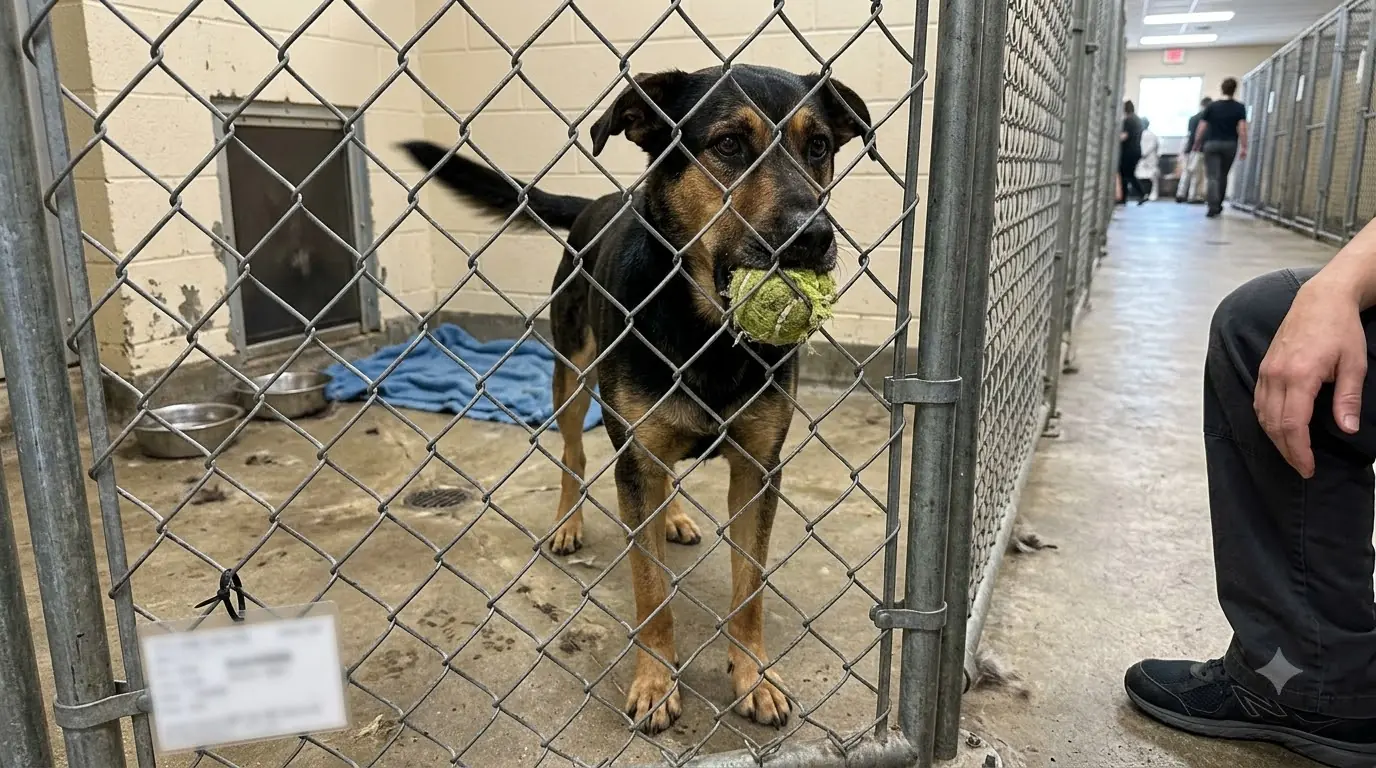
Clockwork is now living in a medical foster home after being diagnosed with exocrine pancreatic insufficiency, commonly called EPI. His condition is stable, and he has begun responding to treatment, but rebuilding the weight and muscle he lost will require time, consistency, and repeated veterinary monitoring.
EPI occurs when the pancreas no longer produces enough digestive enzymes. Those enzymes normally break food into nutrients that the small intestine can absorb. Without them, a dog may eat large meals and still lose weight because much of the food passes through the body without being properly digested.
German Shepherds are among the breeds more commonly affected by this condition. In many cases, the enzyme-producing portion of the pancreas gradually shrinks. The process may begin long before the symptoms become severe enough to attract attention.
Clockwork’s shelter records showed that his weight had fluctuated for more than a year. He sometimes gained a pound or two after his food portions were increased, only to lose it again. His appetite remained strong, so his thin appearance was initially attributed to kennel stress and constant movement.
Staff also noted intermittent soft stool. Because the symptoms improved temporarily with diet changes, parasites and food sensitivity were considered more likely. Routine fecal examinations did not identify a persistent parasite infection.
By the time our team examined him, Clockwork had lost considerable muscle over his hips, spine, and shoulders. His ribs were too easy to feel beneath his coat, even though his abdomen sometimes appeared full after eating. He seemed hungry again soon after finishing a meal.
The veterinary team ordered a specialized blood test that measures trypsin-like immunoreactivity. Clockwork’s result was extremely low, confirming that his pancreas was not producing an adequate supply of digestive enzymes.
Another test showed a severe cobalamin, or vitamin B12, deficiency. Dogs with EPI frequently struggle to absorb this vitamin, and bacteria within the intestine may consume part of what remains. Low cobalamin can worsen diarrhea, weight loss, weakness, and poor response to treatment.
Clockwork began receiving pancreatic enzyme powder with every meal. The powder is mixed thoroughly into moistened food before he eats. It must accompany each serving because his body cannot reliably digest the meal without it.
The correct amount is important. Too little enzyme may leave food poorly digested, while unnecessary excess can irritate the mouth and increase treatment costs. His foster caregiver measures every dose and records his meals, stool quality, appetite, and weight.
During the first few days, Clockwork hesitated because the enzyme changed the smell and texture of his food. His caregiver introduced it with a familiar canned food and allowed the mixture to moisten before serving. By the third meal, he ate the entire portion.
He now receives several smaller meals instead of one or two large servings. This reduces the amount his digestive system must process at once and gives the enzyme more opportunity to work effectively. His total daily calories are carefully calculated to promote gradual recovery.
Clockwork is also receiving cobalamin supplementation. The initial plan includes scheduled injections because his intestinal absorption is unreliable. His caregiver brings him to the clinic for each dose, though oral supplementation may be considered later if repeat testing shows an adequate response.
He tolerated the first injection without difficulty. Afterward, he accepted a treat and placed one paw against the technician’s knee. His energy has improved gradually since treatment began, though it is too early to know how much of that change is directly related to the vitamin replacement.
His stool was pale, bulky, and poorly formed during the first days in care. This is common when food passes through the intestine without adequate digestion. Within a week of starting enzymes, the volume decreased and the color became more normal.
He still has occasional soft stool, particularly if his meals are served too close together or if he receives unfamiliar treats. For now, all treats are taken from his approved diet, and no table food is offered.
Clockwork’s weight is checked weekly on the same clinic scale. Frequent daily weighing would reflect normal changes in hydration and stomach contents rather than true progress. The team is looking for a steady upward trend over several weeks.
He has gained a small amount since treatment began. More importantly, he is no longer losing weight despite receiving slightly smaller total portions than he ate at the shelter. This suggests that his body is finally absorbing more of the nutrition placed in his bowl.
His ribs remain prominent, and the muscles along his back are still thin. Visible physical recovery will take longer than the improvement in his stool. The veterinarian has cautioned against overfeeding him in an attempt to produce rapid weight gain.
Too much food could overwhelm his digestive system and worsen diarrhea. Clockwork’s calories will be increased only as his stool remains stable and his body demonstrates that it can use the additional nutrition.
Bloodwork showed mild anemia and low protein levels consistent with chronic malabsorption. His kidney and liver values were acceptable, and there was no evidence of diabetes. Those findings are reassuring but will be repeated after several weeks of treatment.
A urine test showed appropriate concentration and no serious infection. His heart and lungs sounded normal, and chest X-rays did not reveal a mass or advanced disease. The medical team found no evidence that an unrelated systemic illness was responsible for his weight loss.
EPI sometimes occurs alongside chronic inflammation or bacterial imbalance within the small intestine. Clockwork’s initial response to enzymes has been good enough that the veterinarian is not adding multiple medications at once. Treating too many possibilities simultaneously would make it difficult to know which therapy is helping.
If his stool remains abnormal or his weight stops improving, further testing may be needed. The team could evaluate his intestinal bacteria, folate level, food tolerance, or signs of inflammatory bowel disease. An antibiotic or diet change would be considered only if supported by his response and test results.
Clockwork’s skin and coat were also affected by poor nutrient absorption. His coat was dry, coarse, and shedding unevenly. The skin along his lower back had developed flakes, and the fur behind his thighs was thin.
Skin samples did not reveal mange mites or a severe bacterial infection. Flea prevention was administered, and a gentle medicated wash was used to remove accumulated oil and debris. His caregiver brushes him in short sessions to avoid irritating the dry skin.
The coat has not yet regained the fullness expected of a healthy German Shepherd, but the flaking has decreased. Fine new hair is beginning to appear along his thighs. Full improvement may take several months because hair growth depends on consistent nutrition.
Clockwork also had areas of redness between his toes. He likely licked them during periods of stress or digestive discomfort. The paws are cleaned after walks, and his caregiver redirects licking with quiet scent activities.
There are no deep cracks or infected wounds. The redness has faded, and Clockwork spends less time chewing his feet at night. If the problem returns after his overall health improves, environmental allergies may be investigated separately.
His teeth showed moderate tartar but no urgent abscess. The veterinarian found minor irritation along his gums that may have been worsened by the powdered enzyme contacting the tissues before being fully mixed into food.
His caregiver now makes sure the powder is thoroughly blended into a moist meal. Clockwork’s mouth is checked regularly for redness, ulcers, drooling, or discomfort. No new irritation has developed since the feeding method was adjusted.
A professional dental cleaning will be considered after his weight, protein levels, and vitamin status improve. Elective anesthesia is not necessary while his body is still rebuilding from chronic malnutrition.
Clockwork’s movement is limited by weakness rather than a major orthopedic injury. X-rays showed mild arthritis in his hips but no severe dysplasia, fracture, or spinal instability. Much of the hollow appearance around his hindquarters comes from lost muscle.
During his first foster-home walk, he moved eagerly for several minutes and then slowed abruptly. His back feet began scuffing the pavement, and he looked toward his caregiver instead of continuing. The walk ended immediately.
He now receives several short outings on level ground. These are intended for gentle conditioning rather than tiring him. His caregiver avoids steep hills, long stairways, and slippery surfaces.
Nonslip rugs create secure paths through the home. Clockwork has an orthopedic bed low enough for him to step onto without jumping. A support harness is available, though he currently rises and walks without assistance.
A rehabilitation specialist has introduced controlled weight shifts and slow sit-to-stand movements. Clockwork can perform only a few repetitions before resting. The goal is to rebuild stability gradually while his nutrition improves.
His stride has become more confident, and he no longer appears exhausted after every bathroom trip. He still needs time before attempting normal-length walks. Adding muscle faster than his body can support it would create pain and increase the risk of injury.
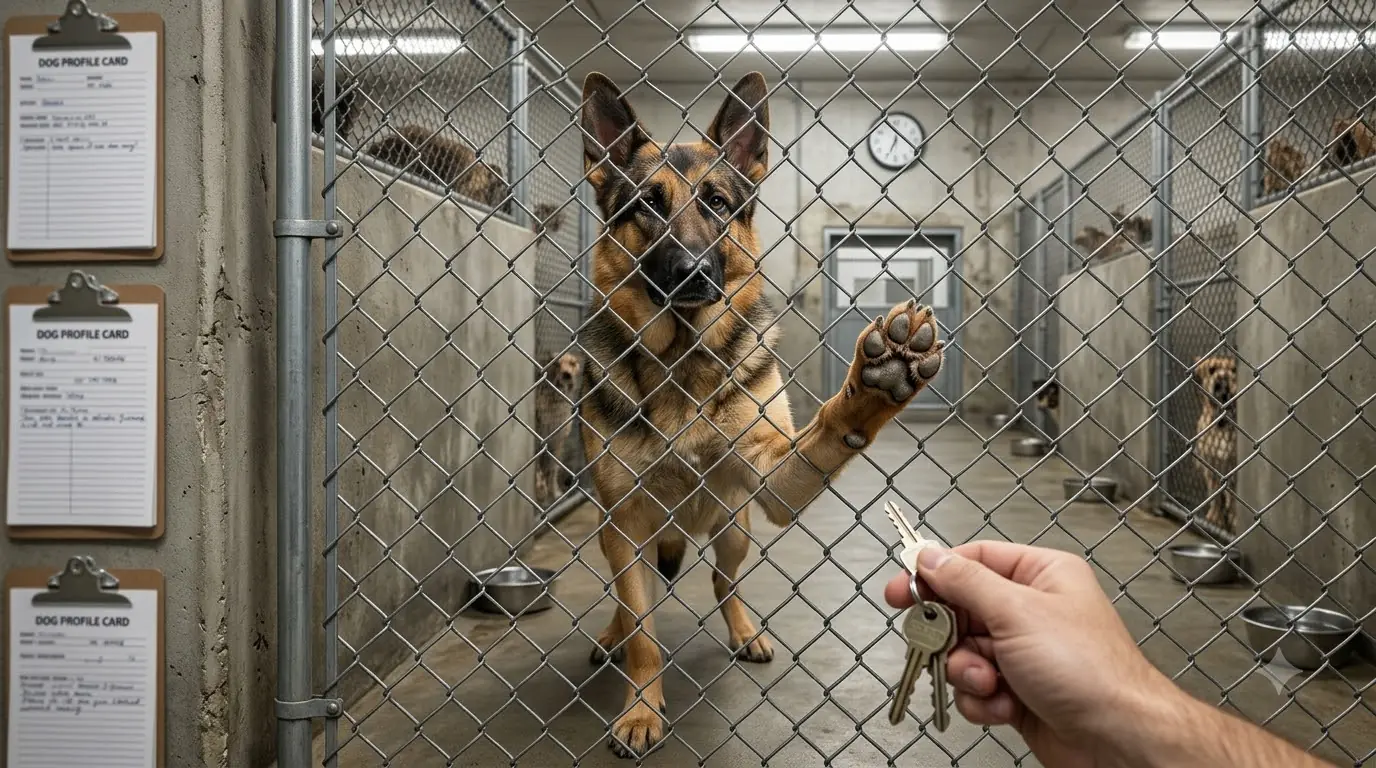
Emotionally, Clockwork has carried his shelter routine into the foster home. During the first morning, he woke before the household and walked to the front door. At almost exactly 7:00, he lifted one paw and rested it against the glass.
The same thing happened the following day.
No one knows what 7:00 once meant to him. It may have been the time a former owner returned, the time shelter staff began morning rounds, or simply the hour when footsteps regularly appeared in the hallway. Whatever its origin, the routine seems to help Clockwork organize an uncertain world.
His foster caregiver does not punish or interrupt the behavior. At 7:00, she quietly approaches, attaches his harness, and takes him outside for a brief walk. This predictable response has turned the ritual into a safe part of his new schedule.
Clockwork still raises his paw at the door, but he no longer holds it there for several minutes. After his caregiver appears, he lowers it and waits for the harness. His body is less tense, and his tail now moves slowly while she prepares.
He watches clocks, appliances, and household movement with unusual concentration. He learns meal times quickly and begins waiting near the kitchen several minutes before food is served. Because intense hunger was part of his illness, his caregivers are careful not to interpret all food-seeking as a behavioral problem.
As treatment improves digestion, the frantic edge around meals has begun to soften. Clockwork still eats eagerly, but he can now wait on a mat while the bowl is placed on the floor. He no longer circles the counter after finishing.
Puzzle feeders are used only with fully prepared, enzyme-treated food. Dry kibble cannot be scattered casually because every meaningful portion must include the medication necessary for digestion.
His caregiver places small amounts of the prepared meal into a slow feeder or simple food toy. Clockwork works carefully and remains occupied without consuming extra calories.
During his first week, he followed his caregiver everywhere. If she entered another room, he rose immediately, even when he had just settled. After nearly two years in a kennel, he seemed unable to trust that a person would remain nearby unless he maintained visual contact.
The family began teaching him to rest on his bed while someone moved around the room. The exercises were extremely brief. The caregiver took one step away, returned, and rewarded Clockwork before he became worried.
He can now remain on the bed while she crosses the living room or walks into the adjacent kitchen. His ears track her movement, but he does not always stand. Sometimes he lowers his head again once he hears her voice.
Clockwork is reserved with strangers. He does not rush forward or bark continuously. He stands upright, watches their posture, and waits for them to make the first mistake or the first safe choice.
Visitors are asked to turn slightly sideways and avoid reaching over his head. If they remain calm, Clockwork approaches, smells their hands, and steps away to consider them. On a second or third meeting, he often recognizes the person immediately.
One volunteer who visited him regularly at the shelter came to the foster home. Clockwork watched her through the doorway, then walked forward and lifted his right paw. Instead of placing it on the gate, he rested it gently on her forearm.
He remained beside her for several minutes before returning to his bed. The interaction confirmed that the familiar paw gesture is not only connected to doors or time. It is also one of the ways he asks for contact.
Clockwork enjoys having his chest and shoulders rubbed but remains uncomfortable when someone hugs him. He will turn his head away or step backward if contact becomes too restrictive. His caregivers respect those signals and allow him to leave.
He has begun sleeping more deeply. At the shelter, morning noise started early and continued throughout the day. In foster care, Clockwork initially woke whenever a cabinet closed or footsteps crossed the hall.
He now sleeps on his side for several hours at night. His ears still rise at unfamiliar sounds, but he can settle again without walking to the door. On cool afternoons, he rests in a patch of sunlight near the window.
Clockwork has been introduced to one calm adult dog during a parallel walk. Both dogs remained on harnesses with several feet between them. He showed curiosity but no lunging, stiff posturing, or prolonged staring.
A later greeting through a secure barrier was equally uneventful. Direct interaction will progress slowly because Clockwork is physically weak and should not be involved in rough play. His compatibility with cats and young children remains unknown.
The next medical milestone will be repeat bloodwork and cobalamin testing. His protein levels, red blood cell count, weight, and electrolyte balance will be reviewed alongside his digestive response.
If his cobalamin level remains low, the injection schedule may be extended or adjusted. If it reaches a healthy range and stays there, the veterinarian may eventually reduce the frequency of supplementation while continuing periodic checks.
Pancreatic enzyme replacement will remain necessary for life. Clockwork’s pancreas is not expected to regain normal enzyme production. Missing treatment could cause diarrhea, extreme hunger, weight loss, and nutritional deficiencies to return.
His future family must understand that every meal matters. Enzyme powder must be measured, stored correctly, and mixed into his food consistently. They will also need to monitor his weight and stool rather than waiting until he looks thin again.
The cost and routine are manageable for many households, but they require commitment. Clockwork cannot safely be fed at random by neighbors, visitors, or an automatic dispenser unless the food has been prepared correctly.
He is not ready for adoption yet. The rescue team wants his weight to increase steadily, his stool to remain controlled, his vitamin deficiency to improve, and his medication routine to become predictable before another transition occurs.
When he is medically cleared, Clockwork will need a home that values structure. He finds comfort in meals, walks, rest, and medication arriving at familiar times. Sudden changes are possible, but they should be introduced patiently.
His 7:00 ritual may remain with him forever. It does not need to be eliminated. In a permanent home, it may simply become the moment he asks his family to begin the day with him.
After 22 months as the shelter’s longest resident, Clockwork is no longer growing thinner behind a chain-link door while eating meals his body cannot use. He is receiving the enzymes and vitamins that allow nutrition to reach him at last.
His hips are still narrow, his coat still needs time, and every bowl still requires careful preparation. But his stool is improving, his weight has begun to rise, and he now sleeps deeply enough to miss an occasional household sound.
At 7:00 each morning, Clockwork still places one paw against the door. The difference is that someone now opens it.
News in the same category
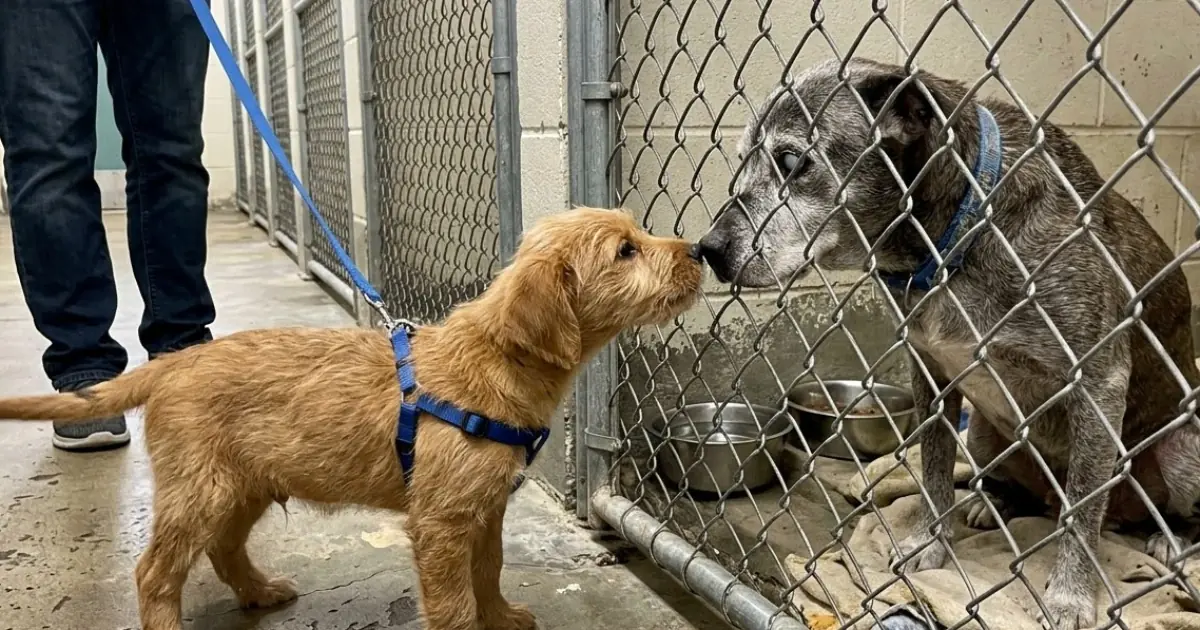
A Puppy Stopped to Say Goodbye to His Senior Friend Before Leaving the Shelter
Bella’s Recovery After an Owner Surrender and Medical Crisis

A Tiny Dog Was Found Trapped Above Rushing Water Beside a Highway
Nova’s Recovery After Giving Birth to Six Puppies in a Shelter
Iris’s Recovery After Two Years in a Shelter Kennel
Grace’s Recovery After 202 Days in the Shelter

A Mother Dog and Her Five Puppies Were Abandoned in a Cardboard Box
Atlas’s Recovery After Five Months of Watching Visitors Pass
Lucky’s Recovery After Eight Months in a Shelter Kennel
What's next for Shadow after Jackie's death?
A Starving Dog Was Rescued After Being Trapped Without Food for Days
Captain’s Recovery After Seven Months in a Concrete Kennel
Daily’s Recovery After Losing Her Owner at Age 11
A Frightened Dog Was Found Trapped in a Thorn Bush Beside the Highway
Big Bear's viral eagle Jackie dies after weeks of intensive care
NEW UPDATE: Jackie the eagle endures 'difficult' 24 hours
NEW UPDATE: Vets share 'difficult news' about Big Bear bald eagle Jackie