The first thing Lieutenant General Faith Anderson remembered afterward was the heat. Not the blue lights, although there had been plenty of those, or the sound of the deputy's boots grinding against loose gravel beside Route 33.
What returned to her in the middle of the night, weeks after the incident, was the heat of the black Mercedes hood against her cheek and the helpless knowledge that she had done everything she was supposed to do.
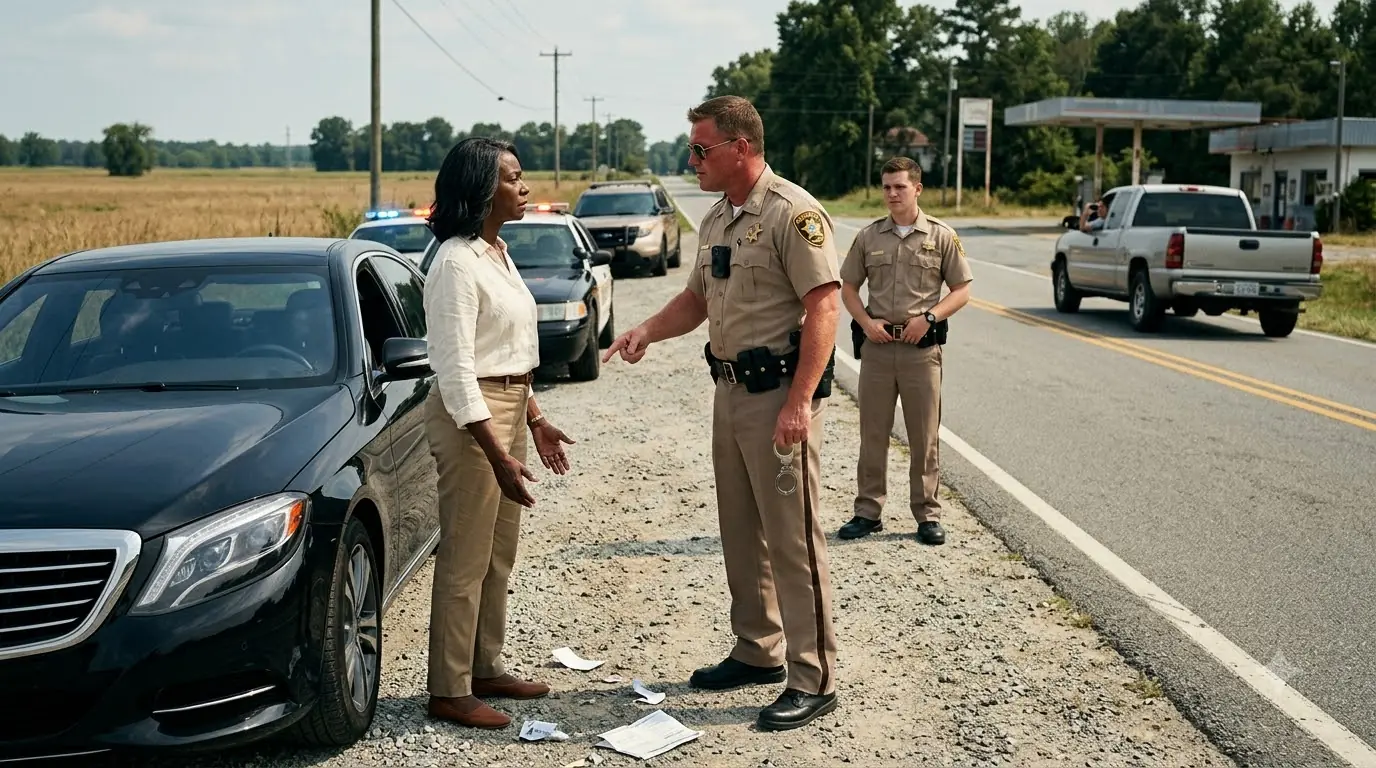
She had kept both hands visible, answered calmly, and produced documents that checked out, and none of it had persuaded the man holding her down that she deserved to be treated like a human being.
The second thing she remembered was the ordinary birthday present lying in the gravel. Pink tissue paper had blown from the gift bag and caught in the tall brown grass near the shoulder, where it trembled each time a truck passed. Her mother's eighty-second birthday card was inside that bag, along with a bracelet Faith had chosen after weeks of looking for something beautiful enough and simple enough to suit the woman who had raised her. While Deputy Sergeant Derek Lawson tightened handcuffs around Faith's wrists, the card waited beside the road with the other belongings he had pulled from her trunk.
If anyone had told Faith that morning that she would end the day in a sheriff's cruiser, she would have asked what investigation required her presence. She would not have imagined herself in the back seat, hands restrained and blouse damp with sweat, while a man who had sworn to enforce the Constitution laughed beside his patrol car. For thirty-four years she had served in the United States Army, and she knew that formal authority was a responsibility rather than an entitlement. She was about to learn how thoroughly another man had confused those two things.
At five that morning, the house near Fort Belvoir was dark enough that Faith could barely distinguish the outlines of the furniture. She woke without an alarm, the habit of decades of early inspections, flight schedules, emergency briefings, and deployments that had trained her body to keep its own appointments. For a moment she lay still and listened to the central air humming beyond the bedroom door. There were no messages demanding an immediate response, no aide waiting in the hall, and no briefing materials on the bedside table, which made the silence feel almost ceremonial.
She rose, folded the bedding neatly, and drew the corners of the sheets tight as she had been taught as a young soldier. At fifty-seven she no longer believed discipline could solve every problem, but she still liked beginning a day by finishing one small task properly. She washed her face, tied her hair back, and walked into the kitchen barefoot. Outside the window, the first light was turning the tops of the trees gray, and the neighborhood had not yet awakened enough to fill the air with traffic.