At 9:49 on a Saturday morning, a police cruiser blocked the driveway of a house at the end of Maplewood Court.
Its emergency lights flashed across the polished chrome of a 1969 Chevrolet Chevelle SS, the leaves of an old live oak, and the face of a man washing his car in peace.
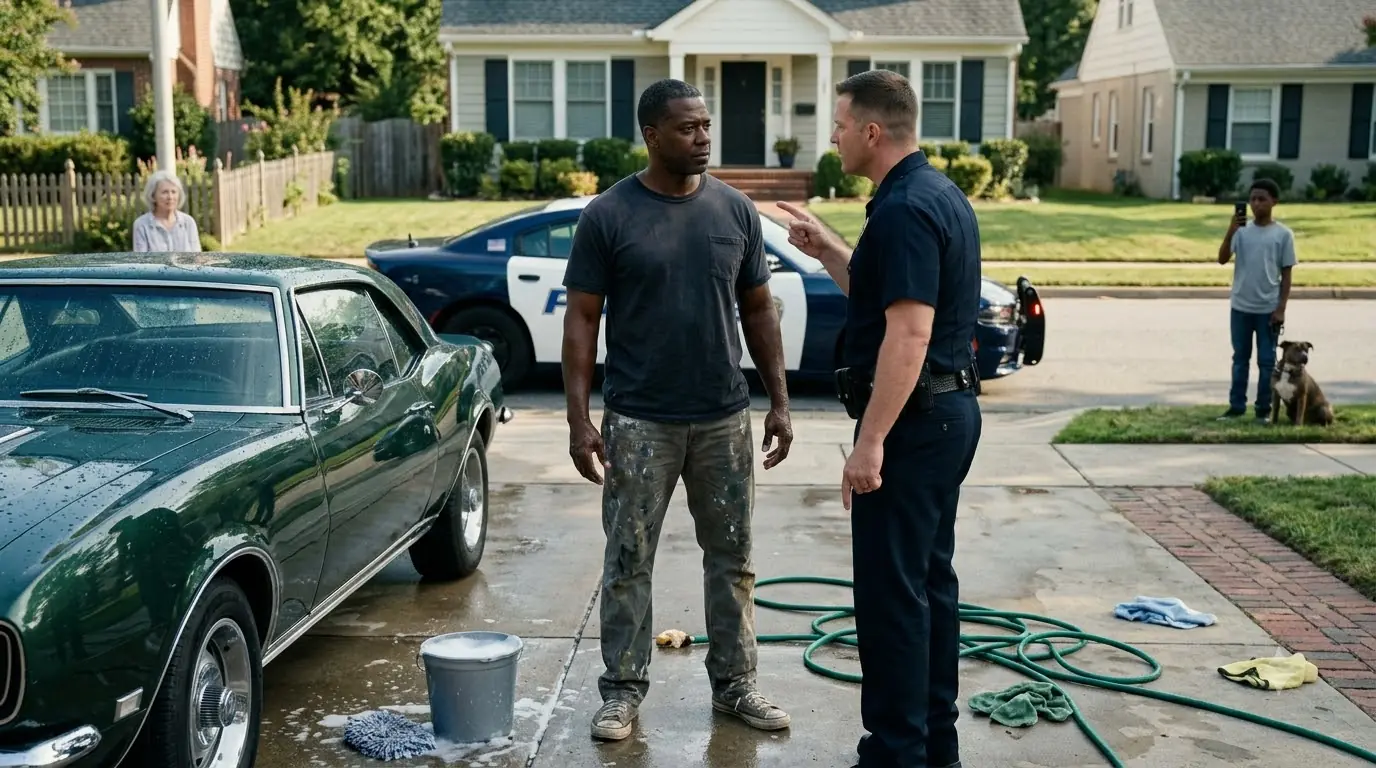
The officer behind the wheel had not received a call about that house, had not checked for a reported crime, and had not spoken to a single neighbor. He had simply seen Raymond Doss standing beside a beautiful automobile in paint-stained work clothes and decided that something about the picture was wrong.
Fifteen minutes later, the officer would be staring at a gold detective sergeant's shield with the same expression a man might wear after watching the ground disappear beneath his feet. But the shield was not what made the morning important. Three earlier complainants had already tried to tell the Garland City Police Department what kind of officer Kyle Puit was, and three times the system had found reasons not to listen. What happened in Raymond's driveway would finally make those earlier voices impossible to ignore.
Long before the cruiser arrived, Cedarwood Heights had been conducting the quiet business of a summer weekend. Sprinklers tapped across neat front lawns, bicycles rattled over uneven pavement, and somebody two houses away was frying bacon with the kitchen windows open. The July heat had not fully settled yet, although its promise hung in the air above the asphalt. Mockingbirds argued in the enormous live oak beside Dorothy Wills's fence as if the entire neighborhood had been built to give them a place to disagree.
Raymond had been outside since eight. He wore a faded Howard University T-shirt, canvas sneakers streaked with old green paint, and a pair of work pants so permanently marked by home repairs that Sandra had declared them unfit for anywhere except the garage. A bucket of clean water stood beside the hose, and a folded chamois cloth rested on the roof of the Chevelle. The garage radio was playing Otis Redding, and Raymond moved his polishing cloth across the front bumper in slow circles that were almost ceremonial.
There were people who spent their weekends recovering from the workweek by doing nothing. Raymond recovered by working on things that would remain fixed when he finished them. At the police department, a carefully prepared investigation could turn on a witness who changed a statement or evidence that arrived too late. In his driveway, a dull strip of chrome became bright beneath his hands, and no supervisor could argue that it had not happened.
The Chevelle had been an unreasonable purchase, and Raymond had never pretended otherwise. Eleven years earlier, he had found it beneath dusty canvas tarps at an estate sale in East Garland, its body scarred by rust and its original engine in pieces. The late owner's widow had asked him whether he