Cop Kicks Black Coffee Vendor's Cart In Street His Voice Cracks as She Reads Out a Federal Number
Reader Theme:
Font Size:
24px
Get this filthy garbage off my street. Now! Officer Derek Hollis didn't wait for an answer. He planted his boot into the side of a black woman's coffee cart and kicked it over. The whole thing flipped into the road. Glass exploded. Hot coffee flooded the sidewalk.
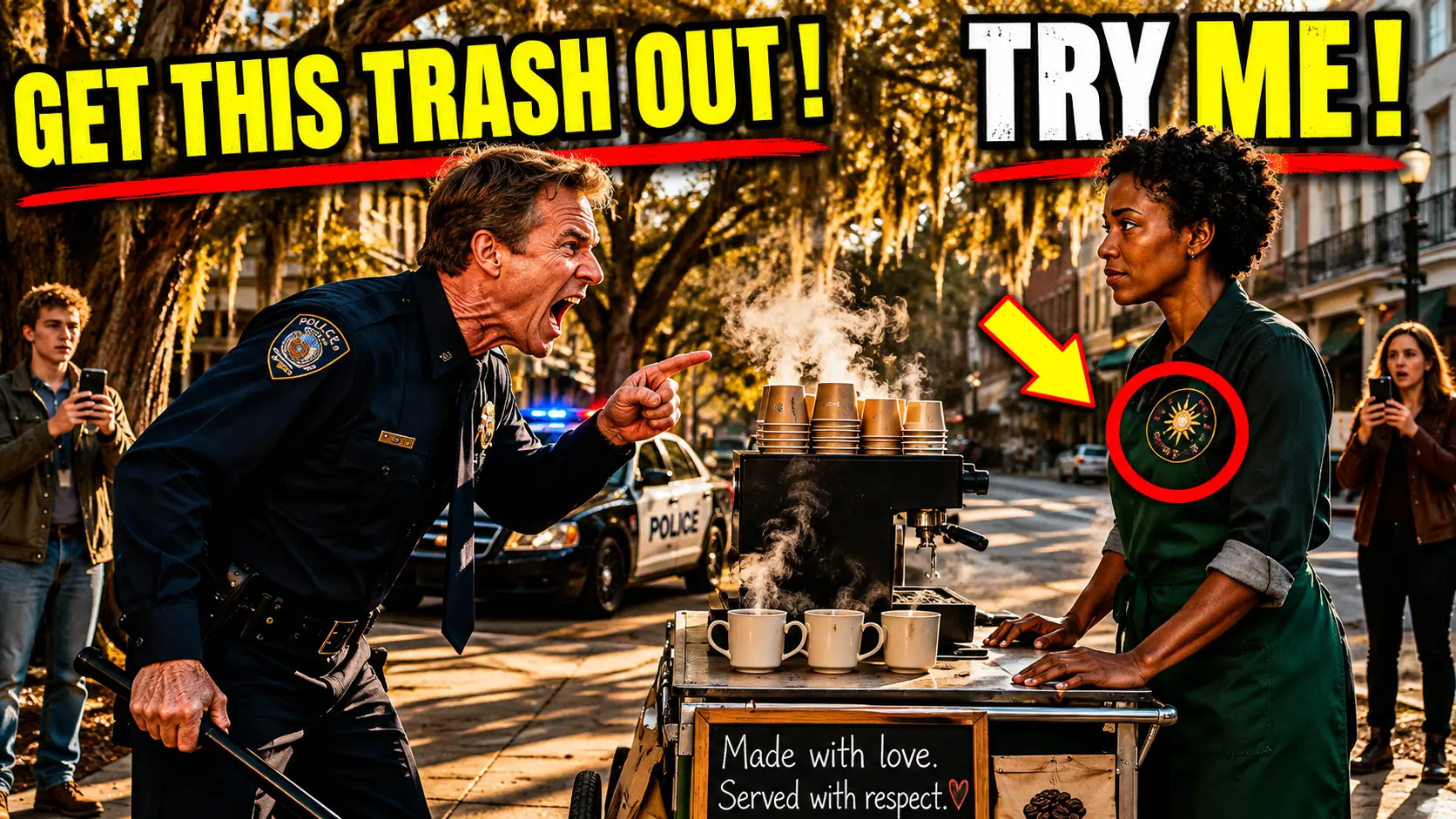
Carolyn Stewart stood there, coffee dripping down her apron, her hands still. "I did nothing wrong, officer." "Shut your mouth!" He kicked a broken mug toward her feet. "I don't want to hear it. You people always got an excuse. Pack up this trash and crawl back to wherever you came from."
Carolyn said nothing. She just looked at him. What Derek didn't know, the small brass pin on her apron wasn't decoration. And the number she was about to read to him would make his hands shake so bad he couldn't hold his own handcuffs. Some people don't realize who they're disrespecting until it's too late.
Let's rewind a few hours before the broken glass, before the badge, before any of it. 4:45 in the morning, Savannah, Georgia. The sky still dark purple over the oak trees on Drayton Street. Spanish moss hanging low, barely moving in the warm, sticky air. A blue pickup truck, old, dented, but clean, backed up to the curb on the corner of Drayton and Broughton.
The tailgate dropped with a metal clang that echoed down the empty block. Carolyn Stewart climbed out. She was 52 years old. Strong hands. Reading glasses tucked into the collar of her shirt. A canvas apron folded over her arm. She moved the way someone moves when they've done the same thing a thousand mornings in a row. No wasted steps. No hesitation.
She pulled the coffee cart off the truck bed and rolled it into position on the sidewalk. Same corner. Same spot. Three years running. Then she started setting up. The ceramic mugs came first. Each one wrapped in a kitchen towel to keep them from chipping. She stacked them in two neat rows on the counter. Then the thermoses. Then the hand-labeled bags of her signature roast, Colombian beans she sourced herself and roasted in small batches in her kitchen every Sunday night.
The smell hit the sidewalk the moment she unzipped the first bag. Rich, dark, warm. The kind of smell that makes you stop walking and turn your head. She propped her chalkboard menu against the side of the cart. Hand-painted in white chalk, every letter careful, every price clean. At the bottom, in smaller letters, "Made with love, served with respect."
She plugged the espresso machine into a portable generator tucked underneath the cart. It hummed to life. Steam hissed from the nozzle as she ran the first test shot. The sound blended with the birds waking up in the oaks overhead and the distant rumble of early traffic on Broughton. By 5:30, the first regular showed up. Nadine Hartwell, 74 years old, retired school teacher.
She came every single morning. Rain, heat, didn't matter. Decaf with two sugars. She always stayed for 10 minutes, leaning on the cart, talking about her garden or her grandkids or whatever was on the news. "Morning, baby," Nadine said. "Morning, Miss Nadine. Same as always?" "You know it."
After Nadine came the construction crew. Four large black coffees, no sugar, to go. They called Carolyn Miss C and left a tip in the jar every time. Then a lawyer in a gray suit who ordered a cortado without looking up from his phone. Then a young mother with a stroller who always got a chai latte and told Carolyn she was the best part of her morning.
Carolyn knew every name, every order. She didn't write them down. She just remembered. By 6:30 her assistant arrived. Trey Dawson, 22, college senior studying social work, tall, quiet, always wore a backward cap. He handled the register while Carolyn pulled shots. They had a rhythm. She'd call out the drink, he'd take the money, she'd slide it across the counter. Fast, smooth, no wasted motion.
"You're late," Carolyn said, "by 2 minutes." "That's late," he grinned. She grinned back. The cart was legal, licensed, inspected. Carolyn kept her vendor's permit laminated and taped to the front panel where anyone could see it. Food handler's certificate in a folder under the register. Health inspection sticker on the side. Everything by the book.
Now, here's what the neighborhood didn't know, but you need to. This block had history with the local police precinct. Not ancient history, recent. Three excessive force complaints filed in 2 years. A wrongful arrest of a black shop owner 6 months ago. Charges dropped, but the damage already done. An uneasy truce between the community and the officers who patrolled these streets. People were polite, but people were also watching.
Around 7:15, a white and blue cruiser rolled up to the curb across the street. It just sat there, engine idling. The driver's window cracked an inch. Carolyn noticed. She always noticed. She'd seen this car before, circling the block, slowing down near the cart, never stopping to buy. Just watching. She didn't look up. She kept pouring.
Trey glanced over. "He's back." "I see him," Carolyn said. Quiet, calm, like she was talking about the weather. The morning light was golden now. The street was alive, foot traffic picking up, shop doors propping open, the smell of coffee mixing with magnolia and exhaust. Everything felt like a normal Tuesday in downtown Savannah.
Then the cruiser door opened and Sergeant Derek Hollis stepped out. Derek Hollis didn't walk toward the cart the way a customer walks. He walked the way a man walks when he already knows what he's going to do. Slow, chest out, both thumbs hooked into his belt, sunglasses on, even though the morning sun was barely above the rooftops. His partner, Officer Bryce Kendall, trailed two steps behind. Younger, quieter, eyes scanning the sidewalk like he was looking for something to report.
Derek stopped directly in front of the chalkboard menu. He didn't read it. He didn't look at the prices or the handwritten descriptions of single origin roasts. He stared past the board, straight at Carolyn, the way you'd stare at a stain on your kitchen floor. He didn't say good morning. He didn't nod. He didn't acknowledge the line of three customers waiting for their drinks. He just stood there, feet wide, blocking the counter until the silence got thick enough to feel.
A woman in line shifted her weight. A man behind her cleared his throat. Nobody left yet, but nobody was comfortable, either. Then Derek spoke. "Where's your permit?" Not "Do you have a permit?" Not "Excuse me, ma'am." Just "Where's your permit?" Flat, hard, like he was talking to someone who'd already been caught doing something wrong.
Carolyn set down the portafilter she was holding. She wiped her hands on her apron. Slow, deliberate, no rush. She'd served over 200 customers that morning already. She wasn't about to let this moment knock her off rhythm. "Right there, officer." She pointed to the laminated vendor's license taped to the front panel of the cart. City seal in the upper left corner, date of issue, expiration date, permit number. All visible. All current. Taped at eye level, exactly where anyone, including a patrol sergeant, could see it without asking.
Derek barely turned his head. He glanced at the permit the way you'd glance at a fly on a window. Half a second. No focus. Then looked back at Carolyn. "This cart is obstructing pedestrian flow. You need to move it. Now." The sidewalk was 12 ft wide. The cart took up maybe 3. People had been walking around it without issue for 3 years, including Derek himself, on the dozens of mornings he'd cruised past in his patrol car without stopping.
Carolyn kept her voice even, polite. The kind of polite that takes real effort when someone is standing in your workspace telling you to leave. "Sir, my sidewalk permit specifies this exact location. Corner of Drayton and Broughton. I've been set up right here for 3 years. The city approved this spot." Derek's jaw tightened. A small muscle twitched near his ear. He didn't like being corrected. He especially didn't like being corrected by her.
"I don't care what some clerk stamped on a piece of paper. I'm telling you to move." Carolyn didn't argue. She didn't raise her voice. She didn't cross her arms or shake her head. She just said, "Yes, sir. I understand you're telling me that, but the permit is valid." That was the moment the temperature changed. Not the air temperature. Savannah was already 82° at 7:30 in the morning. Humidity so thick you could feel it sitting on your skin. No. The temperature between Derek Hollis and Carolyn Stewart. Something shifted. Like the moment before a dog bites. You can feel it in your chest before your brain catches up.
Derek unclipped his radio from his shoulder. He pressed the button and spoke into it loud enough for the whole sidewalk to hear. "Dispatch, this is 451. I'm at Drayton and Broughton. I've got an unlicensed food vendor refusing to comply. I need a registration check on a mobile food unit." An unlicensed food vendor? She just shown him the license. Refusing to comply. She'd answered every question he asked. And a registration check on a coffee cart. Coffee carts don't have vehicle registrations. Every person on that sidewalk knew it. Carolyn knew it. Trey knew it. The woman with the stroller who'd bought a chai latte 20 minutes ago knew it. Even Bryce, standing 3 ft behind Derek with his arms crossed, probably knew it. But nobody said a word. Because Derek had a badge and a gun. And a radio that connected to a system that would back him up no matter what he said into it.
The radio crackled back. Dispatch sounded confused. Asked him to repeat the unit type. Derek ignored the confusion and kept going. He turned back to Carolyn. "I'm going to need your driver's license." She reached into her apron pocket and handed it over without a word. He took it between two fingers, barely touching it, like it was dirty. And studied it for a long time. Too long. Way too long for a driver's license with a clear photo and a valid date. He wasn't reading it. He was making her wait. Making her stand there while he held a piece of her identity in his hand and decided how long she deserved to be uncomfortable.
"Social Security number." Carolyn paused. Just a beat. "Officer, you don't need my Social Security number for a sidewalk permit check." "I'll decide what I need." His voice dropped lower. Not louder. Lower. The kind of quiet that sounds like a threat. "Social. Now." She gave it to him. Quietly. Digit by digit. The line of customers behind the cart had dissolved completely now. One by one, people drifted away. Not because they wanted to leave, but because standing next to a police confrontation on a Tuesday morning felt like standing next to a fire you can't put out. A woman pulled her daughter closer and walked the other direction. A man in a suit looked at his watch, shook his head, and crossed the street. Better to leave. Better not to get involved. Better not to be next.
Derek handed the license back without looking at her. Then he reached across the counter and picked up one of the coffee bags. A hand-labeled bag of Carolyn's signature blend. The one she roasted herself every Sunday night. The one Nadine always bought an extra bag of to take home. The one that said, "Stewart's Morning Blend" in Carolyn's own handwriting on the front. He held it up to his nose, sniffed it. Slow. Theatrical. Like he was inspecting evidence at a crime scene. Then he turned it over, read the back, and dropped it on the ground. Just opened his fingers and let it fall.
"You got a food handler certificate for this?" Carolyn bent down and picked up the bag. She brushed the dirt off the label with her thumb, carefully, like she was cleaning something precious. Then she reached under the register, pulled out a clear plastic folder, and handed him the certificate. Laminated. Current. Signed by the Chatham County Health Department. Derek took it. Looked at it for 1 second. Handed it back without a word. Not, "Okay." Not, "Thank you." Not, "That checks out." Nothing. He just moved on to the next demand, like the certificate didn't exist. Like nothing she showed him would ever be enough. Like the point was never the paperwork, and that's exactly what this was. It was never about permits, never about pedestrian flow or food safety or registration numbers. It was about a man with a badge who looked at a black woman on a street corner and decided she didn't belong there. Everything else was decoration.
Bryce Kendall stood behind Derek the entire time. Arms folded, jaw set, saying absolutely nothing. Every few seconds he'd smirk, a quick twitch at the corner of his mouth, or shake his head slightly, like Carolyn was wasting everyone's time by existing. He never stepped in. Never once said, "Hey, she's got her papers. Let's move on." He just stood there, the silent partner. The system working exactly the way it was built to work. And Carolyn, Carolyn didn't flinch, didn't sigh, didn't roll her eyes or mutter under her breath. She answered every question with "Yes, sir." And "Here you go, officer." And "Of course." Her voice stayed level. Her hands stayed still. Her eyes stayed on Derek's face. Not with anger, not with fear. With something else. Something patient and controlled and deeply, deeply deliberate. The kind of stillness that only comes from training, from practice, from knowing exactly what you're doing and why. She was not afraid of him. But he didn't know that yet.
Then Nadine stepped forward. 74 years old, 5 ft 3, a cup of decaf still in her hand, the one Carolyn made her 20 minutes ago. "Officer, this woman has been here every single morning for 3 years. She has never caused a problem, not once. Everyone on this block knows her, everyone." Derek spun on Nadine so fast she flinched backward. "Ma'am, step back right now, unless you want to be cited for interference with a police officer." Nadine's hand shook. The coffee in her cup trembled, a tiny ring of brown liquid vibrating against the ceramic. She stepped back. She didn't say another word. But her eyes. Her eyes said everything her mouth couldn't.
Across the street, behind a parked sedan, a teenager named Antonio Reeves held his phone at chest height. He'd started recording the moment Derek walked up to the cart. He was quiet, dead still. The phone didn't shake. He was 17 years old and he already knew, already understood in his bones, that sometimes a camera is the only witness people believe. Derek turned back to Carolyn one more time. He looked at the cart, looked at the permit taped to its front, looked at her. "I'm giving you 5 minutes, 5 minutes to pack up and clear out. If you're still standing here when I come back, I'm impounding this cart and citing you for operating without a license." "Without a license?" The license was taped right there. He'd looked right at it. Carolyn nodded once, slow, controlled. "Understood, officer."
Derek turned and walked back toward his cruiser. Bryce followed. Neither of them looked back. Trey leaned over to Carolyn. His voice was barely a whisper. "We should call someone. This isn't right." Carolyn shook her head, barely a movement. "Not yet." She picked up the portafilter she'd set down at the start of all this. She tamped the grounds, locked it in, pulled a shot. The espresso machine hissed. Dark liquid dripped slow and steady into a ceramic cup. She set the cup on the counter and looked across the street at Derek's cruiser. Then, she waited.
Derek didn't give her 5 minutes. He gave her maybe 90 seconds. Just enough time for Carolyn to pull one more shot and set it on the counter. Just enough time for her to think, maybe, just maybe, he was going to sit in his cruiser and drive away. He didn't. The cruiser door swung open again. This time, Derek walked faster, harder. His boots hit the sidewalk like he had somewhere to be and someone to punish when he got there. Bryce followed, half a step behind, hand resting on his belt. Derek didn't stop at the front of the cart this time. He walked around it, behind it, into Carolyn's workspace. The narrow strip between the cart and the brick wall where she kept her cooler, her dry goods bin, and her personal bag.
"I'm checking for health code violations," he said. Not to Carolyn. Not to anyone, really. Just out loud, like he was narrating his own report in advance. He popped open the cooler. Milk cartons, cream, a bottle of vanilla syrup. He pushed things around with his fingers, not carefully, roughly, like he was digging through a trash can. He pulled out a carton of half and half, read the expiration date, and tossed it back in. Then he opened the dry goods box. Bags of sugar, stirring sticks, napkins, sleeve cups. He grabbed a handful of sugar packets and let them fall through his fingers onto the ground like confetti.
Carolyn spoke, calm, measured. Every word placed like a brick. "Officer, to conduct a health inspection, you need either a warrant or a certified health inspector present. I'm asking you to stop." Derek didn't even look at her. "I'll stop when I'm satisfied there's no violation here." He kept going. He opened a storage bin underneath the cart and pulled out a stack of to-go containers. He dropped them on the sidewalk. Then he found a box of plastic lids and dumped those, too. The lids bounced and scattered across the pavement, rolling into the gutter, spinning in circles on the bricks.
Then he stood up. He looked at the cart. He looked at Carolyn. Something crossed his face. Not anger, exactly, but something colder. Decision. He walked to the side of the cart. He grabbed the edge with one hand. He set his feet. And then, he drove his boot into the lower frame. The cart rocked. Carolyn lunged for it, her hands reaching for the counter, trying to hold it steady. Too late. The whole cart tipped. Slowly at first, like it was thinking about it. Then, all at once, it slammed onto its side in the middle of the street.
The espresso machine hit the asphalt with a sound like a gunshot. Metal on stone. Something inside it cracking. A deep mechanical groan as the housing split open. The portable generator sparked once, twice, then went dead. Glass carafes shattered, not cracked, shattered, into hundreds of pieces that sprayed across the road like thrown ice. Coffee, hot, black, the batch she'd brewed at 5:00 that morning, poured out in a dark river across the pavement. Milk pooled in the gutter. Sugar crunched underfoot. The chalkboard menu, the one she'd hand-painted, every letter careful, every price clean, snapped in half when the cart landed on it. The two pieces lay face up on the asphalt. The words "Made with love, served with respect" split right down the middle.
Ceramic mugs, the ones she'd wrapped in kitchen towels that morning at 4:45, the ones she'd carried from the truck bed one at a time, exploded into shards. White pieces scattered between the coffee beans that had burst from a torn bag of her signature roast, the beans rolling into the gutter, into the storm drain, into the cracks in the road. Three years. Three years of 4:00 a.m. mornings. Three years of hand-roasted beans and hand-painted signs and remembering every customer's name. Three years of building something from nothing on a street corner in Savannah, Georgia. All of it lying sideways in the street, steaming, broken, done.
Derek Hollis stood over the wreckage. He didn't flinch. He didn't look sorry. He didn't look anything. He put his hands on his hips and looked down at the mess the way a man looks at a pile of leaves he just raked to the curb. Then, he looked at Carolyn. "I told you to move. Now it's moved." He kicked a broken mug toward her feet. The pieces skittered across the wet pavement and stopped against her shoe. Carolyn didn't move. Coffee was dripping down her apron, splattered on her arms, soaking through her shoes. A piece of broken glass sat 2 in from her left foot. She stood completely still. Her hands hung at her sides, open, visible, not clenched. Her face showed nothing, not anger, not tears, not shock, just stillness. The kind of stillness that is louder than screaming.
Then Derek went further. He reached behind the overturned cart and grabbed Carolyn's personal bag, a canvas tote she kept on a hook near the register. He unzipped it and turned it upside down. Everything spilled onto the wet sidewalk. Her wallet, her phone, her reading glasses, a ring of keys, a granola bar, a small leather notebook with a rubber band around it, a pen, a pack of tissues, all of it. The private contents of a woman's bag dumped in a pile on a public street soaking in coffee and milk and rainwater from the gutter. Derek crouched down and picked through the items one by one, slowly. He opened the wallet and looked at the bills inside. He turned the phone over in his hand. He held up the reading glasses like they were a piece of evidence. Every movement slow, deliberate. He wasn't searching for anything. He was performing, making her stand there and watch a stranger go through her life piece by piece in front of everyone.
Then he picked up the notebook. He pulled off the rubber band and flipped through the pages. The first few were what you'd expect, customer orders, daily sales tallies, a list of supplies to restock. But deeper in, the handwriting changed, smaller, more precise, dates in the margins, badge numbers, short hand descriptions of incidents, times, locations, witness counts. Coded entries that didn't match anything a coffee vendor would need to write down. Derek stared at a page. His brow furrowed. Something didn't fit, but he couldn't figure out what. He tossed the notebook back on the pile. "What's this? Your diary?" He laughed, a short, ugly sound. That notebook was Carolyn Stewart's field journal for the United States Department of Justice. Every entry was an observation. Every badge number was a data point. Every coded line was evidence. And Derek Hollis had just held it in his hands and laughed at it.
Trey couldn't take it anymore. He stepped forward, not aggressively, not fast, just one step, and said, "Sir, you can't do this. She has every permit. You can't just destroy her." Derek cut him off without even turning around. "Sit down and shut your mouth, kid, before I run your ID for warrants." Trey went silent. He was 22 years old. He had no record. Not a speeding ticket, not a parking fine, nothing. But he knew, the way every young black man in America knows, what a warrant check can become. A pat down that turns into a search. A search that turns into resisting. A resisting charge that turns into a night in county. He knew. So he sat down on the curb and said nothing.
A white woman walking past on the opposite sidewalk slowed down. She looked at the overturned cart, the broken glass, the personal items scattered on the ground, the officer standing over all of it like he owned the street. She muttered, just loud enough to hear, "This is wrong." Derek's head snapped toward her. "Move along, ma'am. This doesn't concern you." She moved along. The street was tense now. People watched from windows above the shops. A barber stood in his doorway with a towel over his shoulder, staring. A woman in a second-floor apartment held her phone to the glass. But nobody came down. Nobody intervened. Nobody stepped between Derek Hollis and the woman whose life he was dismantling on a public sidewalk at 7:30 on a Tuesday morning. The power imbalance was total, absolute, complete.
And behind Carolyn's stillness, behind the open hands and the level voice and the eyes that never looked away, her heart was slamming. Her jaw was clenched so tight her teeth ached. Her pulse drummed in her ears. But she kept her hands visible. Kept her voice even. Kept her eyes locked on Derek's face. She knew what she was doing. She had done this before, in other cities, with other officers, on other street corners where the same scene played out with different names and the same ending. She knew exactly how bad this could get. And she knew exactly what she was capturing. There was a small pin on the left side of her apron. It looked like a decorative button, a little brass sun, the kind of thing you'd buy at a craft fair for $2. It was not decorative.
Derek reached for his handcuffs. "That's it. You're being detained. Operating an unlicensed food establishment. Failure to comply with a lawful order." Two charges, both fabricated. The license was taped to the cart he'd just kicked over. She'd complied with everything he asked. Carolyn didn't step back, didn't protest, didn't cry. She extended her wrists, slowly, calmly, like someone who had rehearsed this exact moment a hundred times in her head. But before Derek could close the cuffs, she spoke. Not louder, not faster, lower, steadier. The kind of voice that makes a noisy room go quiet. "Officer Hollis." He paused. Something in her tone caught him. Not fear, not pleading, something he didn't recognize. "Before you put those on me, I need you to write down a number." Derek snorted. "What number?" Carolyn looked directly into his eyes. She did not blink. "C R dash 8 8 2 1 1 6."
The street went quiet. Not regular quiet. The kind of quiet where even the birds stopped. "That is my federal credential number with the United States Department of Justice, Civil Rights Division." Then, announcing every movement, both hands visible, she reached into the inside pocket of her apron and pulled out a badge. Not a vendor's permit. Not a food handler's certificate. A federal ID badge. She held it up at Derek's eye level. The morning sun caught the embossed eagle seal. Gold lettering on deep navy leather. United States Department of Justice in capitals across the top. Her photograph. Her name. Her title. Field Investigator. She held it there, steady, not shaking.
Derek's arm stopped midair. The handcuffs hung open, frozen halfway to her wrists. His mouth opened. Nothing came out. The smirk. The one he'd been wearing for 32 minutes while he kicked her cart and dumped her bag and told her to crawl back where she came from vanished. Like it had been wiped off with a rag. Color drained from his face. Then flooded back. Deep red. The kind that starts at the neck and climbs. His eyes darted to the badge. To her face. Back to the badge. Then his hand started to shake. The same hand that kicked her cart. The same hand that dumped her bag on the sidewalk. The same hand that pointed in her face. That hand. Trembling. The handcuffs rattled. A small metallic shaking. Clink. Clink. Clink. In the silence of that street, everyone heard it. Steel bouncing against steel in a man's unsteady fingers.
"I... That's... You're not..." He couldn't finish. His voice cracked, split right down the middle. The same voice that barked, "Pack up this garbage, Grandma," now sounded like a kid in the principal's office trying to explain a broken window. His voice cracks as she reads out a federal number. Bryce Kendall took two full steps backward. Fast. Like the badge was a grenade. His face went paper white. His hand dropped limp from his belt. He looked at Derek the way you look at a building right before it falls. Carolyn lowered the badge, but didn't put it away. Visible. Official.
"I have been embedded in this district for 11 months monitoring a pattern of civil rights complaints filed against this precinct. Specifically against you, Sergeant Hollis." She paused. "Everything that occurred in the last 32 minutes, every word, every action, every fabricated charge has been recorded by a federal surveillance device." She touched the small brass sun pinned to her apron. One finger. Light. "Audio, video, GPS stamped metadata transmitting to a secure DOJ server since 6:45 this morning." Derek's eyes locked on the pin. The little brass sun he'd walked past a dozen times and never looked at twice. He stared at it like he was seeing it for the first time. Because he was.
Carolyn pulled out a phone from her inside pocket. Not the one Derek had dumped on the sidewalk. A different phone. Black, unmarked, secure. She dialed. "Director Foster, this is Stewart. Pick up unit needed at Drayton and Broughton. Badge numbers 451 and 632. Full audio-visual captured. Subject still on scene." Flat. Procedural. Like she was reading a grocery list. She hung up. Slid the phone into her pocket. She did not look at Derek again. 3 seconds of silence. 3 seconds where nobody on that street breathed. Then a whisper from behind a parked car. "Oh my god." Nadine Hartwell covered her mouth with both hands. Her shoulders shook. Tears ran down her face and she didn't wipe them. Antonio Reeves lowered his phone, eyes wide, mouth open. He looked at his screen, still recording, then back at Carolyn, making sure it was real. A man in a suit across the street said quietly to no one, "She was federal the whole time."
And Derek Hollis stood in the middle of it all. The broken glass, the spilled coffee, the scattered beans, the snapped chalkboard, still holding the handcuffs, still trembling. A man who had just destroyed his career, his pension, his badge, and his freedom on camera, in broad daylight, because he decided a black woman with a coffee cart didn't deserve to stand on his street. 12 minutes. That's how long it took. Two unmarked black sedans turned onto Drayton Street and pulled to the curb. No sirens, no flashing lights, just two quiet cars rolling up like they'd been waiting around the block. Three agents stepped out. Plain clothes, slacks, button-downs. Then they pulled on navy windbreakers with four letters across the back, D O J. They didn't rush. They didn't shout. They walked toward Derek and Bryce the way people walk when they already know how this ends.
The lead agent stopped in front of Derek, held up his badge, didn't raise his voice. "Sergeant Hollis, Special Agent Wyatt, Department of Justice, Civil Rights Division. You and Officer Kendall are to surrender your service weapons and badges, immediately." Derek hadn't moved from the spot where Carolyn showed him the federal ID. 12 minutes. Boots frozen to the same piece of asphalt. "You can't just take my badge. I'm a sworn officer. I have rights. You need to talk to my..." "This is not a request, Sergeant." Derek's mouth kept moving. The words got smaller. "I didn't do anything wrong." Then, "She didn't identify herself. How was I supposed to know?" Then, "Can we just talk about this? Let me explain." Denial, deflection, bargaining, three stages of a man watching his life collapse in real time. The agents didn't argue. They weren't there to negotiate or hear his side. They were there to collect evidence, and the evidence was already recorded.
Derek unholstered his weapon, handed it grip first, then his badge. He held it in his palm for a moment, the silver shield he'd carried for 15 years, and placed it in the agent's hand. His fingers were still shaking. Bryce didn't wait to be asked twice. Weapon out before anyone said a word. Badge off his belt before anyone reached for it. "I want to cooperate. Fast, tripping over himself. I had concerns about Sergeant Hollis's conduct. I've had concerns for a while. I tried to de-escalate today." Funny thing about that. Bryce had been silent for 32 minutes. Silent while Derek kicked a cart. Silent while he dumped a woman's bag on the sidewalk. Silent while he threatened an old lady and fabricated charges against a federal agent. 32 minutes of smirking and folded arms. But now, with the DOJ standing in front of him, suddenly he had concerns. Suddenly he'd tried to de-escalate. Amazing how fast complicity turns into self-preservation when the handcuffs point the other way.
A female agent approached Carolyn, spoke quietly, respectfully, like she was talking to a colleague, because she was. "Investigator Stewart, we need to secure the recording device." Carolyn unpinned the brass sun from her apron and placed it in the agent's gloved hand. It went into a clear evidence bag labeled with a case number. That tiny pin, no bigger than a quarter, had captured everything. High-fidelity audio, full-color video, GPS coordinates stamped every 30 seconds. 32 minutes of uninterrupted, federally admissible evidence. Across town, Chief Harold Pennington picked up his phone at his desk. He listened for 90 seconds. Then he set it down slowly, the way you set down something heavy, and didn't move. Two of his officers in federal custody, his precinct under formal DOJ review. The call came from the regional director of the Civil Rights Division. He said nothing for a very long time.
Back on Drayton Street, Derek and Bryce were walked to the sedans. No handcuffs yet, but the back doors opened for them the way they opened for suspects, not passengers. Derek ducked his head getting in. He didn't look at anyone. He didn't look at Carolyn. Carolyn watched the cars pull away. She didn't gloat, didn't smile, didn't say a word. She walked into the street, grabbed the edge of the overturned cart, and pulled it upright. Dented on one side, chalkboard snapped, espresso machine cracked down the housing, glass crunching under her shoes, beans still in the gutter. She picked them up, one handful at a time, swept the glass, set the cart back on its wheels. It wobbled, one leg bent, but it stood. Then she went to her truck, pulled out a backup thermos, and poured a cup of plain drip coffee. She walked it over to Nadine, still standing on the sidewalk, right where she'd been since the beginning, tears still running. "Here, Ms. Nadine, on the house." Nadine took the cup with both hands, shaking. She didn't say thank you. She just held it against her chest and cried. Because the coffee still needs to be served.
Antonio Reeves posted the video at 11:42 that morning. He didn't add a caption. He didn't need one. He just uploaded 12 minutes of raw, unedited phone footage to every platform he had, and the internet did the rest. By noon, it had 50,000 views. By 3:00, 200,000. Local news picked it up before dinner. Elaine Crawford, a reporter with the Savannah NBC affiliate, ran it as her lead story at 6:00. She played the footage next to a split screen of Carolyn's vendor's license, valid, current, taped right to the front of the cart Derek kicked over. By the next morning, the video had crossed 2 million views, and it was still climbing. The comment section was on fire. People were tagging their senators, sharing clips, screenshotting the moment Derek's boot connected with the cart, and turning it into a meme that said, "Tell me you don't read permits without telling me you don't read permits." But this wasn't a meme. This was a federal case.
Three days after the video went viral, Director Reginald Foster held a press conference in Washington. He stood behind a podium with the DOJ seal and announced that the Department of Justice was launching a full pattern or practice investigation into the Savannah Police Department's downtown precinct. He was very specific about one thing. This was not just about Derrick Hollis. This was about a system, a department, a chain of command, a culture that had allowed one officer to harass, intimidate, and abuse residents of color for 15 years without a single formal consequence. Not one write-up. Not one suspension. Not one disciplinary review. 15 years of complaints that went nowhere. 15 years of silence from the people who were supposed to be watching. That silence was over.
In the days following the video, six additional complaints were filed with the DOJ. Six people who had stayed quiet for months, some for years, because they didn't think anyone would listen. Now, they were talking. A black barbershop owner named Wendell Price came forward. He'd been cited three times by Derrick for noise violations on days when the shop was closed. Three citations. Three fines. All fabricated. All paid because fighting a cop's word in municipal court costs more than the fine. A Latina food truck operator named Sophia Delgado filed a complaint. Her truck had been towed from a permitted location without warning or explanation. By the time she got it back, $800 in inventory had spoiled. Derrick signed the tow order. No reason listed. A black teenager, 15 years old, name withheld because he was a minor, had been stopped and frisked walking home from school. No cause. No report filed. The boy told his mother. His mother told the school. The school told nobody. Because what do you do with a complaint against a cop when the complaint system runs through the same precinct? Six victims. Six stories. One officer. And the pattern was now documented, timestamped, and sitting on the desk of a federal prosecutor.
National outlets picked up the story within the week. The narrative was irresistible. It crystallized around a single image that no editor could resist. A cop kicking over a coffee cart owned by a federal investigator he didn't know was watching him. It was almost too perfect. Editorials were written. Think pieces went up. Cable news panels debated it for three straight nights. The phrase the coffee cart case started trending and didn't stop. The trial began 9 weeks later in the United States District Court for the Southern District of Georgia. Derrick Hollis was charged with four federal counts. Deprivation of civil rights under color of law, Title 18, US Code, Section 242. Filing false reports. Destruction of property. Unlawful search and seizure. The prosecution's case was built on three pillars. Carolyn's testimony, Antonio's video, and 32 minutes of high-definition footage from a federal surveillance device pinned to a coffee vendor's apron.
Derrick's defense attorney argued that his client was conducting a routine inspection and had no racial motivation. The jury watched the video. They heard Derrick say, "You people always got an excuse." They watched him sniff a coffee bag and drop it on the ground. They watched him kick the cart. They heard him say, "Crawl back to wherever you came from, Grandma." The deliberation took 4 hours. Guilty. All counts. Judge Gloria Whitfield presided over the sentencing. She was brief. She was precise. She looked at Derrick when she spoke. 54 months in federal prison. A permanent ban from working in law enforcement. Anywhere in the United States for the rest of of life. Restitution of $38,000 for property damage and emotional distress. And a note in the record that would follow his name forever. Derek stood when the sentence was read. His attorney put a hand on his shoulder. Derek didn't look at the courtroom. He looked at the floor.
Bryce Kendall's case was handled separately. He pleaded guilty to a lesser charge, failure to intervene. The judge gave him 18 months of probation, permanent forfeiture of his badge, and 300 hours of community service. The community service was assigned specifically in the neighborhoods he used to patrol. The neighborhoods where he'd stood with folded arms and said nothing. But the story didn't end with two officers. As a result of the pattern or practice investigation, the Savannah Police Department's downtown precinct was placed under a federal consent decree. That meant mandatory, court-enforced reforms. Body cameras for every officer, with no off switch, no accidental deactivation, no dead batteries. A civilian oversight board with full subpoena power. Quarterly bias audits conducted by an independent monitor. Revised use-of-force protocols. A complete overhaul of the internal complaint process that had been swallowing grievances for over a decade.
Three weeks after the consent decree was signed, Chief Harold Pennington announced his early retirement. He read a prepared statement, four sentences, carefully worded by a lawyer. He thanked the department for his years of service. He expressed confidence in the path forward. He wished his successor well. He did not use the word sorry. He did not use the word apology. He did not mention Carolyn Stewart, or Derek Hollis, or the coffee cart, or the six victims who came forward, or the 15 years of silence that happened on his watch. And that told you everything you needed to know about how deep the problem went.
Six months later, corner of Drayton and Broughton, 7:00 in the morning. The oak trees still dripping with Spanish moss, the air still thick and warm, the same sidewalk, the same bricks, and the same coffee cart. It looked a little different now. The dent on the left side had been hammered out, not perfectly, but close enough. The espresso machine was new. The chalkboard menu was new, too. Same handwriting, same prices, same words at the bottom. "Made with love, served with respect." But there was one addition, a small brass plate bolted to the front of the cart, right below the laminated vendor's permit. Four words engraved in clean block letters, "Permitted and protected." A gift from Nadine.
Carolyn Stewart stood behind the counter, same as always. Apron on, sleeves rolled, steam rising from the espresso nozzle. She handed a cortado to a man in a gray suit, same lawyer, same order, and wiped down the counter with a rag. She'd been promoted within the DOJ, senior field investigator now. But her new role wasn't in the field anymore. She trained incoming investigators, the young ones, fresh out of law school or the academy, the ones who hadn't done undercover work yet, and didn't know what it felt like to stand still while someone tore your life apart in front of you. She taught them what she called the three C's: composure, compliance, capture. Stay calm, follow the law, even when the person violating it is wearing a badge, and make sure every second is recorded. She told them the most powerful weapon against abuse isn't anger. It isn't a lawsuit. It isn't even a badge. It's patience. The kind of patience that lets you stand in the middle of a storm and not move until the storm runs out of wind.
Trey Dawson graduated that spring, degree in social work, honors. He'd been offered a fellowship with the DOJ's Community Engagement Office, a position that didn't exist before the consent decree. It was created specifically to build trust between federal investigators and the neighborhoods they were trying to protect. When a reporter asked Trey what inspired him to go into public service, he didn't talk about a textbook or a professor. He talked about a Tuesday morning on Drayton Street. He talked about a woman who watched her coffee cart get kicked over and didn't lose her composure. He said, "She showed me that justice doesn't have to be loud. Sometimes the quietest person in the room is the one changing everything."
The neighborhood was changing, too, slowly. Not overnight. Nothing real changes overnight. But there were signs. Officers walked beats now instead of cruising past in patrol cars with the windows up. Some of them stopped at the cart. Not all, but some. They ordered coffee. They said good morning. They knew Carolyn's name. One morning, a young officer, fresh out of the academy, first week on the job, uniform still creased, walked up to the cart. He stood there for a second, nervous, like he wasn't sure if he was welcome. "Ma'am, I I read about you, about what happened here. I just wanted to say thank you for staying." Carolyn looked at him. She didn't say anything for a moment. Then she reached under the counter, pulled out a cup, and poured him a coffee. "Welcome to the neighborhood, officer." He took the cup. He smiled. He walked his beat. It wasn't everything. It wasn't a fixed system. It wasn't proof that the world had changed, but it was a start. And sometimes a start is all you need.
Nadine Hartwell was there that morning. Same spot. Same time. Decaf with two sugars. She sat on the little folding stool Carolyn kept for her next to the cart, the way she'd sat there every morning for 3 and 1/2 years. She looked at the cart, at the brass plate, at the street waking up around her. The dog walkers, the commuters, the shop doors propping open. She took a sip of her coffee, set it down, looked at Carolyn. "You know, I've been coming here every morning for 3 years." She paused. "This is the first time I feel safe." Real talk, this story's fiction. I wrote it. But that feeling, being treated like you don't belong on your own street, that's real. That happens every day. And honestly, that's why I can't stop telling these stories. The lesson isn't revenge. The lesson is readiness. The lesson is that systems can change, but only when someone is willing to stand inside them and do the work. Carolyn Stewart stood inside the system, and she didn't move.
Carolyn Stewart stood there, coffee dripping down her apron, her hands still. "I did nothing wrong, officer." "Shut your mouth!" He kicked a broken mug toward her feet. "I don't want to hear it. You people always got an excuse. Pack up this trash and crawl back to wherever you came from."
Carolyn said nothing. She just looked at him. What Derek didn't know, the small brass pin on her apron wasn't decoration. And the number she was about to read to him would make his hands shake so bad he couldn't hold his own handcuffs. Some people don't realize who they're disrespecting until it's too late.
Let's rewind a few hours before the broken glass, before the badge, before any of it. 4:45 in the morning, Savannah, Georgia. The sky still dark purple over the oak trees on Drayton Street. Spanish moss hanging low, barely moving in the warm, sticky air. A blue pickup truck, old, dented, but clean, backed up to the curb on the corner of Drayton and Broughton.
The tailgate dropped with a metal clang that echoed down the empty block. Carolyn Stewart climbed out. She was 52 years old. Strong hands. Reading glasses tucked into the collar of her shirt. A canvas apron folded over her arm. She moved the way someone moves when they've done the same thing a thousand mornings in a row. No wasted steps. No hesitation.
She pulled the coffee cart off the truck bed and rolled it into position on the sidewalk. Same corner. Same spot. Three years running. Then she started setting up. The ceramic mugs came first. Each one wrapped in a kitchen towel to keep them from chipping. She stacked them in two neat rows on the counter. Then the thermoses. Then the hand-labeled bags of her signature roast, Colombian beans she sourced herself and roasted in small batches in her kitchen every Sunday night.
The smell hit the sidewalk the moment she unzipped the first bag. Rich, dark, warm. The kind of smell that makes you stop walking and turn your head. She propped her chalkboard menu against the side of the cart. Hand-painted in white chalk, every letter careful, every price clean. At the bottom, in smaller letters, "Made with love, served with respect."
She plugged the espresso machine into a portable generator tucked underneath the cart. It hummed to life. Steam hissed from the nozzle as she ran the first test shot. The sound blended with the birds waking up in the oaks overhead and the distant rumble of early traffic on Broughton. By 5:30, the first regular showed up. Nadine Hartwell, 74 years old, retired school teacher.
She came every single morning. Rain, heat, didn't matter. Decaf with two sugars. She always stayed for 10 minutes, leaning on the cart, talking about her garden or her grandkids or whatever was on the news. "Morning, baby," Nadine said. "Morning, Miss Nadine. Same as always?" "You know it."
After Nadine came the construction crew. Four large black coffees, no sugar, to go. They called Carolyn Miss C and left a tip in the jar every time. Then a lawyer in a gray suit who ordered a cortado without looking up from his phone. Then a young mother with a stroller who always got a chai latte and told Carolyn she was the best part of her morning.
Carolyn knew every name, every order. She didn't write them down. She just remembered. By 6:30 her assistant arrived. Trey Dawson, 22, college senior studying social work, tall, quiet, always wore a backward cap. He handled the register while Carolyn pulled shots. They had a rhythm. She'd call out the drink, he'd take the money, she'd slide it across the counter. Fast, smooth, no wasted motion.
"You're late," Carolyn said, "by 2 minutes." "That's late," he grinned. She grinned back. The cart was legal, licensed, inspected. Carolyn kept her vendor's permit laminated and taped to the front panel where anyone could see it. Food handler's certificate in a folder under the register. Health inspection sticker on the side. Everything by the book.
Now, here's what the neighborhood didn't know, but you need to. This block had history with the local police precinct. Not ancient history, recent. Three excessive force complaints filed in 2 years. A wrongful arrest of a black shop owner 6 months ago. Charges dropped, but the damage already done. An uneasy truce between the community and the officers who patrolled these streets. People were polite, but people were also watching.
Around 7:15, a white and blue cruiser rolled up to the curb across the street. It just sat there, engine idling. The driver's window cracked an inch. Carolyn noticed. She always noticed. She'd seen this car before, circling the block, slowing down near the cart, never stopping to buy. Just watching. She didn't look up. She kept pouring.
Trey glanced over. "He's back." "I see him," Carolyn said. Quiet, calm, like she was talking about the weather. The morning light was golden now. The street was alive, foot traffic picking up, shop doors propping open, the smell of coffee mixing with magnolia and exhaust. Everything felt like a normal Tuesday in downtown Savannah.
Then the cruiser door opened and Sergeant Derek Hollis stepped out. Derek Hollis didn't walk toward the cart the way a customer walks. He walked the way a man walks when he already knows what he's going to do. Slow, chest out, both thumbs hooked into his belt, sunglasses on, even though the morning sun was barely above the rooftops. His partner, Officer Bryce Kendall, trailed two steps behind. Younger, quieter, eyes scanning the sidewalk like he was looking for something to report.
Derek stopped directly in front of the chalkboard menu. He didn't read it. He didn't look at the prices or the handwritten descriptions of single origin roasts. He stared past the board, straight at Carolyn, the way you'd stare at a stain on your kitchen floor. He didn't say good morning. He didn't nod. He didn't acknowledge the line of three customers waiting for their drinks. He just stood there, feet wide, blocking the counter until the silence got thick enough to feel.
A woman in line shifted her weight. A man behind her cleared his throat. Nobody left yet, but nobody was comfortable, either. Then Derek spoke. "Where's your permit?" Not "Do you have a permit?" Not "Excuse me, ma'am." Just "Where's your permit?" Flat, hard, like he was talking to someone who'd already been caught doing something wrong.
Carolyn set down the portafilter she was holding. She wiped her hands on her apron. Slow, deliberate, no rush. She'd served over 200 customers that morning already. She wasn't about to let this moment knock her off rhythm. "Right there, officer." She pointed to the laminated vendor's license taped to the front panel of the cart. City seal in the upper left corner, date of issue, expiration date, permit number. All visible. All current. Taped at eye level, exactly where anyone, including a patrol sergeant, could see it without asking.
Derek barely turned his head. He glanced at the permit the way you'd glance at a fly on a window. Half a second. No focus. Then looked back at Carolyn. "This cart is obstructing pedestrian flow. You need to move it. Now." The sidewalk was 12 ft wide. The cart took up maybe 3. People had been walking around it without issue for 3 years, including Derek himself, on the dozens of mornings he'd cruised past in his patrol car without stopping.
Carolyn kept her voice even, polite. The kind of polite that takes real effort when someone is standing in your workspace telling you to leave. "Sir, my sidewalk permit specifies this exact location. Corner of Drayton and Broughton. I've been set up right here for 3 years. The city approved this spot." Derek's jaw tightened. A small muscle twitched near his ear. He didn't like being corrected. He especially didn't like being corrected by her.
"I don't care what some clerk stamped on a piece of paper. I'm telling you to move." Carolyn didn't argue. She didn't raise her voice. She didn't cross her arms or shake her head. She just said, "Yes, sir. I understand you're telling me that, but the permit is valid." That was the moment the temperature changed. Not the air temperature. Savannah was already 82° at 7:30 in the morning. Humidity so thick you could feel it sitting on your skin. No. The temperature between Derek Hollis and Carolyn Stewart. Something shifted. Like the moment before a dog bites. You can feel it in your chest before your brain catches up.
Derek unclipped his radio from his shoulder. He pressed the button and spoke into it loud enough for the whole sidewalk to hear. "Dispatch, this is 451. I'm at Drayton and Broughton. I've got an unlicensed food vendor refusing to comply. I need a registration check on a mobile food unit." An unlicensed food vendor? She just shown him the license. Refusing to comply. She'd answered every question he asked. And a registration check on a coffee cart. Coffee carts don't have vehicle registrations. Every person on that sidewalk knew it. Carolyn knew it. Trey knew it. The woman with the stroller who'd bought a chai latte 20 minutes ago knew it. Even Bryce, standing 3 ft behind Derek with his arms crossed, probably knew it. But nobody said a word. Because Derek had a badge and a gun. And a radio that connected to a system that would back him up no matter what he said into it.
The radio crackled back. Dispatch sounded confused. Asked him to repeat the unit type. Derek ignored the confusion and kept going. He turned back to Carolyn. "I'm going to need your driver's license." She reached into her apron pocket and handed it over without a word. He took it between two fingers, barely touching it, like it was dirty. And studied it for a long time. Too long. Way too long for a driver's license with a clear photo and a valid date. He wasn't reading it. He was making her wait. Making her stand there while he held a piece of her identity in his hand and decided how long she deserved to be uncomfortable.
"Social Security number." Carolyn paused. Just a beat. "Officer, you don't need my Social Security number for a sidewalk permit check." "I'll decide what I need." His voice dropped lower. Not louder. Lower. The kind of quiet that sounds like a threat. "Social. Now." She gave it to him. Quietly. Digit by digit. The line of customers behind the cart had dissolved completely now. One by one, people drifted away. Not because they wanted to leave, but because standing next to a police confrontation on a Tuesday morning felt like standing next to a fire you can't put out. A woman pulled her daughter closer and walked the other direction. A man in a suit looked at his watch, shook his head, and crossed the street. Better to leave. Better not to get involved. Better not to be next.
Derek handed the license back without looking at her. Then he reached across the counter and picked up one of the coffee bags. A hand-labeled bag of Carolyn's signature blend. The one she roasted herself every Sunday night. The one Nadine always bought an extra bag of to take home. The one that said, "Stewart's Morning Blend" in Carolyn's own handwriting on the front. He held it up to his nose, sniffed it. Slow. Theatrical. Like he was inspecting evidence at a crime scene. Then he turned it over, read the back, and dropped it on the ground. Just opened his fingers and let it fall.
"You got a food handler certificate for this?" Carolyn bent down and picked up the bag. She brushed the dirt off the label with her thumb, carefully, like she was cleaning something precious. Then she reached under the register, pulled out a clear plastic folder, and handed him the certificate. Laminated. Current. Signed by the Chatham County Health Department. Derek took it. Looked at it for 1 second. Handed it back without a word. Not, "Okay." Not, "Thank you." Not, "That checks out." Nothing. He just moved on to the next demand, like the certificate didn't exist. Like nothing she showed him would ever be enough. Like the point was never the paperwork, and that's exactly what this was. It was never about permits, never about pedestrian flow or food safety or registration numbers. It was about a man with a badge who looked at a black woman on a street corner and decided she didn't belong there. Everything else was decoration.
Bryce Kendall stood behind Derek the entire time. Arms folded, jaw set, saying absolutely nothing. Every few seconds he'd smirk, a quick twitch at the corner of his mouth, or shake his head slightly, like Carolyn was wasting everyone's time by existing. He never stepped in. Never once said, "Hey, she's got her papers. Let's move on." He just stood there, the silent partner. The system working exactly the way it was built to work. And Carolyn, Carolyn didn't flinch, didn't sigh, didn't roll her eyes or mutter under her breath. She answered every question with "Yes, sir." And "Here you go, officer." And "Of course." Her voice stayed level. Her hands stayed still. Her eyes stayed on Derek's face. Not with anger, not with fear. With something else. Something patient and controlled and deeply, deeply deliberate. The kind of stillness that only comes from training, from practice, from knowing exactly what you're doing and why. She was not afraid of him. But he didn't know that yet.
Then Nadine stepped forward. 74 years old, 5 ft 3, a cup of decaf still in her hand, the one Carolyn made her 20 minutes ago. "Officer, this woman has been here every single morning for 3 years. She has never caused a problem, not once. Everyone on this block knows her, everyone." Derek spun on Nadine so fast she flinched backward. "Ma'am, step back right now, unless you want to be cited for interference with a police officer." Nadine's hand shook. The coffee in her cup trembled, a tiny ring of brown liquid vibrating against the ceramic. She stepped back. She didn't say another word. But her eyes. Her eyes said everything her mouth couldn't.
Across the street, behind a parked sedan, a teenager named Antonio Reeves held his phone at chest height. He'd started recording the moment Derek walked up to the cart. He was quiet, dead still. The phone didn't shake. He was 17 years old and he already knew, already understood in his bones, that sometimes a camera is the only witness people believe. Derek turned back to Carolyn one more time. He looked at the cart, looked at the permit taped to its front, looked at her. "I'm giving you 5 minutes, 5 minutes to pack up and clear out. If you're still standing here when I come back, I'm impounding this cart and citing you for operating without a license." "Without a license?" The license was taped right there. He'd looked right at it. Carolyn nodded once, slow, controlled. "Understood, officer."
Derek turned and walked back toward his cruiser. Bryce followed. Neither of them looked back. Trey leaned over to Carolyn. His voice was barely a whisper. "We should call someone. This isn't right." Carolyn shook her head, barely a movement. "Not yet." She picked up the portafilter she'd set down at the start of all this. She tamped the grounds, locked it in, pulled a shot. The espresso machine hissed. Dark liquid dripped slow and steady into a ceramic cup. She set the cup on the counter and looked across the street at Derek's cruiser. Then, she waited.
Derek didn't give her 5 minutes. He gave her maybe 90 seconds. Just enough time for Carolyn to pull one more shot and set it on the counter. Just enough time for her to think, maybe, just maybe, he was going to sit in his cruiser and drive away. He didn't. The cruiser door swung open again. This time, Derek walked faster, harder. His boots hit the sidewalk like he had somewhere to be and someone to punish when he got there. Bryce followed, half a step behind, hand resting on his belt. Derek didn't stop at the front of the cart this time. He walked around it, behind it, into Carolyn's workspace. The narrow strip between the cart and the brick wall where she kept her cooler, her dry goods bin, and her personal bag.
"I'm checking for health code violations," he said. Not to Carolyn. Not to anyone, really. Just out loud, like he was narrating his own report in advance. He popped open the cooler. Milk cartons, cream, a bottle of vanilla syrup. He pushed things around with his fingers, not carefully, roughly, like he was digging through a trash can. He pulled out a carton of half and half, read the expiration date, and tossed it back in. Then he opened the dry goods box. Bags of sugar, stirring sticks, napkins, sleeve cups. He grabbed a handful of sugar packets and let them fall through his fingers onto the ground like confetti.
Carolyn spoke, calm, measured. Every word placed like a brick. "Officer, to conduct a health inspection, you need either a warrant or a certified health inspector present. I'm asking you to stop." Derek didn't even look at her. "I'll stop when I'm satisfied there's no violation here." He kept going. He opened a storage bin underneath the cart and pulled out a stack of to-go containers. He dropped them on the sidewalk. Then he found a box of plastic lids and dumped those, too. The lids bounced and scattered across the pavement, rolling into the gutter, spinning in circles on the bricks.
Then he stood up. He looked at the cart. He looked at Carolyn. Something crossed his face. Not anger, exactly, but something colder. Decision. He walked to the side of the cart. He grabbed the edge with one hand. He set his feet. And then, he drove his boot into the lower frame. The cart rocked. Carolyn lunged for it, her hands reaching for the counter, trying to hold it steady. Too late. The whole cart tipped. Slowly at first, like it was thinking about it. Then, all at once, it slammed onto its side in the middle of the street.
The espresso machine hit the asphalt with a sound like a gunshot. Metal on stone. Something inside it cracking. A deep mechanical groan as the housing split open. The portable generator sparked once, twice, then went dead. Glass carafes shattered, not cracked, shattered, into hundreds of pieces that sprayed across the road like thrown ice. Coffee, hot, black, the batch she'd brewed at 5:00 that morning, poured out in a dark river across the pavement. Milk pooled in the gutter. Sugar crunched underfoot. The chalkboard menu, the one she'd hand-painted, every letter careful, every price clean, snapped in half when the cart landed on it. The two pieces lay face up on the asphalt. The words "Made with love, served with respect" split right down the middle.
Ceramic mugs, the ones she'd wrapped in kitchen towels that morning at 4:45, the ones she'd carried from the truck bed one at a time, exploded into shards. White pieces scattered between the coffee beans that had burst from a torn bag of her signature roast, the beans rolling into the gutter, into the storm drain, into the cracks in the road. Three years. Three years of 4:00 a.m. mornings. Three years of hand-roasted beans and hand-painted signs and remembering every customer's name. Three years of building something from nothing on a street corner in Savannah, Georgia. All of it lying sideways in the street, steaming, broken, done.
Derek Hollis stood over the wreckage. He didn't flinch. He didn't look sorry. He didn't look anything. He put his hands on his hips and looked down at the mess the way a man looks at a pile of leaves he just raked to the curb. Then, he looked at Carolyn. "I told you to move. Now it's moved." He kicked a broken mug toward her feet. The pieces skittered across the wet pavement and stopped against her shoe. Carolyn didn't move. Coffee was dripping down her apron, splattered on her arms, soaking through her shoes. A piece of broken glass sat 2 in from her left foot. She stood completely still. Her hands hung at her sides, open, visible, not clenched. Her face showed nothing, not anger, not tears, not shock, just stillness. The kind of stillness that is louder than screaming.
Then Derek went further. He reached behind the overturned cart and grabbed Carolyn's personal bag, a canvas tote she kept on a hook near the register. He unzipped it and turned it upside down. Everything spilled onto the wet sidewalk. Her wallet, her phone, her reading glasses, a ring of keys, a granola bar, a small leather notebook with a rubber band around it, a pen, a pack of tissues, all of it. The private contents of a woman's bag dumped in a pile on a public street soaking in coffee and milk and rainwater from the gutter. Derek crouched down and picked through the items one by one, slowly. He opened the wallet and looked at the bills inside. He turned the phone over in his hand. He held up the reading glasses like they were a piece of evidence. Every movement slow, deliberate. He wasn't searching for anything. He was performing, making her stand there and watch a stranger go through her life piece by piece in front of everyone.
Then he picked up the notebook. He pulled off the rubber band and flipped through the pages. The first few were what you'd expect, customer orders, daily sales tallies, a list of supplies to restock. But deeper in, the handwriting changed, smaller, more precise, dates in the margins, badge numbers, short hand descriptions of incidents, times, locations, witness counts. Coded entries that didn't match anything a coffee vendor would need to write down. Derek stared at a page. His brow furrowed. Something didn't fit, but he couldn't figure out what. He tossed the notebook back on the pile. "What's this? Your diary?" He laughed, a short, ugly sound. That notebook was Carolyn Stewart's field journal for the United States Department of Justice. Every entry was an observation. Every badge number was a data point. Every coded line was evidence. And Derek Hollis had just held it in his hands and laughed at it.
Trey couldn't take it anymore. He stepped forward, not aggressively, not fast, just one step, and said, "Sir, you can't do this. She has every permit. You can't just destroy her." Derek cut him off without even turning around. "Sit down and shut your mouth, kid, before I run your ID for warrants." Trey went silent. He was 22 years old. He had no record. Not a speeding ticket, not a parking fine, nothing. But he knew, the way every young black man in America knows, what a warrant check can become. A pat down that turns into a search. A search that turns into resisting. A resisting charge that turns into a night in county. He knew. So he sat down on the curb and said nothing.
A white woman walking past on the opposite sidewalk slowed down. She looked at the overturned cart, the broken glass, the personal items scattered on the ground, the officer standing over all of it like he owned the street. She muttered, just loud enough to hear, "This is wrong." Derek's head snapped toward her. "Move along, ma'am. This doesn't concern you." She moved along. The street was tense now. People watched from windows above the shops. A barber stood in his doorway with a towel over his shoulder, staring. A woman in a second-floor apartment held her phone to the glass. But nobody came down. Nobody intervened. Nobody stepped between Derek Hollis and the woman whose life he was dismantling on a public sidewalk at 7:30 on a Tuesday morning. The power imbalance was total, absolute, complete.
And behind Carolyn's stillness, behind the open hands and the level voice and the eyes that never looked away, her heart was slamming. Her jaw was clenched so tight her teeth ached. Her pulse drummed in her ears. But she kept her hands visible. Kept her voice even. Kept her eyes locked on Derek's face. She knew what she was doing. She had done this before, in other cities, with other officers, on other street corners where the same scene played out with different names and the same ending. She knew exactly how bad this could get. And she knew exactly what she was capturing. There was a small pin on the left side of her apron. It looked like a decorative button, a little brass sun, the kind of thing you'd buy at a craft fair for $2. It was not decorative.
Derek reached for his handcuffs. "That's it. You're being detained. Operating an unlicensed food establishment. Failure to comply with a lawful order." Two charges, both fabricated. The license was taped to the cart he'd just kicked over. She'd complied with everything he asked. Carolyn didn't step back, didn't protest, didn't cry. She extended her wrists, slowly, calmly, like someone who had rehearsed this exact moment a hundred times in her head. But before Derek could close the cuffs, she spoke. Not louder, not faster, lower, steadier. The kind of voice that makes a noisy room go quiet. "Officer Hollis." He paused. Something in her tone caught him. Not fear, not pleading, something he didn't recognize. "Before you put those on me, I need you to write down a number." Derek snorted. "What number?" Carolyn looked directly into his eyes. She did not blink. "C R dash 8 8 2 1 1 6."
The street went quiet. Not regular quiet. The kind of quiet where even the birds stopped. "That is my federal credential number with the United States Department of Justice, Civil Rights Division." Then, announcing every movement, both hands visible, she reached into the inside pocket of her apron and pulled out a badge. Not a vendor's permit. Not a food handler's certificate. A federal ID badge. She held it up at Derek's eye level. The morning sun caught the embossed eagle seal. Gold lettering on deep navy leather. United States Department of Justice in capitals across the top. Her photograph. Her name. Her title. Field Investigator. She held it there, steady, not shaking.
Derek's arm stopped midair. The handcuffs hung open, frozen halfway to her wrists. His mouth opened. Nothing came out. The smirk. The one he'd been wearing for 32 minutes while he kicked her cart and dumped her bag and told her to crawl back where she came from vanished. Like it had been wiped off with a rag. Color drained from his face. Then flooded back. Deep red. The kind that starts at the neck and climbs. His eyes darted to the badge. To her face. Back to the badge. Then his hand started to shake. The same hand that kicked her cart. The same hand that dumped her bag on the sidewalk. The same hand that pointed in her face. That hand. Trembling. The handcuffs rattled. A small metallic shaking. Clink. Clink. Clink. In the silence of that street, everyone heard it. Steel bouncing against steel in a man's unsteady fingers.
"I... That's... You're not..." He couldn't finish. His voice cracked, split right down the middle. The same voice that barked, "Pack up this garbage, Grandma," now sounded like a kid in the principal's office trying to explain a broken window. His voice cracks as she reads out a federal number. Bryce Kendall took two full steps backward. Fast. Like the badge was a grenade. His face went paper white. His hand dropped limp from his belt. He looked at Derek the way you look at a building right before it falls. Carolyn lowered the badge, but didn't put it away. Visible. Official.
"I have been embedded in this district for 11 months monitoring a pattern of civil rights complaints filed against this precinct. Specifically against you, Sergeant Hollis." She paused. "Everything that occurred in the last 32 minutes, every word, every action, every fabricated charge has been recorded by a federal surveillance device." She touched the small brass sun pinned to her apron. One finger. Light. "Audio, video, GPS stamped metadata transmitting to a secure DOJ server since 6:45 this morning." Derek's eyes locked on the pin. The little brass sun he'd walked past a dozen times and never looked at twice. He stared at it like he was seeing it for the first time. Because he was.
Carolyn pulled out a phone from her inside pocket. Not the one Derek had dumped on the sidewalk. A different phone. Black, unmarked, secure. She dialed. "Director Foster, this is Stewart. Pick up unit needed at Drayton and Broughton. Badge numbers 451 and 632. Full audio-visual captured. Subject still on scene." Flat. Procedural. Like she was reading a grocery list. She hung up. Slid the phone into her pocket. She did not look at Derek again. 3 seconds of silence. 3 seconds where nobody on that street breathed. Then a whisper from behind a parked car. "Oh my god." Nadine Hartwell covered her mouth with both hands. Her shoulders shook. Tears ran down her face and she didn't wipe them. Antonio Reeves lowered his phone, eyes wide, mouth open. He looked at his screen, still recording, then back at Carolyn, making sure it was real. A man in a suit across the street said quietly to no one, "She was federal the whole time."
And Derek Hollis stood in the middle of it all. The broken glass, the spilled coffee, the scattered beans, the snapped chalkboard, still holding the handcuffs, still trembling. A man who had just destroyed his career, his pension, his badge, and his freedom on camera, in broad daylight, because he decided a black woman with a coffee cart didn't deserve to stand on his street. 12 minutes. That's how long it took. Two unmarked black sedans turned onto Drayton Street and pulled to the curb. No sirens, no flashing lights, just two quiet cars rolling up like they'd been waiting around the block. Three agents stepped out. Plain clothes, slacks, button-downs. Then they pulled on navy windbreakers with four letters across the back, D O J. They didn't rush. They didn't shout. They walked toward Derek and Bryce the way people walk when they already know how this ends.
The lead agent stopped in front of Derek, held up his badge, didn't raise his voice. "Sergeant Hollis, Special Agent Wyatt, Department of Justice, Civil Rights Division. You and Officer Kendall are to surrender your service weapons and badges, immediately." Derek hadn't moved from the spot where Carolyn showed him the federal ID. 12 minutes. Boots frozen to the same piece of asphalt. "You can't just take my badge. I'm a sworn officer. I have rights. You need to talk to my..." "This is not a request, Sergeant." Derek's mouth kept moving. The words got smaller. "I didn't do anything wrong." Then, "She didn't identify herself. How was I supposed to know?" Then, "Can we just talk about this? Let me explain." Denial, deflection, bargaining, three stages of a man watching his life collapse in real time. The agents didn't argue. They weren't there to negotiate or hear his side. They were there to collect evidence, and the evidence was already recorded.
Derek unholstered his weapon, handed it grip first, then his badge. He held it in his palm for a moment, the silver shield he'd carried for 15 years, and placed it in the agent's hand. His fingers were still shaking. Bryce didn't wait to be asked twice. Weapon out before anyone said a word. Badge off his belt before anyone reached for it. "I want to cooperate. Fast, tripping over himself. I had concerns about Sergeant Hollis's conduct. I've had concerns for a while. I tried to de-escalate today." Funny thing about that. Bryce had been silent for 32 minutes. Silent while Derek kicked a cart. Silent while he dumped a woman's bag on the sidewalk. Silent while he threatened an old lady and fabricated charges against a federal agent. 32 minutes of smirking and folded arms. But now, with the DOJ standing in front of him, suddenly he had concerns. Suddenly he'd tried to de-escalate. Amazing how fast complicity turns into self-preservation when the handcuffs point the other way.
A female agent approached Carolyn, spoke quietly, respectfully, like she was talking to a colleague, because she was. "Investigator Stewart, we need to secure the recording device." Carolyn unpinned the brass sun from her apron and placed it in the agent's gloved hand. It went into a clear evidence bag labeled with a case number. That tiny pin, no bigger than a quarter, had captured everything. High-fidelity audio, full-color video, GPS coordinates stamped every 30 seconds. 32 minutes of uninterrupted, federally admissible evidence. Across town, Chief Harold Pennington picked up his phone at his desk. He listened for 90 seconds. Then he set it down slowly, the way you set down something heavy, and didn't move. Two of his officers in federal custody, his precinct under formal DOJ review. The call came from the regional director of the Civil Rights Division. He said nothing for a very long time.
Back on Drayton Street, Derek and Bryce were walked to the sedans. No handcuffs yet, but the back doors opened for them the way they opened for suspects, not passengers. Derek ducked his head getting in. He didn't look at anyone. He didn't look at Carolyn. Carolyn watched the cars pull away. She didn't gloat, didn't smile, didn't say a word. She walked into the street, grabbed the edge of the overturned cart, and pulled it upright. Dented on one side, chalkboard snapped, espresso machine cracked down the housing, glass crunching under her shoes, beans still in the gutter. She picked them up, one handful at a time, swept the glass, set the cart back on its wheels. It wobbled, one leg bent, but it stood. Then she went to her truck, pulled out a backup thermos, and poured a cup of plain drip coffee. She walked it over to Nadine, still standing on the sidewalk, right where she'd been since the beginning, tears still running. "Here, Ms. Nadine, on the house." Nadine took the cup with both hands, shaking. She didn't say thank you. She just held it against her chest and cried. Because the coffee still needs to be served.
Antonio Reeves posted the video at 11:42 that morning. He didn't add a caption. He didn't need one. He just uploaded 12 minutes of raw, unedited phone footage to every platform he had, and the internet did the rest. By noon, it had 50,000 views. By 3:00, 200,000. Local news picked it up before dinner. Elaine Crawford, a reporter with the Savannah NBC affiliate, ran it as her lead story at 6:00. She played the footage next to a split screen of Carolyn's vendor's license, valid, current, taped right to the front of the cart Derek kicked over. By the next morning, the video had crossed 2 million views, and it was still climbing. The comment section was on fire. People were tagging their senators, sharing clips, screenshotting the moment Derek's boot connected with the cart, and turning it into a meme that said, "Tell me you don't read permits without telling me you don't read permits." But this wasn't a meme. This was a federal case.
Three days after the video went viral, Director Reginald Foster held a press conference in Washington. He stood behind a podium with the DOJ seal and announced that the Department of Justice was launching a full pattern or practice investigation into the Savannah Police Department's downtown precinct. He was very specific about one thing. This was not just about Derrick Hollis. This was about a system, a department, a chain of command, a culture that had allowed one officer to harass, intimidate, and abuse residents of color for 15 years without a single formal consequence. Not one write-up. Not one suspension. Not one disciplinary review. 15 years of complaints that went nowhere. 15 years of silence from the people who were supposed to be watching. That silence was over.
In the days following the video, six additional complaints were filed with the DOJ. Six people who had stayed quiet for months, some for years, because they didn't think anyone would listen. Now, they were talking. A black barbershop owner named Wendell Price came forward. He'd been cited three times by Derrick for noise violations on days when the shop was closed. Three citations. Three fines. All fabricated. All paid because fighting a cop's word in municipal court costs more than the fine. A Latina food truck operator named Sophia Delgado filed a complaint. Her truck had been towed from a permitted location without warning or explanation. By the time she got it back, $800 in inventory had spoiled. Derrick signed the tow order. No reason listed. A black teenager, 15 years old, name withheld because he was a minor, had been stopped and frisked walking home from school. No cause. No report filed. The boy told his mother. His mother told the school. The school told nobody. Because what do you do with a complaint against a cop when the complaint system runs through the same precinct? Six victims. Six stories. One officer. And the pattern was now documented, timestamped, and sitting on the desk of a federal prosecutor.
National outlets picked up the story within the week. The narrative was irresistible. It crystallized around a single image that no editor could resist. A cop kicking over a coffee cart owned by a federal investigator he didn't know was watching him. It was almost too perfect. Editorials were written. Think pieces went up. Cable news panels debated it for three straight nights. The phrase the coffee cart case started trending and didn't stop. The trial began 9 weeks later in the United States District Court for the Southern District of Georgia. Derrick Hollis was charged with four federal counts. Deprivation of civil rights under color of law, Title 18, US Code, Section 242. Filing false reports. Destruction of property. Unlawful search and seizure. The prosecution's case was built on three pillars. Carolyn's testimony, Antonio's video, and 32 minutes of high-definition footage from a federal surveillance device pinned to a coffee vendor's apron.
Derrick's defense attorney argued that his client was conducting a routine inspection and had no racial motivation. The jury watched the video. They heard Derrick say, "You people always got an excuse." They watched him sniff a coffee bag and drop it on the ground. They watched him kick the cart. They heard him say, "Crawl back to wherever you came from, Grandma." The deliberation took 4 hours. Guilty. All counts. Judge Gloria Whitfield presided over the sentencing. She was brief. She was precise. She looked at Derrick when she spoke. 54 months in federal prison. A permanent ban from working in law enforcement. Anywhere in the United States for the rest of of life. Restitution of $38,000 for property damage and emotional distress. And a note in the record that would follow his name forever. Derek stood when the sentence was read. His attorney put a hand on his shoulder. Derek didn't look at the courtroom. He looked at the floor.
Bryce Kendall's case was handled separately. He pleaded guilty to a lesser charge, failure to intervene. The judge gave him 18 months of probation, permanent forfeiture of his badge, and 300 hours of community service. The community service was assigned specifically in the neighborhoods he used to patrol. The neighborhoods where he'd stood with folded arms and said nothing. But the story didn't end with two officers. As a result of the pattern or practice investigation, the Savannah Police Department's downtown precinct was placed under a federal consent decree. That meant mandatory, court-enforced reforms. Body cameras for every officer, with no off switch, no accidental deactivation, no dead batteries. A civilian oversight board with full subpoena power. Quarterly bias audits conducted by an independent monitor. Revised use-of-force protocols. A complete overhaul of the internal complaint process that had been swallowing grievances for over a decade.
Three weeks after the consent decree was signed, Chief Harold Pennington announced his early retirement. He read a prepared statement, four sentences, carefully worded by a lawyer. He thanked the department for his years of service. He expressed confidence in the path forward. He wished his successor well. He did not use the word sorry. He did not use the word apology. He did not mention Carolyn Stewart, or Derek Hollis, or the coffee cart, or the six victims who came forward, or the 15 years of silence that happened on his watch. And that told you everything you needed to know about how deep the problem went.
Six months later, corner of Drayton and Broughton, 7:00 in the morning. The oak trees still dripping with Spanish moss, the air still thick and warm, the same sidewalk, the same bricks, and the same coffee cart. It looked a little different now. The dent on the left side had been hammered out, not perfectly, but close enough. The espresso machine was new. The chalkboard menu was new, too. Same handwriting, same prices, same words at the bottom. "Made with love, served with respect." But there was one addition, a small brass plate bolted to the front of the cart, right below the laminated vendor's permit. Four words engraved in clean block letters, "Permitted and protected." A gift from Nadine.
Carolyn Stewart stood behind the counter, same as always. Apron on, sleeves rolled, steam rising from the espresso nozzle. She handed a cortado to a man in a gray suit, same lawyer, same order, and wiped down the counter with a rag. She'd been promoted within the DOJ, senior field investigator now. But her new role wasn't in the field anymore. She trained incoming investigators, the young ones, fresh out of law school or the academy, the ones who hadn't done undercover work yet, and didn't know what it felt like to stand still while someone tore your life apart in front of you. She taught them what she called the three C's: composure, compliance, capture. Stay calm, follow the law, even when the person violating it is wearing a badge, and make sure every second is recorded. She told them the most powerful weapon against abuse isn't anger. It isn't a lawsuit. It isn't even a badge. It's patience. The kind of patience that lets you stand in the middle of a storm and not move until the storm runs out of wind.
Trey Dawson graduated that spring, degree in social work, honors. He'd been offered a fellowship with the DOJ's Community Engagement Office, a position that didn't exist before the consent decree. It was created specifically to build trust between federal investigators and the neighborhoods they were trying to protect. When a reporter asked Trey what inspired him to go into public service, he didn't talk about a textbook or a professor. He talked about a Tuesday morning on Drayton Street. He talked about a woman who watched her coffee cart get kicked over and didn't lose her composure. He said, "She showed me that justice doesn't have to be loud. Sometimes the quietest person in the room is the one changing everything."
The neighborhood was changing, too, slowly. Not overnight. Nothing real changes overnight. But there were signs. Officers walked beats now instead of cruising past in patrol cars with the windows up. Some of them stopped at the cart. Not all, but some. They ordered coffee. They said good morning. They knew Carolyn's name. One morning, a young officer, fresh out of the academy, first week on the job, uniform still creased, walked up to the cart. He stood there for a second, nervous, like he wasn't sure if he was welcome. "Ma'am, I I read about you, about what happened here. I just wanted to say thank you for staying." Carolyn looked at him. She didn't say anything for a moment. Then she reached under the counter, pulled out a cup, and poured him a coffee. "Welcome to the neighborhood, officer." He took the cup. He smiled. He walked his beat. It wasn't everything. It wasn't a fixed system. It wasn't proof that the world had changed, but it was a start. And sometimes a start is all you need.
Nadine Hartwell was there that morning. Same spot. Same time. Decaf with two sugars. She sat on the little folding stool Carolyn kept for her next to the cart, the way she'd sat there every morning for 3 and 1/2 years. She looked at the cart, at the brass plate, at the street waking up around her. The dog walkers, the commuters, the shop doors propping open. She took a sip of her coffee, set it down, looked at Carolyn. "You know, I've been coming here every morning for 3 years." She paused. "This is the first time I feel safe." Real talk, this story's fiction. I wrote it. But that feeling, being treated like you don't belong on your own street, that's real. That happens every day. And honestly, that's why I can't stop telling these stories. The lesson isn't revenge. The lesson is readiness. The lesson is that systems can change, but only when someone is willing to stand inside them and do the work. Carolyn Stewart stood inside the system, and she didn't move.
News in the same category
At My Husband’s Funeral, Another Woman Wearing My Wedding Ring Walked to His Coffin and Said, “I Lived With Him for Twelve Years.”
I Was Showing Clients an Apartment Listed as “Never Occupied”… Then I Found My Husband’s Wedding Photo in the Bedroom
Our Baby Monitor Connected to the TV During Family Dinner… Then I Saw My Husband With the Woman Sitting Beside Me
I Was About to Give Birth When a Nurse Called My Husband Into the Room Across the Hall… Then I Saw Who Was Inside
My Rich Neighbor's Black Belt Son Mocked Me and Demanded a Fight — Then Everything Changed
They Forced Her to Her Knees Before 600 People — Then She Started Counting
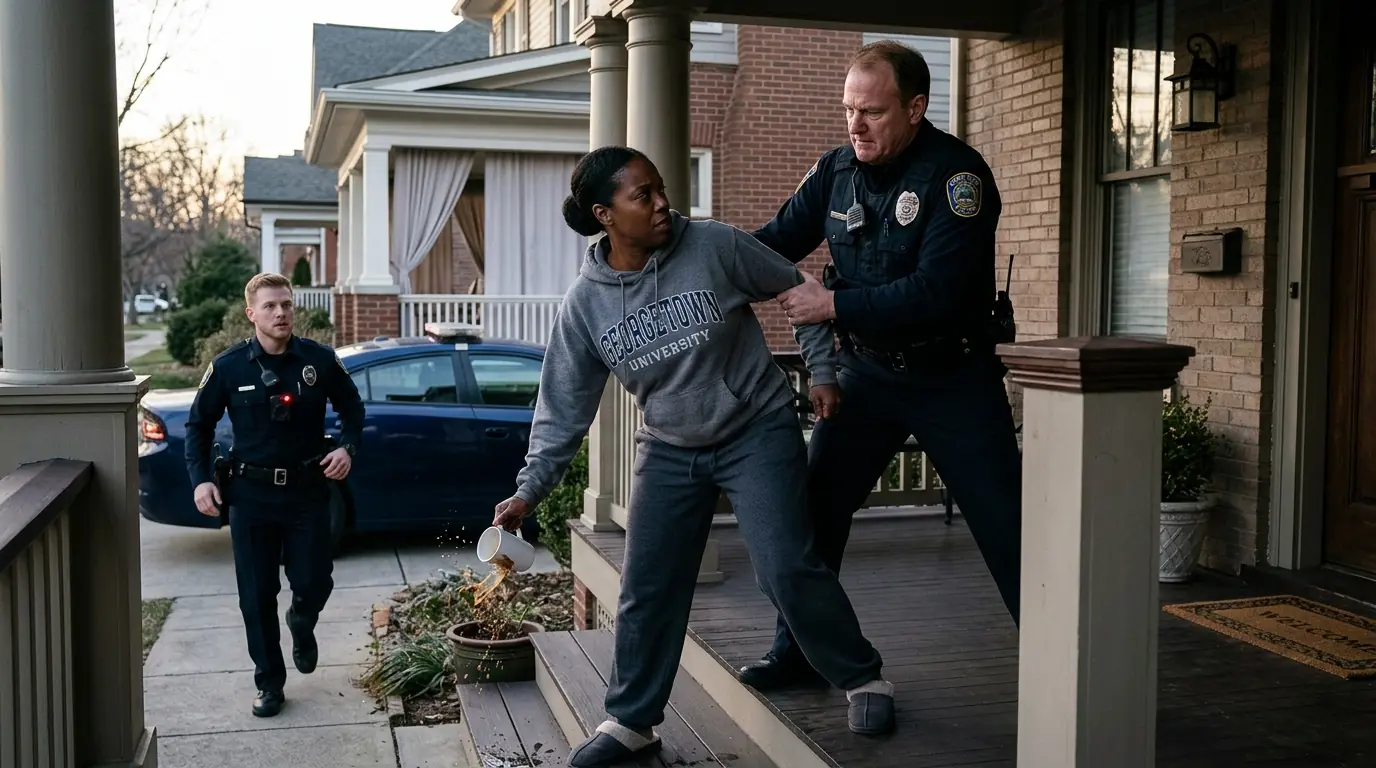
Police Demanded ID From a Black Woman on Her Own Porch — Then Their Captain Recognized the U.S. Attorney They Had Threatened
Black CEO Walks Into His Daughter’s School Cafeteria — The First Thing He Hears Makes Him Stop Cold
HOA President Poured Gasoline Into a Black Homeowner’s Private Pool — Then His Security System Exposed Her $2.4 Million Property Scheme
A Cocky Black Belt Thought the Quiet Farmer Was Easy Money — Until He Learned About His Elite Past
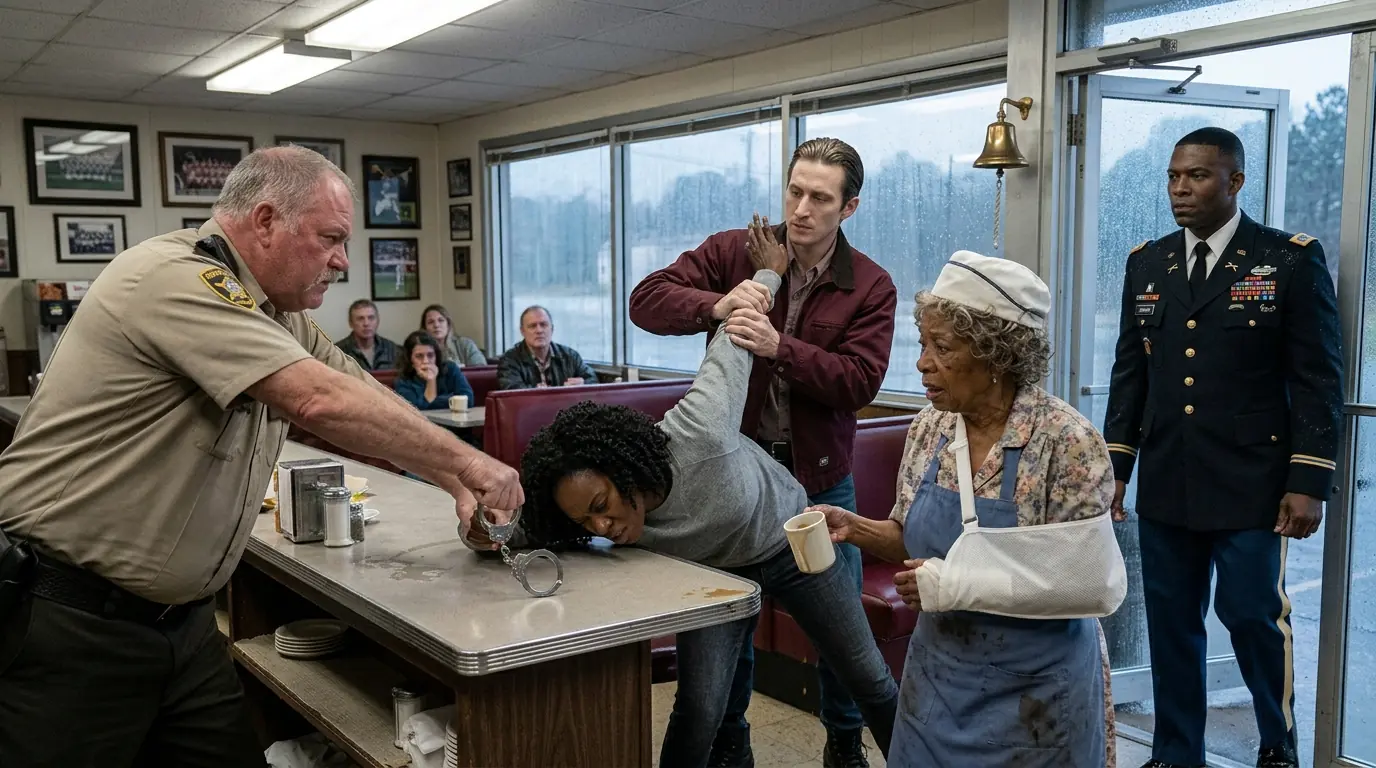
Sheriff Threatened to Bury a Black Woman Under Her Father’s Case — Then a Hidden Key Reopened the Crime He Buried
“Easy Money.” A Cocky Black Belt Bet Against a Quiet Farmer — Unaware He Was a Former Elite Officer
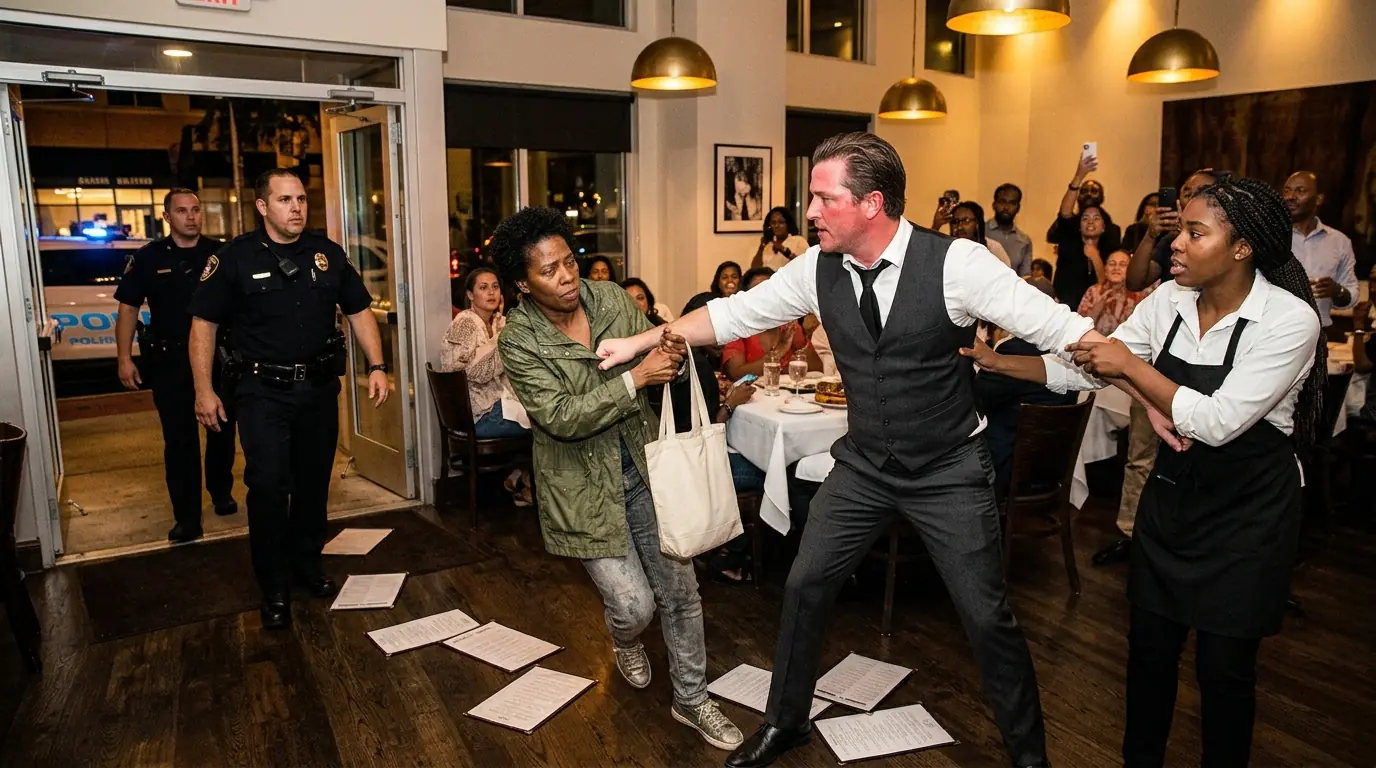
Restaurant Manager Called Black Woman "Homeless Trash" — Nearly Fainted When She Owns Entire Chain
Old Black Mechanic Helps 12 Stranded Riders in the Rain — What Arrives at His Shop Leaves Him in Tears
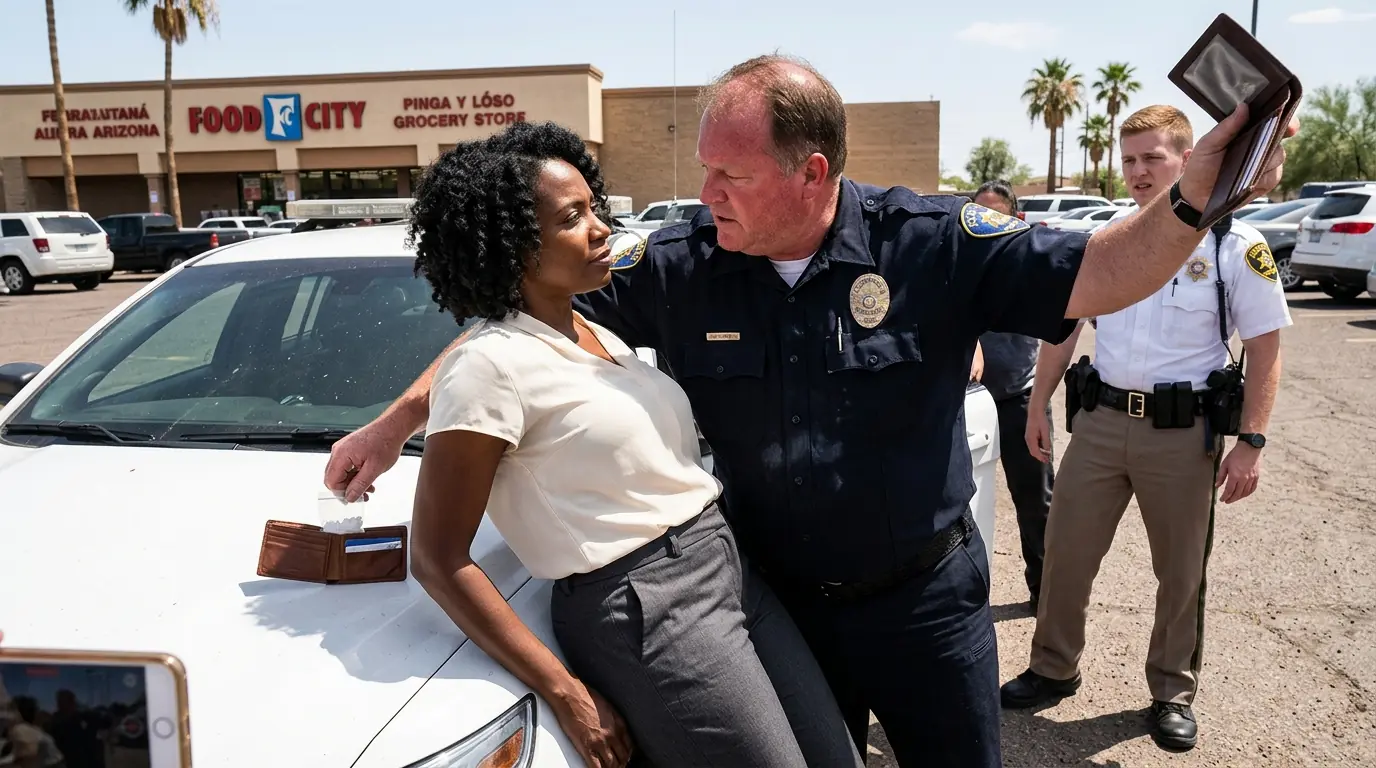
Cops Arrest Black Woman For "Shoplifting" — Unaware She Is An Off-Duty Police Captain
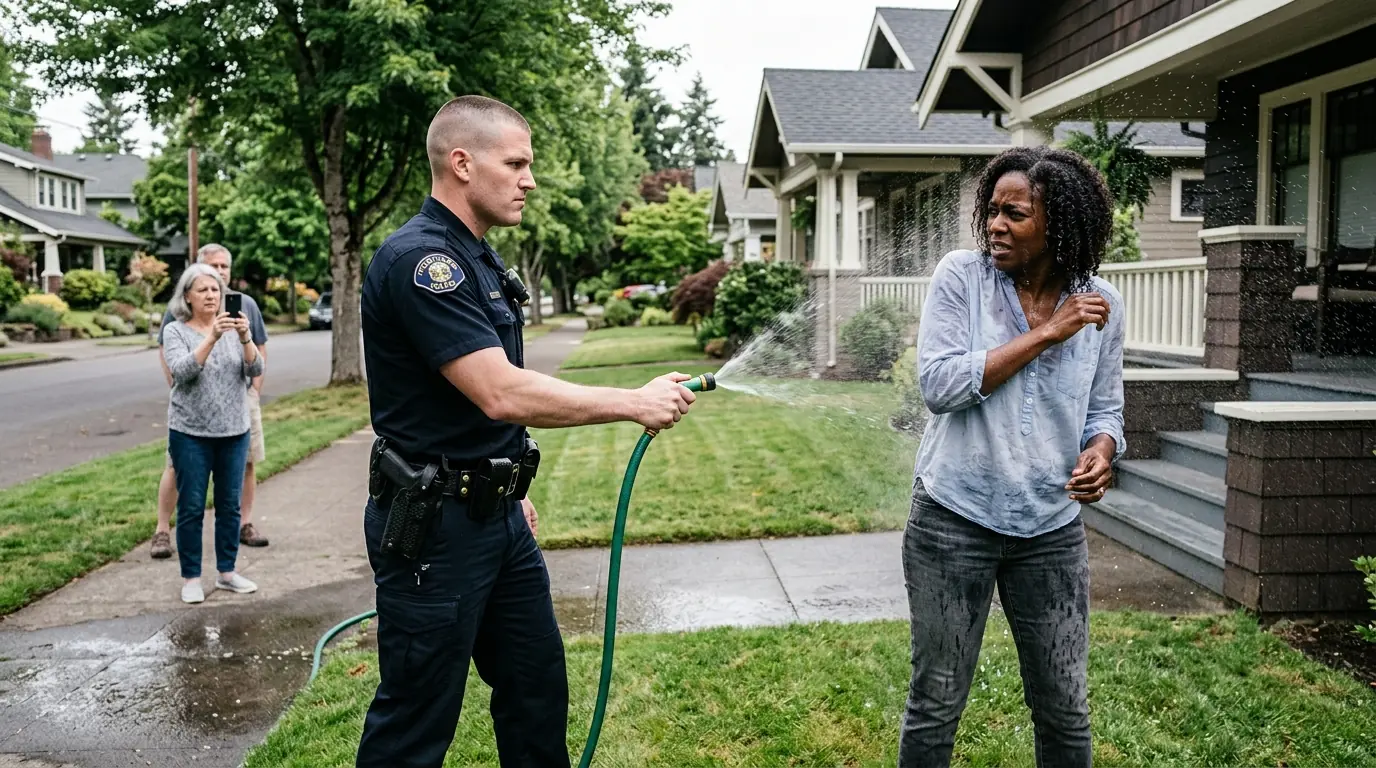
A Cop Humiliated A Black Woman On Her Own Lawn — Then She Opened Her Badge
They Called Police to Take His Mustang — Then He Just Stood There