The first sound was not a knock. It was the low scrape of a boot finding purchase on the front step, followed by a voice that seemed determined to own the house before the man behind it had even entered.
"Police. Open the door." Whitney Adams opened her eyes in the darkness, already reaching for the clock beside her bed. It read 2:03 a.m., an hour when ordinary people were supposed to be safe behind locked doors.
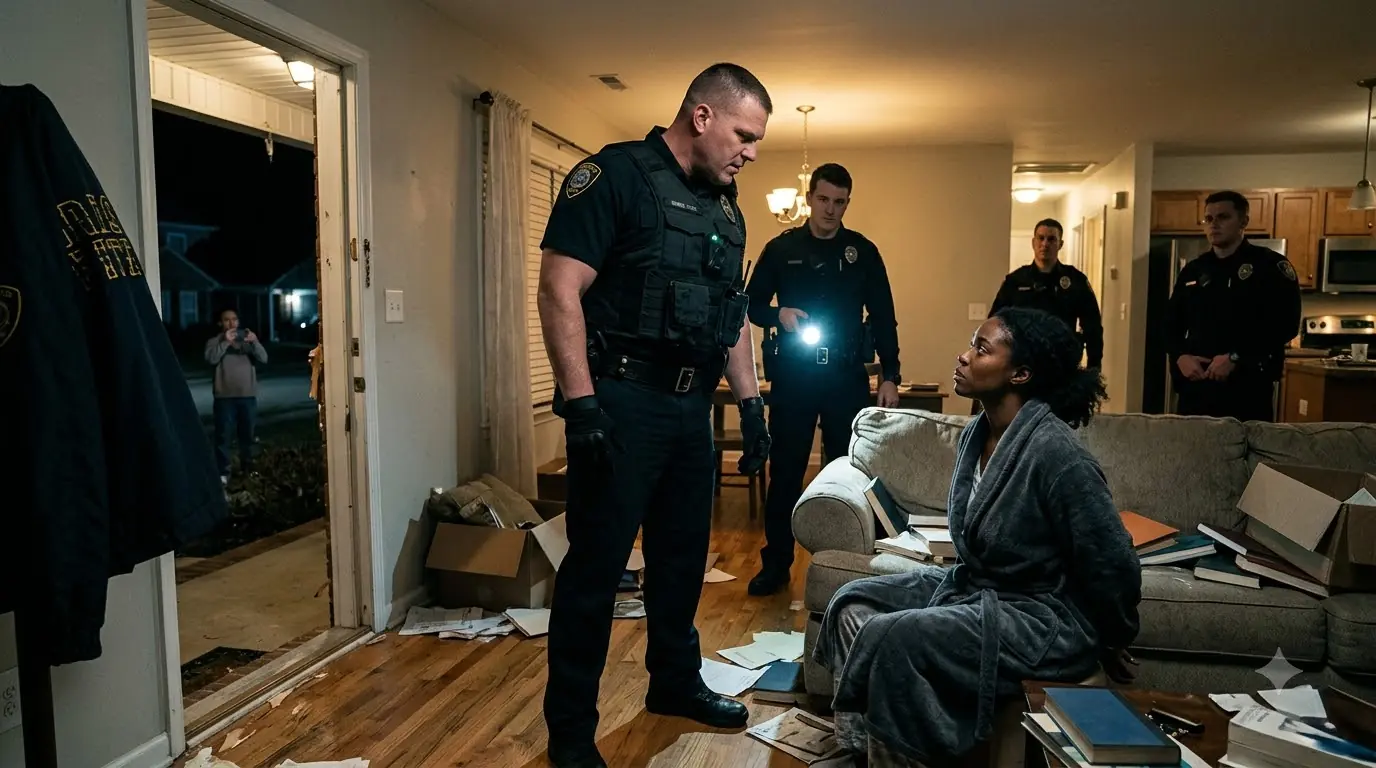
"Identify yourself and tell me whether you have a warrant," she called. The answer came through the hallway in a man's impatient voice: "You don't give the orders tonight." She heard another man laugh, a dry, ugly sound, and then the kind of impact that makes the whole frame of a house answer at once. The deadbolt tore free, wood struck plaster, and four beams of white light began hunting through her new home.
Within minutes, a sergeant would have her on the floor and threaten to invent evidence he could not find. Within an hour, he would see three gold letters stitched across a navy jacket hanging beside the door he had destroyed. He would realize that the woman he had chosen to intimidate had spent nine years investigating officers like him. But the story had begun much earlier, in the quietest possible way, with a moving truck and a neighbor looking through a curtain.
Three weeks before that night, Maplewood Terrace looked like the sort of street people drew when they wanted to illustrate the word settled. The houses were modest but carefully maintained, most with deep front porches, flowering borders, and driveways just wide enough for two cars. Flags moved lazily above trimmed lawns, and the sprinkler heads clicked through their morning rotations while the school bus collected children at the corner. The atmosphere was pleasant enough to convince a stranger that everyone there must already know how to live together.
A moving truck turned onto the street shortly after sunrise and stopped outside number 14, a pale house on a corner lot. Behind it came a silver sedan driven by Whitney Adams, thirty-four years old and tired in the ordinary way of someone who had completed a long transfer before finding time to sleep. She stepped out wearing worn jeans, white sneakers, and a plain gray T-shirt, with dark hair pulled into a practical knot. Her face held none of the excitement the real estate advertisements insisted new homeowners should feel, but there was satisfaction in the way she looked at the front door.
Whitney was a Black American woman who had spent almost her entire adult life learning how complicated the distance could be between an official promise and the way that promise was kept. Her mother had worked two jobs and still made time to help her with schoolwork at the kitchen