The coffee cup struck the checkered floor so hard that the sound seemed to travel beneath every table in Loretta's Griddle.
White ceramic scattered beneath the counter stools, coffee sprayed across the base of a red vinyl booth, and for one astonished second nobody in the diner appeared to know whether to stand, duck, or pretend the noise had come from the kitchen.
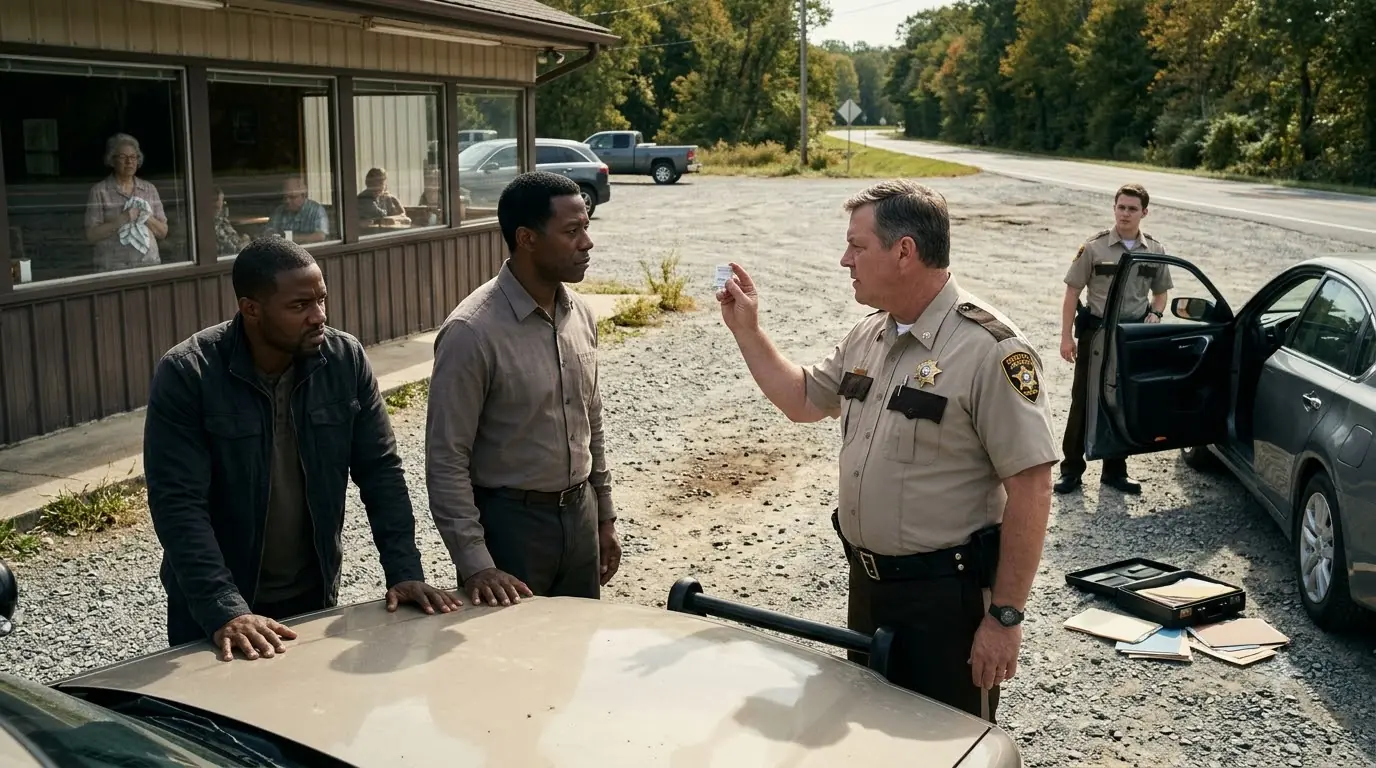
Deputy Russell Crawford stood above the broken cup with his shoulders squared and his jaw lifted, as though the destruction had been some official act performed in the name of the law.
Malcolm Owens had not risen from his seat. His younger brother, Elijah, had, and that simple movement had brought Crawford's hand toward the holster at his hip. The deputy had been calling them names for several minutes, moving from insinuations about stolen money to questions about whether men like them belonged in a family restaurant, until finally he had asked, in a voice that carried to the farthest booth, when the diner had started serving animals.
"We ordered breakfast," Elijah said. His large hands were held where everyone could see them, and the strain in his voice made Malcolm more uneasy than the deputy's hand near his weapon. "We're paying customers, just like everybody else."
"With what?" Crawford demanded. "Somebody else's wallet? A welfare check?" He nudged a piece of broken ceramic with the toe of his boot. "You two can get out before I show you where you belong."
The diner had security cameras. One was fixed above the cash register, another looked along the row of booths by the windows, and a third watched the parking lot. In the right pocket of Elijah's jacket, a phone was recording too, its microphone picking up the deputy's insults, the scrape of furniture, and the silence of people who had heard every word.
Four minutes after that cup hit the floor, Malcolm and Elijah would be standing outside under a merciless Virginia sun. In the following stretch of that morning, six black Chevrolet Suburbans would turn off Route 58 and roll onto Loretta's gravel lot, bringing twelve federal officers into a place where Deputy Crawford had spent years believing his word was the only one that mattered. But the event that changed the deputy's career was not the arrival of those vehicles. It was what he chose to do while he believed nobody important was watching.
Two hours earlier, Malcolm had been driving through a landscape of hay fields and low hills, with the windows of a gray rented Nissan cracked just enough to let in the smell of fresh-cut grass. The September sky was almost colorless at the horizon, blue higher up, and the morning light moved slowly over cattle fences and weathered barns. A gospel song played quietly on the radio, one their mother used to hum while she cleaned the kitchen before church.