Grace’s Recovery After 202 Days in the Shelter
Reader Theme:
Font Size:
24px
Grace’s Recovery After 202 Days in the Shelter
PART 2 — CURRENT CONDITION UPDATE
Grace is now staying in a quiet, temperature-controlled medical foster home while our veterinary team evaluates her breathing and prepares a long-term care plan. She is stable, comfortable at rest, and adjusting well to life outside the shelter. Her condition is not currently an emergency, but laryngeal paralysis can become dangerous if a dog overheats, panics, or exercises beyond her ability.
The larynx sits at the entrance to the windpipe. In a healthy dog, structures within the larynx open as the dog inhales, allowing air to move freely toward the lungs. When the nerves controlling those structures weaken, they may remain partly closed. The narrowed opening makes breathing more difficult, particularly during excitement, physical activity, or hot weather.
Grace’s first obvious symptom was the harsh, raspy sound she made after walking through the clinic. She did not cough continuously, but her breathing became much louder when she was nervous. The veterinarian also noticed that her bark sounded unusually weak and hoarse.
A preliminary examination suggested that one side of her larynx was moving poorly. Because a complete diagnosis requires careful observation of the airway under light sedation, Grace was referred to a veterinary surgery specialist. The procedure must be performed cautiously because too much sedation can alter normal laryngeal movement and make the results difficult to interpret.
The specialist confirmed that both sides of Grace’s larynx were affected, with one side almost completely immobile. Her airway still allows enough air to pass while she is calm, which explains why she can sleep and move around the house without obvious distress. The danger appears when her body suddenly demands more oxygen.
Chest X-rays did not show pneumonia, fluid around the lungs, or an obvious mass pressing against her airway. Her heart was mildly enlarged but remained within a range that can be seen in older dogs. An echocardiogram showed age-related valve changes without congestive heart failure, and Grace does not currently require heart medication.
The team discussed a surgery commonly used to improve airflow in dogs with severe laryngeal paralysis. During that procedure, one side of the larynx is permanently held open. It can greatly reduce breathing difficulty, but it also increases the risk that food or water could enter the airway and cause aspiration pneumonia.
Grace’s surgeons do not believe that decision should be rushed. She is breathing comfortably in her current environment, and her other medical problems must be considered before anesthesia. For now, her caregivers are managing her condition by controlling heat, stress, body weight, and activity.
Grace wears a padded harness rather than a collar. Nothing is allowed to press against her throat. Her outdoor trips take place during the coolest parts of the morning and evening, and she remains inside on warm or humid afternoons.
Her foster caregiver watches for a rapid increase in breathing effort, blue or pale gums, collapse, panic, excessive drooling, or an inability to recover after mild activity. An emergency cooling plan has been prepared, and the nearest veterinary hospital has Grace’s records in case she needs immediate treatment.
So far, Grace has experienced no respiratory crisis. During her first days in foster care, she became noisy after walking only halfway down the driveway. Her caregiver stopped, guided her into the shade, and waited until her breathing settled before returning slowly to the house.
Her walks have since been shortened to several calm outings of five to eight minutes. Grace chooses the pace and is never encouraged to continue if she begins breathing heavily. On cool mornings, she can now explore the yard and return indoors without the harsh sound becoming pronounced.
Her resting respiratory rate is recorded while she sleeps. This gives the medical team a consistent measurement that is not influenced by excitement. The numbers have remained stable, and she continues to sleep comfortably on her side.
Grace’s weight is also important. She was not severely overweight when rescued, but even a few unnecessary pounds could make breathing more difficult and place additional pressure on her arthritic joints. Her meals are carefully measured, and treats are taken from her daily food allowance whenever possible.
She eats two moderate meals each day rather than one large portion. Her bowl is raised slightly so she does not have to bend sharply, but it is not positioned so high that she must stretch her neck. Water is offered in smaller amounts throughout the day because drinking too quickly can trigger coughing in dogs with airway weakness.
During her first week, Grace occasionally gulped water after returning from outside and then coughed several times. Her caregiver now allows her to cool down before offering the bowl and encourages slower drinking. The coughing episodes have become much less frequent.
A swallowing assessment did not reveal severe dysfunction, but the veterinarian remains alert to the possibility that nerve changes may affect more than Grace’s larynx. Some older dogs with this condition eventually develop weakness in other parts of the body, particularly the hind legs.
Grace already had reduced muscle around her hips when she arrived. X-rays showed moderate arthritis in both hip joints and degenerative changes along the lower spine. There was no recent fracture, but the stiffness was significant enough to explain why she rose slowly and sometimes dragged the nails of one back paw.
A neurological examination found mild weakness and delayed paw placement in both hind legs. Grace can still correct her footing and walk independently, but the findings suggest that her difficulty is not caused by arthritis alone. The veterinary team suspects a broader age-related nerve condition that can accompany laryngeal paralysis.
There is no medication that can reverse this nerve degeneration. Treatment focuses on preserving strength, preventing injury, and helping Grace remain active without pushing her breathing beyond safe limits. Her progress will be measured by comfort and function rather than by expecting her to move like a younger dog.
The foster home has been adapted for her. Nonslip runners cover the hallway, and a ramp allows her to enter the yard without using steep steps. Her food, water, and bed are all on the same floor. Baby gates prevent her from attempting the staircase when no one is nearby.
A support harness is available for days when her back legs feel weak. Grace does not need it during every walk, but the handle allows her caregiver to steady her without pulling on her neck. She accepted the harness calmly after being given time to smell it.
Her pain is managed with medication selected according to her bloodwork. Grace’s kidney and liver values are currently within acceptable ranges, though they will be monitored because senior dogs can become more sensitive to long-term medications. She also receives a veterinarian-approved joint supplement.
After several days of pain relief, Grace began standing more easily. She still pauses before pushing herself up, but she no longer needs multiple attempts each time. Her back feet occasionally slip when she turns too quickly, so her caregiver guides her through wide, slow turns.
A rehabilitation specialist created a gentle home program consisting of controlled weight shifts, supported standing, and short walks on level ground. Strenuous exercises and underwater treadmill sessions are not appropriate until the breathing specialist decides what level of exertion is safe.
Grace appears to enjoy the simple exercises because they are followed by a quiet rest and a small food reward. She has begun placing more weight on her left hind leg and can remain standing while her meals are prepared. The team considers preservation of her current mobility a meaningful goal.
Her painful ears have also received treatment. Both canals were inflamed, with the right ear containing a heavy accumulation of wax and debris. Laboratory examination identified yeast and bacteria but did not show ear mites.
The ears were gently flushed while Grace was sedated for her airway evaluation. She now receives medicated drops at home. Initially, she lowered her head and walked away when the bottle appeared, so her caregiver introduced the routine slowly and avoided cornering her.
Grace now stands on a rubber mat while each ear is treated. She accepts a small piece of softened food after the drops are applied. The odor and redness have decreased, and she no longer shakes her head throughout the night.
Her hearing appears reduced, especially on the side with the more severe infection. Some improvement may occur as inflammation subsides, but age-related hearing loss is also possible. Grace responds more consistently when a person approaches within her line of sight or gently taps the floor to create vibration.
Caregivers avoid startling her while she sleeps. They speak before touching her and allow her to see their hands. This has reduced the flinching that was common during her first examination.
Grace’s mouth requires additional care. She has heavy tartar, gum recession, and several loose or damaged teeth. Dental X-rays will be needed to determine how many teeth must be extracted.
A dental procedure is being postponed until the anesthesia team decides whether it can be combined safely with any airway surgery. Repeated anesthesia would place unnecessary risk on an older dog with breathing limitations. Until then, Grace receives softened meals and veterinary medication for oral discomfort.
She continues to eat with interest and has not shown facial swelling or active bleeding. She favors one side of her mouth and avoids hard treats, but she finishes nearly every meal. Her caregiver checks her appetite carefully because a sudden refusal to eat could indicate worsening dental pain or another medical change.
Grace’s coat was dull and shedding heavily when she left the shelter. A skin examination found dryness and mild irritation but no severe infection or open wounds. Flea prevention was administered, and accumulated undercoat was removed gradually rather than through one long grooming session.
Long grooming sessions made her restless and caused her breathing to become louder. Her caregiver now brushes one section for only a few minutes at a time. Grace has started leaning into the brush along her shoulders and chest.
Her skin looks healthier, and the coat around her neck and back has regained some shine. She still sheds considerably, which is normal for a German Shepherd, but the thick mats behind her legs have been removed without shaving large areas.
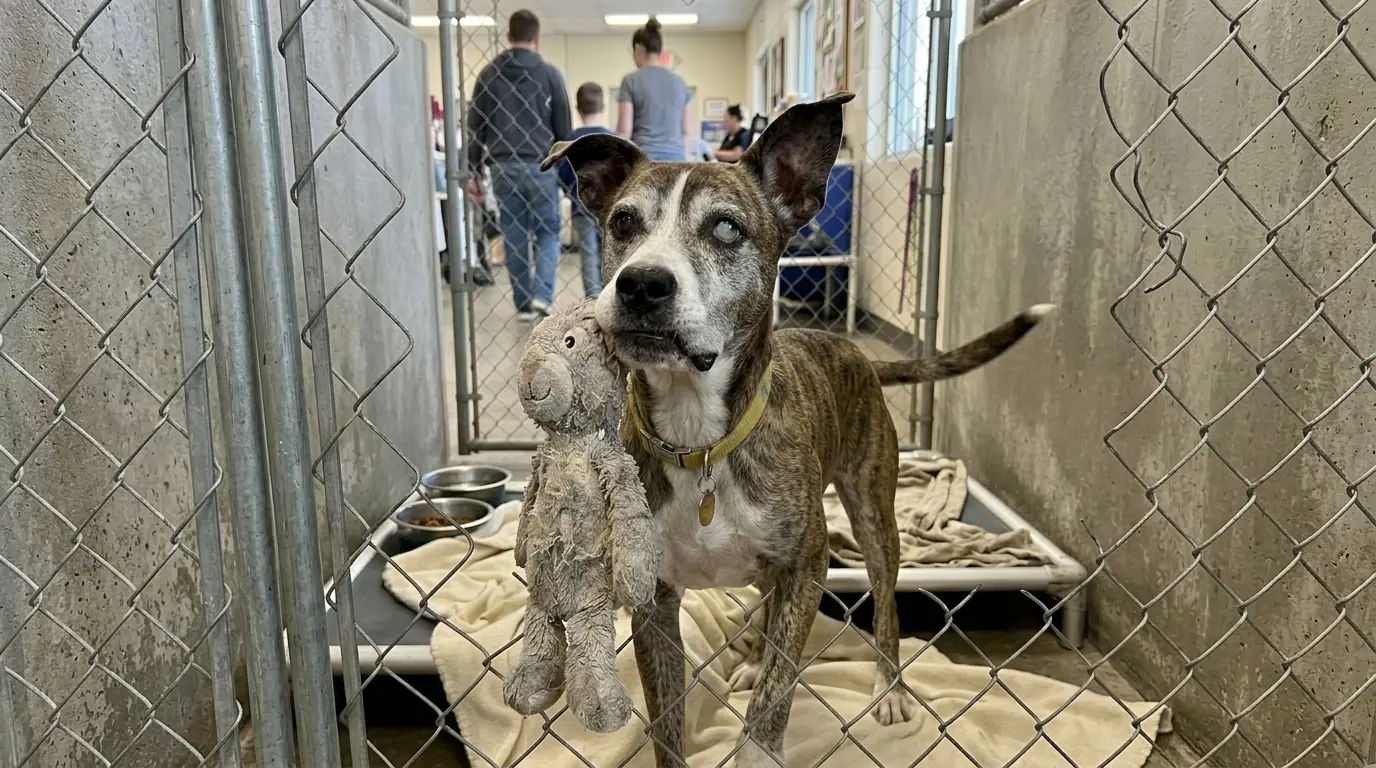
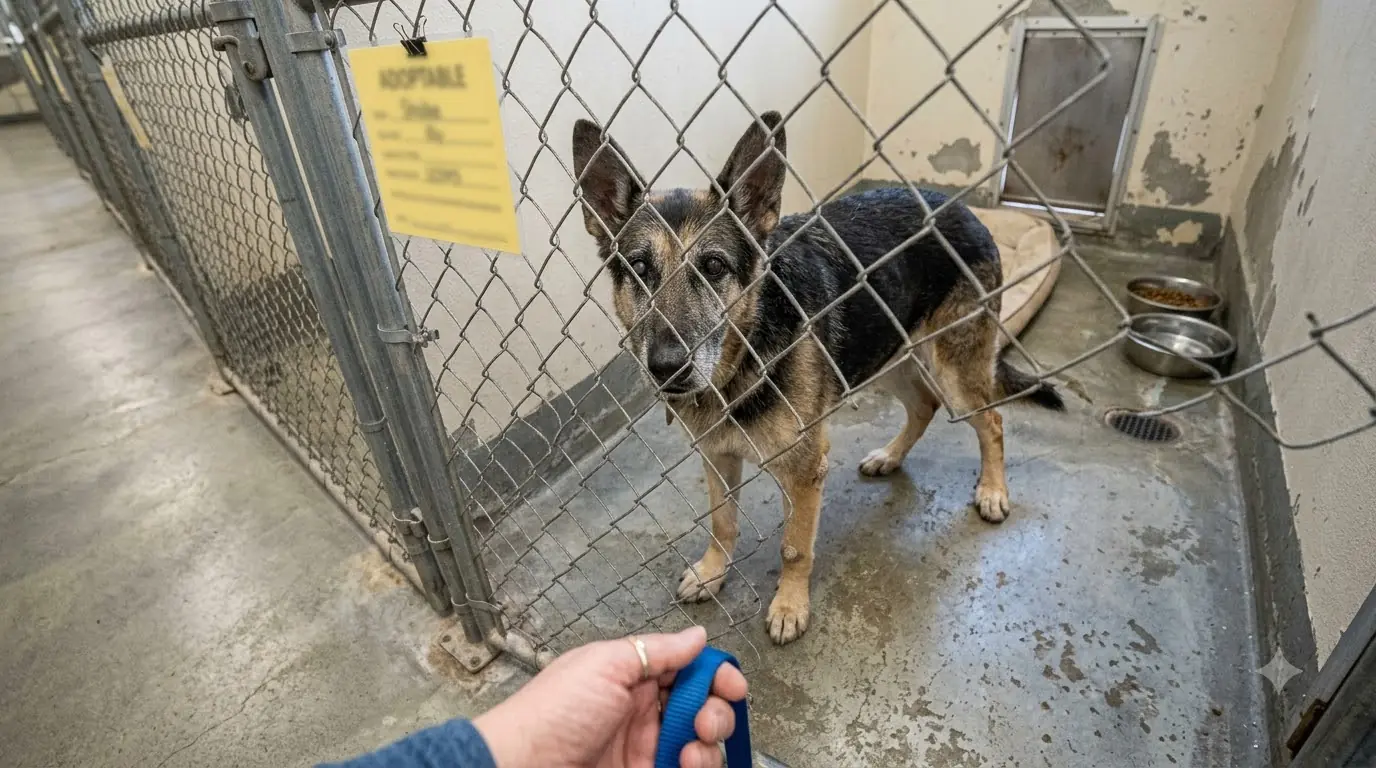
Emotionally, Grace arrived with habits formed during 202 days of watching people from behind a kennel gate. She had learned that footsteps could mean attention, a walk, a meal, or another visitor leaving with a different dog. That uncertainty followed her into the foster home.
During her first afternoon, Grace stood near the front window and watched every person who passed outside. When a car door closed, she walked toward the entrance. If someone entered, she approached slowly and waited several feet away.
She did not demand affection. She simply remained visible, as though she had learned that being overlooked was more likely if she returned to her bed. Even when tired, she resisted lying down while unfamiliar people were present.
Her foster caregiver began giving her a predictable resting place away from the front door. A thick orthopedic bed was positioned in a quiet corner of the living room where Grace could observe the household without standing. Each time she chose the bed, she received calm praise.
At first, Grace remained there for less than a minute. She would hear movement and rise again. Over several days, she began resting her chest on the bed while keeping her head upright. Eventually, she lowered her chin and slept.
She now spends part of each afternoon stretched across the bed while her caregiver works nearby. She still opens her eyes when the door moves, but she no longer stands for every sound. This reduction in vigilance has helped her breathing because she experiences fewer episodes of sudden excitement.
Grace remembers visitors much as Atlas did, but she responds differently. She moves to the front of the room and waits quietly. If someone kneels and offers a hand, she smells it carefully before stepping close enough for her shoulder to be touched.
She especially enjoys slow scratching beneath her chin, where hands remain visible and do not pass over her head. If the person stops, Grace sometimes nudges the hand once. She does not insist if they move away.
One evening, her foster caregiver returned after a short trip to the grocery store. Grace walked toward the door, gave two restrained sweeps of her tail, and leaned her full shoulder against the caregiver’s legs. It was the first time she had greeted anyone with unmistakable relief.
The family is careful not to encourage frantic reunions because excitement can compromise her breathing. Arrivals remain quiet, and Grace is acknowledged only after all four paws are steady and her breathing is controlled.
She has begun following the household routine. She wakes when the kitchen lights come on, waits on a rug while breakfast is prepared, and then returns to her bed. In the evening, she walks to the back door before her final trip outside.
Grace does not show much interest in balls or energetic games. She prefers scent-based activities that require little exertion. Her caregiver hides several pieces of food beneath loosely folded towels or around one room.
At first, Grace watched the food being placed and waited for help. She now searches independently, moving slowly from one hiding place to another. The activity provides stimulation without causing the excitement that comes with chasing toys.
Her interactions with other dogs are being managed cautiously. She observed a calm senior dog through a secure barrier and showed neutral body language. Her ears remained upright, but her muscles were relaxed and she was able to turn away.
A short parallel walk was later conducted with both dogs on harnesses and several feet apart. Grace did not attempt to approach aggressively or initiate play. Because of her physical limitations, any future canine companion would need to respect her space and avoid rough contact.
She has not been tested with cats, and her history around children is unknown. A calm home with adults or older children would likely suit her better than a busy household. Sudden chasing, tight hugs, and high-energy play could increase both her stress and respiratory risk.
The next major decision concerns airway surgery. Grace will return to the specialist after several weeks of controlled activity and careful observation. Her resting breathing, recovery after walks, coughing frequency, swallowing behavior, and overall comfort will all be reviewed.
If she remains stable, the team may continue conservative management while keeping surgery available if her symptoms worsen. If she begins struggling during mild activity or experiences a respiratory emergency, the balance may shift toward operating sooner.
No option is completely without risk. Surgery could give Grace a larger airway and greater tolerance for movement, but it would permanently change the protection of her windpipe during swallowing. Conservative care avoids that surgical risk but cannot stop the underlying nerve weakness from progressing.
Our team will make the decision according to Grace’s quality of life rather than her age alone. Ten-year-old dogs can still enjoy meaningful, comfortable years, and her willingness to engage with people shows that she has not withdrawn from life.
Grace is not ready for adoption. Her breathing plan must be finalized, her dental disease addressed, and her mobility stabilized. A permanent family will need to understand that she cannot exercise in hot weather, wear a neck collar, become overweight, or be left outside without supervision.
They will also need to recognize the early signs of respiratory distress and be prepared to seek emergency care. Her condition may require ongoing specialist visits, rehabilitation, medication, and environmental adjustments.
Those needs are significant, but they do not define every part of Grace’s day. Most of her time is spent resting comfortably, eating softened meals, exploring the yard at a measured pace, and staying close to someone she trusts.
Grace still walks toward the door when a visitor arrives. The difference is that she no longer has to present herself through chain-link fencing and hope to be selected before they move on. She can greet them, return to her bed, and trust that her caregiver will remain.
After 202 days of being visible but repeatedly overlooked, Grace is finally receiving the patient medical attention her age and condition require. Her future contains uncertainty, but she is breathing safely, sleeping deeply, and learning that she no longer has to stand at the front of a kennel to remind people she is there.
News in the same category
Iris’s Recovery After Two Years in a Shelter Kennel

A Mother Dog and Her Five Puppies Were Abandoned in a Cardboard Box
Atlas’s Recovery After Five Months of Watching Visitors Pass
Lucky’s Recovery After Eight Months in a Shelter Kennel
What's next for Shadow after Jackie's death?
A Starving Dog Was Rescued After Being Trapped Without Food for Days
Captain’s Recovery After Seven Months in a Concrete Kennel
Daily’s Recovery After Losing Her Owner at Age 11
A Frightened Dog Was Found Trapped in a Thorn Bush Beside the Highway
Big Bear's viral eagle Jackie dies after weeks of intensive care
NEW UPDATE: Jackie the eagle endures 'difficult' 24 hours
NEW UPDATE: Vets share 'difficult news' about Big Bear bald eagle Jackie
Jackie the eagle’s caregivers face intense response
Jackie the eagle’s caregivers face intense response

Jackie the bald eagle's recovery takes a worrying turn after latest health update
A Mother Dog Shielded Her Five Puppies Through a Violent Rainstorm