The rain had stopped only a few minutes earlier when I pulled my car to the side of the road and looked at my co-worker sitting quietly in the passenger seat. She had spent the entire evening pretending she was fine, pretending the red eyes and trembling hands were caused by exhaustion. I almost didn't offer her a ride home. I almost drove away and minded my own business like everyone else in the office did, but something about the sadness in her face reminded me of my own lonely nights.
And that single decision changed both of our lives forever. I had no idea that when I reached her house, an elderly woman would open the door, smile through her tears, and look at me as if I had been part of their family for years. My name is Rowan Mercer, and at 32 years old, I had become an expert at being alone. I worked as an accountant in a medium-sized construction company, spent my evenings in a small apartment, and lived a life that was painfully predictable. three years earlier, I had lost my fiancée in a terrible accident just two weeks before our wedding.
Since then, I had built walls around my heart so high that no one could climb over them. I smiled when necessary, completed my work, and avoided getting close to anyone. six months before that rainy evening, a new employee joined our office. Her name was Maris Vale. She was 28, quiet, and carried a gentleness that seemed almost old-fashioned.
Unlike everyone else, she never participated in office gossip. She brought homemade lunches, remembered everyone's birthdays, and often stayed late to help others finish their assignments. I noticed her because she reminded me of sunlight. She had a way of making even the dullest room feel warm.
But I kept my distance, convinced that friendship always led to loss. Then one afternoon, I found her crying in the archive room. She quickly wiped her tears and pretended everything was fine. But I had seen enough grief in my life to recognize it immediately.
From that day, I began noticing how exhausted she looked every morning. Dark circles appeared beneath her eyes. She sometimes skipped lunch to save money. Yet, she never complained.
One evening, our manager announced another round of layoffs because the company was struggling financially. Everyone became nervous, especially Maris. Losing her job would mean losing her mother's treatment. I could see the fear in her eyes.
A week later, I discovered something that broke my heart. She had secretly sold her father's old watch and several pieces of furniture to pay for medication. I wanted to help, but I didn't know how. Then came the rainy evening that changed everything.
The buses had stopped running because of flooding in certain parts of the city. Most employees hurried home before the weather became worse. I noticed Maris standing outside the office building without an umbrella, staring at her phone. She looked lost.
I asked if she needed help. At first, she refused, but after another heavy shower began, she reluctantly accepted my offer for a ride. The drive was quiet. Street lights reflected on the wet roads while soft music played from the radio.
After several minutes, she finally spoke. She confessed that she had spent the entire day at the hospital because her mother had suffered another attack. The doctors warned that surgery might become necessary. I didn't know why, but I told her about my fiancée and how losing someone had changed me.
For the first time, I saw her smile. It was small and sad, but it was real. She said that grief changes people, but kindness can slowly put the pieces back together. Those words stayed with me.
When we reached her neighborhood, I realized she lived in one of the oldest parts of the city. The houses were small, their paint fading under years of sunlight and rain. She invited me inside for tea as a way of thanking me. I almost refused.
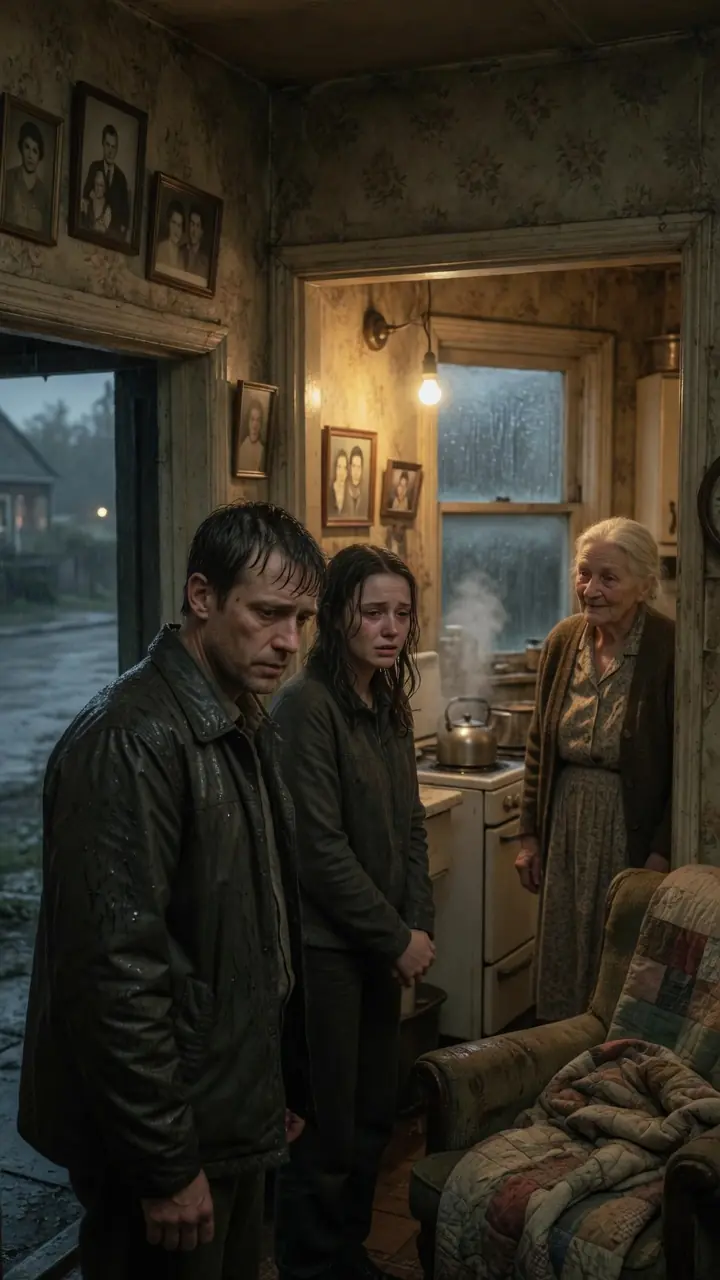
Then the front door opened. An elderly woman stood there wearing a simple sweater and holding a blanket around her shoulders. Her face looked tired, but her eyes sparkled with warmth. She smiled when she saw me.
Then she said something that made my heart stop. She smiled gently and said that I must be the man her daughter kept talking about. I looked at Maris in confusion. She turned bright red.
Her mother laughed softly and explained that every evening Maris came home with stories about a quiet man at work who stayed late to help everyone, who carried extra umbrellas in his car for rainy days, and who always looked sad even when he smiled. I couldn't remember the last time anyone had spoken about me with affection. For a moment, I simply stood there. Then something unexpected happened.
The old woman hugged me. I hadn't been hugged like that since my mother passed away years earlier. It felt like coming home. Inside the small house, I saw photographs covering the walls.
Most of them showed a younger Maris with her parents. Her father had died five years earlier from cancer. Since then, she had become everything for her mother. She worked two jobs, handled the bills, cooked every meal, and still managed to care for everyone around her.
I suddenly realized that the strongest person I had ever met was sitting right in front of me. That night, we talked for hours. I learned that her dream was to open a small bookstore one day because books had helped her survive difficult times. I shared memories of my fiancée and admitted that I had spent years punishing myself for surviving.
Her mother listened quietly and finally said something I would never forget. She said that grief is love with nowhere to go, and perhaps I had simply been carrying too much love by myself. I couldn't sleep that night. Her words echoed in my mind.
Over the next few weeks, I found myself visiting their home more often. Sometimes I brought groceries. Sometimes I fixed broken shelves or repaired a leaking faucet. Sometimes I simply sat with them and drank tea.
For the first time in years, I looked forward to tomorrow. Then disaster struck. One morning, Maris received a call from the hospital. Her mother's condition had worsened.
The surgery needed to happen immediately. The cost was impossible. I watched the hope disappear from her face. She tried to stay strong, but I could see her breaking apart.
That evening, I went home and opened an old box containing memories of my fiancée. Inside was the engagement ring I had kept all these years. I had never been able to let it go. But suddenly I understood something.
Love is not about holding on to the past. It is about helping someone else live. The next day I sold the ring. I emptied my savings account.
When I handed the money to Maris, she burst into tears. She refused at first, but I reminded her that years earlier, someone had helped me when I thought my life was over. This was my chance to pass that kindness forward. The surgery took six hours.
They were the longest six hours of my life. I sat beside Maris in the hospital waiting room, watching the clock and praying silently. When the surgeon finally appeared with a smile, we both collapsed in relief. Her mother was going to survive.
Maris cried against my shoulder. I held her carefully, realizing that my heart had been healing without me noticing. Over the following months, her mother recovered slowly. Life became brighter.
I laughed more. I smiled more. I even started taking photographs again, a hobby I had abandoned after losing my fiancée. One sunny afternoon, I accompanied Maris to a small empty store that was available for rent.
She looked through the window and whispered that it would make the perfect bookstore. I looked at her face. There was hope there, real hope, and I knew exactly what I wanted. Together, we made a plan.
I helped with the paperwork. Friends from work volunteered to paint the walls. Her mother baked cookies for everyone. three months later, the bookstore opened. They named it Second Chapter because every life deserves another beginning.
On opening day, children filled the tiny shop. Laughter echoed between shelves and sunlight poured through the windows. I looked around and realized something extraordinary. I was no longer alone.
I had found a family. A year later, I stood inside the bookstore after closing time. The shelves were full. The business was thriving.
Maris's mother was healthy again, and I was happier than I had been in years. That evening, I asked Maris to walk with me to the little park across the street. The sunset painted the sky in shades of gold and orange. I told her that she had done something impossible.
She had taught a broken man how to live again. She had shown me that love can return when we least expect it. Then I asked if she would spend the rest of her life writing new chapters with me. Tears filled her eyes.
She said yes. Her mother cried even harder than we did. six months later, we were married in the bookstore itself. The shelves were decorated with flowers. Children from the neighborhood carried candles.
And her mother watched us with tears of happiness. As I looked at my wife, I realized that the rainy evening when I offered a simple ride home had never been an accident. Sometimes life doesn't heal us with grand miracles. Sometimes it sends us a tired co-worker standing in the rain.
Sometimes it opens a small front door and places an elderly woman there to remind us that we are loved. And sometimes when we think our story has already ended, life quietly turns the page and begins a beautiful second chapter.
END