Two patrol cars were parked crosswise across my gravel drive, their headlights reaching up the four steel legs of the water tower my grandfather built. Beyond the wire fence, forty of my neighbors stood with their phones raised, watching as if they had arrived for an evening performance.
The steel valve wheel was still cold against my palms when the first officer told me to step away. Diane Caldwell pointed at me before he had finished climbing out of his cruiser.
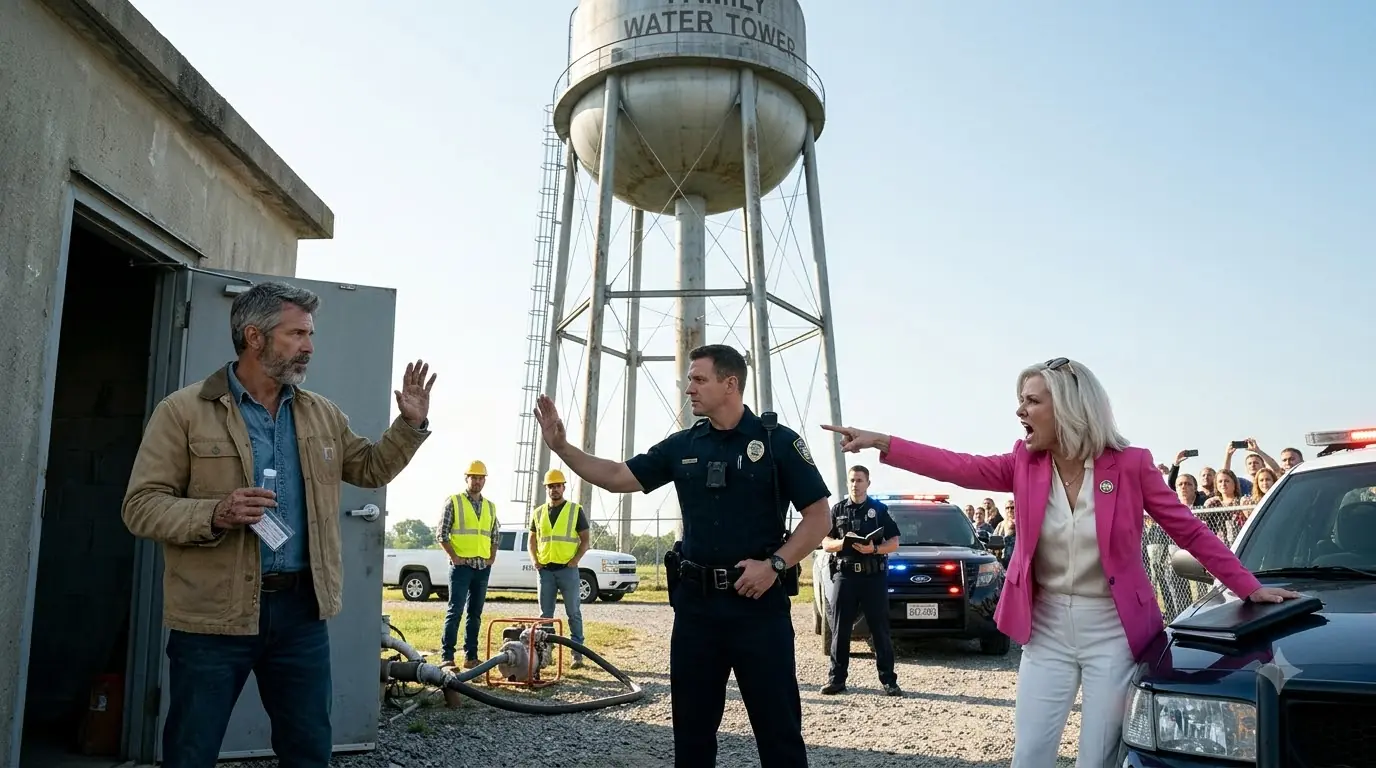
"That's him," she announced. "He cut the water to a hundred and eighty-six homes. There are children in those houses. Arrest him."
I released the wheel, backed eleven feet across gravel my grandfather had spread with his own hands, and held my palms where the officer could see them. The tower gave a long, low groan overhead as sixty thousand gallons of stored water settled against declining pressure. Diane called me an unlicensed farmer, a trespasser on community property, and a man trying to extort his neighbors over an unpaid bill. The officer asked whether I had shut the valve, and I told him I had.
That answer was all Diane wanted to hear. She told the deputy to write it down, take my keys, and remove me from the property before I could cause more damage. Nobody behind the fence spoke my name, although I recognized almost every face. Some of those people had watched me replace water-service connections in freezing rain, and some had called me at midnight when a pipe burst under their kitchen sinks. At that moment, they saw only the man who had left them without running water.
I did not tell Diane what her call to the police would eventually accomplish. I did not tell her that she had invited independent witnesses onto ground where she had spent years pretending I did not belong. Most of all, I did not tell her about the number I had written in my water-quality log less than two hours earlier. It was a single zero, with a decimal point in front of it, and it frightened me more than two cruisers ever could.
Ten days later, a woman would step out of a white county truck and say six words that changed everything: "HOA has no rights here." Before those words, however, came ten days in which I nearly lost my operator certification, my livelihood, my neighbors' trust, and the water system my family had maintained for three generations. To explain how that happened, I have to go back to the morning before the first patrol car came up my drive, and then further back to the summer of 1958.
My name is Kenneth Wilson. I was fifty-four years old that year, married to a woman named Ruth who knew my moods from the sound of my boots on the kitchen floor, and father to a daughter, Emily, who had just begun her second year at college. We lived on the