HOA Karen Used My Property as a Shortcut — Until One Drive Changed Everything
Reader Theme:
Font Size:
24px
Chapter 1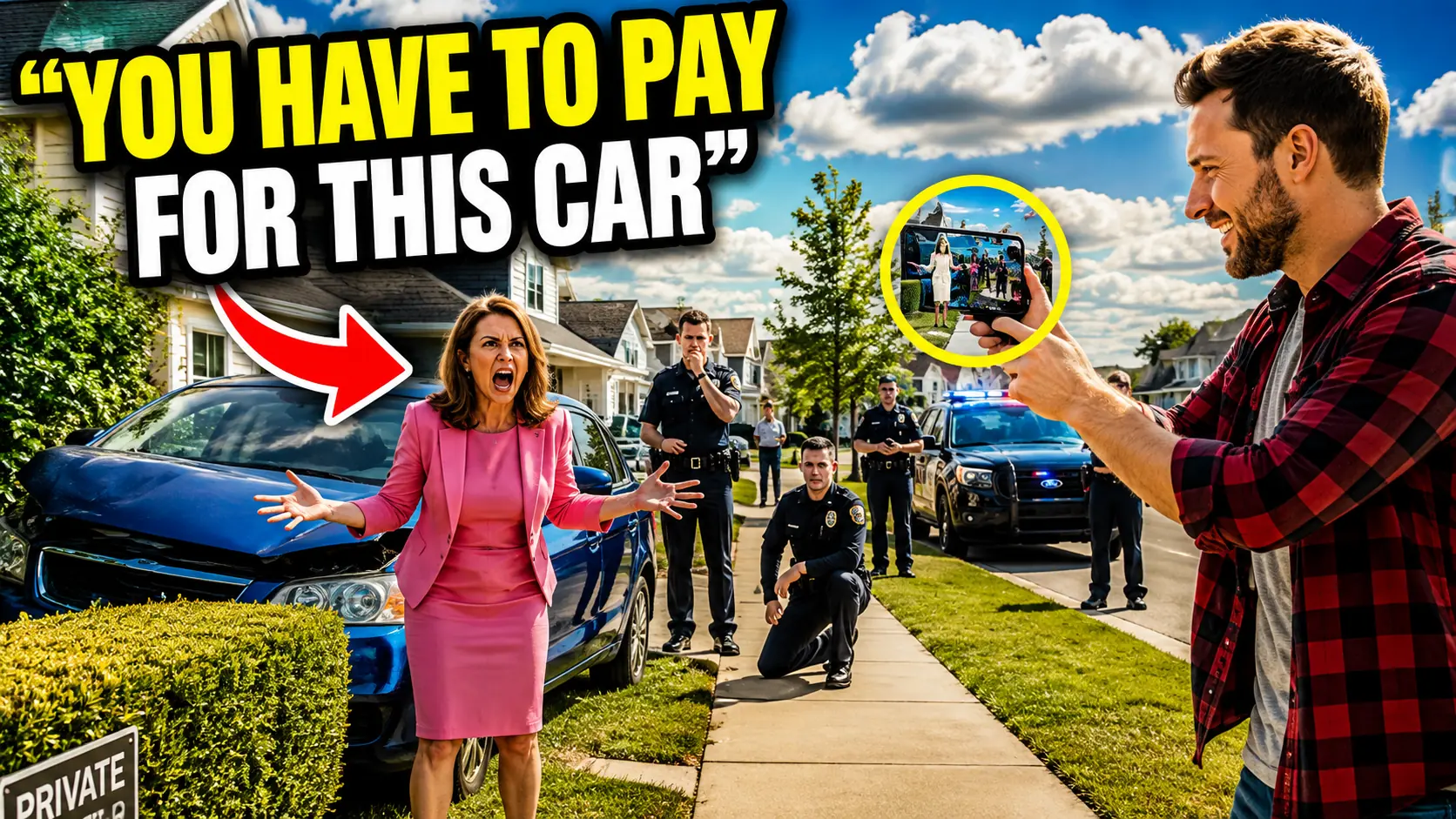
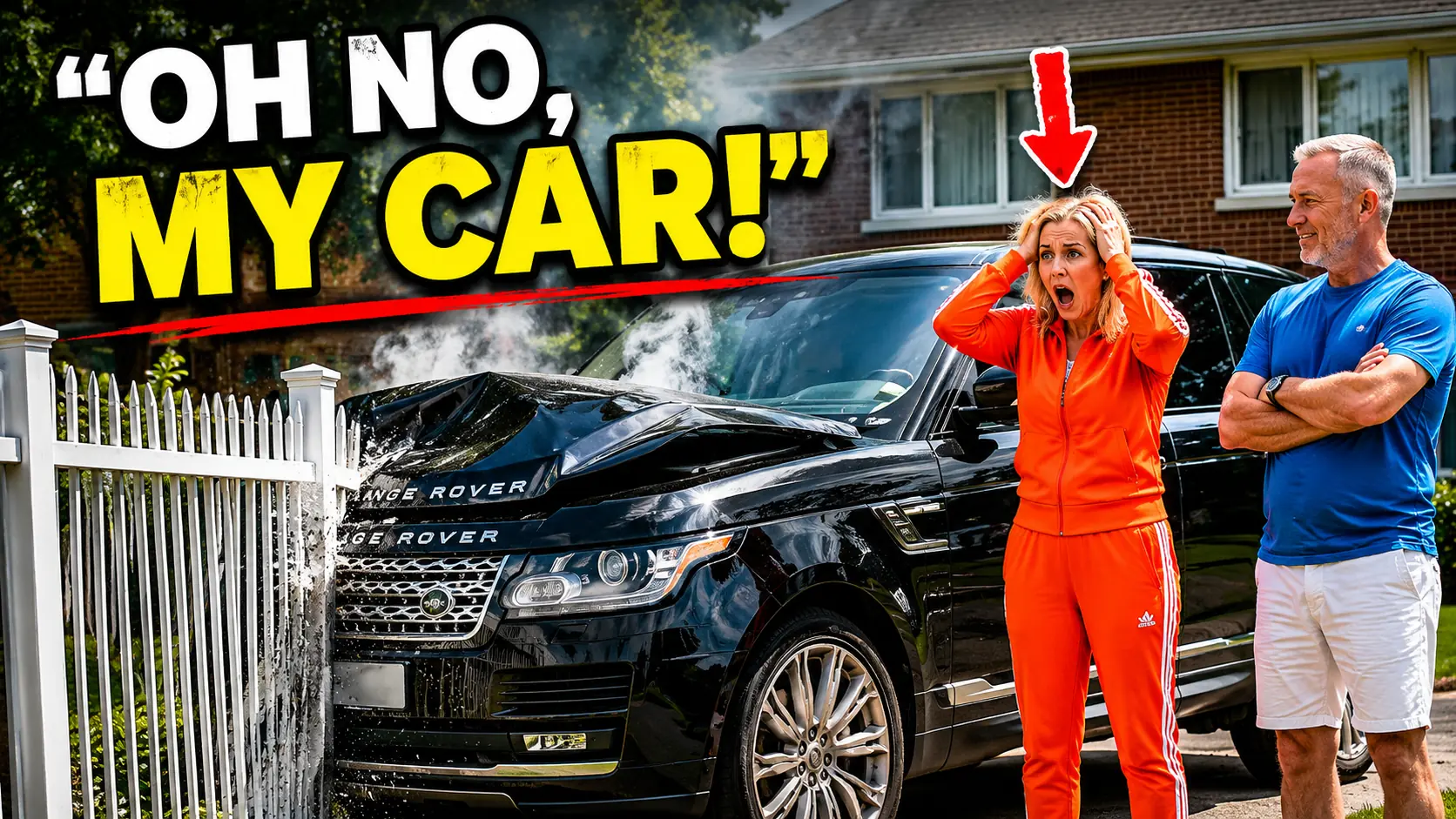
Crash. The sound of metal twisting and wood splintering echoed down my street like a thunderclap. I rushed outside just in time to see Karen Whitmore, our self-appointed HOA queen, stumbling out of her prized Range Rover, staring in disbelief at what used to be my fence. Only this time, the fence was still standing, and her SUV was the one in ruins. Smoke hissed from the hood. Her bumper hung off like a loose tooth. And my neighbors peeked out from their porches, gasping, whispering, even laughing under their breath. For weeks, Karen thought she could plow through my property like it was her personal shortcut, daring me to stop her. Well, she finally hit the wall, literally. And trust me, it wasn’t luck.
When I first moved into our neighborhood, I thought I had found a slice of the American dream. Quiet streets where kids ride their bikes without fear. Neighbors who wave politely as they mow their lawns in tidy little homes that look like they’d been plucked straight out of a suburban postcard. My house wasn’t the biggest on the block. And I didn’t have the flashiest yard ornaments, but I had something I was proud of. My fence. That fence wasn’t just a row of wooden boards hammered into the ground. It was the result of months of sweat, planning, and late evenings with a hammer in one hand and a cold beer in the other. I designed it myself, built it from sturdy pine, and painted it a crisp white that practically glowed in the Sunday sun. It wasn’t fancy, but it framed my yard perfectly and gave me that feeling every homeowner craves. This is mine.
For a while, life was peaceful. I’d sit on my porch in the evenings watching the sun dip behind the rooftops, sipping coffee while my dog Max lounged near the gate. I kept my lawn trimmed, my garden neat, and my fence straight. And for a few months, no one had anything to complain about. That peace didn’t last long. You see, in every neighborhood, there’s always one person who seems to think the rules are written only for everyone else. In our community, that person was Karen Whitmore. Picture a woman in her late 50s, designer sunglasses glued to her face, a perpetual sneer tugging at her lips, and an SUV so big it could rival a tank. Karen wasn’t just any resident. She was on the HOA board. Worse yet, she carried herself like she was the queen of the HOA. Untouchable, unchallenged, and convinced the entire neighborhood revolved around her whims.
At first, I didn’t pay her much attention. She had her clique of friends who whispered during board meetings, her habit of posting passive-aggressive notes on community bulletin boards, and her endless parade of rules about aesthetics. Fine. If she wanted to obsess over how high someone’s grass was or whether a mailbox leaned two inches too far, that was her problem. But then she turned her sights on me. It started with comments. She’d slow down her SUV as she drove past my house, roll down the tinted window, and call out, “That fence looks a little off-white. Don’t you think HOA guidelines prefer eggshell?” Or she’d corner me at the mailbox, wagging a manicured finger at the boards. “Did you measure the spacing correctly? We wouldn’t want to violate symmetry standards.” I’d smile, nod politely, and walk away, telling myself she was just bored and needed a hobby.
But then she escalated. One morning, I woke up to the sound of Max barking furiously in the yard. I walked out, coffee mug in hand, only to find my fence leaning awkwardly. A section of it splintered and broken. At first, I thought maybe it had been a storm, though there hadn’t been one. Then I saw deep tire tracks cutting across the grass, leading straight through the broken boards. I didn’t have to guess. I already knew who it was. Later that day, I saw her. Karen, smug as ever, steering her shiny black Range Rover down her driveway. And instead of using the street like every other decent human being, she casually cut across my yard through the gap in the fence, bouncing over the grass as if it were her private shortcut. She gave me the most insincere little wave, the kind that said, “What are you going to do about it?” I clenched my jaw so hard it hurt.
You’d think anyone with a shred of decency would apologize, maybe even offer to pay for repairs. Not Karen. She doubled down. The next HOA meeting, she stood there in front of the entire board and announced, “We really should address unsightly damage to fences in the neighborhood. It drags down property values.” And then she had the gall to look directly at me as if I were the one at fault. I filed a complaint with the HOA, complete with photos of the tire tracks and the smashed boards. The response? A polite but dismissive letter saying they’d look into it. A week later, I received an official notice in the mail. Violation: fence in disrepair. Fine: $200. I nearly choked. Not only had she destroyed my fence, but now the HOA—her HOA—was fining me for it. That was the moment something inside me shifted. I wasn’t just annoyed anymore. I wasn’t just angry. No, this had become personal. Karen had made a mockery of me in front of my neighbors, wrecked something I had built with my own two hands, and then laughed in my face while fining me for the privilege. Every time I looked at that broken fence, every time I caught her smirk as she drove past, I felt my blood pressure rise. But here’s the thing. I’m not the kind of man who acts on impulse. No, I’ve learned in life that the sweetest revenge isn’t loud, and it isn’t quick. It’s quiet, patient, and precise.
I started watching Karen more closely. Her routine was predictable. Morning yoga at the community center, afternoon shopping trips, evening HOA patrols where she cruised around in her Range Rover looking for violations to report. And more than once, I saw her cut across my property like it was a public road. It wasn’t an accident. It wasn’t careless. It was deliberate. That’s when I began thinking: if she wanted to make my fence her personal driveway, maybe it was time the fence fought back. I didn’t know how just yet, but I knew one thing for certain. Karen had just declared war, and I wasn’t about to lose.
The first time Karen drove through my fence, I told myself it was a one-off. Maybe she’d been distracted. Maybe she’d taken the wrong angle backing out of her driveway. Heck, maybe she’d even been late for her yoga class and decided a shortcut was worth it. I wanted to give her the benefit of the doubt. I really did. But when I repaired the fence—spent an entire Saturday hammering, sawing, repainting—and saw her plow through it again the following week, laughing into her Bluetooth headset as if nothing happened, I knew I wasn’t dealing with an accident. I was dealing with arrogance. She made it a habit. Twice a week, sometimes more, I’d find fresh damage, broken slats, tire marks gouged into my lawn, splinters scattered like confetti. Every time I fixed the fence, it was like she took it as a challenge, an open invitation to test her Range Rover’s bumper against my property. And every time, she’d win.
At first, I tried civility. I caught her one morning as she was unloading groceries. “Karen,” I said, keeping my voice calm. “You’ve been driving through my fence. I need you to stop.” She didn’t even blink. “Oh, please, Mark. It’s barely a fence. Just a few boards nailed together. Honestly, it looks like a public pathway. If you wanted privacy, you should have built something sturdier.” Her tone dripped with condescension, like I was some naive child who didn’t understand the big bad world of HOA regulations. She adjusted her sunglasses, gave me a fake smile, and added, “Besides, you should be thanking me. I’m adding character to your property.” Character. That word rattled in my head long after she disappeared into her house. Character was not what she was adding. Chaos was.
So I did what any reasonable homeowner would do. I took it to the HOA. I filed my complaint with photos, dates, even a video I’d managed to capture of her SUV bulldozing through like a wrecking ball. I sat at the board meeting waiting for justice, expecting them to at least reprimand her. Instead, Karen sat across the table, arms crossed, smirking as the board president shuffled through my paperwork. “Well,” he said, clearing his throat. “We appreciate you bringing this to our attention. However, property line disputes fall into a bit of a gray area.” Gray area. It was my fence on my land, destroyed by one of their own board members. What part of that was gray? Karen leaned forward, her voice dripping with mock concern. “Mark, maybe the problem isn’t me. Maybe the problem is your fence. It’s just not very HOA-friendly. Perhaps if you built something more in line with community standards, it wouldn’t be so easy to accidentally damage.” The board nodded along like sheep, jotting notes about aesthetic violations and safety concerns. By the end of the meeting, instead of Karen being fined for destruction, I walked out with a violation notice for “damaged fence visible to the public.”
That night, I sat on my porch, staring at the broken boards. Max whined beside me, sensing my frustration. The injustice gnawed at me. I wasn’t just fighting Karen. I was fighting an entire system that seemed rigged in her favor. And Karen knew it. She grew bolder. She didn’t just drive through my fence. She made a spectacle of it. Once, while I was barbecuing in the backyard with a few friends, she barreled through, sending wood flying, then waved at us like she was the guest of honor. My buddies stood there slack-jawed, burgers in hand, while Karen revved her engine and disappeared down the street. Another time she slowed down right after smashing through, rolled down her window, and called out, “Might want to get that fixed, Mark. HOA doesn’t like eyesores.” Then she sped off, her laughter echoing like nails on a chalkboard. It was humiliating. Every time my fence lay in ruins, it wasn’t just my property she was wrecking. It was my dignity. Neighbors started whispering. Some pitied me. Others found it amusing. I even overheard one guy joke at the mailbox, “At this point, Mark should just install a drive-thru sign.”
The worst part? The costs. Lumber isn’t cheap. Paint isn’t cheap. And my weekends certainly aren’t free. Yet there I was again and again, shelling out money and sweat just to restore what she’d destroyed days later. And all the while, the HOA kept sending me fines for unrepaired damage. It was like I was living in a comedy skit written by a satirist. But beneath the frustration, something else was growing. A resolve. I started keeping a journal documenting every incident, snapping photos from different angles, cataloging dates and times. Not because I thought the HOA would care, but because I knew one day I’d need the receipts. I needed to be ready. And every time Karen’s SUV roared through my fence, I reminded myself she was building her own downfall, one arrogant shortcut at a time. She thought she was untouchable, but she was wrong. The more she laughed, the more she mocked, the more I planned. Quietly. Patiently. Because here’s the thing about people like Karen. They never expect consequences. They think their power protects them. Their titles shield them. Their noise drowns out anyone else’s voice. But all it takes is one well-placed strike, one carefully laid trap, to bring the whole facade crashing down. And as I stood there repairing my fence for what felt like the tenth time, hammer in hand, sweat dripping down my back, I made myself a promise: the next time Karen tried to plow through, she wouldn’t be laughing. She’d be learning.
>>>NEXT CHAPTER 2: HOA Karen Kept Smashing Through My Fence — Then Her Own Car Paid the Price<<<