I got to the crossing at 9:40 on a Tuesday and a paver was burying my rail alive. Six hundred twenty feet of steel my grandfather set in 1948 going black under hot asphalt while a roller waited to pack it flat. I ran up onto the last rail head still showing and yelled at them to stop.
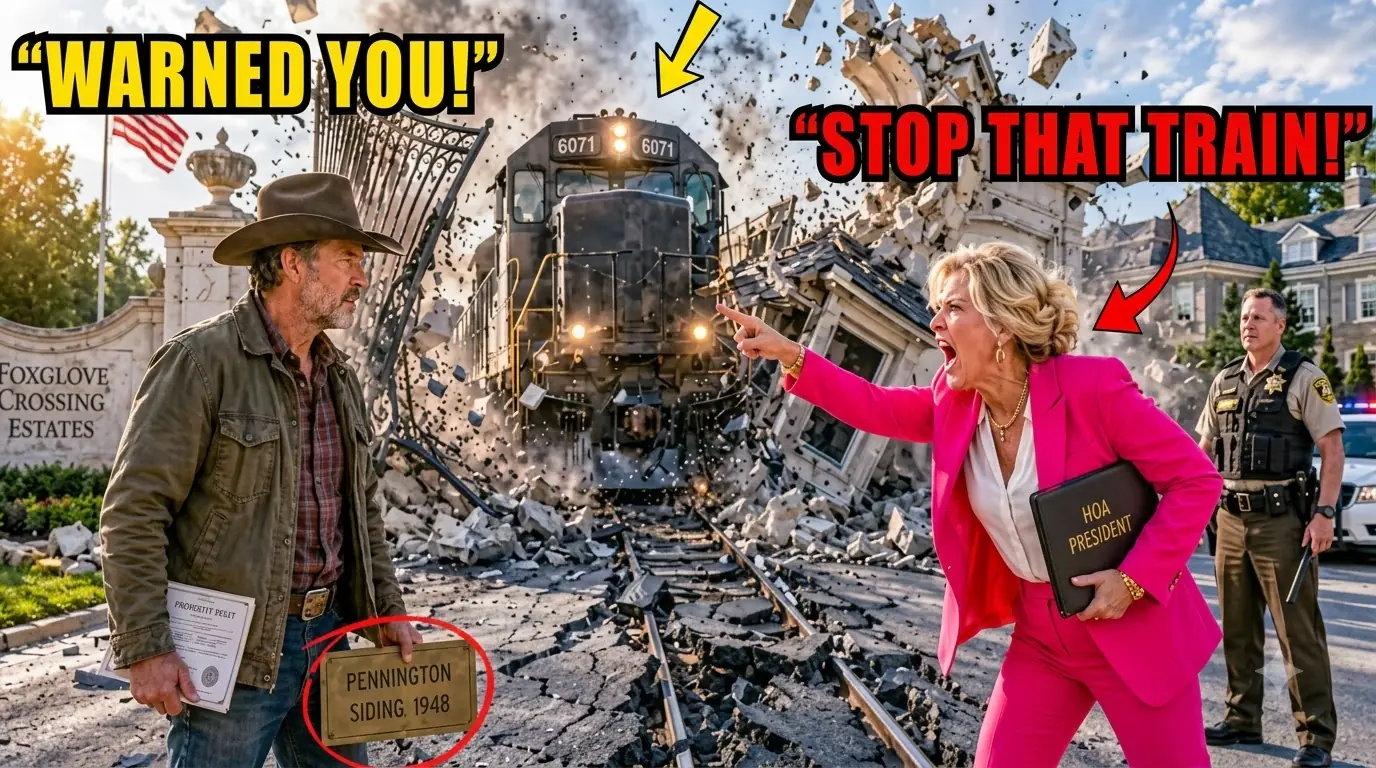
Karen Brantley walked over with a clipboard on her hip, looked straight past me, and lifted one finger at the roller operator. “Roll it. He’s trespassing.” The drum came on four feet from my boots. I told her it was my line. I held up the deed. She didn’t take it.
“You don’t own an entrance. You own a junk pile,” she said. “You don’t live here. You don’t vote here. You don’t get an opinion on what our community looks like.” I said I’d bring the railroad out. She smiled. “Bring whoever you want. It’s under six inches of asphalt by lunch.”
Then she pointed at the dumpster by the guard shack. My switch stand was in it, cut off with the base brass plate still bolted on. Pennington Siding 1948. “Take your antique. Loading docks that way.” Her security took my arm and walked me off my own ground while she went back to her tape measure.
At the shoulder I asked her one thing. If that rail had been dead thirty years, why was the top of it worn shiny? She said gravel and told me to move my truck before she had it towed.
My name is Porter Pennington. I was fifty-four that fall and I ran the quarry my grandfather opened, Pennington Stone and Materials. Nine people on the payroll and most of them from Kelso County. The spur was not a hobby. It was how the rock left.
Micah Pennington laid it in 1948, one and nine-tenths miles of track from our loadout down to where it tied into the Fern Hollow and Southern’s branch line. He bought the ground under it outright. That mattered more than anything else I owned. The railroad had the right to run trains on it. The dirt, the ties, the steel, the crossing, those were ours in fee, recorded, taxed.