HOA Tried to Ban My Pool — So I Built the Most Unforgettable Backyard on the Block
HOA Tried to Ban My Pool — So I Built the Most Unforgettable Backyard on the Block
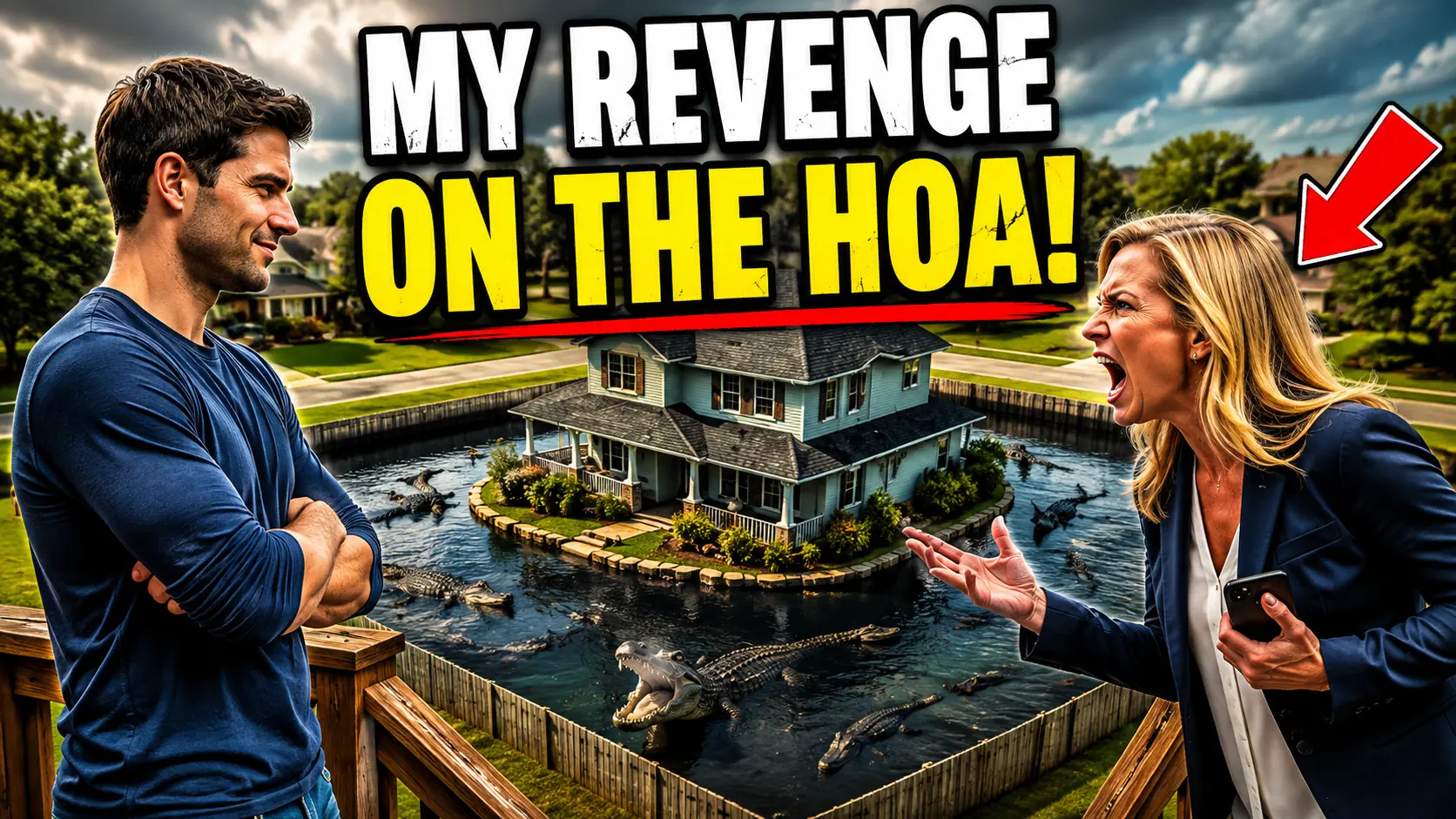
So you want a trench? Bob asked, scratching his head. A big one. Bigger, I replied. Think medieval. Think defensive. Bob’s grin widened. I like your style, he chuckled. When do we start?
The tranquility of my backyard, usually a sanctuary of shimmering turquoise and the happy shrieks of children splashing in the pool, was shattered by a single brightly colored flyer. It was taped to my mailbox, a jarring splash of orange against the serene backdrop of my carefully curated flower beds. Attention residents, it proclaimed in bold blocky letters. New HOA regulation: prohibition of swimming pools. I snatched the flyer, a knot of unease tightening in my stomach. Swimming pools banned? It seemed preposterous.
My pool, a sparkling oasis of chlorinated bliss, had been a fixture in my backyard for years. It was more than just a pool. It was the heart of my summer barbecues, the site of countless neighborhood pool parties, the source of endless joy for my family. It was my pool, a perfectly maintained, aesthetically pleasing, if I did say so myself, addition to my property. I scanned the flyer, my confusion growing with each line of bureaucratic jargon. The HOA, under the newly appointed leadership of one Karen McDictator—yes, that Karen—had decided that swimming pools, both above ground and in-ground, were unsightly and disruptive to neighborhood harmony. They were, the flyer declared, incompatible with the desired aesthetic of our community.
I scoffed. Neighborhood harmony? My pool had created neighborhood harmony. It was a gathering place, a source of fun and relaxation for everyone. What was disruptive about that? The fine print, however, was even more infuriating. The new regulation wasn’t just about preventing new pool installations. It specifically targeted existing pools. Homeowners were ordered to remove their pools within 30 days or face hefty daily fines. Failure to comply, the flyer warned ominously, will result in further legal action. I reread the flyer, my anger simmering. This was outrageous. My perfectly maintained pool, which had been there for years, was now deemed unsightly and disruptive by a power-hungry HOA president with a clear vendetta against anything that didn’t conform to her vision of suburban perfection. It was a blatant power grab, an arbitrary rule designed to exert control over homeowners and enforce Karen’s narrow-minded aesthetic preferences. And it was, I knew, a direct attack on me. My pool, my pride and joy, had become a target in Karen’s war on fun.
Staring at the bright orange flyer, the unreasonable pool ban burning in my brain, a slow smile spread across my face. Karen McDictator wanted my pool gone. Fine. She wanted neighborhood harmony? Even better. I’d give her neighborhood harmony she wouldn’t soon forget. If I couldn’t have a pool, well, I’d just have to think bigger. Much, much bigger. The idea, ridiculous and glorious in its pettiness, sparked in my mind like a rogue firework. A moat. A massive, magnificent moat encircling my entire property. It was perfect. It was petty. It was exactly the kind of over-the-top response Karen deserved.
The next morning, armed with a hefty dose of caffeine and a devilish grin, I set about making my vision a reality. First, the construction crew. I found a local company, Bob’s Dig ’Em Out, known for their discretion and their willingness to tackle unusual projects. I met with Bob himself, a burly man with a perpetually amused expression. So you want a trench? Bob asked, scratching his head. A big one. Bigger, I replied. Think medieval. Think defensive. Bob’s grin widened. I like your style, he chuckled. When do we start? The digging began the following week. The massive excavator rumbled onto my property, its buckets scooping out vast quantities of earth. My neighbors watched with a mixture of curiosity and concern. Even Karen, who occasionally drove by in her pristine white SUV, seemed perplexed. What’s he doing now? I overheard her mutter to a passenger, presumably another HOA busybody. Some kind of landscaping project. Looks like he’s going for a zen garden, the passenger replied with a hint of sarcasm. A very large zen garden. Karen sniffed. I just smiled and waved, letting them believe it was just an eccentric landscaping project. Let them think I was simply rearranging the dirt. They had no idea what was coming.
The trench grew wider and deeper, encircling my house like a protective embrace. It was truly a sight to behold, a gaping chasm in the earth that hinted at the glorious pettiness to come. And then the water. I hired a water truck to fill the trench, transforming it from a ditch into a shimmering, reflective moat. The HOA, upon realizing my true intentions, collectively lost their minds. A moat! Karen shrieked, her voice echoing across the newly formed body of water. You’ve built a moat! This is preposterous! This is—this is unsightly! Unsightly? I echoed, feigning confusion. I think it’s quite harmonious, don’t you agree? It really ties the whole yard together. Karen sputtered, her face turning an alarming shade of purple. This is a clear violation of—of something! We’ll find a rule! We’ll find a dozen rules! Good luck with that, Karen, I said, a mischievous glint in my eye. Because as far as I’m concerned, this is just a very large, very decorative natural water feature.
The moat wasn’t just a giant ditch filled with water. It was a carefully curated ecosystem of pettiness. I stocked it with a variety of fish—koi, goldfish, even a few brightly colored guppies—creating a vibrant underwater world. Lily pads, both real and strategically placed floating replicas, dotted the surface, adding a touch of serene beauty and further infuriating Karen. And of course, no moat would be complete without a drawbridge. A ridiculously oversized, ornate drawbridge complete with a crank and a dramatic creaking sound when lowered. It was completely unnecessary, utterly absurd, and absolutely perfect. The sheer scale of the moat was breathtaking. It wasn’t just a small ditch. It was a veritable lake encircling my house like a medieval fortress. It was so big I considered getting a small boat. The absurdity of it all was precisely the point. It was a visual representation of Karen’s over-the-top rules, magnified and amplified to an almost comical degree.
Karen and the HOA, predictably, were apoplectic. They descended upon my property like a swarm of angry bees, their faces contorted with rage. This is insane! Karen shrieked, pointing at the moat with a trembling finger. You can’t just build a moat! It’s a safety hazard! It’s—it’s not in the community spirit! Safety hazard? I echoed, feigning concern. Nonsense, Karen. It’s perfectly safe. See? I gestured towards a sign I had erected near the drawbridge. Caution: deep water. Do not feed the fish. Fish? Karen sputtered. There are fish in there? What about alligators? Alligators? I raised an eyebrow. Karen, you wound me. I would never introduce such disruptive creatures into our harmonious community. Not yet, anyway. But—but the moat, Karen stammered. It’s against the rules! We’ll find a rule! We’ll cite every single bylaw if we have to! Good luck with that, Karen, I said, pulling out a thick folder filled with meticulously compiled documents. Because as far as I’m concerned, this is just a very large, very decorative natural water feature.
I proceeded to explain, in excruciating detail, how the moat technically complied with every single HOA landscaping rule. I cited obscure bylaws about natural water features, water retention, and erosion control. I even presented a report from a certified wetland specialist, a friend of mine with a knack for creative interpretations, who had declared the moat a vital part of the local ecosystem. Karen and the HOA board members stared at the documents, their faces a mixture of confusion and disbelief. They were trapped. They couldn’t argue with the paperwork. They couldn’t deny the natural water feature designation. And they certainly couldn’t accuse me of violating any specific rules. I had out-pettied them. And to add insult to injury, I hired a team of landscapers to build decorative stone walls around the moat. They weren’t just any stone walls. They were aesthetically pleasing, perfectly aligned, and ridiculously expensive-looking. Community aesthetics, I muttered to myself with a satisfied grin. It was the perfect finishing touch, a final flourish of pettiness that drove Karen absolutely bonkers. It’s—it’s beautiful, she shrieked, her voice laced with frustration. It’s too beautiful! It’s—it’s mocking us! Mocking you? I feigned innocence. Karen, I’m just trying to enhance the neighborhood’s harmony. Don’t you agree? It really ties the whole yard together.
The HOA’s reaction to the moat was, to put it mildly, volcanic. Their outrage reverberated through the neighborhood, reaching a fever pitch at their emergency meeting. I could practically feel the steam rising from their pristine, rule-laden headquarters. They convened like a council of war, plotting their next move against my aquatic masterpiece. I imagined Karen, red-faced and sputtering, banging her gavel and demanding my immediate moat removal. But their frantic attempts to find a loophole, a bylaw, anything that could force me to drain my glorious creation, were met with the cold, hard reality of my meticulous planning. My natural water feature was airtight. They were trapped in their own bureaucratic web, tangled in the very rules they so gleefully wielded against others. Their powerlessness was delicious. But I wasn’t content with merely outsmarting them. I wanted to escalate the pettiness to truly legendary levels. Enter the “Caution: Live Alligators” signs. I strategically placed these ominous warnings around the moat, complete with cartoonish alligator illustrations and bold red lettering. The signs, of course, were entirely fabricated. At this point the moat was populated only by harmless koi, guppies, and the occasional lily-pad-nibbling goldfish. But the HOA, particularly Karen, was already primed for paranoia. The mere suggestion of alligators sent them into a full-blown panic.
Alligators! I overheard Karen shriek to a fellow HOA member during her usual drive-by surveillance of my property. He’s put alligators in the moat! That’s it! This has gone too far! But are there actually alligators? the other HOA member asked nervously. Of course there are alligators, Karen huffed. He’s trying to intimidate us. He thinks he’s so clever. Karen, driven by her suspicion and a burning desire to catch me in the act of—well, having alligators—decided to take matters into her own hands. She arrived at my property clad in her usual power suit, which seemed a bit overdressed for moat inspection, but who was I to judge, determined to inspect the moat herself. I watched from my window, a mug of hot chocolate in hand, because what’s a bit of petty revenge without a cozy beverage. As Karen cautiously approached the drawbridge, she peered over the edge, her nose practically touching the water, searching for any sign of reptilian menace. There’s nothing there, she muttered to herself, her voice laced with disappointment. He’s bluffing. Just as she straightened up, convinced that her alligator fears were unfounded, the drawbridge, which I may or may not have subtly loosened earlier, gave way with a dramatic creak. Karen, caught off guard, yelped and tumbled headfirst into the moat. The splash was magnificent. I choked back a laugh as I watched her emerge sputtering and dripping, her power suit now thoroughly soaked. The koi, startled by the sudden intrusion, scattered in all directions. Karen, covered in lily pads and fish slime, looked less like a fearsome HOA president and more like a swamp monster. The security camera, of course, captured the entire spectacle in glorious high def. It was a moment destined for viral infamy. I couldn’t have scripted it better myself.
Karen’s unexpected swim in the moat was the comedic climax, but the real masterpiece of petty revenge was yet to come. The “Caution: Live Alligators” signs, initially a bluff, now required—well, alligators. I wasn’t about to populate my moat with wild man-eating reptiles. That would be irresponsible and frankly a bit much even for me. Instead I opted for a more civilized approach. I contacted a licensed wildlife facility specializing in rescued and rehabilitated animals. After a surprisingly easy application process—apparently “moat owner” is a perfectly valid reason to adopt alligators—I became the proud guardian of three small docile alligators. They were about the size of large house cats, more interested in sunbathing and eating fish than causing any actual trouble. They were also, importantly, legally my alligators, with all the necessary permits and documentation to prove it. The HOA naturally lost what little composure they had left when they discovered the actual alligators in my moat. Their paranoia, initially fueled by my signs, had become a self-fulfilling prophecy. They descended upon my property once again, this time with a contingent of police officers in tow. He’s done it! Karen shrieked, pointing a trembling finger at the alligators who were peacefully basking on a floating log. He’s actually put alligators in the moat! This is a public safety hazard! Arrest him!
The police officers, looking even more bewildered than before, approached me cautiously. Mr. Jamie, the older officer said, his voice laced with a mixture of amusement and exasperation. We received a complaint about alligators. Yes, officer, I replied calmly. My alligators. Would you like to see their adoption papers? I produced the aforementioned documentation, complete with photos of my reptilian companions and official stamps from the wildlife facility. The officers examined the paperwork, their expressions shifting from concern to incredulity. These alligators are legally yours? the younger officer asked, clearly struggling to wrap his head around the situation. Indeed, I replied. They’re fully licensed and permitted. And as you can see—I gestured towards the moat—they reside in a legally designated natural water feature. It’s all perfectly above board. Karen sputtered, her face turning an alarming shade of red. But—but alligators in a residential neighborhood? It’s insane! The older officer sighed. Ma’am, I understand your concern, but Mr. Jamie has all the necessary permits. And as long as the alligators are contained within the moat, there’s no legal basis for us to remove them. He turned to me, a hint of amusement in his eyes. Just try to keep them fed, Mr. Jamie, he said. We don’t want any incidents. Of course, officer, I replied with a perfectly straight face. They’re quite fond of fish. The police officers, shaking their heads in disbelief, retreated back to their patrol cars. Karen and the remaining HOA members were left standing by the moat, their faces a mixture of anger, frustration, and utter bewilderment. They had been outsmarted, out-pettied, and outmaneuvered at every turn. Their power, their authority, their carefully constructed world of suburban control had been completely and utterly dismantled by a moat, some fish, and a few legally adopted alligators.
The absurdity of the situation was almost too much to bear. And I, standing on my drawbridge overlooking my moat and my reptilian companions, couldn’t help but smile. The HOA was trapped. Their carefully constructed web of rules and regulations, designed to exert control over every aspect of suburban life, had become their own undoing. They couldn’t fine me for the pool. It was gone, a casualty of their own petty ban. They couldn’t fine me for the moat. It was a natural water feature, a legally designated part of my landscaping. And they certainly couldn’t fine me for the alligators. They were legally adopted, permitted, and residing in their legally designated natural water feature. They had painted themselves into a corner, outsmarted and outmaneuvered at every turn. Their power, once so absolute, had evaporated, leaving them sputtering in the face of my magnificent moat. The community, on the other hand, embraced the moat with open arms. It wasn’t just a moat. It was an attraction, a conversation starter, a symbol of rebellion against the HOA’s overreach. Children squealed with delight as they watched the alligators bask in the sun, their small reptilian forms adding an exotic touch to the suburban landscape. Neighbors gathered on my drawbridge, sharing stories, laughing, and enjoying the spectacle. My house, once just another cookie-cutter dwelling in the neighborhood, had become the coolest house on the block, a source of pride and a constant source of irritation for the HOA.
And then there was the moat party. It was an epic affair, a celebration of my victory over the HOA and a community gathering of epic proportions. I strung lights around the moat, set up a sound system blasting upbeat music, and catered the event with enough food and drinks to feed an army. Everyone was invited—except, of course, the HOA board. They watched from their office windows, their faces a mixture of envy and resentment, as the sounds of laughter and celebration echoed through the neighborhood. The moat party was more than just a party. It was a symbol of my triumph. It was a public declaration that I had won, that I had turned their petty rules into a joke, and that I had reclaimed my right to a little bit of fun in my own backyard. It was also a way to thank my neighbors for their support, for their shared disdain for the HOA’s tyranny, and for their willingness to embrace the absurdity of it all. The moat, once a symbol of conflict, had become a symbol of community, a gathering place where everyone was welcome—except, of course, the HOA board. They were isolated, ostracized, and utterly defeated. Their power had been stripped away, leaving them marooned on their island of rules and regulations while the rest of the neighborhood celebrated in the moat-lit glow of my victory.
The final nail in Karen’s coffin was, ironically, delivered by her own clumsiness. The security camera footage of her moat mishap—her dramatic tumble into the lily pads and subsequent emergence covered in fish slime—had gone viral. It was everywhere. Facebook, Instagram, Twitter, even TikTok was flooded with memes featuring Karen as the Moat Monster, the Lilypad Princess, and the Queen of the Swamp. The image of her sputtering and dripping, her power suit ruined, her dignity shattered, was simply too good to resist. The humiliation was complete. Karen, once the feared and respected—or at least obeyed—HOA president, had become a laughingstock, a symbol of overbearing authority brought down by her own pettiness. She couldn’t show her face in the neighborhood without being met with snickers and whispers. The HOA meetings became a source of amusement, with residents openly mocking her and quoting her most ridiculous pronouncements. The pressure was too much. Karen, already reeling from the public ridicule and the HOA’s complete and utter defeat, finally resigned. Her resignation letter, a terse and bitter document, blamed “personal reasons” and “community negativity” for her decision. But everyone knew the truth. Karen McDictator had been dethroned, not by force, but by a moat, some alligators, and the power of the internet.
And as if to add insult to injury, I, emboldened by my victory and fueled by an endless supply of petty inspiration, decided to take things one step further. I commissioned the construction of a tiki bar—not just any tiki bar, but a floating tiki bar complete with thatched roof, colorful stools, and a bartender who specialized in tropical drinks. It was positioned in the middle of the moat, accessible only by a small, equally ridiculous rowboat. It was the ultimate act of defiance, a final flamboyant middle finger to the HOA and their rules. They couldn’t touch me. They couldn’t fine me. They couldn’t even complain. I had outsmarted them, outmaneuvered them, and out-pettied them at every turn. My moat, once a symbol of conflict, had become a symbol of freedom, a testament to the power of creative pettiness. From that day forward, no HOA rule was ever enforced against me again. The moat remained a shimmering, alligator-infested oasis in the heart of suburbia. It became a legend, a story told and retold in the neighborhood, a reminder that even the most overbearing tyrants can be brought down by a well-placed moat and a healthy dose of humor. And I, the once-bullied homeowner, became a local hero, the Moat Master, the one who dared to challenge the queen of suburban control and won. The whole experience, while initially frustrating, had been surprisingly fun. And as I sipped a tropical drink on my floating tiki bar, watching the alligators bask in the sun, I couldn’t help but smile. Sometimes a moat is just a moat. And sometimes it’s so much more.
So you want a trench? Bob asked, scratching his head. A big one. Bigger, I replied. Think medieval. Think defensive. Bob’s grin widened. I like your style, he chuckled. When do we start?
The tranquility of my backyard, usually a sanctuary of shimmering turquoise and the happy shrieks of children splashing in the pool, was shattered by a single brightly colored flyer. It was taped to my mailbox, a jarring splash of orange against the serene backdrop of my carefully curated flower beds. Attention residents, it proclaimed in bold blocky letters. New HOA regulation: prohibition of swimming pools. I snatched the flyer, a knot of unease tightening in my stomach. Swimming pools banned? It seemed preposterous.
My pool, a sparkling oasis of chlorinated bliss, had been a fixture in my backyard for years. It was more than just a pool. It was the heart of my summer barbecues, the site of countless neighborhood pool parties, the source of endless joy for my family. It was my pool, a perfectly maintained, aesthetically pleasing, if I did say so myself, addition to my property. I scanned the flyer, my confusion growing with each line of bureaucratic jargon. The HOA, under the newly appointed leadership of one Karen McDictator—yes, that Karen—had decided that swimming pools, both above ground and in-ground, were unsightly and disruptive to neighborhood harmony. They were, the flyer declared, incompatible with the desired aesthetic of our community.
I scoffed. Neighborhood harmony? My pool had created neighborhood harmony. It was a gathering place, a source of fun and relaxation for everyone. What was disruptive about that? The fine print, however, was even more infuriating. The new regulation wasn’t just about preventing new pool installations. It specifically targeted existing pools. Homeowners were ordered to remove their pools within 30 days or face hefty daily fines. Failure to comply, the flyer warned ominously, will result in further legal action. I reread the flyer, my anger simmering. This was outrageous. My perfectly maintained pool, which had been there for years, was now deemed unsightly and disruptive by a power-hungry HOA president with a clear vendetta against anything that didn’t conform to her vision of suburban perfection. It was a blatant power grab, an arbitrary rule designed to exert control over homeowners and enforce Karen’s narrow-minded aesthetic preferences. And it was, I knew, a direct attack on me. My pool, my pride and joy, had become a target in Karen’s war on fun.
Staring at the bright orange flyer, the unreasonable pool ban burning in my brain, a slow smile spread across my face. Karen McDictator wanted my pool gone. Fine. She wanted neighborhood harmony? Even better. I’d give her neighborhood harmony she wouldn’t soon forget. If I couldn’t have a pool, well, I’d just have to think bigger. Much, much bigger. The idea, ridiculous and glorious in its pettiness, sparked in my mind like a rogue firework. A moat. A massive, magnificent moat encircling my entire property. It was perfect. It was petty. It was exactly the kind of over-the-top response Karen deserved.
The next morning, armed with a hefty dose of caffeine and a devilish grin, I set about making my vision a reality. First, the construction crew. I found a local company, Bob’s Dig ’Em Out, known for their discretion and their willingness to tackle unusual projects. I met with Bob himself, a burly man with a perpetually amused expression. So you want a trench? Bob asked, scratching his head. A big one. Bigger, I replied. Think medieval. Think defensive. Bob’s grin widened. I like your style, he chuckled. When do we start? The digging began the following week. The massive excavator rumbled onto my property, its buckets scooping out vast quantities of earth. My neighbors watched with a mixture of curiosity and concern. Even Karen, who occasionally drove by in her pristine white SUV, seemed perplexed. What’s he doing now? I overheard her mutter to a passenger, presumably another HOA busybody. Some kind of landscaping project. Looks like he’s going for a zen garden, the passenger replied with a hint of sarcasm. A very large zen garden. Karen sniffed. I just smiled and waved, letting them believe it was just an eccentric landscaping project. Let them think I was simply rearranging the dirt. They had no idea what was coming.
The trench grew wider and deeper, encircling my house like a protective embrace. It was truly a sight to behold, a gaping chasm in the earth that hinted at the glorious pettiness to come. And then the water. I hired a water truck to fill the trench, transforming it from a ditch into a shimmering, reflective moat. The HOA, upon realizing my true intentions, collectively lost their minds. A moat! Karen shrieked, her voice echoing across the newly formed body of water. You’ve built a moat! This is preposterous! This is—this is unsightly! Unsightly? I echoed, feigning confusion. I think it’s quite harmonious, don’t you agree? It really ties the whole yard together. Karen sputtered, her face turning an alarming shade of purple. This is a clear violation of—of something! We’ll find a rule! We’ll find a dozen rules! Good luck with that, Karen, I said, a mischievous glint in my eye. Because as far as I’m concerned, this is just a very large, very decorative natural water feature.
The moat wasn’t just a giant ditch filled with water. It was a carefully curated ecosystem of pettiness. I stocked it with a variety of fish—koi, goldfish, even a few brightly colored guppies—creating a vibrant underwater world. Lily pads, both real and strategically placed floating replicas, dotted the surface, adding a touch of serene beauty and further infuriating Karen. And of course, no moat would be complete without a drawbridge. A ridiculously oversized, ornate drawbridge complete with a crank and a dramatic creaking sound when lowered. It was completely unnecessary, utterly absurd, and absolutely perfect. The sheer scale of the moat was breathtaking. It wasn’t just a small ditch. It was a veritable lake encircling my house like a medieval fortress. It was so big I considered getting a small boat. The absurdity of it all was precisely the point. It was a visual representation of Karen’s over-the-top rules, magnified and amplified to an almost comical degree.
Karen and the HOA, predictably, were apoplectic. They descended upon my property like a swarm of angry bees, their faces contorted with rage. This is insane! Karen shrieked, pointing at the moat with a trembling finger. You can’t just build a moat! It’s a safety hazard! It’s—it’s not in the community spirit! Safety hazard? I echoed, feigning concern. Nonsense, Karen. It’s perfectly safe. See? I gestured towards a sign I had erected near the drawbridge. Caution: deep water. Do not feed the fish. Fish? Karen sputtered. There are fish in there? What about alligators? Alligators? I raised an eyebrow. Karen, you wound me. I would never introduce such disruptive creatures into our harmonious community. Not yet, anyway. But—but the moat, Karen stammered. It’s against the rules! We’ll find a rule! We’ll cite every single bylaw if we have to! Good luck with that, Karen, I said, pulling out a thick folder filled with meticulously compiled documents. Because as far as I’m concerned, this is just a very large, very decorative natural water feature.
I proceeded to explain, in excruciating detail, how the moat technically complied with every single HOA landscaping rule. I cited obscure bylaws about natural water features, water retention, and erosion control. I even presented a report from a certified wetland specialist, a friend of mine with a knack for creative interpretations, who had declared the moat a vital part of the local ecosystem. Karen and the HOA board members stared at the documents, their faces a mixture of confusion and disbelief. They were trapped. They couldn’t argue with the paperwork. They couldn’t deny the natural water feature designation. And they certainly couldn’t accuse me of violating any specific rules. I had out-pettied them. And to add insult to injury, I hired a team of landscapers to build decorative stone walls around the moat. They weren’t just any stone walls. They were aesthetically pleasing, perfectly aligned, and ridiculously expensive-looking. Community aesthetics, I muttered to myself with a satisfied grin. It was the perfect finishing touch, a final flourish of pettiness that drove Karen absolutely bonkers. It’s—it’s beautiful, she shrieked, her voice laced with frustration. It’s too beautiful! It’s—it’s mocking us! Mocking you? I feigned innocence. Karen, I’m just trying to enhance the neighborhood’s harmony. Don’t you agree? It really ties the whole yard together.
The HOA’s reaction to the moat was, to put it mildly, volcanic. Their outrage reverberated through the neighborhood, reaching a fever pitch at their emergency meeting. I could practically feel the steam rising from their pristine, rule-laden headquarters. They convened like a council of war, plotting their next move against my aquatic masterpiece. I imagined Karen, red-faced and sputtering, banging her gavel and demanding my immediate moat removal. But their frantic attempts to find a loophole, a bylaw, anything that could force me to drain my glorious creation, were met with the cold, hard reality of my meticulous planning. My natural water feature was airtight. They were trapped in their own bureaucratic web, tangled in the very rules they so gleefully wielded against others. Their powerlessness was delicious. But I wasn’t content with merely outsmarting them. I wanted to escalate the pettiness to truly legendary levels. Enter the “Caution: Live Alligators” signs. I strategically placed these ominous warnings around the moat, complete with cartoonish alligator illustrations and bold red lettering. The signs, of course, were entirely fabricated. At this point the moat was populated only by harmless koi, guppies, and the occasional lily-pad-nibbling goldfish. But the HOA, particularly Karen, was already primed for paranoia. The mere suggestion of alligators sent them into a full-blown panic.
Alligators! I overheard Karen shriek to a fellow HOA member during her usual drive-by surveillance of my property. He’s put alligators in the moat! That’s it! This has gone too far! But are there actually alligators? the other HOA member asked nervously. Of course there are alligators, Karen huffed. He’s trying to intimidate us. He thinks he’s so clever. Karen, driven by her suspicion and a burning desire to catch me in the act of—well, having alligators—decided to take matters into her own hands. She arrived at my property clad in her usual power suit, which seemed a bit overdressed for moat inspection, but who was I to judge, determined to inspect the moat herself. I watched from my window, a mug of hot chocolate in hand, because what’s a bit of petty revenge without a cozy beverage. As Karen cautiously approached the drawbridge, she peered over the edge, her nose practically touching the water, searching for any sign of reptilian menace. There’s nothing there, she muttered to herself, her voice laced with disappointment. He’s bluffing. Just as she straightened up, convinced that her alligator fears were unfounded, the drawbridge, which I may or may not have subtly loosened earlier, gave way with a dramatic creak. Karen, caught off guard, yelped and tumbled headfirst into the moat. The splash was magnificent. I choked back a laugh as I watched her emerge sputtering and dripping, her power suit now thoroughly soaked. The koi, startled by the sudden intrusion, scattered in all directions. Karen, covered in lily pads and fish slime, looked less like a fearsome HOA president and more like a swamp monster. The security camera, of course, captured the entire spectacle in glorious high def. It was a moment destined for viral infamy. I couldn’t have scripted it better myself.
Karen’s unexpected swim in the moat was the comedic climax, but the real masterpiece of petty revenge was yet to come. The “Caution: Live Alligators” signs, initially a bluff, now required—well, alligators. I wasn’t about to populate my moat with wild man-eating reptiles. That would be irresponsible and frankly a bit much even for me. Instead I opted for a more civilized approach. I contacted a licensed wildlife facility specializing in rescued and rehabilitated animals. After a surprisingly easy application process—apparently “moat owner” is a perfectly valid reason to adopt alligators—I became the proud guardian of three small docile alligators. They were about the size of large house cats, more interested in sunbathing and eating fish than causing any actual trouble. They were also, importantly, legally my alligators, with all the necessary permits and documentation to prove it. The HOA naturally lost what little composure they had left when they discovered the actual alligators in my moat. Their paranoia, initially fueled by my signs, had become a self-fulfilling prophecy. They descended upon my property once again, this time with a contingent of police officers in tow. He’s done it! Karen shrieked, pointing a trembling finger at the alligators who were peacefully basking on a floating log. He’s actually put alligators in the moat! This is a public safety hazard! Arrest him!
The police officers, looking even more bewildered than before, approached me cautiously. Mr. Jamie, the older officer said, his voice laced with a mixture of amusement and exasperation. We received a complaint about alligators. Yes, officer, I replied calmly. My alligators. Would you like to see their adoption papers? I produced the aforementioned documentation, complete with photos of my reptilian companions and official stamps from the wildlife facility. The officers examined the paperwork, their expressions shifting from concern to incredulity. These alligators are legally yours? the younger officer asked, clearly struggling to wrap his head around the situation. Indeed, I replied. They’re fully licensed and permitted. And as you can see—I gestured towards the moat—they reside in a legally designated natural water feature. It’s all perfectly above board. Karen sputtered, her face turning an alarming shade of red. But—but alligators in a residential neighborhood? It’s insane! The older officer sighed. Ma’am, I understand your concern, but Mr. Jamie has all the necessary permits. And as long as the alligators are contained within the moat, there’s no legal basis for us to remove them. He turned to me, a hint of amusement in his eyes. Just try to keep them fed, Mr. Jamie, he said. We don’t want any incidents. Of course, officer, I replied with a perfectly straight face. They’re quite fond of fish. The police officers, shaking their heads in disbelief, retreated back to their patrol cars. Karen and the remaining HOA members were left standing by the moat, their faces a mixture of anger, frustration, and utter bewilderment. They had been outsmarted, out-pettied, and outmaneuvered at every turn. Their power, their authority, their carefully constructed world of suburban control had been completely and utterly dismantled by a moat, some fish, and a few legally adopted alligators.
The absurdity of the situation was almost too much to bear. And I, standing on my drawbridge overlooking my moat and my reptilian companions, couldn’t help but smile. The HOA was trapped. Their carefully constructed web of rules and regulations, designed to exert control over every aspect of suburban life, had become their own undoing. They couldn’t fine me for the pool. It was gone, a casualty of their own petty ban. They couldn’t fine me for the moat. It was a natural water feature, a legally designated part of my landscaping. And they certainly couldn’t fine me for the alligators. They were legally adopted, permitted, and residing in their legally designated natural water feature. They had painted themselves into a corner, outsmarted and outmaneuvered at every turn. Their power, once so absolute, had evaporated, leaving them sputtering in the face of my magnificent moat. The community, on the other hand, embraced the moat with open arms. It wasn’t just a moat. It was an attraction, a conversation starter, a symbol of rebellion against the HOA’s overreach. Children squealed with delight as they watched the alligators bask in the sun, their small reptilian forms adding an exotic touch to the suburban landscape. Neighbors gathered on my drawbridge, sharing stories, laughing, and enjoying the spectacle. My house, once just another cookie-cutter dwelling in the neighborhood, had become the coolest house on the block, a source of pride and a constant source of irritation for the HOA.
And then there was the moat party. It was an epic affair, a celebration of my victory over the HOA and a community gathering of epic proportions. I strung lights around the moat, set up a sound system blasting upbeat music, and catered the event with enough food and drinks to feed an army. Everyone was invited—except, of course, the HOA board. They watched from their office windows, their faces a mixture of envy and resentment, as the sounds of laughter and celebration echoed through the neighborhood. The moat party was more than just a party. It was a symbol of my triumph. It was a public declaration that I had won, that I had turned their petty rules into a joke, and that I had reclaimed my right to a little bit of fun in my own backyard. It was also a way to thank my neighbors for their support, for their shared disdain for the HOA’s tyranny, and for their willingness to embrace the absurdity of it all. The moat, once a symbol of conflict, had become a symbol of community, a gathering place where everyone was welcome—except, of course, the HOA board. They were isolated, ostracized, and utterly defeated. Their power had been stripped away, leaving them marooned on their island of rules and regulations while the rest of the neighborhood celebrated in the moat-lit glow of my victory.
The final nail in Karen’s coffin was, ironically, delivered by her own clumsiness. The security camera footage of her moat mishap—her dramatic tumble into the lily pads and subsequent emergence covered in fish slime—had gone viral. It was everywhere. Facebook, Instagram, Twitter, even TikTok was flooded with memes featuring Karen as the Moat Monster, the Lilypad Princess, and the Queen of the Swamp. The image of her sputtering and dripping, her power suit ruined, her dignity shattered, was simply too good to resist. The humiliation was complete. Karen, once the feared and respected—or at least obeyed—HOA president, had become a laughingstock, a symbol of overbearing authority brought down by her own pettiness. She couldn’t show her face in the neighborhood without being met with snickers and whispers. The HOA meetings became a source of amusement, with residents openly mocking her and quoting her most ridiculous pronouncements. The pressure was too much. Karen, already reeling from the public ridicule and the HOA’s complete and utter defeat, finally resigned. Her resignation letter, a terse and bitter document, blamed “personal reasons” and “community negativity” for her decision. But everyone knew the truth. Karen McDictator had been dethroned, not by force, but by a moat, some alligators, and the power of the internet.
And as if to add insult to injury, I, emboldened by my victory and fueled by an endless supply of petty inspiration, decided to take things one step further. I commissioned the construction of a tiki bar—not just any tiki bar, but a floating tiki bar complete with thatched roof, colorful stools, and a bartender who specialized in tropical drinks. It was positioned in the middle of the moat, accessible only by a small, equally ridiculous rowboat. It was the ultimate act of defiance, a final flamboyant middle finger to the HOA and their rules. They couldn’t touch me. They couldn’t fine me. They couldn’t even complain. I had outsmarted them, outmaneuvered them, and out-pettied them at every turn. My moat, once a symbol of conflict, had become a symbol of freedom, a testament to the power of creative pettiness. From that day forward, no HOA rule was ever enforced against me again. The moat remained a shimmering, alligator-infested oasis in the heart of suburbia. It became a legend, a story told and retold in the neighborhood, a reminder that even the most overbearing tyrants can be brought down by a well-placed moat and a healthy dose of humor. And I, the once-bullied homeowner, became a local hero, the Moat Master, the one who dared to challenge the queen of suburban control and won. The whole experience, while initially frustrating, had been surprisingly fun. And as I sipped a tropical drink on my floating tiki bar, watching the alligators bask in the sun, I couldn’t help but smile. Sometimes a moat is just a moat. And sometimes it’s so much more.
Tags:
News in the same category


The Black Belt Shoved the Limping Handyman — Then He Stopped Walking Away
She Called Police to Tow His Mustang — Then the Officers Looked at Him Twice
She Stormed Into the Hotel Demanding the Vault Keys — Then Her “Court Order” Hit the Table

He Was Drinking Coffee on His Own Porch — Then the Officer Put Him in Cuffs
She Called the Police Over His Mustang — Then Pointed at Him and Screamed “Thief”

They Mocked the Four-Star Pin in His Pocket — Then Put Him in Handcuffs

The Black Belt Humiliated the New Girl — Then She Dropped the Pads
HOA Shut Down My Pool — They Never Expected My Next Move

A Billionaire Mocked a Maid's Son and Bet $1 Million at Chess — Biggest Mistake of His Life
A Billionaire Mocked a Maid's Son and Bet $1 Million at Chess — Biggest Mistake of His Life
"She's Too Weak," 12 Marines Mocked a Black Single Mom — Then Everything Changed

HOA Ordered Me to Fix the Cracks in My Sidewalk — So I Turned Them Into a Neighborhood Attraction
HOA Thought They Could Control My Backyard — Then I Turned the Tables
Karen Called the Cops for Me Loitering on My Porch, So I Hired a PI to Dig Up Her Old Warrants!
A Billionaire Bet $1 Million a Maid's Son Couldn't Beat Him at Chess — Then Everything Changed

The Pilots Collapsed Mid-Flight — A Poor Black Kid Did the Unthinkable
12 Marines Laughed at a Black Single Mom — Minutes Later, Nobody Was Laughing