I Asked Him, “When Do You Know Love Is Dying?” His Answer Scared Me More Than I Expected
PART 1
“When do you know love is dying?”
Ben looked up from his phone.
“What?”
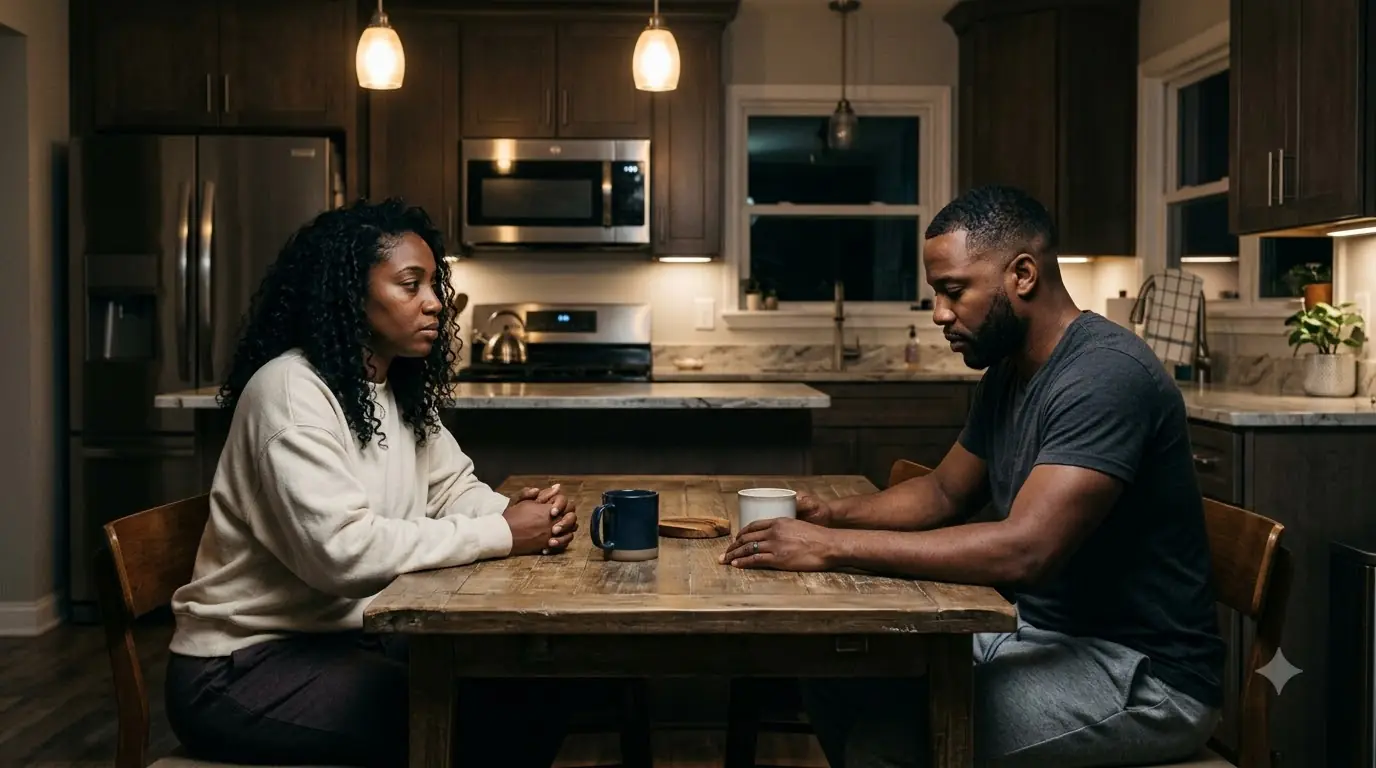
I was sitting across from him at the kitchen table, both hands wrapped around a mug of tea that had already gone cold.
“When do you know love is dying?”
He stared at me for a second.
Then he gave a nervous laugh.
“That’s a weird question.”
“Is it?”
“At nine-thirty on a Tuesday? Kind of.”
I looked down.
That was the problem.
Everything serious between us had become badly timed.
Too late.
Too early.
Too stressful.
Too dramatic.
Too much.
There was always a reason not to have the conversation.
Ben put his phone down.
“Where is this coming from?”
I hated that question because I had no simple answer.
There was no affair.
No secret second family.
No explosive fight.
No betrayal dramatic enough to explain why I had been lying beside the man I loved and feeling lonely.
“I don’t know.”
He frowned.
“Yes, you do.”
Maybe I did.
Ben and I had been together for seven years.
Married for four.
We lived in suburban Philadelphia in a house we bought two years after the wedding.
I was thirty-four and worked in human resources for a hospital network.
Ben was thirty-six and managed operations for a manufacturing company.
We had a dog named Charlie.
No kids yet.
Not because we had decided against them.
Because every year, something came up.
Work.
The house.
Money.
Stress.
“We’ll talk about it next year.”
We said that twice.
Then stopped bringing it up.
That should have told me something.
In the beginning, Ben and I talked about everything.
We met at a friend’s birthday dinner.
I thought he was too quiet.
He thought I talked too much.
By the end of the night, we were standing outside the restaurant still talking after everyone else had left.
Three months later, I knew things about him his closest friends didn’t.
He told me he was terrified of disappointing his father.
I told him I secretly worried I would become like my mother, staying too long in a marriage where nobody was happy.
He laughed.
“You won’t.”
“How do you know?”
“Because you talk about everything.”
At the time, that sounded reassuring.
Seven years later, I remembered it almost every time I swallowed something I wanted to say.
The changes didn’t happen all at once.
They were small.
Ben stopped asking follow-up questions.
I would tell him about something difficult at work.
He would say, “That sucks.”
Then go back to his phone.
I started telling my best friend first.
Then there was touch.
We still kissed.
Technically.
A quick kiss before work.
A quick kiss goodnight.
Sometimes sex on the weekend.
But physical closeness had started to feel scheduled.
Like checking a box.
One Friday, I realized Ben had not hugged me for no reason in weeks.
Maybe months.
That sounds ridiculous until you notice it.
Then you can’t stop noticing.
I started testing things.
Not intentionally at first.
I would stop talking in the middle of a story to see if he noticed.
Sometimes he didn’t.
I stopped initiating plans.
We stayed home for three weekends.
Neither of us suggested anything.
I changed my hair.
He noticed two days later.
“You did something different.”
“Yeah.”
“Looks nice.”
That was it.
None of these things meant he didn’t love me.
I knew that.
But together, they created a feeling I couldn’t explain.
Like the relationship was still running after both of us had slowly stepped away from the controls.
That Tuesday night, Ben watched me carefully.
“Are you asking if I still love you?”
My chest tightened.
“I don’t know.”
“That sounds like yes.”
I looked at him.
“Do you?”
“Yes.”
No hesitation.
I felt relief.
Then shame for needing it.
“Then why does it feel different?”
He leaned back.
“Relationships change.”
“I know.”
“We’re not twenty-seven anymore.”
“I know.”
“We have jobs. A house. Responsibilities.”
“I know, Ben.”
“Then what do you want?”
There it was.
What do you want?
I had heard that question too many times.
As if needing connection required a proposal.
A fix.
A task list.
“I want to know whether we still like being together.”
His face changed.
“Of course we do.”
“When?”
“What?”
“When do we enjoy each other?”
He looked confused.
“That’s not fair.”
“Why?”
“Because you’re taking normal adult life and turning it into some relationship crisis.”
I felt something inside me sink.
“That’s exactly why I haven’t said anything.”
His expression softened slightly.
“Sarah.”
“No.”
I looked away.
“Every time I try to talk about us, you make me feel like I’m inventing a problem.”
“I don’t.”
“You do.”
“I just don’t think every quiet period means something is wrong.”
“I don’t either.”
I looked at him.
“But what if it stops being a period?”
Silence.
He didn’t answer.
I continued.
“What if this is just who we are now?”
He rubbed his forehead.
“Why are you doing this tonight?”
I laughed softly.
“There. Again.”
“What?”
“There is never a good time.”
“I had a twelve-hour day.”
“And yesterday?”
“I was tired.”
“Saturday?”
“We had your parents over.”
“Sunday?”
He went quiet.
I nodded.
“Exactly.”
Ben stood and carried his glass to the sink.
I watched his back.
Then I asked something that surprised even me.
“Do you ever miss me when I’m in the same room?”
He froze.
His shoulders changed.
Slowly, he turned around.
“What does that mean?”
“You know exactly what it means.”
“No, I don’t.”
“Yes, you do.”
My throat tightened.
“Sometimes I sit next to you and feel like we haven’t actually been together all day.”
He looked hurt.
Good.
Not because I wanted to hurt him.
Because at least he felt something.
“I’m right here.”
“I know.”
“That’s not enough for you?”
The question landed badly.
I stared at him.
“Do you hear yourself?”
He closed his eyes.
“That’s not what I meant.”
“But maybe it is.”
I stood too.
“Maybe that’s the whole problem.”
“What?”
“You think being here is the same as showing up.”
His face hardened.
“I work all day and come home every night.”
“I know.”
“I don’t go out drinking.”
“I know.”
“I’m not cheating.”
“I know.”
“I’m not disappearing.”
“I know.”
“Then what exactly am I failing at?”
I stared at him.
“Do you really think those are the only ways someone can leave a relationship?”
That stopped him.
The room went quiet.
I heard Charlie move in the hallway.
Ben looked at me.
I continued.
“You can stay in the house.”
My voice shook.
“You can sleep in the bed.”
“You can pay the bills.”
“You can say ‘love you’ before work.”
My eyes filled.
“And still slowly stop being here.”
Ben’s expression changed.
For a moment, I thought he might argue again.
Instead, he sat down.
That scared me more.
I sat across from him.
Neither of us spoke.
Then he said, “I don’t know how to answer your original question.”
“What?”
“When you know love is dying.”
I swallowed.
He looked at the table.
“I think maybe you know when you stop being curious about each other.”
That hit me.
Hard.
Because Ben had always been curious about me.
He used to ask why I thought certain things.
What I wanted.
What I was afraid of.
Now our conversations were mostly logistics.
Did you pay the water bill?
What do you want for dinner?
Are you taking Charlie to the vet?
What time are your parents coming?
I whispered, “Are you curious about me?”
He looked up.
The hesitation was tiny.
I saw it anyway.
“I know you.”
That answer broke my heart.
“That’s not the same thing.”
“I didn’t mean it like that.”
“But you think you already know everything.”
“No.”
“Then what changed?”
He looked away.
“I don’t know.”
I laughed bitterly.
“You used to hate that answer.”
“I know.”
We sat there quietly.
Then Ben said something unexpected.
“I’ve been wondering too.”
My stomach tightened.
“Wondering what?”
“If something is wrong with us.”
I stared at him.
“How long?”
“Months.”
My heart started pounding.
“And you never said anything?”
“No.”
“Why?”
He gave a tired smile.
“Same reason you didn’t.”
That hurt because it was true.
He continued.
“I didn’t know if it was normal.”
“What does normal mean?”
“Maybe this is marriage after a while.”
My stomach dropped.
“You think marriage is supposed to feel like this?”
“No.”
He rubbed his hands together.
“But I thought maybe everybody gets bored sometimes.”
Bored.
The word landed harder than I expected.
“Are you bored with me?”
He immediately shook his head.
“That’s not what I said.”
“You said bored.”
“With life.”
“Be honest.”
“I am.”
“No.”
I leaned forward.
“Be cruel if you have to. Just be honest.”
He looked at me for a long time.
Then he said quietly, “Sometimes.”
I felt tears gather.
He continued quickly.
“Not you as a person.”
“How can you separate that?”
“I don’t know.”
“Try.”
He looked miserable.
“I think I got used to us.”
That sentence hurt more than bored.
“Used to us.”
“Yes.”
“Like furniture.”
“No.”
“It sounds like it.”
“I mean I stopped appreciating things because I assumed they’d always be there.”
I looked away.
He continued.
“I stopped planning dates because I knew we’d have next weekend.”
My throat tightened.
“I stopped asking certain questions because I thought I already knew the answers.”
He swallowed.
“And I stopped worrying about distance because you were still beside me.”
Tears slid down my face.
“That’s exactly what I’ve been feeling.”
“I know.”
“No.”
I wiped my eyes.
“You know now.”
He nodded.
“Yes.”
For the first time all night, we were finally in the same conversation.
Then I asked the question I was most afraid of.
“Do you want to fix it?”
Ben stared at me.
His mouth opened.
Then closed.
I felt my entire body tense.
“Ben.”
“I don’t know.”
There it was.
Three words.
Not I don’t love you.
Something almost worse.
“I don’t know.”
My chest tightened.
“You said you love me.”
“I do.”
“Then why don’t you know?”
“Because I don’t know whether love is enough if neither of us is happy.”
I stared at him.
That was the first truly honest thing either of us had said.
And I hated it.
“So what do we do?”
He looked exhausted.
“I think we need space.”
My heart dropped.
“What kind of space?”
“I don’t know.”
“Stop saying that.”
“I’m sorry.”
“Are you asking to separate?”
He looked away.
That was when I knew the thought had already existed before that night.
“You’ve thought about it.”
“Yes.”
“How long?”
“A few weeks.”
I stood.
I couldn’t sit anymore.
“So while I was sitting here wondering whether love was dying, you were already imagining living without me.”
“No.”
“Then what is separation?”
“Trying to understand what we feel without routine deciding for us.”
I stared at him.
“That sounds like leaving.”
“Maybe temporarily.”
“Temporary is still leaving.”
“I know.”
I turned toward the window.
For a moment, I hated him.
Then I hated myself for understanding.
Because part of me had wondered too.
What would it feel like to have a weekend alone?
Not waiting for Ben to look up from his phone.
Not hoping he would suggest something.
Not feeling disappointed by expectations he didn’t know I had.
That realization scared me.
“Have you looked at apartments?”
He hesitated.
My heart dropped.
“Ben.”
“Just one.”
I turned around.
“You looked at an apartment?”
“Online.”
“That’s different.”
“Is it?”
He looked ashamed.
“I didn’t apply.”
“But you imagined it.”
“Yes.”
I sat back down slowly.
I thought that was the worst thing I would hear that night.
It wasn’t.
Ben took a breath.
“There’s something else.”
My stomach tightened.
“Is there someone else?”
“No.”
The answer came instantly.
I believed him.
“What then?”
He rubbed both hands over his face.
“I talked to your sister.”
I stared at him.
“What?”
“Two weeks ago.”
“Why?”
“Because I didn’t know who else to ask.”
“Ask what?”
He looked at me.
“If you were unhappy too.”
I felt something shift inside me.
“You talked to Melissa about our marriage?”
“Yes.”
“What did she say?”
“She told me to talk to you.”
“Good.”
“She also told me something I didn’t know.”
My heart started pounding.
“What?”
Ben hesitated.
“Last year, you told her you weren’t sure you wanted children anymore.”
Everything in me went still.
Because I had.
Once.
After a terrible week.
After watching my friend struggle through postpartum depression.
After Ben and I had fought about money.
I had told Melissa:
“I don’t even know if I want kids anymore.”
I never told Ben.
Because I knew how much he wanted them.
His face looked devastated.
“You knew that?” I whispered.
“No.”
“Until two weeks ago.”
“Yes.”
I looked away.
Now the hurt wasn’t only his.
Ben continued.
“I realized I had been assuming our future was still exactly what we planned years ago.”
His voice was quiet.
“And maybe neither of us had been brave enough to admit we were changing.”
I stared at him.
He was right.
We had been saying love you while avoiding the questions that could actually alter our lives.
Children.
Marriage.
Happiness.
Loneliness.
Whether we still wanted the same future.
And suddenly, I understood something terrifying.
Maybe love wasn’t dying because we had stopped loving each other.
Maybe it was dying because we had stopped letting each other know who we were becoming.
Ben looked at me.
“I think we should take some time apart.”
This time, I didn’t argue.
Not because I wanted him gone.
Because for the first time, I wasn’t sure staying exactly as we were was more loving than leaving for a while.
“When?”
“Tomorrow?”
My chest tightened.
“That fast?”
“If we wait, we’ll probably talk ourselves out of it.”
He was right.
I hated that too.
He moved into his brother’s guest room the next evening.
One suitcase.
A duffel bag.
Laptop.
That was all.
Before leaving, he stood near the door.
Charlie sat between us, confused.
“How long?” I asked.
“Two weeks?”
I nodded.
“No dating.”
“Of course.”
“No pretending we’re single.”
“No.”
“And no disappearing.”
“I won’t.”
I looked at him.
“Ben?”
“Yeah?”
“What if we realize we’re happier apart?”
His face broke.
“I don’t know.”
This time, I didn’t get angry at the answer.
Because neither of us knew.
He hugged me.
A real hug.
The first one I could remember in weeks.
I almost asked him to stay.
Instead, I let him go.
The door closed.
I stood there listening to the silence.
And for the first time in years, our house felt exactly as empty as our marriage had started to feel.
The difference was that now neither of us could pretend not to notice.
PART 2 — FINAL
The first night without Ben was awful.
The second was strangely peaceful.
That scared me.
I slept diagonally across the bed.
Made pasta at ten.
Watched a documentary Ben would have hated.
No one asked what I wanted to do.
No one disappointed me.
By day three, I missed him so badly I almost called.
I didn’t.
Not because we had some rule against talking.
Because I wanted to understand what I missed.
Ben?
Or being married?
The distinction mattered.
Our counselor later told us that was one of the hardest questions long-term couples could ask honestly.
At the time, we didn’t have a counselor.
Just space.
Ben texted every evening.
Nothing dramatic.
Hope your day was okay.
Charlie eating normally?
Goodnight.
I answered.
Shortly.
Not coldly.
There was something painful about talking to your husband like a polite friend.
On the fifth day, I went to dinner with Melissa.
She looked guilty.
“I’m sorry.”
“For telling him?”
“Yes.”
I thought about it.
“You probably shouldn't have.”
“I know.”
“But I should have told him myself.”
She nodded.
“Why didn’t you?”
“I was afraid.”
“Of what?”
“That if I said I wasn’t sure about kids, he’d hear that I wasn’t sure about him.”
Melissa looked at me carefully.
“Were you?”
I hated the question.
“I don’t know.”
“Sarah.”
I looked away.
“I think part of me started questioning kids because I didn’t feel close to Ben.”
There it was.
Saying it made it real.
“I couldn't imagine adding a baby to a relationship where I already felt lonely.”
Melissa reached for my hand.
“Did you stop wanting children?”
“No.”
I swallowed.
“I stopped wanting them like this.”
That changed everything.
Because suddenly the children question wasn't separate from the marriage.
It was evidence.
I wanted a family.
But not one built on emotional distance.
On day seven, Ben called.
Not texted.
“Hey.”
“Hey.”
“How are you?”
“I don’t know.”
He laughed softly.
“Same.”
That sound hit me harder than expected.
I missed his laugh.
Not the idea of it.
His.
“Can we meet?” he asked.
“We said two weeks.”
“I know.”
“Then why?”
“I learned something.”
My stomach tightened.
“What?”
“I don’t want to say it over the phone.”
I almost refused.
Then agreed.
We met at a park near our house.
Neutral ground.
Ben looked tired.
But lighter.
That hurt.
I probably looked the same.
We sat on a bench.
Neither of us touched.
“What did you learn?”
He stared ahead.
“That I miss you.”
My chest tightened.
“Okay.”
“Not the house.”
He continued.
“Not Charlie.”
“I’d hope you miss Charlie.”
He smiled.
“I do.”
Then he got serious again.
“I miss telling you stupid things.”
My eyes filled.
“I saw a guy at work try to microwave foil yesterday and almost texted you immediately.”
I laughed.
“There it is.”
“What?”
“The most romantic thing you’ve said in six months.”
We both laughed.
Then we went quiet.
He continued.
“I also realized something ugly.”
“What?”
“I liked not disappointing you.”
I looked at him.
“At my brother’s place, nobody expected anything from me.”
His voice was calm.
“I worked late. Ate whatever. Watched sports. Slept.”
“And you liked it.”
“Yes.”
That hurt.
“But after a few days, I realized relief and happiness aren’t the same thing.”
I stayed quiet.
“I felt relieved from pressure.”
He looked at me.
“But I wasn’t happier without you.”
My eyes filled.
That mattered.
Then I said, “I have something ugly too.”
He waited.
“I liked not waiting for you.”
His face changed.
“I didn’t realize how much of my day had become waiting.”
“For what?”
“You to notice me.”
He swallowed.
“Waiting for you to ask what’s wrong.”
I continued.
“For you to plan something.”
“For you to reach for me.”
My voice broke.
“And when you weren’t in the house, I couldn't be disappointed that you weren't doing those things.”
Ben looked devastated.
“I’m sorry.”
“I know.”
This time, sorry felt relevant.
We sat quietly.
Then he asked, “Do you think love is dying?”
There it was.
My original question.
I thought carefully.
“I think something is dying.”
He nodded.
“The marriage?”
“I don’t know.”
He almost smiled at the phrase.
I did too.
Then I said, “Maybe the version we’ve been living.”
He looked at me.
“I don't want that version anymore.”
“Neither do I.”
For the first time, the possibility of losing our relationship didn't feel like the only danger.
Keeping it unchanged felt dangerous too.
We finished the two weeks apart.
That was important.
No rushing back because one conversation felt emotional.
During the second week, I wrote down everything I wanted from a marriage.
Not from Ben.
A marriage.
Conversation.
Touch.
Friendship.
Individual space.
Sex that didn’t feel obligatory.
Shared plans.
Curiosity.
Honesty.
Room to change.
Then I wrote down what I was willing to give.
That list was harder.
Attention.
Initiative.
Honesty before resentment.
Less mind-reading.
Less testing.
More direct requests.
Space when he needed it without interpreting every withdrawal as rejection.
When Ben came home after two weeks, he had made his own list.
We sat at the same kitchen table.
He read first.
“I want us to stop acting like knowing each other means we don’t have to ask questions.”
That one hit.
“I want one night a week without phones.”
I smiled.
“Agreed.”
“I want us to talk about kids honestly.”
My stomach tightened.
“Agreed.”
“I want to stop saying yes to things because I think saying no will start a fight.”
That one stung.
I nodded.
Then my turn.
“I want affection that isn't only a greeting or a lead-in to sex.”
Ben looked ashamed.
“Okay.”
“I want dates.”
“Okay.”
“Not expensive.”
“I know.”
“I want you to ask me questions even if you think you know the answer.”
His expression softened.
“Okay.”
“And I want you to tell me when you're unhappy before you’re looking at apartments online.”
He closed his eyes.
“Yeah.”
We started counseling the following week.
It was uncomfortable.
Useful.
The counselor asked us when we had stopped being curious.
Ben said after buying the house.
That surprised me.
“Why?”
He looked at me.
“Because I think I started treating the house like proof we were done building the relationship.”
I stared at him.
He explained.
“We bought the house.”
“Got married.”
“Had stable jobs.”
He shrugged sadly.
“I thought the foundation was finished.”
Our counselor said something simple.
“Long-term relationships don’t fail because familiarity exists. They fail when familiarity becomes assumption.”
I wrote that down.
We had assumed.
I assumed Ben didn’t care because he didn't ask.
He assumed I was happy because I stayed.
I assumed he wanted children on the same timeline.
He assumed I did too.
He assumed physical presence showed commitment.
I assumed emotional distance meant love was disappearing.
Some assumptions were partly true.
Others weren’t.
But none of them had been checked.
So we started checking.
Not obsessively.
Honestly.
“How are you feeling about us?”
“What are you worried about lately?”
“Do you still want this?”
“What do you need more of?”
“What do you need less of?”
At first, it felt clinical.
Then it became normal.
One night, Ben came home and said, “I don't want to talk tonight.”
Old me would have heard:
I don’t want you.
Instead I asked, “Space or are you upset with me?”
“Space.”
“Okay.”
Twenty minutes later, he came downstairs.
“Actually, now I want to talk.”
Progress.
Another night, I told him I was lonely.
He didn’t defend himself.
He asked, “What would help?”
I said, “Sit with me without your phone.”
He did.
It sounds embarrassingly small.
But relationships often die or recover in small places.
Not vacations.
Not anniversaries.
The ten minutes after dinner.
The hand on someone's back in the kitchen.
The question you almost don't ask.
The answer you decide not to fake.
We also talked about children.
Really talked.
I told Ben I still wanted them.
His eyes filled.
“But not if we go back to how we were.”
He nodded.
“Me neither.”
We decided not to start trying immediately.
That decision surprised our families.
We didn’t care.
We wanted to rebuild the marriage before expanding it.
Not perfect it.
Rebuild it.
Six months later, I noticed something one Saturday morning.
Ben was making coffee.
I was standing by the window.
He looked at me and said, “What are you thinking about?”
The question stopped me.
“What?”
“You looked somewhere else.”
I smiled.
“I was thinking about my mom.”
“What about her?”
I stared at him.
There it was.
A follow-up question.
Something so ordinary that nobody else would have noticed.
I did.
He noticed me noticing.
“What?”
“Nothing.”
“You’re being weird.”
I laughed.
“Keep going.”
“With what?”
“Being curious.”
He smiled.
“I can do that.”
A year after our separation, we went back to the same park.
Not intentionally.
We were walking Charlie and realized where we were.
Ben sat on the same bench.
I sat beside him.
“You remember this?”
“Unfortunately.”
He smiled.
Then asked, “If I asked you now when love is dying, what would you say?”
I thought about it.
“I don't think it’s when people fight.”
He nodded.
“I don’t think it’s when attraction changes.”
“No.”
“Or when life gets boring.”
He waited.
“I think love starts dying when two people stop caring what’s happening inside each other.”
Ben stayed quiet.
I continued.
“When your partner’s sadness becomes annoying instead of important.”
“When their silence feels convenient.”
“When you stop asking because you assume you already know.”
“When you stop telling because you assume they won’t understand.”
His eyes softened.
“And when both people start protecting themselves from disappointment instead of reaching toward each other.”
Ben took my hand.
“What if only one person is trying?”
I looked at him.
“Then love might still exist.”
I squeezed his fingers.
“But the relationship is in trouble.”
That distinction mattered.
Love can survive inside unhealthy relationships.
People can love each other and still neglect each other.
Love can exist after trust has been damaged.
It can exist while compatibility disappears.
It can exist even when staying is no longer the right choice.
That was something I finally understood.
The question isn't only:
Do we love each other?
Sometimes the better questions are:
Are we still interested in each other?
Do we still turn toward each other?
Can we still tell the truth?
Are we willing to repair?
Do we care enough to change what is hurting the other person?
Ben and I had not stopped loving each other.
But we had stopped practicing love in ways the other person could feel.
And eventually, feelings that are never practiced become difficult to recognize.
That was why I had asked the question.
“When do you know love is dying?”
I had expected an answer about cheating.
Or stopped attraction.
Or someone wanting to leave.
Instead, the answer was quieter.
Love had started dying in the spaces where we stopped paying attention.
Where assumptions replaced questions.
Where routine replaced intention.
Where “I know you” became an excuse not to keep knowing each other.
We were lucky.
We noticed before indifference became permanent.
Not every couple does.
And sometimes noticing does not save the relationship.
Sometimes one person realizes they no longer want to repair it.
Sometimes the honest ending is still an ending.
But if two people still care when they finally look directly at the distance between them, that distance doesn't always have to be the end.
Sometimes it is simply the place where they decide whether to keep walking away…
or turn around and meet each other again.
Ben squeezed my hand.
“You know what I think now?”
“What?”
“I think love dies when you stop choosing to know the person you're with.”
I smiled.
“That’s annoyingly good.”
“I’ve had a year to work on it.”
I leaned against him.
And for the first time in a long time, the quiet between us didn’t feel empty.
It felt shared.