I Never Asked to Be Your Whole Life. I Just Asked to Be Your Top Priority.
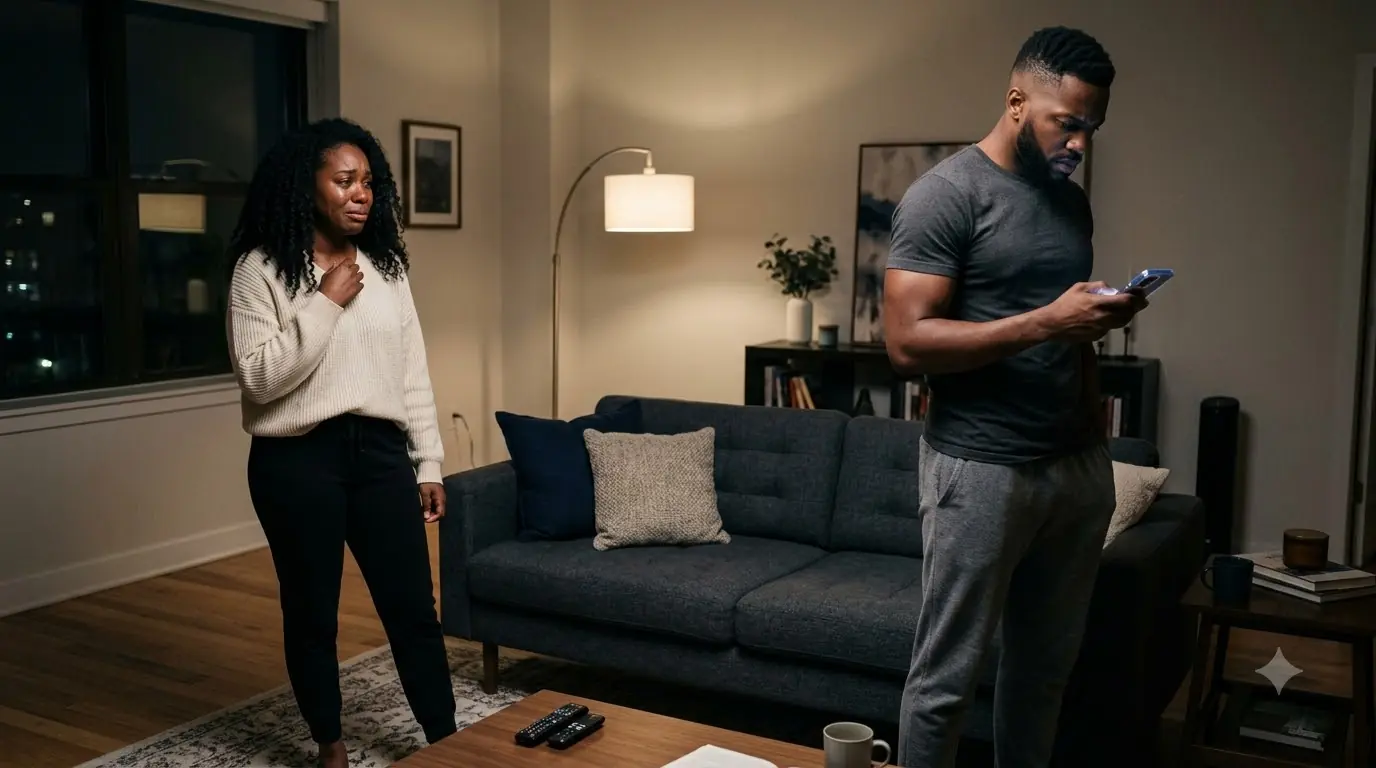
PART 1
“I never asked to be your whole life.”
Ryan stood in the hallway with one shoe on and his car keys in his hand.
I was still sitting on the edge of our bed.
He looked at me.
“I know.”
“No, you don’t.”
My voice shook.
“I just asked to be your top priority.”
Silence.
That was the moment the argument stopped being about his brother’s birthday dinner.
It stopped being about one canceled weekend.
One late night.
One forgotten plan.
It became about two years of me quietly rearranging my life around his while pretending that compromise was the same as being chosen.
Ryan and I had been together for almost four years.
We lived in Denver.
I worked in digital marketing for a healthcare company.
He was an operations manager for a growing outdoor equipment company.
When we met, I loved how full his life was.
He had close friends.
A big family.
Hobbies.
Weekend hikes.
A fantasy football league he treated like a federal responsibility.
He called his mother twice a week.
Helped his younger brother with money.
Played basketball with the same group of guys every Thursday.
He wasn’t the kind of man who disappeared into a relationship.
I respected that.
Actually, I admired it.
My previous boyfriend had made me his entire social life.
At first, it felt romantic.
Then it became exhausting.
If I went out with friends, he felt abandoned.
If I wanted a night alone, he took it personally.
By the time that relationship ended, I promised myself I would never again confuse dependence with love.
Then I met Ryan.
He had his life.
I had mine.
And in the beginning, we made space for each other beautifully.
Friday nights were ours.
He planned dates.
I planned trips.
He came to my work events.
I went to his family barbecues.
If his friends called while we were together, sometimes he answered and sometimes he didn’t.
There was balance.
That was what I thought love between two independent adults looked like.
Then his father had a minor stroke.
He recovered well.
But something shifted in Ryan afterward.
He became more involved with his family.
Understandably.
His parents lived forty minutes away.
He started visiting more.
Helping with errands.
Taking his dad to follow-up appointments.
I supported all of it.
Then his brother, Matt, went through a divorce.
Ryan became his emergency contact for everything.
Late-night phone calls.
Moving.
Lawyer recommendations.
Money.
Emotional support.
Again, I understood.
Then Ryan got promoted.
Longer hours.
More responsibility.
More dinners with clients.
More weekend events.
One by one, the things in his life got bigger.
And somehow, our relationship got whatever was left.
At first, I didn’t say anything.
Because what was I supposed to complain about?
His dad had been sick.
His brother’s marriage had ended.
His job mattered.
His friends mattered.
His family mattered.
None of these things were unreasonable.
That was what made it so hard to explain why I felt so lonely.
Every individual choice made sense.
Together, they created a pattern.
I was always the thing that could move.
“Can we push dinner to eight?”
Sure.
“Matt needs help tonight. Can we do tomorrow?”
Okay.
“My mom asked if we can come Sunday instead.”
Fine.
“Work thing came up Friday.”
No problem.
I became incredibly easy.
Because I wanted to be supportive.
And Ryan got used to it.
The first time I realized how bad it had become was my birthday.
I turned thirty-two on a Saturday.
Ryan had planned dinner.
He made the reservation himself.
I was excited because that had become rare.
At four that afternoon, Matt called.
His ex-wife had dropped off the last of his belongings.
He was upset.
Ryan went quiet after the call.
“What?” I asked.
“He’s having a rough time.”
I already knew where this was going.
“Okay.”
“He wants me to come over.”
I stared at him.
“Tonight?”
“Just for a little while.”
“Our reservation is at seven.”
“I’ll be back.”
“Ryan.”
“He’s really not doing well.”
I felt guilty before I even said anything.
That was the problem.
“How long?”
“Maybe an hour.”
He left at five.
At six-thirty, I texted.
Are you coming?
No answer.
At seven, the restaurant called to confirm whether we were still arriving.
I said no.
Ryan came home at 9:40.
He looked miserable.
“I’m sorry.”
I was sitting on the couch in sweatpants.
My makeup was already washed off.
The birthday dress I had bought was hanging back in the closet.
“What happened?”
“Matt started talking about everything.”
I nodded.
“Okay.”
“I lost track of time.”
“Okay.”
“Are you mad?”
I looked at him.
“Would it matter?”
His face changed.
“Of course.”
“Then yes.”
He sighed.
“Sarah, come on.”
There it was.
Come on.
The phrase people use when your hurt is inconvenient.
“It was my birthday.”
“I know.”
“Then why are you acting like I’m unreasonable?”
“I’m not.”
“You sound like you are.”
“He was falling apart.”
“And I wasn’t asking you to leave him alone.”
“What did you want me to do?”
“Remember me too.”
He stared at me.
“I do remember you.”
“No.”
I shook my head.
“You remember me after.”
That sentence stayed with both of us.
He apologized.
We went out the next night.
He bought me flowers.
I accepted it.
But the feeling didn’t disappear.
Because it wasn’t about the birthday.
It was about knowing that if something came up, I was always the easiest thing to postpone.
Three months later, it happened again.
My company had an awards dinner.
I was being recognized for a project I had led for almost a year.
Ryan promised to come.
The morning of the event, his mother asked him to help his father pick up a piece of furniture.
I overheard the call.
“Can’t Matt do it?” Ryan asked.
Pause.
“Okay.”
I already knew.
When he hung up, I waited.
He looked at me.
“My dad needs—”
“No.”
He frowned.
“What?”
“No.”
“Sarah.”
“You told me tonight was blocked.”
“It is.”
“Then tell them you’re not available.”
He looked uncomfortable.
“It’ll take an hour.”
“That’s what you said on my birthday.”
His face tightened.
“This isn’t the same.”
“It is exactly the same.”
“My father needs help.”
“He needs help moving a dresser.”
“He can’t lift it anymore.”
“Then Matt can help.”
“Matt has his daughter today.”
“Hire someone.”
Ryan stared at me.
“You’re being cold.”
That hurt.
“I’m being cold?”
“Yes.”
“This is your father.”
“And I’m your partner.”
“I know that.”
“Do you?”
He rubbed his forehead.
“What do you want me to do? Tell my parents they’re less important now because I have a girlfriend?”
I went still.
That wasn’t what I had said.
But something about the way he framed it made me realize how he had been hearing every request I made.
Competition.
As if priority meant ranking everyone else below me.
“I never asked you to stop helping your family.”
“Then what are we fighting about?”
“I’m asking you to honor the commitment you already made.”
He shook his head.
“Life comes up.”
“For everyone.”
“Yes.”
“So why is my life always the flexible one?”
He didn’t answer.
That evening, he made it to the awards dinner.
Barely.
He arrived eleven minutes before my name was called.
His hair was messy.
His shirt wrinkled.
He apologized quietly.
I smiled because coworkers were watching.
We took pictures.
He told me he was proud of me.
I believed him.
That was the painful part.
Ryan loved me.
I never doubted that.
But love and priority were not the same thing.
He loved me emotionally.
He prioritized me conditionally.
I didn’t know how to explain that without sounding demanding.
So I tried harder to be reasonable.
Then came our anniversary.
Four years.
We planned a weekend in Aspen.
Two nights.
No family.
No work.
No friends.
Just us.
We had not taken a trip alone in almost a year.
The hotel was booked.
Bags packed.
I was genuinely excited.
The morning we were supposed to leave, Ryan’s boss called.
There was a problem with a supplier.
“I can handle it remotely,” Ryan told me.
I nodded.
“Okay.”
An hour later, he was still on the phone.
Then two.
At noon, I asked, “Are we leaving?”
“Yeah.”
“When?”
“Soon.”
At two, his boss asked him to come into the office.
Ryan looked at me.
I laughed.
Not because it was funny.
“No.”
“What?”
“No.”
“Sarah, this is serious.”
“So is this.”
“It's work.”
“I know.”
“People's jobs could be affected.”
“And why are you the only person who can fix it?”
“I’m responsible for the team.”
“You are always responsible for somebody.”
He stared at me.
“That's unfair.”
“Your dad.”
“Don't.”
“Your mom.”
“Sarah.”
“Matt.”
“Stop.”
“Your friends.”
He raised his voice.
“What exactly do you want from me?”
I went quiet.
Because there it was.
The question underneath everything.
I looked at him.
“I want to matter before the emergency.”
His expression shifted.
“I want you to protect some space for us instead of giving it away every time someone asks.”
“That’s not how life works.”
“Maybe not.”
I swallowed.
“But this relationship cannot survive on leftovers.”
He stared at me.
Then his phone rang.
His boss.
Neither of us moved.
The phone kept ringing.
Finally, Ryan answered.
That told me everything.
He went to work.
I canceled the hotel.
Alone.
When he came home that night, I had packed a small bag.
His face changed.
“What are you doing?”
“Going to Maya’s.”
“For how long?”
“I don’t know.”
His expression hardened.
“So now you're leaving because I had a work emergency?”
“No.”
I looked at him.
“I’m leaving because I keep having to convince you that our relationship deserves protected time.”
He exhaled.
“Sarah, adults have responsibilities.”
“Yes.”
“And adults also choose what they protect.”
“I protect us.”
“How?”
“I come home every night.”
That sentence hit me hard.
“You think coming home is priority?”
“I’m here.”
“You’re physically here.”
I felt tears coming.
“But your attention, your time, your energy—everything gets promised somewhere else first.”
“That’s not true.”
“When was the last time you said no to someone because you had plans with me?”
Silence.
“When?”
He looked away.
I nodded.
“That’s what I thought.”
I left.
Maya didn’t say “I told you so.”
I appreciated that.
She handed me a glass of wine and let me sit silently for almost twenty minutes.
Finally, she asked, “Are you breaking up?”
“I don’t know.”
“Do you want to?”
“No.”
“Then what do you want?”
I stared at the floor.
“I want him to choose me without me having to create a crisis.”
That sentence made me cry.
Because that was exactly it.
Ryan responded to emergencies.
So part of me had started wondering whether I needed to become one.
Maybe if I threatened to leave, I would finally become urgent enough.
I hated that thought.
Love shouldn’t require emotional fire alarms to get attention.
Ryan called that night.
I didn’t answer.
The next morning, he texted.
Can we talk tonight? I canceled basketball.
I stared at the message.
It should have made me happy.
Instead, I felt angry.
Why did I need to leave for him to cancel something?
Still, I went home.
Ryan was sitting at the kitchen table.
His phone was face down.
That was new.
I sat across from him.
He looked exhausted.
“I’m sorry.”
I stayed quiet.
“I think I finally understand what you’ve been saying.”
“Do you?”
“I think so.”
He rubbed his hands together.
“You weren't asking me to choose you over my family.”
“No.”
“Or work.”
“No.”
“You were asking me to sometimes say, ‘I can’t. I already have something important.’”
My eyes filled.
“Yes.”
“And that something important could be you.”
I nodded.
“Yes.”
He looked ashamed.
“I don't think I’ve ever said that out loud.”
“What?”
“No, I can’t. Sarah and I have plans.”
My throat tightened.
“I always thought you'd understand.”
There it was.
The sentence that explained years of hurt.
“I did understand.”
My voice softened.
“Every time.”
He looked at me.
“That’s why it got so easy to disappoint me.”
His eyes filled.
“I knew you’d be there.”
“Yes.”
“And I knew Dad would be upset.”
“Yes.”
“Matt would spiral.”
“Yes.”
“My boss would remember.”
“Yes.”
He looked down.
“And you would forgive me.”
I nodded.
“Until I couldn’t.”
For a moment, neither of us spoke.
Then Ryan said something I didn't expect.
“I think I know why I do it.”
I looked at him.
“My dad.”
Of course.
Ryan had grown up in a house where his father measured love through usefulness.
You showed up.
You fixed things.
You said yes.
His father had worked constantly, but if a relative called at midnight, he went.
If a neighbor needed help, he went.
If someone asked for something, saying no was almost treated like selfishness.
Ryan had learned that being dependable meant being endlessly available.
“And if you say no?” I asked.
“I feel guilty.”
“To everyone?”
He nodded.
“Except me.”
His face fell.
I hadn’t meant it cruelly.
But it was true.
“Why?”
“Because you feel safe.”
I stared at him.
He continued.
“I know that sounds terrible.”
“It does.”
“I know.”
He looked ashamed.
“With everyone else, I’m scared saying no will change how they see me.”
“And with me?”
“I thought our relationship was strong enough to survive me disappointing you.”
My eyes filled.
“It was.”
I whispered.
“But survival isn't the same thing as being healthy.”
He nodded.
“I know.”
Then he told me something that made the whole situation more complicated.
“My boss offered me another promotion.”
I stared at him.
“When?”
“Last week.”
Of course.
“What does it involve?”
“Regional oversight.”
“Meaning?”
“More travel.”
My stomach dropped.
“How much?”
“Probably ten days a month.”
I looked away.
“Were you going to tell me?”
“Yes.”
“When?”
He hesitated.
That answer was enough.
“Ryan.”
“I didn’t know how.”
I laughed bitterly.
“Because you knew what I’d say.”
“I thought you'd think I was choosing work over you.”
“Aren’t you?”
“No.”
He looked at me.
“I haven't accepted it.”
That mattered.
“But you want it.”
“Yes.”
I appreciated the honesty.
Even while it hurt.
“I’ve worked toward something like this for years.”
“I know.”
“And the money would help.”
“I know.”
“But?”
He took a breath.
“I don't want to keep building a life where every success costs us more time together.”
That was new.
“What are you saying?”
“I’m saying I haven't decided.”
He looked at me.
“And for once, I want us to decide what this means before I say yes.”
That should have felt like progress.
It did.
But it also exposed the larger question.
What if Ryan’s ambitions, family responsibilities, and sense of duty simply left less room than I needed?
Love could not solve a structural mismatch by itself.
I looked at him.
“I don't want you to turn down your life for me.”
“And I don't want you to keep getting the leftovers.”
Silence.
For the first time, neither of us had an easy enemy.
Not his brother.
Not his boss.
Not his parents.
The real issue was whether we knew how to build a relationship where love had an actual place on the calendar, not just a place in our hearts.
Ryan reached for my hand.
I let him.
Then he asked, “What if I don’t know how to make you my top priority without failing everyone else?”
My chest tightened.
Because that was the question we had finally needed to ask.
Not whether he loved me.
Whether he could live in a way that made that love visible.
PART 2 — FINAL
Ryan did not accept the promotion immediately.
That mattered.
Not because I needed him to reject it.
Because for the first time, he didn’t treat a career opportunity like a personal decision I would simply have to support afterward.
We spent the next two weeks talking.
Not fighting.
Mostly.
We looked at the travel schedule.
The salary.
His current workload.
Our time together.
His family obligations.
I asked one question over and over.
“What would actually change?”
At first, Ryan kept answering with money.
“We could save faster.”
“We could travel more.”
“We could eventually buy a bigger place.”
Finally, I stopped him.
“No.”
He frowned.
“What?”
“What would change about how we live?”
He stared at me.
That question was harder.
Because money can make a future look better on paper while the relationship living inside it gets worse.
Ryan thought for a moment.
“I’d be gone more.”
“Yes.”
“I’d have more after-hours calls.”
“Yes.”
“But I’d also have more authority to set my own schedule.”
“Would you?”
He hesitated.
“I think so.”
“That’s not an answer.”
He smiled faintly.
“You’ve gotten annoying.”
“I learned from you.”
We both laughed.
That helped.
Then he became serious.
“I could negotiate.”
“For what?”
“Protected travel limits.”
I listened.
“No calls Friday evenings unless it’s actually urgent.”
My chest tightened slightly.
“Would they agree?”
“I don’t know.”
“Then ask.”
That was new for Ryan too.
He had spent years accepting the first version of responsibility handed to him.
At work.
With family.
With friends.
He didn’t negotiate.
He absorbed.
So he went back to his boss.
He asked for clearer travel limits.
One protected weekend a month minimum.
Flexible work after heavy travel weeks.
His boss agreed to most of it.
Not everything.
Ryan came home almost shocked.
“That was easier than I expected.”
I stared at him.
“You mean you asked for what you needed and the world didn’t collapse?”
He laughed.
“Apparently.”
That sentence became important.
Because Ryan's problem had never been only that other people demanded too much.
It was that he rarely told anyone no.
We started with work.
Then family.
That was harder.
The first real test came three weeks later.
Friday night.
We had dinner reservations.
Nothing major.
Just us.
At five-thirty, Matt called.
Ryan looked at the screen.
I felt my whole body tense automatically.
He answered.
“Hey.”
Pause.
“What happened?”
Another pause.
I stared at my hands.
Here we go.
Then Ryan said something I had almost never heard.
“I can’t tonight.”
My head lifted.
He listened.
“No, everything okay?”
Pause.
“Then I can come by tomorrow morning.”
I felt tears sting my eyes.
Ryan glanced at me.
Not for permission.
Just awareness.
Then he said, “Love you, man. Tomorrow.”
He hung up.
I stared at him.
“What?”
I shook my head.
“Nothing.”
“You’re crying.”
“I’m not.”
“You definitely are.”
I laughed.
“It’s stupid.”
“No.”
He reached for my hand.
“It’s not.”
“What did he need?”
“Help mounting a TV.”
I stared at him.
“You have canceled plans with me for less.”
“I know.”
That was the point.
Not that Matt’s TV didn't matter.
That not every request was an emergency.
Ryan had been treating other people’s wants like obligations and my wants like options.
Now he was learning to pause long enough to tell the difference.
But boundaries are easier when the stakes are small.
The harder test came with his father.
Two months later, Ryan and I planned another weekend away.
Not Aspen.
We weren't ready to tempt fate.
A small cabin two hours outside Denver.
Friday morning, his mother called.
His father had a cardiology appointment Monday and wanted Ryan to come.
Ryan immediately said yes.
Then he hung up and looked at me.
I didn’t say anything.
He knew.
“What?”
“You tell me.”
“It’s medical.”
“Yes.”
“He wants me there.”
“I know.”
“You’re upset.”
“No.”
He frowned.
“I’m worried.”
“About?”
“Whether you know the difference between being needed and being requested.”
His face tightened.
“My dad had a stroke.”
“I know.”
“That changes things.”
“Yes.”
I stepped closer.
“And if the doctor had said this was urgent, I would tell you to go.”
He stayed quiet.
“But this is a routine follow-up.”
“He gets anxious.”
“I know.”
“So?”
“So your mom is going.”
He looked conflicted.
I softened.
“Ryan, being a good son does not require you to attend every appointment.”
He looked away.
“You don’t understand.”
“Then help me.”
He sat down.
For a long moment, he said nothing.
Then:
“The first time Dad had chest pain when I was sixteen, I wasn’t home.”
My expression changed.
“What?”
“I was at a friend’s house.”
I had never heard this.
“He was okay.”
Ryan continued.
“But Mom called me crying.”
His voice got quieter.
“And I remember thinking if something happened while I was out having fun, I’d never forgive myself.”
My chest tightened.
There it was.
The old fear underneath the constant availability.
“You were sixteen.”
“I know.”
“Did your dad blame you?”
“No.”
“Your mom?”
“No.”
“So you've been carrying that yourself.”
“Yes.”
He looked tired.
“I think every time somebody I love needs something, part of me hears that phone call.”
That changed the conversation.
Not the boundary.
The understanding.
I sat beside him.
“I don’t want you to become someone who doesn’t show up.”
“I know.”
“I love that you're dependable.”
His eyes lifted.
“I just don't want dependability to mean you abandon your own life every time someone asks.”
He nodded slowly.
“What do I do about Monday?”
“Call your dad.”
“And say what?”
“The truth.”
He did.
His father surprised him.
“Of course you don't need to come,” he said.
Ryan blinked.
“You sure?”
“Son, your mother will be there.”
Ryan looked at me.
His father continued.
“I’m not dying.”
Ryan laughed nervously.
“Good to know.”
“And if something changes, we call you.”
“Okay.”
That conversation lasted three minutes.
The guilt Ryan had carried for twenty years had been controlling decisions nobody was actually demanding.
That was the beginning of a much bigger change.
He started therapy.
His idea.
I was proud of him.
Not because therapy magically fixed priority problems.
Because Ryan finally understood that constantly saying yes had become part of his identity.
He needed people to see him as dependable.
Useful.
The one who showed up.
And I had paid the price because I was the person whose love he trusted enough to disappoint.
That realization hurt him.
It also changed him.
We started having one protected night each week.
Not necessarily date night.
Sometimes we ordered food and watched television.
Sometimes we took a walk.
Sometimes we argued.
But the rule mattered.
We didn't casually give the time away.
If a genuine emergency happened, of course plans changed.
But inconvenience was no longer automatically an emergency.
The first few months felt unnatural.
Almost scheduled.
Then something interesting happened.
Ryan started protecting our time without thinking about it.
A coworker asked if he wanted to join a dinner Thursday.
“Can’t. Sarah and I have plans.”
A friend asked him to help move Saturday morning.
“I can do afternoon.”
His mother asked if we could come for dinner on a night we had something planned.
“How about Sunday?”
No speech.
No resentment.
Just normal boundaries.
And I changed too.
That mattered.
Because I had developed a bad habit of treating every interruption as evidence that I still ranked last.
Sometimes his family genuinely needed him.
Sometimes work was genuinely urgent.
Sometimes a friend deserved support.
Priority did not mean exclusivity.
I had to learn that too.
One night, Ryan's mother called crying.
His father had fallen.
Ambulance.
Hospital.
Ryan immediately grabbed his keys.
I grabbed mine too.
He looked at me.
“You don't have to come.”
“I know.”
“Then why are you?”
“Because you need me.”
He hugged me so quickly I almost lost balance.
That night, we sat in the emergency room until nearly three in the morning.
His father was fine.
Bruised hip.
No fracture.
As we drove home, Ryan said, “You know what's weird?”
“What?”
“If this had happened a year ago, I would’ve been scared you were angry about our plans changing.”
I looked at him.
“And tonight?”
“I knew you understood it was real.”
That was the trust we had been missing.
When every request gets treated like an emergency, your partner eventually resents even the real ones.
Once Ryan started protecting our relationship from unnecessary interruptions, I stopped feeling threatened by necessary ones.
We both became more generous.
About six months after the original argument, Ryan accepted the promotion.
With the negotiated boundaries.
It wasn’t perfect.
Some months he traveled more than promised.
Sometimes I got lonely.
Sometimes he came home exhausted and wanted silence when I wanted connection.
But now we talked before resentment grew teeth.
One night, after he had been traveling for eight days, he came home.
I expected him to drop his suitcase and collapse.
Instead, he hugged me.
Long.
No phone.
No distracted glance toward the television.
Just me.
“I missed you.”
My chest tightened.
“I missed you too.”
He pulled back.
“Dinner tomorrow?”
“You’ll be exhausted.”
“Probably.”
I smiled.
“You don't have to.”
“I know.”
That was the point.
He wanted to.
A year later, Ryan proposed.
Not because priority meant marriage.
But because our relationship had finally become something we both knew how to protect.
He proposed at home.
No crowd.
No family hiding behind furniture.
Just us.
Before asking, he said, “I need to tell you something.”
“That sounds ominous.”
He smiled.
“I spent a long time thinking making someone a priority meant making everyone else less important.”
I listened.
“I was wrong.”
He took my hands.
“It means when I build my life, I make sure there's a protected place for you inside it.”
My eyes filled.
“Not wherever there’s room left.”
That sentence broke me.
He continued.
“You’re not my whole life.”
I laughed through tears.
“Good.”
“My family matters.”
“I know.”
“My friends matter.”
“I know.”
“My work matters.”
“I know.”
“And you matter differently.”
My throat tightened.
“Because you’re the person I’m choosing to build the daily part with.”
Then he knelt.
I said yes.
Our marriage later taught us that priority is not a permanent ranking.
Life changes.
Parents get sick.
Children arrive.
Careers demand seasons of intense attention.
Friends have crises.
Sometimes your partner will not be the person receiving the most hours in a week.
That is not automatically neglect.
Priority is deeper than counting minutes.
It is knowing your relationship will not always be the easiest thing to cancel.
It is knowing important decisions include you.
It is knowing your needs are not repeatedly dismissed because someone else's request is louder.
It is knowing the person you love can say no to other people sometimes without making you beg for it.
It is knowing that when the world becomes demanding, your relationship has a protected place instead of a leftover one.
And it goes both ways.
Ryan learned to say no.
I learned not to demand proof every time he said yes to someone else.
We stopped treating love like a competition.
That was the mistake we had made before.
I wasn't asking to beat his mother.
His father.
His brother.
His friends.
His career.
Those relationships weren't competing for the same role.
I was asking Ryan to recognize that the person you build a life with cannot always be the person expected to understand why everyone else came first.
Understanding is generous.
But when one person is always expected to provide it, eventually generosity starts feeling like invisibility.
Years later, I still remember standing in our bedroom while Ryan held his keys.
“I never asked to be your whole life.”
That sentence was true then.
It is true now.
I would never want to be his entire world.
A healthy relationship needs two complete people.
Friends.
Family.
Purpose.
Interests.
Space.
But loving someone deeply while consistently giving them whatever remains is not balance.
It is neglect with good intentions.
I didn't need Ryan to choose me every time.
I needed to know that sometimes, when everything else reached for him at once, he would look at the life we were building and say:
“Not tonight.”
“I already promised this time.”
“She needs me too.”
“We have plans.”
“I'll help tomorrow.”
Those small sentences changed our relationship.
Because priority is not saying someone is important.
It is making choices that allow them to feel it.
And once Ryan understood that, I never again had to ask to be his whole life.
I finally knew I had a real place in it.