“I Think We Should Break Up Because I Don’t Love You Anymore.” I Thought He Was Angry—Then I Realized He Meant It
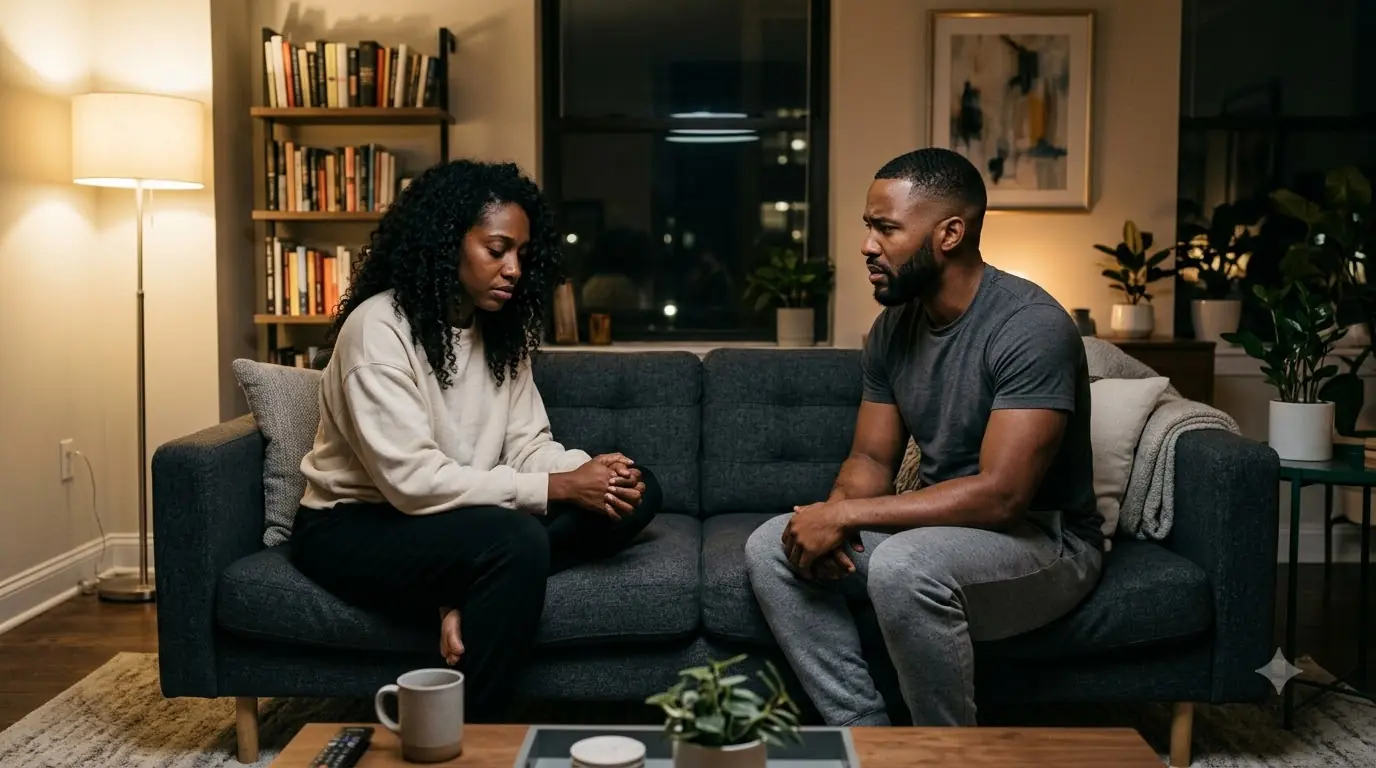
PART 1
“I think we should break up because I don’t love you anymore.”
For a second, I honestly thought I had misheard him.
The restaurant around us kept moving.
Glasses clinked.
Someone laughed at the table behind us.
A server walked past carrying two plates.
And across from me, Adam sat completely still.
I stared at him.
“What?”
His eyes dropped to the table.
“I’m sorry.”
“No.”
My voice came out sharper than I intended.
“No, repeat what you just said.”
He looked up.
His face was pale.
“I think we should break up.”
“That’s not the part I asked you to repeat.”
He swallowed.
“Sarah.”
“Say it.”
He closed his eyes for a second.
Then opened them.
“I don’t love you anymore.”
There are sentences that hurt immediately.
And then there are sentences your mind refuses to understand because understanding them would change too much at once.
This was the second kind.
Adam and I had been together for five years.
Five years and three months, actually.
I knew because our anniversary had been two weeks earlier.
He bought me a necklace.
We had dinner at an Italian place near our apartment.
He kissed me before we went to sleep.
Two weeks.
That was how long ago he had looked at me and said, “Happy anniversary, babe.”
Now he was saying he didn’t love me.
I laughed.
Not because it was funny.
Because something in me broke in a direction I didn’t expect.
“You bought me jewelry two weeks ago.”
“I know.”
“You told my mom we were coming for Thanksgiving.”
“I know.”
“We just renewed the lease.”
“I know.”
My eyes burned.
“Then what exactly do you know?”
He looked down again.
“I know I handled this badly.”
“Badly?”
I leaned forward.
“You think this is about handling?”
“No.”
“Because right now I’m trying to understand how a person goes from kissing me goodnight to not loving me in fourteen days.”
“It wasn’t fourteen days.”
That sentence changed everything.
I went still.
“How long?”
Adam said nothing.
My heart started pounding.
“How long have you felt this way?”
“I don’t know.”
“That’s a lie.”
“It’s not.”
“Three months?”
Silence.
“Six?”
He rubbed his hands together.
“Maybe.”
I stared at him.
“Maybe six months?”
“Sarah—”
“Were you lying to me for six months?”
“No.”
“What do you call sleeping next to someone, saying you love them, planning holidays with them, and buying anniversary gifts while secretly wondering whether you even want the relationship?”
His face tightened.
“I was trying.”
That word hurt almost as much as the first sentence.
Trying.
Like loving me had become a task.
A responsibility.
Something he was working hard to continue feeling.
I pushed my chair back.
“Take me home.”
“Please let me explain.”
“Not here.”
“Sarah.”
“Take me home.”
He paid the bill.
I don’t remember the drive.
I remember staring out the passenger window and thinking about every small thing from the last six months.
Every moment that suddenly looked different.
Adam coming home later.
His shorter answers.
The way he stopped reaching for my hand in the car.
How often I initiated sex.
How many times he said he was tired.
How many weekends he wanted to spend alone.
I had noticed all of it.
Of course I had.
I just gave everything a kinder explanation.
Work stress.
Fatigue.
Routine.
Adulthood.
Love changes.
That was what I told myself.
I had no idea I was watching it disappear.
When we got home, I walked into the bedroom.
Adam followed.
“Can we talk now?”
I turned around.
“Is there someone else?”
“No.”
“Don’t lie to make this easier.”
“I’m not.”
“Did you cheat?”
“No.”
“Do you want someone else?”
“No.”
I stared at him.
Somehow, that made it worse.
If there had been another woman, I could hate her.
Or him.
I could point to a betrayal.
Something concrete.
But what do you do when someone simply stops loving you?
“What happened?” I asked.
He looked exhausted.
“I don’t know.”
“That’s not good enough.”
“I wish I had a better answer.”
“Did I do something?”
“No.”
“Did we become boring?”
“I don’t know.”
“Do you resent me?”
“No.”
“Then what?”
He sat on the edge of the bed.
I stayed standing.
“I started noticing I was going through the motions.”
My chest tightened.
“What does that mean?”
“I would come home and kiss you because that’s what I always did.”
I flinched.
“I’d say I love you because…”
He stopped.
“Because what?”
“Because you said it first.”
That one cut deep.
I looked away.
He continued.
“I kept thinking if I stayed normal long enough, maybe whatever was wrong would pass.”
“So you used me as an experiment.”
“No.”
“That’s exactly what you did.”
“I didn’t know what else to do.”
“You could’ve talked to me.”
“I was scared.”
“Of what?”
“Hurting you.”
I laughed bitterly.
“Fantastic plan.”
“I know.”
“No, you don’t.”
I turned back toward him.
“You let me build six more months of memories inside a relationship you weren’t sure you wanted.”
“I was still sure sometimes.”
I stared at him.
“What does that even mean?”
“There were days I felt close to you.”
“And others?”
He looked away.
“Where I didn’t.”
I swallowed.
“Do you love me at all?”
He hesitated.
That hesitation was worse than no.
“I care about you.”
I closed my eyes.
Everyone who has ever been dumped knows how cruel that sentence can be.
I care about you.
The consolation prize of love.
“What about five years?”
“Five years matter.”
“Apparently not enough.”
“That’s not fair.”
“Stop.”
I held up my hand.
“Do not tell me what’s fair right now.”
He nodded.
I walked toward the closet and pulled down a suitcase.
His face changed.
“What are you doing?”
“Leaving.”
“You don’t have to leave tonight.”
I turned around.
“You just told me you don’t love me.”
“I know, but—”
“And now you want me to sleep beside you?”
“No.”
“Then what?”
“I can take the couch.”
I laughed.
“You really think the sleeping arrangement is the problem?”
He said nothing.
I pulled clothes from hangers.
My hands were shaking so badly I dropped two shirts.
Adam stood.
“Let me help.”
“Don’t touch my stuff.”
He stopped.
“Sarah.”
“What?”
“I’m sorry.”
I turned around so quickly he stepped back.
“Stop saying that.”
His eyes reddened.
“You keep saying sorry like you spilled something.”
“I don’t know what else to say.”
“Then say nothing.”
Silence.
I hated myself for crying.
I hated him for looking like he wanted to comfort me.
Because comfort from the person causing the pain is one of the most confusing things in the world.
“Did you ever plan to tell me?” I asked.
“Yes.”
“When?”
“I don’t know.”
“Before we got engaged?”
His eyes widened.
“What?”
I laughed bitterly.
“Don’t act surprised.”
“We weren’t engaged.”
“No, but we talked about it.”
He went quiet.
“Last month you asked what kind of ring I liked.”
His face fell.
“I know.”
“Why?”
“I was trying to figure out if taking the next step would…”
He stopped.
My entire body went cold.
“Would what?”
He looked ashamed.
“Make me feel differently.”
I stared at him.
“You considered proposing to fix your feelings?”
“I didn’t buy a ring.”
“Thank God.”
“Sarah—”
“No. Seriously. Thank God.”
I wiped my face.
“You could have married me because you were too scared to admit you didn’t want me anymore.”
“That’s not what I wanted.”
“Then what did you want?”
“I wanted to want it.”
There it was.
The saddest truth in the room.
He wanted to love me.
He wanted the relationship to work.
He wanted the future we had discussed.
He just didn’t feel what he thought he should.
And for the first time, I understood that I couldn’t argue him back into love.
That realization was unbearable.
I packed enough for a few days.
My sister lived twenty minutes away.
When I reached the front door, Adam followed.
“Can we talk tomorrow?”
“I don’t know.”
“Please don’t disappear.”
I almost laughed.
“You’re worried I’ll disappear?”
“I still care about you.”
“I know.”
The words came out colder than I intended.
“That’s the problem.”
I opened the door.
Then he said, “There’s something else.”
I froze.
Of course there was.
There is always something else when someone waits too long to tell the truth.
I turned.
“What?”
Adam looked at the floor.
“I went to see a therapist three months ago.”
I stared at him.
“You what?”
“Because I thought something was wrong with me.”
My anger shifted.
“Why didn’t you tell me?”
“I was embarrassed.”
“About what?”
He looked at me.
“Because it wasn’t just you.”
My chest tightened.
“What does that mean?”
“I stopped feeling much of anything.”
The room went quiet.
“About work. Friends. Things I used to enjoy.”
I stared at him.
“Then how do you know you stopped loving me?”
His face changed.
That question hit him differently.
“I don’t know.”
For the first time since the restaurant, he looked genuinely unsure.
I felt anger rush through me.
“You just ended a five-year relationship because you don’t know?”
“I know what it feels like.”
“What does it feel like?”
“Empty.”
I swallowed.
“And your therapist?”
“He thinks I might be burned out.”
“Burned out?”
“He didn’t diagnose anything. He said I’ve been emotionally shut down for a while and need to figure out why.”
I stared at him.
“Then why tell me you don’t love me?”
His eyes filled.
“Because I didn’t want to keep lying.”
I stood there with my suitcase in my hand, more confused than before.
Five minutes earlier, I thought I had lost Adam because love had simply ended.
Now I wasn’t sure whether he had fallen out of love with me…
or whether he had become so emotionally numb that he couldn’t tell what he felt about anything anymore.
But either way, one fact had not changed.
He had made a decision about us without letting me know there was a problem.
And I couldn’t stay just because uncertainty made leaving harder.
“I’m still going.”
He nodded.
“I know.”
“I need time.”
“I understand.”
“And you need to figure yourself out without using me as proof that you’re okay.”
His eyes filled.
“You’re right.”
I left.
For the first three days, I barely functioned.
My sister, Lauren, let me stay in her guest room.
She didn’t ask too many questions.
That helped.
On the fourth night, she found me sitting at her kitchen table staring at my phone.
“You want to text him?”
“Yes.”
“Then why don’t you?”
“Because I don’t know what I’d be asking for.”
She sat down.
“Do you want him back?”
I cried before I answered.
“Yes.”
Then I whispered, “But I don’t want to convince someone to love me.”
Lauren reached for my hand.
“You shouldn’t.”
The next morning, Adam texted.
Can we meet? There’s something I need to tell you, and this time I want to tell you before I make another decision alone.
I stared at the message for a long time.
Then replied:
Tomorrow.
What I didn’t know was that the next conversation would hurt differently.
Because Adam had finally figured out when his feelings began to change.
And the answer involved a choice I had made almost a year earlier.
PART 2
We met at a coffee shop Saturday morning.
Adam was already there.
He looked worse than I did.
Unshaven.
Tired.
There was no relief in seeing that.
I sat down.
“What did you figure out?”
He didn’t waste time.
“I think I know when I started pulling away.”
I waited.
“Last summer.”
My stomach tightened.
“What happened last summer?”
He looked at me.
“When you turned down the Seattle job.”
I stared at him.
“What?”
A year earlier, I had been offered a promotion.
Great salary.
Better title.
The problem was Seattle.
We lived in Minneapolis.
When I got the offer, Adam and I spent two weeks discussing it.
At least, I thought we had discussed it.
He told me he didn’t want to move.
His parents were nearby.
His job was there.
We had friends.
A life.
I wanted the promotion.
But I wanted Adam more.
So I declined.
“What does Seattle have to do with you not loving me?”
He looked ashamed.
“Because after you turned it down, something changed between us.”
I felt anger rise.
“You asked me to stay.”
“I know.”
“I chose us.”
“I know.”
“And that made you stop loving me?”
“No.”
He rubbed his face.
“It made me feel trapped.”
I stared at him.
“You felt trapped because I stayed?”
“Not by you.”
“Then by what?”
“By what it meant.”
I waited.
“You gave up something huge for us.”
His voice got quieter.
“And suddenly I felt like I had to prove the relationship was worth it.”
My chest tightened.
“That’s insane.”
“I know.”
“No, Adam, I’m serious.”
I leaned forward.
“I made an adult choice.”
“I know.”
“You didn't force me.”
“I know.”
“Then why would you resent me for staying?”
“I didn’t resent you.”
“What did you resent?”
“Pressure.”
I stared at him.
“Pressure you created in your own head.”
“Yes.”
That honesty stopped me.
He continued.
“Every bad week after that felt bigger.”
“How?”
“If we fought, I thought, She turned down Seattle for this?”
I went quiet.
“If I wanted a night alone, I felt guilty.”
He looked down.
“If I had doubts about the future, I felt like I wasn’t allowed to have them because you had already sacrificed something.”
I swallowed.
“So instead of talking to me, you pulled away.”
“Yes.”
“And I saw you pulling away, so I tried harder.”
His eyes lifted.
“Yes.”
There it was.
The cycle.
I had felt distance.
So I planned more dates.
Talked more about our future.
Asked whether we were okay.
Adam felt guilty and pressured.
So he withdrew further.
The more he withdrew, the more afraid I became.
Neither of us said the real thing.
“You should have told me,” I said.
“I know.”
“I might have understood.”
“I didn’t understand it myself.”
“That doesn’t make it okay.”
“No.”
I looked at him.
“Do you actually not love me?”
He exhaled slowly.
“I don’t know how to answer that without hurting you.”
“The truth already hurts.”
He nodded.
“I don't feel connected to you the way I used to.”
My eyes burned.
“That sounds like no.”
“Maybe.”
I looked away.
“But I also don’t feel connected to much of anything.”
I stayed quiet.
He continued.
“I met with my therapist again.”
“And?”
“He asked me whether I wanted to end the relationship or whether I wanted relief from feeling responsible for another person’s happiness.”
That landed.
“What did you say?”
“I didn’t know.”
Of course.
I laughed softly.
“You really don’t know much right now.”
“No.”
For the first time, he almost smiled.
It disappeared quickly.
“I think that’s why I need to be alone.”
That hurt.
Even though part of me knew it was coming.
“For how long?”
“I don’t think it should be a break.”
My heart sank.
“What?”
“If I say it’s a break, you’ll wait.”
I went still.
“And I don't think that’s fair.”
I stared at him.
“You want a real breakup.”
“Yes.”
I felt tears coming.
“So that's it?”
“No.”
“What do you mean, no?”
“It means I'm not saying we can never find our way back.”
He held my gaze.
“But I’m not asking you to hold your life still while I figure myself out.”
That hurt in a different way.
Because it was respectful.
And I hated that.
It would have been easier if he were selfish.
If he asked me to wait.
If he wanted me available while he explored freedom.
Then I could be angry.
Instead, he was finally doing the thing I had needed him to do months earlier.
Telling the truth before asking me to build around uncertainty.
“I hate this,” I whispered.
“So do I.”
“You’re the one leaving.”
“I know.”
“That means you don’t get to act like we’re hurting the same.”
He flinched.
“You're right.”
I wiped my face.
“Are you going to date?”
“I don’t know.”
“Please stop saying that.”
He nodded.
“I’m not planning to.”
“That’s not what I asked.”
He looked at me.
“If I meet someone eventually, I’m not going to lie to you.”
My stomach turned.
I stood.
“I can’t do this conversation anymore.”
He stood too.
“Sarah.”
“What?”
“I’m sorry.”
This time, I didn't tell him to stop.
I just nodded.
“I know.”
And I left.
The breakup became real quickly.
Adam moved out of our apartment because I couldn’t afford to break the lease immediately.
He took the couch.
Most of the kitchen stuff.
His desk.
Half the books.
The empty spaces were brutal.
For weeks, everything reminded me of him.
The missing coffee mug.
The blank wall where his photographs had been.
The drawer that suddenly had too much space.
I cried constantly at first.
Then less.
Then unexpectedly again.
Grief does not respect progress.
People kept telling me things they thought would help.
“If it's meant to be, he'll come back.”
“You deserve someone who knows.”
“Five years is a long time.”
“You’ll find someone better.”
I hated all of it.
Because I didn't want better.
I wanted the man I already knew.
But eventually, something changed.
I started asking a different question.
Not:
Why wasn't I enough?
But:
Why had I been so willing to stay inside a relationship where I had been feeling alone for six months?
That question was harder.
Because Adam's withdrawal had not been invisible.
I noticed.
I simply kept lowering my expectations because losing the relationship felt scarier than admitting it had changed.
Two months after the breakup, I received an email.
From the company in Seattle.
The position I had declined was filled.
But they had another opening.
Not identical.
Still good.
Would I be interested in interviewing?
I stared at the email for almost an hour.
Then I called Lauren.
“Do it,” she said.
“I don't know if I want to move.”
“You don't have to.”
“What if they offer it?”
“Then you decide.”
Simple.
I interviewed.
They offered me the job.
This time, I said yes.
Not because Adam was gone.
Because I finally allowed myself to ask what I wanted without immediately filtering the answer through us.
Moving terrified me.
It also woke something up.
New apartment.
New coworkers.
Rain.
Too much coffee.
Getting lost constantly.
For the first time in years, my life felt unfamiliar.
And slowly, unfamiliar stopped feeling like loss.
Adam and I barely spoke.
Birthday texts.
One message when my mother had minor surgery.
Nothing more.
Six months after the breakup, he called.
I stared at his name for three rings before answering.
“Hi.”
“Hey.”
My heart still reacted.
That annoyed me.
“How are you?”
“Better.”
“You?”
“Better.”
Silence.
Then he said, “I heard you moved.”
“Yeah.”
“Seattle.”
“Yeah.”
He laughed softly.
“I guess the universe has a sense of humor.”
“Apparently.”
We talked for twenty minutes.
Nothing romantic.
He told me he had changed jobs.
Was still in therapy.
Started running again.
I told him about Seattle.
My apartment.
Work.
The terrifying hill outside my building.
Before we hung up, he said, “I’m glad you went.”
I looked out my window.
“I am too.”
Another six months passed.
Then Adam came to Seattle for a conference.
He asked if I wanted coffee.
I almost said no.
Then I realized I wasn't afraid of seeing him anymore.
So I went.
He looked familiar.
And different.
Maybe I did too.
We talked for two hours.
Eventually, he said, “Can I tell you something selfish?”
“That depends.”
“I miss you.”
My chest tightened.
He continued.
“I've missed you for a long time.”
I looked at him.
“What changed?”
“A lot.”
“That’s vague.”
He smiled sadly.
“Fair.”
He looked down.
“I think I had spent so much time experiencing commitment as responsibility that I forgot it was also something I had chosen.”
I stayed quiet.
“When we broke up, I expected relief.”
“Did you get it?”
“For about three weeks.”
That surprised me.
“Then?”
“Then I realized being alone removed the pressure, but it didn't make me happier.”
My heart started beating faster.
“That doesn't mean we should get back together.”
“I know.”
That mattered.
He continued.
“I had to figure out whether I missed you or just missed being loved.”
I swallowed.
“And?”
“I missed you.”
I looked away.
“Adam…”
“I'm not asking for anything.”
“Good.”
“I mean it.”
He leaned back.
“I know I don’t get to leave, figure myself out, and then expect you to reopen the door because I'm ready.”
That sentence reached me.
A year earlier, Adam had made decisions inside his own head and delivered them to me when they were already complete.
Now he was finally leaving room for my choice.
“I’ve changed too,” I said.
“I can tell.”
“You might not like all of it.”
He smiled.
“That’s probably healthy.”
I laughed.
And for the first time since the breakup, being with him felt easy.
Not familiar.
Easy.
There was a difference.
We didn't get back together that day.
We didn't kiss.
He went home.
We started talking occasionally.
Then weekly.
Three months later, he came back to Seattle.
Not for work.
For me.
We spent a weekend together.
Walking.
Talking.
Arguing once about something stupid.
It mattered that we argued.
Because afterward, neither of us panicked.
He said, “I need ten minutes.”
I said, “Okay.”
He came back.
We finished the conversation.
No disappearing.
No pretending.
Eventually, I asked the question we had both been avoiding.
“Do you love me?”
Adam looked at me.
“Yes.”
No hesitation.
I almost cried.
Then I asked the harder question.
“How do you know?”
He thought before answering.
“Because this time I'm not saying it to keep the relationship stable.”
My throat tightened.
“I’m saying it because I know I can leave.”
He held my gaze.
“And I don’t want to.”
That answer mattered.
So did mine.
“I love you too.”
We started over.
Slowly.
Long distance first.
Then Adam eventually found a position in Seattle.
I made him promise he wasn't moving only for me.
He laughed.
“That sounds familiar.”
“It should.”
We talked about it for months.
Career.
Money.
His family.
My work.
His own reasons for wanting change.
Only after all of that did he move.
We did not move in together immediately.
That surprised everyone.
But we had learned something.
History does not entitle two people to skip the rebuilding.
Two years after our breakup, Adam proposed.
This time, there was no panic.
No using marriage to create certainty.
No trying to make a relationship feel different through a bigger commitment.
He asked because we had already done the difficult part.
We had learned how to tell each other the truth when that truth might cost us everything.
I said yes.
But sometimes I still think about the sentence that ended our first relationship.
“I think we should break up because I don’t love you anymore.”
For months, I hated those words.
Eventually, I understood them differently.
Adam had been wrong about one thing.
His feelings hadn't disappeared as completely as he believed.
But he had been right that something between us had died.
The version of our relationship where we avoided difficult truths.
The version where he performed love because he was afraid to hurt me.
The version where I ignored emotional distance because I was afraid to lose him.
That relationship needed to end.
Ours did.
And there was no guarantee another one would replace it.
That's important.
Sometimes someone says they don't love you anymore, and they mean exactly that.
You cannot argue someone into staying.
You cannot use history as a debt.
You cannot make five years become evidence that someone owes you a sixth.
And you should never have to beg a person to feel something they no longer feel.
Love offered out of guilt will eventually make both people lonely.
But there's another truth too.
Feelings don't always disappear for simple reasons.
Sometimes love gets buried under resentment.
Fear.
Burnout.
Pressure.
Unspoken sacrifices.
A relationship can become so heavy that someone mistakes the desire to escape the dynamic for the desire to escape the person.
The only way to know the difference is honesty.
And sometimes honesty still ends the relationship.
Ours had to end before either of us could understand what we had turned it into.
The breakup hurt more than anything I had experienced.
I would never romanticize it.
But I also no longer wish Adam had stayed that night just because I wanted him to.
Because staying without love would not have been kindness.
Pretending would not have saved me.
It only would have delayed the truth.
And if someone ever looks at you and says, “I don't love you anymore,” you are allowed to be devastated.
You are allowed to ask what changed.
You are allowed to grieve everything you thought was coming.
But you do not have to audition for your place in their heart.
You do not have to prove you are worth loving.
Sometimes the strongest thing you can say is:
“I wish that weren't true.”
Then believe them enough to let them go.
If love is truly gone, you'll have protected your dignity.
And if the truth turns out to be more complicated, any love worth returning to will have to find its way back honestly.
Not because you begged it to stay.