“If You Lost All Your Money, Would You Still Stay With Me?” I Didn’t Know He Was Already Losing Everything
PART 1
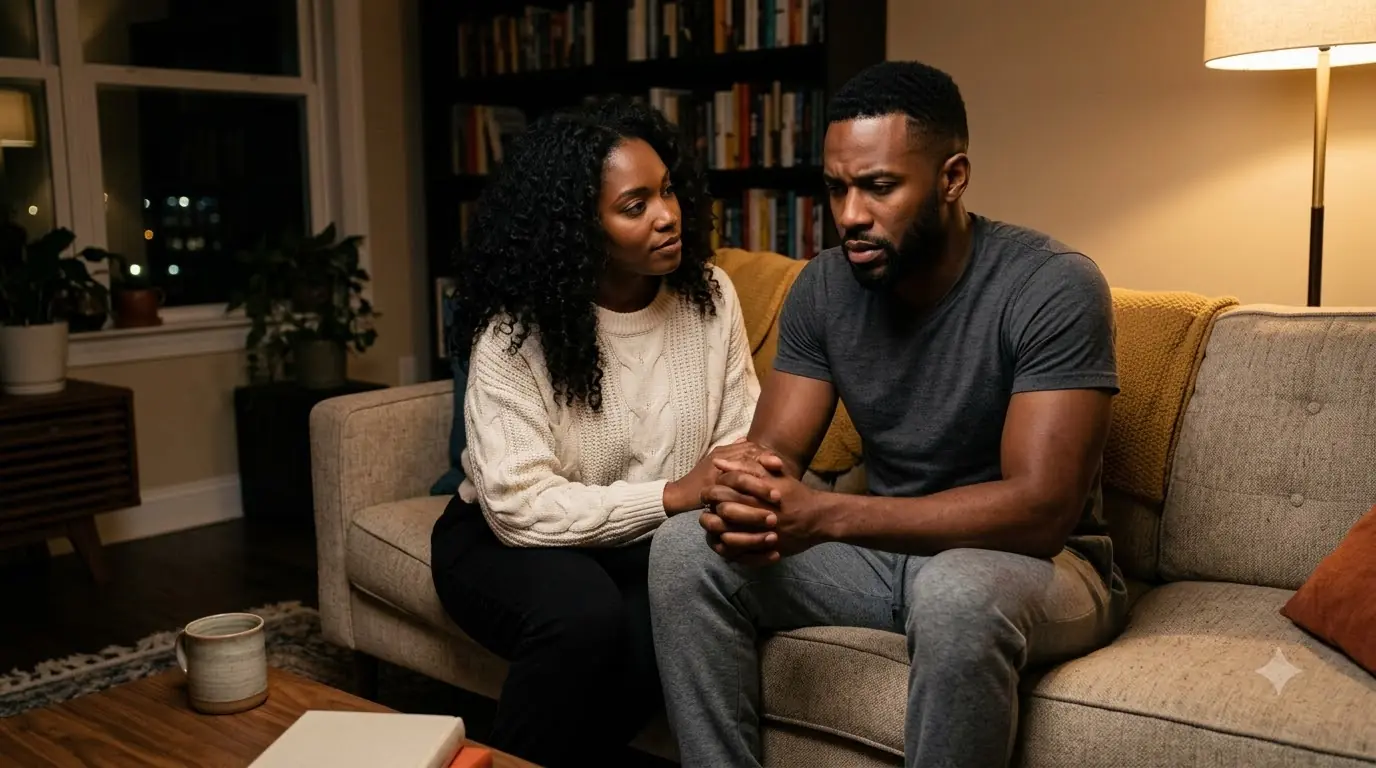
“If you lost all your money, would you still stay with me?”
I looked up from the takeout menu.
“What?”
Daniel was sitting across from me at the kitchen table, one hand around a glass of water, his face harder to read than usual.
“If I lost everything,” he said. “Would you stay?”
I laughed because I thought he was joking.
“Like… everything everything?”
“Yeah.”
“Your job?”
“Yes.”
“Your savings?”
“Yes.”
“Your car?”
He smiled faintly.
“Sure.”
I put the menu down.
“Where is this coming from?”
“Just answer.”
I studied him.
Daniel and I had been together for four years.
He was thirty-seven, worked in finance, and had always been careful with money.
Not flashy.
Not cheap.
Just disciplined.
He bought quality things and kept them forever.
He tracked investments.
He planned vacations months ahead.
He was the kind of man who knew exactly how much he spent on groceries last quarter.
I was thirty-three and worked as a marketing manager for a healthcare company.
We lived together in a condo he had bought before we met.
From the outside, Daniel looked secure.
Steady.
Responsible.
That was part of what had made me trust him so quickly.
So the question felt strange.
“I'd stay,” I said.
He looked at me.
“That fast?”
“Yes.”
“What if we had to move?”
“Okay.”
“What if we couldn't go out the way we do?”
“We'd survive.”
“What if I couldn't buy you things?”
I frowned.
“You barely buy me expensive things now.”
He smiled slightly.
“You know what I mean.”
“No, I don’t.”
I leaned forward.
“Do you think I’m with you for money?”
“No.”
“Then why are you asking?”
He looked down.
“I don’t know.”
That was the first lie.
I just didn’t know it yet.
For the next few weeks, Daniel changed.
Not dramatically.
That would have been easier.
He became distracted.
Checked his phone constantly.
Stopped suggesting dinners out.
Canceled a weekend trip we had been planning.
“Work’s crazy,” he said.
Then he started staying late.
One night, I woke up around 2 a.m. and found him sitting in the living room with his laptop open.
“What are you doing?”
He snapped the screen shut.
“Nothing.”
I stared at him.
“Nothing usually doesn't require closing the laptop that fast.”
He rubbed his forehead.
“I’m tired.”
“So am I.”
“Can we not do this?”
That phrase bothered me.
Do this.
As if asking a question had become the problem.
I sat beside him.
“Are you okay?”
“Yes.”
“You don’t seem okay.”
“I’m fine.”
I looked at him.
“Daniel.”
He exhaled.
“I just have a lot going on.”
“With work?”
“Mostly.”
“Mostly?”
He didn’t answer.
The next morning, I noticed something else.
His watch was gone.
Not just any watch.
The watch his father had given him when he turned thirty.
Daniel wore it almost every day.
“Where’s your watch?”
He looked at his wrist.
“Oh.”
“Oh?”
“I left it at the office.”
Something in his voice didn’t sound right.
Three days later, I asked again.
Still no watch.
Then his car disappeared.
He came home in a rideshare.
“Where’s the car?”
“Shop.”
“What happened?”
“Transmission issue.”
“For how long?”
“A while.”
I stared at him.
Daniel had never been vague about practical things.
That scared me.
Then came the dinner with my parents.
My father asked Daniel whether we were still thinking about buying a larger place.
Daniel smiled.
“Eventually.”
My mother said, “You two should do it before prices go up again.”
I watched Daniel’s face change.
Just for a second.
Fear.
Real fear.
On the drive home, I asked.
“What was that?”
“What?”
“When my mom mentioned buying a house.”
He stared at the road.
“Nothing.”
“Stop saying nothing.”
He tightened his grip on the steering wheel.
“Rachel.”
“No.”
I turned toward him.
“You’ve been weird for a month.”
“I know.”
“You’re hiding something.”
He stayed quiet.
“Is there someone else?”
His head snapped toward me.
“No.”
“Then tell me what it is.”
He looked back at the road.
“I can’t right now.”
That answer hurt.
“You can’t?”
“No.”
“Why?”
“Because I need to handle it first.”
I felt something in me go cold.
“Handle what?”
“Please.”
He looked exhausted.
“Just trust me.”
I almost did.
That was the dangerous part.
I almost let the conversation end there.
Then I remembered his question.
If you lost all your money, would you still stay with me?
My stomach tightened.
“Are you in financial trouble?”
Daniel said nothing.
There it was.
I turned fully toward him.
“Daniel.”
Still nothing.
“How bad?”
His jaw tightened.
“We'll talk at home.”
“No.”
“Rachel.”
“No. Tell me.”
He pulled into a parking lot and stopped the car.
For a moment, he just sat there.
Then he said, “I made a mistake.”
My heart started pounding.
“What kind of mistake?”
“A financial one.”
“How much?”
He looked away.
“How much?”
“A lot.”
“That’s not a number.”
He closed his eyes.
“About two hundred and eighty thousand.”
I stopped breathing.
“What?”
“I can explain.”
“Two hundred and eighty thousand dollars?”
“Yes.”
I stared at him.
“Where?”
“Investments.”
“What investments?”
“Private deals.”
I felt sick.
“Your money?”
“Mostly.”
“Mostly?”
He looked ashamed.
My voice dropped.
“Daniel.”
“Some was borrowed.”
My stomach twisted.
“Borrowed from who?”
“Credit line.”
“How much?”
“About ninety thousand.”
I couldn’t speak.
He continued quickly.
“I thought I could recover it.”
“Recover what?”
“The losses.”
My hands started shaking.
“How long has this been happening?”
“Six months.”
I stared at him.
Six months.
While we were talking about moving.
While we were planning trips.
While he was asking me to imagine our future.
He had been watching his financial life collapse.
“You didn’t tell me.”
“I was trying to fix it.”
“You didn’t tell me.”
“I know.”
“We live together.”
“I know.”
“We’ve talked about marriage.”
“I know.”
“You asked me whether I would stay if you lost everything.”
His face broke.
“I know.”
“That wasn’t a hypothetical.”
“No.”
I looked away.
I wanted to be compassionate.
I wanted to understand.
Instead, I was furious.
“You tested me.”
“I was scared.”
“So you tested me.”
“I didn’t mean to.”
“You knew exactly what you were asking.”
He looked down.
“Yes.”
That hurt almost as much as the money.
“You wanted reassurance without giving me the truth.”
“I didn’t know how to tell you.”
“You start with the truth.”
“I thought you'd leave.”
I laughed bitterly.
“And now?”
He looked at me.
“I don’t know.”
That answer changed something.
Because suddenly the issue wasn’t whether I loved him without money.
It was whether I could trust a man who had hidden a crisis this large while asking me to prove my loyalty blindly.
“What did you lose?”
He looked confused.
“Everything you can tell me.”
He took a breath.
“Most of my liquid savings.”
“How much left?”
“About twenty thousand.”
My stomach dropped again.
Daniel had once had more than three hundred thousand in savings and investments outside retirement.
“And the condo?”
“Safe for now.”
“For now?”
“I refinanced it.”
I stared at him.
“When?”
“Three months ago.”
“You refinanced the condo?”
“Yes.”
“And didn’t tell me?”
“It’s in my name.”
That sentence cut.
Technically true.
Emotionally devastating.
We had lived there together for three years.
Paid utilities together.
Decorated it together.
Talked about selling it together.
But when the situation became dangerous, suddenly it was his.
“Right.”
“Rachel, that’s not what I meant.”
“It is.”
I turned away.
“What else?”
He swallowed.
“I sold the watch.”
My chest tightened.
“Your father’s watch?”
“Yes.”
“And the car?”
“Sold.”
I closed my eyes.
Every vague answer.
Every missing object.
Every canceled plan.
All of it had been evidence.
I just hadn’t known what story it belonged to.
“Why didn’t you stop after the first loss?”
His face changed.
There.
Shame.
“I thought I could get it back.”
“How?”
“Another deal.”
“That sounds like gambling.”
“It wasn’t.”
“Then why does it sound exactly like chasing losses?”
He didn’t answer.
That scared me more than anything else.
“Were you gambling?”
“No casinos. No sports.”
“That’s not what I asked.”
He looked at me.
“I made increasingly risky investments because I couldn’t accept the loss.”
I nodded slowly.
“So yes.”
He looked down.
“Maybe.”
My anger shifted into fear.
This wasn’t one bad stock pick.
This was behavior.
A pattern.
Something Daniel had hidden because he thought control meant fixing it before anyone saw.
“Are you still doing it?”
“No.”
“How do I know?”
His face fell.
“You don't.”
That was the first truly honest answer of the night.
We drove home in silence.
When we walked into the condo, nothing looked different.
The same couch.
Same kitchen.
Same framed photo from our trip to California.
But suddenly I saw everything differently.
Security had been an illusion.
Not because money could disappear.
Because Daniel had been willing to let me live inside a reality that wasn’t true.
He sat at the kitchen table.
I stayed standing.
“I need to see everything.”
“What?”
“Accounts. Debt. Loans. Whatever you have.”
His face tightened.
“Rachel.”
“If you’re asking whether I’ll stay when you have nothing, I get to know what nothing means.”
He nodded.
We spent two hours going through everything.
It was worse than I expected.
Not because there was another hidden fortune.
Because there wasn't.
The losses were real.
The debt was real.
The refinance was real.
He had also taken a personal loan from his brother.
Twenty-five thousand.
I stared at the number.
“Your brother knows?”
“Yes.”
“So he knew before me.”
Daniel closed his eyes.
“Yes.”
That hurt.
“Who else?”
“My financial advisor.”
“Anyone else?”
“No.”
I laughed softly.
“Your girlfriend was fourth in line.”
“That’s not fair.”
“It is completely fair.”
He went quiet.
Then I saw a payment I didn’t recognize.
Three thousand dollars.
To a therapist.
I frowned.
“What is this?”
Daniel looked embarrassed.
“I started seeing someone.”
My anger paused.
“For what?”
“Anxiety.”
“How long?”
“Two months.”
I stared at him.
“You've been in therapy for two months and never told me?”
“I was ashamed.”
“Why?”
“Because I thought if I admitted how bad this got, you'd see me differently.”
I looked at him.
“I do see you differently.”
His face collapsed.
I immediately hated saying it.
But it was true.
Not poorer.
Not weaker.
Less trustworthy.
That was different.
I sat down.
“Do you think I care that you’re not rich?”
“No.”
“Then what are you actually afraid of?”
He stared at his hands.
“That without the life I could provide, I’m not enough.”
My anger softened slightly.
“Did I ever tell you that?”
“No.”
“Then where did that come from?”
He laughed bitterly.
“My father.”
Of course.
Daniel’s father had built a successful construction business from nothing.
He measured everything through financial competence.
Daniel had told me stories.
“You always need enough money that nobody can control you.”
“Never let your family feel unstable.”
“Men who can’t provide create problems.”
Daniel had spent his life trying not to become a man his father would consider irresponsible.
And somehow that fear had helped make him exactly that.
“I thought if you saw me fail this badly…”
He stopped.
“What?”
“You wouldn’t respect me.”
I looked at him.
“Do you know what makes me lose respect?”
He stayed quiet.
“Lying.”
His eyes filled.
“Not losing money.”
I swallowed.
“Not making a mistake.”
I looked directly at him.
“Making decisions that affect our future and letting me continue planning with fake information.”
He nodded.
“I know.”
“No.”
My voice softened.
“You’re starting to know.”
That night, I slept in the guest room.
In the morning, Daniel made coffee.
He handed me a mug.
I took it.
“Are you leaving?” he asked.
“I don’t know.”
He nodded.
That answer scared him.
I could see it.
Good.
Not because I wanted revenge.
Because I needed him to understand that love did not remove consequences.
“I need space.”
“Okay.”
“And I need you to stop asking me whether I'd stay if you lost everything.”
His face tightened.
“Why?”
“Because you’re still making this about money.”
I put the coffee down.
“I don’t know whether I can stay with someone who hides the truth until there’s nothing left to hide.”
He looked devastated.
“That is the question.”
Not:
Would I love him poor?
Would I miss restaurants?
Would I care about the car?
The real question was:
Could I build a future with someone who believed protecting me meant deceiving me?
I moved in with my sister for a week.
Daniel didn’t stop me.
That mattered.
He texted every day.
Not begging.
Updates.
Met with the advisor.
Closed the account I was using for the high-risk trades.
Set up automatic debt payments.
Therapy at 4.
I did not reply to all of them.
On the fifth day, he sent something different.
I need to tell you one more thing. I should've told you the first night.
My stomach dropped.
I called immediately.
“What?”
His voice was quiet.
“I was offered a job in New York.”
I stared at the wall.
“When?”
“Three weeks ago.”
“Why didn’t you tell me?”
“Because I was going to take it.”
My chest tightened.
“Without me?”
He paused.
“I thought it might be easier if I started over alone.”
There it was.
The bigger betrayal.
Not the money.
Not even the hiding.
While asking whether I would stay if he lost everything, Daniel had been quietly preparing to leave before I got the chance to decide.
PART 2 — FINAL
“What do you mean you were going to start over alone?”
Daniel stayed quiet on the phone.
I could hear him breathing.
“Answer me.”
“I thought I had ruined everything.”
“That’s not what I asked.”
“I know.”
His voice was shaky.
“The New York job pays more.”
“And?”
“And I thought if I moved, sold the condo, paid down the debt, worked for a few years…”
He stopped.
“You thought you could rebuild.”
“Yes.”
“Without me.”
Another pause.
“Yes.”
That hurt more than I expected.
“You asked whether I would stay.”
“I know.”
“But you were already planning to leave.”
“I was scared you’d sacrifice your life because you loved me.”
I laughed bitterly.
“So you were going to make the choice for me.”
“I thought I was protecting you.”
“No.”
I stood in my sister’s spare bedroom, pacing.
“You were protecting yourself from seeing what I would choose.”
He went quiet.
That was the truth.
If I stayed, Daniel would have to live with being seen at his lowest.
If I left, he would have to experience rejection directly.
Leaving first gave him control over both possibilities.
“You didn’t want to lose me,” I said.
“No.”
“But you were going to abandon the relationship before I could decide.”
He exhaled.
“Yes.”
I closed my eyes.
That mattered.
Not because it made anything better.
Because he finally stopped defending it.
“Did you accept?”
“No.”
“Why?”
“I asked for a week.”
“How convenient.”
“I know.”
We stayed quiet.
Then I asked, “Do you want the job?”
“Yes.”
That surprised me.
“Because of the money?”
“Partly.”
“Anything else?”
“Career growth.”
I nodded even though he couldn’t see me.
“Then why didn't you talk to me?”
“Because every conversation in my head ended with you either following me and resenting me or staying behind and leaving me eventually.”
I almost laughed.
“You built two bad endings and picked one without me.”
“Yes.”
There it was again.
Control disguised as protection.
I went back to the condo two days later.
Not to move home.
To talk.
Daniel looked smaller somehow.
No watch.
No expensive car downstairs.
No confident version of himself managing everything.
Just a tired man sitting at the same table where he had asked if I would still love him without money.
I sat across from him.
“Show me the New York offer.”
He slid the email toward me.
It was good.
Better than good.
Strong salary.
Signing bonus.
Relocation assistance.
I understood why he wanted it.
That complicated things.
“Do you think you should take it?”
He looked surprised.
“I thought you'd tell me not to.”
“I’m not doing that.”
“Why?”
“Because I don’t want staying in this city to become some proof that you choose me.”
He stared at me.
“I also don't want moving to become proof that you don't.”
He nodded.
“So what do we do?”
“We decide what each of us actually wants.”
That was new for us.
Not:
What protects Daniel’s pride?
Not:
What proves my loyalty?
What do we want?
I told him the truth.
“I don't want to move to New York right now.”
His face tightened.
“Okay.”
“My job is here.”
He nodded.
“My sister is here. My parents are three hours away.”
“Okay.”
“And after everything that happened, I don't want to uproot my life because your crisis created urgency.”
He looked down.
“That’s fair.”
“But.”
He looked back up.
“I’m not saying you shouldn't take it.”
Pain crossed his face.
“Long distance?”
“Maybe.”
“For how long?”
“I don't know.”
He almost smiled bitterly.
“That’s your favorite answer lately.”
“It’s the honest one.”
That mattered.
We decided not to make a relationship decision that day.
Daniel took the job.
That shocked everyone.
Including me.
He moved to New York six weeks later.
And I stayed.
We did not call it a breakup.
We also did not pretend everything was normal.
Long distance became an experiment in honesty.
If we were going to survive, we had to stop using reassurance as a substitute for reality.
The first few months were hard.
Daniel lived in a small apartment.
Nothing like his old condo.
He sent most of his extra income toward debt.
No luxury dinners.
No expensive clothes.
No pretending.
I visited once a month.
He came home twice.
The first time I saw his New York apartment, I almost cried.
Not because it was small.
Because he looked embarrassed.
He apologized before I even put my bag down.
“It’s not much.”
I stared at him.
“Daniel.”
“What?”
“Stop.”
He looked confused.
“Stop apologizing for what things cost.”
His face softened.
“I’m here to see you.”
That was when I realized how deeply money had infected his sense of worth.
He kept expecting me to look disappointed.
I wasn't.
I was disappointed in other things.
The lies.
The secrecy.
The control.
But never the size of his apartment.
He had to learn the difference.
So did I.
During one visit, we went to a cheap diner because Daniel said he didn’t want to spend much.
He looked uncomfortable when the check came.
I laughed.
“What?”
“You’re doing it again.”
“What?”
“Watching me.”
He looked embarrassed.
“I keep expecting you to hate this.”
“Hate what?”
“Going backward.”
I thought about it.
“Do you know what I hate?”
He waited.
“I hate that you think a cheaper dinner means we’re going backward.”
He looked at me.
“We’re having a better conversation over twelve-dollar burgers than we had at most of those fancy restaurants last year.”
He smiled.
That was true.
Something strange happened as Daniel lost the life he thought made him valuable.
He became easier to know.
Not immediately.
But slowly.
He told me when he was scared.
When debt payments stressed him.
When he felt ashamed at work because his colleagues talked about investments.
When he wanted to make another risky move.
That one mattered most.
Six months after he moved, he called me.
“I need you to talk me out of something.”
I sat up.
“What?”
“There’s an opportunity.”
My stomach tightened.
“What kind?”
“High risk.”
I stayed quiet.
He continued.
“My brain keeps telling me if it works, I could clear half the remaining debt.”
“Are you doing it?”
“No.”
“Why not?”
“Because I’m telling you before I touch it.”
My eyes filled.
That was trust rebuilding.
Not the absence of temptation.
Transparency before action.
“Walk away,” I said.
“I know.”
“Then why call?”
“Because I wanted you to know I'm still tempted by the same thinking.”
That honesty mattered more than pretending he was cured.
Daniel had also started attending a support group recommended by his therapist for compulsive financial behavior.
He hated the phrase at first.
“I’m not a gambler.”
His therapist challenged that.
Maybe the product wasn't a casino.
But the pattern was familiar.
Risk.
Loss.
Shame.
Chasing.
Secrecy.
Trying to recover through one more big win.
When Daniel finally admitted that, something shifted.
He stopped treating the problem as one unlucky period.
It was a behavior he had to manage.
I respected him more for that.
Not less.
Meanwhile, I had my own work.
I had always told myself I was independent.
Then I realized part of why Daniel's money had made me feel safe was because I liked knowing someone else had everything under control.
When his financial life collapsed, I didn't just fear losing comfort.
I feared uncertainty.
That was mine to face.
I increased my emergency savings.
Reviewed my own retirement accounts.
Stopped letting Daniel be the default financial expert in the relationship.
Not because I didn’t trust him.
Because a healthy partnership should not depend on one person carrying all the knowledge.
A year after Daniel moved, his debt had fallen dramatically.
He had repaid his brother.
The high-interest portion was gone.
He still had work to do.
But the crisis was no longer controlling every decision.
Then his company offered him something unexpected.
A transfer back.
Same role.
Slightly lower salary.
He called me immediately.
“What do you think?”
I smiled.
“About what?”
“Coming back.”
“No.”
His tone changed.
“No?”
“I mean no, I’m not answering first.”
He laughed.
“Okay.”
“What do you want?”
Long pause.
“I want to come home.”
My chest tightened.
“For me?”
“For us.”
I waited.
“And because I miss my family. I miss the city.”
He continued.
“And I don’t need the highest possible salary anymore to feel like I’m fixing myself.”
That answer mattered.
He came back three months later.
We did not move back into the condo.
Daniel sold it.
Not because the bank forced him.
Because the equity could eliminate almost all remaining debt.
That decision hurt him.
I knew it.
The condo had represented success.
Proof that he had made it.
When the sale closed, he was quiet all day.
That night, we sat in my apartment.
Yes.
My apartment.
I had moved out of my sister’s place and rented my own one-bedroom while Daniel was away.
He looked around.
“You know what’s weird?”
“What?”
“I thought losing the condo would feel like losing my life.”
“And?”
“It feels like losing a condo.”
I laughed.
“That’s growth.”
“Very expensive growth.”
I laughed harder.
For the first time in a long time, money could be mentioned without shame swallowing the room.
We moved in together again six months after he returned.
Carefully.
We had rules.
Separate emergency funds.
Shared household account.
Full disclosure of debt and major investments.
No hidden loans.
No secret refinancing.
Anything high risk required a cooling-off period and discussion with his advisor.
Most importantly, no financial question could become a loyalty test.
That rule came from me.
One evening, about two years after the original question, Daniel and I were eating dinner at home.
Nothing fancy.
Pasta.
Cheap wine.
He looked at me.
“Can I ask you something?”
I narrowed my eyes.
“Depends.”
He smiled.
“If I lost all my money now, would you stay?”
I put my fork down.
He started laughing.
“I’m kidding.”
“Good.”
“No. Actually…”
His expression became serious.
“I finally understand why that was such a terrible question.”
I waited.
“Because I was asking you to promise loyalty to a situation you knew nothing about.”
I nodded.
“I wanted you to tell me love was unconditional so I wouldn’t have to risk being honest.”
“Yes.”
He looked down.
“And I thought if you said you'd stay, then I was safe.”
My voice softened.
“You weren't asking whether I loved you.”
“No.”
He looked at me.
“I was asking whether I could fail and still control the outcome.”
That was it.
Exactly.
I reached across the table.
“What would you ask now?”
He thought for a moment.
“Maybe…”
He took my hand.
“If everything changed, would we still tell each other the truth?”
I smiled.
“That’s a better question.”
“And?”
“Yes.”
He squeezed my fingers.
“Me too.”
That was the answer our relationship needed.
Not a promise that I would stay no matter what.
I would never make that promise.
Because money was not the only thing someone could lose.
Trust could disappear.
Respect could disappear.
Safety could disappear.
And loving someone did not mean agreeing to survive every version of what they chose to do.
If Daniel had kept lying, I would have left.
If he had continued chasing losses, I would have left.
If he had expected me to finance his recovery or sacrifice my stability while refusing help, I would have left.
And that would not have meant I loved him only for money.
That distinction mattered.
People sometimes ask:
“If I lost everything, would you still love me?”
But love and staying are not always the same promise.
You can love someone and still refuse to be pulled into their self-destruction.
You can stay through unemployment without staying through deception.
You can accept a smaller house without accepting hidden debt.
You can give up luxury without giving up honesty.
Daniel had to lose most of his money before he understood that I had never loved his financial status.
What I loved was the man I believed I could build with.
When he hid the truth, that was the thing he actually put at risk.
Not his bank balance.
Us.
And when we rebuilt, we did it with far less money than before.
But something stronger.
No secret accounts.
No fake confidence.
No loyalty tests.
No promises extracted before the truth.
Just two people sitting at an ordinary table, knowing exactly what they had and what they didn’t.
And for the first time, that felt richer than anything we had lost.