Injured Boxer Mix Rescued With a Painful Leg After He Could No Longer Greet Shelter Visitors
Reader Theme:
Font Size:
24px
Charlie Arrives With a Bandaged Leg
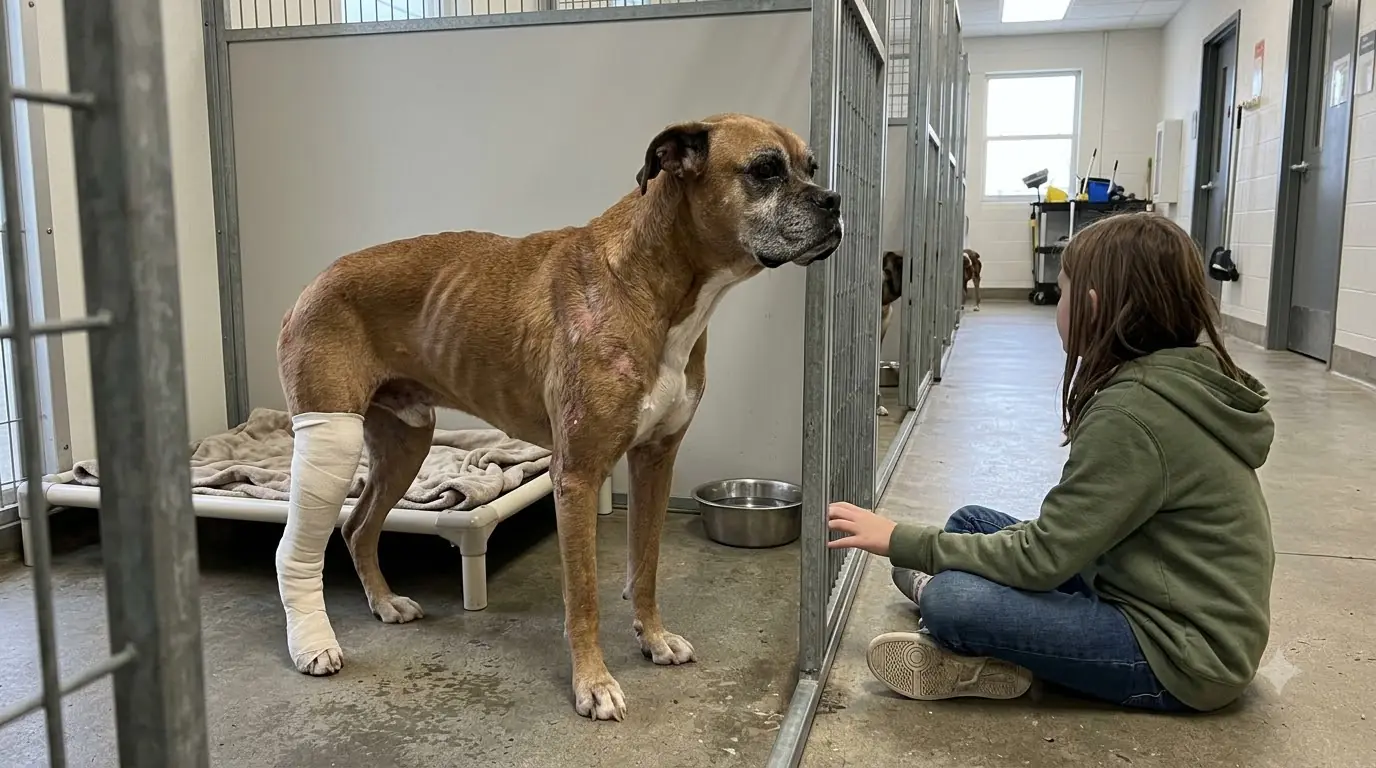
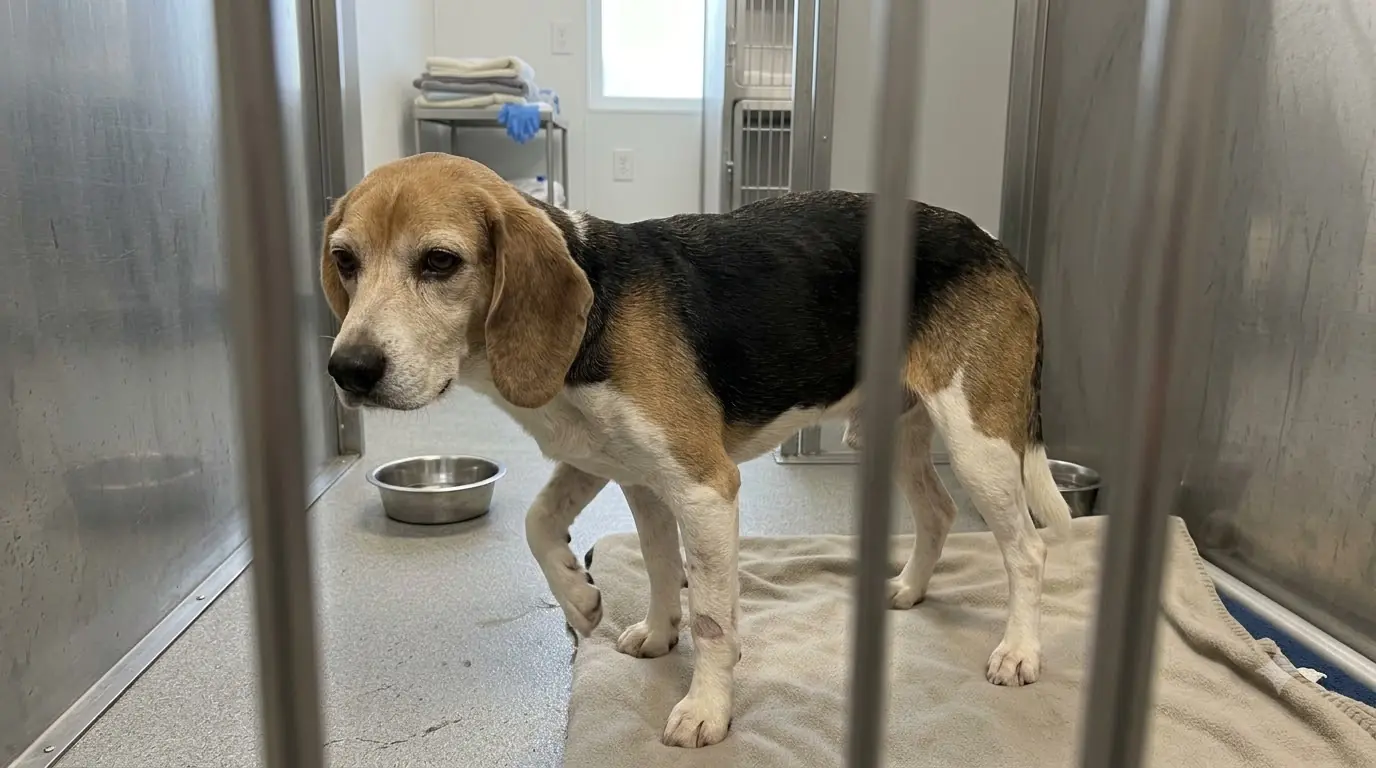
Charlie arrived at the shelter moving carefully.
The 7-year-old Boxer mix could walk without being carried, but every step placed an obvious demand on him.
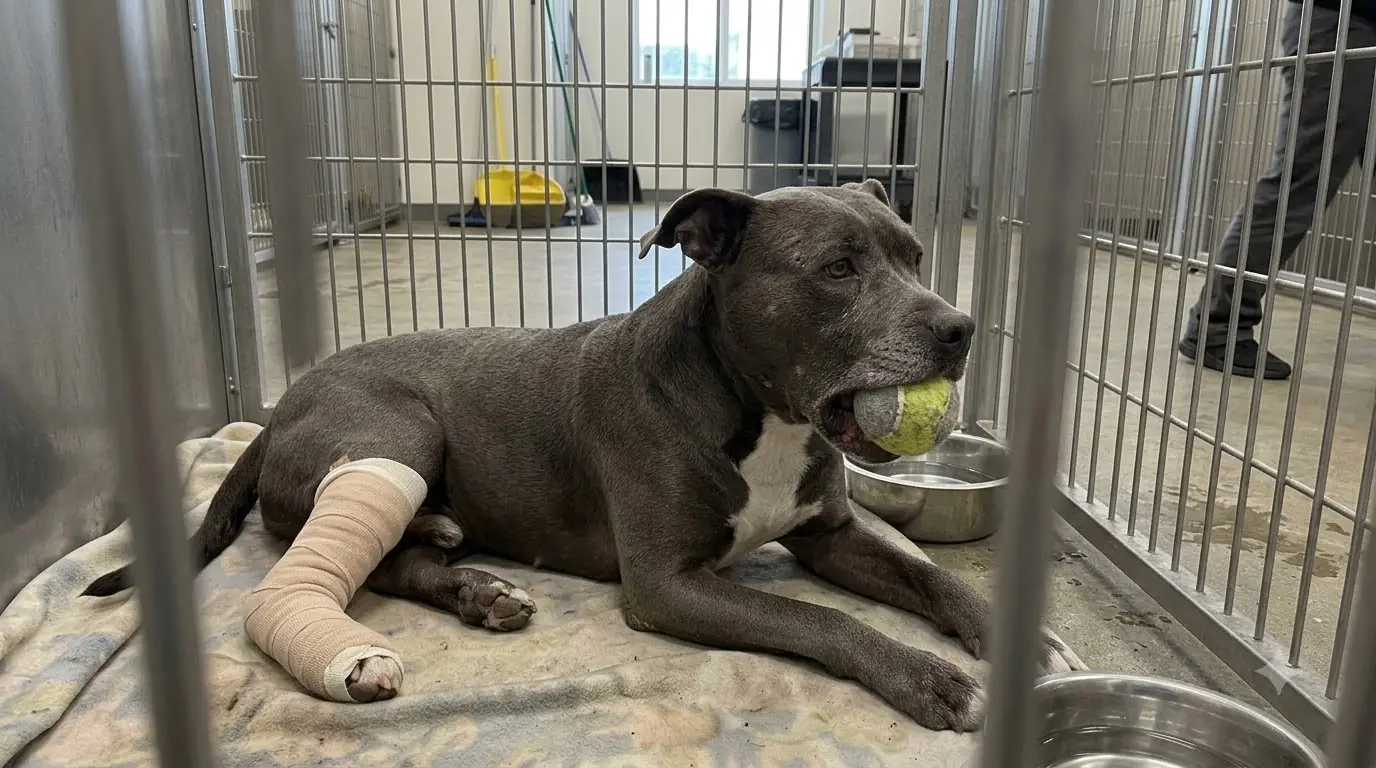
One back leg was protected by a thick bandage that extended over the lower portion of the limb. Charlie tried not to put his full weight on it.
Several areas of his coat were also noticeably thin.
The skin underneath looked irritated, particularly along his sides and around portions of his hindquarters.
Those two problems immediately became the focus of his intake.
Charlie needed his leg evaluated properly.
He also needed someone to determine why his skin was inflamed and his hair was thinning.
Until then, staff wanted him moving as little as necessary.
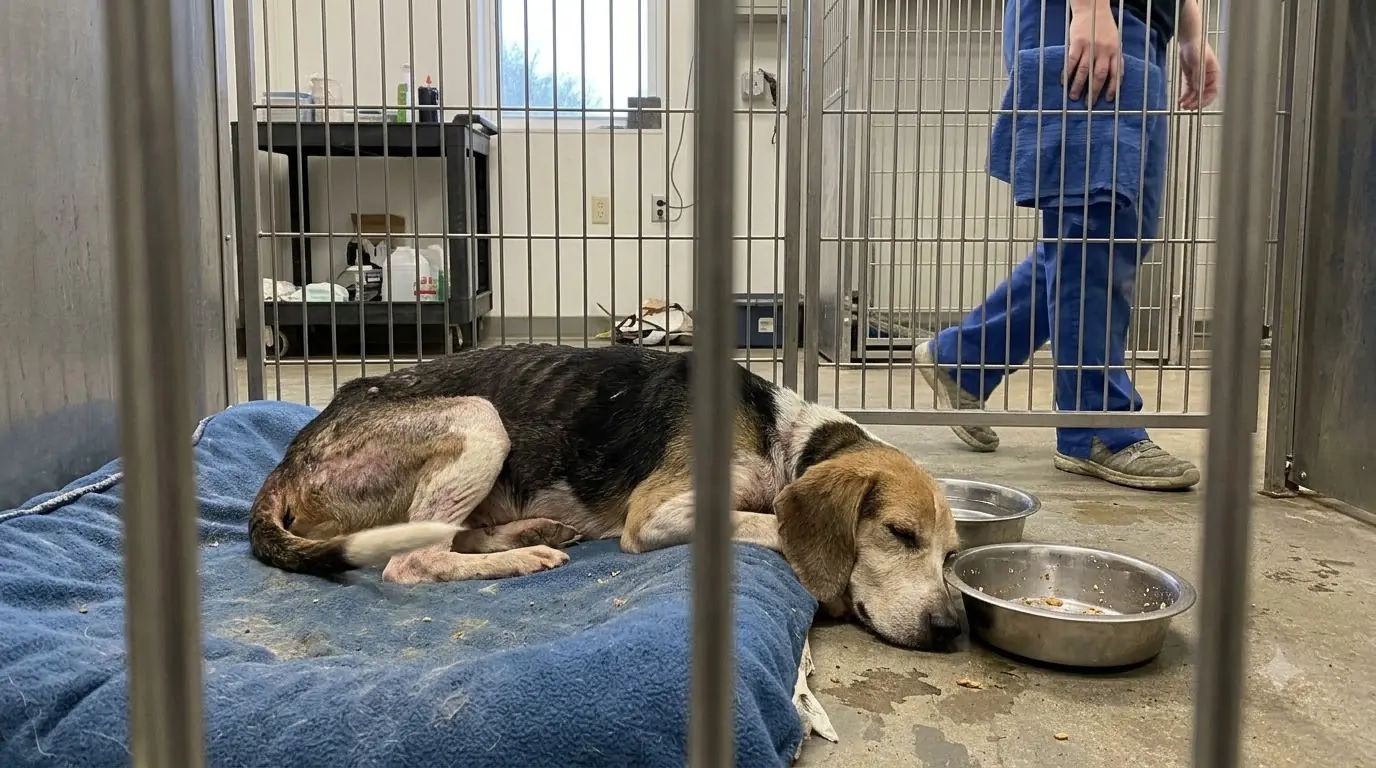
A padded bed was placed near the front half of his kennel so Charlie would not need to cross the entire space for food or water.
Non-slip bedding gave his other three legs better traction.
Bathroom trips were kept short.
For the moment, rest was part of his treatment.
What We Didn't Know About the Injury
Charlie arrived with a bandage already covering the injured leg, but the rescue did not have enough verified history to explain exactly how the injury occurred.
That distinction mattered.
An injured dog can raise many questions.
Was he struck by something?
Did he fall?
Did he become caught somewhere?
Had another animal injured him?
Without reliable evidence, none of those possibilities could be presented as fact.
The veterinary team therefore approached Charlie's case without trying to reconstruct an unknown story.
The injury itself would tell them what needed treatment.
It could not necessarily tell them how it happened.
His First Veterinary Examination
At the clinic, Charlie was alert and responsive.
His temperature was within normal limits.
His heart and lungs sounded stable.
His hydration was adequate.
His body condition was slightly below ideal but not severely poor.
The injured leg was examined carefully.
Because manipulating a painful limb can increase distress, Charlie was handled slowly and given appropriate pain relief.
The old bandage was removed.
Underneath, the veterinary team found swelling around the lower hind limb and hock region.
There was a superficial wound that was already beginning to heal, but the degree of lameness suggested that the visible skin injury was not the entire problem.
Charlie resisted full extension of the joint.
That made imaging important.
Radiographs Bring Some Good News
Radiographs were taken of the affected leg.
There was no displaced fracture.
There was no obvious bone destruction.
The joint remained aligned.
Those findings were encouraging.
But they did not mean Charlie's leg was normal.
The examination and imaging were most consistent with a substantial soft-tissue injury involving structures around the hock.
Ligaments, tendons, muscles, and other soft tissues can be significantly injured without producing the obvious radiographic changes seen with a broken bone.
Charlie appeared to have a severe sprain or strain rather than a fracture.
The veterinarian recommended conservative treatment initially.
That meant rest, appropriate pain management, supportive bandaging when indicated, and close monitoring.
Why the Bandage Needed Attention
Bandages can protect an injured limb, but they require careful management.
A bandage that becomes wet, slips, tightens, or remains unchanged for too long can create additional problems.
Charlie's toes were checked for swelling.
The skin beneath the bandage was monitored.
Bandage changes were performed according to the veterinary schedule rather than simply leaving the same wrap in place.
Staff also watched Charlie closely to make sure he did not chew at it.
The goal was to support healing without creating pressure sores or circulation problems.
The Irritated Skin
Charlie's coat presented a separate problem.
The thinning areas were irregular.
Some skin was red.
Other areas were flaky.
The veterinary team collected samples for cytology and performed skin scrapings where appropriate.
Testing showed bacterial overgrowth consistent with secondary superficial pyoderma.
There was also evidence that Charlie had been scratching or licking certain areas.
The underlying trigger was less obvious.
Parasites were considered.
Allergic skin disease was also possible.
Because several different conditions can produce similar appearances, the veterinarian did not make assumptions based solely on the missing fur.
Treating What Could Be Confirmed
The bacterial skin infection could be treated.
Charlie began veterinarian-directed therapy based on the severity and distribution of the lesions.
Topical treatment was incorporated where practical.
His skin was monitored for increasing redness, discharge, odor, or spreading lesions.
Parasite prevention was brought up to date according to veterinary recommendations.
The team also planned to reassess Charlie after the secondary infection improved.
If itching and hair loss persisted, additional investigation for allergies or other underlying skin disease would be appropriate.
Treating an infection without considering why it developed could lead to repeated problems.
His First Days in the Kennel
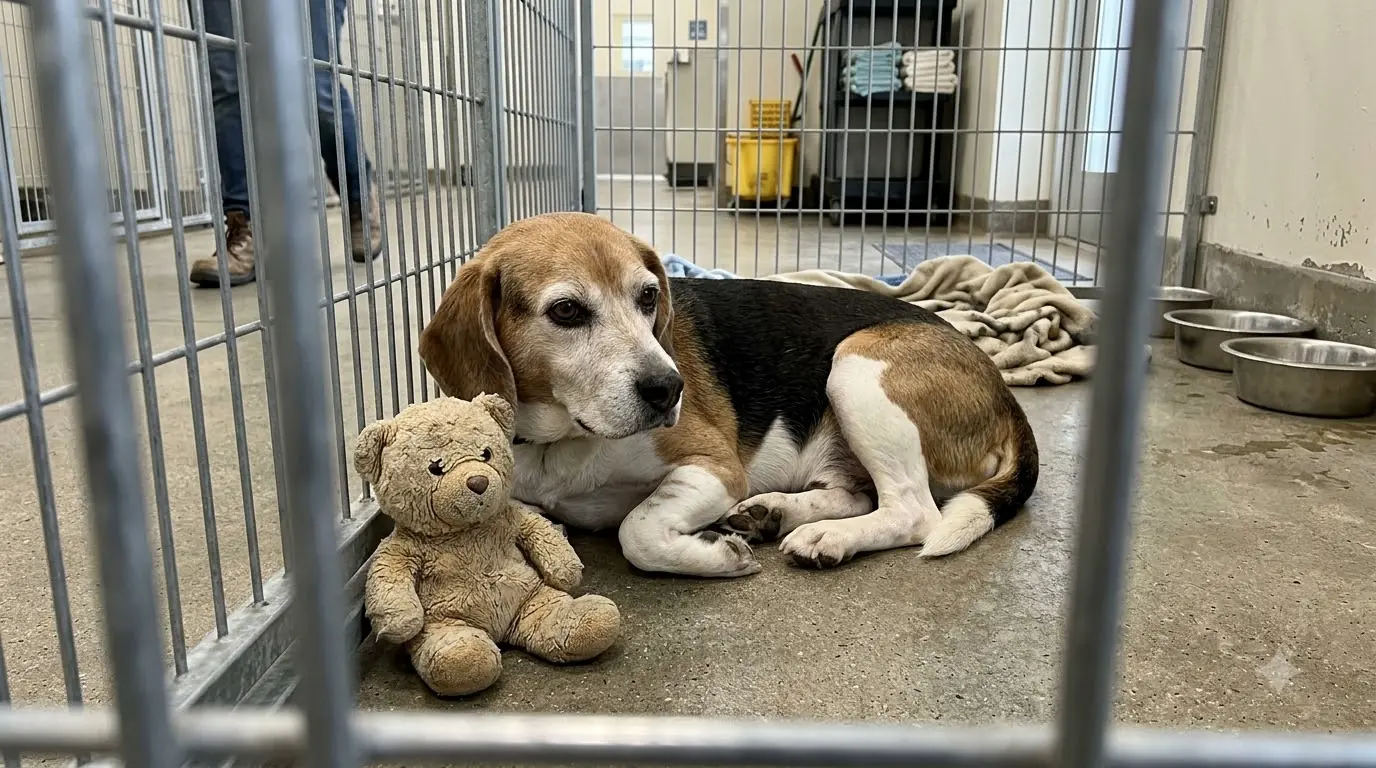
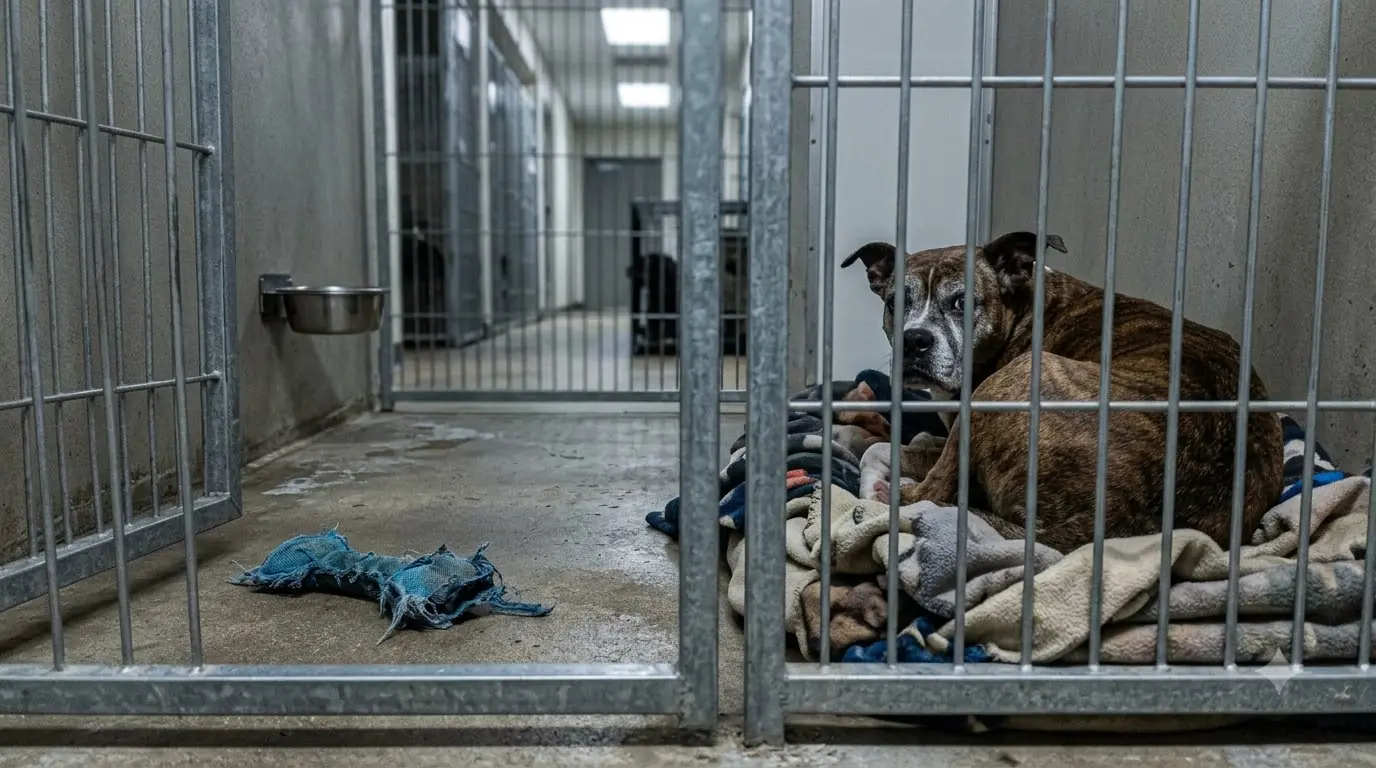
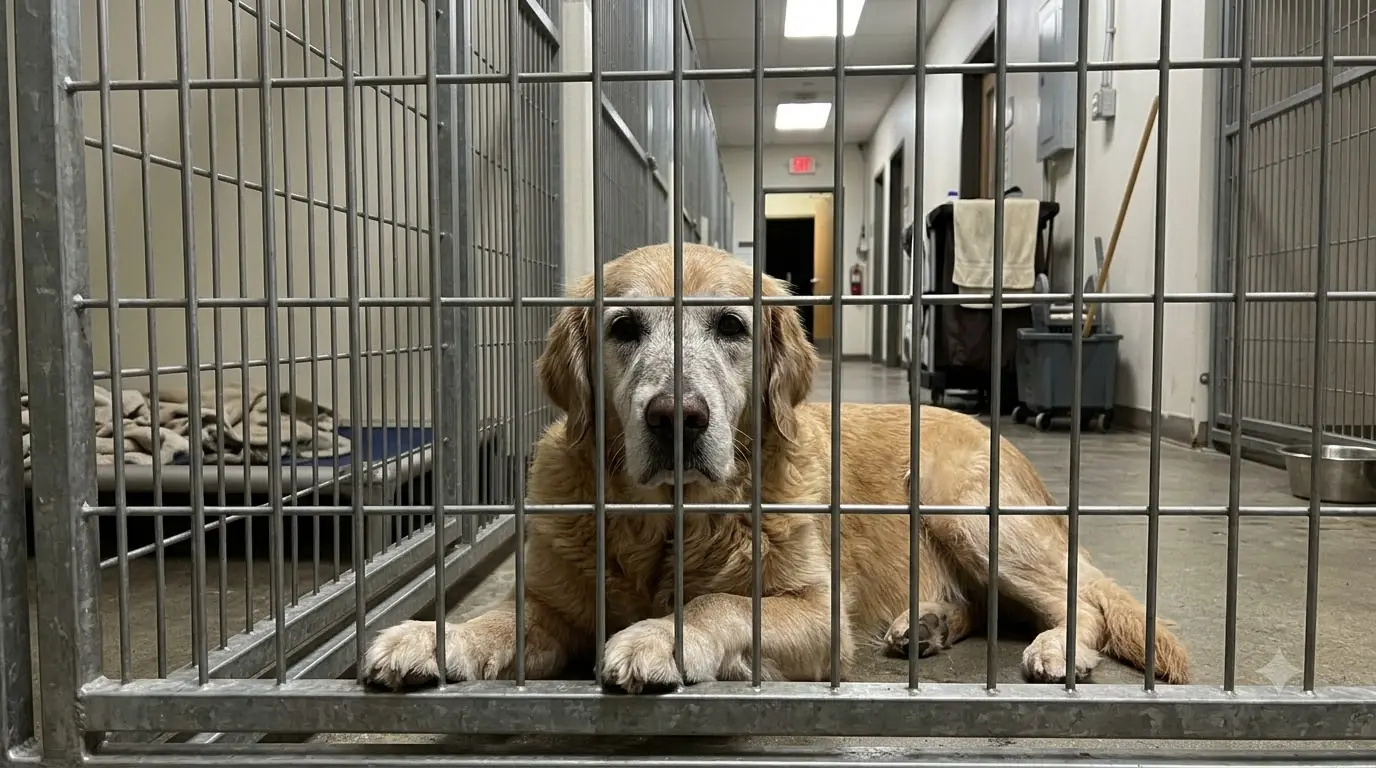
Charlie spent much of his early shelter stay lying down.
That was not surprising.
His leg hurt.
Moving with a bandage was awkward.
And the shelter was unfamiliar.
When staff entered, Charlie usually lifted his head.
He accepted food.
He drank normally.
He allowed familiar caregivers to approach.
But he did not repeatedly stand at the gate.
During busy visiting periods, this made him easy to overlook.
The Dogs Around Him Were Louder
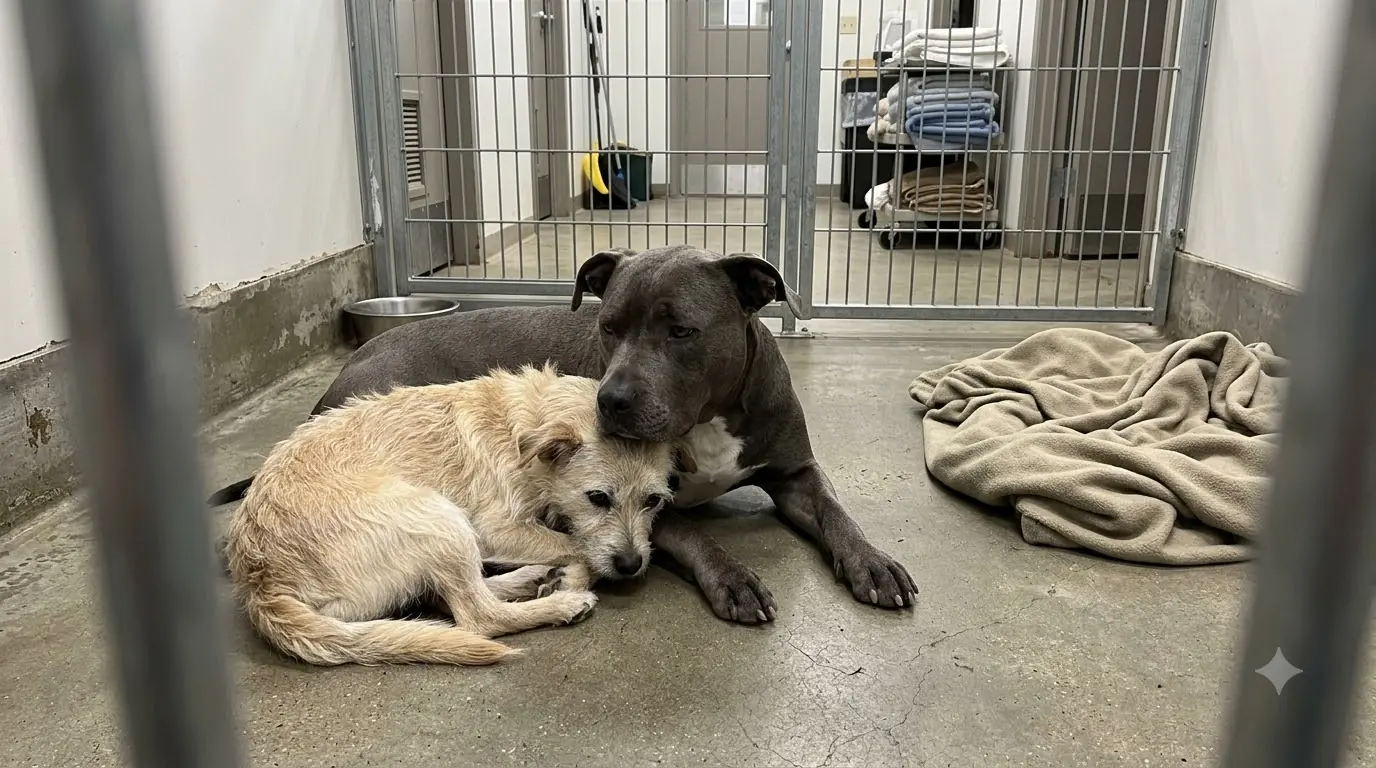
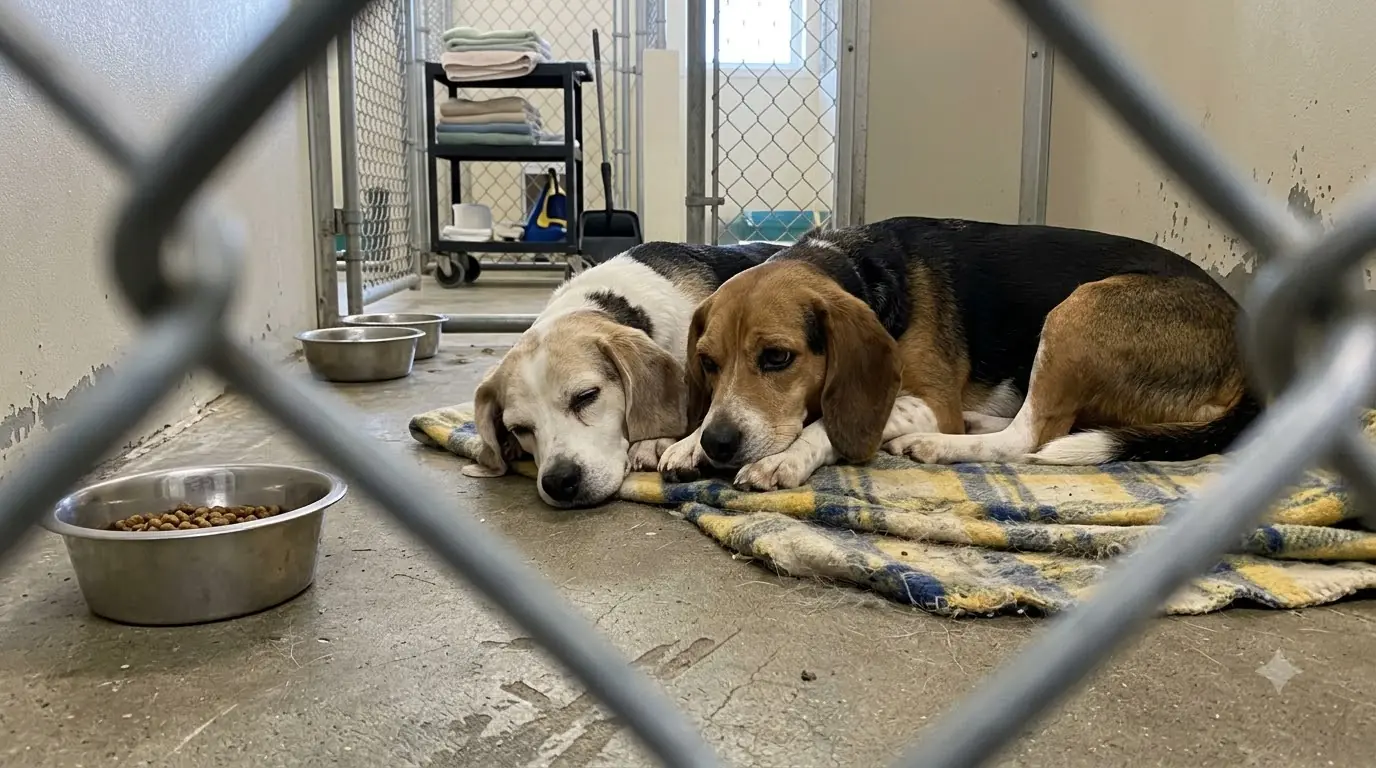
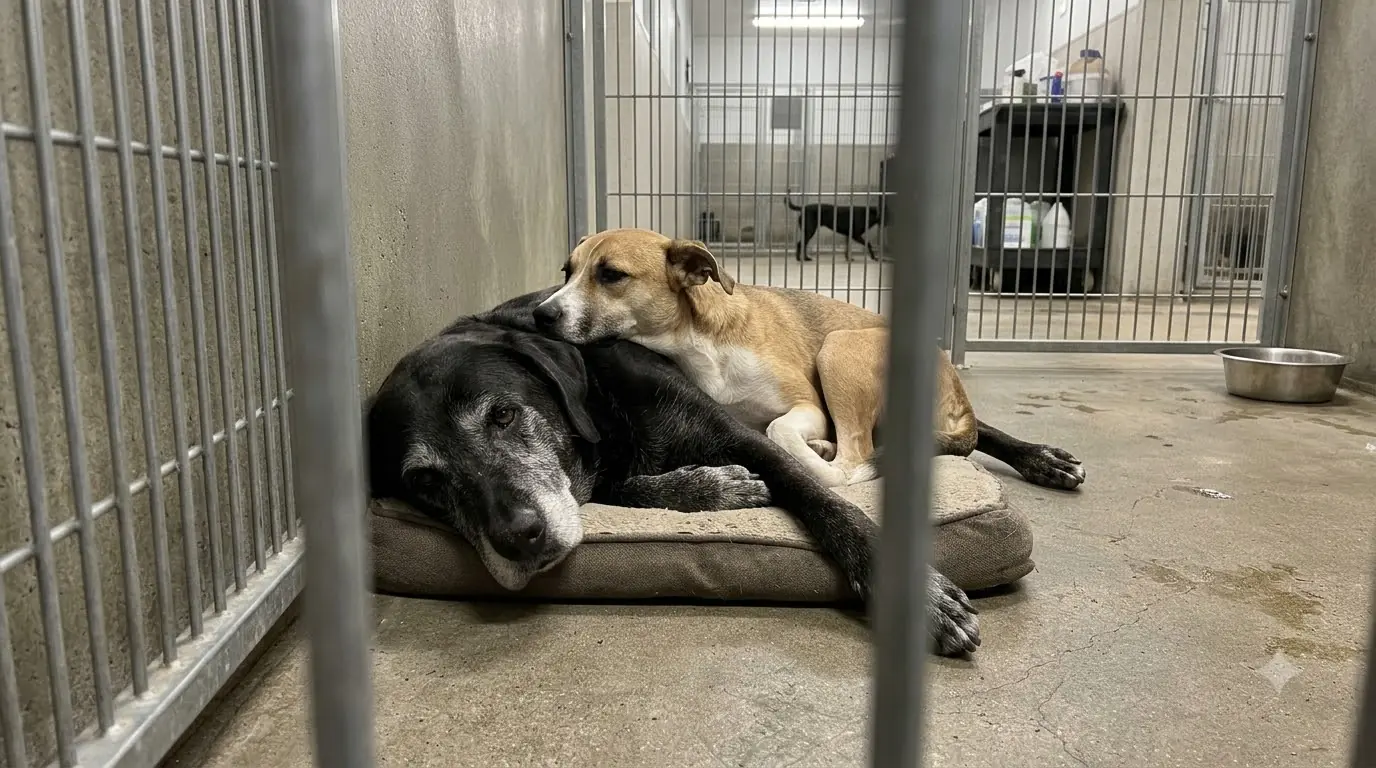
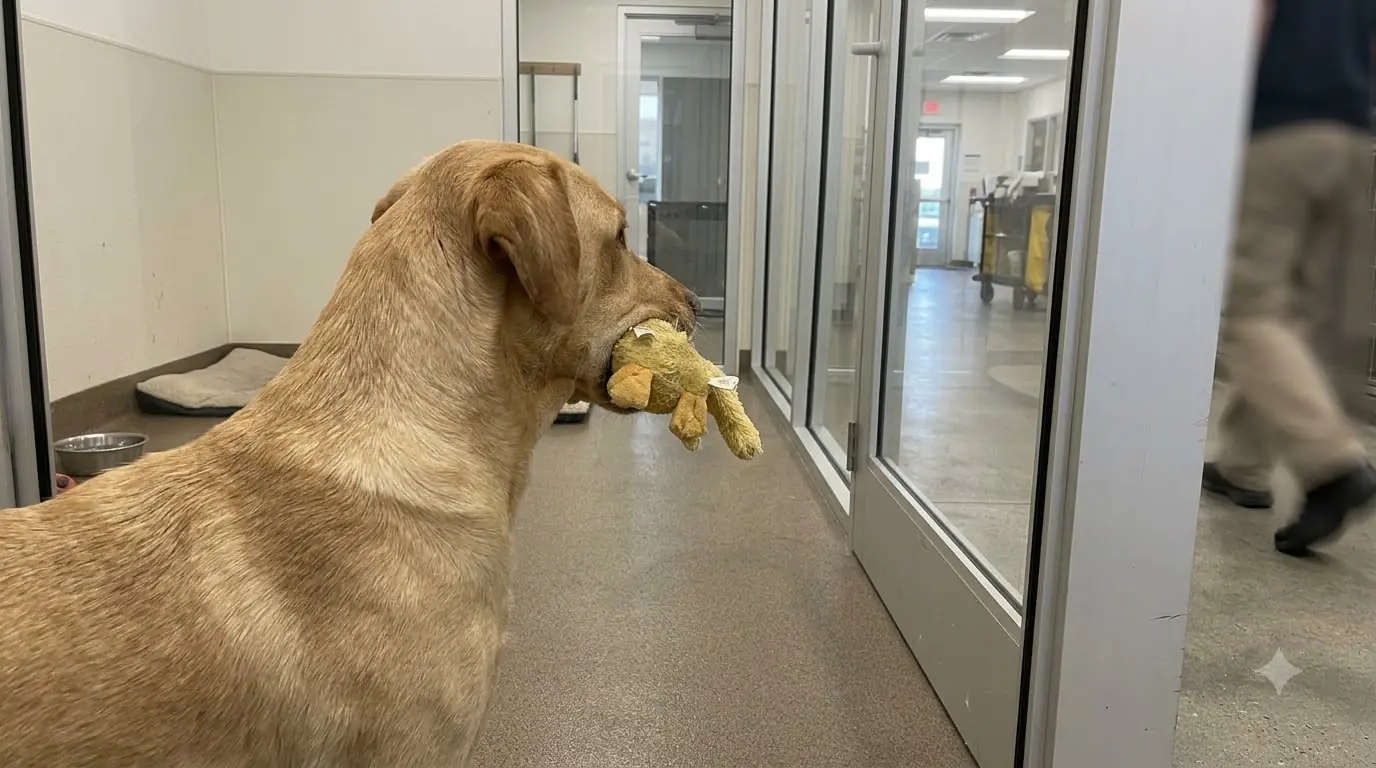
Charlie shared the kennel room with dogs who had very different ways of meeting visitors.
Some barked.
Some jumped.
Some pressed their entire bodies against their gates.
Families naturally noticed them.
Charlie watched from his bed.
Occasionally his tail moved when someone looked toward him.
Usually, however, people continued walking.
Staff knew that Charlie's quiet behavior should not be mistaken for lack of interest.
Standing hurt.
There was no reason to ask him to perform through pain just to attract attention.
Eating and Drinking
Charlie's appetite remained reasonably good.
He was offered a complete and balanced adult diet in measured portions.
During his first days, he occasionally left a small amount behind, particularly after stressful veterinary appointments.
As he settled, he began finishing meals consistently.
He drank normally.
There was no persistent vomiting or diarrhea.
His body weight was monitored because maintaining a healthy lean condition would help his injured leg.
Extra weight would increase the load on healing tissues.
At the same time, Charlie needed adequate calories and protein to support recovery.
Bathroom Trips
Bathroom breaks required patience.
Charlie could walk independently, but he favored the injured hind leg.
Staff used a leash and moved at his speed.
He was not taken on unnecessary walks.
He urinated normally.
His bowel movements were regular.
Squatting initially required some adjustment because Charlie did not want to place full weight through the affected limb.
He found a posture that worked.
Handlers gave him enough time and avoided pulling him forward before he was ready.
The Afternoon Someone Stopped
One afternoon, several families were moving through the kennel area.
Charlie was in his usual place.
He watched.
A family approached.
Then a little girl stopped.
She looked at Charlie.
Instead of moving to the next kennel, she sat down outside his gate.
Charlie lifted his head.
The girl remained still.
There was no tapping on the bars.
No repeated calling.
No attempt to reach inside.
Charlie watched her.
Then he shifted his front paws beneath himself.
Slowly, he stood.
Crossing the Kennel
Charlie placed most of his weight on his three stronger legs.
He took one careful step.
Then another.
His injured leg touched down lightly.
The girl stayed where she was.
Charlie continued.
By the time he reached the gate, the distance he had crossed was only several feet.
For Charlie at that moment, it was enough.
He lowered his head.
His nose reached the bars beside the girl's hand.
She kept her fingers still and allowed Charlie to sniff.
His tail moved.
Staff watched from nearby.
Charlie had spent days seeing people pass while other dogs competed for their attention.
This time, he had not needed to compete.
Someone had chosen to sit beside him first.
A Meaningful Moment, Not a Medical Test
Charlie's willingness to stand did not mean his leg had stopped hurting.
Dogs can move despite pain when something motivates them.
That is why his medical restrictions remained unchanged.
Nobody used the moment as evidence that he could suddenly tolerate longer walks.
Once the interaction ended, Charlie returned to his bed.
He rested.
His treatment continued.
Rechecking the Leg
At Charlie's follow-up examination, the swelling had begun decreasing.
The superficial wound was healing appropriately.
His range of motion remained limited, but there was modest improvement.
The veterinarian continued conservative management.
The supportive bandage was eventually reduced and then discontinued when it was no longer providing enough benefit to justify continued wrapping.
Charlie still needed strict activity control.
Soft-tissue injuries can take weeks to heal.
Feeling better before the tissue is fully recovered can actually create risk if activity increases too quickly.
Pain Management Makes a Difference
With consistent veterinary-directed pain control, Charlie began using the leg more comfortably.
At first, he touched the toes down only occasionally.
Then he began bearing slightly more weight.
His gait remained uneven.
That was expected.
Staff looked for gradual trends rather than dramatic changes.
Was Charlie standing more comfortably?
Was he using the leg during bathroom breaks?
Was swelling continuing to decrease?
Did he seem more reluctant to move after activity?
Those observations helped guide his rehabilitation.
His Skin Begins Improving
Charlie's skin responded to treatment too.
The irritated areas became less red.
Flaking decreased.
He stopped licking some of the affected spots as frequently.
Hair regrowth was slow.
That was normal.
Skin can improve before the coat visibly fills back in.
At his recheck, cytology showed substantial improvement in the bacterial component.
However, Charlie still showed occasional itching.
That suggested there might be an underlying allergic tendency rather than the bacterial infection being the entire problem.
Looking for the Underlying Cause
The veterinarian reviewed Charlie's pattern of skin irritation, response to parasite prevention, and progress after treating the infection.
Environmental or food-related allergy remained possible.
Rather than immediately labeling him with one specific lifelong condition, the team developed a monitoring plan.
His future caregiver would need to watch for recurrent itching, paw licking, ear irritation, redness, or new hair loss.
If those problems returned, further diagnostic work could be pursued.
For now, the immediate infection was resolving.
Charlie Starts Meeting Staff at the Gate
Something else changed during recovery.
Charlie began standing more often when familiar staff approached.
He did not jump.
He simply got up.
Sometimes he walked to the gate.
Sometimes he remained on the bed and wagged.
Both were accepted.
One caregiver began sitting with him for several minutes after his morning medication.
Charlie liked leaning his shoulder against people.
He also enjoyed slow scratches along his chest.
His personality was becoming easier to see now that pain was no longer dominating every movement.
Beginning Rehabilitation
Once the veterinarian determined that Charlie's leg was stable enough, controlled rehabilitation began.
The first sessions were deliberately modest.
Short leash walks on flat surfaces.
Slow weight shifting while standing.
Careful range-of-motion work when tolerated.
Rest.
The goal was to rebuild strength without reinjuring healing tissue.
Charlie was not encouraged to run.
He was not allowed to jump repeatedly.
He was not taken on long walks simply because he seemed enthusiastic.
Healing tissues needed time.
A Small Setback
Several weeks into recovery, Charlie became more excited during an outdoor bathroom break when he saw another dog.
He attempted to move faster.
His handler immediately slowed the situation, but later that day Charlie's limp appeared slightly more pronounced.
The veterinary team was notified.
There was no dramatic swelling or evidence of a new major injury.
His activity was reduced temporarily.
Pain management was reviewed.
Within several days, Charlie returned to his previous level of comfort.
The setback reinforced an important point.
Improvement was not permission to rush.
Moving Into Foster Care
Charlie eventually became stable enough to leave the shelter environment for foster care.
The foster home was selected with his physical needs in mind.
There were few stairs.
Rugs covered slippery floors.
A large supportive bed was available.
Access to furniture was managed so Charlie would not repeatedly jump up and down while his leg continued healing.
His foster caregiver understood his exercise restrictions.
Charlie entered the house cautiously.
He sniffed the living room.
He inspected the kitchen.
Then he found the bed.
Within minutes, he was lying on it.
His First Night
Charlie slept deeply.
He woke once for a bathroom break.
His foster caregiver walked him outside slowly.
Charlie urinated, sniffed the grass for several minutes, and returned indoors.
He did not pace.
He did not cry at the door.
He settled again.
By morning, he seemed interested in the household routine.
Especially breakfast.
His Weight and Nutrition
Charlie gradually reached an ideal body condition.
Because he was recovering from a leg injury, keeping him lean was especially important.
His meals were measured.
Treats were incorporated into his daily calorie allowance rather than added endlessly on top of meals.
His foster caregiver used some of his food for enrichment.
Simple puzzle feeders gave Charlie something to do without requiring intense physical activity.
That proved useful.
He was clever and food motivated.
Walking Becomes Easier
Week by week, Charlie's gait improved.
He began placing the injured leg more normally.
His stride became more even.
He could comfortably walk farther before showing fatigue.
Rehabilitation sessions increased gradually.
Still, there were limits.
No long runs.
No repeated jumping.
No sudden changes in exercise simply because he had one particularly good day.
The team wanted durable improvement.
Not a temporary burst followed by another setback.
Follow-Up Imaging and Examination
At a later orthopedic recheck, Charlie showed improved joint stability and less discomfort during manipulation.
There was no indication that surgery was necessary based on his progress.
Conservative management had been successful enough to continue.
That did not mean the leg had become identical to an uninjured limb.
Charlie still occasionally showed mild stiffness after longer periods of rest.
The veterinarian expected continued gradual strengthening.
His Skin at the Same Recheck
Charlie's coat was also beginning to fill in.
Several formerly thin areas had visible new growth.
The skin underneath was calmer.
There was no active widespread bacterial infection.
His foster caregiver continued routine parasite prevention and monitored him for itching.
Because allergic skin disease remained a possibility, recurrence would require reassessment.
For now, Charlie was comfortable.
Learning to Enjoy Walks Again
As restrictions eased, Charlie began taking regular neighborhood walks.
His favorite part was not distance.
It was stopping.
He sniffed bushes.
Mailboxes.
Fence posts.
Grass.
Anything that appeared to contain information about another dog became important.
His foster caregiver let him explore at a reasonable pace.
The walks served two purposes.
They helped rebuild muscle.
They also gave Charlie mental enrichment after weeks of restricted activity.
Visitors at the Foster Home
Charlie behaved differently in the quieter foster environment than he had in the shelter.
When visitors arrived, he sometimes walked toward them.
He still preferred calm introductions.
People were asked not to crowd him.
If someone sat down, Charlie often approached more quickly.
Perhaps he had learned that seated people were easier to understand.
Or perhaps that had always been his preference.
Either way, the rescue respected it.
The Little Girl's Visit
The family who had first stopped at Charlie's kennel remained interested in his progress.
After appropriate arrangements were made, they visited him again.
Charlie was stronger by then.
The little girl sat down.
Just as she had before.
This time Charlie did not need several minutes to decide.
He walked toward her.
His gait was still slightly careful.
But he no longer struggled across the floor.
He sniffed her hand.
Then he leaned his shoulder gently against her legs.
She scratched his chest.
Charlie stayed.
Evaluating the Match
An emotional shelter interaction can be meaningful.
But it is not enough by itself to determine whether a home is appropriate.
The rescue spoke with the family about Charlie's medical needs.
They discussed his recovering leg.
His possible tendency toward allergic skin problems.
Future veterinary expenses.
Exercise.
Weight management.
Safe interactions.
The adults asked questions.
They listened.
Most importantly, they understood that Charlie's improvement did not erase his medical history.
Charlie's Ongoing Medical Needs
Charlie's leg had healed enough for normal daily activity, but maintaining strength remained useful.
Regular moderate exercise would help.
Keeping him lean would reduce unnecessary stress on his joints.
Sudden intense activity after long periods of inactivity would be discouraged.
His skin also needed monitoring.
If hair loss, redness, itching, ear problems, or excessive paw licking returned, his veterinarian would need to evaluate him.
Routine preventive care remained essential.
Bathroom Habits and Daily Function
By this stage, Charlie could comfortably go outside without assistance.
He urinated normally.
His bowel movements remained regular.
He could posture without obvious difficulty.
He walked around the foster home independently.
He stood from his bed without struggling.
He could navigate normal household surfaces, although rugs remained useful.
These everyday abilities mattered more than whether he could sprint.
His Sleep Changes
At the shelter, Charlie often remained on his bed because movement was difficult.
In foster care, the bed became a place he chose rather than a place he seemed stuck.
He walked around.
He followed people.
He explored.
Then he returned to rest.
Sometimes he slept on his side with his legs stretched out.
Sometimes he curled tightly into the middle.
His foster caregiver could tell the difference between a dog resting comfortably and the dog who once avoided standing because it hurt.
What We Know About Charlie
We know Charlie entered the shelter with a significant hind-leg injury.
We know he had irritated skin, thinning fur, and a secondary bacterial infection.
We know his leg improved with conservative treatment and rehabilitation.
We know his skin responded to treatment.
We know he became increasingly social as he became more comfortable.
We do not know exactly what caused his injury.
We do not know everything about his previous life.
His quiet behavior at the shelter cannot prove what happened before he arrived.
Charlie's documented story begins with the care he received after entering rescue.
Adoption Preparation
Once his veterinary team was satisfied with his progress, Charlie was cleared to move into adoption preparation.
His medical records were organized for any prospective family.
His future adopter would receive information about his leg injury, treatment, skin history, and follow-up recommendations.
The rescue wanted Charlie's next home to understand him completely.
Not just the affectionate dog standing at the gate.
Also the dog who might need another veterinary visit if his skin flared.
The dog whose weight needed monitoring.
The dog who benefited from sensible exercise.
No Longer Watching Everyone Pass
One of the biggest changes had nothing to do with laboratory tests or orthopedic measurements.
Charlie stopped spending visiting time simply watching.
When people entered his foster home, he noticed.
Sometimes he stood.
Sometimes he approached.
His body now allowed him to participate.
That mattered.
Pain had once limited not only his movement but his opportunity to show people who he was.
Charlie Today
Charlie is now walking comfortably for normal daily activities.
His injured leg has improved substantially.
He still receives sensible exercise, and his caregivers remain alert for renewed limping or stiffness.
His body condition is healthy.
He eats and drinks normally.
His bathroom habits are regular.
The bacterial skin infection has resolved.
His hair has regrown across much of the previously affected skin.
Because an underlying allergic tendency remains possible, his skin will continue to be monitored.
He sleeps comfortably.
He enjoys walks.
He likes food puzzles.
And he has discovered that sitting people are excellent places to lean.
The Distance Across a Kennel
Looking back, the distance Charlie crossed that afternoon was tiny.
Only a few feet separated his bed from the kennel gate.
But Charlie had spent days avoiding unnecessary movement.
His leg was wrapped.
Standing was difficult.
Other dogs could rush forward.
Charlie could not.
Then someone sat down.
She did not ask him to hurry.
She did not move on because he wasn't entertaining enough.
She waited.
Charlie stood.
He limped across the floor.
And he placed his nose beside her hand.
He Didn't Have to Chase Attention
That remains the part of Charlie's story we remember most.
Shelter dogs are often surrounded by noise.
Visitors have limited time.
The dogs who make themselves visible can naturally receive more attention.
Charlie was not capable of doing that when he arrived.
His body would not let him.
For once, it didn't matter.
Someone noticed him while he was still lying down.
Someone stopped before he performed.
Someone sat beside his kennel before he had given them anything in return.
Charlie made the difficult walk only after she was already there.
What Comes Next
Charlie's future is not built around pretending his injury never happened.
His family will need to continue watching his mobility.
His skin may require additional veterinary care if symptoms return.
He will need normal preventive medicine, appropriate nutrition, regular exercise, and routine examinations as he grows older.
Those are realistic responsibilities.
Charlie does not need a miraculous ending.
He needed his painful leg treated.
He needed his skin cared for.
He needed time to heal.
And he needed someone willing to see him before he could walk over and introduce himself.
The first time that happened, a little girl sat quietly outside his kennel.
Charlie slowly rose from his bed.
He crossed the floor.
His nose touched the bars beside her hand.
For once, he didn't have to chase someone's attention.
Someone had already come to him.