Injured Shelter Dog Annie Finally Asked for Affection as Vets Fought to Save Her Comfort
Reader Theme:
Font Size:
24px
Annie Arrives in Pain
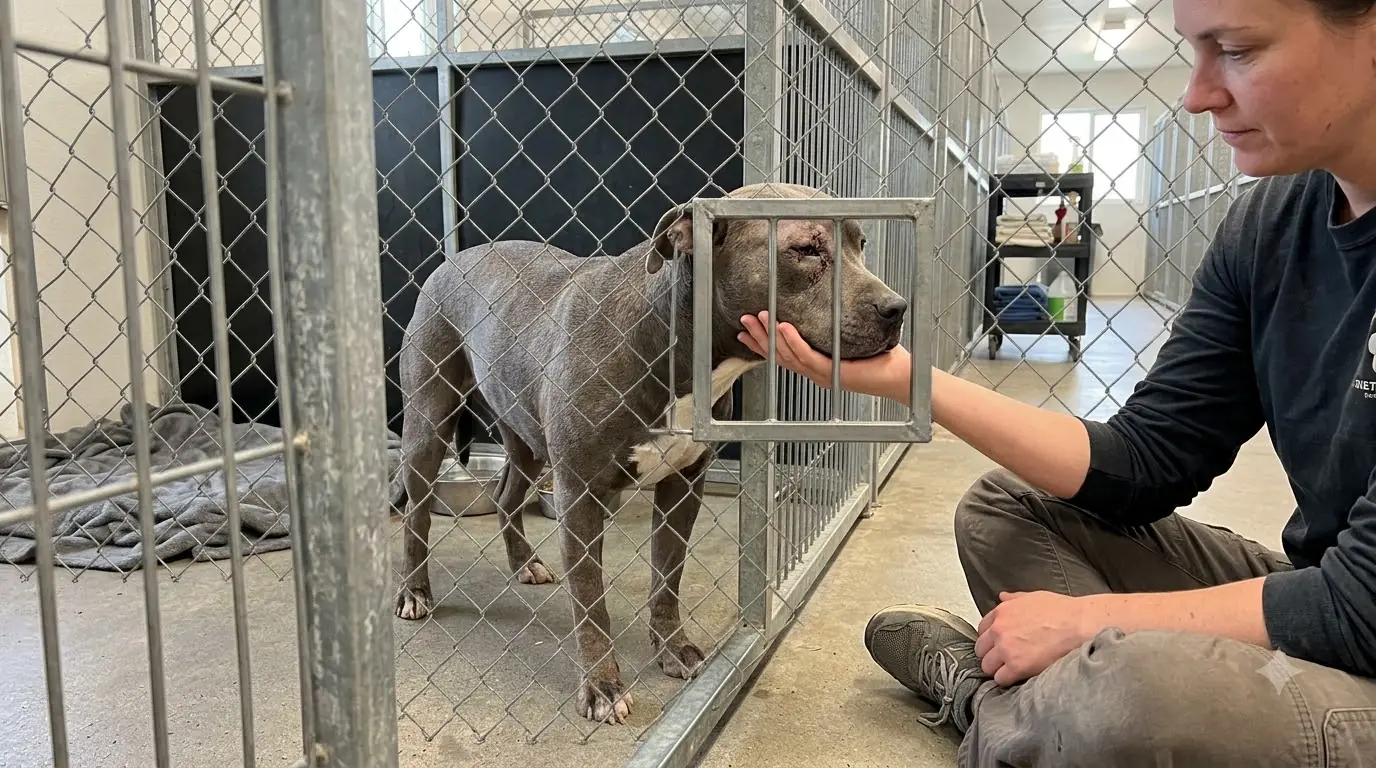
When Annie entered our care, the first thing staff noticed was her eye.
The 5-year-old Pit Bull mix had a significant injury affecting one eye. She was able to walk on her own, and she remained aware of the people around her, but she was clearly uncomfortable.
The injured eye was partially closed.
There was swelling around it, and Annie repeatedly tried to keep that side of her face away from handling.
Nobody attempted to force a detailed shelter-side examination.
Eye injuries can be extremely painful, and some can worsen quickly. Annie needed veterinary attention rather than repeated manipulation by well-meaning people.
She was transported to the clinic as soon as possible.
We did not know exactly how the injury had happened.
There was no reliable history establishing whether it resulted from an accident, another animal, a foreign object, or another cause.
Her injury alone could not tell us her past.
Our responsibility was to treat what was in front of us.
And what was in front of us was a frightened dog with a painful eye.
The First Veterinary Examination
At the clinic, Annie's examination began with an overall assessment.
Her heart and lungs sounded normal.
Her temperature was within an acceptable range.
She was mildly underweight but not severely emaciated.
Her hydration status was adequate.
There were no obvious major injuries elsewhere on her body.
The eye required a more focused examination.
Because Annie was painful and anxious, handling was minimized, and appropriate medication was used when needed to allow the veterinary team to evaluate her safely.
The veterinarian examined the surface of the eye, the surrounding tissues, the pupil, and Annie's response to light.
Testing included fluorescein staining, which can help identify damage to the cornea.
The results confirmed significant corneal injury.
There was also substantial inflammation inside the eye.
The veterinarian was concerned that the damage involved more than a superficial scratch.
Trying to Preserve Comfort and Function
Not every serious eye injury automatically requires removal of the eye.
When medically reasonable, veterinarians may first attempt to control pain and inflammation, protect the eye from further damage, and determine whether useful function can be preserved.
Annie was started on a treatment plan appropriate for her specific findings.
This included prescription eye medication, systemic pain control, and an Elizabethan collar to prevent her from rubbing the injured area.
The veterinary team scheduled frequent rechecks.
With eye injuries, changes can occur quickly.
An eye that appears stable one day may deteriorate.
Annie's response therefore needed to be evaluated closely rather than assumed.
Returning to the Shelter
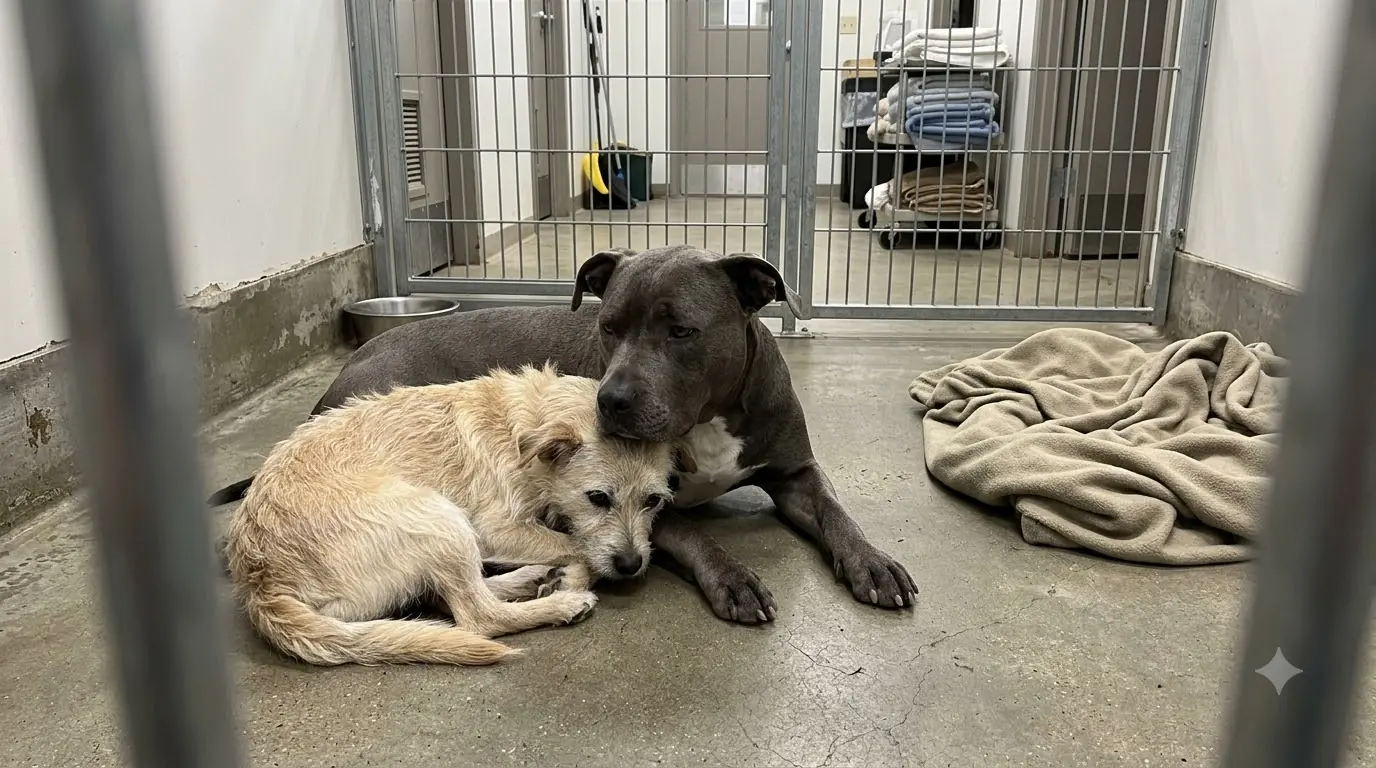
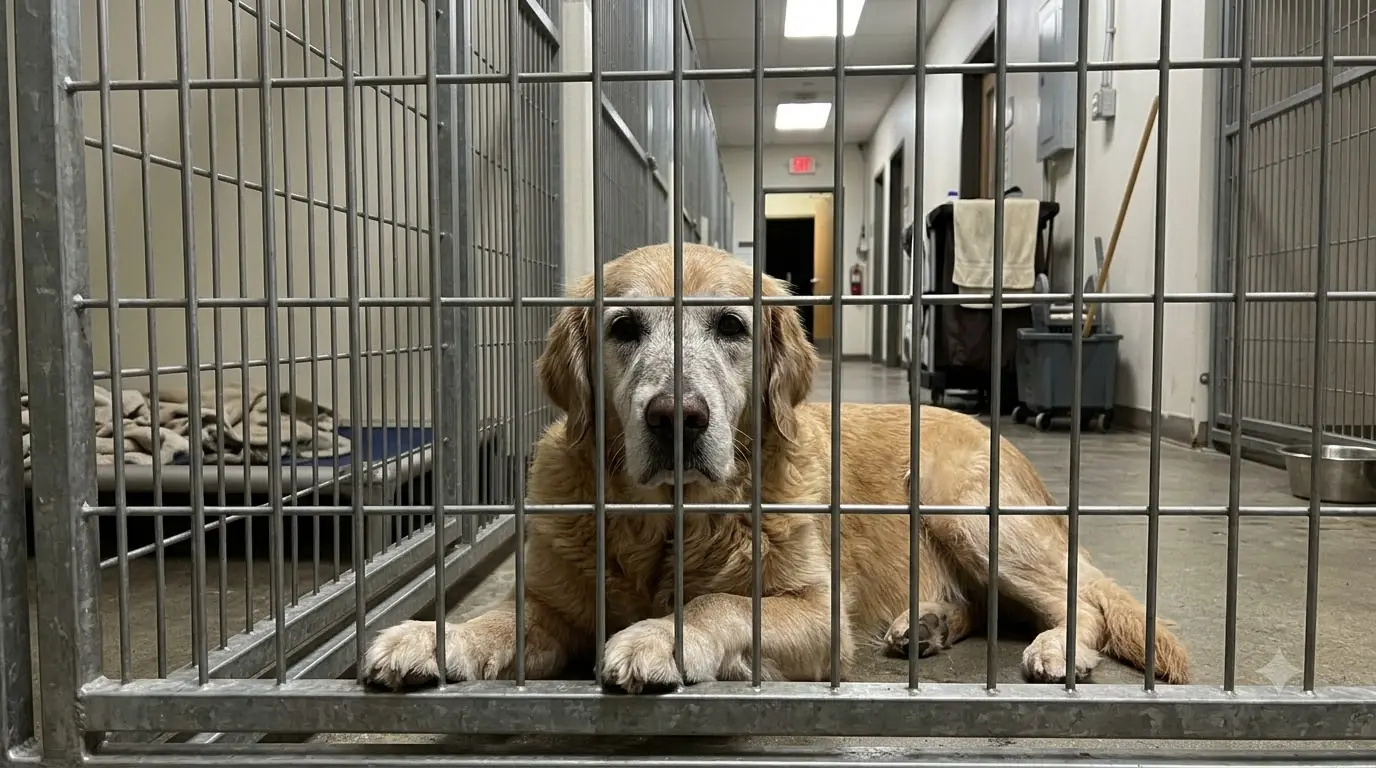
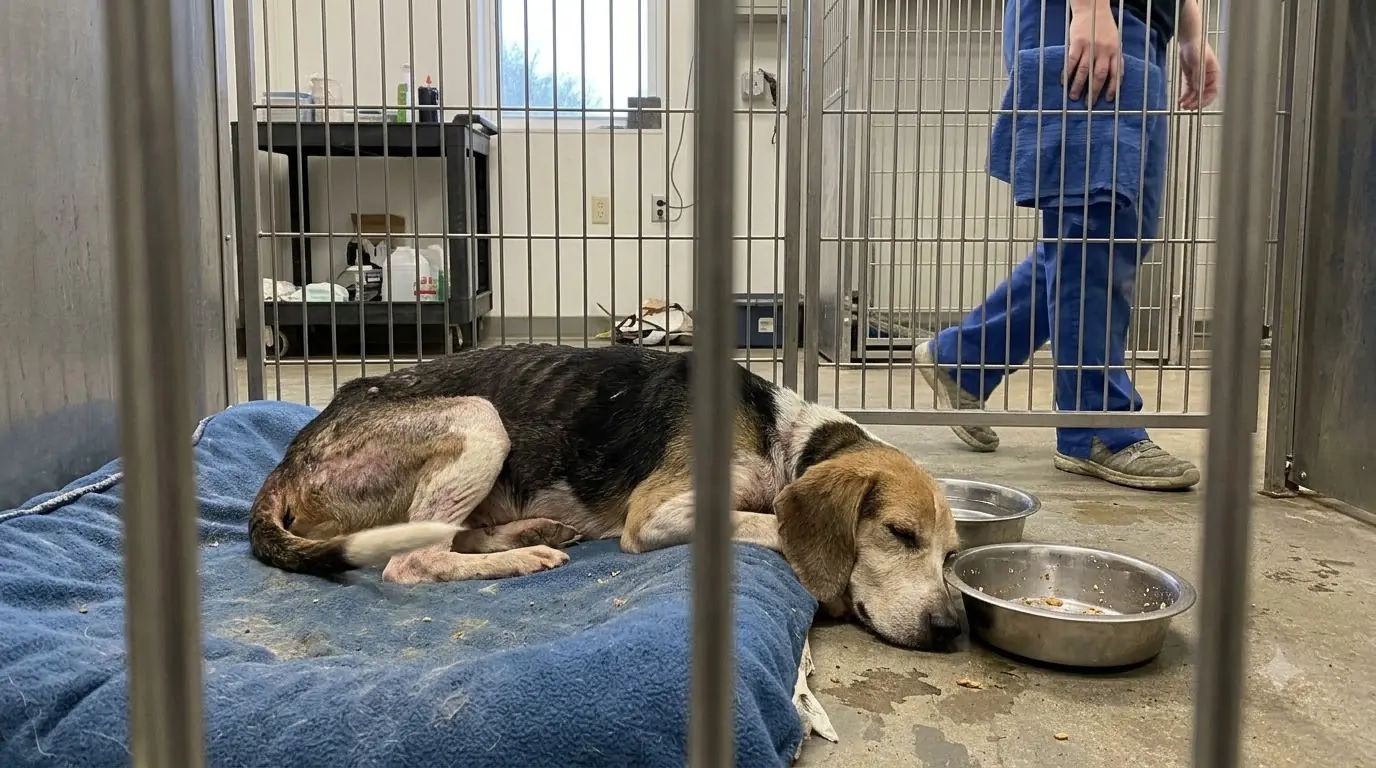
After the first clinic visit, Annie returned to a quiet section of the shelter.
Her kennel had thick bedding.
Food and water were placed where she could reach them without unnecessary movement.
Lighting was kept comfortable.
Staff approached calmly and announced themselves before entering her space, especially because vision on one side was compromised.
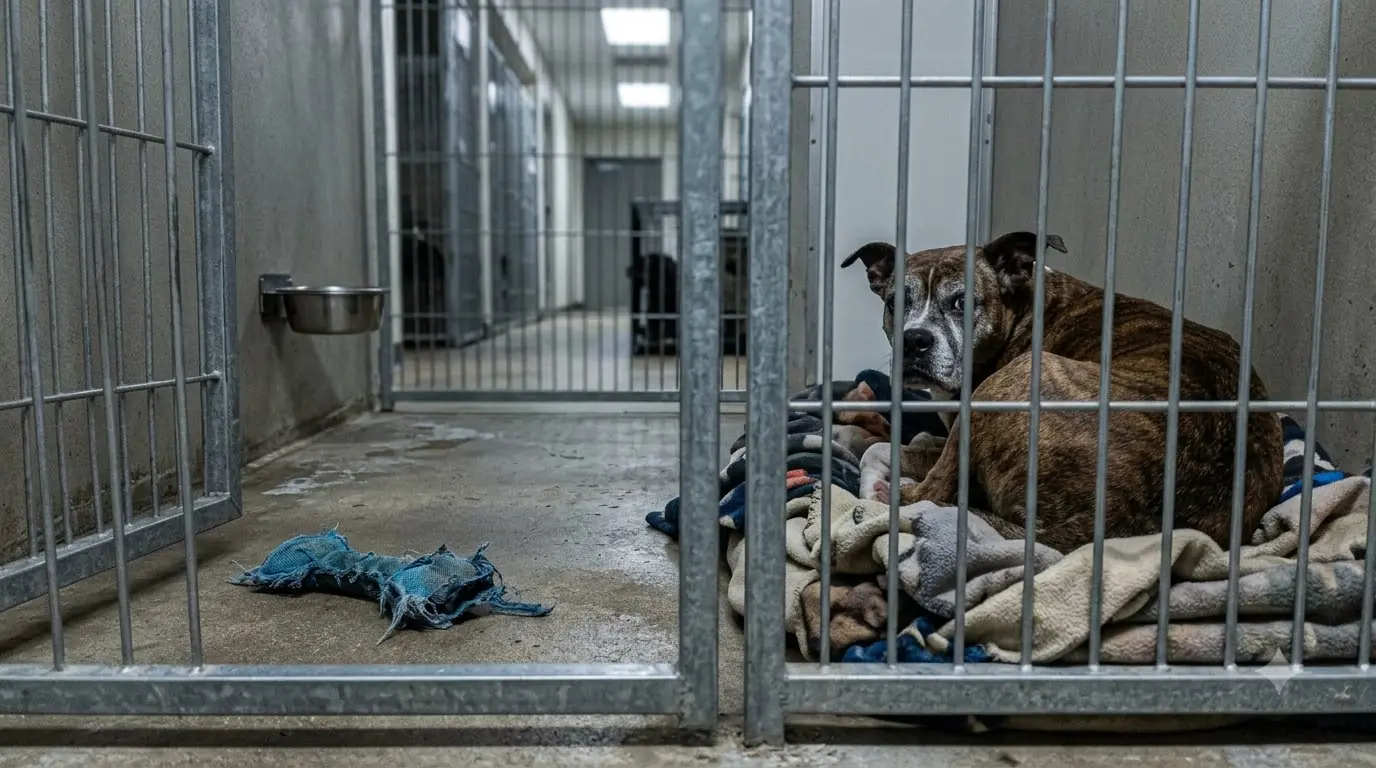
Annie walked to the far corner.
She curled up.
When someone approached, she turned her face toward the wall.
At first, staff wondered whether she was simply exhausted from the clinic.
But the behavior continued.
Annie ate when the room was quiet.
She drank.
She went outside for bathroom breaks.
Then she returned to the corner.
She was functioning.
She simply did not want interaction.
Pain and Fear Can Look Quiet
Annie never needed to growl or snap for us to understand that she was uncomfortable.
Turning away was communication.
Remaining in the corner was communication.
Keeping the injured side protected was communication.
A quiet dog is not automatically a relaxed dog.
Pain can make dogs withdraw.
So can fear.
So can exhaustion.
Often, several factors are present at the same time.
Staff therefore did not attempt to “socialize” Annie by repeatedly touching her.
Her medical needs required some handling, but everything else could wait.
The Worker Who Started Sitting Outside
One shelter worker began spending part of her break outside Annie's kennel.
She sat on the floor.
That was all.
She did not open the gate.
She did not reach through the bars.
She did not repeatedly call Annie's name.
During the first visit, Annie barely acknowledged her.
The next day, Annie looked over several times.
The worker remained where she was.
On another afternoon, she brought paperwork and completed it while sitting there.
Annie watched.
Nothing happened.
That was exactly the point.
Annie was learning that a person could be nearby without demanding something from her.
Eating and Drinking
Annie's appetite was reduced during the first day after treatment but never disappeared completely.
She ate small amounts when left undisturbed.
As her pain management took effect, her appetite improved.
Within several days, she was finishing her measured meals.
Her water intake remained normal.
She urinated regularly during outdoor breaks.
Her bowel movements were formed, although stress initially made her reluctant to eliminate while a staff member stood too close.
Handlers began giving her more leash distance in a secure area.
That solved the problem.
Once Annie had enough space, her bathroom habits were completely normal.
The First Recheck
At Annie's first scheduled ophthalmic recheck, the veterinary team repeated the relevant examinations.
Some inflammation had improved.
Unfortunately, the deeper damage remained concerning.
The injured eye did not appear to have useful vision.
The corneal injury was also healing less successfully than hoped.
The veterinary team adjusted her medication and continued monitoring.
At this stage, nobody declared treatment a failure.
But the priority was becoming increasingly clear.
Saving an eye anatomically is not worthwhile if the result is a chronically painful, nonfunctional eye.
Annie's comfort had to come first.
Annie Walks Forward
Back at the shelter, Annie continued watching the worker who sat outside her kennel.
Several days passed.
Then one afternoon, something changed.
The worker sat in her usual place.
Annie was lying near the back.
After several minutes, she stood.
She remained there for a moment.
Then she took a few steps forward.
The worker did not move toward her.
Annie continued.
When she reached the kennel gate, the worker slowly positioned her hand where Annie could investigate it without being touched unexpectedly.
Annie sniffed.
Then she moved her head sideways.
Very gently, she pressed the uninjured side of her face against the worker's hand.
The worker stroked her cheek once.
Annie leaned closer.
It was the first time staff had seen her actively request affection.
What That Moment Did—and Didn't Mean
Everyone was encouraged.
But we were careful not to give the moment a meaning it could not carry.
Annie asking for affection did not mean she was no longer in pain.
It did not mean her fear had disappeared.
It did not prove anything about how humans had treated her before arriving.
It meant that Annie had made one voluntary choice.
She wanted contact with one person she had learned to trust.
That was enough.
From that afternoon forward, the worker continued letting Annie initiate interactions.
Sometimes Annie approached.
Sometimes she did not.
Both choices were accepted.
The Eye Remains Painful
Unfortunately, Annie's next veterinary evaluation brought difficult news.
Although treatment had controlled some inflammation, the injured eye remained significantly damaged.
Useful vision had not returned.
More importantly, the veterinarian found evidence that the eye continued to cause discomfort.
Long-term preservation would have required ongoing treatment without a reasonable expectation that Annie would regain meaningful vision.
The team discussed the options carefully.
Continuing medication indefinitely was possible in some eye conditions, but it was not considered the best choice for Annie's particular injury.
The veterinary recommendation was enucleation—surgical removal of the damaged eye.
For people unfamiliar with the procedure, the recommendation can sound frightening.
For a dog with a permanently blind and painful eye, however, removal can eliminate the source of chronic pain.
The objective was not cosmetic.
It was comfort.
Preparing for Surgery
Before anesthesia, Annie received a preoperative assessment.
Bloodwork was performed to evaluate her red and white blood cells, platelets, kidney values, liver values, and other factors relevant to anesthesia.
The results did not identify a major problem preventing surgery.
Her weight was recorded.
Her heart and lungs were reassessed.
Her medications were reviewed.
The rescue approved the procedure.
The worker Annie trusted visited her before surgery.
She sat beside her as usual.
Annie walked forward and leaned against her.
Nobody knew whether Annie understood anything about what was going to happen.
What she did understand was that this person had become familiar.
Sometimes that is the most useful reassurance we can provide.
Annie's Surgery
Annie underwent surgery under general anesthesia with appropriate monitoring.
The damaged eye was removed, and the surgical area was closed.
The procedure proceeded as expected.
Afterward, Annie received pain management and was monitored closely during anesthetic recovery.
When she woke, she was groggy.
Staff kept her warm and quiet.
She wore protective equipment to prevent rubbing at the surgical site.
The area was checked regularly for excessive swelling, discharge, bleeding, or other signs of complications.
Her first priority was rest.
The First Night After Surgery
Annie slept for much of the evening.
She drank a small amount of water once she was sufficiently awake.
Food was offered later.
She ate only part of the meal.
That was not immediately concerning after anesthesia.
Her vital signs remained stable.
By the following morning, Annie was brighter.
She finished a larger portion of breakfast.
She walked outside.
She urinated normally.
Then she returned to her bed.
What staff noticed most was something less measurable.
Annie was no longer constantly positioning her head as though trying to protect the painful eye.
The surgical site was understandably tender.
But the deeper source of persistent ocular pain was gone.
Learning to Navigate With One Eye
Dogs can adapt remarkably well to vision in only one eye, but adjustment still deserves consideration.
Annie's remaining eye was healthy on examination.
That meant she retained functional vision.
Her depth perception and field of view were different, however.
Staff began approaching from her seeing side whenever possible.
They spoke before touching her from the blind side.
Furniture and kennel arrangements were kept consistent.
Annie occasionally turned her whole head to inspect something that approached from the side where the eye had been removed.
That behavior was normal.
She was learning to compensate.
Recovery From the Procedure
During the following days, swelling around the surgical site gradually decreased.
Annie remained on prescribed medication.
Staff prevented her from scratching or rubbing the area.
Her appetite returned fully.
She drank normally.
Her bathroom habits remained regular.
There were no signs of surgical-site infection.
At her scheduled recheck, healing appeared appropriate.
The veterinarian was satisfied with her progress.
The protective collar remained in place until the surgical site was sufficiently healed.
Annie did not enjoy it.
Few dogs do.
But she tolerated it.
Her Behavior Changes
As physical discomfort decreased, Annie began spending less time in the far corner.
At first, she moved her bed slightly forward.
Then she started lying where she could watch the hallway.
She began standing when familiar staff entered.
Her tail occasionally moved.
The worker who had sat outside continued visiting.
Now Annie frequently walked to the gate before the worker sat down.
She pressed her cheek against the familiar hand.
Sometimes she remained there for several minutes.
Other times she accepted a few scratches and returned to bed.
Annie controlled the interaction.
That remained important.
Moving Into Foster Care
Once Annie's surgical recovery was stable, the rescue began looking for an appropriate foster home.
Shelter staff had learned enough about her to know what environment would probably help.
She needed predictability.
She needed people willing to announce themselves before approaching from her blind side.
She needed a home that would not interpret hesitation as disobedience.
An experienced foster volunteer offered her a quiet room.
Annie moved in after receiving veterinary clearance.
Her First Evening in a Home
Annie entered slowly.
She sniffed the doorway.
She investigated the edge of a rug.
She walked around the room with her head turning slightly more than a two-eyed dog might need to.
Her foster caregiver did not follow closely behind.
Annie was allowed to map the space.
She found her water bowl.
Then her bed.
Then the kitchen.
The kitchen became particularly interesting.
That evening, she ate her entire dinner.
After a short bathroom walk, Annie returned indoors and selected a spot beside the sofa.
Not on the sofa.
Beside it.
Her foster caregiver sat above her and watched television.
Annie slept.
Weight and Physical Condition
Annie had arrived somewhat underweight, though nutrition was never as urgent a concern as her eye.
Once her pain was controlled, her appetite became consistently good.
She was fed a complete and balanced adult diet in measured portions.
Her weight increased gradually.
The goal was an appropriate lean body condition rather than rapid gain.
Her coat remained healthy.
Her energy improved.
She began showing interest in longer walks once the veterinarian cleared her from postoperative restrictions.
Walking With Limited Vision
Annie adjusted well to outdoor walks.
She sometimes startled if another dog or person appeared suddenly from her blind side.
Her foster caregiver learned to position herself so Annie had additional space.
Busy environments were introduced gradually.
Quiet neighborhood walks came first.
Annie enjoyed sniffing.
She investigated mailboxes, grass, tree trunks, and apparently every place another dog had ever considered interesting.
She was not rushed.
As her confidence grew, unfamiliar environments became easier.
Her Remaining Eye
Protecting Annie's remaining eye became part of her long-term health plan.
There was no disease identified in that eye during her examinations.
Still, her future adopter would need to take any eye problem seriously.
Squinting, redness, discharge, cloudiness, rubbing, or sudden behavioral changes would warrant veterinary attention.
Because Annie depended on that eye for vision, prompt evaluation would be especially important.
Routine veterinary examinations would also continue.
A Postoperative Recheck
At Annie's later recheck, the surgical site had healed well.
Her veterinarian was pleased with the result.
No additional surgical treatment was needed.
The pathology and clinical findings did not create a need for ongoing cancer treatment; the procedure had been performed because of irreversible traumatic damage and pain rather than a confirmed tumor.
Annie was cleared to resume normal activity gradually.
Her medication was adjusted as healing progressed.
The uncomfortable eye that had dominated her first days in rescue was no longer an active medical problem.
Affection Becomes Routine
Something else had changed.
Annie no longer reserved affection for one shelter worker.
She began approaching her foster caregiver.
At first, she stood nearby.
Then she rested against a leg.
Eventually, she discovered the sofa.
Her foster caregiver invited her up once Annie was medically cleared.
Annie climbed onto one end.
She stayed there for several minutes before moving closer.
Then she rested the uninjured side of her face against her caregiver's thigh.
It was the same gesture she had first offered through the kennel gate.
Only the setting had changed.
She Still Had Boundaries
Progress did not make Annie universally comfortable.
She disliked strangers reaching directly toward her head.
Sudden movement from her blind side could startle her.
At veterinary appointments, she still became tense during prolonged handling.
Her caregivers worked with those realities rather than trying to eliminate them through force.
Visitors were asked to let Annie approach.
Children, when encountered in controlled situations, were not permitted to crowd her.
Other dogs were introduced thoughtfully and individually rather than assuming Annie would automatically enjoy every canine companion.
Her foster team wanted to understand Annie as an individual before making placement decisions.
Her Sleep Changes
At the shelter, Annie slept facing the wall.
In foster care, she began sleeping in open spaces.
Sometimes she stretched across her bed.
Sometimes she curled beside the sofa.
Eventually, she began sleeping deeply enough that ordinary household noises did not wake her.
Because of her blind side, her foster caregiver continued avoiding unexpected touches while she slept.
Calling Annie's name or making a gentle sound before approaching prevented unnecessary startling.
These small accommodations became routine.
What Happened to Annie?
We still do not know exactly how her eye was injured.
There was no reliable evidence establishing a specific event.
We therefore cannot say Annie was deliberately harmed.
We cannot identify a person responsible.
We cannot use her initial fear of handling as proof of mistreatment.
Fear and withdrawal can result from pain, stress, unfamiliar surroundings, previous experiences, temperament, or combinations of those factors.
Annie's verified story begins with the condition in which she entered our care.
That story is meaningful without adding anything we cannot prove.
Preparing Annie for Adoption
Once Annie had healed medically and settled behaviorally, permanent-home planning began.
Her future family would need to understand life with a one-eyed dog.
For the most part, Annie could participate in normal household activities.
She could walk.
Play.
Explore.
Sleep wherever she found comfortable.
Seek affection.
Enjoy enrichment.
Her missing eye did not make her helpless.
But some accommodations would help.
Approaching from her seeing side when possible.
Avoiding sudden surprises from the blind side.
Keeping hazardous obstacles out of narrow pathways.
Monitoring her remaining eye.
Giving her time in unfamiliar environments.
These were manageable needs.
Finding the Right Match
The rescue did not want Annie adopted solely because someone felt sorry for her.
She did not need pity.
She needed compatibility.
Her ideal home would appreciate an adult dog who enjoyed companionship but also valued personal space.
Her adopter would need to understand canine body language.
They would need to allow introductions to happen naturally.
They would also need to maintain routine veterinary care and immediately address any concerns involving her remaining eye.
Annie had already demonstrated that she could form strong relationships.
The question was not whether she could love people.
The question was whether people would give her enough time to choose them.
The Worker Returns
Before Annie moved toward the next stage of her placement, the shelter worker who had first sat outside her kennel visited her foster home.
Annie was in the living room.
She heard the voice.
Her head turned.
Then she stood.
The worker sat on the floor.
Just as she had months earlier.
This time, Annie did not spend days watching.
She walked directly across the room.
She approached from the side where she could see clearly.
Then she turned her head.
The uninjured side of her face pressed against the worker's hand.
The worker smiled and stroked her cheek.
Annie leaned harder.
Annie Today
Annie has recovered well from surgery.
Her surgical site is healed.
Her remaining eye is healthy and functional.
She eats and drinks normally.
Her body condition has improved.
She urinates and defecates normally.
She walks comfortably and has adjusted well to having a reduced field of vision.
She sleeps deeply.
She seeks affection from familiar people.
She still appreciates thoughtful approaches from her blind side.
That will probably remain important throughout her life.
Her medical story did not end with saving the injured eye.
In fact, the eye could not reasonably be saved as a comfortable, functional organ.
Instead, her veterinary team made the decision that prioritized what mattered more.
Annie's quality of life.
The Corner She No Longer Needs
There was a time when Annie spent most of her day facing a kennel wall.
People entered.
She turned away.
Nobody knew whether she would eventually seek contact.
Nobody forced her to answer that question.
One person simply sat outside.
Day after day.
Annie watched.
Then she stood.
She walked forward.
And she placed the safe side of her face into a waiting hand.
That moment did not cure her eye.
Veterinary medicine did what could responsibly be done for the physical problem.
Surgery ultimately removed a source of chronic pain.
Time addressed something medicine could not measure as easily.
Trust.
Today, Annie does not hide her face when familiar people approach.
She turns toward them.
Sometimes she leans against a hand.
Sometimes she settles beside a leg.
Sometimes she simply remains where she is and watches.
She is allowed all three choices.
Her missing eye will always be visible.
It will always be part of her rescue story.
But it is no longer the most important thing about her.
Annie is a 5-year-old dog who likes quiet walks, comfortable beds, familiar voices, and people who understand that affection means more when she is allowed to ask for it.
The first time she did, she had to walk from the far corner of a shelter kennel to reach one patient hand.
Now she no longer has to cross that distance alone.