Another piece of Black trash from the ghetto wasting my courtroom. Judge Harold Whitmore glared at the 19-year-old Black girl standing alone below. No lawyer, no family, no one. Couldn’t afford a real lawyer.
Your kind never can. Too busy cashing welfare checks and popping out babies. He leaned forward, sneering. No father, right?
Don’t even know who he is. Mother on food stamps. Section 8. Teaching you stealing is easier than working. He waved like swatting a cockroach.
You people disgust me. Born criminals. White attorneys smirked. Black families sat frozen. But the girl wasn’t crying.
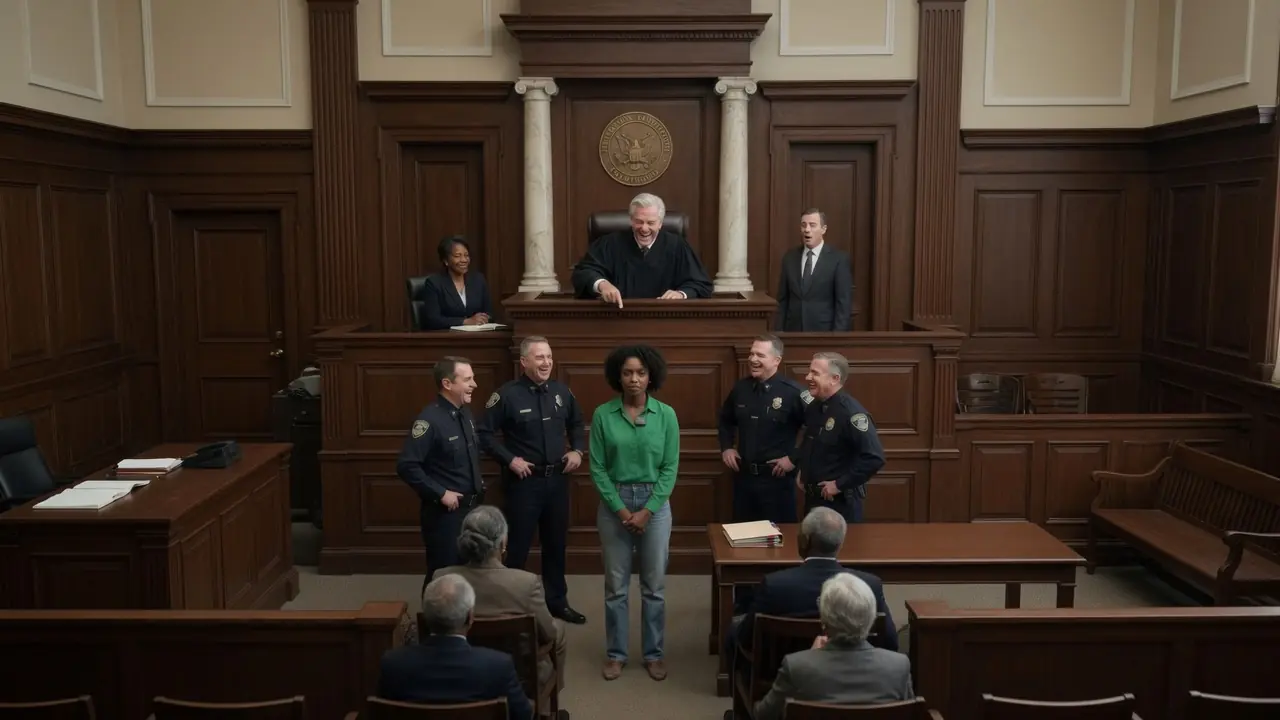
Her dark eyes were scanning, calculating. Have you ever been destroyed before speaking a single word? Here’s what Whitmore didn’t know. This Black teenager wasn’t who she appeared to be.
She was sent here for him. Every word captured. His 32-year career about to end. Destroyed by the girl he called trash.
Jefferson County Courthouse stood like a monument to a different era. Built in 1892, its marble columns and faded grandeur whispered stories of a time when justice wore a very specific face, white, wealthy, and male. A Confederate memorial still stood in the parking lot. City council had voted three times to remove it.
Three times heritage preservation groups had blocked them. The statue remained, a silent greeting to every black family walking through those courthouse doors. Inside, the building’s decay matched its soul. Cracked marble floors echoed with footsteps of the desperate.
Portraits of white judges lined every hallway. 130 years of faces that looked remarkably similar, as if justice itself had been copy-pasted across generations. The metal detectors at the entrance told their own story. Black visitors were stopped twice as often, searched more thoroughly, questioned more aggressively.
A mother with three children waited 20 minutes while security examined her diaper bag. A white businessman in a suit walked through with barely a glance. This was Jefferson County. This was how things worked.
Every day, over 200 cases moved through this building. Assembly-line justice. 4 minutes per defendant. Next case. 4 minutes. Next. The system didn’t have time for nuance. Didn’t have patience for context.
It processed bodies, predominantly Black and brown bodies with mechanical efficiency. And presiding over courtroom 4, the busiest courtroom in the building, sat judge Harold Whitmore, 63 years old, silver hair perfectly styled, Rolex watch glinting under fluorescent lights, 32 years on the bench, longer than many of his defendants had been alive. They called him the Hammer, not because he was tough on crime, but because he was surgical in his cruelty. And his cruelty had a very specific target.
His sentencing record told the story that polite society refused to acknowledge. A Black single mother couldn’t pay parking tickets, 90 days in jail, her children sent to foster care. A white college student caught with cocaine, probation, a handshake, boys will be boys. A Black teenager shoplifted food for his hungry siblings.
18 months in juvenile detention. a white businessman on his third DUI. A fine and continued driving privileges. Pattern after pattern after pattern.
14 formal complaints had been filed against Whitmore in the past decade. Because Harold Whitmore wasn’t just a judge, he was a protected species. He golfed with District Attorney Richard Coleman every Saturday. He attended charity galas with police chief Warren Brody.