I was 50 years old, standing calmly in my driveway after replacing a loose porch rail, when a Mustang rolled up. The blonde kid from three houses down stepped out wearing MMA gloves, a backwards cap, and a gold medal hanging against his black shirt. His girlfriend followed, already recording with her phone and smirking like she knew the ending. He pointed at me and said I had embarrassed his mother during the neighborhood meeting. Then he raised his fist and demanded a fight.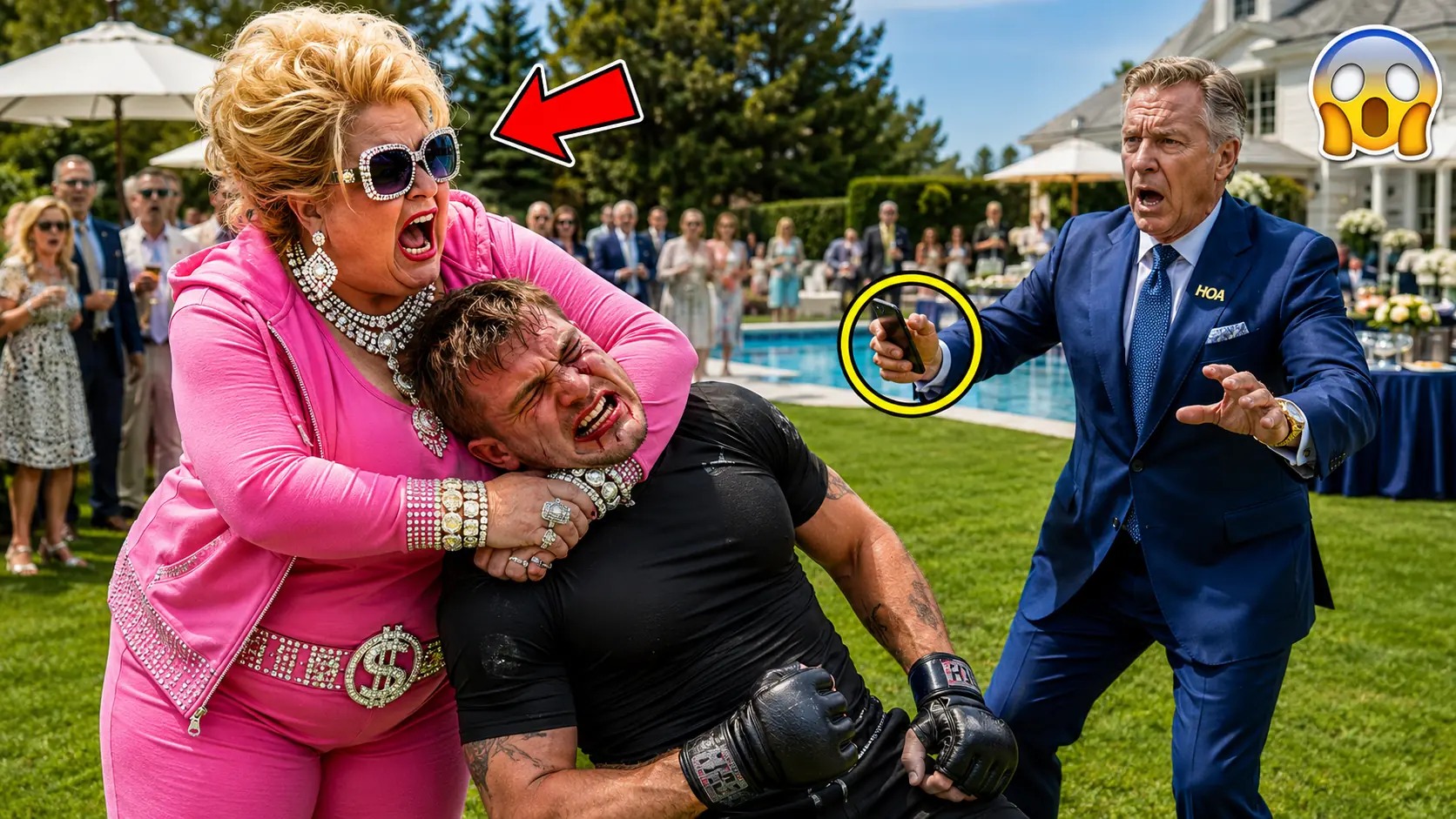
I looked at his medal, looked at the camera, and asked, “Are you absolutely sure about this?” His mother spent months acting like our street belonged to her family. She complained where my guests parked illegally, reported my porch lights as being too bright, and demanded I move my garage bins because she disliked seeing them from her kitchen. At the meeting, I read every complaint aloud, along with city responses showing none were valid. Neighbors laughed when she accused me of targeting her.
Her son apparently decided laughter required revenge. He bounced on his toes, rolling his shoulders like a professional. I remained still, hands open, and told his girlfriend to record everything, especially what happened next. The kid mistook calmness for fear. He stepped closer until we were six feet apart and started listing his accomplishments.
He shoved my chest with both gloves. I stepped backwards, steadied myself, and warned him clearly, “Touch me again, and I will defend myself without striking his face.” What he did not know was that I had spent 22 years coaching high school wrestling and teaching defensive control to hospital security officers. I had stopped competing long ago, but balance, leverage, and timing remained part of me. I had no interest in proving anything to a 20-year-old.
I wanted him off my property safely, and he circled left, threw a jab that stopped inches from my nose, then grinned at the camera. I repeated my warning. He answered by slapping my shoulder and attempting a tackle around my waist. That was when the performance stopped and physical reality began. I widened my stance and caught his forward pressure before it drove me backwards.
His head pressed against my ribs while his arms locked around my hips. Instead of punching, I wrapped one arm over his shoulder, controlled his wrist, and turned with his momentum. We stumbled across the driveway, shoes scraping concrete. He tried lifting me, but his posture collapsed as he leaned too far. I stepped behind his leg and guided him down onto the grass beside the pavement.
He landed hard enough to lose his cap, but not to seriously injure him. His girlfriend’s smirk disappeared immediately. The kid scrambled up, furious that his first attack had failed. His medal had twisted behind his neck, and one glove was smeared with dirt. He accused me of cheating because I had not fought standing.
I told him real confrontations did not follow rules he invented. He rushed again, this time swinging wide with his right hand. I slipped inside, tied up his arms, and placed my forehead against his chest to prevent another strike. He tried kneeing my thigh and twisting free. We wrestled against the Mustang’s quarter panel until the alarm began screaming through the neighborhood.
Porch doors opened, curtains moved, and two neighbors stepped outside with phones, but nobody approached because the kid was thrashing. He tried forcing his forearm across my throat, so I changed position, turned behind him, and controlled his upper body without choking him. He dragged us several feet, kicking at my ankles and shouting for his girlfriend to stop filming. She kept recording, though her expression changed from amusement to panic. I told him to relax and leave.
Instead, he threw his weight backwards, hoping to crush me against the car. I shifted sideways, and we dropped onto the lawn again. This time, he landed on top, and for one second, he believed he had won. He planted a glove near my face and tried to pin my shoulders. I trapped one arm, turned onto my side, and used my hips to reverse our positions.
Suddenly, he was underneath me, breathing hard. His medal pressed into the grass. I held him with pressure across his shoulder while keeping my knees away from his ribs. He bucked, bridged, and twisted, but every explosive movement exhausted him faster. I said, “You asked for a fight. I’m giving you a chance to end it peacefully.”
He answered by grabbing my shirt and trying to bite my forearm. That ended my patience. I secured both wrists against the ground and told his girlfriend to call the police. She hesitated, then said his mother was coming. From across the street, I heard a woman screaming his name.
The kid used the distraction to jerk one hand free and rake his glove across my cheek. I shifted my weight, regained control, and kept him pinned. He cursed, accused me of assault, and demanded his girlfriend claim I attacked first. He stared at her phone because the recording showed otherwise. His mother arrived in pink slippers, showing no concern for anyone except her son’s pride.
She screamed that I was crushing him and ordered me to release him. I said I would let go when he stopped fighting and police arrived. She stepped onto my lawn and tried pulling my shoulder. A neighbor blocked her and warned that touching me could make things worse. Her son went limp, pretending he couldn’t breathe.
I eased pressure while maintaining wrist control. The instant I shifted, he exploded upwards again. That performance convinced every witness he was dangerous and determined to continue. He managed to reach one knee, then lunged for my legs. We toppled together near the driveway edge, and my elbow struck the grass.
He climbed toward my back, trying to hook his arm around my neck again. I tucked my chin, peeled one glove away, and rolled so he lost position. His medal chain snapped, scattering the ribbon and gold disc beside us. That sound affected him more than anything else. He froze, stared at the broken medal, then roared as if I had destroyed his identity.
He charged recklessly again, abandoning technique, control, and every advantage youth gave him. I caught him in a body clinch and turned us away from the pavement. His feet tangled beneath him, and I lowered him onto the lawn for the third time. He landed face down, swinging blindly. I controlled one arm behind his back, not forcing it, simply preventing another punch.
His breathing sounded ragged. Sweat darkened his shirt. The girlfriend stepped closer and begged him to stop. He yelled at her for recording his humiliation. That sentence mattered.
He had not come to defend his mother. He came expecting an easy victory, a viral video, and proof intimidation worked. Police sirens approached while I kept him still. I told him I would release him if he placed both hands flat and stopped resisting. Eventually, he obeyed.
I backed away slowly, palms visible, and the kid rolled onto his side clutching his shoulder. He wasn’t seriously hurt, but he looked stunned by exhaustion and embarrassment. Two officers separated everyone and collected statements. His girlfriend handed over the full recording without being asked twice. It showed the shove, the tackle, the attempted punches, his mother grabbing me, and every warning I gave before using controlled force to protect myself.
The officers arrested the son for assault, trespassing, and disorderly conduct. His mother was cited for interfering after witnesses confirmed she tried pulling me off while her son attacked. She screamed that the medal proved he was disciplined as an athlete. One officer picked up the ribbon and replied that discipline was not visible in the video. The son demanded medical attention, so paramedics examined him.
They found bruising, a strained shoulder, and no broken bones. I had a scrape on my cheek, grass stains, and a torn collar. The girlfriend sat on the curb deleting captions she had prepared beforehand. The biggest surprise came when the karate instructor arrived at the station. The son had called him expecting support.
Instead, the instructor watched the footage and looked disgusted. The school prohibited students from using training to threaten people outside supervised competition. The medal came from a point-based beginner division with protective rules, not the elite championship the son had described. The instructor revoked his membership immediately and contacted the tournament organizers. By morning, the son’s photograph was removed from the promotional page.
His confidence had been built around a story that collapsed the moment someone examined the actual facts carefully. His girlfriend’s recording spread, but not the way he planned. She sent it privately to police, yet one of her friends posted a clip version after hearing his boast. The neighborhood saw him shove me, rush me, and repeatedly refuse chances to leave. They also saw me avoid punches, keep him off the concrete, and release pressure whenever he claimed distress.
Comments mocked his medal, but I asked neighbors to stop sharing the video. Humiliation couldn’t be the only lesson by then. What mattered was accountability. Unfortunately, the full recording had already reached his employer, gym, and scholarship committee. He worked part-time at a recreation center supervising teenagers.
The center suspended him after reviewing the arrest report, then terminated him because he had used his position to advertise private fighting lessons he was not licensed to teach. His scholarship was also withdrawn under his conduct clause. His mother blamed me for every consequence. I reminded her that I had not driven him over, placed gloves on his hands, or told his girlfriend to record. She threatened a lawsuit, but her attorney declined after seeing the video.
My homeowners insurer preserved copies and warned against filing a false claim. At sentencing, the judge focused on the planning. The backwards cap, gloves, medal, camera, and girlfriend were not random. They showed he intended to stage a confrontation for attention. Because he had no previous conviction, he avoided a long jail term, but the punishment was unusually specific.
Thirty days in county jail, 18 months of probation, 200 hours of community service, anger management classes, and restitution for my torn shirt, medical visit, and damaged porch planter. He was also ordered to stay away from my property. His mother received a fine and a separate no-trespass warning from the city. Months later, I saw him completing community service at the recreation center that had fired him. He wore an orange vest and moved equipment under supervision.
No medal, no gloves, no crowd. He first approached after asking permission through the supervisor. His voice was quiet when he apologized. He admitted he expected me to panic, swing wildly, and look guilty on camera. He never imagined I could control him without losing control myself.
I accepted the apology but did not excuse the attack. Respect, I told him, is not how you win by forcing another person to kneel before you. The driveway looked normal again, but everyone on the street remembered what happened there. His mother stopped filing complaints, his girlfriend ended the relationship, and later thanked me for not injuring him when I could have. As for the son, he returned to training after probation.
This time, at a school that emphasized restraint before competition. I never celebrated taking him down. The real victory was refusing to become the violent villain he wanted for his video. He demanded a fight because he thought strength meant domination. I showed him strength could mean control, patience, and knowing when to stop.