Lisa is safe.
That is important.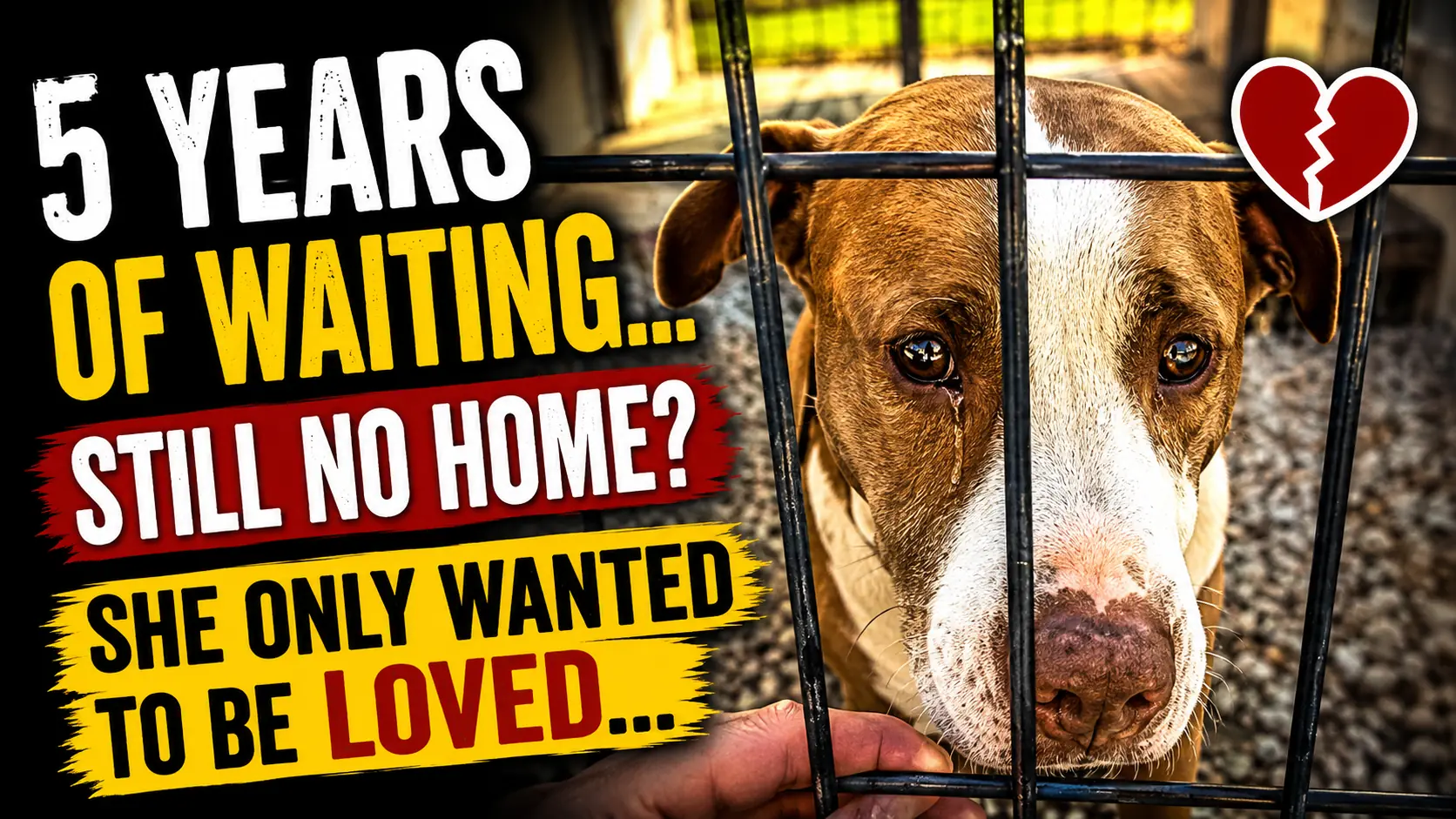
But after years of watching her live in boarding, we have also learned that being safe is only the beginning of what a rescued dog deserves.
Lisa has been in boarding since 2021.
She has food.
She has water.
She has people checking on her.
She is protected from traffic and the dangers she once faced while living outside.
What she still does not have is a home of her own.
And as Lisa gets older, that distinction becomes harder for us to ignore.
During her time in boarding, Lisa lost her vision. She now relies heavily on her other senses and on the familiarity of her environment.
Blind dogs can adapt remarkably well, but their world works differently.
Lisa listens before moving toward something unfamiliar.
She uses scent to identify people and places.
She remembers where familiar objects are located.
And when she enters an environment she already knows, she moves with much more confidence than someone might expect from a dog who cannot see.
This is one reason a future adopter will need patience during Lisa's transition.
Moving into a home would be wonderful for her, but initially it would also mean replacing a familiar environment with one she cannot visually explore.
She will need time.
Furniture should remain in consistent locations whenever possible.
Walkways should be kept clear.
Stairs and other potential hazards may need barriers while she learns the home's layout.
Food and water should remain in predictable places.
Her bed should become an easy-to-find safe space that belongs entirely to her.
Verbal cues can also help Lisa understand what is happening around her.
A gentle word before touching her can prevent startling her.
Simple cues can warn her about steps, doors, obstacles, or changes in direction during walks.
None of these accommodations are extraordinary.
They simply require consistency.
Lisa has already demonstrated that she is capable of adapting.
Her blindness does not mean she has stopped enjoying human companionship.
In fact, her relationship with people is one of the most encouraging things about her.
Lisa is sweet and friendly with the humans she trusts.
When someone approaches, she often pauses and listens.
Once she recognizes the voice or scent, her body softens.
She accepts gentle contact and enjoys having someone nearby.
There are moments when she simply settles beside a caregiver and seems content knowing she isn't alone.
Those moments remind us what Lisa is missing.
A boarding facility can provide care.
It cannot completely reproduce the quiet intimacy of living with a family.
Lisa has never had the opportunity to learn the ordinary rhythms of a permanent home since entering boarding.
She doesn't know what it is like to have one bed that stays hers.
She doesn't know the sound of one familiar person making breakfast every morning.
She doesn't know what it is like to sleep in a quiet room and wake to the same footsteps.
She doesn't know the comfort of spending an uneventful afternoon beside someone on the couch.
Those are small things.
For Lisa, they would be enormous.
There is, however, an important requirement that anyone considering Lisa must understand.
Lisa needs to be the only animal in the home.
Although she is affectionate with people, she is not pet friendly.
We don't want anyone attempting to force her into a household with another dog or cat because they believe enough affection will eventually make the situation work.
Lisa has already told us what kind of environment makes her comfortable.
We need to respect that.
She needs a home without other animals where she can have predictable routines and human companionship without the stress of sharing her space with another pet.
That requirement makes finding Lisa's adopter more difficult.
We know that.
Many of the people most willing to adopt a special-needs dog already have animals.
But difficult does not mean impossible.
Lisa doesn't need hundreds of applications.
She needs one appropriate one.
Ideally, her person will understand that adopting a blind older dog isn't about feeling sorry for her.
It is about giving her the environment she actually needs.
She still deserves boundaries, enrichment, walks appropriate for her condition, affection when she wants it, and opportunities to make choices.
Blindness should not reduce her entire life to being handled and protected.
Lisa can still sniff the air outside.
She can still recognize familiar voices.
She can still enjoy comfortable bedding.
She can still investigate interesting scents.
She can still learn routines.
She can still seek affection.
She can still wag her tail when someone she trusts arrives.
She is still a dog.
Our goal is not simply to keep Lisa alive.
It is to give her a life that feels like hers.
Because Lisa is older and blind, her ongoing veterinary care is also important.
Her future family should be prepared for routine senior wellness examinations and continued monitoring of her overall comfort and mobility.
Any sudden behavioral or physical change should be evaluated rather than automatically attributed to age or blindness.
Her adopter will also need to watch for subtle signs of discomfort.
A dog who cannot visually communicate with the environment may show uncertainty by freezing, hesitating, moving more slowly, or becoming reluctant to enter unfamiliar spaces.
Patience will matter enormously during the first weeks.
Lisa should not be expected to understand an entire house immediately.
She may need guided exploration.
She may bump into something.
She may become confused about where a doorway is.
She may initially prefer one small area because it feels easier to understand.
That is okay.
Her world can expand gradually.
One room becomes familiar.
Then another.
The route to the water bowl becomes automatic.
The distance between her bed and the back door becomes something her body remembers.
The sound of her person's footsteps becomes recognizable.
Eventually, what was unfamiliar becomes home.
That is what we want for her.
There are already small things that tell us Lisa still wants connection.
She responds to familiar human voices.
She accepts affection from people she trusts.
She can relax when she understands that she is safe.
She still shows curiosity through scent and sound.
And despite everything that has changed in her life, she has not withdrawn completely from people.
She still lets us in.
That matters.
We sometimes think about how much of Lisa's life has happened while she was waiting.
Since 2021, seasons have changed again and again.
Dogs have entered boarding and left.
People have come and gone.
Lisa remained.
She adapted to blindness there.
She learned the sounds there.
She learned where things were.
She learned how to make that environment familiar enough to navigate.
But we never wanted boarding to become the final destination of her rescue story.
Lisa was taken off the streets because someone believed her life mattered.
That belief shouldn't end simply because her needs became more complicated.
If anything, this is when it matters most.
She is older now.
She is blind.
She cannot live with other pets.
Those facts significantly narrow the number of homes appropriate for her.
But they do not make Lisa less deserving of one.
Her ideal home may actually be very simple.
A quiet household.
No other animals.
Clear pathways.
Predictable routines.
A comfortable bed.
Patient hands.
A person who talks to her before reaching down to touch her.
Someone willing to let her sniff and learn instead of rushing her.
Someone who understands that progress might look different with Lisa.
The first victory might simply be finding her water bowl without guidance.
Then sleeping deeply through the night.
Then recognizing the path to the door.
Then hearing her person's voice from another room and walking confidently toward it.
Those are the milestones we hope someone gets to celebrate with her.
We don't know how many years Lisa has ahead of her.
Nobody can promise that.
What we do know is that the years she has already spent waiting cannot be returned to her.
So we don't want to waste the ones that remain.
Lisa does not need a perfect person.
She needs the right person.
Someone without other pets who can offer patience, stability, and the kind of home where an older blind dog can finally stop adapting to temporary circumstances.
She was rescued from the street years ago.
Now we hope someone will help us complete that rescue.
Not by simply keeping Lisa safe.
By giving her somewhere she belongs.
A familiar voice every morning.
A bed that remains in the same place every night.
Hands she recognizes.
A home she can memorize until she no longer needs sight to know exactly where she is.
And, perhaps for the first time since 2021, the certainty that she isn't waiting anymore.