Married at 29. Divorced at 51. Broke at 53. Revitalized at 72—I Was Wrong About Everything
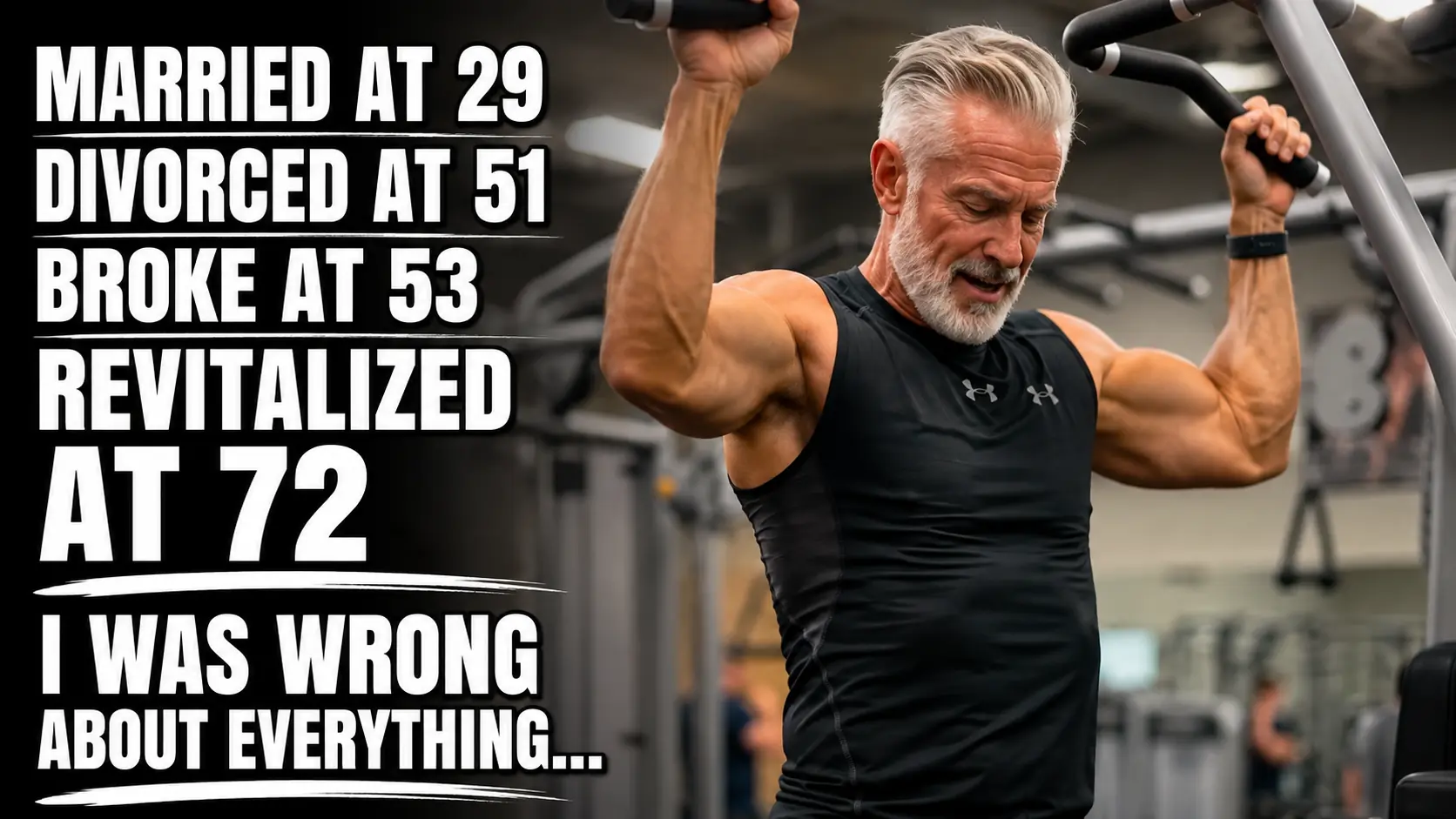
Married at 29.
Divorced at 51.
Broke at 53.
Revitalized at 72.
Looking back, the strangest part isn't how much changed.
It's how many times I convinced myself the story was already over.
At 29, I thought stability meant I had life figured out.
At 51, divorce made me question much of what I'd assumed about the future.
At 53, financial trouble made starting over feel almost embarrassing.
And somewhere along the way, I made another assumption:
By my 70s, the important part of life would mostly be behind me.
I was wrong about that too.
Not because I discovered a miracle treatment.
Not because I found a supplement that “reversed aging.”
And certainly not because my 72-year-old body suddenly became 40 again.
What changed was much less dramatic.
I began rebuilding the ordinary parts of life I'd gradually stopped protecting.
Strength.
Movement.
Sleep.
Nutrition.
Relationships.
Purpose.
Preventive healthcare.
None erased my age or my past.
But together, they changed what being 72 felt like.
The Biggest Mistake Was Assuming Decline Had Only One Direction
There are real biological changes associated with aging.
Muscle mass and strength can decline. Cardiovascular fitness can decrease. Bones may become more vulnerable. Balance and reaction time can change. Risk for many chronic diseases increases.
We shouldn't pretend otherwise.
But I had confused two very different statements:
Aging changes the body.
And:
Nothing can improve once you're older.
The first is true.
The second isn't.
Older adults can improve muscular strength through appropriate resistance training. Cardiovascular fitness can respond to regular aerobic activity. Balance can be trained. Someone who has become sedentary can become more active.
That doesn't mean every limitation is reversible.
Genetics, disease, previous injuries, medications, disability, and many other factors matter.
But I stopped asking whether I could undo aging.
I started asking what I could still improve.
That question was far more useful.
1. I Rebuilt My Legs Before I Worried About Looking Younger
I used to think muscle was primarily about appearance.
Then everyday tasks started teaching me otherwise.
Getting out of a low chair.
Climbing stairs.
Carrying groceries.
Standing after kneeling.
Walking uphill.
Those aren't bodybuilding challenges.
They're independence challenges.
Muscle mass, strength, and power can decline with advancing age, especially alongside inactivity. In some older adults, clinically significant losses contribute to sarcopenia and reduced physical function.
Resistance training became one of my priorities.
Not seven days a week.
Not extreme lifting.
Just regular, progressive strength work appropriate for my ability.
Depending on the person, that can include chair sit-to-stands, squats, step-ups, rows, presses, resistance bands, machines, dumbbells, and other movements targeting the major muscle groups.
Federal physical activity guidelines recommend muscle-strengthening activities on at least two days each week.
I particularly value my legs.
Because bigger arms might change what I see in the mirror.
Stronger legs can change what I'm able to do.
2. I Started Walking Even When I Had Nowhere Important to Go
Work gives people movement they often don't recognize as exercise.
You walk from the parking lot.
Move around the workplace.
Climb stairs.
Go to lunch.
Run errands on the way home.
Then life changes.
Retirement, remote work, illness, or a major personal transition can remove that movement.
Mine disappeared gradually.
So I deliberately put walking back.
I walk around the neighborhood.
I walk after meals when convenient.
I choose stairs when they're appropriate.
I take short walks instead of waiting until I have time for the “perfect” workout.
Walking contributes to aerobic physical activity, but it does something else I value:
It keeps me practicing walking.
That sounds almost ridiculous until walking becomes difficult.
Then you understand how much freedom depends on it.
Airports.
Stores.
Vacations.
Parks.
Museums.
Family outings.
The ability to comfortably move through those places helps determine how large your world remains.
I don't need every walk to be impressive.
I need walking to remain normal.
3. I Stopped Eating Like Weight Was the Only Thing That Mattered
For years, nutrition seemed to come down to one instruction:
Eat less.
At 72, I ask a different question.
What am I trying to preserve?
Muscle is high on that list.
Protein provides amino acids used to maintain and repair body tissues, including muscle. That's why adequate protein becomes particularly relevant when you're also resistance training.
I try to include meaningful protein sources across my day.
Eggs.
Fish.
Greek yogurt.
Chicken.
Beans and lentils.
Cottage cheese.
Tofu and other soy foods.
Lean meats when I choose them.
But protein isn't the entire diet.
Vegetables, fruit, whole grains, legumes, nuts, seeds, and other nutrient-dense foods provide fiber and important nutrients.
I don't need a perfect diet.
I need one that supports the body I'm asking to remain active.
Unintentional Weight Loss Is Different
One lesson becomes especially important later in life.
Weight loss isn't automatically good news.
If an older adult begins losing significant weight without trying, particularly alongside weakness, poor appetite, fatigue, or other symptoms, that deserves medical attention.
Illness, medication effects, dental problems, depression, gastrointestinal conditions, and many other issues can affect appetite and weight.
And losing muscle can undermine the exact independence we're trying to protect.
The goal isn't simply becoming lighter.
It's staying adequately nourished and physically capable.
4. I Started Treating Sleep as Maintenance, Not Wasted Time
When life feels uncertain, sleep is often one of the first things to deteriorate.
Stress keeps you awake.
You stay up watching television.
Your schedule becomes inconsistent.
Then you wake up exhausted and move less because you're tired.
Sleep remains important as we age.
It supports attention, mood, physical recovery, cardiovascular and metabolic health, immune function, and other essential processes.
Most adults generally need at least seven hours per night, although individual requirements vary.
So I stopped treating sleep as whatever time remained after everything else.
I gave it a place in my routine.
Reasonably consistent sleep and wake times.
A bedroom designed for sleeping.
Less unnecessary stimulation when I'm supposed to be winding down.
But there's an important distinction between improving sleep habits and ignoring a medical sleep problem.
Habitual loud snoring, witnessed pauses in breathing, gasping during sleep, persistent insomnia, morning headaches, or substantial daytime sleepiness can deserve evaluation.
Feeling exhausted every day isn't something you should automatically accept because you're older.
5. I Practiced Balance Before Losing It Became Frightening
At 40, balance barely crossed my mind.
At 72, I understand its value.
Think about tripping on an uneven sidewalk.
Your body needs to recognize what happened and respond rapidly enough to keep you upright.
That response involves sensory information, the nervous system, muscular strength, coordination, vision, and other factors.
If several parts of that system become less effective, recovering from a misstep can become harder.
Falls are an important concern for older adults.
So I practice balance rather than assuming I still have enough.
Depending on ability, that might include carefully standing on one leg near a stable support, heel-to-toe walking, controlled stepping, or activities such as tai chi.
Strength training also matters because recovering from a loss of balance requires physical force.
But balance practice shouldn't create unnecessary danger.
Repeated falls, new instability, persistent dizziness, or sudden changes in balance deserve medical attention.
Sometimes medications, vision problems, neurological conditions, blood pressure changes, or other medical issues contribute.
6. I Started Training for the Life I Wanted, Not the Body I Used to Have
This may have changed my mindset more than anything.
I stopped training for 40.
I'm 72.
I don't need to pretend otherwise.
Instead, I train for 80.
What would I like to still be doing then?
Carrying groceries.
Walking through an airport.
Getting out of a chair without struggling.
Traveling.
Going upstairs.
Getting onto and off the floor.
Spending an afternoon away from home without worrying whether I'll have enough energy.
Once I started thinking that way, exercise stopped feeling like punishment for getting older.
It became preparation.
Strength training prepares me to lift and carry.
Walking preserves walking.
Aerobic exercise builds stamina.
Balance exercises prepare me for unexpected movements.
Mobility work helps maintain useful ranges of motion.
That's a much more motivating reason to exercise than trying to make a 72-year-old body look exactly like it did decades ago.
7. I Stopped Letting Pride Keep Me From Preventive Healthcare
There's another side to healthy aging that can't be accomplished in the gym.
Medical care.
Some important health risks don't necessarily produce obvious early symptoms.
High blood pressure can be silent.
Elevated cholesterol doesn't usually announce itself.
Blood-sugar problems can develop without dramatic warning signs.
That's why preventive care matters.
I want to know my blood pressure.
I want appropriate discussions about cholesterol and diabetes screening.
I want to keep up with recommended cancer screenings and vaccinations based on my age and individual circumstances.
I want medication reviews when appropriate.
And I don't assume every new symptom is “just aging.”
Lifestyle and medical care aren't opposing philosophies.
You can walk every morning, strength train, eat well, and still need medication.
You can take medication and still benefit from physical activity and nutrition.
Health isn't a purity contest.
The objective is the best realistic outcome for the individual.
8. I Rebuilt My Social Life Alongside My Physical Health
This is something fitness articles often forget.
You can have strong legs and still have a very small life.
Divorce, retirement, relocation, illness, financial problems, and bereavement can all change social networks.
Sometimes people don't deliberately isolate themselves.
It happens one canceled plan at a time.
Social isolation and loneliness are associated with poorer health outcomes, particularly among older adults.
So rebuilding my life also meant rebuilding connection.
Calling someone.
Meeting for coffee.
Walking with a friend.
Joining an activity.
Going somewhere even when staying home would be easier.
Maintaining relationships requires effort.
But those relationships also give health a purpose.
Why do I want enough endurance to walk around a city?
Because I want someone beside me.
Why do I want to remain mobile?
Because there are places worth going.
Why do I want another healthy decade?
Because I want there to be something inside it.
9. I Learned That Starting Small Isn't the Same as Thinking Small
People love dramatic transformations.
They're easy to photograph.
Real life often changes differently.
A ten-minute walk.
Learning five basic strength exercises.
Going to bed 30 minutes earlier.
Cooking one nutritious dinner.
Calling one friend.
Scheduling one overdue medical appointment.
None makes an impressive transformation video.
But each can change the direction you're moving.
This became particularly important after difficult periods of my life.
When everything feels broken, you naturally want one enormous action that fixes everything.
Health rarely works that way.
Consistency is usually less dramatic.
You make a reasonable decision.
Then make it again.
Eventually those decisions become your normal life.
10. I Started Making Future Plans Again
This may be the most important habit of all.
There was a period when I stopped thinking very far ahead.
That's understandable when life has taken several unexpected turns.
But eventually I realized something.
If I wanted to remain capable, I needed reasons to use that capability.
So I started planning again.
Trips.
Walks.
Lunches.
Projects.
Hobbies.
Family time.
Nothing needed to be extraordinary.
It simply needed to exist in the future.
Because a future you expect to participate in gives today's health decisions context.
I don't strength train because aging frightens me.
I strength train because there are stairs I still want to climb.
I don't walk because I'm desperately chasing a step number.
I walk because there are places I still want to see.
I don't protect my health because I believe I'll live forever.
I protect it because I'm still living now.
What “Revitalized at 72” Really Means
This word needs some perspective.
Revitalized doesn't mean cured of aging.
It doesn't mean having the metabolism, joints, hormones, or physical capacity of a 25-year-old.
It doesn't mean never feeling tired.
It doesn't mean never getting sick.
It means something much more realistic.
Being engaged again.
Moving more.
Becoming stronger where improvement is possible.
Having enough stamina for everyday activities.
Taking care of medical problems instead of ignoring them.
Eating adequately.
Sleeping better.
Seeing people.
Making plans.
Looking forward.
That's the version of revitalization I believe is worth pursuing.
Who Should Be Especially Careful About Starting Over?
Starting or increasing physical activity can benefit many older adults, but the appropriate program depends on the individual.
Someone with significant cardiovascular or lung disease may need guidance about exercise intensity.
Severe osteoporosis may affect exercise selection.
Major arthritis or previous joint replacement may require modifications.
Balance problems can make certain exercises unsafe without support.
Kidney disease can affect nutrition recommendations.
Diabetes medications can influence how someone manages food and physical activity.
That's why personalized medical care matters.
The answer isn't necessarily to avoid exercise.
It's to find the version that fits your body.
When “I'm Just Getting Older” Isn't a Good Enough Explanation
Some changes deserve evaluation rather than acceptance.
Talk with a healthcare professional about persistent or progressive weakness, repeated falls, new balance problems, unexplained weight loss, substantial appetite changes, persistent fatigue, unexplained dizziness, or a meaningful reduction in your ability to perform normal activities.
New or worsening shortness of breath with activity also deserves attention.
Seek urgent or emergency medical evaluation for concerning chest pain or pressure, fainting, severe or sudden shortness of breath, or sudden neurological symptoms such as facial drooping, one-sided weakness, confusion, or difficulty speaking.
Getting older isn't a diagnosis.
Don't use age to explain away a serious new symptom.
I Was Wrong About What My Best Years Were Supposed to Look Like
At 29, I thought my best years would be the most secure ones.
At 51, I thought losing that security meant I'd already had them.
At 53, financial trouble made the future feel even smaller.
And by the time I imagined myself growing old, I pictured life becoming a long process of giving things up.
I was wrong.
Not because later life is automatically easy.
It isn't.
Not because every problem can be fixed.
It can't.
I was wrong because I had defined “best” too narrowly.
Your best years don't necessarily have to be your youngest.
They don't have to be your richest.
They don't have to be the years when your family looked a certain way or your career was at its peak.
A good year at 72 can look entirely different from a good year at 29.
Maybe it's the year you become stronger.
The year you start walking again.
The year you reconnect with people.
The year you finally take your health seriously without becoming obsessed with it.
The year you travel somewhere you thought you'd never see.
The year stairs become a little easier.
The year you stop thinking of yourself primarily in terms of everything you've lost.
The Big Picture
There is no routine that guarantees you'll reach 72 healthy.
And there is no routine at 72 that can guarantee how many healthy years come next.
That's not something anyone can responsibly promise.
But there are things worth protecting.
Muscle.
Cardiovascular fitness.
Balance.
Mobility.
Sleep.
Nutrition.
Preventive healthcare.
Relationships.
Purpose.
Independence.
If you're 40, don't wait until those things become difficult before valuing them.
If you're 50, a difficult chapter doesn't automatically determine the next one.
If you're 60, you haven't suddenly become too old to benefit from movement.
And if you're already in your 70s, don't measure your possibilities solely against the body you had decades ago.
Start with the body and life you have now.
Then ask a better question:
What would make the next few years more capable, connected, and worth participating in?
For me, that question changed everything.
I don't need my 29-year-old life back.
I don't need my 40-year-old body back.
I don't need to pretend the difficult years never happened.
At 72, I'm interested in something else entirely:
Being strong enough for today—and still curious about tomorrow.
Medical disclaimer: This article is for general educational purposes only and is not a substitute for individualized medical advice, diagnosis, or treatment. Health, exercise, nutrition, and preventive-care needs vary according to medical history, medications, physical ability, and individual circumstances. Consult a qualified healthcare professional about significant symptoms and before making major changes to your health routine when appropriate.