Less than ten days after Max left the shelter with his new family, he was brought back carrying the same blue leash and tennis ball that had gone home with him. His adopters explained that he cried whenever they left, scratched the door, and damaged several things inside the house.
As the couple completed the return paperwork, Max stood at the kennel gate with one paw pressed against the bars. He watched them walk down the hallway until the shelter doors closed, then remained there long after they were gone.
But when staff reviewed the notes from his brief adoption, they noticed something that suggested Max had not been “a bad dog” at all—he had been terrified of being abandoned again.
Max had already spent nearly four months at the shelter before a couple visited his kennel.
The black senior dog rarely barked or jumped when strangers approached. He usually sat near the gate and quietly extended one paw through the bars.
That small gesture caught the couple’s attention.
They spent nearly an hour with him in the shelter yard. Max followed them calmly, accepted treats, and rested beside the man’s leg. Before leaving, they submitted an adoption application.
Several days later, Max walked out wearing a new blue harness.
Staff packed his medication, favorite tennis ball, familiar blanket, and enough food to help him transition gradually. His adopters were warned that shelter dogs often need time to adjust and may behave differently in a home.
During the first two days, everything appeared to go well.
Max explored the house slowly and slept beside the couple’s bed. He followed them from room to room and became visibly excited whenever either person returned from outside.
The problems began when he was left alone.
On the third morning, the couple went to work and left Max inside the house. When they returned several hours later, they found scratches around the front door, a damaged window blind, and urine near the entrance.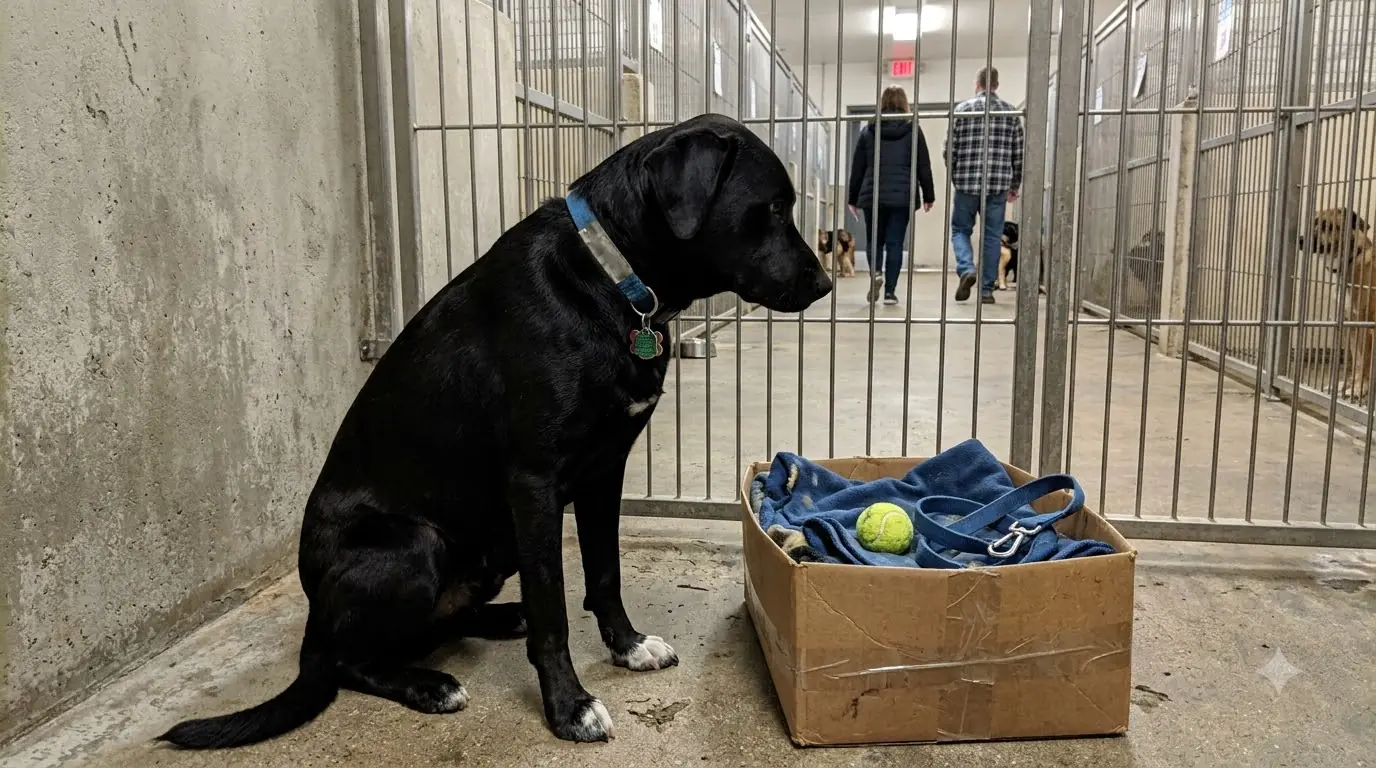
Max was trembling beneath the dining table.
They believed the unfamiliar home had simply frightened him, so they tried again the following day. This time, they placed him in a separate room with his bed, toys, food, and water.
Within minutes of the door closing, Max began barking.
A home camera later showed him pacing continuously between the door and window. He ignored his food and toys, scratched at the floor, and howled until the couple returned.
His distress grew worse over the next several days.
Max damaged another blind while attempting to look outside. He scraped his paws against the door and stopped eating whenever he was left alone.
The couple contacted the shelter for advice.
Staff recommended shorter departures, predictable routines, enrichment toys, and consultation with a veterinarian. They also explained that separation anxiety could not usually be resolved within a few days.
But the couple’s work schedule required Max to remain alone for long periods.
On the ninth day, they decided they could not safely manage his behavior.
The following morning, Max was returned.
He entered the shelter willingly because he recognized the building and several familiar caregivers. He even wagged his tail when one staff member called his name.
Then the couple handed over his leash.
While they completed the paperwork, Max remained beside them. When they began walking toward the exit, he tried to follow.
A caregiver gently held his harness.
Max watched the couple continue down the hallway without him. He placed one paw against the kennel gate as the exterior door opened, then remained completely still after it closed.
Staff returned his old blanket and placed the tennis ball from his adoptive home beside it.
Max did not touch either one.
For the rest of the afternoon, he sat facing the hallway. He refused dinner and repeatedly lifted his head whenever footsteps approached.
No one punished him for the behavior that had caused his return.
The notes and home-camera recordings showed that Max had not destroyed objects from boredom or disobedience. He had panicked whenever the people he depended on disappeared.
His medical records provided a possible explanation.
Before arriving at the shelter, Max had been found alone inside an empty rental property after the previous occupants moved away. Neighbors believed he had remained there for several days before anyone discovered him.
The experience may have taught him that a closed door could mean the people around him were never coming back.
The shelter began a structured treatment plan.
Max was moved to a quieter kennel near the staff office, where caregivers could practice brief, controlled separations. At first, his regular caregiver stepped away for only a few seconds before returning.
If Max remained calm, she rewarded him.
The process moved slowly.
During the first sessions, he began whining as soon as she turned the corner. She shortened the distance and repeated the exercise until he could tolerate her being out of sight for several seconds.
His meals were also offered inside enrichment toys, helping him associate short periods alone with something positive. A veterinarian evaluated him and prescribed anti-anxiety medication to support the behavioral work.
Within two weeks, Max began showing small improvements.
He could remain settled on his bed while his caregiver walked to the end of the corridor. He started eating even when she was briefly out of view and no longer rushed toward the door every time it opened.
His tennis ball became part of the routine.
A caregiver rolled it into his kennel before stepping away. Max initially ignored it, but one morning he picked it up and carried it to his blanket instead of following her to the gate.
The shelter also changed the kind of home it would seek for him.
Max needed adopters who understood separation anxiety, could remain home during the early transition, and were willing to continue working with a qualified behavior professional.
Several people expressed interest after his story was shared.
The shelter did not place him immediately.
Potential adopters were asked to visit multiple times and learn the training routine before taking him home. Staff wanted Max’s next departure to be carefully prepared, not another hopeful decision made after a single meeting.
One applicant stood out.
A retired teacher named Diane lived in a quiet home and had previously cared for a dog with severe anxiety. She visited Max six times over three weeks.
She never rushed him.
During their early meetings, Diane sat beside his kennel and rolled the tennis ball toward him. Later, she joined his training sessions and learned the verbal cues his caregivers used before stepping away.
Max gradually began waiting for her at the gate.
A foster-to-adopt placement is now being arranged. Diane plans to spend the first several weeks at home with him, introducing alone time in small, manageable steps rather than leaving him for hours.
There is no guarantee that the transition will be easy.
Max may cry, pace, or stop eating when his surroundings change again. If the placement becomes overwhelming, the shelter will continue supporting both of them.
For now, Max is still inside the kennel where he waited after being returned.
But he no longer spends the entire day watching the exit.
When Diane visits, he carries his tennis ball toward her and places it beside the gate. Then he offers the same paw that once reached through the bars toward the people walking away—only now, someone keeps returning to take it.