Milo and Daisy are still together, and both dogs are physically doing well.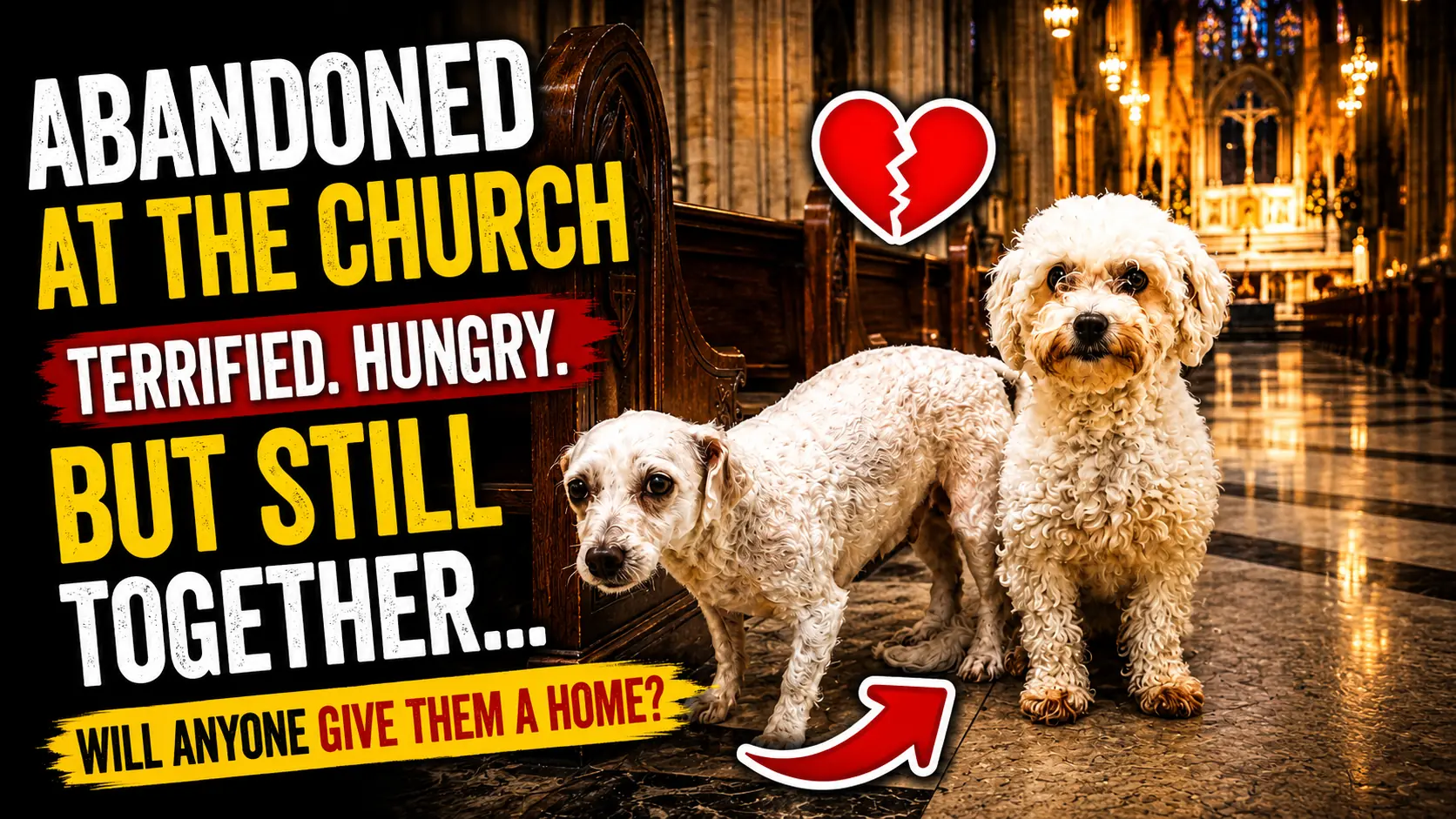
That is the first thing we want everyone following their story to know.
After the pair began staying around the church last Christmas, volunteers gradually earned enough of their trust to arrange full veterinary examinations. Neither dog had identification that immediately led us to a confirmed owner, and their previous medical history was limited.
Fortunately, their examinations did not reveal a major emergency.
Both were somewhat underconditioned when first evaluated, and their coats needed basic grooming and skin care after spending time outdoors. They also showed mild irritation around their paws, likely from walking on cold, rough surfaces.
Those issues have improved significantly.
Their weight is now stable.
Their coats are cleaner and healthier.
Their appetites are strong.
And both dogs move comfortably without obvious mobility problems.
Physically, they have come a long way.
Emotionally, the process has been slower.
Milo and Daisy still carry behaviors that suggest unfamiliar people make them uneasy.
When someone they do not recognize approaches quickly, both dogs often lower their heads.
Their bodies become smaller.
Sometimes Daisy takes a step backward.
Milo tends to remain in place longer, but he watches every movement carefully.
Then something interesting happens.
Their tails begin moving.
It can look contradictory at first.
A dog lowering its head while wagging its tail is not necessarily saying, “I am completely happy.”
Body language has to be read as a whole.
For Milo and Daisy, the wagging appears mixed with uncertainty. They are interested in people. They want interaction. But part of them is still cautious about what will happen when that person gets close.
So our volunteers do not rush them.
Nobody reaches suddenly over their heads.
Nobody corners them.
People sit nearby.
They turn their bodies slightly to the side.
They allow Milo and Daisy to approach when they are ready.
That approach has worked.
Daisy was initially the more hesitant of the two.
When someone entered the room, she often moved behind Milo or toward the nearest pew.
If a hand appeared too quickly, Daisy lowered her head and stepped away.
One volunteer began spending time with her without trying to touch her at all.
She simply sat.
Sometimes she read quietly.
Sometimes she placed a treat several feet away.
Then she waited.
For several days, Daisy would collect the treat only after the volunteer looked away.
Eventually, she took it while the volunteer was watching.
Then she took one from an open hand.
The first time Daisy allowed a gentle touch along her shoulder, it lasted perhaps two seconds.
Then she stepped away.
Nobody followed her.
That mattered.
Several days later, she came back on her own.
Today Daisy will sometimes approach familiar volunteers with her head still slightly lowered.
The tail starts first.
Then she moves closer.
If the person waits, Daisy may lean gently against their leg.
Those moments are becoming more common.
Milo processes uncertainty differently.
He is less likely to retreat immediately, but he watches carefully.
During his first weeks around the church, Milo often positioned himself between Daisy and unfamiliar people.
He never needed to become aggressive.
He simply remained alert.
That behavior has softened over time.
Milo has learned that familiar volunteers bring predictable things.
Food.
Leashes.
Gentle grooming.
Walks.
Quiet affection.
Now, when someone he recognizes approaches, Milo's tail begins wagging almost immediately.
His head may still lower for a moment.
Then he usually steps forward.
Sometimes Daisy follows him.
Their bond remains one of the strongest parts of their behavior.
They choose to rest near one another.
If Daisy becomes nervous, she checks where Milo is.
If Milo walks into another room, Daisy usually watches until he returns.
At night, they often sleep close enough that their bodies touch.
We have provided separate beds and resting areas so neither dog is forced to share.
They still choose each other.
For now, our team believes keeping them together is important.
We are continuing individual confidence-building sessions because both dogs should be able to function independently when necessary.
But after everything they have experienced side by side, we do not want to separate them casually.
The church environment has become deeply familiar to them.
They know the sound of the large doors.
They recognize the footsteps of regular members.
They know where water is placed.
They know which quiet corners are safest when services become busy.
Most importantly, they understand that nobody here forces them to leave.
That consistency appears to be why they stayed.
On quieter afternoons, Milo and Daisy sometimes sit together between the wooden pews.
Their bodies relax.
Then someone familiar approaches.
Both heads lower slightly.
Two tails begin moving.
The person crouches.
Milo usually comes forward first.
Daisy follows.
A year ago, these dogs were outside on Christmas night with no reliable place to go.
Today they seek people out.
That is progress.
Their walks have also become much more enjoyable.
Initially, both dogs remained extremely aware of everything around them.
A passing vehicle could make them stop.
A stranger approaching from behind caused both heads to turn.
Now they spend more time behaving like ordinary dogs.
They sniff grass.
They investigate trees.
They occasionally become fascinated by something completely unimportant to humans.
Milo tends to walk slightly ahead.
Daisy prefers staying closer to the person holding her leash.
Neither dog needs especially intense exercise, but regular walks have helped them build confidence outside the church.
Their appetite is another positive sign.
Both dogs eat consistently.
During their earliest days, Daisy sometimes waited until the room became completely quiet before approaching food.
Now she understands the routine.
When bowls arrive, she follows Milo.
Both dogs eat normally and maintain appropriate hydration.
There is no concerning behavior around food.
Sleep has changed too.
Dogs who feel uncertain often rest lightly.
A small noise brings the head up.
Footsteps trigger immediate attention.
During the first weeks, Milo and Daisy both slept that way.
Now they increasingly sleep through ordinary sounds.
One evening, a volunteer walked past them while they were resting together.
Daisy opened her eyes but did not stand.
Milo barely moved.
They recognized the environment as safe enough to continue sleeping.
That may sound like a very small accomplishment.
For these two, it is not.
The veterinary outlook remains good.
Both dogs will continue receiving routine preventive care, wellness checks, dental monitoring, and any recommended vaccinations or parasite prevention.
At this point, neither requires treatment for a serious ongoing medical condition.
Their greatest need is not medical.
It is permanence.
The church saved them from having nowhere at all.
It gave them warm floors instead of cold pavement.
Food instead of uncertainty.
Familiar faces instead of strangers.
People willing to wait instead of people forcing them away.
But the church is still not a private home.
When the building closes for the evening, volunteers have to arrange where the dogs will stay.
When services become busy, their environment changes.
Different people enter.
Different voices fill the room.
Milo and Daisy have adapted remarkably well, but we want them to have something more predictable.
One family.
One routine.
One front door.
Beds that remain in the same place every night.
Bowls that belong only to them.
Someone whose footsteps become the sound they wait for instead of something they fear.
We believe the right adopter will need patience.
Milo and Daisy may not greet every visitor with immediate confidence.
They may lower their heads.
They may hesitate.
Daisy may step backward before coming forward again.
Milo may watch carefully before deciding someone is safe.
That does not mean they do not want affection.
Their tails tell us they are trying.
The right person will understand that trust cannot be demanded.
It has to be repeated.
A hand reaches down gently today.
Nothing bad happens.
The same hand returns tomorrow.
Breakfast appears.
A walk happens.
Someone leaves.
Someone comes home.
Another quiet evening passes.
Eventually, those moments stop feeling temporary.
That is what we want for them.
A home where kindness becomes so ordinary that they no longer have to think about whether it will disappear.
We sometimes think about how strange their first Christmas here must have been.
A church full of lights.
People coming and going.
Holiday decorations.
Warm rooms beyond doors they initially did not know they were allowed to enter.
Two little dogs staying close because the only dependable thing they had was each other.
The people around them noticed.
Someone offered food.
Someone found blankets.
Someone stayed.
Then another person stayed.
Eventually Milo and Daisy stopped running away.
That may be the most important part of their story.
They still believe people are worth approaching.
Even after being left behind.
Even after uncertainty.
Even when their heads lower instinctively.
Those tails keep moving.
That willingness to trust again deserves to be protected.
This Christmas, we hope their lives look completely different.
We hope Milo is stretched across a bed in someone's living room.
We hope Daisy is curled beside him.
We hope there are familiar voices nearby.
Maybe there is a tree in the corner.
Maybe there are gifts.
Maybe there is nothing special happening at all.
The details do not really matter.
What matters is that when the evening ends, nobody leaves Milo and Daisy outside.
Nobody drives away without them.
Nobody makes them search for another safe place.
Their new family simply turns off the lights and says goodnight.
And in the morning, they are still home.
Until that day comes, the church will continue to be their refuge.
Volunteers will feed them.
They will receive veterinary care.
People will sit with them.
And when Milo and Daisy lower their heads but wag their tails anyway, nobody will force them to be braver than they are ready to be.
They have already survived being left behind once.
The next person who chooses them needs to understand what that choice means.
Not just an adoption day.
Not just a photograph.
A promise.
Milo and Daisy do not need another temporary Christmas miracle.
They need someone who will make sure they never have to be abandoned again.