Monkey Is Still Waiting for His First Real Home
Reader Theme:
Font Size:
24px
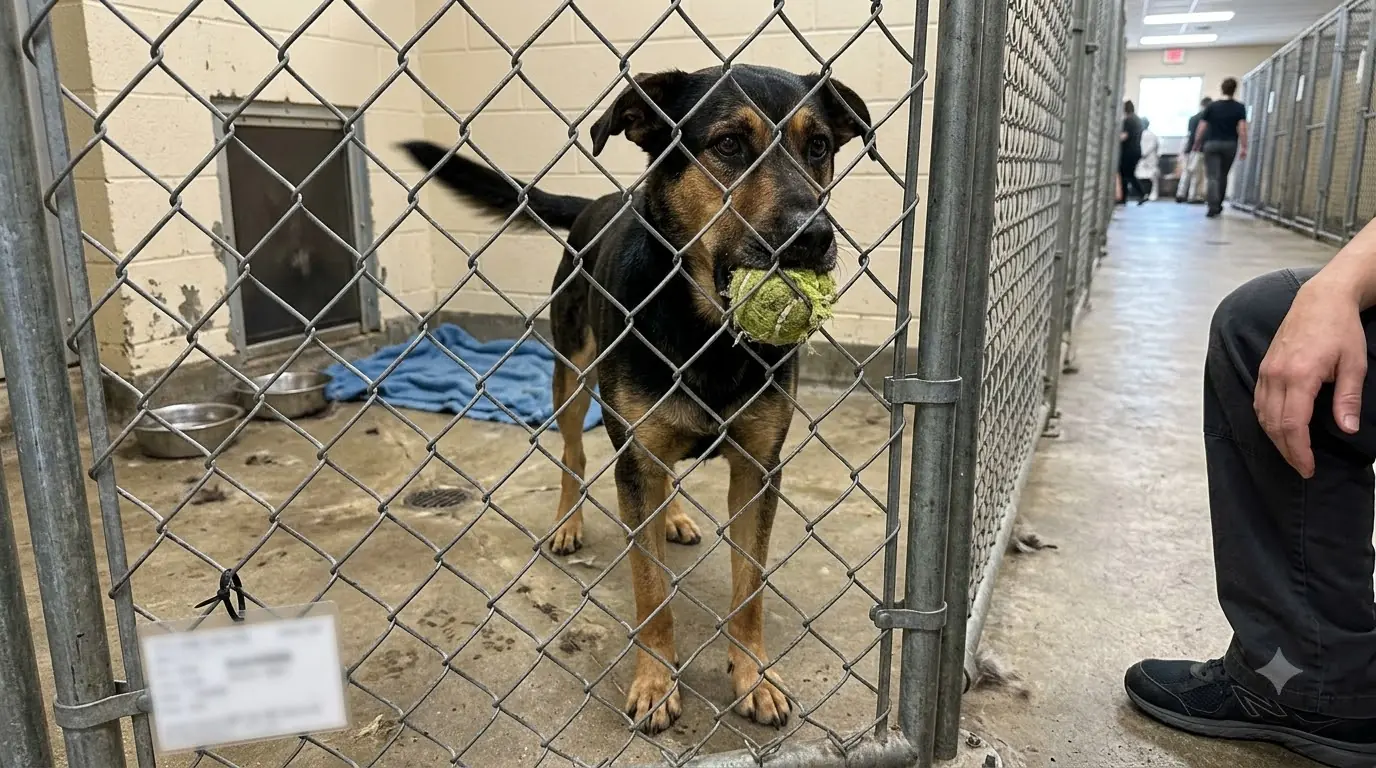
Monkey remains at the Aurora Dog Pound, and physically, he is doing well.
His veterinary care is current, he has been vaccinated, and there are no known major health concerns preventing him from being adopted. His appetite is strong, his energy level is exactly what we would expect from a playful young dog, and his mobility is excellent.
The harder part of Monkey's situation is not something that appears on a veterinary chart.
He is growing up in a shelter.
Monkey was only about three months old when he was found on the street. That means many of the experiences other young dogs have inside homes—sleeping beside their people, hearing the television in the evening, learning household routines, exploring a backyard, or simply knowing which bed belongs to them—have not been normal parts of his life.
His normal has been different.
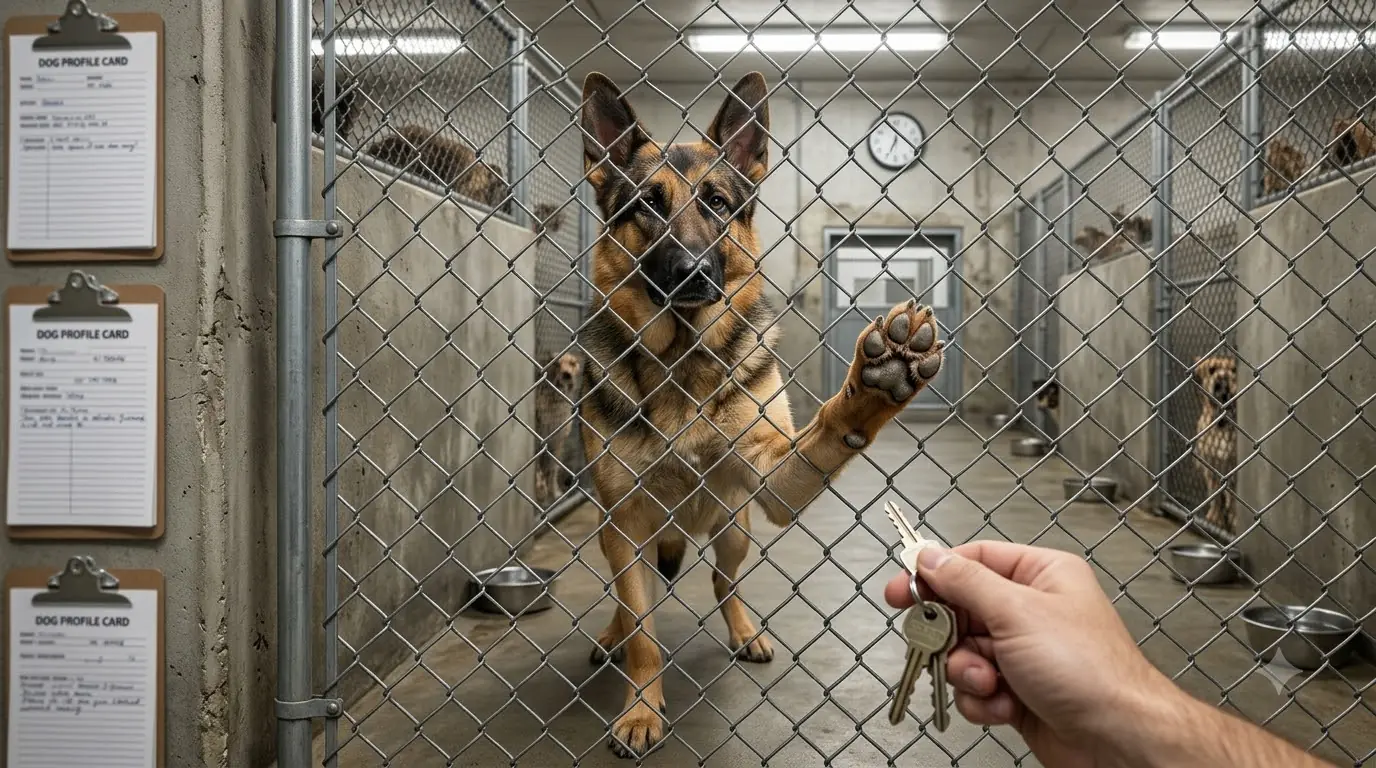
Kennel doors opening.
Dogs barking.
Food carts moving through the building.
Leashes appearing for walks.
People entering the hallway and disappearing again.
Monkey has adapted remarkably well.
When someone approaches his kennel, he rarely retreats.
Instead, his tail begins moving.
If the person stops, Monkey becomes visibly excited. His body wiggles, his attention locks onto the visitor, and he seems completely convinced that this person might be there specifically for him.
That optimism is one of the things staff members love most about him.
Shelter life has not taken away his interest in people.
Outside his kennel, Monkey's personality becomes even clearer.
He is energetic and playful, and when given enough room, he loves releasing that puppy energy in short bursts of running and bouncing around.
Then something funny happens.
The energetic dog eventually runs out of fuel.
Once Monkey has played, explored, and satisfied his curiosity, he becomes surprisingly affectionate. He settles near whoever is spending time with him and seems perfectly happy receiving gentle attention.
That balance is important for potential adopters to understand.
Monkey is not a dog who will be satisfied spending every day without activity. He is young and needs appropriate exercise, play, enrichment, and training.
But he is also capable of settling.
He simply needs help learning when it is time for each.
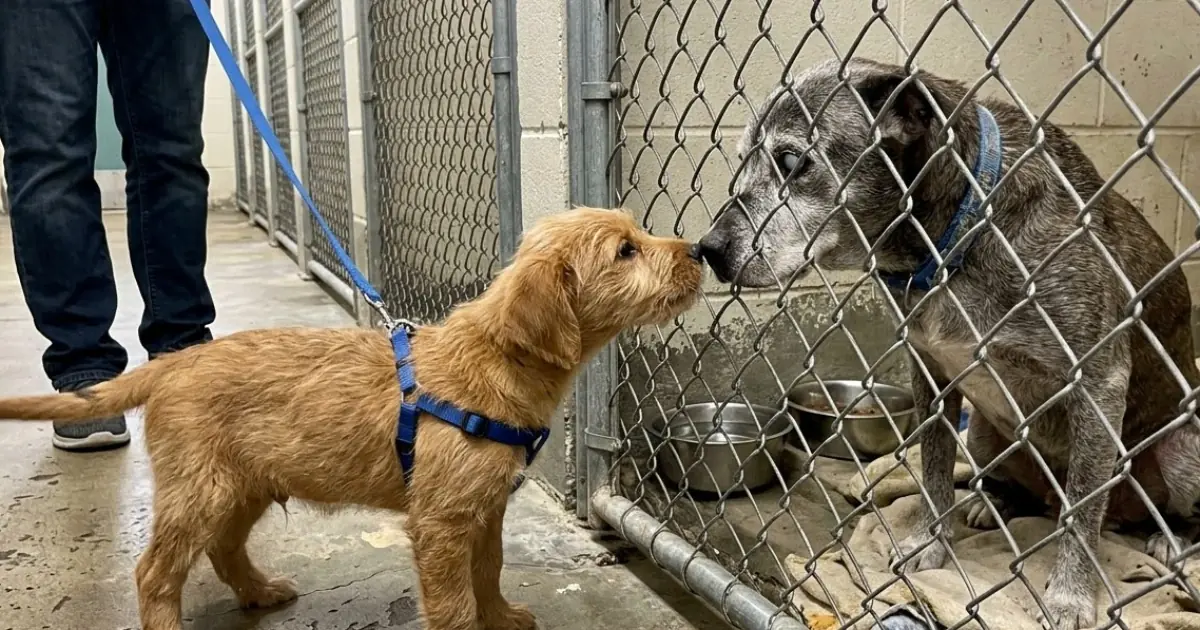
His interactions with other dogs have been encouraging. Monkey approaches canine companions with enthusiasm and appears to view new dogs as opportunities to play.
Because excitement can sometimes overwhelm another dog, staff members continue helping him practice polite introductions and appropriate boundaries.
He is young.
He is still learning.
That is exactly why finding a home now would be so valuable.
A patient adopter could help Monkey develop household manners while he is still at an age when he is eager to learn.
Basic training will be important.
Walking calmly on leash, waiting at doors, settling when asked, and learning appropriate greetings are all skills Monkey can continue developing.
Positive reinforcement has worked well with him because he is motivated by both food and attention.
He likes making people happy.
Sometimes he simply needs help figuring out what they are asking him to do.
The shelter environment can make that learning more difficult.
When a building is full, there are constant distractions.
Another dog barks.
A kennel door closes.
Someone walks past.
A volunteer appears with a leash.
Monkey wants to investigate everything.
In a home with predictable routines and consistent guidance, we believe he will have a much better opportunity to focus and mature.
His appetite remains excellent.
Monkey eats regular meals and maintains a healthy level of energy. Fresh water is always available, and staff continue monitoring his weight and general condition as he grows.
Because he is still young, maintaining appropriate nutrition is particularly important.
We want him developing gradually and healthily rather than simply gaining weight as quickly as possible.
Rest is equally important.
Young dogs need considerable sleep, even when they seem determined to convince everyone otherwise.
After active periods, Monkey is encouraged to decompress in a quieter environment.
He has become better at settling after exercise rather than remaining constantly overstimulated.
Give him enough activity, and eventually the bouncing stops.
The body relaxes.
Then Monkey seems to remember how much he enjoys being close to people.
Those quiet moments show another side of him.
He can curl up near someone and simply stay there.
He accepts gentle touch.
Sometimes his eyes slowly close while someone rubs his shoulders.
For a dog known around the pound for zoomies and enthusiasm, those moments reveal the companion underneath all that puppy energy.
The biggest concern for Monkey right now is time.
Not because we believe something terrible is immediately wrong with him, but because every additional month spent inside a kennel is another month when shelter routines become more deeply established.
Young dogs benefit tremendously from experiencing normal family life.
Monkey needs to learn that footsteps in a hallway do not always belong to strangers.
That a door can open and lead into his own backyard.
That toys can remain where he left them overnight.
That the person who says goodnight will still be there tomorrow.
Those experiences cannot be fully reproduced inside a crowded pound.
Staff and volunteers do everything possible.
They walk him.
They play with him.
They give him affection.
They provide enrichment.
They keep him fed and medically cared for.
But then the volunteer has to move to the next dog.
Monkey returns to his kennel.
And another day passes.
The pound is operating at capacity, which makes adoption and responsible placement especially important.
Monkey is not the only dog waiting.
There are other kennel doors.
Other faces watching people walk past.
Other dogs who need homes.
That is why sharing an adoptable dog matters even when the person sharing cannot personally adopt.
Sometimes the person who sees a post is not the right adopter.
But someone they know might be.
For Monkey, the ideal family will understand that adopting a young, energetic dog means accepting both the fun and the responsibility.
There will be zoomies.
There will probably be mistakes.
There will be things he has never encountered before.
A vacuum cleaner may be strange.
Household boundaries may take practice.
Quietly passing another dog on a walk may not happen perfectly on the first attempt.
He may need time to understand that excitement does not require his entire body to participate.
None of that makes him a bad dog.
It makes him a young dog who has spent much of his early life without the benefit of a permanent home teaching him what comes next.
Patience will matter.
Consistency will matter.
Exercise and enrichment will matter.
And affection will come naturally.
Monkey already has plenty of that to give.
One of the most difficult things about watching him in the shelter is seeing how quickly hope appears whenever someone stops.
A visitor approaches.
Monkey notices.
The tail starts.
His body wiggles.
He looks upward as though this might finally be the person who came specifically for him.
Sometimes they stay for a moment.
Then they continue walking.
Monkey watches.
Eventually, he settles again.
But the remarkable thing is what happens when the next person arrives.
The tail starts all over again.
He hasn't stopped believing people are worth being excited about.
We hope he never does.
Monkey's next steps are straightforward: continued routine veterinary care, consistent meals, daily exercise, enrichment, positive training, appropriate social experiences, and as much individual attention as staff can provide while he waits.
But none of those things are the final goal.
The goal is a home.
We want Monkey's next chapter to contain ordinary things.
A leash hanging beside someone's front door.
A favorite sleeping spot.
A water bowl in the kitchen.
A toy that disappears beneath the couch.
Morning walks.
Afternoon naps.
Someone laughing when the zoomies begin.
Someone still sitting beside him when they end.
Monkey has already spent too much of his young life looking at the world through a kennel barrier.
He is healthy.
He is playful.
He loves companionship.
He enjoys other dogs.
And beneath all that wiggly energy is a young dog who settles into affection as soon as he realizes someone is staying.
For now, Monkey is safe and cared for.
But safe is only the beginning of what we want for him.
He deserves to grow up knowing that when evening comes, he does not have to return to a concrete kennel and wait for tomorrow's visitors.
He deserves a soft place to land.
Most of all, he deserves the chance to discover what home means.
News in the same category
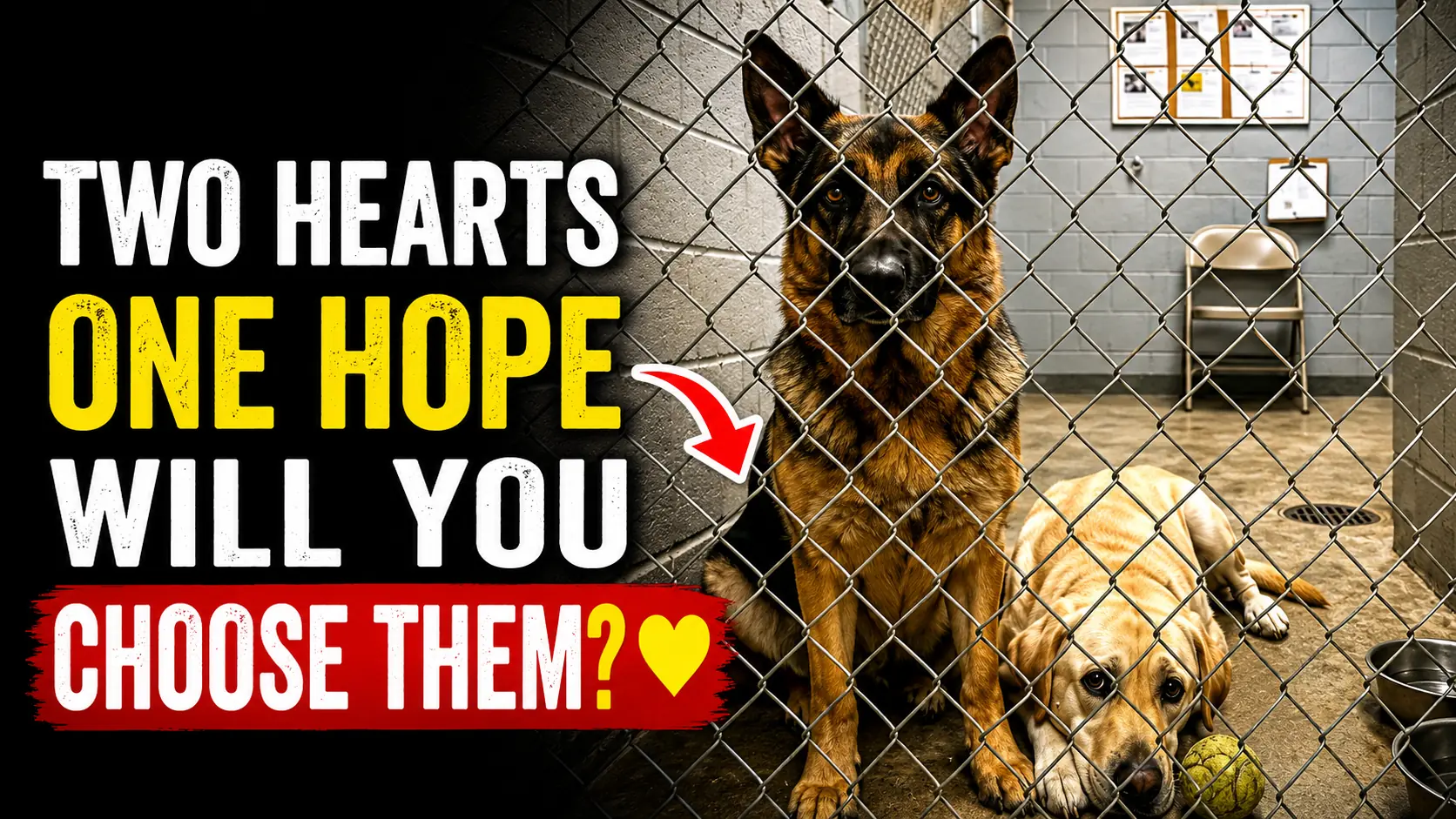
Max and Buddy Are Waiting for a New Home Together
Monkey Is Still Waiting for His First Real Home
An Undefeated Black Belt Looked Down on a Waiter — Unaware He Was Once a Highly Respected Combat Instructor

An Undefeated Black Belt Tried to Embarrass a Waiter — Until His Legendary Training Past Was Revealed
An Undefeated Black Belt Mocked a Quiet Waiter — Never Knowing He Had Trained Elite Professionals

An Undefeated Black Belt Humiliated a Waiter — Unaware He Was Once a Legendary Elite Instructor
An Undefeated Black Belt Humiliated a Waiter — Unaware He Was Once a Legendary Elite Instructor
She Ridiculed the Old Mechanic’s Stance — Then the Black Belt Spotted a Tattoo Tied to His Legendary Past
She Laughed at the Old Mechanic — Until the Black Belt Recognized the Sign of His Hidden Training
She Mocked the Old Mechanic’s Fighting Stance — Then the Black Belt Saw the Symbol That Changed Everything
She Laughed at the Old Mechanic’s Stance — Until the Black Belt Noticed the Mark From His Elite Past

The Manager Called Her A Thief | Then Learned She Owned The Jewelry Empire
White Woman Calls Police on Black Teen, Speechless When His Mom Arrives and She's the Mayor
“You’re Really Leaving?” My Husband Asked — Then His Phone Lit Up With the Reason I Finally Had To

What would hurt you the most?
The Bikers Soaked the Old Woman on Purpose — Then One Rider Turned Around
My Wife Asked, “What If I Cheated on You?” — Three Days Later, I Learned Why She Needed the Answer