Most Men Over 50 Don’t Need 20 Exercises to Build Muscle—Focus on These 5 Things Instead
Reader Theme:
Font Size:
24px
Most Men Over 50 Don’t Need 20 Exercises to Build Muscle—Focus on These 5 Things Instead
Walk into almost any gym and you'll see someone performing an exercise you've never seen before.
A special curl for one part of the biceps.
Three different cable movements for the chest.
Four shoulder variations.
A complicated leg exercise that seems to require perfect balance, a resistance band, two dumbbells, and half the available floor space.
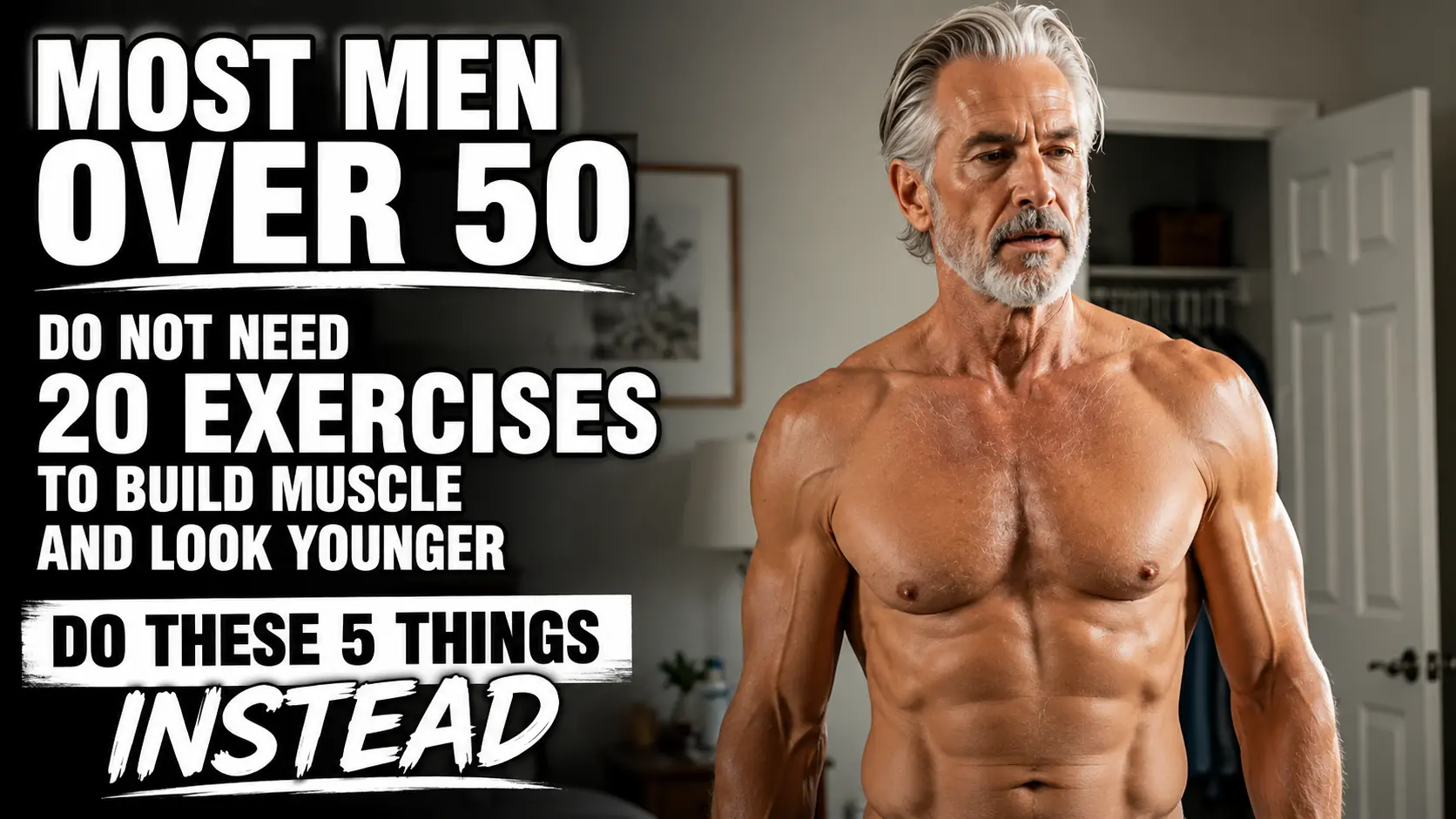
If you're a man over 50 trying to build or preserve muscle, all that complexity can create the wrong impression:
Maybe you need dozens of exercises to make progress.
You don't.
Your muscles don't know how many exercises are written in your workout notebook. They respond to mechanical tension, appropriate training volume, progressive challenge, adequate nutrition, and recovery.
Exercise variety can certainly be useful. Different movements can emphasize muscles differently, work around injuries, prevent boredom, and make training more enjoyable.
But you don't need a massive exercise menu simply because you're getting older.
In fact, simplifying your training may make it easier to consistently focus on the things that actually drive results.
Here are five priorities that matter far more.
1. Build Your Workouts Around the Major Movement Patterns
Instead of asking, “How many exercises should I do?” ask a better question:
What does my body actually need to be strong at?
A useful resistance-training program generally trains the major muscle groups and movement patterns.
That usually means some version of:
-
Squatting or sitting and standing
-
Hip hinging
-
Pushing
-
Pulling
-
Carrying or stabilizing
These patterns can cover an enormous amount of your body without requiring 20 different exercises.
Start With a Squat or Sit-to-Stand Pattern
Your legs are central to physical independence.
You use them when you get out of a chair, climb stairs, stand from the toilet, step over an obstacle, or rise from the floor.
A squat pattern doesn't necessarily mean putting a heavy barbell across your shoulders.
Depending on your experience, mobility, and joints, you might use a chair sit-to-stand, goblet squat, leg press, supported squat, or another appropriate variation.
The exact exercise matters less than safely challenging the muscles responsible for the movement.
Include a Hip-Hinge Pattern
The muscles around your hips and posterior chain help you lift, stabilize your body, walk, and perform many daily activities.
Deadlift variations, Romanian deadlifts, hip hinges with light resistance, hip thrusts, and certain machines can train these areas.
Again, there is no requirement that every man over 50 perform heavy conventional deadlifts.
Exercise selection should fit the person.
Push Something
Pressing movements train muscles of the chest, shoulders, and arms.
Depending on your ability, this might include push-ups, machine chest presses, dumbbell presses, or overhead pressing variations.
Pull Something
Rows and pulldown variations can strengthen the back and arms.
These muscles contribute to pulling, carrying, posture, and many everyday tasks.
Carry and Stabilize
Carrying appropriately weighted dumbbells or other objects can challenge grip, trunk stability, legs, and upper-body musculature simultaneously.
That's extremely practical.
After all, real life frequently asks you to carry things.
Groceries.
Suitcases.
Laundry.
Boxes.
You don't need 20 exercises to train these fundamental abilities.
You need a handful of movements performed well and consistently.
2. Make the Exercises Gradually Harder
Doing the same easy workout forever isn't an effective strategy for continued muscle growth.
Muscles adapt.
If you want to continue improving, your training generally needs some form of progressive overload.
That phrase sounds technical, but the idea is simple:
Over time, give your muscles a reason to adapt.
That doesn't mean adding weight every workout.
Progress can happen in several ways.
You might increase the resistance.
Do another repetition with good technique.
Perform another set when appropriate.
Improve your range of motion.
Use better control.
Progress from an easier exercise variation to a more challenging one.
The key is that your muscles experience meaningful resistance.
You Don't Need to Train Like You're 25
Progressive overload is sometimes interpreted as “lift heavier at all costs.”
That's a mistake at any age.
It's particularly unhelpful if you're over 50 and trying to train consistently for years.
You don't get extra credit for choosing a weight that ruins your technique.
And an exercise that causes persistent joint pain isn't automatically more productive because it's difficult.
The resistance should challenge the target muscles while allowing controlled movement.
As you become more experienced, some sets can appropriately become quite challenging. But you don't have to turn every set into an all-out battle.
Training to complete muscular failure isn't required on every set to build muscle.
You can often stimulate muscle effectively while stopping with some repetitions still possible.
That's particularly useful when fatigue or technique breakdown would make continuing unsafe.
Track Something
One of the simplest ways to improve training after 50 is to keep basic records.
Write down:
Exercise.
Weight.
Repetitions.
Sets.
You don't need an elaborate app.
If you performed 10 controlled repetitions with a certain resistance several weeks ago and can now perform 12, you've gained useful information.
If the same workout has felt easy for six months, that's useful information too.
Progress doesn't have to be dramatic.
It does need to exist.
3. Eat Enough Protein—and Don't Forget the Rest of Your Diet
You cannot talk seriously about maintaining muscle after 50 without talking about nutrition.
Resistance exercise provides the training stimulus.
Your body also needs adequate nutrition to support repair and adaptation.
Protein is especially relevant because it supplies amino acids used to build and maintain body proteins, including muscle tissue.
Good sources can include:
Eggs.
Fish.
Chicken or turkey.
Lean meats.
Greek yogurt.
Cottage cheese.
Milk.
Beans and lentils.
Soy foods such as tofu and tempeh.
Nuts and seeds.
The exact amount of protein you need depends on body size, age, total calorie intake, activity, health status, and other factors.
Research and expert recommendations often suggest that physically active older adults may benefit from protein intakes above the basic minimum dietary requirement, but there is no single ideal number for every man over 50.
Spread Protein Across Your Day
Instead of reaching dinner and realizing nearly all your protein is arriving in one enormous meal, consider including meaningful protein sources across meals.
Breakfast might include eggs and Greek yogurt.
Lunch could include chicken, fish, tofu, or beans.
Dinner could include another protein source alongside vegetables and a high-quality carbohydrate.
This can also make meals more satisfying.
Don't Turn Protein Into Your Entire Diet
Building muscle doesn't require living on steak and protein shakes.
Your overall dietary pattern matters.
Vegetables and fruits provide vitamins, minerals, fiber, and numerous beneficial compounds.
Whole grains and legumes can provide carbohydrates, fiber, and nutrients.
Healthy dietary patterns can support cardiovascular and metabolic health—both particularly important as you get older.
Carbohydrates aren't automatically the enemy either.
They can provide useful fuel for training and daily activity.
Dietary fat is also essential.
The goal isn't “maximum protein at all costs.”
It's adequate protein within an overall nutritious eating pattern.
Men with kidney disease or other medical conditions affecting protein recommendations should discuss substantial dietary changes with their healthcare professional.
4. Recover Like Recovery Actually Matters
Here's where many men over 50 get themselves into trouble.
They remember what they could tolerate at 25.
Then they attempt to train the same way at 55.
Your ability to build muscle doesn't disappear after 50.
But recovery can become a more important consideration, particularly when you add previous injuries, work stress, sleep problems, medications, joint issues, and chronic health conditions.
More training isn't automatically better training.
Your Muscles Need Time Between Hard Sessions
If you train the same muscle groups hard every day, performance and recovery can suffer.
A simple full-body strength routine performed several times per week can work very well for many people because it provides repeated training opportunities while leaving recovery time between sessions.
Others prefer upper- and lower-body splits.
Both approaches can work.
You don't need a seven-day bodybuilding split unless you genuinely enjoy it and can recover from it.
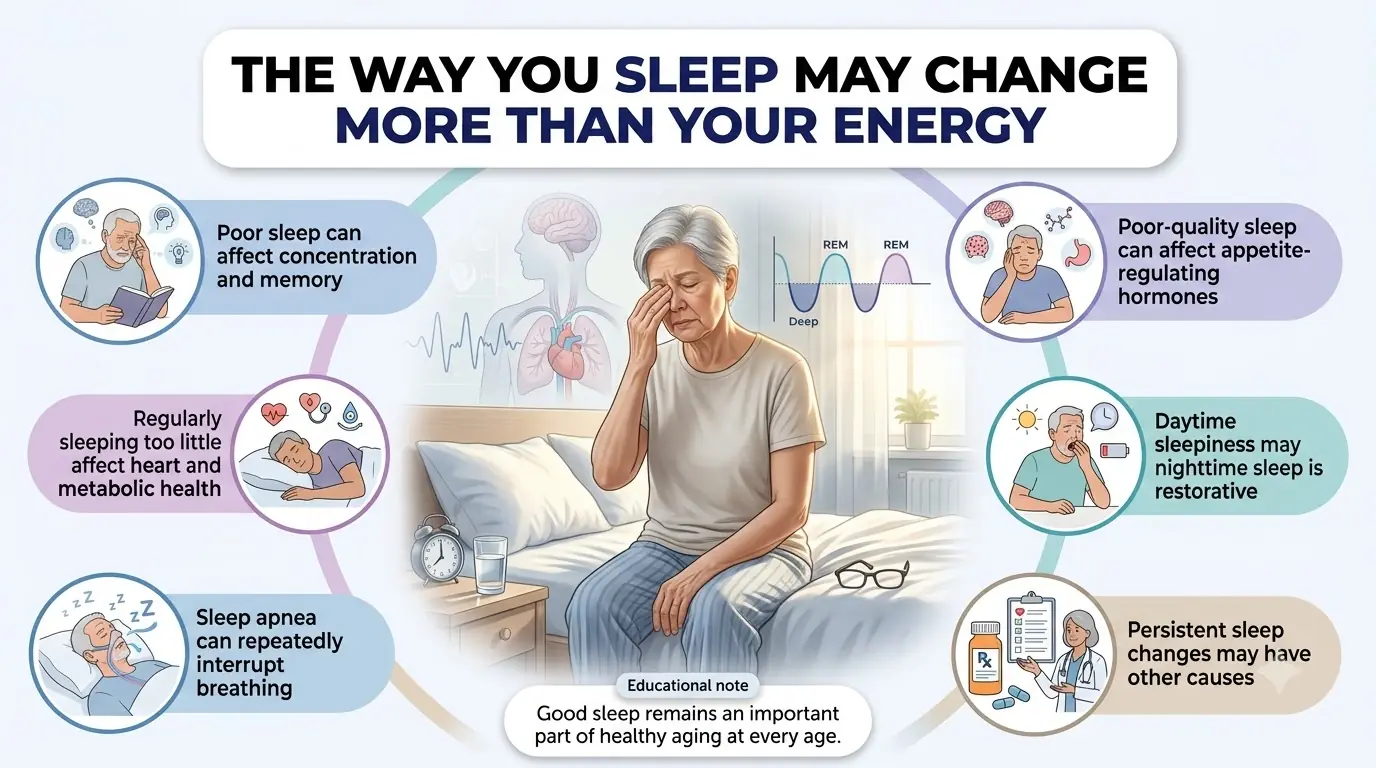
Sleep Is Part of the Program
You don't build a better body only during the hour you're lifting weights.
Sleep supports physical recovery and numerous aspects of metabolic, cardiovascular, immune, and cognitive health.
Most adults generally need at least seven hours of sleep per night, although individual needs vary.
If you're chronically sleeping five hours and trying to compensate by adding more workouts, you may be focusing on the wrong variable.
Give yourself enough opportunity to sleep.
And don't dismiss persistent sleep problems as normal aging.
Habitual loud snoring, gasping during sleep, witnessed pauses in breathing, significant daytime sleepiness, or persistent insomnia are worth discussing with a healthcare professional.
Sleep apnea becomes particularly relevant because many people have it without realizing it.
Learn the Difference Between Training Discomfort and Pain
Muscular effort during resistance training is expected.
Sharp joint pain is different.
Persistent pain is different.
Sudden weakness is different.
If an exercise repeatedly hurts your shoulder, knee, hip, or back, don't assume you need to prove your toughness by continuing.
Sometimes changing technique helps.
Sometimes reducing resistance helps.
Sometimes changing the exercise solves the problem.
And sometimes you need professional evaluation.
Training around a problem intelligently can keep you active much longer than repeatedly aggravating it.
5. Train for Strength You Can Actually Use
This is where muscle-building after 50 becomes much more interesting.
Ask yourself:
What is the muscle for?
If your only answer is “looking younger,” you're missing the biggest payoff.
Muscle is physical capacity.
Strong quadriceps help you stand.
Strong hips help you climb.
Strong back muscles help you lift and carry.
Strong shoulders and arms help you handle objects overhead.
Grip strength helps you open, hold, and carry things.
A strong trunk helps transfer force and stabilize your body.
This is why resistance training can matter so much as you get older.
Train Your Legs
Leg training deserves particular attention.
Imagine you're 70.
Which would you rather have?
Slightly larger biceps or enough leg strength to comfortably climb the stairs to your hotel room?
Ideally, you can have both.
But if priorities matter, function comes first.
Squats, sit-to-stands, leg presses, step-ups, hinge variations, and other appropriately selected lower-body exercises can help train the muscles used in daily activities.
Don't Ignore Grip
Grip naturally gets trained during many pulling and carrying exercises.
That's useful because grip is involved in countless everyday tasks.
Carry groceries.
Hold tools.
Pick up luggage.
Open containers.
Move furniture.
You don't necessarily need a complicated grip routine.
Regular strength training that includes appropriate pulling and carrying may already provide substantial grip work.
Keep Some Power if You Can Safely Train It
Strength and muscle aren't the entire story.
Power refers to producing force quickly.
Think about catching yourself after a stumble.
You don't have five seconds to gradually generate force.
Your body has to respond.
Power tends to decline with age, and maintaining the ability to move with appropriate speed can be useful for physical function.
However, power training requires appropriate exercise selection and technique.
Older beginners, people with significant medical conditions, and those with balance or orthopedic problems may benefit from professional instruction before adding faster movements.
The goal isn't explosive stunts.
It's preserving the ability to produce force when real life requires it.
What Actually Happens to Muscle After 50?
Muscle loss doesn't suddenly begin on your 50th birthday.
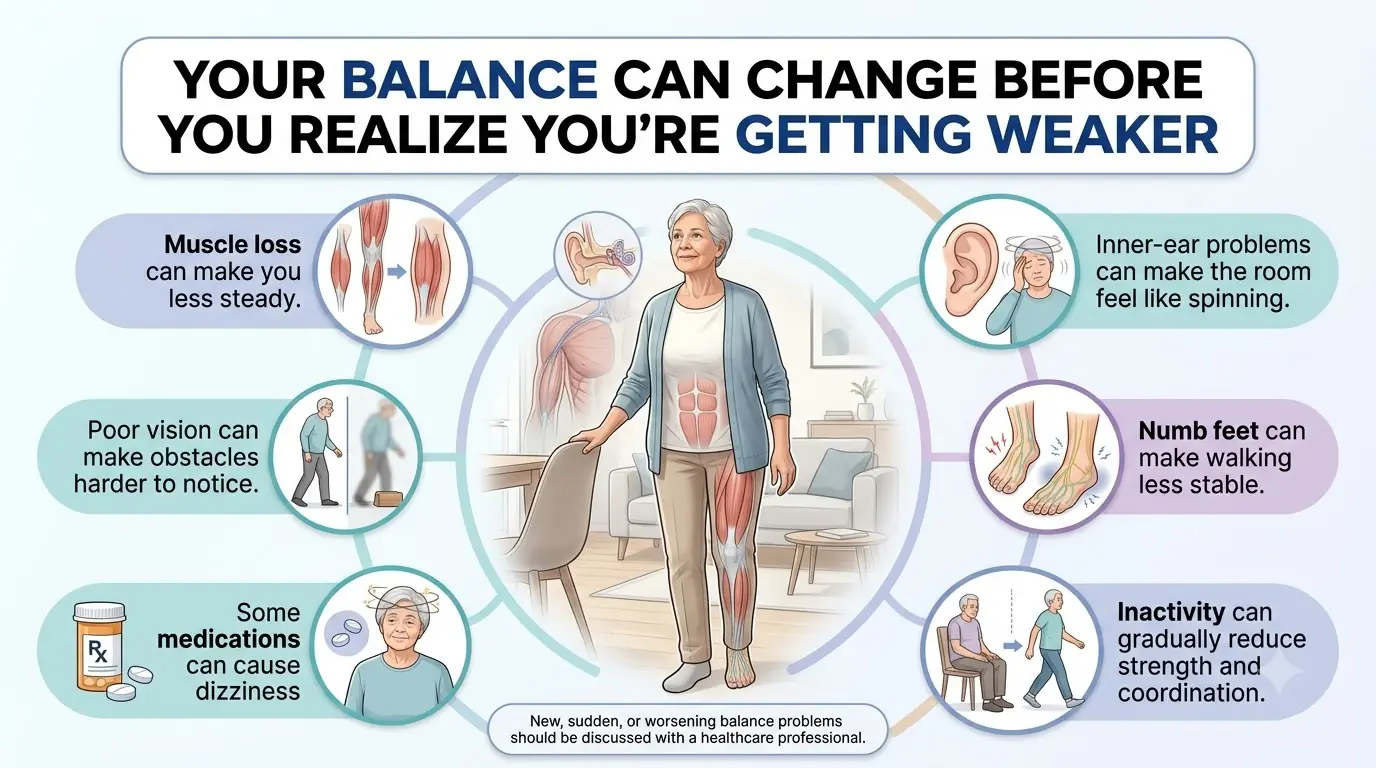
Changes occur gradually across adulthood.
With advancing age, people can experience reductions in muscle mass, strength, and particularly power.
In some older adults, substantial loss of strength and function contributes to sarcopenia.
But age isn't acting alone.
Inactivity can accelerate physical decline.
Poor nutrition can matter.
Illness can matter.
Extended bed rest can have a major impact.
Certain medications and chronic conditions can affect muscle and exercise capacity.
That's why two 65-year-old men can have dramatically different levels of physical function.
One may struggle to get out of a chair.
Another may be hiking regularly and strength training several days per week.
Genetics and medical history certainly contribute to those differences, but lifestyle and training matter too.
Do You Need 20 Exercises?
No.
You need enough training to challenge the major muscle groups appropriately.
For many recreational lifters, a relatively small group of well-chosen exercises can accomplish that.
Imagine a workout containing:
A squat or leg-press pattern.
A hip-hinge movement.
A horizontal or vertical push.
A horizontal or vertical pull.
A carry or appropriate trunk exercise.
Depending on your needs, you could add a small amount of targeted work for muscles you particularly want to develop.
That's already a substantial full-body session.
You don't need five different chest exercises simply because social media showed you five different chest exercises.
Variety is a tool.
It's not the goal.
What About Cardio?
Don't abandon cardiovascular exercise because you're trying to build muscle.
Heart and lung fitness matter enormously after 50.
Adults are generally encouraged to accumulate at least 150 minutes of moderate-intensity aerobic activity per week, 75 minutes of vigorous activity, or an equivalent combination, plus muscle-strengthening activity on at least two days.
Walking, cycling, swimming, hiking, and other aerobic activities can coexist with strength training.
You simply need to manage your total training volume and recovery.
If muscle growth is a major priority, extremely high volumes of endurance training may require more careful programming and nutrition.
For most recreational exercisers, however, the choice isn't “cardio or muscle.”
You want both.
A strong body isn't nearly as useful if walking through an airport leaves you exhausted.
Can Building Muscle Really Make You Look Younger?
This is where we need to separate reasonable expectations from marketing.
Resistance training can change body composition, muscular development, posture, and physical capability.
For some people, those changes may contribute to a more athletic or energetic appearance.
Exercise can also support broader physical and mental health.
But strength training does not reverse biological aging.
It doesn't erase wrinkles.
It doesn't guarantee a particular appearance.
And it cannot make a 60-year-old biologically 30 again.
That's okay.
Looking younger isn't the best reason to train.
Moving better as you get older is.
The mirror is optional feedback.
The ability to live independently is the larger prize.
What If You Haven't Exercised in 20 Years?
Then don't begin by copying someone who has trained for 20 years.
Start with your current capacity.
A beginner may make meaningful progress with basic movements and relatively modest resistance.
Learning technique matters.
Consistency matters.
Gradually increasing the challenge matters.
If you're uncertain about exercise form, a qualified trainer experienced in working with older adults or a physical therapist can be valuable.
Your first month doesn't need to be impressive.
It needs to get you safely to your second month.
Who Should Be More Careful?
Resistance exercise can be appropriate for many adults, including older adults, but individual medical circumstances matter.
Talk with a healthcare professional when appropriate if you have significant cardiovascular disease, uncontrolled blood pressure, major orthopedic limitations, recent surgery, severe osteoporosis, significant balance problems, or another condition that could affect exercise safety.
People taking medications that influence blood pressure, blood sugar, heart rate, or balance may also need individualized guidance.
If you've been very inactive and have substantial medical concerns, professional advice can help determine an appropriate starting point.
This isn't about being afraid of exercise.
It's about making exercise sustainable.
When to Stop Exercising and Get Medical Help
Normal muscular effort is one thing.
Warning symptoms are another.
Stop exercising and seek appropriate medical attention for concerning symptoms such as chest pressure or pain, fainting, severe or unusual shortness of breath, or sudden neurological symptoms.
New unexplained weakness, persistent dizziness, repeated falls, or a substantial unexplained decline in exercise tolerance also deserves medical discussion.
Persistent joint or muscle pain that isn't resolving should be evaluated rather than repeatedly trained through.
Being disciplined doesn't mean ignoring your body.
A Simple Way to Think About Training After 50
Forget the idea that you need a giant exercise library.
Think about five priorities:
Train the major movement patterns.
Progressively challenge your muscles.
Eat enough high-quality nutrition and protein.
Recover properly.
Build strength that improves real life.
Everything else is detail.
Useful detail sometimes—but still detail.
You can add curls because you enjoy them.
You can train calves.
You can perform lateral raises.
You can change exercises periodically.
There's nothing wrong with those things.
Just don't confuse variety with effectiveness.
The Big Picture: Build Muscle for Your 70-Year-Old Self
At 50, it's tempting to train for the person in the mirror.
Try training for the person you'll be at 70 too.
Build legs that can climb stairs.
Build enough strength to get off the floor.
Maintain the ability to carry your own luggage.
Train your back and grip so everyday lifting remains ordinary.
Keep your cardiovascular system fit enough to walk for hours when you're traveling.
Maintain balance and mobility so you can keep participating rather than gradually shrinking your world.
You don't need to look 25.
You don't need 20 exercises.
And you certainly don't need every workout to leave you exhausted.
You need appropriate resistance, gradual progression, adequate nutrition, recovery, and enough consistency to keep doing it for years.
Because after 50, the most valuable muscle isn't the muscle that makes you look younger in a photograph.
It's the muscle that helps you remain capable when you're older.
Medical disclaimer: This article is for general educational purposes only and is not a substitute for individualized medical advice, diagnosis, or treatment. Exercise and nutrition needs vary according to health history, medications, physical ability, and medical conditions. Consult a qualified healthcare professional before beginning or substantially changing an exercise or nutrition program when appropriate.