My Dad Kicked Me Out at 18. Twelve Years Later, One Message Changed Everything.
The message arrived at 2:14 in the morning.
I was awake because my son had a fever.
He was sleeping against my chest on the living room couch, his small hand curled into the fabric of my shirt while the glow from the hallway night-light spilled across the floor.
My wife had finally gone upstairs to rest.
I was scrolling through my phone without really reading anything when a notification appeared.
You have a new message request.
The name beneath it made my entire body go still.
David Mercer.
My father.
I stared at the screen for so long that it dimmed.
Twelve years had passed since the last time I heard his voice.
Twelve years since he stood in the doorway of my bedroom on my eighteenth birthday and told me I wasn’t worth the trouble anymore.
Twelve years since he carried my duffel bag outside, dropped it beside my rusted car, and ordered me to leave before dinner.
My younger sister, Claire, had stood behind him smiling.
Not crying.
Not protesting.
Smiling.
I had spent the next three nights sleeping in that car.
Now, after twelve years of silence, my father had found me online.
His message contained only six words.
Is this really you, Ethan?
I looked down at my sleeping son.
Then I opened my father’s profile.
He looked older.
His hair was almost completely gray. His face had softened around the jaw, but his eyes were the same—pale, narrow, and always searching for weakness.
His profile photograph showed him standing beside Claire at what appeared to be a family barbecue.
There were grandchildren in the background.
A dog.
A house I didn’t recognize.
An entire life that had continued without me.
I opened his message again.
My hands were steady when I typed my response.
It was one sentence.
One sentence carrying twelve years of hunger, humiliation, exhaustion, and survival.
I pressed send.
Less than a minute later, my phone began to ring.
I declined the call.
He called again.
Then again.
On the fourth attempt, I answered.
For several seconds, neither of us spoke.
Then I heard my father begin to cry.
Not quietly.
Not politely.
He sounded broken.
“Oh God,” he kept repeating. “Oh God, Ethan... what have I done?”
I didn’t answer.
Because for the first time in twelve years, he finally understood what he had thrown away.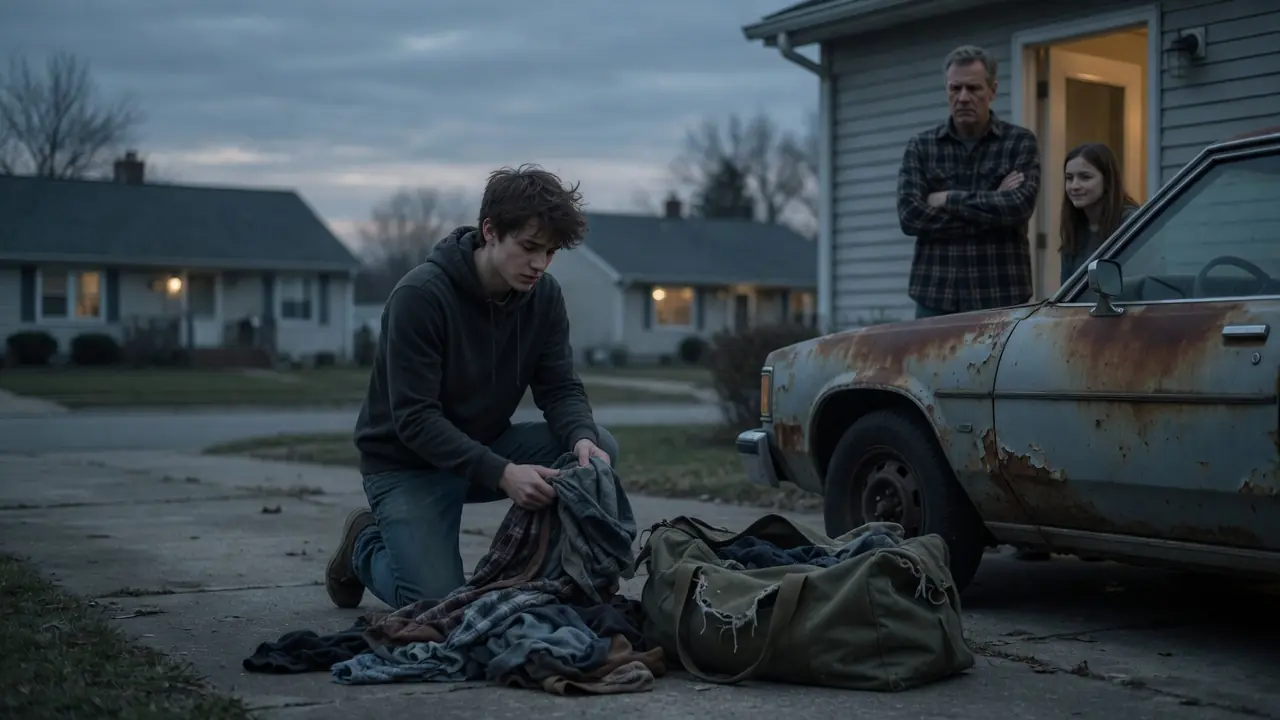
My mother died when I was eleven.
Cancer took her slowly.
For almost two years, our house smelled like medicine, disinfectant, and the lavender candles she lit when the pain became too much.
Before she got sick, my mother was the center of everything.
She remembered birthdays.
She packed lunches.
She made my father laugh.
She knew when Claire was lying and when I was pretending not to be hurt.
After she died, the house changed.
My father became a man made entirely of anger.
He stopped cooking and began bringing home fast food.
He worked late.
He slept on the couch.
He removed my mother’s photographs from the walls and placed them in boxes in the basement.
No one was allowed to mention her unless he did first.
Claire was nine at the time.
She learned quickly that the safest way to survive our father was to agree with him.
I did the opposite.
I questioned him.
I argued.
I reminded him when bills were overdue and when Claire needed rides to school.
I became the person who noticed everything he wanted to ignore.
That made me difficult.
At least, that was the word he used.
Difficult.
Ungrateful.
Too much like my mother.
Sometimes he said that last one as an insult.
By the time I turned sixteen, I was working twenty hours a week at a grocery store.
My father told people it was because he wanted me to learn responsibility.
The truth was simpler.
He stopped buying my clothes.
He stopped paying for school supplies.
He stopped giving me lunch money.
If I wanted anything beyond a roof and whatever food happened to be in the kitchen, I had to pay for it myself.
I didn’t complain.
I saved every dollar I could.
My plan was to attend community college and eventually transfer to a university.
I wanted to study engineering.
Machines made sense to me.
People didn’t.
When a machine failed, there was always a reason.
A broken component.
A loose connection.
A design flaw.
You could trace the problem.
You could repair it.
Families were different.
Sometimes they broke simply because the people inside them decided one person was easier to blame than the others.
In our house, that person was me.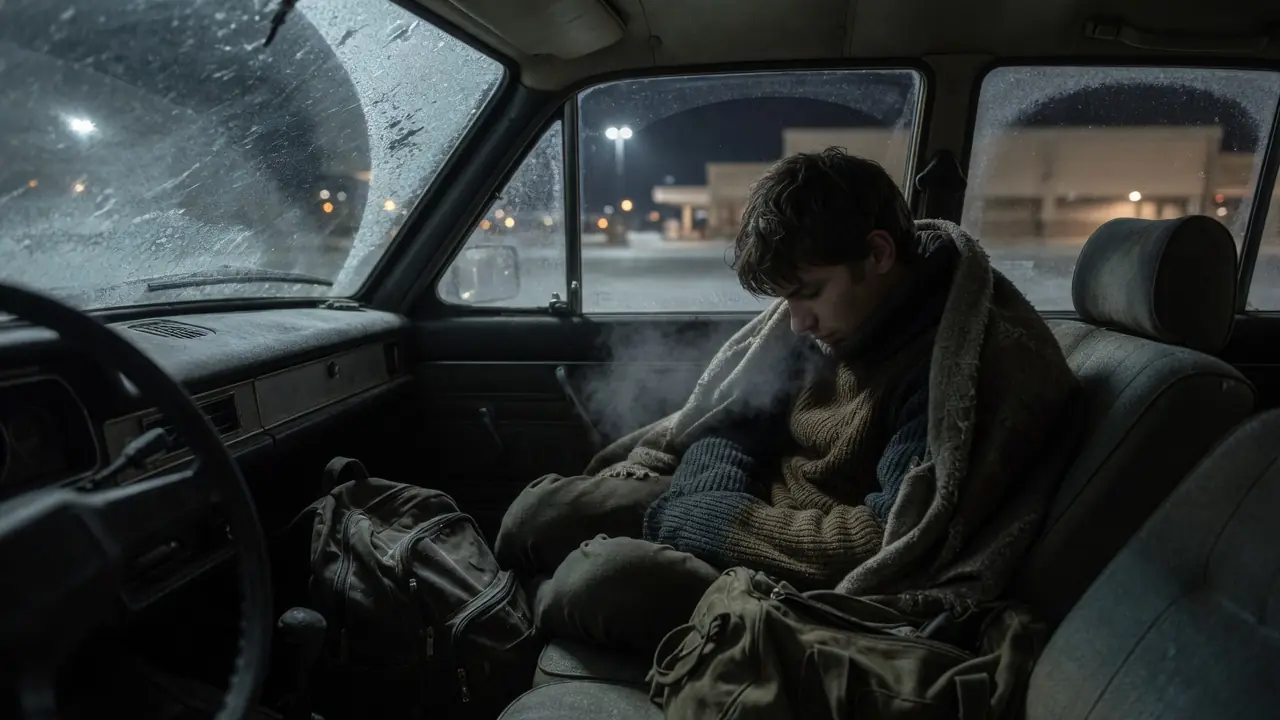
Claire understood the system better than I did.
She knew how to tell my father what he wanted to hear.
If she failed a class, it was because the teacher disliked her.
If she came home late, it was because her friend’s car had trouble.
If money disappeared from the kitchen drawer, she cried until my father accused me.
She became his favorite not because she was kinder or more responsible, but because she never challenged him.
She gave him someone to protect.
I gave him someone to punish.
The difference became obvious after my seventeenth birthday.
I had saved nearly three thousand dollars.
It was supposed to pay for tuition, books, and repairs to my car.
I kept the money in a small lockbox beneath a loose floorboard in my bedroom.
One evening, I came home from work and found the box open.
Eight hundred dollars was missing.
I confronted Claire.
She denied everything.
Then I found a receipt from a clothing store in her purse.
She had spent over five hundred dollars in a single afternoon.
When I showed the receipt to my father, he barely looked at it.
“You shouldn’t have been hiding money in this house,” he said.
“It was my money.”
“You live under my roof.”
“I earned it.”
He stood from the kitchen table.
“Watch your tone.”
“Claire stole from me.”
“She borrowed it.”
“Without asking.”
“She needed things for school.”
“She bought designer clothes.”
Claire began crying.
My father turned toward me.
“Look what you’re doing to your sister.”
That was the moment I finally understood.
Facts would never matter.
Not in that house.
The months before my eighteenth birthday were tense.
My father began reminding me that adulthood was approaching.
He said things like, “You think you know everything now. Let’s see how you do in the real world.”
At first, I assumed he was trying to frighten me into becoming more obedient.
I didn’t realize he was warning me.
My birthday fell on a Saturday.
I woke early because I had an opening shift at the grocery store.
There was no cake.
No card.
No birthday message.
That wasn’t unusual.
My father had forgotten my previous two birthdays.
When I returned home that afternoon, my bedroom door was open.
My clothes had been pulled from the closet.
My books were stacked on the floor.
My duffel bag sat on the bed.
My father stood beside it.
“What’s going on?” I asked.
“You’re eighteen.”
“I know.”
“So you’re an adult.”
I waited.
He zipped the duffel bag.
“You need to leave.”
For a second, I thought I had misunderstood him.
“Leave where?”
“That’s not my problem.”
I laughed once, because the alternative was panic.
“You’re serious?”
“I’ve spent enough years dealing with your attitude.”
“I’m still in high school.”
“You graduate in four months.”
“I don’t have anywhere to go.”
“You have a car.”
The words landed slowly.
I looked toward the hallway.
Claire stood there with her arms crossed.
She was seventeen.
Her mouth curved into a small smile.
“Dad,” I said, “I pay for my own food. I help with bills. I drive Claire to school.”
“And complain every second.”
“I’m asking for four months.”
“I’ve made my decision.”
I looked at Claire.
She avoided my eyes for half a second.
Then she smiled again.
“You heard him,” she said.
My father carried the duffel bag outside.
He dropped it beside my car.
The zipper split.
My clothes spilled onto the driveway.
A neighbor across the street was watering her lawn.
She looked away.
I crouched down and began gathering my belongings.
My father stood over me.
“You’re not worth the trouble anymore.”
I still remember the exact tone of his voice.
Calm.
Almost relieved.
As if removing me from the house was nothing more than canceling an expensive service he no longer used.
I packed what I could into my trunk.
Then I drove away.
No one came after me.
The first night, I parked behind the grocery store where I worked.
I didn’t want anyone to see me, so I waited until the closing staff left and then moved my car behind a row of dumpsters.
The temperature dropped below freezing.
My car’s heater only worked when the engine was running, and I couldn’t afford to waste fuel.
I wore two sweaters and wrapped my legs in an old blanket.
Every sound woke me.
A truck passing.
A shopping cart rolling in the wind.
Someone shouting across the parking lot.
At three in the morning, a security guard knocked on the window.
I thought he would call the police.
Instead, he looked at my school backpack on the passenger seat and asked how old I was.
“Eighteen.”
“Do your parents know you’re here?”
“Yes.”
That answer made him pause.
He looked at the duffel bag in the back.
Then he told me I could stay until five, but I had to leave before the morning manager arrived.
I thanked him.
He walked away without asking more questions.
The second night, I parked at a twenty-four-hour laundromat.
The third night, I slept at a highway rest stop.
I attended school each morning.
I changed clothes in the locker room.
I washed my face in gas station bathrooms.
No one noticed.
Or maybe they noticed and didn’t know what to say.
On the fourth day, my English teacher, Mrs. Ramirez, stopped me after class.
“You’ve been wearing the same shoes for three days,” she said.
I looked down.
“I like these shoes.”
“You also fell asleep during a test.”
“I worked late.”
She closed the classroom door.
“Where are you staying?”
I lied.
She waited.
I lied again.
She waited longer.
Something in her expression broke me.
I told her everything.
Not dramatically.
Not all at once.
Just enough.
My birthday.
The bags.
The car.
My father’s words.
Mrs. Ramirez didn’t react the way adults usually did.
She didn’t say my father probably didn’t mean it.
She didn’t suggest I apologize.
She didn’t tell me family was complicated.
She simply said, “You cannot keep sleeping in your car.”
She contacted the school counselor.
By that evening, I had a temporary room at a youth housing program.
The room had a metal bed, a desk, and one narrow window.
To me, it looked like a palace.
I finished high school.
My father didn’t attend graduation.
Claire posted photographs online from a beach trip they took that same weekend.
I saw them on a library computer.
My father looked happy.
That hurt more than I expected.
Some part of me had imagined the house falling apart after I left.
I thought he might realize how much I had done.
The laundry.
The grocery shopping.
The bills I helped cover.
The rides I gave Claire.
Instead, they looked relieved.
So I stopped looking.
I changed my phone number.
I blocked every relative who tried to pressure me into “making peace.”
Then I worked.
I worked at the grocery store.
I washed dishes at night.
I unloaded trucks before sunrise.
I cleaned offices on weekends.
For a while, I slept four hours a night.
Every dollar had a purpose.
Rent.
Food.
Tuition.
Gas.
Textbooks.
Emergency savings.
There was no room for waste.
There was barely room for rest.
Community college took me three years instead of two.
I failed calculus the first time.
I nearly quit.
I remember sitting in my car outside campus after receiving the final grade.
The same car I had slept in after my father threw me out.
The seats were torn.
The dashboard light flickered.
The heater still worked only when it felt like it.
I rested my head against the steering wheel and thought about how easy it would be to stop.
No one expected anything from me.
No one would be disappointed.
Then I heard my father’s voice in my memory.
You’re not worth the trouble.
I registered for the class again the next semester.
I earned an A.
At twenty-two, I transferred to a state university.
At twenty-four, I graduated with an engineering degree.
No family attended the ceremony.
Mrs. Ramirez did.
She sat in the second row and cried louder than anyone.
Afterward, she gave me a small card.
Inside, she had written:
You were always worth the trouble.
I kept that card.
I still have it.
My first engineering job paid more money than I had ever imagined earning.
I rented a small apartment with actual heat.
I bought a used table.
I slept on a mattress on the floor for three months because furniture felt like a luxury.
Then I met Hannah.
She worked in the company’s accounting department.
The first time we spoke, she told me I looked angry every time the office printer jammed.
“I’m not angry,” I said.
“You threatened it.”
“It deserved it.”
She laughed.
I loved that laugh before I understood I loved her.
Hannah was patient in ways I didn’t know how to accept.
She noticed that I never asked for help.
She noticed that I apologized whenever I was sick.
She noticed I kept receipts for everything and panicked when unexpected expenses appeared.
She never tried to fix me.
She simply stayed.
When I finally told her about my family, she didn’t say, “But he’s your father.”
She said, “That should never have happened to you.”
It was the first time someone had described my past without making me responsible for repairing it.
We married when I was twenty-seven.
Our wedding was small.
Mrs. Ramirez walked me down the aisle after Hannah jokingly said someone needed to make sure I didn’t run away.
When the officiant asked who supported our marriage, Mrs. Ramirez stood and said, “I do.”
There were twenty-eight people in the room.
Every one of them had chosen to be there.
No empty seats.
No relatives arriving late.
No one treating me like an obligation.
It was the happiest day of my life.
Until our son was born.
We named him Noah.
The first time I held him, I was terrified.
He was so small.
So completely dependent on me.
I looked down at his face and suddenly understood something I had spent years trying not to think about.
When my father threw me out, I had still been his child.
Legally adult.
Technically grown.
But still a boy who didn’t know where he would sleep.
For years, I told myself my father had been overwhelmed.
Grieving.
Angry.
Broken after my mother’s death.
Holding Noah destroyed those excuses.
Pain did not force my father to abandon me.
He chose to.
Every step from my bedroom to the driveway was a choice.
Every piece of clothing he threw into that bag was a choice.
Every night he slept in a warm house while I slept in a freezing car was a choice.
I promised Noah something that night.
He would never have to earn his place in our home.
He would never wonder whether one mistake could make us stop loving him.
He would never hear the words my father said to me.
Twelve years passed faster than I expected.
I built a career.
Hannah and I bought a house.
I became a senior project engineer.
Then a department director.
The company featured me in an online article after our team completed a major infrastructure project ahead of schedule.
The article included a photograph of me standing at the construction site wearing a hard hat.
It mentioned that I had overcome housing instability as a teenager.
I had agreed to include that detail because the company was partnering with a youth shelter.
I wanted other kids to know that homelessness did not have to define the rest of their lives.
I didn’t know my father would find it.
His first message arrived three days after the article was published.
Is this really you, Ethan?
I didn’t respond immediately.
I read it repeatedly.
There was no apology.
No explanation.
No mention of what he had done.
Only surprise.
As though he had discovered that a person he discarded had continued existing.
I checked his profile.
Claire was married.
She had two children.
My father appeared in dozens of photographs with them.
Birthday parties.
Christmas mornings.
School performances.
Family vacations.
He looked like a devoted grandfather.
That was the hardest part.
He had learned how to be gentle.
Just not with me.
I nearly deleted the message.
Then I noticed another photograph.
My father stood beside Claire’s oldest child, helping him build a wooden race car.
The boy looked about eight.
My father had one hand on his shoulder.
He was smiling with pride.
I imagined myself at that age.
Before my mother died.
Before the anger.
Before I became the family problem.
For one dangerous moment, I wanted to ask him why.
Why had Claire deserved protection?
Why had her children received the grandfather I never got?
Why had he searched for me now?
But I knew those questions would return power to him.
They would tell him I was still waiting for answers.
I wasn’t.
So I typed one sentence.
You didn’t find your son, Dad—you found the man who survived you.
I pressed send.
The phone rang less than a minute later.
I declined it.
He called again.
Then again.
Finally, I answered.
“Ethan?”
His voice was weaker than I remembered.
“Yes.”
There was a long silence.
Then I heard him begin to cry.
“Oh God,” he whispered.
I said nothing.
“What have I done?”
His breath caught.
“Oh God, Ethan. What have I done?”
I looked down at Noah, still sleeping against me.
His forehead was warm.
I adjusted the blanket around him.
My father continued crying.
“I saw the article,” he said. “I saw what happened to you.”
“You knew what happened to me.”
“No. I didn’t know you were homeless.”
“You watched me drive away with everything I owned.”
“I thought you had somewhere to go.”
“I told you I didn’t.”
“I was angry.”
“You were my father.”
“I know.”
“You knew I was still in high school.”
“I know.”
“You didn’t call once.”
His crying became louder.
“I thought you hated me.”
“I was eighteen.”
“I was ashamed.”
“So you stayed silent for twelve years?”
“I didn’t know how to fix it.”
I closed my eyes.
There it was.
The same pattern.
He had waited because fixing the damage would be uncomfortable for him.
My pain had always been less important than his discomfort.
He told me Claire had found the article first.
She recognized my photograph.
She sent it to him.
They had spent hours reading everything they could find about me.
My job.
My marriage.
My public interviews.
The youth shelter partnership.
My father said he had watched a video of me speaking at a charity event.
In the video, I said that one teacher’s kindness had changed my life.
He realized I was talking about Mrs. Ramirez.
Not him.
He told me that was when he understood.
“You built everything without me,” he said.
“Yes.”
“I should have been there.”
“Yes.”
“I should have helped you.”
“Yes.”
“I was grieving your mother.”
“So was I.”
That silenced him.
For twelve years, my father’s grief had been treated like a natural disaster.
Something no one could question.
Something that excused every broken thing left behind.
But I had lost my mother too.
Claire had lost her too.
Only one of us had turned that pain into permission to abandon a child.
My father asked if he could meet me.
I said no.
He asked if he could speak to Hannah.
I said no.
Then he asked about Noah.
“How old is he?”
“Four.”
“I have a grandson.”
“You have a biological grandson.”
The distinction hurt him.
I heard it in his breathing.
“Can I see a picture?”
“No.”
“Ethan, please.”
“You don’t get to disappear for twelve years and ask for access to my child.”
“I’m still your father.”
“No. You were my father. Then you resigned.”
He began crying again.
I felt nothing.
That frightened me more than anger would have.
For years, I imagined confronting him.
I imagined shouting.
I imagined listing every night I went hungry and every shift I worked while exhausted.
But now that the moment had arrived, I only felt tired.
He apologized.
Not perfectly.
Not without excuses.
But he apologized.
He said he had blamed me for reminding him of my mother.
He admitted he favored Claire because she made life easier.
He admitted he knew she stole my money.
He admitted he had planned to remove me from the house before my birthday.
“Why?” I asked.
The question escaped before I could stop it.
He was silent.
Then he said, “Because Claire told me you were planning to leave anyway.”
I almost laughed.
“She said you thought you were better than us. She said you were saving money because you wanted to disappear.”
“I was saving for college.”
“I know that now.”
“You knew it then.”
He didn’t answer.
I understood.
He had chosen the version of events that made abandoning me easier.
The next morning, Claire messaged me.
Her message was much longer than our father’s.
She said she had been young.
She said she had been jealous.
She said she didn’t understand how serious the situation was.
Then she admitted something I had never known.
She had found my money weeks before the theft.
She told our father about it.
She convinced him I was secretly planning to leave and never speak to them again.
She said I had been telling people he was a terrible parent.
None of that was true.
My father believed her because he wanted to.
Claire wrote that when he decided to throw me out, she was excited.
She believed the house would finally belong to her.
The smile I remembered wasn’t nervousness.
It wasn’t shock.
It was satisfaction.
She apologized for it.
Then she asked whether our children could meet.
I deleted the message.
My father continued contacting me.
Letters arrived at my office.
Then at my home.
I never told him my address.
He found it through public property records.
That frightened Hannah.
We installed cameras.
I sent him one final message telling him not to come to our home.
He respected that boundary.
Afterward, his letters arrived through a post office box.
I didn’t read most of them.
Hannah stored them in a folder in case I changed my mind.
Months later, I opened one.
My father wrote about my mother.
He told me she had made him promise to support my education.
She knew I wanted to become an engineer.
She had even started a savings account for me.
After her death, he emptied it to pay household expenses.
He never told me.
The account had contained nearly twelve thousand dollars.
Money my mother had saved for my future.
Money that could have kept me from working three jobs while attending school.
I sat at the kitchen table for a long time after reading that.
My father had not only thrown me out.
He had used the final gift my mother left for me.
I called him that night.
He answered immediately.
“I read your letter.”
He inhaled sharply.
“The college account?”
“Yes.”
“I’m sorry.”
“How much of it went to Claire?”
Silence.
“How much?”
“Some.”
“How much?”
“About five thousand.”
“For what?”
“A car.”
I laughed.
Not because it was funny.
Because the cruelty was so complete that my mind had no other response.
While I slept in a broken car behind a grocery store, Claire had been driving a vehicle partly purchased with the money my dying mother saved for my education.
My father began explaining.
I hung up.
That was the last time we spoke for nearly a year.
Then Mrs. Ramirez died.
She had been ill for months but told almost no one.
At her funeral, I delivered the eulogy.
I described the day she noticed I was homeless.
I described the room she helped me find.
The college applications she reviewed.
The graduation ceremonies she attended.
I said she had become the parent I needed at the moment I needed one most.
After the service, I saw my father standing near the back of the church.
He looked smaller than I remembered.
Older.
He had not approached me.
He simply stood there holding his hat.
I walked toward him.
“Why are you here?”
“I saw the obituary.”
“How?”
“I follow the youth shelter’s page.”
He looked toward Mrs. Ramirez’s photograph.
“I wanted to thank her.”
“You can’t.”
“I know.”
He began crying.
“She did what I should have done.”
“Yes.”
“I’m sorry.”
For the first time, he didn’t add an excuse.
No grief.
No anger.
No mention of Claire.
Just the apology.
I didn’t forgive him.
But I didn’t ask him to leave.
We stood in silence for several minutes.
Then he went home.
Rebuilding anything with my father was slow.
There was no dramatic reunion.
No hug that erased the past.
For months, we communicated only through email.
I set rules.
He could not contact Noah.
He could not visit our house.
He could not speak to Hannah unless she initiated it.
He could not blame Claire, my mother’s death, or me for his decisions.
If he violated any boundary, contact would end.
He agreed.
More importantly, he followed them.
A year later, I met him for coffee.
He looked at me for several seconds before speaking.
“You look like your mother.”
“I know.”
“I used to hate that.”
“I know.”
“Now I’m grateful.”
I didn’t respond.
He slid an envelope across the table.
Inside was a cashier’s check.
It represented the money from my mother’s college account, adjusted for inflation and interest.
I pushed it back.
“I don’t want it.”
“It was yours.”
“It should have been.”
He lowered his head.
“Then give it to the shelter.”
That was what we did.
The youth housing program used the donation to create a scholarship in Mrs. Ramirez’s name.
My father eventually met Noah.
Not because he demanded it.
Because after two years, I decided to allow it.
We met in a public park.
My father arrived early.
He brought no gifts.
I had told him not to.
Noah hid behind my leg at first.
My father crouched down several feet away.
“Hi,” he said. “I’m David.”
Not Grandpa.
Not family.
Just David.
Noah showed him a toy truck.
My father listened as if it were the most important story he had ever heard.
I watched carefully.
Every muscle in my body was ready to intervene.
But nothing bad happened.
The meeting lasted twenty minutes.
Then we left.
My father cried in his car afterward.
Hannah saw him.
I didn’t.
Claire never became part of my life again.
She sent birthday cards to Noah without permission.
I returned them.
She apologized repeatedly, but every apology contained a request.
A meeting.
A photograph.
A chance to explain.
I had already heard enough.
Forgiveness, I learned, was not the same as access.
I could release the anger without reopening the door.
People sometimes ask whether I forgive my father.
I don’t know.
Forgiveness sounds like one decision.
For me, it has been hundreds of smaller ones.
Choosing not to hate him.
Choosing not to become him.
Choosing to let him prove he could respect boundaries.
Choosing to protect my family even when he cried.
We will never have the relationship we could have had.
He missed my graduation.
My wedding.
The birth of my son.
He missed the years when I needed him most.
No apology can return those years.
But he finally stopped asking me to pretend they didn’t matter.
That was the first real change.
The message that changed everything wasn’t his.
It was mine.
You didn’t find your son, Dad—you found the man who survived you.
That sentence forced him to see what he had avoided for twelve years.
He thought he had thrown out a difficult teenager.
He had actually abandoned a grieving child.
He thought I would fail.
I built a life.
He thought I would come crawling back.
I found people who loved me without making me beg.
And when he finally saw my name, my career, my wife, and my son, he understood the true cost of what he had done.
He hadn’t only lost twelve years of my life.
He had lost the right to assume he belonged in the years that came after.
That right had to be earned.
Slowly.
Carefully.
And entirely on my terms.