My Dad Told Me “Don’t Embarrass Us” at My Brother’s Dinner—Then the Colonel Stood Up
At two in the morning, my father called me with instructions.
Not an invitation.
Instructions.
“Tomorrow, you’re joining us for dinner with your brother’s fiancée’s family.”
I sat up in bed and looked at the clock.
2:07 a.m.
Outside my apartment, the street was silent.
“Why are you calling me now?”
“Because you never answer during the day.”
“I was working.”
“You’re always working.”
His voice already carried the irritation he usually saved for me.
I rubbed my eyes.
“What dinner?”
“Andrew is meeting Caroline’s parents formally. Her father is a decorated colonel.”
He paused, letting the title hang between us as if I should be impressed.
Then his tone hardened.
“Keep your mouth shut.”
I almost laughed.
“Excuse me?”
“Don’t start talking about your odd jobs, don’t argue with anyone, and don’t embarrass us.”
My father believed I worked as a civilian contractor somewhere near an Army installation.
That was the explanation he had created years earlier after deciding my actual career was either too confusing or too unimportant to remember.
He never asked for details.
He preferred assumptions.
“Anything else?” I asked.
“Wear something appropriate.”
“I own clothes.”
“Not that uniform-looking nonsense.”
I smiled in the darkness.
“Got it.”
He hung up without saying goodbye.
The next evening, halfway through dinner, Caroline’s father stopped speaking in the middle of a sentence.
Colonel James Whitaker stared across the table at me.
For several seconds, no one understood why.
Then he stood.
My father’s face tightened, clearly afraid I had already done something wrong.
The colonel looked directly at me and smiled.
“Captain?”
The room went silent.
He stepped away from his chair.
“I’m surprised to see you here. Where have you been?”
My brother dropped his fork.
My mother stared at me.
And my father looked as though the floor had disappeared beneath him.
Because the decorated colonel he had spent all evening trying to impress was standing at attention for the daughter he had ordered to keep quiet.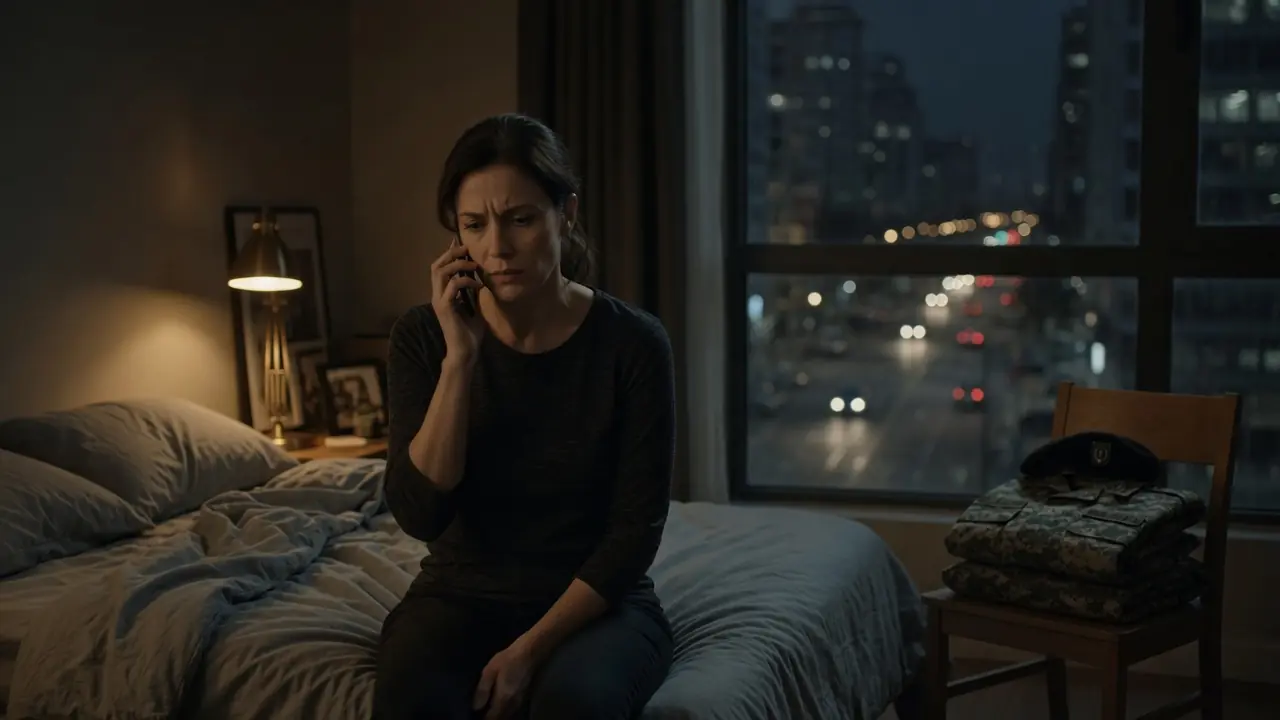
My brother Andrew had always been the child my father understood.
He was confident, social, and naturally comfortable around people with money or influence.
He played football in high school.
Joined the right fraternity.
Studied finance.
Learned how to shake hands while maintaining exactly the right amount of eye contact.
My father loved introducing him.
“This is my son, Andrew.”
He always said the name with pride.
When he introduced me, there was usually an explanation attached.
“This is Laura. She’s still figuring things out.”
Or:
“She works somewhere with the military.”
Or, on particularly cruel days:
“She never really followed the family path.”
The family path meant becoming someone my father could describe in one impressive sentence.
Andrew was an investment consultant.
My father owned a commercial real estate company.
My mother chaired charity committees.
I served in the United States Army.
Apparently, that was too complicated.
I joined at twenty-two after finishing university.
That detail mattered because my father frequently told people I had “run off before getting a proper education.”
In reality, I earned a degree in systems engineering.
I completed officer training.
I entered logistics and operational planning.
My job was not glamorous.
Most military operations depended on people the public never saw.
Someone had to move vehicles, supplies, personnel, equipment, fuel, and medical resources through places where plans changed by the hour.
I was good at it.
I liked difficult systems.
I liked responsibility.
I liked knowing that if I did my job correctly, hundreds of other people could do theirs.
My father heard none of that.
When I told him I had commissioned as a second lieutenant, he asked whether that was “above sergeant.”
When I was promoted to first lieutenant, he said, “That’s nice.”
When I became a captain, my mother sent a thumbs-up emoji.
Andrew never mocked me openly.
He simply allowed my parents to believe whatever made him look better.
That was his skill.
He rarely created conflict.
He just benefited from it.
My father’s contempt for my career began before I even joined.
He had planned my life carefully.
Business degree.
Graduate school.
A position at his company.
Eventually, a leadership role beside Andrew.
He called it legacy.
I called it being trapped in a building with my family.
During my final year of university, I received an offer from a defense technology company and an opportunity to pursue a military commission.
I chose the military.
My father took it personally.
“You’re walking away from the company.”
“I never agreed to join it.”
“You were raised for this.”
“I’m not a racehorse.”
My mother gasped.
Andrew looked down at his plate to hide a smile.
My father stood.
“You have no idea what real responsibility looks like.”
Years later, that sentence still amused me.
By the time he called me at two in the morning, I had overseen operations involving more people than worked across his entire company.
But he still believed I needed instructions on how not to embarrass him at dinner.
The dinner was held at the Briar House Club.
It was the kind of private establishment where the lobby contained oil paintings of people who looked disappointed by modern life.
My father had spent years trying to become a member.
Colonel Whitaker had arranged the reservation through an old friend.
That fact alone made my father worship him before they even met.
I arrived five minutes early.
My father was waiting near the entrance.
His eyes moved over my dark green dress.
“At least you look presentable.”
“Good evening to you too.”
“Remember what I said.”
“Keep quiet.”
“And don’t discuss politics.”
“I never discuss politics with you.”
“You always correct people.”
“Only when they’re wrong.”
He gave me a warning look.
Then Andrew entered with Caroline.
She was warm, intelligent, and visibly nervous.
I had met her twice before.
Both times, she had made an effort to include me in conversation.
That alone placed her above most people Andrew dated.
“Laura,” she said, hugging me. “I’m glad you came.”
“Your future father-in-law insisted.”
My father pretended not to hear.
Andrew gave me a quick kiss on the cheek.
“Please behave.”
“You too.”
He laughed, assuming I was joking.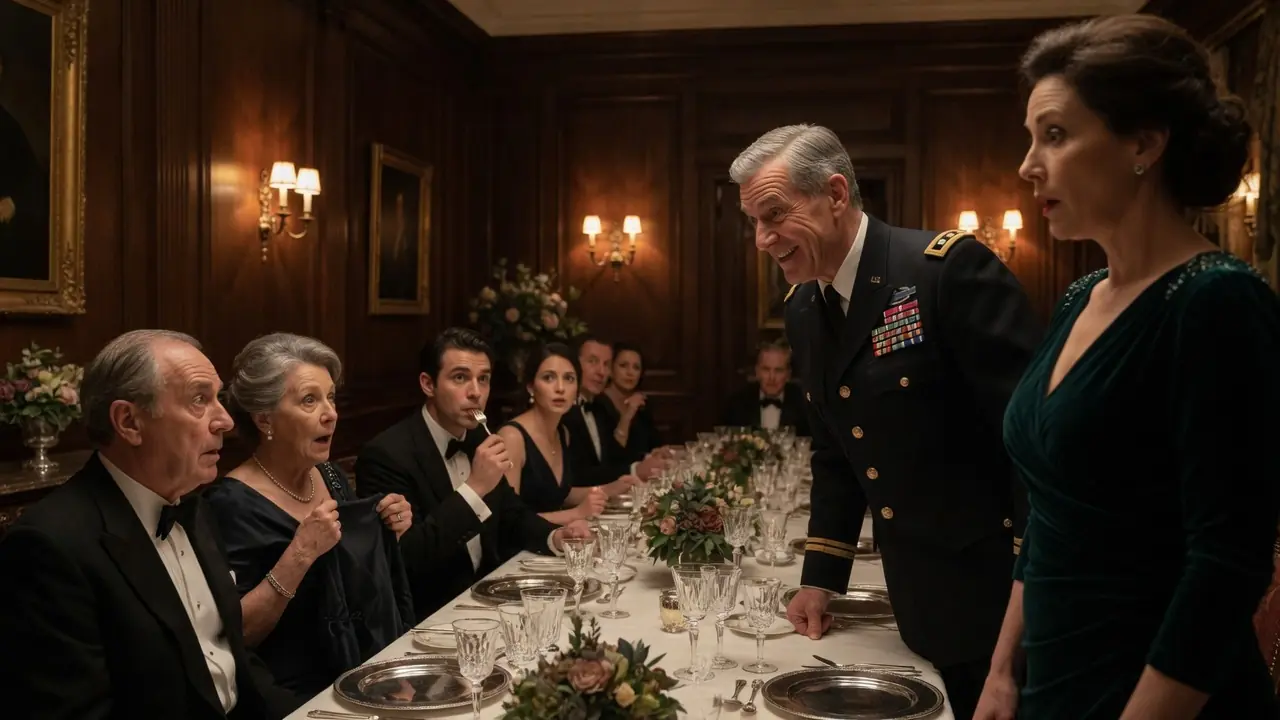
Colonel James Whitaker arrived with his wife, Evelyn.
He was tall, silver-haired, and carried himself with the posture of someone who had spent decades entering rooms where people immediately noticed.
My father practically rushed forward.
“Colonel Whitaker, an honor.”
The colonel shook his hand.
“Please, call me James.”
My father never did.
Evelyn was elegant and direct.
She embraced Caroline, greeted Andrew warmly, then turned to me.
“And you must be Laura.”
My father answered before I could.
“Our daughter. She does support work near a military base.”
I looked at him.
Support work.
Near a military base.
Colonel Whitaker glanced at me briefly, but his attention returned to my father.
“What kind of support work?”
My father waved one hand.
“Administrative things. Temporary contracts. She moves around.”
“I see,” the colonel said.
I said nothing.
I had promised.
We were seated in a private dining room overlooking a garden.
My father arranged the positions himself.
Andrew and Caroline sat in the center.
The Whitakers sat opposite my parents.
I was placed near the end.
That suited me.
The first half hour focused on the wedding.
Venues.
Guest lists.
Family traditions.
My mother spoke about a church ceremony.
Caroline politely reminded her that she and Andrew had not decided on a religious venue.
My father described Andrew’s career in impressive detail.
He mentioned clients, promotions, and future partnership opportunities.
Then Colonel Whitaker asked me what I did.
My father interrupted again.
“Nothing stable yet.”
I stared at my water glass.
The colonel looked toward him.
“She works with the Army, you said?”
“In a way.”
My father laughed.
“She’s always been a little secretive.”
“I’m sitting right here,” I said.
My father’s smile froze.
Andrew quickly changed the subject.
“Caroline says you recently returned from Europe, Colonel.”
The colonel nodded.
The moment passed.
But not completely.
I noticed him studying me.
Dinner continued.
My father became more confident with every glass of wine.
He asked the colonel about decorations and overseas assignments.
He used the word “war hero” twice.
Colonel Whitaker politely corrected him both times.
“I was fortunate to serve with excellent people.”
My father nodded as though humility were another medal.
Then he began comparing Andrew and me.
“Andrew always had direction,” he said.
My mother smiled.
“He knew what he wanted.”
My father turned slightly toward me.
“Laura was more restless.”
I continued eating.
Evelyn asked, “Restless how?”
My mother answered.
“She never stayed close to home.”
“She was deployed,” Andrew said quietly.
It was the first time he had corrected them.
My father waved him off.
“Nothing dangerous.”
I looked up.
He had no idea where I had been.
No idea what I had done.
Yet he spoke with absolute confidence.
Colonel Whitaker set down his fork.
“Where were you deployed?” he asked me.
My father’s expression warned me not to answer fully.
I chose the simplest version.
“Several places.”
The colonel’s eyes narrowed slightly.
“What branch?”
“Army.”
“Specialty?”
“Logistics and operational coordination.”
My father smiled as if the answer proved his point.
“Supply work.”
The colonel looked at me.
Then at my hands.
Then back at my face.
Something changed in his expression.
Not recognition yet.
But attention.
Caroline began telling us about how she and Andrew met.
At a charity event.
He spilled coffee on her dress.
He paid for the cleaning.
They argued.
Then they started dating.
Everyone laughed.
For a while, the dinner became normal.
I relaxed.
Then my father decided to make a toast.
He stood and lifted his glass.
“To family,” he began.
“To Andrew, who has made us proud in every possible way.”
Andrew smiled.
My mother touched his arm.
My father continued.
“And to Caroline, whose discipline, grace, and family values make her the perfect addition to ours.”
Caroline’s smile became uncomfortable.
Then my father glanced at me.
He could have stopped.
He didn’t.
“And perhaps her example will inspire certain other members of our family to take life more seriously.”
My mother gave a small laugh.
Andrew looked down.
The Whitakers did not react.
I held my father’s gaze.
He smiled.
“Laura knows I’m joking.”
“No,” I said. “I know you’re speaking.”
The room went quiet.
My father’s face hardened.
Before he could respond, Colonel Whitaker said, “What exactly do you believe she does?”
The question was so direct that my father hesitated.
“Well, as I said, support work.”
“For whom?”
“The military.”
“In what capacity?”
“I’m not involved in the details.”
The colonel turned to me.
“What unit?”
I gave him the designation.
His body became completely still.
He repeated it.
I nodded.
“When?”
“Until eight months ago.”
The colonel placed his glass down.
“Who commanded regional operations during the Haversham evacuation?”
My father looked confused.
I answered.
“I did.”
The colonel stared at me.
Then recognition crossed his face.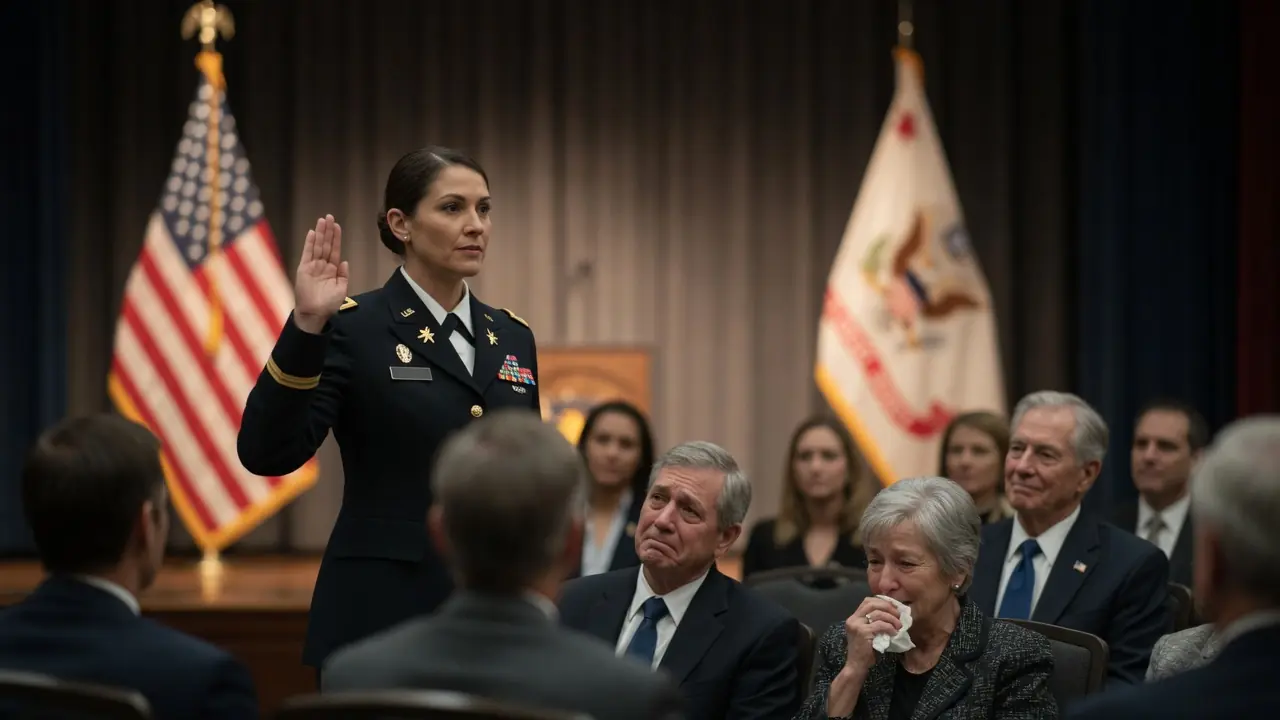
He pushed back his chair and stood.
The entire table froze.
My father looked alarmed.
Perhaps he thought the colonel was offended.
Instead, Colonel Whitaker smiled.
“Captain?”
I stood automatically.
“Yes, sir.”
He stepped toward me and extended his hand.
“I’m surprised to see you here.”
We shook hands.
Then he laughed.
“Where have you been?”
My father stared between us.
“You know her?”
The colonel ignored him for the moment.
“You disappeared before the final review,” he said.
“I was reassigned.”
“You rebuilt that entire movement plan in less than six hours.”
“We had good teams.”
“You always say that.”
He turned toward Evelyn.
“This is Captain Laura Bennett.”
Evelyn smiled.
“Yes, I gathered that.”
Caroline looked at me with wide eyes.
Andrew whispered, “Captain?”
My father still looked lost.
Colonel Whitaker returned to his chair but remained focused on me.
“Your father said you handled temporary administrative contracts.”
I sat.
“He has a creative understanding of my career.”
For the first time that evening, Evelyn laughed.
My father leaned forward.
“What evacuation?”
Colonel Whitaker looked at him.
“Haversham.”
“That doesn’t mean anything to me.”
“It should.”
His tone changed.
No longer warm.
No longer polite.
“Haversham was a major emergency relocation operation after severe flooding damaged transport routes and cut off several installations.”
My father glanced at me.
“And Laura was involved?”
“She coordinated the primary logistics response.”
The colonel spoke slowly, as if explaining something to a child.
“Thousands of people had to be moved. Medical supplies were running low. Two main routes failed. Your daughter reorganized transportation, fuel, communications, and staging under conditions most senior officers never face in their careers.”
My mother stared at me.
Andrew stopped touching his food.
My father attempted to recover.
“Well, she never told us any of that.”
I looked at him.
“I did.”
“When?”
“I called after it ended.”
“You said work had been difficult.”
“I sent you the article.”
He frowned.
“What article?”
“The one you replied to with ‘Glad you’re staying busy.’”
Evelyn covered her mouth, hiding a smile.
Colonel Whitaker leaned back.
“I recommended her for a commendation.”
My father’s expression changed.
“A commendation?”
“Yes.”
“For supply work?”
The colonel looked at him for several seconds.
“Mr. Bennett, logistics is the difference between a plan and a disaster.”
The room became quiet again.
He continued.
“People who know very little about military operations often dismiss support functions because they only notice dramatic moments. They don’t understand that every aircraft, vehicle, medical unit, evacuation, and deployment depends on someone ensuring resources arrive where they are needed.”
My father’s face reddened.
“I meant no disrespect.”
“You called your daughter unserious during a toast.”
“That was family humor.”
“No one else laughed.”
The words landed harder because the colonel delivered them calmly.
My mother finally spoke.
“Laura has always been private.”
I turned toward her.
“No. You’ve always been uninterested.”
“That isn’t fair.”
“I invited you to my promotion ceremony.”
“We had a fundraiser.”
“I invited you to the award presentation.”
“Your father had a client dinner.”
“I sent photographs.”
“We’re not military people.”
Colonel Whitaker said, “Pride doesn’t require military knowledge.”
My mother looked down.
Andrew rubbed his forehead.
Caroline stared at him.
“You knew she was an officer?” she asked.
Andrew hesitated.
“I knew she had some rank.”
“Some rank?”
“I didn’t understand the details.”
“You never asked?”
He looked at me.
The answer was obvious.
The waiter entered carrying dessert menus.
He sensed the atmosphere immediately.
No one spoke.
He placed the menus down and retreated.
My father cleared his throat.
“Well, Laura has always preferred keeping us at a distance.”
I almost admired his determination.
Even now, he needed my career to be my failure.
“You called me at two this morning and told me to keep my mouth shut,” I said.
Caroline looked at him.
“You did what?”
My father’s eyes narrowed.
“That was a private conversation.”
“You were afraid I’d embarrass you in front of a decorated colonel.”
Colonel Whitaker’s expression became colder.
My mother whispered, “Laura, please.”
“No. You asked me to attend a dinner where you planned to introduce me as an unstable temporary worker.”
“We did not say unstable,” my father replied.
“You said I had nothing stable.”
“That’s different.”
“No, it’s better phrasing.”
Andrew stood.
“This is supposed to be about our engagement.”
I looked at him.
“I didn’t bring this up.”
“You could have corrected Dad privately.”
“I have. For years.”
Caroline turned toward him.
“Why didn’t you ever tell me your sister was a captain?”
Andrew looked uncomfortable.
“It didn’t seem relevant.”
“You told me she struggled to hold jobs.”
“I repeated what Dad said.”
“You knew she was in the Army.”
“Of course.”
“And you let me believe she was barely employed.”
Andrew’s frustration rose.
“Why does this matter so much?”
Caroline stared at him.
“Because you were willing to make your sister look small to make yourself look better.”
My brother had no answer.
For once, silence did not protect him.
Evelyn reached for her wine.
“I believe we should all finish dinner.”
My mother looked relieved.
But Evelyn continued.
“After Laura receives an apology.”
My father stiffened.
“This is a family matter.”
“You made it public at this table.”
He looked toward Colonel Whitaker, perhaps expecting male solidarity.
The colonel said nothing.
That silence was an answer.
My father looked at me.
“I’m sorry if you felt embarrassed.”
I almost laughed.
“That isn’t an apology.”
He exhaled sharply.
“Laura—”
“Say what you did.”
His jaw tightened.
Everyone waited.
Finally, he said, “I misrepresented your work.”
“And?”
“I spoke disrespectfully.”
“And?”
He looked furious now.
I did not help him.
“I told you not to embarrass us when I should have been concerned about embarrassing you.”
The words sounded painful.
Good.
“I’m sorry,” he said.
I nodded once.
I did not tell him it was fine.
It wasn’t.
Dinner ended early.
Outside the club, Caroline asked to speak with me.
We stood beneath the stone awning while light rain fell beyond the entrance.
“I’m sorry,” she said.
“You didn’t do anything.”
“I should have asked more about you.”
“You knew what Andrew told you.”
She looked toward the lobby where my brother stood with our parents.
“I don’t know if I knew him.”
“That’s a larger conversation.”
She gave a sad laugh.
“Apparently.”
Then she asked about Haversham.
Not because she wanted to flatter me.
Because she was genuinely curious.
I explained the basic situation.
She listened.
When I finished, she said, “My father doesn’t praise people easily.”
“I know.”
“He talks about that operation.”
“He probably remembers the parts that went wrong.”
“He remembers the people who fixed them.”
That stayed with me.
My father called the next morning.
Not at two.
At nine.
I let it ring twice before answering.
“You humiliated me,” he said.
No greeting.
No apology.
“I thought we covered this last night.”
“You knew the colonel.”
“Yes.”
“You deliberately hid it.”
“You told me to keep my mouth shut.”
“That doesn’t mean you couldn’t have warned me.”
“Warned you that your assumptions were wrong?”
“You enjoyed watching me look foolish.”
I sat at my kitchen table.
“No. I watched you discover the consequences of never asking your daughter a question.”
He became quiet.
Then he said, “Why didn’t you tell us how important you were?”
The phrasing bothered me.
“I shouldn’t need to be important for you to respect me.”
“That isn’t what I meant.”
“It is exactly what you meant.”
He tried to argue that parents were busy.
That military careers were confusing.
That I never visited enough.
I let him finish.
Then I asked one question.
“What is my current job?”
Silence.
He knew I had transferred.
He knew I lived near another installation.
He had no idea what I did.
“Operational planning,” he guessed.
I laughed.
“What rank am I now?”
“Captain.”
“I was promoted six months ago.”
More silence.
I was now a major.
The promotion ceremony had been small.
I sent the date to my family.
My mother replied that travel was difficult.
My father never responded.
Andrew sent a bottle of wine to the wrong address.
Colonel Whitaker had attended by video.
My own family had not.
The engagement nearly collapsed after dinner.
Not because of me.
Because Caroline began asking Andrew questions.
She discovered he had repeated several false stories about our family.
He said I left university without graduating.
False.
He said I had been demoted once.
False.
He said our parents had financially supported me for years.
The opposite was true.
He said he was expected to inherit the family company because I had declined responsibility.
In reality, my father had never offered me a role with authority.
Only a subordinate position beneath Andrew.
Caroline wasn’t angry that Andrew had a successful career.
She was disturbed by how much he needed to appear superior.
They postponed the wedding.
My mother blamed me.
My father blamed the colonel.
Andrew blamed stress.
Caroline blamed no one.
She simply said trust required facts.
Three weeks later, Andrew came to my apartment.
He arrived without warning.
I considered not opening the door.
Then I saw his face.
He looked exhausted.
“Caroline moved out,” he said.
“I’m sorry.”
“Are you?”
“I’m sorry you’re hurting.”
He sat on my couch.
For several minutes, neither of us spoke.
Then he said, “Dad always compared us.”
“I know.”
“He said you were reckless.”
“I know.”
“He said I was the one he could rely on.”
“I know.”
Andrew looked down.
“I liked it.”
I waited.
“When you left, everything became easier. I was the successful one. The responsible one. The son continuing the family business.”
“You work for an investment firm.”
“He still talks as if I’m taking over his company.”
“Because reality is optional in our family.”
He smiled faintly.
Then his face tightened again.
“I knew you graduated.”
“Yes.”
“I knew you were an officer.”
“Yes.”
“I didn’t know about Haversham.”
“You could have asked.”
“I didn’t want to know.”
That was the first truly honest thing he said.
He admitted that my career threatened him.
Not because it was more prestigious.
Because it was mine.
My father designed Andrew’s path.
University connections.
Internships.
Introductions.
Clients.
I built my own life.
Andrew had always wondered whether his success belonged to him or to our father.
Making me look unsuccessful protected him from that question.
“That isn’t my fault,” I said.
“I know.”
“It also doesn’t excuse lying to Caroline.”
“I know.”
“You may lose her.”
His eyes filled with tears.
“I know.”
I did not comfort him immediately.
Some pain had to be felt before it could teach anything.
Then I gave him the name of a therapist who worked with military families and high-pressure professional households.
He almost laughed.
“You’re sending me to therapy?”
“I’m giving you a number.”
“Dad would lose his mind.”
“That sounds like an additional benefit.”
My father refused therapy.
He also refused responsibility.
For months, he described the dinner as an ambush.
He said Colonel Whitaker had disrespected him.
He said I had used military status to make him look ignorant.
Eventually, Colonel Whitaker wrote him a letter.
I never saw the full text.
My mother accidentally mentioned it during a phone call.
She said the colonel had written:
Your daughter’s rank was not what embarrassed you. Your treatment of her was.
My father never replied.
But he stopped telling the story publicly.
That was progress, in his language.
Caroline and Andrew remained separated for six months.
He began therapy.
He left the investment firm where my father’s connections had secured his position.
He accepted a less impressive role at a smaller company.
The salary was lower.
The title was ordinary.
For the first time, he was evaluated by people who did not know our father.
It terrified him.
It also changed him.
When he and Caroline began speaking again, he did not ask her to return immediately.
He answered her questions.
He admitted what he had lied about.
He accepted that the engagement might never recover.
A year later, they married.
The wedding was small.
No private club.
No politicians.
No performance.
They held the ceremony in Caroline’s parents’ garden.
I stood beside her as one of two attendants.
My father attended.
He did not make a toast.
That was Caroline’s condition.
Before the ceremony, Colonel Whitaker found me near the back porch.
By then, he had retired.
“Major,” he said.
I smiled.
“Sir.”
“You know I’m retired.”
“You know I’m not calling you James.”
He laughed.
Then he handed me a small challenge coin.
One side carried the emblem of his former command.
The other was engraved with a date.
Haversham.
“I should have given you this years ago,” he said.
“You already supported the commendation.”
“This is personal.”
I accepted it.
“Thank you.”
He looked toward the garden, where my father was speaking quietly with Andrew.
“Has he learned anything?”
“He has learned not to call me at two in the morning.”
“A strong beginning.”
After the wedding, my father asked whether we could talk.
We sat on a bench at the edge of the garden.
For once, he did not begin by defending himself.
“I didn’t know you were promoted.”
“I told you.”
“I know.”
He looked at his hands.
“I found the email.”
I waited.
“There were others too.”
Promotion notices.
Invitations.
Articles.
Photographs.
Messages he ignored because reading them would have challenged the story he preferred.
“I thought you rejected the family,” he said.
“I rejected your plan for me.”
“To me, that felt the same.”
“I know.”
He nodded slowly.
“That was my failure.”
It was not a full apology.
But it was more honesty than I expected.
He asked about my current work.
This time, he listened.
I explained that I was overseeing planning across several units, coordinating training readiness and emergency response.
He asked questions.
Some were clumsy.
Some revealed how little he understood.
But he did not interrupt.
At the end, he said, “That sounds like enormous responsibility.”
“It is.”
“I told you once that you didn’t know what real responsibility looked like.”
“Yes.”
“I was wrong.”
I looked toward the reception.
Andrew and Caroline were dancing beneath strings of lights.
My mother was speaking to Evelyn.
Colonel Whitaker was pretending not to watch us.
“I know,” I said.
Our relationship did not transform overnight.
My father still cared too much about appearances.
My mother still introduced Andrew by his job title and me by my rank, as if status were the only language she spoke.
But they stopped describing my career as temporary.
They stopped saying I worked “near a base.”
They attended my next formal ceremony.
My father wore an uncomfortable suit.
My mother cried during the promotion oath.
Afterward, my father shook my hand.
Then, awkwardly, he hugged me.
It lasted about two seconds.
It was enough.
People love the dinner story because of the reveal.
The arrogant father.
The decorated colonel.
The ignored daughter who turns out to outrank everyone’s expectations.
But the rank was never the real point.
If I had been a clerk, a mechanic, a contractor, or an unemployed woman rebuilding her life, my father still had no right to humiliate me.
Respect should not have arrived only after someone powerful recognized me.
Colonel Whitaker understood that.
My father needed years to learn it.
At two in the morning, he called and told me to keep my mouth shut.
He was afraid I might embarrass him in front of an important man.
The next evening, that important man stood up, smiled, and called me Captain.
My father’s face turned white.
Not because he suddenly understood my career.
Because he realized the person whose approval he wanted already respected the daughter he had spent years diminishing.
I did not expose him.
I did not make a speech.
I did exactly what he asked.
I kept quiet.
And eventually, the truth introduced itself.