Caleb's grandmother called that night. Her voice was thin. Mr. Ingram, I don't know what to do. Caleb won't eat. He won't talk. He just sits by the window and looks at the park. He wrapped his own hands this morning. Just sat there with his fists up, hitting the air. Tell him I'll be back, Byron said. When? Byron didn't answer. He didn't know. The next morning, Byron woke at 7:00 out of habit. He got dressed, picked up the bag, walked to the front door, stopped, set the bag down, and sat on the porch. He did the same thing the next morning, and the next, and the next.
On the fourth morning, he found Caleb sitting on his front steps. The boy had walked 11 blocks alone before sunrise to find him. His hands were already wrapped badly, lopsided, the tape bunching between his fingers. The way a 10-year-old wraps his own hands when his coach isn't there. Mr. Byron, Caleb said, I don't want to stop. Byron looked at the boy, split lips still healing, dark circles under his eyes, but his fists were up in guard position, protecting what matters. Byron knelt down, unwrapped the boy's hands, and rewrapped them properly. Two loops around the wrist, three across the knuckles, pulled tight between each finger. Curtis Holloway's method, the same way he'd been doing it for 50 years.
We're not stopping, he said. They trained on Byron's porch that morning. No oak tree, no cracked concrete ring, no canvas bag of gear, just an old man and a boy and a pair of gloves that had survived everything the world had thrown at them. They took his park, threw a rock through his window, and a 10-year-old kid walked 11 blocks in the dark just to say, Don't quit. I'm not going to lie, that broke something in me. Who shows up for you like that?
Gene Whitfield had covered boxing for 41 years. Ringside at the Garden, press row at Atlantic City. He had watched 400 professional fights in person and written about 300 of them. He knew fighters the way a piano tuner knows pianos, not by looking at them, but by listening to the way they moved. He watched the Brandon Park clip for the 14th time on a Wednesday evening. His wife asked him to come to dinner. He didn't hear her. It was the uppercut that haunted him. Not the power, though the power was real. It was the setup. The way the old man planted his back foot at exactly 45 degrees. The way his hips rotated before his arm moved. The way the fist traveled from the waist, not the shoulder.
That wasn't a street fighter's uppercut. That was a trained technique. A specific technique. One he had seen exactly once before in his career. Atlantic City, 1984, middleweight title fight. A fighter they called the ghost. Gene pulled up his archive. Forty-one years of notes, photos, fight cards, press clippings, all stored in filing cabinets in his basement. He found the folder in 20 minutes. Byron the Ghost Ingram. 23 fights, 23 wins, 15 knockouts. Middleweight champion at 28. Then nothing. The record just stopped. No retirement announcement. No farewell fight. One day he was the most dangerous middleweight in the division. The next day he was gone.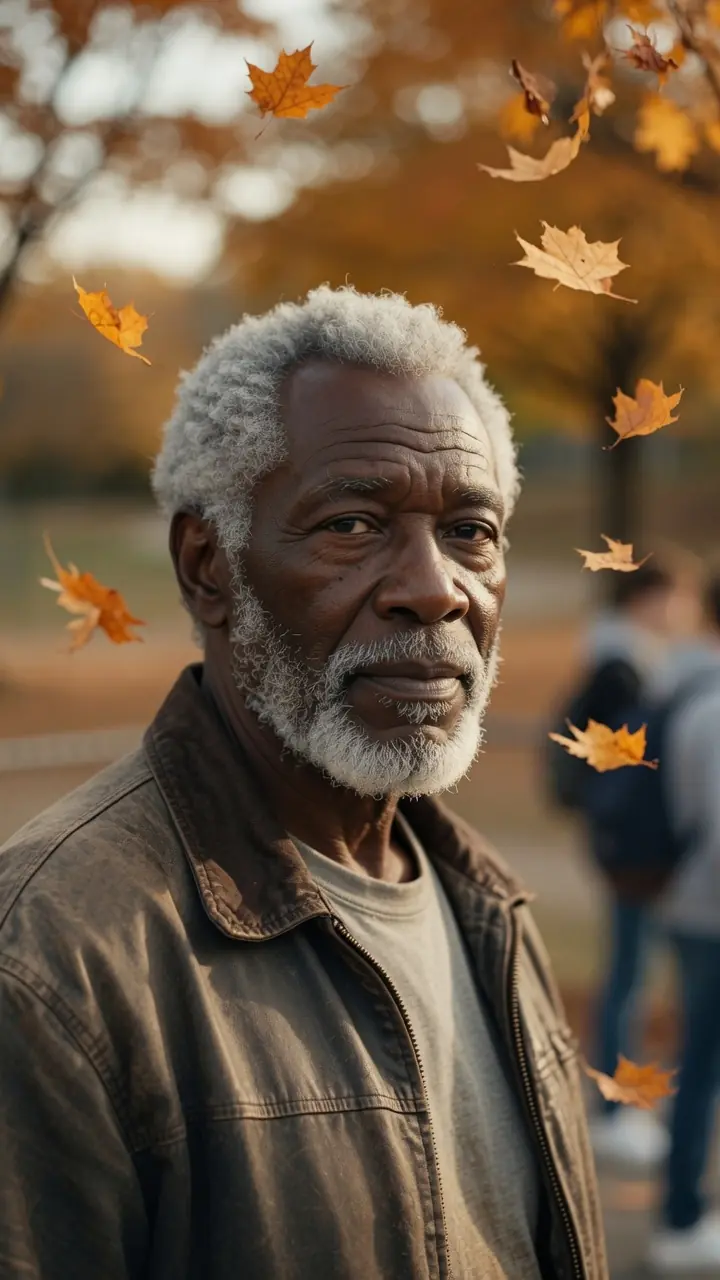
Gene remembered the rumors. An underground fight, an unlicensed bout, serious injury, but no one ever confirmed it. The boxing commission had no record. The promoter was never identified. Byron Ingram simply vanished and the sport moved on. Gene looked at the viral clip again, paused it at the moment Byron took off his dark glasses, and zoomed in. The right eye, clouded, unfocused, dead. A detached retina. The kind of injury that comes from a specific type of impact, the kind that ends careers. He picked up the phone and called a source at the state boxing commission. I need everything you have on unlicensed bouts in 1984. Middleweight division. Anything involving an eye injury.
The source called back Thursday morning. There's nothing in the official record, but I found something in the complaint files. A sealed report. An anonymous complaint was filed in March 1984 about an underground fight organized at a warehouse on Fulton Street. The complaint names a promoter, a guy named Garrett Sawyer. Gene Whitfield sat down slowly. He read the name again. Then he looked at the press conference footage from Monday. Councilman Garrett Sawyer, American flag pin. We are a city of laws. The same man.
Gene drove to Oakfield Road on Thursday afternoon. He knocked on Byron's door. Byron opened it, dark glasses on, cardboard still taped over the broken window behind him. Mr. Ingram, my name is Gene Whitfield. I'm a sports journalist. I covered your title fight in Atlantic City in 1984. Byron didn't move, didn't speak. Just stood in the doorway like a man deciding whether to close the door or step through it. I know who you are, Gene said. I know what happened to your eye, and I think I know who did it. Byron looked at him for a long time. Then he stepped aside and let him in.
They sat in the living room for two hours. Byron told him everything. The warehouse on Fulton Street. The heavyweight who outweighed him by 40 pounds. The illegal elbow. Waking up in the hospital with one eye gone. The promoter who vanished overnight. The career that ended with no press conference, no farewell, no explanation, just silence. I didn't know his name back then, Byron said. He was just a voice behind a curtain. I never saw his face. His name was Garrett Sawyer, Gene said. Byron was quiet. He looked at the shoe box on the shelf, Helen's scarf still wrapped around the belt. His hands were flat on his knees. And his son, Byron said slowly. His son is the one in the park. Yes. Byron closed his eyes. One good, one dead, both shut now.
Gene spent the next 48 hours building the story. He pulled county records, business filings, property deeds. In 1984, Garrett Sawyer was 29 years old and running an unlicensed boxing promotion out of a warehouse he leased under a shell company. He organized underground bouts. No referees, no doctors, no commission oversight. Fighters were paid in cash. No medical coverage, no liability. On March 14th, 1984, Byron the Ghost Ingram fought in one of those bouts. His opponent landed an illegal elbow that detached Byron's retina. There was no ringside doctor. By the time Byron reached the hospital, the damage was permanent. Garrett Sawyer shut down the operation the next week, changed his name on the business filings, moved into real estate, then local politics, then city council. Three terms, chair of the public safety committee.
The man who kept the city safe had once run the operation that destroyed a champion's career and left him half blind. And now his son had cornered that same man in a park, had poured water on his head, had thrown his gloves in the trash, had shoved a 10-year-old boy onto concrete. And when the champion finally fought back with three punches in five seconds, the councilman had used every ounce of his power to bury him again. Gene Whitfield published the story on Friday morning. Front page of the Tribune's website. The headline: The Ghost of Brandon Park. How a City Councilman Destroyed a Boxing Champion. Twice.
The article included everything. The sealed complaint, the warehouse address, the shell company, the medical records from 1984. Side-by-side photos. Byron at 28 holding the middleweight belt and Byron at 74 sitting on a park bench with spray paint behind him. The uppercut from the viral clip frame by frame matched against footage from the 1984 title fight. Identical technique, same fighter, 30 years apart. Garrett Sawyer read the article at 6:00 a.m. in his kitchen. His wife said his face went white. He called his attorney. The attorney didn't pick up. He called his chief of staff. The chief of staff had already resigned by email at 5:45 a.m., 12 minutes after the article went live.
The article hit 40 million views by Saturday night, twice the reach of the original viral clip. #blindchampion came back, but this time it carried a different weight. This time, people understood. The old man in the park wasn't just a fighter. He was a man who had been robbed of everything by the same family that was now trying to rob him again. The DA's office issued a statement Saturday afternoon. In light of new evidence, the charges against Byron Ingram are under review. By Sunday morning, the restraining order had been suspended. By Sunday afternoon, the state attorney general's office had opened an investigation into Councilman Garrett Sawyer.
Sarah Collins, Byron's public defender with the 43 cases, called him at home. Mr. Ingram, have you seen the news? No, Byron said. My TV's been off since Monday. The charges are being dropped. The DA just announced it, and the AG is looking into the councilman. All of it. The underground fights, the sealed complaint, the obstruction, everything. Byron was quiet for a long time. Mr. Ingram, are you there? I'm here, he said. Is it safe to go back to the park? Sarah laughed. It was the first time she'd laughed in weeks. Yes, she said. It's safe.