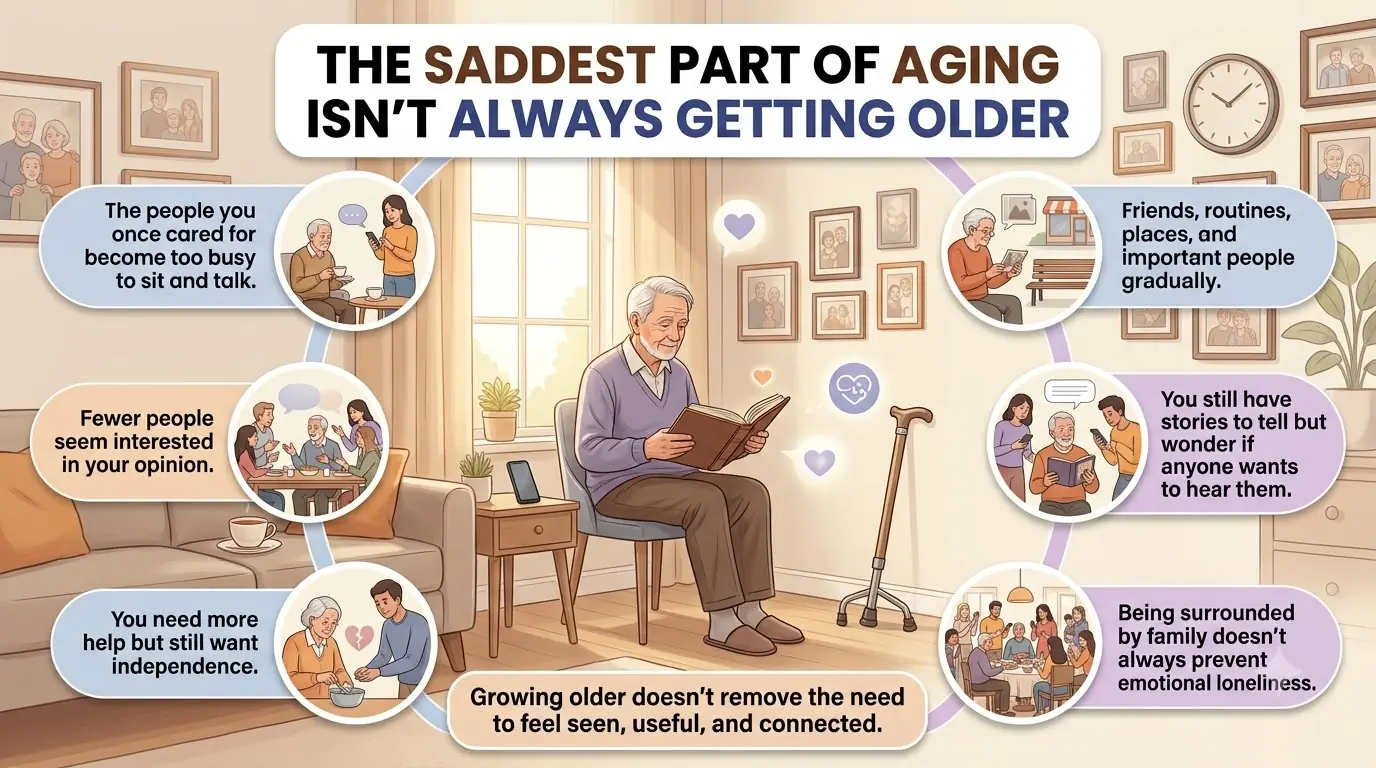
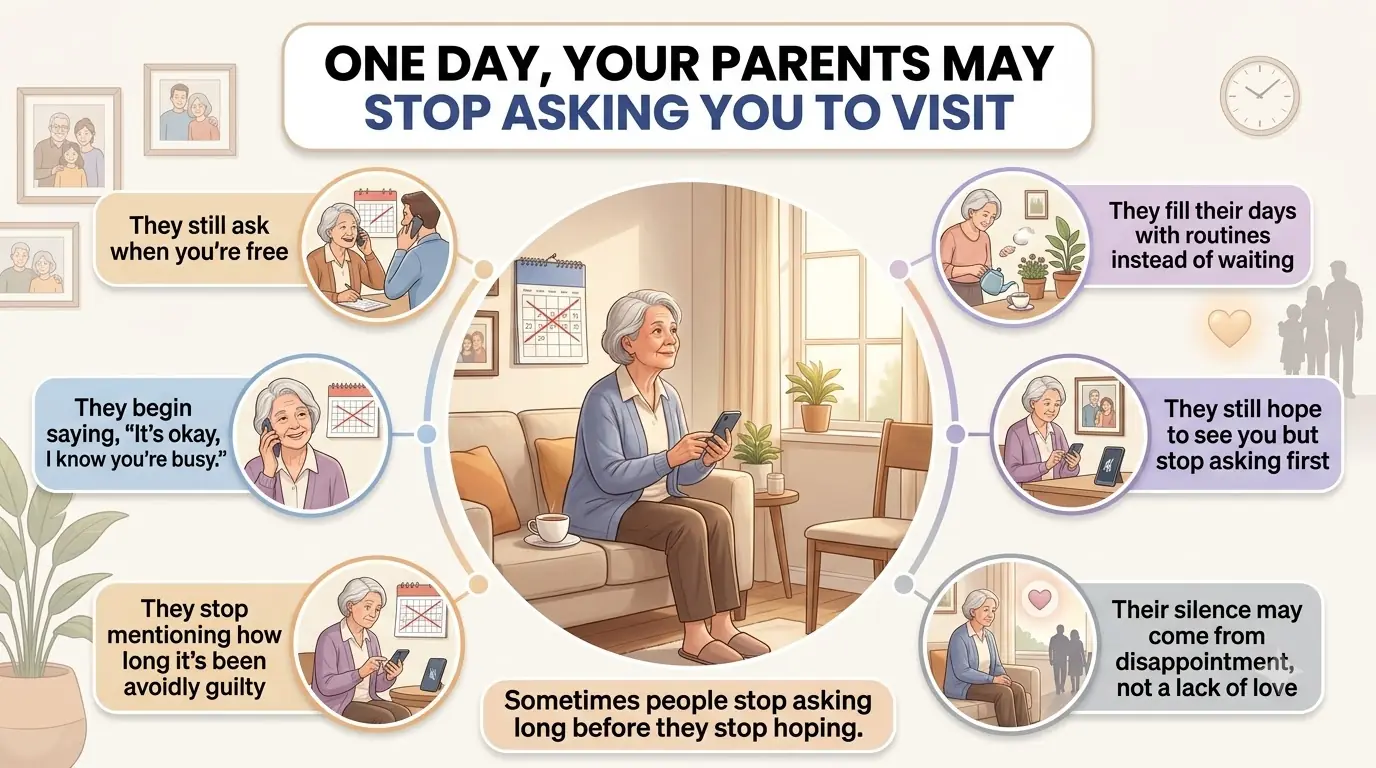
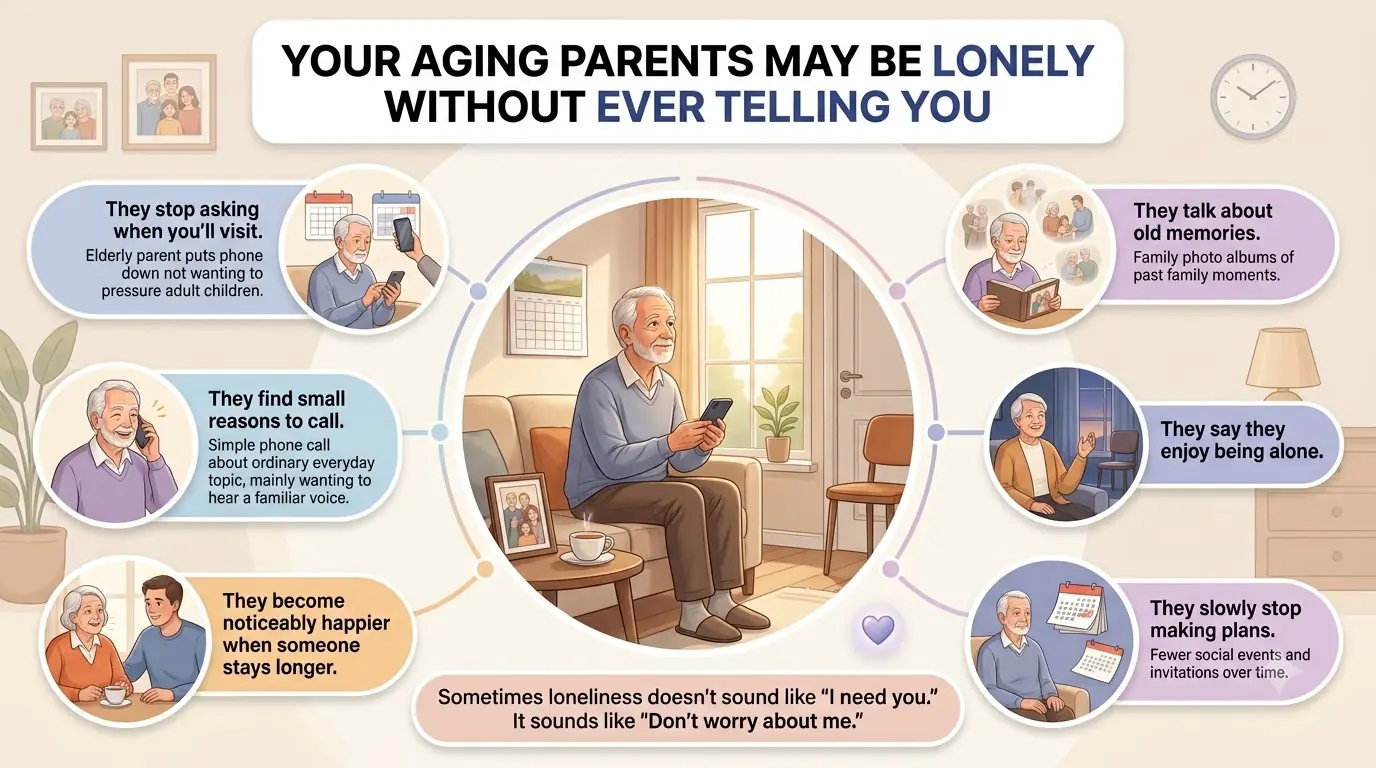
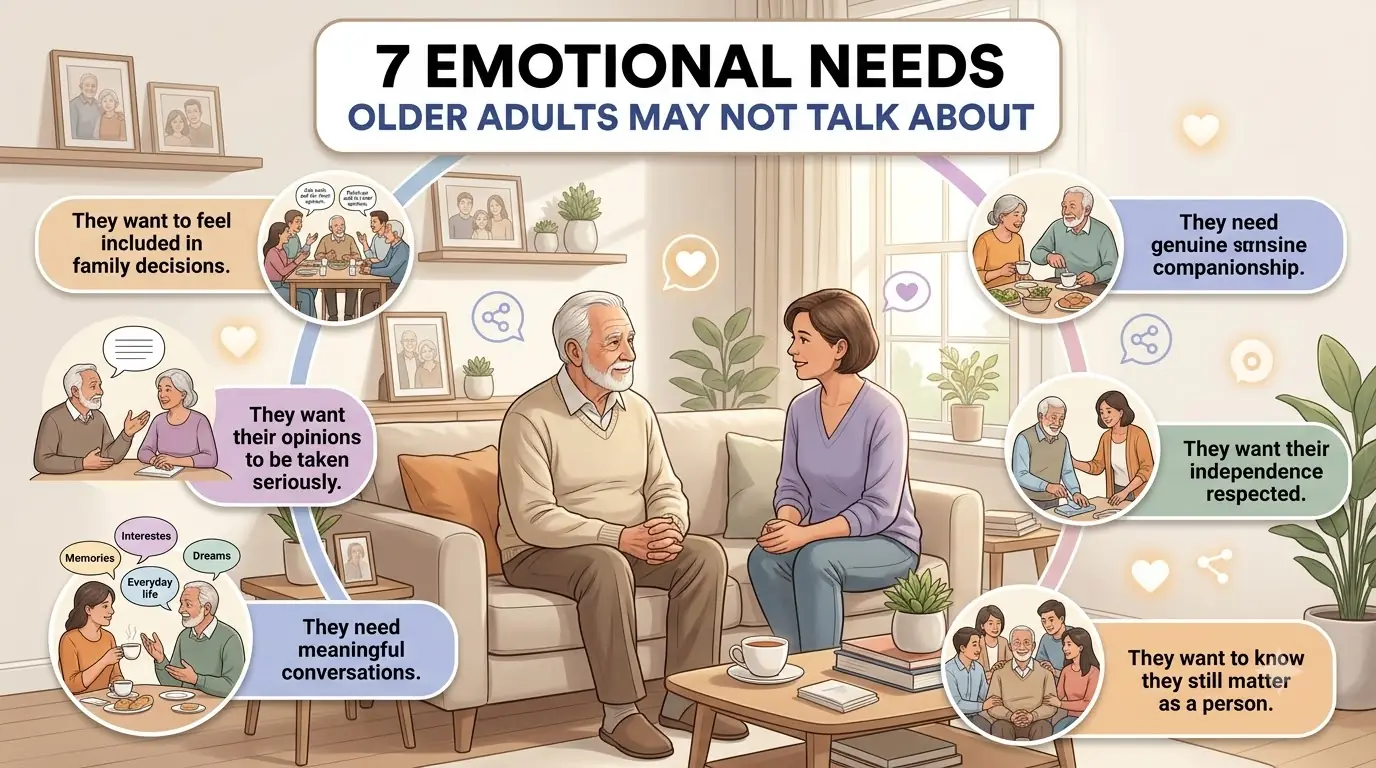
ONE OF THE HARDEST PARTS OF AGING IS FEELING LESS NEEDED
Reader Theme:
Font Size:
24px
ONE OF THE HARDEST PARTS OF AGING IS FEELING LESS NEEDED
For much of adulthood, life can be filled with people who depend on you. Children need rides, meals, advice, reassurance, and help solving problems. Coworkers rely on your experience. A spouse or partner shares responsibilities with you. Friends and relatives call when they need an opinion or an extra pair of hands.
Then life changes.
Children grow up. Careers end. Families develop routines of their own. Tasks that once belonged to you are increasingly handled by someone else. Sometimes people even begin helping you before you've asked them to.
For some older adults, this transition can create a difficult question: If fewer people need what I used to provide, where do I fit now?
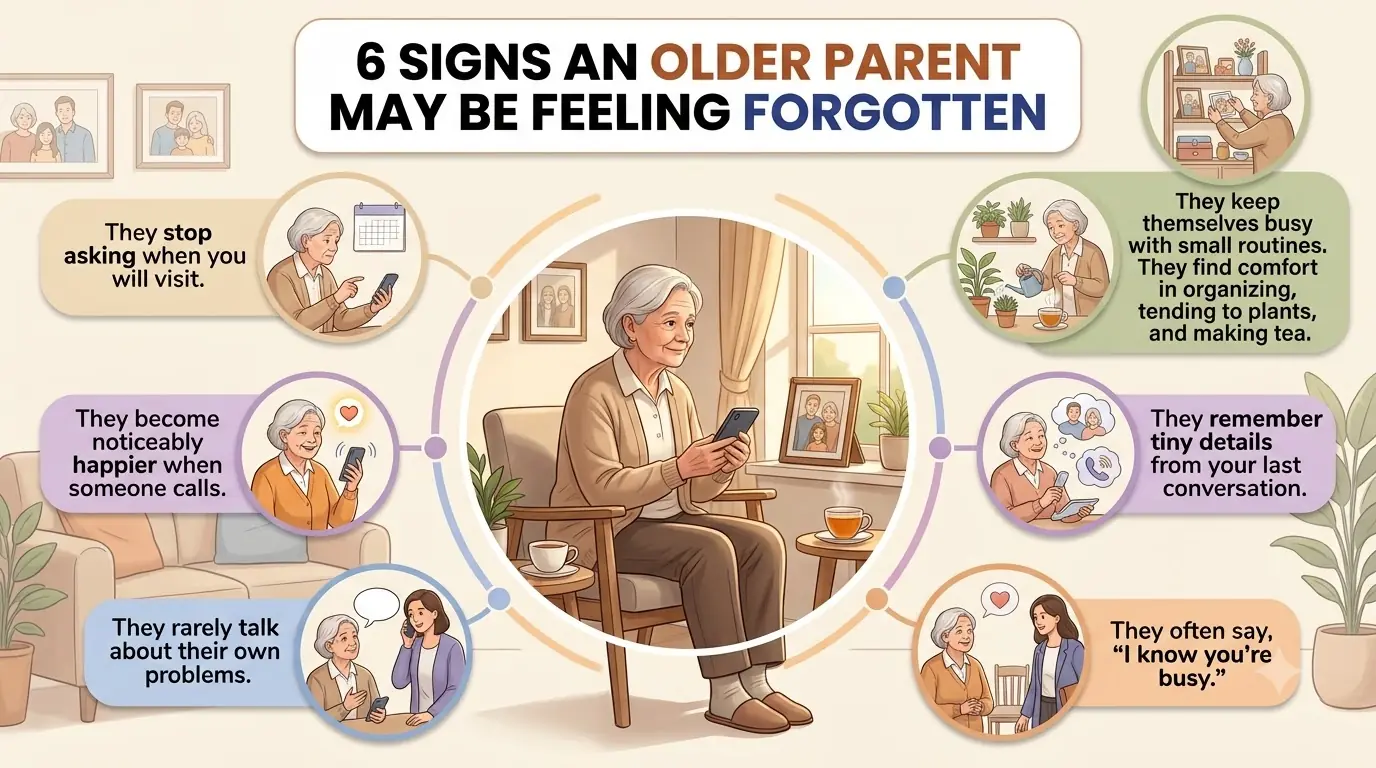
Healthy aging isn't only about protecting the body. Maintaining autonomy, meaningful relationships, social participation, and a sense of purpose can also contribute to well-being. Growing older may change someone's roles, but it doesn't make their experience, abilities, or presence irrelevant.
Why Feeling Needed Can Matter So Much
People often derive meaning from the roles they hold.
Someone may spend decades thinking of themselves as a parent, caregiver, teacher, manager, provider, volunteer, problem-solver, or trusted friend.
Those roles provide more than responsibilities.
They can provide structure, identity, connection, and a reason to get up in the morning.
Retirement, an empty nest, physical limitations, bereavement, or changes in family dynamics can alter those roles surprisingly quickly.
An older adult may suddenly spend far more time receiving assistance than providing it.
That adjustment can be emotionally difficult, especially for someone who has spent most of life caring for other people.
1. The People Who Once Depended on You May No Longer Need the Same Kind of Help
Parenthood is one of the clearest examples.
For years, children may depend on their parents for nearly everything.
Parents prepare meals, solve problems, provide transportation, offer financial support, give advice, and organize much of family life.
Then those children become independent adults.
That's exactly what parents generally hope will happen.
But success can create an unexpected transition.
The phone no longer rings every time something goes wrong. Adult children make major decisions independently. Grandchildren grow older. Family members become increasingly capable of managing their own lives.
A parent can be proud of that independence while simultaneously missing the role they once occupied.
Those feelings aren't contradictory.
Sometimes what an older parent misses isn't having small children again. They miss the experience of knowing their presence was an essential part of someone's everyday life.
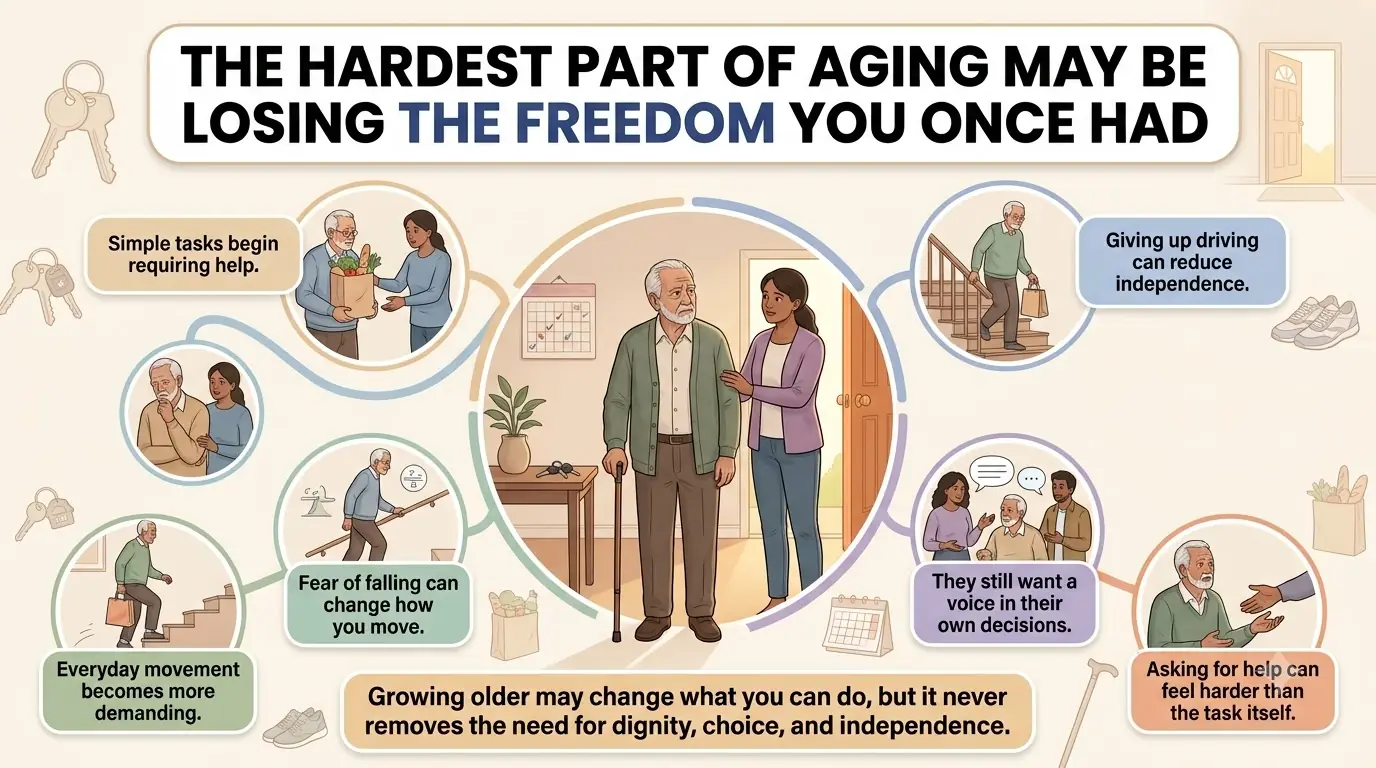
2. People May Begin Doing Things for You Before You Ask
Families often become more protective as parents age.
An adult child may carry the groceries, make an appointment, drive somewhere, handle paperwork, or complete a household task because they want to help.
Sometimes assistance is necessary and appreciated.
But repeatedly stepping in when someone remains capable can unintentionally communicate a different message:
“You can't do this anymore.”
The intention may be love.
The experience can feel like lost independence.
Before automatically taking over, ask:
“Would you like some help?”
“Which part would you like me to handle?”
“Do you want to do this together?”
Giving someone the opportunity to say yes—or no—helps preserve autonomy.
Support works best when it helps someone continue doing what they can safely do rather than automatically replacing their abilities.
3. Their Advice May Be Requested Less Often
Older adults may possess decades of experience with work, relationships, parenting, finances, home repairs, cooking, caregiving, and countless other parts of life.
Yet families can gradually stop asking what they think.
Sometimes this happens because younger generations have different ways of solving problems.
Sometimes everyone is simply busy.
And sometimes people unconsciously begin treating age as though it reduces the value of someone's perspective.
Advice doesn't always need to be followed to be respected.
Ask:
“What do you think?”
“Have you ever dealt with something like this?”
“How would you approach it?”
“What was this like when you were younger?”
The goal isn't to pretend someone knows everything because they're older.
It's to recognize that experience remains a valuable resource.
4. Family Conversations Can Begin Happening Around Them
Being physically included isn't always the same as feeling included.
An older parent can sit at a crowded dinner table and still feel invisible.
Conversations move quickly.
People check their phones.
Children talk among themselves.
Plans are made without asking the older person whether they want to participate.
Hearing loss can make this even harder.
If someone struggles to follow rapid conversations, they may gradually stop trying to participate. Other family members may then interpret their silence as a lack of interest.
Small changes can help.
Sit where everyone can see and hear one another.
Slow down occasionally.
Ask questions directly.
Give someone time to finish speaking.
Most importantly, don't restrict conversation to medications, doctor appointments, and physical health.
An older parent still has opinions about the world.
5. They May Hesitate to Offer Help
A subtle shift can happen when someone becomes viewed primarily as a person who needs care.
Family members may stop allowing them to contribute.
“Sit down. We'll handle it.”
“You don't need to do anything.”
“Just relax.”
Those words can be caring.
But imagine hearing some version of them every day.
Eventually, someone may stop offering.
The answer isn't to create unnecessary chores or expect older adults to prove their usefulness.
Instead, provide genuine opportunities to contribute according to their abilities and interests.
Someone might:
- Help prepare a family meal.
- Teach a grandchild a skill.
- Share a favorite recipe.
- Give advice about something they understand well.
- Help plan an event.
- Volunteer in the community.
- Care for plants or pets.
- Share family history.
Receiving help and providing help aren't mutually exclusive.
A person can need assistance in one part of life while remaining extremely capable in another.
6. What They Miss May Be Purpose, Not Youth
When older adults talk about earlier decades, it's easy to assume they simply miss being young.
Sometimes they may.
But they may also miss what their younger life contained.
People needed them.
There were places they had to be.
Their calendar had structure.
Coworkers expected them.
Children called for help.
Friends regularly stopped by.
There were problems to solve and responsibilities to fulfill.
Retirement and reduced family responsibilities can provide welcome freedom, but they can also remove sources of everyday purpose.
That's why healthy aging should involve more than simply finding ways to pass the time.
Activity and purpose aren't necessarily the same thing.
Someone can stay busy all day without doing anything that feels personally meaningful.
Purpose Can Change Without Disappearing
Meaningful roles don't have to end because someone retires or becomes physically limited.
They may simply need to evolve.
A retired professional might mentor younger people.
A grandparent might teach grandchildren skills or family traditions.
Someone who can no longer maintain a large garden might care for a smaller one.
A person who once volunteered physically might contribute knowledge or time in another way.
The important question isn't:
“What can we give them to do?”
It's:
“What still matters to them?”
Purpose is personal.
For one person, it may come from family. For another, volunteering, faith, creativity, friendship, learning, caregiving, or community involvement may provide meaning.
Independence and Usefulness Aren't the Same as Doing Everything Alone
Older adults don't need to remain completely self-sufficient to maintain autonomy or purpose.
All people depend on others throughout life.
The goal is not to avoid receiving help.
It's to preserve meaningful choice and participation.
Someone may need transportation but still decide where they want to go.
They may need assistance shopping but still choose what they want to buy.
They may need physical help preparing dinner while still teaching the family how to make a treasured recipe.
Support should ideally expand what someone can continue doing—not unnecessarily replace them.
Ask for Their Opinion Before Making Decisions About Them
One of the simplest ways to reinforce someone's sense of value is to include them in decisions.
This becomes particularly important when decisions concern their own life.
Whenever they're able to participate, ask about preferences regarding:
- Living arrangements.
- Transportation.
- Medical care.
- Daily routines.
- Family activities.
- Household assistance.
- Social activities.
Safety sometimes requires difficult conversations, especially when cognitive or physical abilities decline.
But protecting someone doesn't automatically require excluding them from the discussion.
Whenever possible, make decisions with an older adult rather than simply for them.
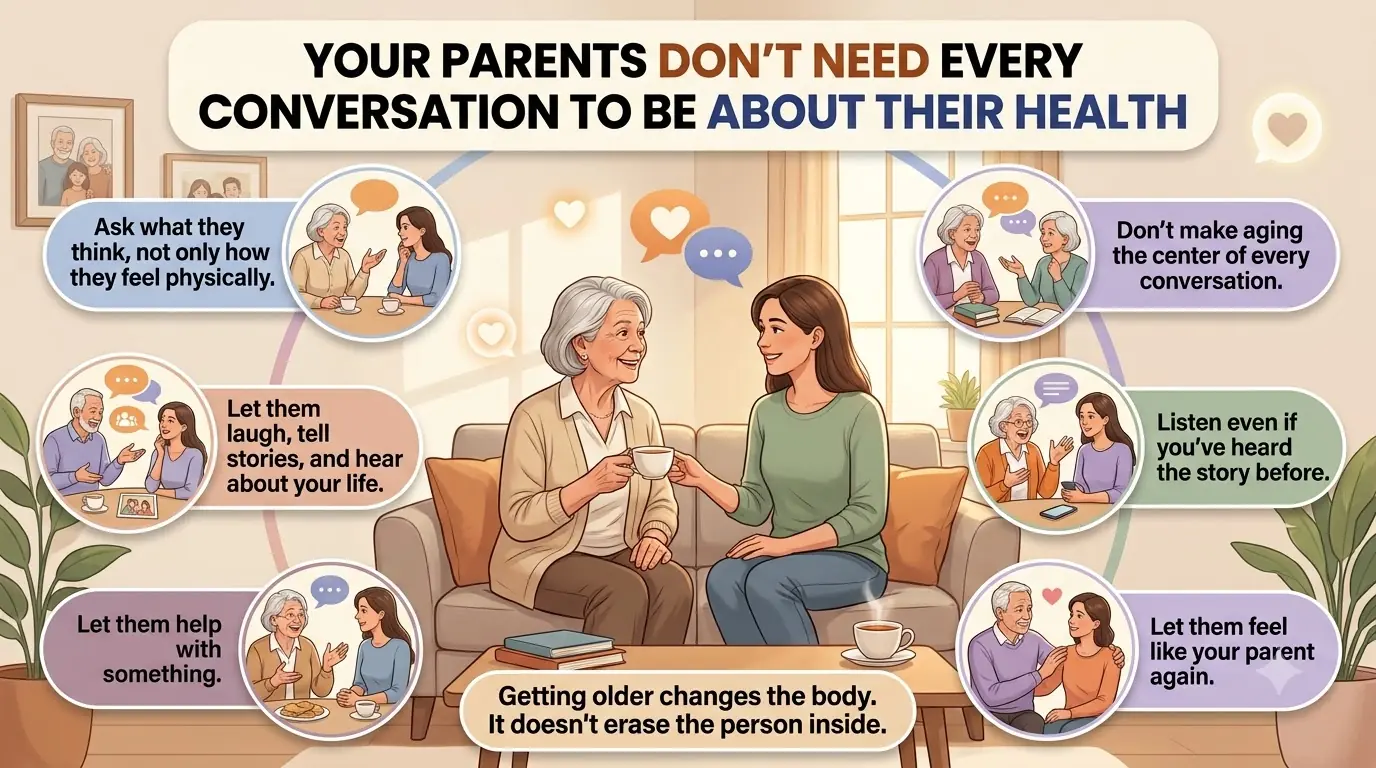
Don't Let Every Conversation Become a Checkup
When parents grow older, adult children naturally become more concerned about their health.
“Did you take your medication?”
“How is your blood pressure?”
“When is your next appointment?”
“Does your knee still hurt?”
These questions can be important.
But if every conversation becomes a health assessment, an older parent may begin to feel more like a patient than a parent.
Talk about ordinary life too.
Tell them what happened at work.
Ask their opinion about something.
Share a joke.
Discuss a movie.
Ask about a family memory.
Tell them about something you're struggling with if appropriate.
Sometimes asking a parent for advice allows the relationship to temporarily return to a familiar position: they get to help you again.
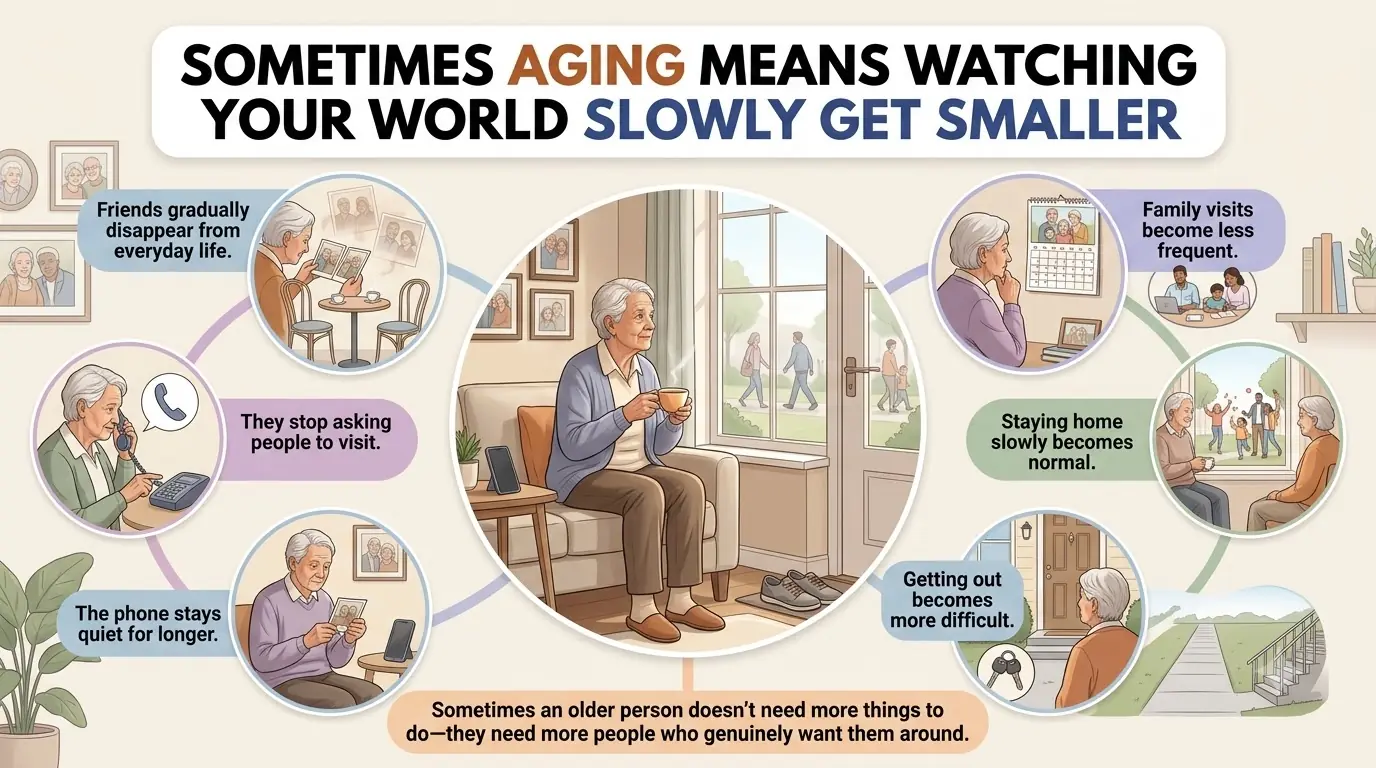
Social Connection Matters Too
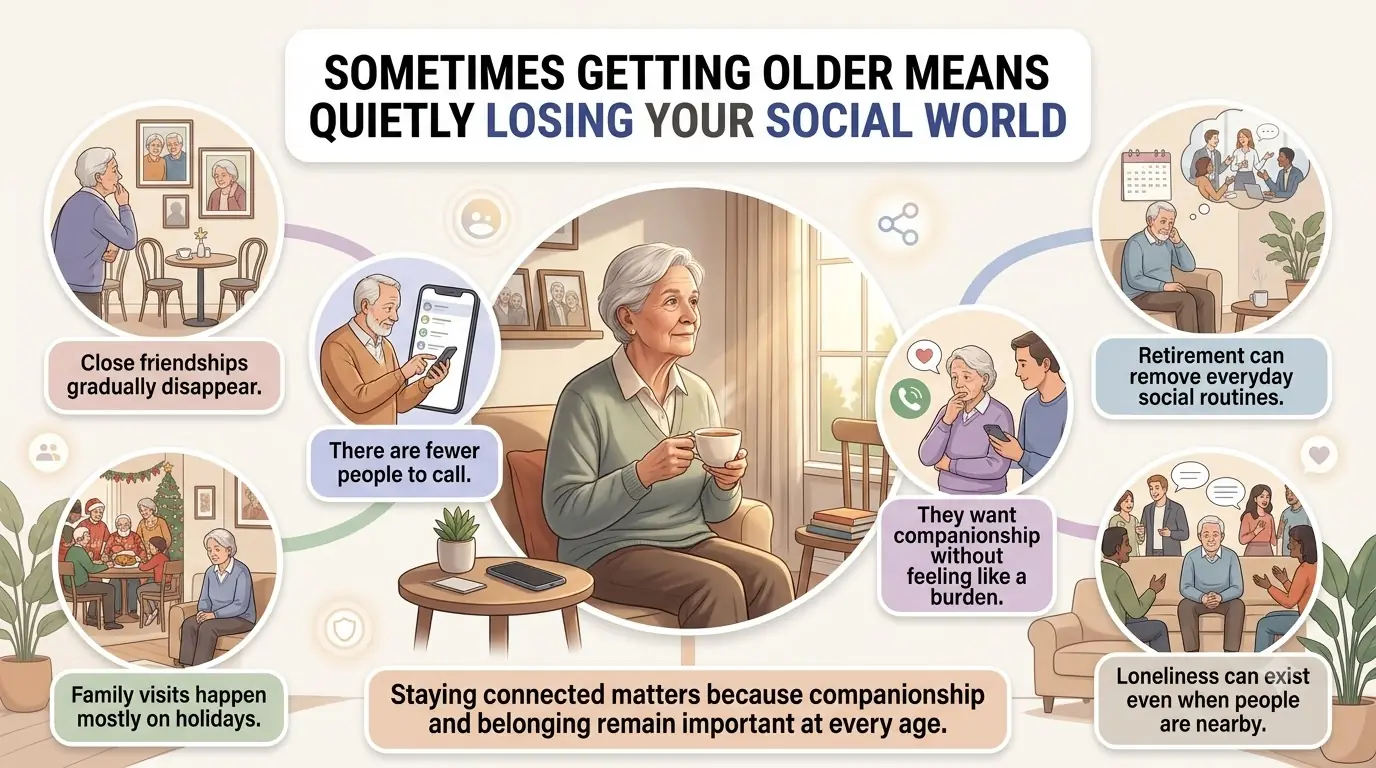
Feeling unnecessary can become particularly difficult when combined with social isolation.
Retirement may remove coworkers.
Friends may become ill or die.
Adult children may live far away.
Driving may become difficult.
Someone who once interacted with dozens of people every week can gradually spend most days alone.
Social isolation and loneliness have been associated with poorer physical and mental health outcomes in older adults.
But the solution isn't simply surrounding someone with people.
Meaningful relationships matter.
Being invited, listened to, consulted, and genuinely wanted can feel very different from being included only because others feel obligated.
When Feeling Less Needed Becomes Persistent Withdrawal
Feeling uncertain about one's role after retirement or other major life transitions can occur without indicating a mental health condition.
But significant behavioral changes deserve attention.
Watch for:
- Persistent sadness or hopelessness.
- Loss of interest in previously enjoyable activities.
- Increasing social withdrawal.
- Major changes in sleep or appetite.
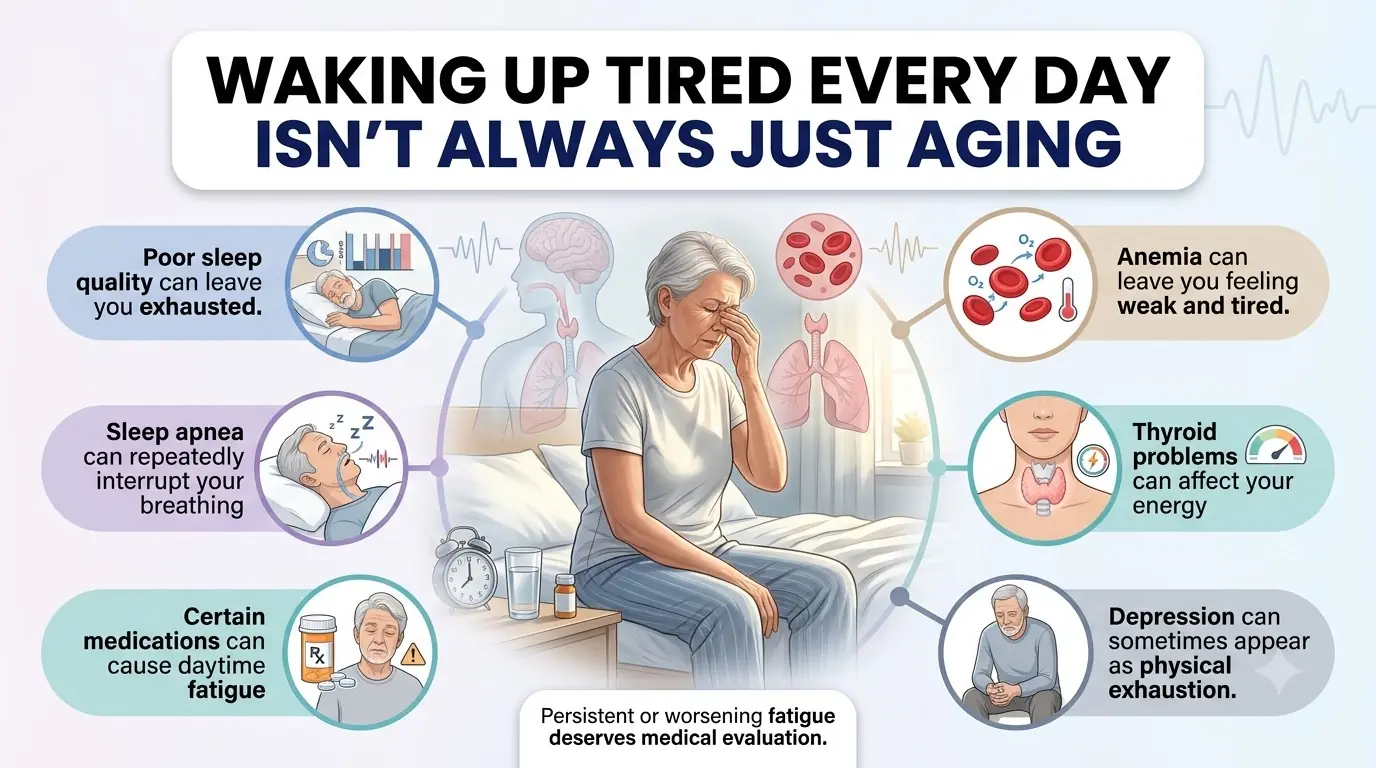
- Unusual fatigue.
- Difficulty concentrating.
- Neglecting personal care.
- Significant changes in everyday functioning.
Depression isn't an inevitable part of aging.
Grief, chronic illness, pain, medication effects, hearing loss, cognitive changes, and other conditions can also contribute to withdrawal or low mood.
Persistent changes should be discussed with a healthcare professional.
How Families Can Help Older Adults Continue to Feel Valued
You don't need to make someone artificially dependent on them.
Instead, recognize the ways they still contribute.
Try:
- Asking for their opinion.
- Listening without immediately correcting them.
- Letting them help when they genuinely can.
- Including them in family decisions.
- Asking about subjects they know well.
- Supporting meaningful hobbies and volunteering.
- Giving them time to complete tasks independently.
- Calling for conversation rather than only health updates.
- Showing appreciation when they contribute.
- Respecting their choices whenever safely possible.
Small interactions repeatedly communicate either “you still belong here” or “we can handle everything without you.”
That distinction can matter.
Key Takeaways
- Retirement, grown children, physical limitations, and changing family roles can affect an older adult's sense of purpose.
- Needing assistance in one area doesn't mean someone is incapable in every area.
- Automatically taking over tasks can unintentionally reduce autonomy.
- Asking older adults for their opinions and involving them in decisions communicates respect.
- Meaningful contribution can take many forms, including family involvement, mentoring, volunteering, creativity, and sharing knowledge.
- Older adults can receive help while still providing valuable help to others.
- Social connection is most meaningful when someone feels genuinely included rather than merely looked after.
- Persistent withdrawal, sadness, or loss of interest shouldn't automatically be dismissed as normal aging.
Growing older may change the ways a person is needed. It should never mean becoming invisible, unheard, or unimportant.
Medical Disclaimer
This article is for general educational purposes and is not a substitute for professional medical or mental health advice, diagnosis, or treatment. Emotional responses to retirement, aging, changing family roles, and loss of independence vary widely. Persistent sadness, hopelessness, social withdrawal, loss of interest, cognitive changes, or significant changes in everyday functioning should be discussed with a qualified healthcare professional.