That translation is wrong. The chubby waitress said it before she could stop herself. Every expert at the table turned toward her. The devastatingly handsome mafia boss slowly looked up. You can read this?
He mocked. Mabel studied the old letter again. Yes. Laughter broke out. Raphael Orsini pushed it toward her. $1 million if you read it correctly.
Mabel ignored the money, translated the first line, then went pale. The room fell silent. Raphael's smile vanished. Keep reading. She looked at him.
Your father says someone in this room betrayed him. Nobody laughed after that. Mabel Quinn stood beside the table with a silver coffee pot still in one hand, painfully aware that six highly paid specialists were staring at her as if the furniture had started speaking. Claudia Ren recovered first. That is not what it says.
Her voice carried the confidence of someone accustomed to being the most qualified person in the room. Mabel glanced at the letter again. Not literally. Claudia gave a thin smile. Then perhaps you should leave literal translation to people trained to do it.
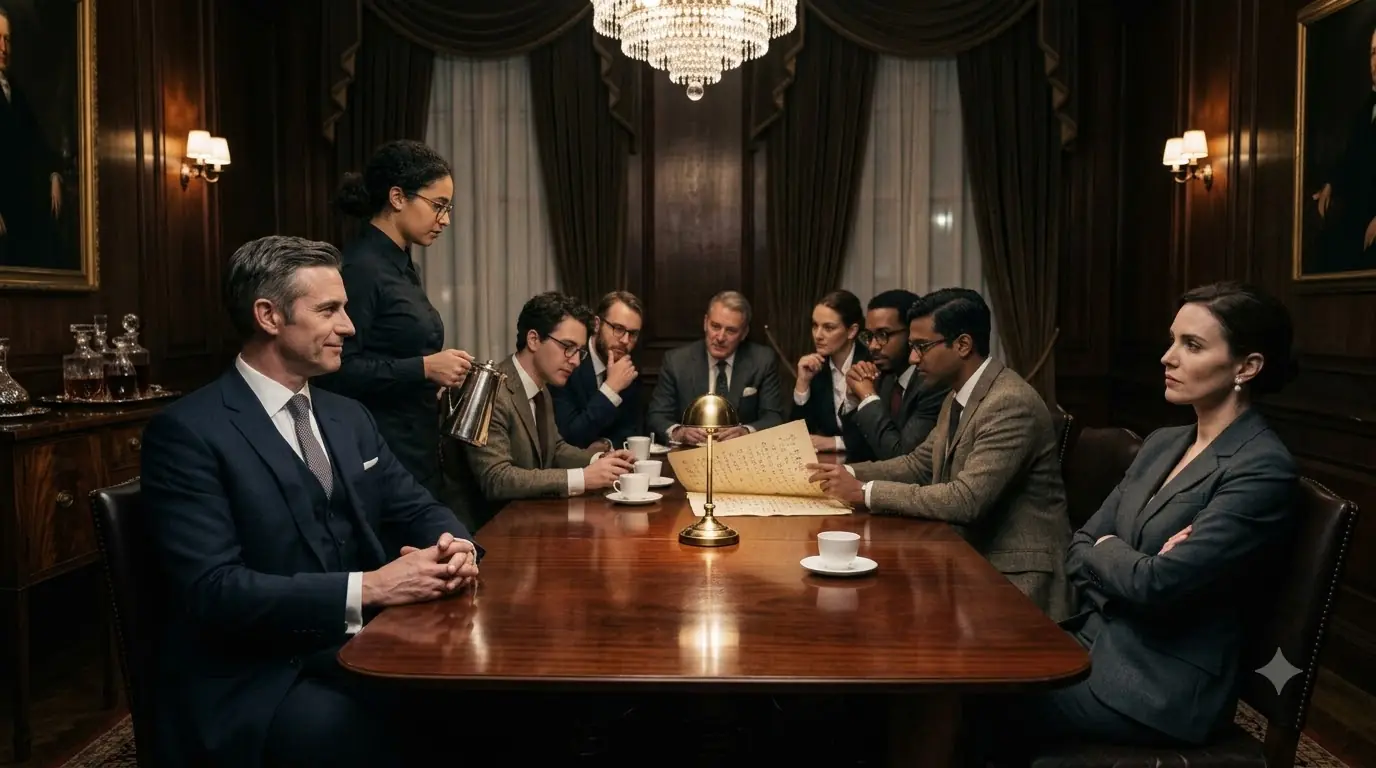
Mabel should have walked away. She had tables waiting, bills waiting, and no desire to become memorable to Raphael Orsini. Especially not Raphael Orsini. Men lowered their voices when they said his name. His legitimate empire stretched through ports, construction firms, luxury properties, private security companies, and investment houses.
The organization beneath it was larger, quieter, and far more feared. Raphael did not raise his voice. He did not need to. Explain, he said. Mabel sat down the coffee pot.
She pointed to a cramped phrase near the letter's upper margin. She translated this as the northern account remains beneath the protection of the house. Claudia folded her arms. Correct. No.
Casa means house in ordinary Italian. Here it means the merchant family responsible for guaranteeing the transaction. One of the other specialists leaned closer. Mabel continued. And that mark isn't punctuation.
It's an accounting substitution. Claudia's expression tightened. According to whom? Merchants who didn't want customs officials reading their books. A faint shift passed across Raphael's face.
Mabel pushed her glasses higher. This isn't one language. That's why your translations keep breaking apart. The writer switches between old merchant Italian and Latin abbreviations, then uses French commercial shorthand whenever he refers to ownership. A cryptographer at the far end frowned.
And the numbers, some are quantities, some replace names. He stopped frowning. Claudia did not. She carries plates for a living. The insult landed softly enough to be worse.
Mabel looked at her. And you mistranslated six lines for a living. Someone coughed into his fist. Raphael turned his face slightly, but not before Mabel caught the brief movement at the corner of his mouth. Then his expression hardened again.
Read the next line. Mabel did slowly. She did not translate word for word. She reconstructed the substitutions, turning fragments into meaning. While the specialists checked dictionaries, photographs, and notes around her, the room grew quieter with every sentence.
There was a reference to keys that were not physical keys, a transfer that was not a sale, then a warning disguised as an inventory discrepancy. Raphael leaned forward. Where did you learn this? Mabel's finger stopped over a faded symbol. From someone who couldn't afford to charge you a million dollars.
This time, Raphael did not hide his reaction quickly enough. For the first time that evening, amusement briefly displaced suspicion. Then, Mabel reached the next sequence. Three numbers repeated beside a tiny wolf-shaped mark. Her stomach tightened.
She read it twice. What? Raphael's amusement disappeared. Mabel looked up. The person who wrote this expected the letter to be intercepted.
That's why the important statements are disguised as commercial instructions. And she translated the next sentence carefully. The wolf did not die. He inherited the keys. Something changed around the table.
Not confusion. Recognition. Raphael became perfectly still. Claudia's face lost a shade of color. Mabel noticed.
Raphael noticed Mabel noticing. "What does wolf mean? " she asked. He ignored the question. "Continue. " Mabel reached for the letter. Raphael placed two fingers over its edge before she could take it.
"The million is yours if you're right. " She met his eyes. "I haven't finished. " His fingers remained there for another second. Then he released the page. Mabel studied the final coded notation beneath the sentence. It was smaller than the others, almost buried in the flourish of the signature.
The symbol repeated twice. Once beside the wolf, once beside a name. She reconstructed the abbreviation and felt the meaning settle unpleasantly into place. Raphael watched her expression. What did you find?
Mabel raised her eyes. The betrayal wasn't 20 years ago. The silence became absolute. According to this, she said, "It was supposed to continue after your father died. " By 9 the next morning, Raphael knew almost everything that could be purchased about Mabel Quinn. By 10, he understood considerably less.
He stood behind the desk in his private office while his head of security summarized a file that should have been ordinary. 32. No criminal record, no unexplained income, no political connections, no relationship to any known rival organization. Four years earlier, Mabel had begun working at the private dining club. Before that, however, the pattern changed.
She studied historical linguistics, Raphael said. And archival studies, his security chief replied. Graduate research track, strong evaluations. Several professors expected her to continue into doctoral work. Raphael turned a page.
There were conference abstracts, research notes, and the remains of a life that did not resemble the woman carrying coffee through his meeting. One paper concerned merchant correspondents across northern Italian and French trading networks. Another examined abbreviations used to conceal commercial ownership. Raphael's gaze stopped. Convenient.
We checked. Of course they had. Raphael employed people whose definition of checking included bank records, former landlords, academic supervisors, travel history, and whether someone had purchased an unusual amount of gasoline 12 years earlier. Nothing connected Mabel to the Orsini family. Her grandfather had restored antique ledgers for collectors and small archives.
As a child, she had spent hours beside him while he reconstructed damaged books. He had taught her obsolete merchant notation as other grandparents might teach card games. Then came the less interesting facts, the ones Raphael found himself reading twice. Her father became ill. Medical expenses accumulated.
Her family's small business collapsed. Loans followed. Then collection notices. Mabel left university. She worked.