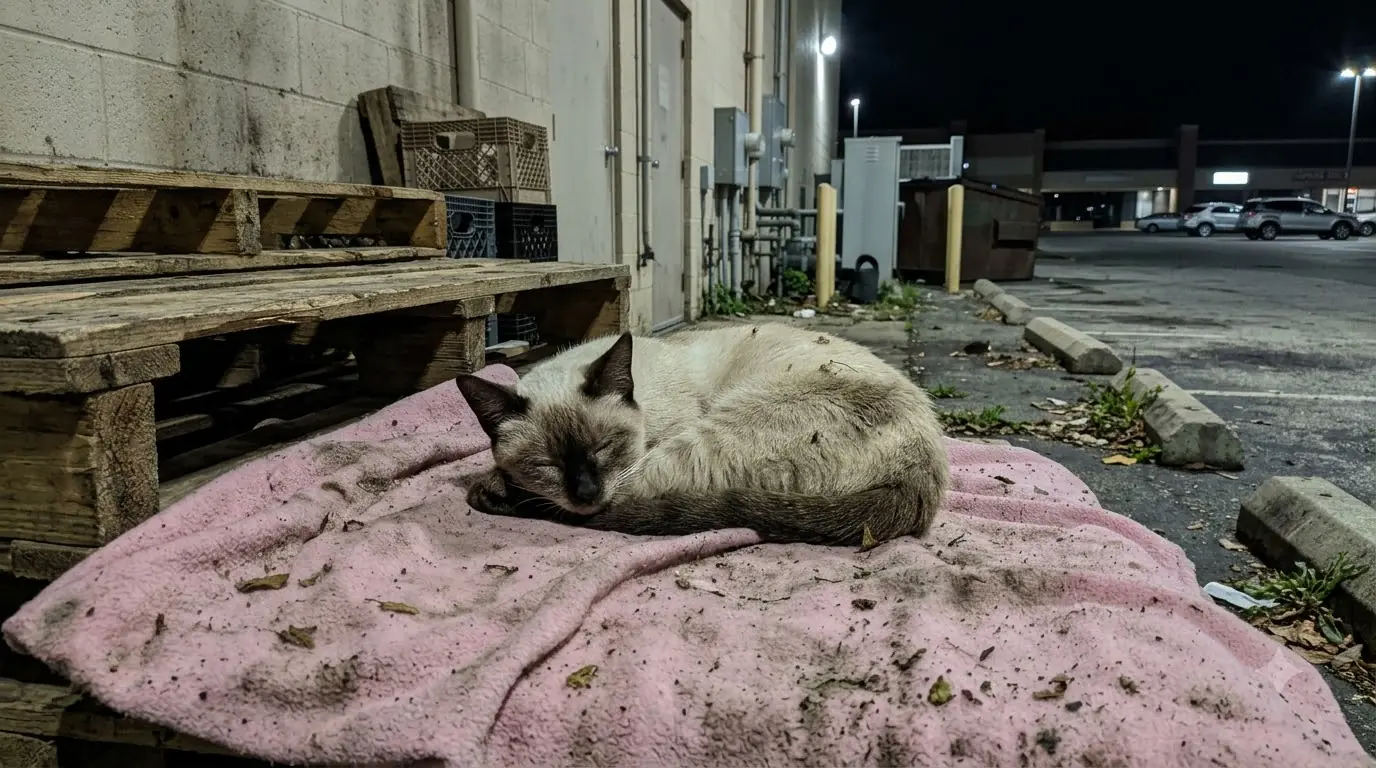
PART 2 — CURRENT CONDITION UPDATE
Mochi’s veterinary examination helped explain something rescuers had noticed almost immediately: although she seemed hungry, eating was difficult for her.
A closer oral examination found significant inflammation along her gums, particularly around several back teeth. One tooth also appeared damaged. The discomfort likely contributed to her low body weight, although we cannot know how long the problem had been present or how much food Mochi had been able to find while living outdoors.
Her veterinary team started pain management and supportive care while addressing her dehydration. Because chewing dry food was uncomfortable, Mochi was offered soft wet food in small portions.
At first, she approached the bowl eagerly but stopped after several bites. Over the next day, with her discomfort better controlled, she began eating longer and returned to the bowl several times on her own.
That has been one of the most encouraging changes.
Mochi is also drinking independently now. She remains underweight, so her meals are being carefully monitored rather than simply giving her unlimited amounts at once. The goal is steady, safe nutritional recovery while her dental problem is properly treated.
Despite her difficult start, her litter box habits have been normal. She is urinating regularly and has begun passing normal stool as her food intake becomes more consistent. She walks comfortably around her recovery room and shows no obvious problems with balance or mobility.
Emotionally, Mochi is still learning that she no longer needs to disappear whenever something moves nearby.
For her first day indoors, she stayed almost completely inside a covered cat bed. Sudden footsteps made her flatten herself against the bedding, and she preferred eating when no one was standing nearby.
Caregivers have avoided pulling her from her hiding place.
That approach is beginning to work. Mochi now watches quietly when her food arrives instead of immediately retreating. She has started stretching outside her bed after naps, and caregivers recently noticed her carefully grooming the fur along one shoulder and front leg.
Her mouth remains the primary medical concern.
Once Mochi is adequately hydrated and stable for anesthesia, the veterinary team plans a more complete dental examination with dental X-rays. The damaged tooth may require extraction, and the imaging will help determine whether additional teeth have painful disease below the gumline.
Until then, she will remain on veterinarian-directed pain control and a soft-food diet while her weight, hydration, and appetite are monitored closely.
Mochi is not fully recovered yet. She still has dental treatment ahead of her and weight to regain. But instead of curling into a tight ball behind a dark strip mall each night, she now sleeps in a warm, quiet room with food nearby, medical care underway, and people giving her all the time she needs to feel safe.