Sainty’s Recovery After Being Struck and Left Beside the Road
Reader Theme:
Font Size:
24px
Sainty’s Recovery After Being Struck and Left Beside the Road
PART 2 — CURRENT CONDITION UPDATE
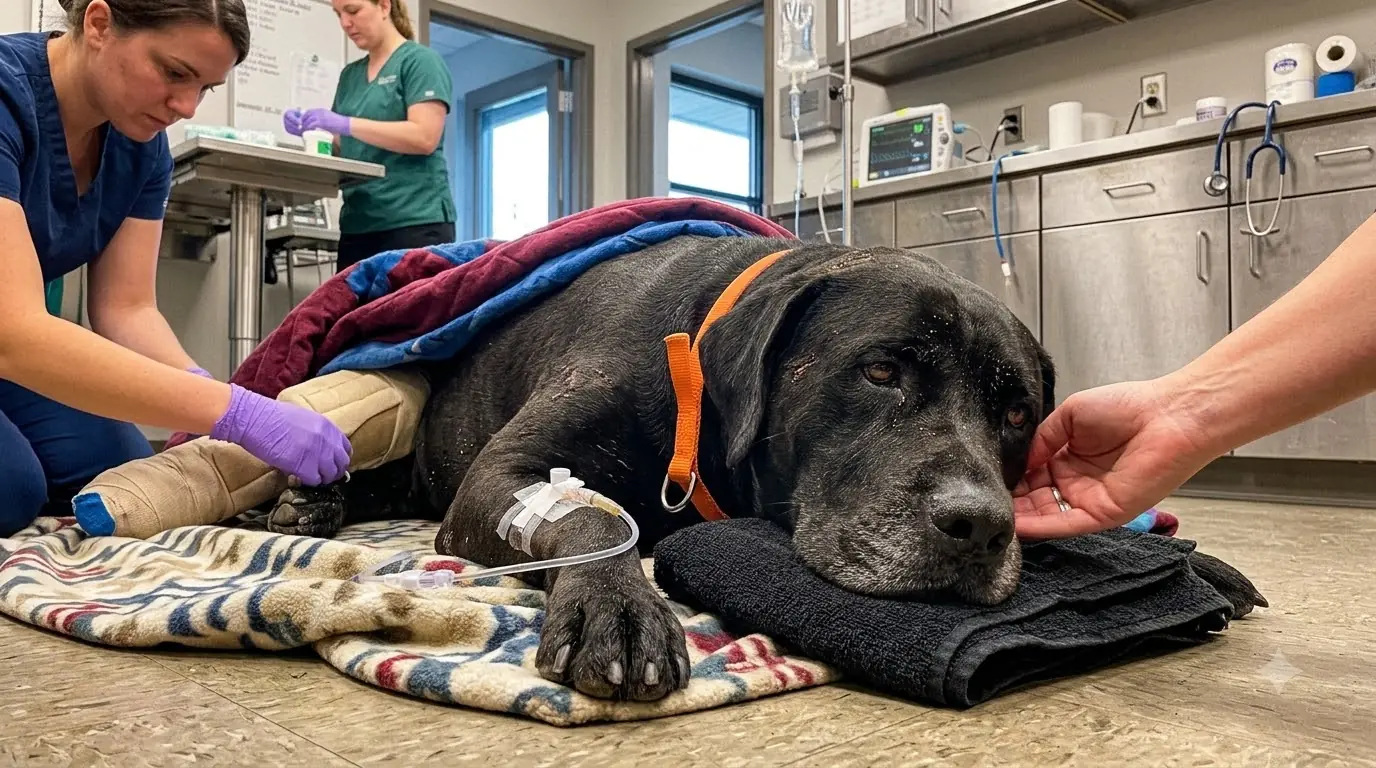
Sainty remains under close veterinary care after undergoing surgery for the most serious injuries caused by the collision. He is stable, alert, and showing several encouraging changes, but his recovery is still considered uncertain. The medical team cannot yet promise that he will regain normal use of his hind legs or complete control of his bladder.
When Sainty arrived at the emergency hospital, the immediate priority was treating shock. His blood pressure was dangerously low, his heart rate was elevated, and his gums were pale. An intravenous catheter was placed while oxygen, carefully measured fluids, pain medication, and warming support were started.
An ultrasound of his abdomen did not reveal a large volume of free fluid, but there was bruising around his bladder and pelvic tissues. Repeated scans were performed because internal bleeding can become more apparent after circulation improves.
Sainty’s red blood cell count fell moderately during the first several hours and then stabilized. He did not require an immediate transfusion, though compatible blood was prepared in case his condition worsened. Follow-up testing showed no evidence of continued major hemorrhage.
Chest X-rays revealed bruising within one lung but no collapsed lung or fluid requiring drainage. Sainty received supplemental oxygen until his breathing became easier. He did not need mechanical ventilation, and the lung changes have begun resolving with rest and supportive care.
The most extensive damage involved his pelvis. CT images showed fractures affecting several areas, including the section near the left hip and one side of the sacroiliac joint, where the pelvis connects to the spine. His left hip had also been forced out of its socket.
One fractured section had shifted inward toward the pelvic canal. Swelling and displaced bone were placing pressure near the nerves responsible for movement, sensation, and bladder function. This finding explained why Sainty could not use his hind legs normally.
The surgical team first stabilized the most displaced portion of the pelvis using plates and screws. Restoring the shape of the pelvic canal reduced pressure on surrounding nerves and helped create a more stable structure for healing.
The left hip could not be returned safely to a stable position because the nearby bone had been damaged. The surgeons performed a procedure that removed the injured head and neck of the femur. Over time, scar tissue and supporting muscles can form a functional false joint that allows comfortable movement.
This procedure does not make the hip anatomically normal, and rehabilitation will be essential. However, it can provide good pain relief and useful mobility, particularly when the alternative is a chronically dislocated and severely painful joint.
No attempt was made to repair every small fracture. Several pieces were well aligned and expected to heal with strict rest once the major instability had been corrected. Additional hardware would have increased surgical time and tissue trauma without a clear benefit.
Sainty remained in intensive care after surgery. He was kept on thick padding and repositioned carefully to prevent pressure sores. His body was moved as a unit so the healing pelvis would not twist.
Pain control required multiple medications working in different ways. The goal was to keep him comfortable without making him so sedated that neurological changes could not be evaluated. His heart rate, breathing, blood pressure, temperature, and response to touch were checked frequently.
During the first night, Sainty slept deeply but raised his head whenever the kennel door opened. By morning, he accepted several licks of water and a small amount of soft food from a technician’s hand.
His appetite remained inconsistent for two days. Pain, anesthesia, stress, and reduced movement can all slow the digestive system. Medication was given for nausea, and meals were offered in small portions while he rested on his chest.
Sainty now eats most of four small meals each day. His caregiver holds the bowl at a comfortable height so he does not have to shift his pelvis. He takes food gently and often pauses to rest his head against the edge of the bowl.
His hydration is stable, and his kidney and liver values remain acceptable. This allows the team to continue the necessary pain medication while watching for side effects. His stool has also remained soft enough that he does not need to strain.
Bladder function remains one of the greatest concerns. When Sainty arrived, his bladder was overly full, and he could not empty it voluntarily. A urinary catheter was placed to prevent dangerous stretching and monitor urine production.
Testing found blood in the urine, which can occur after blunt trauma. A contrast study showed no complete rupture of the bladder or urethra. This was an important piece of good news because a tear would have required additional emergency surgery.
The catheter has since been removed for supervised bladder trials. Sainty can release a small amount of urine, but he does not empty his bladder fully. Veterinary staff check the remaining volume with ultrasound and assist him when necessary.
Incomplete emptying increases the risk of urinary infection and bladder damage. His urine is monitored for bacteria, unusual odor, cloudiness, or increased blood. A culture will be performed if infection is suspected rather than giving unnecessary antibiotics without evidence.
Medication is being used to help the bladder outlet relax while the injured nerves recover. The team evaluates him several times daily for changes in voluntary control. Even a small purposeful stream is considered meaningful at this stage.
Sainty has begun sniffing before urinating and sometimes lifts his tail slightly. These behaviors suggest that some communication between the bladder and nervous system remains. However, reliable control may take weeks or months to evaluate.
His neurological examinations have also produced cautious hope. Before surgery, Sainty showed little purposeful movement in either hind leg. He retained deep pain sensation, meaning he responded when the toes were firmly stimulated. That response gave the surgeons a reason to believe nerve recovery was possible.
After surgery, swelling initially made his movement appear unchanged. On the third day, a technician observed a brief withdrawal of his right hind foot during examination. The movement was weak, but it was repeatable.
Sainty can now flex the toes of his right rear paw and occasionally draw that leg slightly toward his body. The left leg remains significantly weaker because the hip and surrounding tissues sustained greater damage.
These movements do not yet mean he can support his weight. Reflexes can occur without full voluntary control, so the rehabilitation and neurology teams distinguish carefully between automatic responses and purposeful action.
Yesterday, Sainty moved his right leg while trying to reposition himself toward a familiar caregiver. The movement appeared coordinated with his intention to turn, making it more encouraging than an isolated reflex.
His tail has also moved several times. At first, staff could not tell whether the motion was involuntary. Sainty now gives a small, uneven wag when one particular technician enters, though the base of the tail remains weak.
Nerve tissue heals slowly. Improvement may continue for many weeks after the bones and surgical incision have begun healing. The team will not make a final determination about paralysis during this early period.
Sainty receives passive range-of-motion therapy several times a day. A rehabilitation technician carefully moves each joint through a comfortable arc to prevent stiffness and preserve flexibility. The healing pelvis and surgical hip are protected throughout every session.
His paws are placed in a natural position and gently stimulated with different safe textures. This provides sensory input and helps maintain awareness of the limbs while he cannot use them normally.
Short supported-standing sessions have begun using a full-body sling. Two trained people assist him so his front and back ends remain aligned. Sainty’s hind feet are positioned on a nonslip mat while most of his weight is supported.
During the first session, he tolerated only a few seconds before becoming tired. He relied entirely on the sling and his front legs. The session ended before his pain or breathing increased.
By the fourth session, Sainty pressed briefly through his right rear paw. The effort lasted only a moment, but the rehabilitation team felt a small amount of muscular engagement rather than complete collapse.
His left leg still requires full support. No one is forcing it to bear weight before the hip area is ready. Protecting the surgical repair is more important than reaching a dramatic milestone quickly.
Hydrotherapy may be considered later because water can support part of a dog’s body weight. Sainty is not ready for it while his incision is healing and bladder control remains incomplete. Any future session will begin only after his surgeon approves.
A custom mobility cart is also being discussed. The cart would not mean that rehabilitation had failed. It could allow Sainty to move safely, rebuild front-body strength, and engage with his environment while nerve recovery continues.
Measurements will wait until postoperative swelling decreases and his body condition stabilizes. A poorly fitted cart could create pressure sores or strain the healing pelvis.
Sainty’s swollen rear paw did not contain a fracture. X-rays showed soft-tissue trauma and bruising around two toes. The swelling has decreased with rest, elevation, and protected positioning.
The pads were scraped from contact with the road but did not require surgical repair. They are cleaned gently and kept dry. A light protective dressing is used only when necessary because prolonged wrapping could trap moisture.
Several shallow abrasions were found beneath Sainty’s coat along his shoulder, side, and chin. The wounds were clipped, cleaned, and treated without harsh scrubbing. None extended deeply into the muscle.
The abrasions are healing without significant infection. New skin has formed over the smaller areas, and the largest patch is contracting normally. Sainty no longer flinches when the fur around his shoulder is cleaned.
His surgical incision is checked multiple times daily for swelling, heat, discharge, or separation. It remains closed and dry. Follow-up X-rays will confirm whether the implanted hardware remains in position as healing progresses.
Sainty must remain on strict activity restriction even if his leg movement improves suddenly. He cannot drag himself freely across the floor, attempt stairs, jump, or twist while trying to stand. Excitement could damage the repair before the bones have united.
His recovery area contains thick, washable bedding over a firm supportive surface. Slippery materials have been removed. Rolled towels help keep his body aligned without pressing directly against the incision.
Because he spends so much time lying down, pressure points over his shoulders, elbows, and hips are inspected closely. His position is changed on a schedule, and the bedding is replaced immediately if it becomes damp.
Sainty has not developed pressure sores. He now assists with some repositioning by pushing through his front legs and lifting his chest. This small amount of participation makes handling easier and gives him more control.
Emotionally, Sainty remained remarkably responsive throughout the emergency care. That does not mean he was unafraid. During his first night, his eyes followed every hand, and his body tightened whenever the stretcher or sling appeared.
Caregivers began announcing each action with the same calm words before touching him. They allowed him to smell bandages, towels, and support equipment. Predictable handling has reduced his anxiety.
Sainty especially responds to slow contact along the side of his face. He presses his muzzle into an open palm and closes his eyes while his ears are rubbed. No one leans over him or hugs him while he cannot move away easily.
The volunteer who rode with him to the hospital has continued visiting. During her first return, Sainty lifted his head before she reached the bed. He smelled her wrist and rested his chin across her forearm.
On a later visit, his tail moved once against the blanket. The motion was small, but the volunteer recognized the same expression he had shown beside the road when he first pressed his face into her hand.
Sainty has begun showing interest in the hallway outside his recovery room. He watches other people pass and raises his ears when food carts approach. These ordinary reactions tell us that pain and fear are no longer consuming every moment.
He sleeps more deeply now. During the earliest nights, he startled awake whenever a metal door closed. He can now remain asleep while staff speak quietly nearby.
A folded fleece blanket stays beneath his head. Sainty often pushes his nose into it before settling. When it is removed for washing, he watches until a clean blanket is placed in the same position.
He has not been introduced directly to other animals. His previous history is unknown, and his current physical condition makes even a friendly greeting risky. A calm dog has passed his doorway without causing barking or lunging.
Sainty watched the dog, smelled the air, and then looked back toward his caregiver. Formal behavior assessment will occur only when he can move without pain and has a safe way to create distance.
His age is estimated rather than known. Examination of his teeth, eyes, and overall development suggests that he is a mature adult rather than a senior dog. This may support physical recovery, but youth alone cannot guarantee nerve healing.
The next major medical milestone is his postoperative imaging. The surgical team will evaluate the pelvic alignment, hardware, hip area, and early bone healing. If the repair remains stable, rehabilitation can progress gradually.
His bladder function will be assessed alongside mobility. The ability to urinate independently would reduce infection risk and make future home care significantly easier. If control does not return fully, caregivers can be trained to assist him safely.
Repeat neurological examinations will document sensation, voluntary movement, muscle tone, reflexes, and coordination. Progress may occur unevenly. One leg may recover faster, and bladder control may improve before or after walking ability.
If Sainty develops worsening pain, loses the sensation he currently retains, stops producing urine, develops fever, or shows changes in the surgical area, the team will investigate immediately. Complications remain possible despite his encouraging early progress.
Pain management will be reduced only as his comfort allows. The goal is not to make him completely inactive through sedation, nor to remove medication so quickly that he is afraid to move. Each drug is being adjusted according to his behavior, vital signs, and rehabilitation response.
Sainty is not ready for adoption. He may require weeks of hospital care followed by months of rehabilitation. His future could include independent walking, assisted walking, long-term use of a cart, ongoing bladder support, or some combination of these.
A permanent family will eventually need to understand his mobility needs, protect his skin, maintain a safe environment, continue rehabilitation, and attend follow-up appointments. The rescue will not place him until those needs are clear.
The early discussion of euthanasia was not made because Sainty’s life lacked value. It was raised because his injuries were severe, his pain was significant, and his ability to recover was unknown. Humane decisions sometimes must be discussed when suffering cannot be controlled.
Advanced imaging showed that there was a medically reasonable path forward, and Sainty remained responsive once his pain was treated. Our team chose that path with the understanding that recovery might not mean returning to the body he had before the collision.
Today, Sainty can lift his chest, eat from a bowl, move the toes of one hind foot, and give a small tail response to someone he recognizes. He has begun helping during supported standing, and his bladder shows early signs of returning communication.
Those changes are promising, but they are not a guarantee. His left leg remains extremely weak, his pelvis is still healing, and he cannot yet urinate reliably without assistance.
For now, success is measured in smaller ways: a stable blood count, a dry surgical incision, a finished meal, a comfortable night, and one purposeful movement that was not present the day before.
Sainty was left beside a road when he could no longer move himself to safety. He is no longer alone there. Whether his future includes four working legs, assisted steps, or a set of wheels, he will face it with pain control, rehabilitation, and people who have chosen to remain beside him.
News in the same category
Clockwork’s Recovery After 22 Months in the Shelter
A Puppy Stopped to Say Goodbye to His Senior Friend Before Leaving the Shelter
Bella’s Recovery After an Owner Surrender and Medical Crisis
A Tiny Dog Was Found Trapped Above Rushing Water Beside a Highway
Nova’s Recovery After Giving Birth to Six Puppies in a Shelter
Iris’s Recovery After Two Years in a Shelter Kennel
Grace’s Recovery After 202 Days in the Shelter
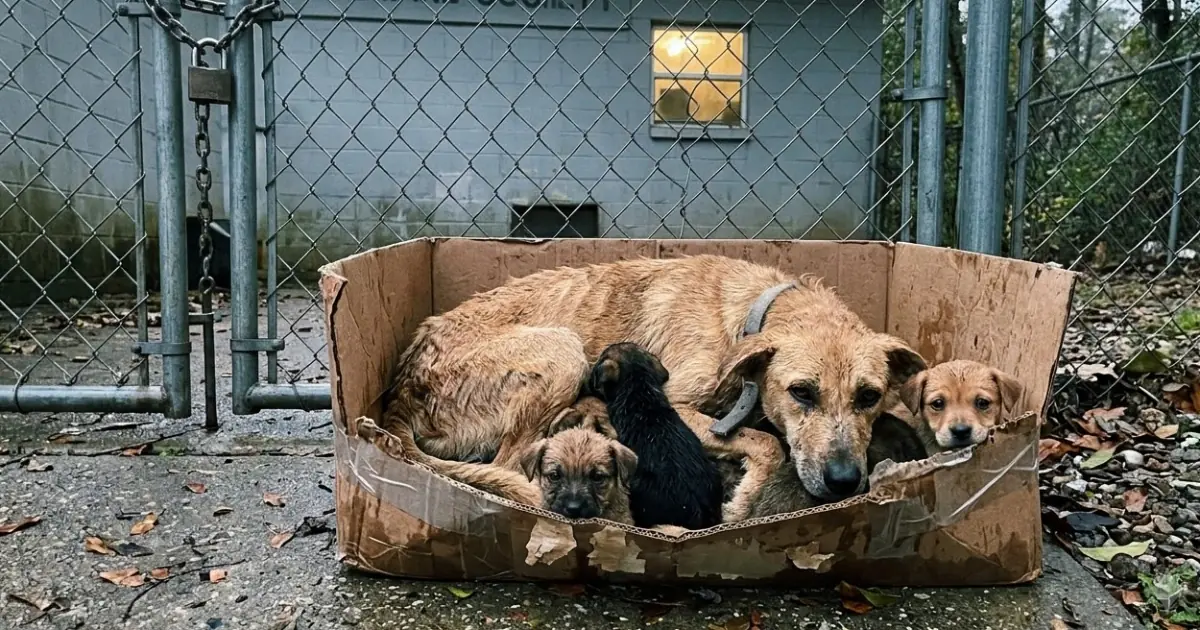
A Mother Dog and Her Five Puppies Were Abandoned in a Cardboard Box
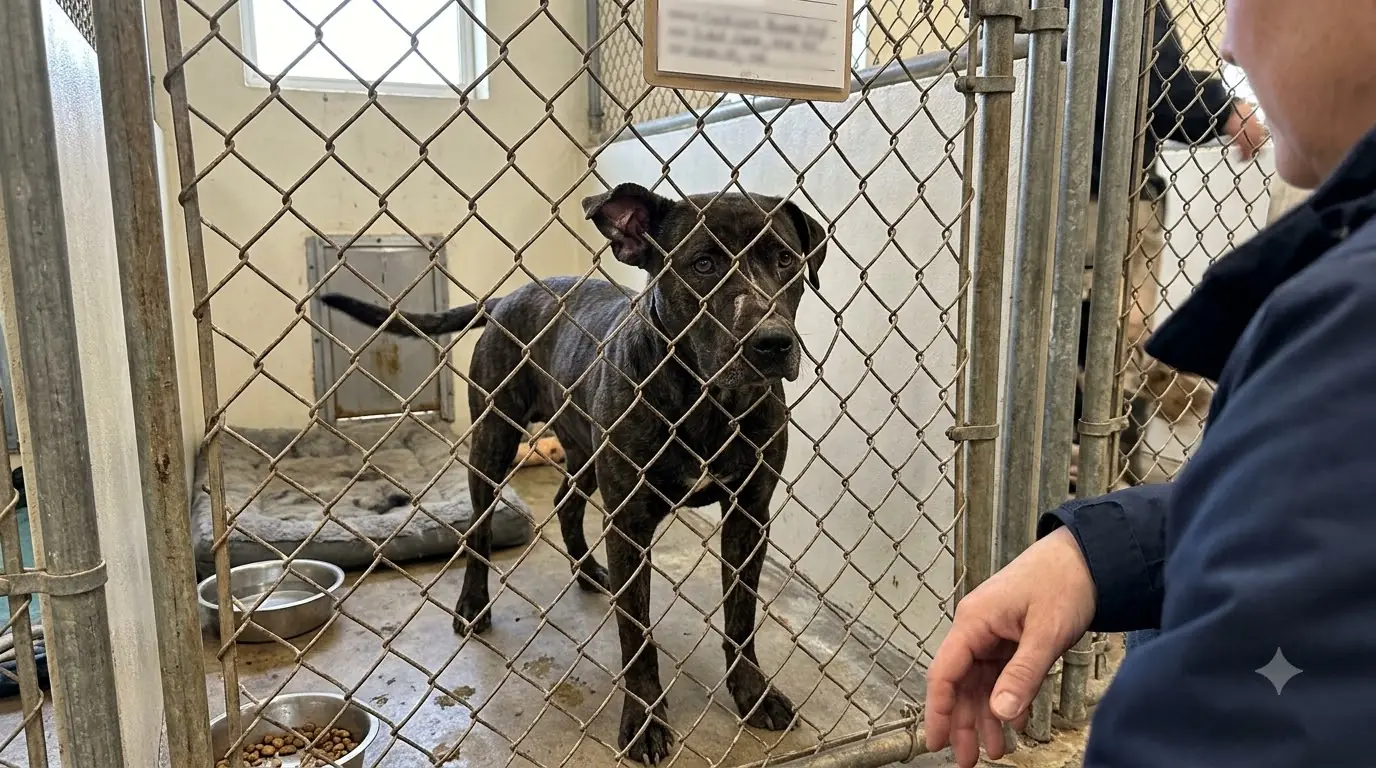
Atlas’s Recovery After Five Months of Watching Visitors Pass
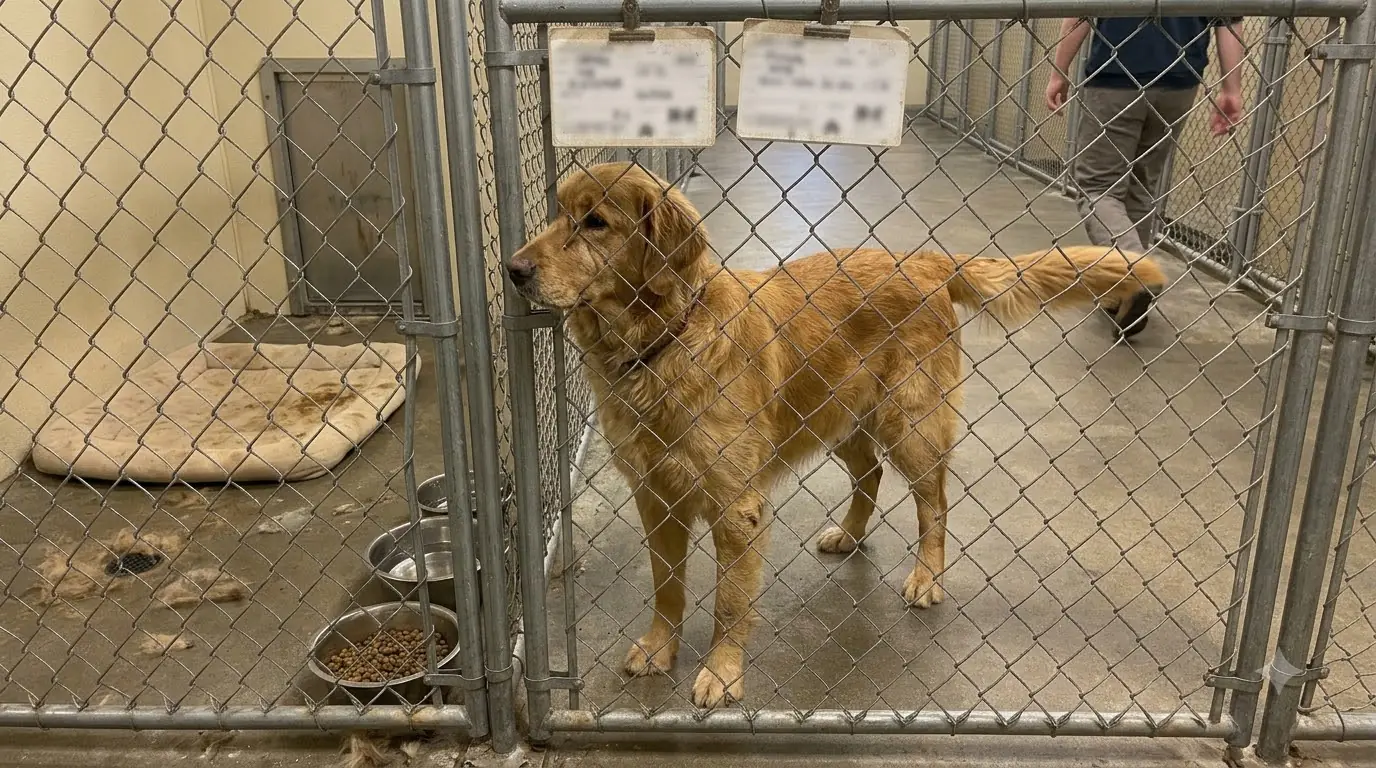
Lucky’s Recovery After Eight Months in a Shelter Kennel
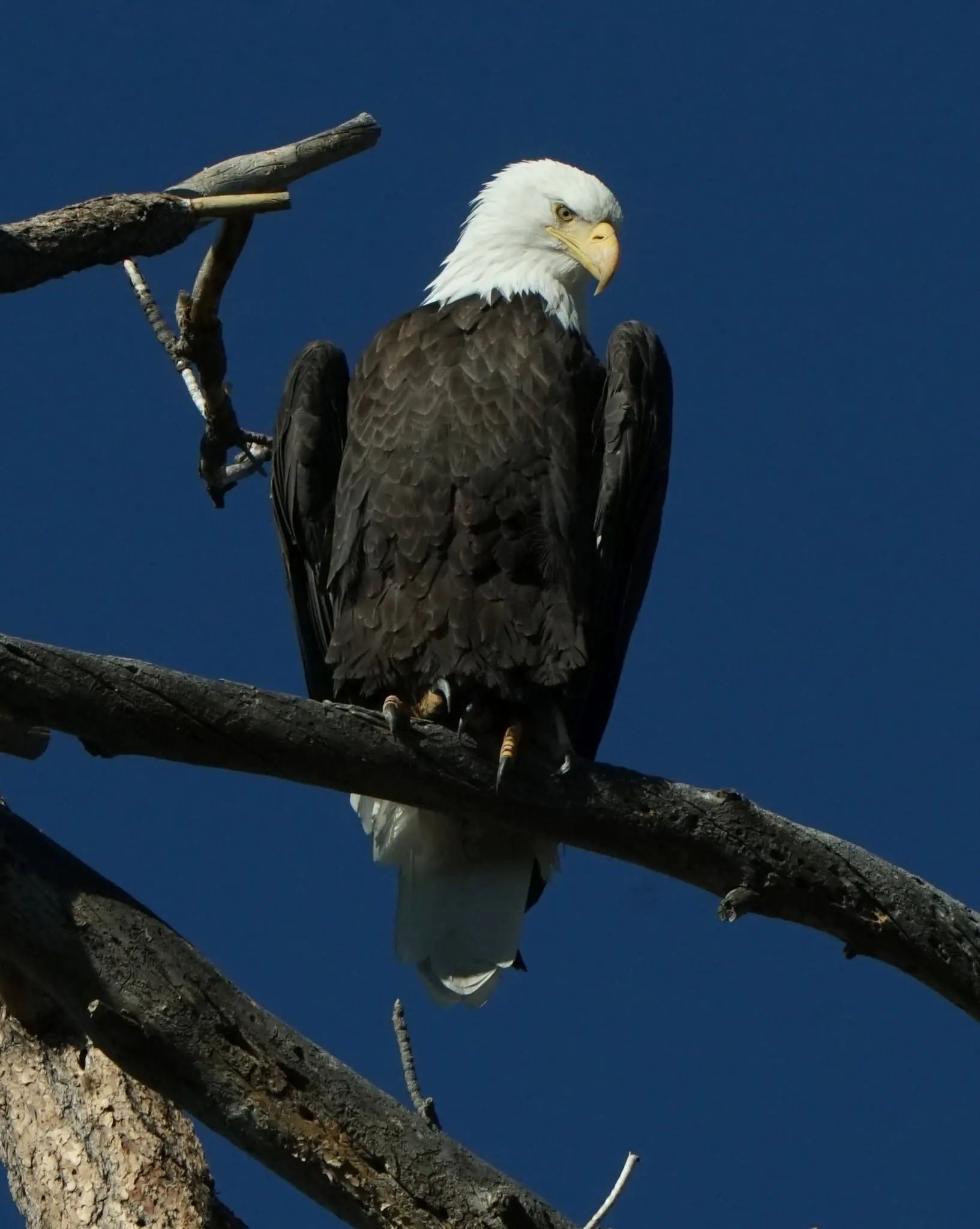
What's next for Shadow after Jackie's death?
A Starving Dog Was Rescued After Being Trapped Without Food for Days
Captain’s Recovery After Seven Months in a Concrete Kennel
Daily’s Recovery After Losing Her Owner at Age 11
A Frightened Dog Was Found Trapped in a Thorn Bush Beside the Highway
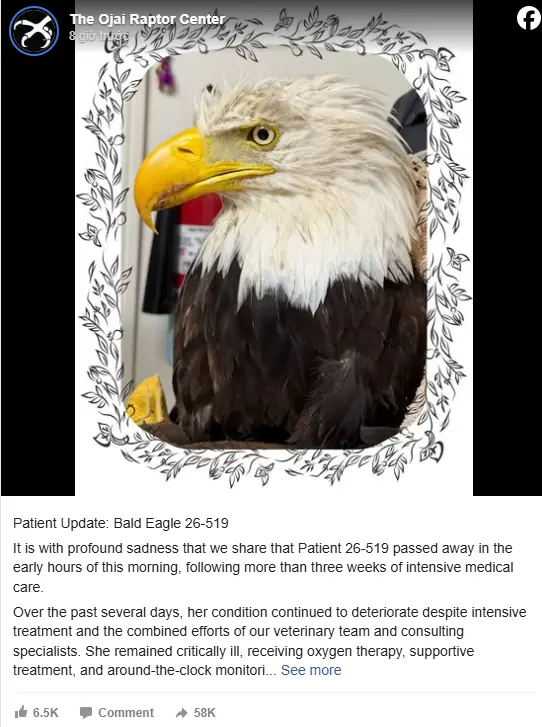
Big Bear's viral eagle Jackie dies after weeks of intensive care
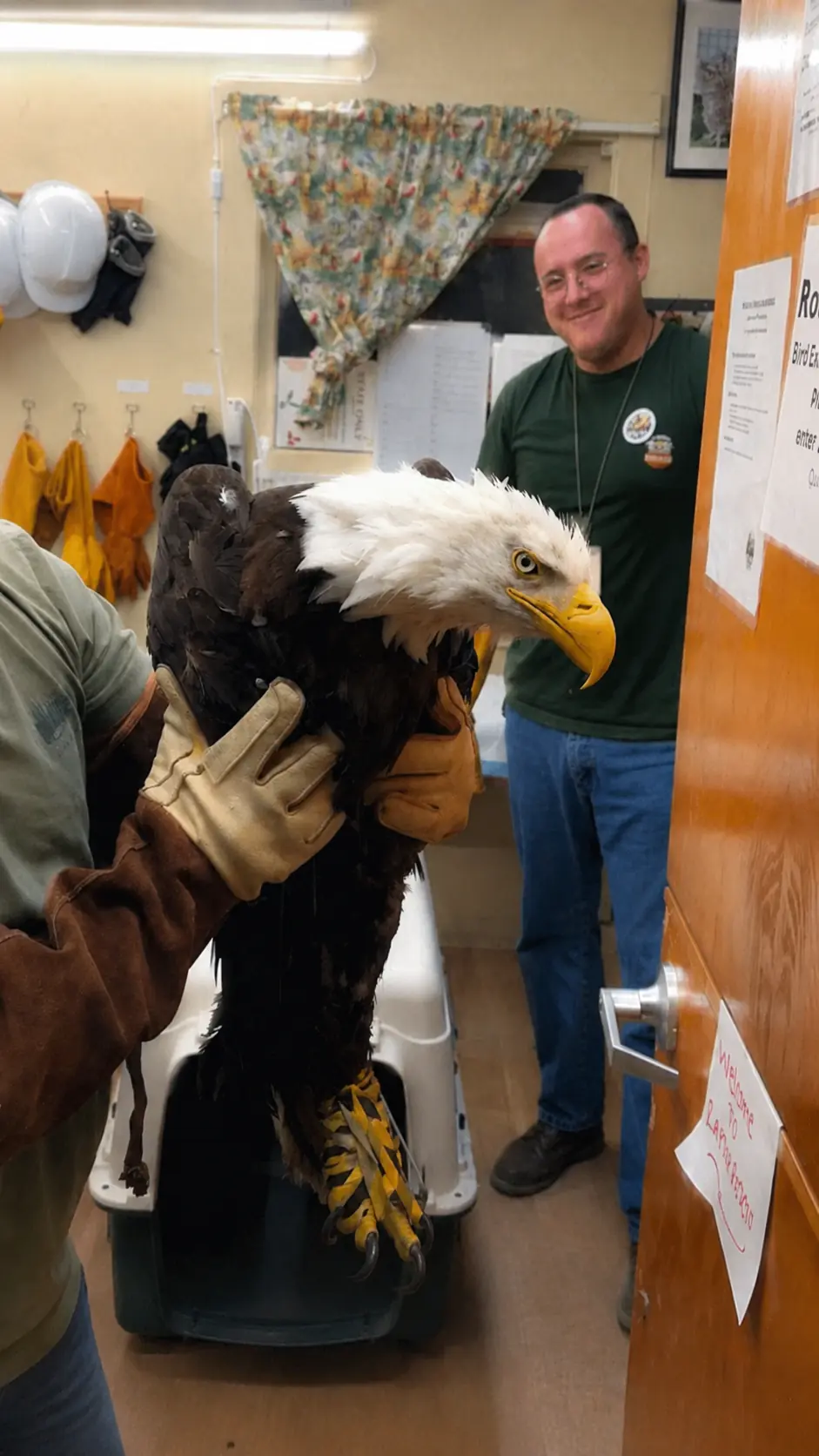
NEW UPDATE: Jackie the eagle endures 'difficult' 24 hours