The Dog Beside the Gate
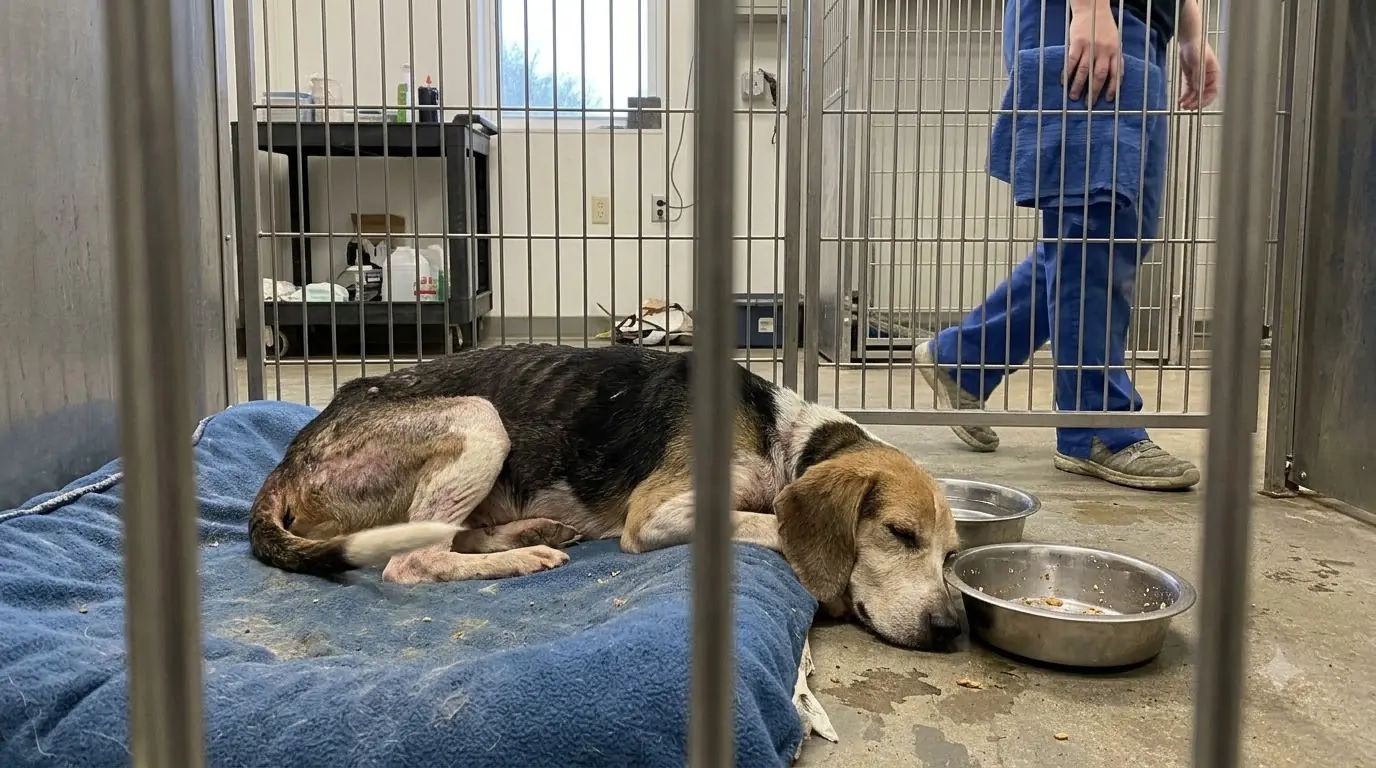
Buddy had been in the shelter long enough that his routine became familiar to nearly everyone who worked there.
The 10-year-old Golden Retriever mix was not a dog who demanded attention.
He did not throw himself against the kennel gate.
He did not bark whenever someone entered the room.
Most mornings, staff found him in almost the same place.
He lay close to the front of his kennel with his gray muzzle between his paws.
Sometimes his eyes were closed.
Sometimes he watched the hallway.
Then footsteps would echo somewhere beyond the room.
Buddy’s head would rise.
Slowly.
Deliberately.
He would stare toward the doorway.
If the person entered, his tail might move.
If the footsteps passed by or faded into another part of the building, Buddy eventually lowered his head again.
That pattern repeated day after day.
It was impossible not to notice.
What We Could Not Say
It would have been easy to create a story around that behavior.
People naturally wondered whether Buddy was waiting for an owner.
Had someone promised to return?
Had he recognized footsteps similar to someone from his past?
We did not know.
Shelter behavior does not provide that kind of certainty.
Dogs respond to routine, anticipation, familiar sounds, human movement, and learned associations.
Buddy may have been hoping for a walk.
He may have been expecting a familiar staff member.
He may simply have learned that footsteps sometimes meant company.
Without evidence, we could not responsibly say he was waiting for one particular person.
The behavior was still meaningful.
Buddy wanted to know who was coming.
And after months in the shelter, that doorway remained important to him.
Why Buddy Had Stayed So Long
Buddy’s age was one factor.
Senior dogs often spend longer waiting for homes than younger dogs.
Some adopters worry about medical expenses.
Others want a dog who can run, hike, or play for long periods.
Some simply notice puppies first.
Buddy also had physical limitations.
He moved slowly.
His hind legs were stiff after resting.
His muzzle was heavily gray.
He looked like exactly what he was: an older dog.
Nothing about him competed visually with the energetic young dogs around him.
But age alone did not define his health.
The shelter veterinary team continued monitoring him throughout his stay.
His Medical Condition
Buddy had chronic osteoarthritis, most noticeable in his hips and knees.
This was not surprising in a large senior dog, but it still required active management.
He also had mild generalized muscle loss, especially in his hindquarters.
Some of that was likely age-related.
Some could also be associated with reduced activity during his shelter stay.
His body condition was otherwise reasonably stable.
He was not severely underweight.
His heart and lungs sounded normal during routine examinations.
His appetite remained good.
His water intake was appropriate.
Routine bloodwork showed no evidence of advanced kidney or liver failure.
That was encouraging.
Buddy was an older dog with chronic needs, but he was not medically collapsing.
Arthritis Is More Than “Getting Old”
One of the most important things the team wanted future adopters to understand was that stiffness should not simply be dismissed as old age.
Buddy’s arthritis caused real discomfort.
The signs were subtle.
He stood more slowly after sleeping.
His first few steps were often shortened.
He sometimes hesitated before changing direction.
Cold mornings made him stiffer.
After he had moved gently for several minutes, his gait usually improved.
Those patterns were consistent with chronic degenerative joint disease.
His Treatment Plan
Buddy received veterinarian-directed pain management appropriate for his age and medical status.
His weight was monitored carefully.
Keeping a senior dog lean can reduce unnecessary pressure on painful joints.
Staff also made environmental changes.
His kennel had thick bedding.
Non-slip surfaces were used where possible.
His walks were short and regular rather than long and strenuous.
He did not need intense exercise.
He needed enough movement to preserve muscle and maintain mobility without exhausting his joints.
Why the Gate Still Mattered
Even with a comfortable bed deeper in the kennel, Buddy often chose the front.
That position allowed him to see more of the hallway.
He could hear people approaching.
He could watch doors open.
For a dog living in a highly structured environment, the kennel gate represented access to almost everything outside his immediate space.
Meals came through it.
Leashes came through it.
People appeared there.
Walks began there.
It made sense that Buddy wanted to be nearby.
Still, staff noticed that his habit persisted even after the kennel room became quiet.
Evenings at the Shelter
At night, the shelter changed.
The daytime barking slowed.
Visitors left.
Staff completed final rounds.
Lights were dimmed.
Most dogs eventually moved deeper into their kennels to sleep.
Buddy often remained near the front.
Sometimes he rested his chin directly beside the bars.
A staff member doing the last evening check would find him there.
If spoken to softly, Buddy lifted his head.
His tail might tap the floor once or twice.
Then he settled again.
It was not dramatic.
But it was difficult to ignore.
Buddy Still Enjoyed People
Despite his long stay, Buddy remained socially interested.
He enjoyed gentle contact.
He especially liked slow scratches along his chest and the sides of his neck.
He was less interested in rough play.
He preferred sitting near someone.
During quiet enrichment sessions, staff often sat beside his kennel.
Buddy would move close and lean his shoulder against the bars.
When taken to a visiting room, he usually walked over to the nearest person and settled nearby.
He did not need constant entertainment.
He wanted company.
His Appetite and Weight
Buddy continued eating consistently.
His meals were measured to maintain a lean body condition.
He drank normally.
There were no persistent vomiting or diarrhea problems.
His bowel movements were regular.
He urinated without difficulty.
Those details mattered because senior dogs can develop subtle changes in appetite, drinking, and elimination that may signal medical problems.
Buddy remained stable.
Maintaining Mobility
Shelter staff worked to prevent his muscles from weakening further.
Buddy received short walks several times a day when staffing and weather allowed.
He preferred slow routes.
He stopped often.
He sniffed.
Sometimes a walk that covered very little distance still took fifteen minutes because Buddy considered every tree and patch of grass important.
That was fine.
For him, movement did not need to be fast to be useful.
A Minor Setback
During a particularly cold stretch, Buddy’s stiffness increased.
One morning, he stood from his bed and took several noticeably uncomfortable steps.
His veterinary team reevaluated him.
There was no sign of a new injury.
His joint pain appeared to have flared.
His treatment plan was adjusted.
His walks were temporarily shortened.
Extra traction was added around his resting area.
Within several days, his mobility returned to his usual baseline.
The episode reinforced that Buddy’s arthritis would require lifelong attention.
Shelter Stress in Senior Dogs
Months in a shelter can be difficult even when an animal receives excellent care.
Kennels are not homes.
There are unfamiliar sounds.
Dogs come and go.
People appear and disappear.
Schedules are structured around shelter needs rather than individual household rhythms.
Buddy adapted.
But adaptation is not the same as thriving.
He slept.
He ate.
He walked.
He interacted.
Still, his world remained small.
That doorway continued to represent the possibility of something different.
Staff Began Discussing Foster Care
Because Buddy’s stay had become long, the team began considering whether a foster home might provide useful information about how he behaved outside the shelter.
A home could also reduce kennel stress and make managing his arthritis easier.
The ideal foster needed to understand senior dogs.
Few stairs.
Good floor traction.
No expectation of intense exercise.
A predictable routine.
Someone comfortable managing medication and watching for changes in mobility.
Eventually, a foster volunteer stepped forward.
Leaving the Kennel Room
The day Buddy left for foster care, staff clipped on his leash.
He stood slowly.
Then he walked toward the hallway.
Buddy had passed through that doorway many times for walks and veterinary appointments.
This trip was different.
He continued through the building.
Past the front desk.
Out the main door.
Toward a waiting vehicle.
Buddy climbed in with assistance.
He turned once on the blanket prepared for him.
Then he lay down.
His First Evening in Foster Care
The foster home was quiet.
Buddy entered carefully.
His limited speed gave him plenty of time to investigate.
He sniffed the entryway.
The living room.
The water bowl.
Then he found the bed.
He stood beside it for a moment before lowering himself onto the cushion.
His foster caregiver sat nearby.
Buddy watched.
He did not pace.
He did not cry at the door.
Within an hour, he was asleep.
A Different Kind of Doorway
During his first several days, Buddy still paid close attention to footsteps.
If his foster caregiver walked down the hallway, Buddy lifted his head.
If the front door opened, he watched.
The habit had not disappeared.
But something was different.
People now returned.
His foster caregiver could leave the room and come back five minutes later.
She could go outside and return through the same door.
Buddy began seeing that departure did not always mean absence.
His Routine at Home
Buddy adapted quickly to household life.
Breakfast came at approximately the same time each morning.
Afterward, he went outside.
He walked slowly around the yard.
Then he came inside and rested.
Afternoons involved another short walk or time outside.
Dinner came in the evening.
After the final bathroom break, Buddy usually slept near the living room.
Routine seemed to suit him.
Sleeping Away From the Door
One of the first emotional changes was subtle.
Buddy stopped sleeping beside the front door.
Initially, he chose a position where he could see the entrance.
After several weeks, he began selecting a bed farther into the room.
Sometimes his foster caregiver walked through the house without Buddy lifting his head.
He had learned the sounds.
He knew which footsteps belonged there.
His Arthritis in a Home Environment
The foster home allowed better control of his physical environment.
Rugs covered hard flooring.
His bed had supportive padding.
Food and water were positioned where he did not need to navigate slippery areas.
A small ramp was available for the vehicle.
These simple changes reduced unnecessary strain.
His foster caregiver continued his prescribed pain management.
Walking Became More Comfortable
With regular low-impact activity, Buddy maintained his mobility.
He did not become fast.
That was never expected.
But he became more confident.
His hindquarters remained somewhat weak.
The foster caregiver gradually increased his walks according to veterinary guidance.
His pace stayed slow.
His comfort stayed central.
Follow-Up Veterinary Examination
At his next senior examination, Buddy remained medically stable.
His weight was appropriate.
His heart and lungs sounded normal.
His arthritis remained evident but manageable.
His muscle condition had improved slightly with consistent activity.
His bloodwork remained reasonably stable for his age.
No major new illness was identified.
That mattered greatly for adoption planning.
Buddy was a senior dog.
He needed care.
But he also had quality time ahead of him.
His Personality Outside the Shelter
The foster home revealed parts of Buddy’s personality that had been harder to see in the kennel.
He liked lying near the kitchen while meals were prepared.
He enjoyed carrying a soft toy from one room to another.
He disliked rain.
He preferred sleeping late.
He occasionally nudged a hand when petting stopped.
He liked people without needing to be constantly touching them.
And he had a remarkable ability to know when food was being handled anywhere in the house.
Visitors
When visitors came over, Buddy usually watched from his bed.
He did not rush the door.
If someone sat down and allowed him time, Buddy often approached.
He sniffed.
Then he sometimes rested his head against a knee.
The gesture was quiet.
It suited him.
Adoption Planning Becomes More Urgent
The rescue knew Buddy’s age could continue making placement difficult.
Senior dogs cannot wait indefinitely for someone to decide their remaining years are worth choosing.
The team updated his profile.
Instead of emphasizing what Buddy could no longer do, they focused on the life he could enjoy.
Short walks.
Quiet companionship.
A soft place to sleep.
Routine.
Gentle affection.
A home that understood aging.
What Buddy Needed
Buddy’s ideal adopter did not need to be physically active.
They did need to be committed.
His arthritis required ongoing management.
Veterinary examinations would remain important.
His weight needed monitoring.
His exercise needed to be appropriate.
Future medical issues were possible simply because he was 10 years old.
Anyone adopting him needed to understand that senior care can change over time.
The rescue would not pretend otherwise.
An Inquiry Arrives
Eventually, a family contacted the rescue after reading about Buddy.
They were specifically looking for an older dog.
They did not want a puppy.
They did not need a running companion.
They wanted a calm dog who could share the house and take short walks.
Those details immediately sounded promising.
But no placement would be based solely on a good application.
The family met Buddy.
The First Meeting
Buddy was brought into a quiet visiting area.
The family sat down.
Nobody crowded him.
Buddy walked slowly around the room.
He sniffed each person.
Then he returned to the oldest member of the family and stood beside the chair.
A hand rested gently against his shoulder.
Buddy leaned.
After a few minutes, he lowered himself onto the floor.
He stayed beside them for the remainder of the visit.
Discussing His Medical Needs
The rescue reviewed everything.
Arthritis.
Pain management.
Future bloodwork.
Healthy weight.
Traction.
Appropriate exercise.
Possible age-related changes.
The family asked practical questions.
What signs would mean his pain medication needed reassessment?
Would stairs become difficult?
How often should his senior bloodwork be repeated?
What should they do if he suddenly stopped eating?
These were encouraging questions.
They were thinking beyond the emotional moment of meeting him.
A Home Trial
A gradual transition was arranged.
Buddy entered the home and immediately began exploring at his familiar slow pace.
He found the water.
He found his bed.
He found the kitchen.
Then he found a place near the family.
The first night, he slept in the living room.
Not beside the front door.
Beside the couch.
Footsteps Sound Different Now
During his early days there, Buddy still lifted his head when someone walked through the hallway.
But the pattern changed.
A person would disappear around the corner.
Then return.
A door would close.
Then open again.
Someone would leave for work.
Later, the same person came back.
Buddy experienced those cycles repeatedly.
The sounds of footsteps no longer always ended in uncertainty.
His Eating and Drinking Remain Stable
Buddy continued eating well.
His meals were kept measured.
He drank normally.
His bathroom habits remained regular.
The family tracked his medication and watched his mobility.
They learned that cold mornings required a little more time.
They learned that Buddy preferred walking after he had been awake for a few minutes.
They learned not to hurry him.
A Flare of Arthritis
Several weeks into the transition, Buddy had another arthritis flare.
He was slower rising.
He hesitated before stepping outside.
His new caregivers contacted the veterinarian.
His treatment plan was reassessed.
There was no evidence of a new injury.
With temporary adjustment and additional rest, he improved.
The family handled the setback exactly as the rescue had hoped.
They did not panic.
They did not ignore it.
They sought veterinary guidance.
Adoption Becomes Permanent
Once everyone was confident that the home met Buddy’s needs and the family understood the commitment, his placement became permanent.
There was no dramatic adoption-day transformation.
Buddy did not suddenly become younger.
His eyes remained those of a senior dog.
His muzzle remained gray.
His joints remained arthritic.
What changed was where he spent his days.
Buddy Today
Buddy now lives in a home rather than a kennel.
He eats well.
He drinks normally.
His bathroom habits are consistent.
His arthritis remains managed under veterinary supervision.
He receives short regular walks.
His body condition is healthy.
He sleeps on supportive bedding.
He has good and slower days.
His family watches both.
He Still Listens for Footsteps
Buddy never stopped noticing footsteps.
He still lifts his head when someone enters the hallway.
But now there is usually recognition in the movement that follows.
Sometimes his tail begins wagging before the person appears.
Sometimes he stands.
Sometimes he simply stays on his bed and waits for them to come closer.
He no longer needs to monitor a shelter doorway for strangers.
These footsteps belong to his home.
What His Waiting Meant
We still cannot say what Buddy was thinking during all those months beside the kennel gate.
We cannot claim he was waiting for one specific person.
That part of his story remains unknown.
But perhaps the most important thing is not who he may have been waiting for.
It is what eventually changed.
The footsteps stopped disappearing forever.
Someone began coming back.
Again and again.
Senior Rescue Is Different
Buddy’s story is not about curing old age.
His arthritis remains.
His senior veterinary needs remain.
His pace is slow.
His future is naturally shorter than that of a puppy.
None of those facts make his remaining life less valuable.
Senior rescue is often about comfort rather than transformation.
Management rather than cure.
Companionship rather than adventure.
Time rather than quantity.
The Gate He No Longer Sleeps Beside
For months, Buddy rested with his face near a kennel gate.
Footsteps echoed.
His head lifted.
The doorway stayed empty.
Then he lowered his muzzle again.
Today, Buddy usually sleeps farther from the door.
He chooses the softest bed.
Sometimes he sleeps beside the couch.
Sometimes in a patch of afternoon sun.
If someone walks away, he may still watch.
But eventually he settles.
Because now he has learned something months in the shelter could never teach him.
People can leave the room and still come back.
Buddy still has arthritis.
He still has a gray muzzle.
He is still an old dog.
But he no longer spends his nights beside a kennel gate listening for the next set of footsteps.
He already knows where they lead.