On the fourth morning after she bought Walter Price's old feed store, Rachel Morgan watched an elderly farmer walk through the front door, cross three aisles of empty shelves, and place a small brass key beside the cash register.
He did it with the unhurried certainty of a man putting something back where it belonged.
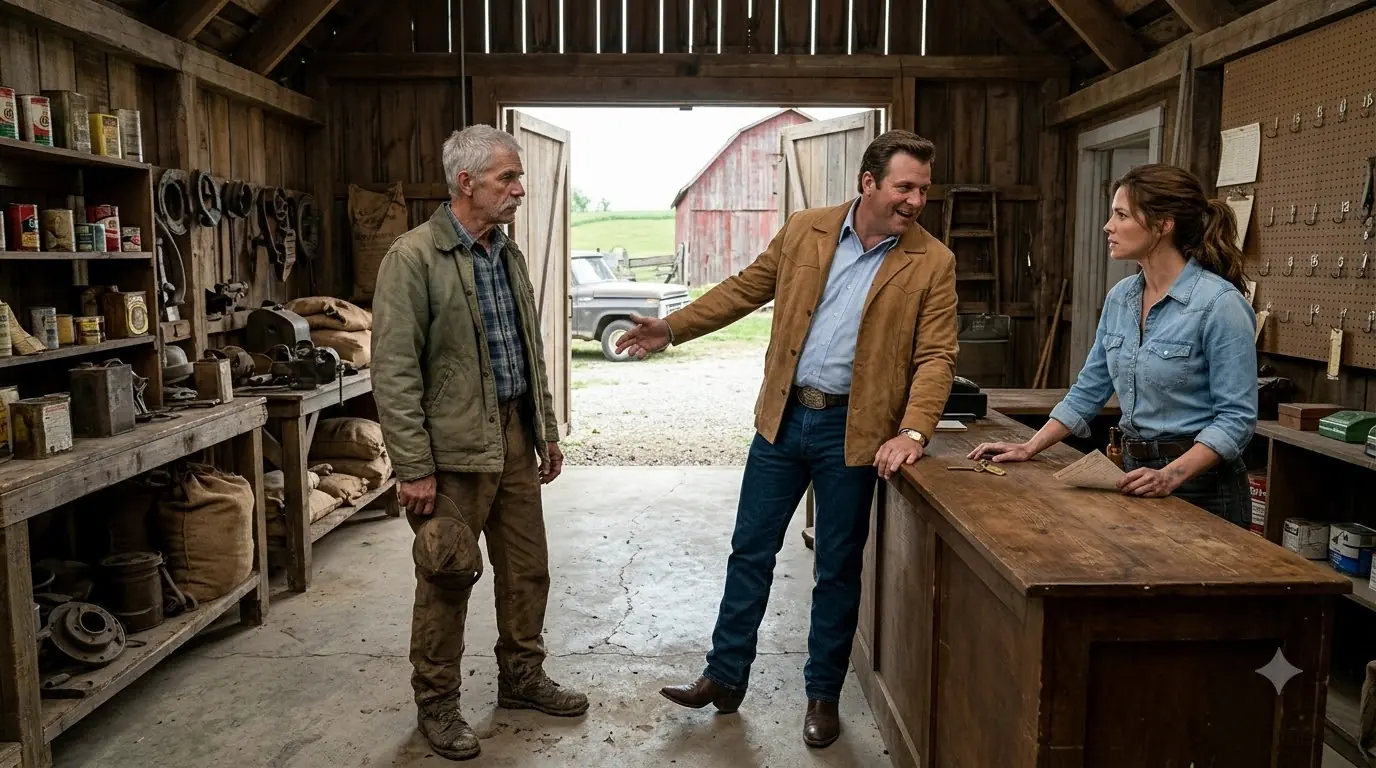
He neither looked at the handwritten sign promising machinery repairs nor asked whether she intended to sell feed again. He just laid down the key, gave the room a brief glance, and turned toward the sunshine outside.
A flattened metal tag hung from the key by a piece of baling wire. The number six had been stamped into it so deeply that Rachel could feel the edges when she picked it up. She had spent the morning removing nails from shelves and trying to decide whether the wooden counter would survive being moved across the room. Finding an unexplained key was the least important item on her list, but there was something peculiar about the way the old man had left it.
"Sir?" she called. "You forgot your key."
The man stopped with one hand on the screen door. His shoulders seemed to sag beneath a faded brown work jacket, and for a moment he looked genuinely puzzled, as if she had said something in a language he didn't quite understand. Then he turned his head toward the register. "That's where it stays," he said, and let the door close behind him.
Rachel stepped out onto the wooden porch, but the farmer was already climbing into a green pickup with a dented tailgate. He started the engine with a rough cough and drove toward the grain elevator at the end of Main Street. She could have called after him again. Instead, she stood in the doorway holding the key while the morning wind pushed a little dust across the floor behind her.
She tried the front door lock first. The teeth were too short. The key wouldn't turn in the office door, the back storage room, or the old desk beside the loading dock. She even crouched beside the rusted padlock on the cellar hatch, although she doubted anybody had opened it in years. Nothing fit, and by lunchtime the mystery had become irritating enough that she dropped the key into the empty register drawer and returned to work.
Two mornings later, another farmer arrived. He was younger than the first, perhaps in his late fifties, with mud on the cuffs of his jeans and the smell of diesel fuel following him through the door. He walked directly to the counter, took a small brass key from his pocket, and placed it on the very same spot. Its aluminum tag carried the number eleven.
Rachel had been stripping peeling paint from an old window frame. She set down the scraper and folded her arms. "All right. I have to ask."
The farmer gave her a pleasant, slightly cautious look. "Ask what?"
"What does eleven open? And while you're at it, what does six open?"
He glanced toward the back of the store, as though checking whether someone was standing behind her. "Depends whether four is back yet," he said. He smiled at whatever confusion crossed her face, touched the brim of his cap, and walked out before she could stop him.