Clara Bennett pressed her last biscuit into the hands of a man she had never met. He was bleeding into the Montana dirt alone beneath a broken wagon, and she had not eaten since dawn. She did not stop to ask his name. She did not stop to count the cost. She simply knelt beside a dying stranger and gave him everything she had left because she still believed that was what decent people did.
She was wrong about many things that summer. But she was never wrong about that. The letter had promised her a future. Three pages written in a careful hand describing a ranch in Montana territory where the grass ran long in summer and the mornings smelled of pine and river water. The man who wrote it, a Mr.
William Carter, had described himself plainly, a working man, a man of property, a man who had decided after years of solitude that he wanted a wife who valued honesty over elegance. Clara Bennett had read that letter 17 times. She had read it on the train leaving Boston. She had read it again at the junction in Billings, where she changed coaches, and a woman beside her asked if she was headed somewhere good. She had read it a third time in the back of a crowded stage coach pressed between a traveling salesman and a widow moving west to live with her son, and she had thought, "Yes, yes, I think I am. " She had believed it because she needed to believe it.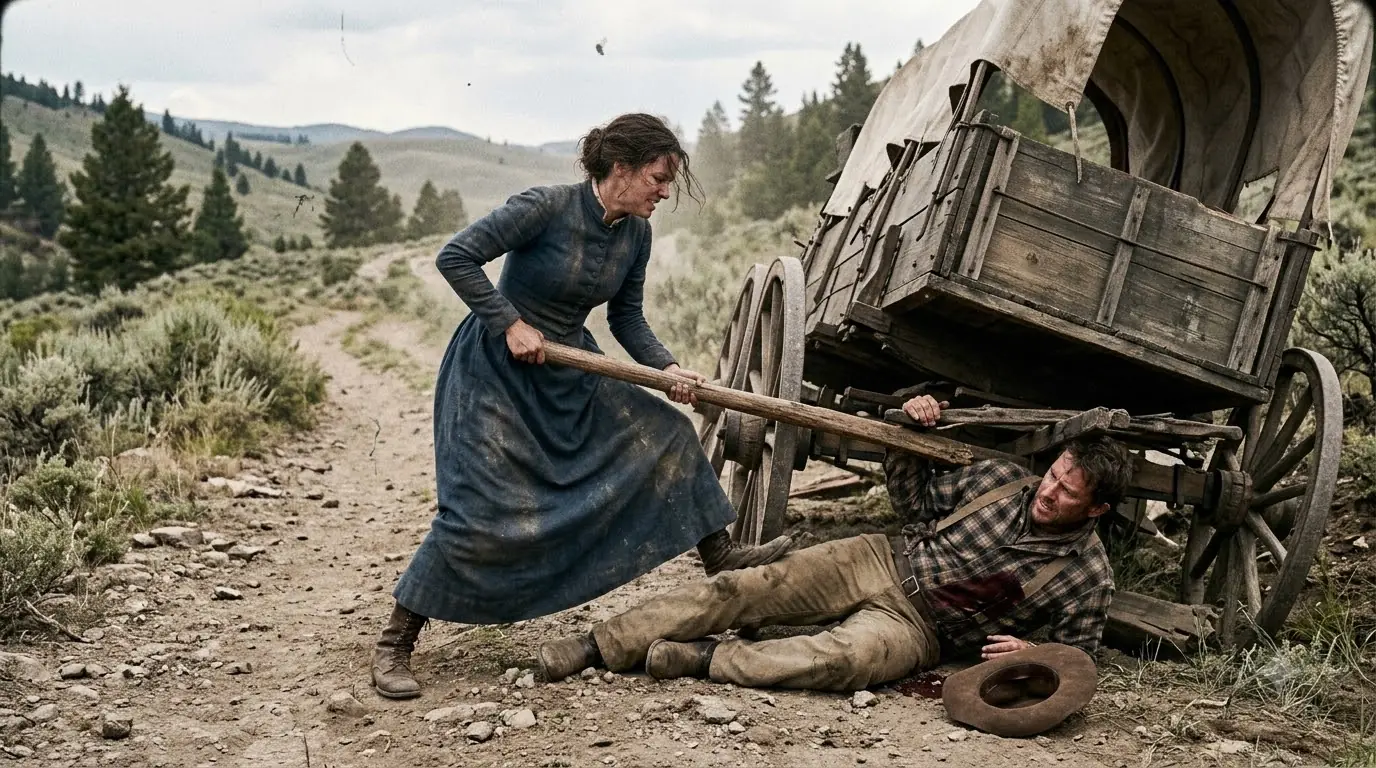
That was the truth. She didn't say out loud. Clara was 25 years old and she had nothing. The school where she had taught for three years had closed in February. The funding dried up by a wealthy trustee who decided Boston had enough educated women.
She had looked for other positions. She had written 14 letters. She had received three responses, two of which informed her that the post had already been filled, and one of which suggested that a woman her age ought to be focused on securing a husband rather than a classroom. She had crumpled that one and thrown it into the fire. But she had kept William Carter's letter, because he had written to her 3 months before any of that happened, responding to a correspondence she'd placed in a frontier gazette at the encouragement of her neighbor, Mrs.
Aldrich, who had done the same thing 12 years ago and ended up in Colorado with a man she called the finest she'd ever known. "You've got good sense and a kind heart, " Mrs. Aldrich had told her. "That's worth more than gold out west. " Clara hadn't been sure, but she'd been willing to find out. And now she was standing on a wooden platform at a way station called Ridgeline, Montana with one traveling trunk, a small canvas bag, and the slow sinking certainty that no one was coming.
The platform was empty except for an old man sweeping dust from one end to the other, working in a slow, deliberate circle, as though he had nowhere else to be. The stage coach that had deposited Clara here had already disappeared down the trail, taking its passengers and its noise with it. The afternoon sun pressed down on everything with a flat, heavy hand. Clara stood very still. She had been standing very still for 2 hours.
Excuse me, she finally said to the old man. Is there any chance a message has come through for me? My name is Clara Bennett. I was expected by a Mr. William Carter.
The old man stopped sweeping. He turned to look at her with the particular expression of a man who has seen many things and is deciding how much of what he knows to share. William Carter, he repeated. Yes, sir. He leaned on his broom.
Miss William Carter owns half this valley. Clara blinked. I beg your pardon. Half the valley? The man said again with the patience of someone explaining something obvious.
Maybe more. His ranch runs from the northern ridge all the way down past Miller's Creek. He's got 40 ranch hands, a bunk house big enough to sleep 60, and more cattle than you can count on a clear day. Clara looked down at the letter in her hand. A working man, it had said.
A man of property. He didn't mention, she began. No. The old man agreed with a small, dry smile. I expect he wouldn't.
She stood there another moment. The wind moved through the station, kicking up a thin line of dust along the platform's edge. A horse tied at the far post swished its tail and stamped. "Is there a town nearby? " She asked at last. "Somewhere I might find lodging. " "Cedar Falls, " the man said.
"3 Miles west. " He pointed with his broom handle. "Follow the trail. You'll see the church steeple before anything else. " Clara picked up her canvas bag. She looked at her trunk. Too heavy to carry, too important to abandon.
I'll send someone for that, the old man said, reading her face. I'll keep it safe. Thank you, she said. You're very kind. He waved a hand.
It's nothing, miss. Safe travels. She walked off the platform and onto the trail. She told herself she was not angry. She told herself there was a reasonable explanation.
Perhaps he had been delayed. Perhaps a message had gone astray. People were not always late because they didn't care. Sometimes the world simply got in the way. She told herself all of that for about half a mile.
Then she stopped telling herself anything and just walked. The trail was dry and pale, cutting through open land that stretched wide in every direction. She could see mountains at the far edge of the world, blue-gray and enormous like something out of a painting. The grass on either side of the path moved in long, slow waves. It was beautiful.
The kind of beautiful that doesn't care whether you're watching or not. Clara walked. The sun moved. Her shoes, which were Boston shoes and not trail shoes, began to make their feelings known around the second mile. She was looking down at the dust around her feet, thinking about nothing in particular when she heard it.
A sound, low and rough and ragged. She stopped. She looked up. 20 Yards off the trail, half hidden by scrub brush and the long shadow of a broken wagon, something moved. Not an animal, a man.
He was on the ground. His left leg was pinned beneath the rear axle of the wagon, which had collapsed sideways and come down hard. One arm was extended, hand pressing flat into the dirt, as if he had been trying to push himself free. His shirt, pale cotton darkened with blood along the shoulder, clung to him in the heat. His hat had fallen several feet away.
His eyes were closed. A horse stood a short distance beyond him. Reins trailing, watching the scene with the calm attention of a creature that has done what it can and is waiting for someone else to take over. Clara did not think. That was the truth of it.
Later she would wonder about that moment about what she should have thought about, whether a wiser woman would have calculated the risk, assessed the situation, made a reasonable decision. But she didn't think. She simply moved. She dropped her bag on the trail and crossed the distance between them at a run. "Sir, " she said, dropping to her knees beside him.
"Sir, can you hear me? " His eyes didn't open. She pressed two fingers to the side of his neck, the way her grandmother had shown her once in a different lifetime, and found his pulse fast and thin, but present. "All right, " she said to no one in particular. "All right, " she assessed the situation with the brisk, unsentimental eye of a woman who has taught other people's children for 3 years, and learned that panic is only useful if you have time for it. The wagon axle was heavy, too heavy for her alone.
But the ground beneath it was soft, and the wheel had sunk slightly into the earth on one side. If she could find something, a long branch, a fence post, she might be able to lever it enough to drag him clear. She stood. She looked around. She found a cedar post half buried in the scrub longer than she was tall, thick enough to hold weight.
She pulled it free with both hands, arms burning, and carried it back. This is going to hurt, she told the unconscious man. I'm sorry. She wedged the post beneath the axle. She pushed down with every bit of weight she had.
The axle groaned, lifted an inch, 2 in. She dropped to one knee, seized his arm with her free hand and dragged. He came loose with a sound she did not want to think about. The axle crashed back down. She sat in the dirt beside him, breathing hard, and checked his leg.
Bruised badly, possibly cracked. She couldn't be certain, but the bone hadn't broken through the skin. That was something. His shoulder was worse. Whatever had happened before the wagon came down had already done damage there.
The blood was older, dried at the edges, but the wound beneath his shirt was deep. Clara opened her canvas bag. She had packed for a new life in Montana. She had not packed for field surgery, but she had a spare blouse she could sacrifice. And she had the small bottle of spirits she'd brought for nerves.
Mrs. Aldrich's suggestion, and she had her grandmother's bone needles and thread, because her grandmother had taught her that a woman alone should always be able to close a wound. She worked in silence for a long time. He stirred while she was still working on his shoulder, a sharp hitch of breath that told her the pain had found him even in unconsciousness. Stay still, she said.
You're going to be fine. Just stay still. A sound came from him. Low, not quite words. I said, "Stay still, " she repeated in the voice she used for 8-year-olds who thought they knew better.
"I mean it. " He went still. She finished the stitching. She tied the cloth bandage as firmly as she could manage. She sat back and looked at what she had done and thought that her grandmother would have done it better. But her grandmother was 30 years gone, and Clara was the only one here.
She reached into her bag and found the biscuit she had wrapped in cloth that morning, the last of what she'd bought at the junction in Billings. She had been saving it. She had not eaten since before dawn. She looked at the man on the ground. She unwrapped the biscuit and set it within his reach for when he woke.
Then she sat down in the shade of the broken wagon, pulled her knees to her chest, and waited. The sun had dropped considerably when his eyes finally opened. She knew because she was watching. She had been watching for the better part of an hour. He blinked at the sky.
Blinked again. Then slowly, with the careful deliberateness of a man testing whether the world was real, he turned his head and looked at her. He had dark hair streaked through with dust. Strong jaw several days unshaven, eyes that were blue-gray in the afternoon light, the color of mountains in cloud shadow. A face that had been outdoors for most of its life, and looked it weathered at the edges, deeply tanned with the kind of lines that come from squinting against sun rather than from years.
He stared at her for a long moment. "You're not a dream, " he said. His voice was rough, dry with thirst, but the tone was almost wondering. "I am not. " Clara agreed. "How long? " He tried to sit up.
His face contracted sharply. "Don't. " She said, "Your shoulder is stitched. Your leg is badly bruised. If you sit up too fast, you'll undo both. " He held still. He looked at his shoulder.
He looked at his leg. He looked at her again. "You did this, " he said. "Yes. " "Why? " Clara considered that. "Because you needed it done. " He said nothing for a moment.
"My horse, " he said then still there. She nodded toward the animal who was cropping grass at the edge of the scrub with unruffled patience. She seems like a sensible creature. Something moved across his face, not quite a smile, but adjacent to one. She is, he said, smarter than most people I know.
I believe that. Clara stood dusting off her skirt. Do you think you can try to sit up slowly? I need to check your leg properly and you should eat something. He did it slowly, the way she'd told him, pausing twice when the pain sharpened and settling once he was upright with a long measured exhale.
The biscuit, she said, nodding to where it lay. He looked at it. Then he looked at her. Have you eaten? I'm fine.
He didn't pick it up. That's not what I asked. She met his eyes. They were steadier than she'd expected for a man who' just spent the afternoon unconscious in the dirt. There was something careful in them, something that was paying close attention.
"Eat it, " she said. "You need it more than I do right now. " He held her gaze a beat longer. Then he picked up the biscuit and broke it in two and held out the larger half. "Then we share, " he said. "It wasn't a question. " The way he said it left no room for argument.
Clara looked at the half of the biscuit in his hand for a moment. All right, she said. She sat back down across from him and they ate in silence. My name is Jack, he said. Jack Miller.
He said it evenly the way people say things they've said many times. No hesitation, no crack in the tone. Clara looked up from wrapping a final bandage around his calf. Clara Bennett, I'm from Boston. She paused.
I was supposed to be met at Ridgeline station. Supposed to be. The person who was supposed to meet me didn't come. He was watching her face. I'm sorry to hear that.
I expect I'll manage. She tied the bandage off. Cedar Falls is 3 miles west. I was on my way there when I found you. There's lodging in town presumably.
There is, he said. The Gilmore House. Mrs. Gilmore keeps a clean room. Fair price.
He moved his shoulder experimentally. The restraint with which he controlled his reaction told her it cost him more than he let on. I can ride, he said. Your leg I've ridden on worse. That, she said, is not reassuring.
The corner of his mouth moved. No, I expect it isn't. He looked out at the landscape. The sun was lower now, casting long orange light across the grass. The broken wagon threw a dramatic shadow.
"You can take my horse, " he said. "I don't ride, " he looked at her. "You don't ride. I'm from Boston, right? He considered this.
I can walk. With that leg, you'll be walking until midnight. Is there a better option you'd like to suggest? She looked at him. She looked at the horse.
Could we both ride if you do the steering, so to speak? He was quiet for a moment. You trust a man you don't know that much? I just spent an hour stitching up a man I don't know, she said. I suppose I've already committed to trusting you somewhat.
He looked at her for a long moment. Yes, he said at last. We can both ride. They rode into Cedar Falls as the last light failed. His horse Clara would learn her name was Duchess, a name that suited her, moved steadily despite carrying double.
He rode behind Clara, one arm around her waist for balance. Steady and unobtrusive as possible. He directed the horse with a light touch and said nothing unless she asked him something. She asked about the land, he answered. She asked about the cattle she could see in the distance, he answered.
She did not ask about his name or where he'd come from or what he'd been doing out on that trail with a broken wagon. She had the sense that those were questions he would answer in his own time or not at all, and she was too tired to push. Cedar Falls resolved out of the dusk church steeple first, exactly as the old man at the station had promised, then lantern light in windows, then the sound of boots on wooden boards and the smell of wood smoke and food cooking somewhere close. They drew attention. The main street was still occupied at this hour.
Men leaving the saloon. Women making final errands. Children called in from play who lingered anyway at the sight of something new. Two women on the boardwalk outside the dry good store stopped talking and stared. Clara felt the weight of it.
The two of them arriving together, her clothes dusty and travel-worn. Him visibly injured, riding too close for propriety. She kept her chin level. She had not done anything wrong. He seemed to feel the stairs as well.
He said quietly near her ear. Gilmore House is straight ahead. Blue shutters. I see it, she said. Mrs.
Gilmore was a small woman in her 60s with sharp eyes and a practical nature. She looked at them both with an expression that took in the blood on his shirt, the dust on Clara's skirt, and the general situation in about 3 seconds. Room for each of you? She asked. "Please, " Clara said.
"Are you family? " "No, ma'am. He was injured on the trail. " I assisted him. Mrs. Gilmore looked at him. "You're going to need that shoulder looked at by Dr.
Haynes in the morning. " "It's been looked at, " he said. "By who? " He glanced at Clara. Mrs. Gilmore turned the same glance on Clara. Clara met it evenly.
"My grandmother was a medical woman, " she said. I have some knowledge. Mrs. Gilmore's expression shifted slightly. Not unfavorable.
Boston? She asked, recognizing something in Clara's vowels. Yes, ma'am. She led them inside. They ate dinner at a small table in the corner of the boarding house kitchen.
Soup bread, a slice of dried apple pie, because Mrs. As Gilmore declared that a man who'd lost that much blood needed feeding, and a woman who'd been traveling since dawn needed it, too, and neither of them was going to argue. He ate slowly. Clara noticed he watched the room. Noticed every person who entered, noticed where the exits were.
It wasn't anxious watching it. Was the watching of someone accustomed to being responsible for something, someone who does not entirely switch off. "You said you were supposed to be met, " he said halfway through dinner. Yes. What happened to the person who was supposed to come?
I don't know. She kept her voice flat because the alternative was letting it have an edge. The station agent told me the man I was expecting owns quite a lot of land in this valley. I expect someone of that standing has more important business than keeping an appointment. Silence.
What was his name? He asked. She looked up. Why? Just curious.
William Carter, she said. He looked at his soup. You know him? She asked. He picked up his spoon.
Small territory. What's he like? A pause. Hard to say. Try.
He set down his spoon again. He seemed to be choosing something she couldn't tell what exactly. He's a stop. He works hard. He takes his responsibilities seriously.
He's not a man who another pause. He doesn't talk much. That Clara said has been my experience of most men out west so far. The corner of his mouth moved. Fair point.
Do you think he'll come if I send word I'm in Cedar Falls? He looked at her steadily. Something moved in his eyes, something she couldn't quite name. I think, he said carefully, that he'll come. She lay awake a long time that night.
The room Mrs. Gilmore had given her was small and clean whitewashed walls, a narrow bed, a window overlooking the back of the property, where a kitchen garden grew in orderly rows. It was the kind of room that asked nothing of you, and she was grateful for that. She thought about the letter. She thought about Boston.
She thought about the school where she had taught the smell of chalk and wintergreen. The sound of children reciting their tables, the peculiar satisfaction of watching a child's face when something finally made sense. She thought about a man's eyes blew gray in the fading light, watching her with something she couldn't categorize. She thought, "I don't even know if he was telling me the truth about his name. " She wasn't sure why that thought came. It simply arrived quiet and clear and lay down next to her.
She turned it over. Jack Miller. He had said it easily. Too easily maybe. But then she was a woman who had spent 3 years teaching children to read.
And part of reading was recognizing when a sentence didn't quite sit right on the page. She let the thought go. She didn't know this country. She didn't know these people. She was making judgments based on nothing but instinct.
And instinct in an unfamiliar place was an unreliable compass. She was here. She had a room. She was safe. Tomorrow she would send word to William Carter that she had arrived.
She closed her eyes. She thought just before sleep he broke the biscuit in half. A man who didn't know her. A man who had been unconscious in the dirt an hour earlier. A man who could have taken the whole thing without a word because he was injured and she had offered it and no one would have said anything.
He broke it in half. She didn't know what to do with that, but she held on to it as she fell asleep in Montana in a clean, small room on the first night of whatever came next. He had not slept. He sat at the window of his own room, smaller than hers, facing the street, and looked at the dark town and thought about what he had done. His real name was William Carter.
He had known that the moment she said she was Clara Bennett. He had known her name from the letters. He had known her handwriting, her way of phrasing things careful and direct with an occasional dry turn that surprised him, and he had recognized her before she'd finished speaking his name. He had not been on that trail by accident. He had been coming to meet her.
He had been late. A situation at the northern pasture had held him longer than expected, and he had been pushing hard to make up the time when the wagon ground had given way on the descent and come down wrong, and his shoulder had hit the frame on the way off. He had been on the ground when she found him. He had watched her through half-closed eyes as she assessed him, her face calm, her hands steady, her movements efficient, and unhesitating. He had been conscious enough by then to know what was happening.
He could have said something. He should have said something. He hadn't because he had needed to know. He had told himself a thousand things since Margaret. He had told himself he was done.
He had told himself that a man who let the wrong person into his life once learned from that and didn't make the mistake again. He had told himself that this arrangement, a mail order correspondence, a practical arrangement, was not the same as trust, that it didn't require anything from him but proximity and basic decency. And then a woman who hadn't eaten since dawn had taken her last biscuit and laid it down for him. She didn't know who he was. She didn't know what he owned.
She had nothing to gain. She did it because, as she said, he needed it done. He pressed the back of his hand against his mouth. He had lied to her. The lie was already there, already set, and now he had to figure out what to do with it, how long to carry it, how to set it down without causing damage he couldn't repair.
He had a feeling she was not going to find it easy to forgive. He had a feeling she was the kind of woman who had very clear ideas about the truth. He had a feeling, and this was the one that kept him at the window, watching the quiet, dark street, that he had already made the most important mistake of his life. He just didn't know yet how much it was going to cost him. Clara was already dressed when the knock came at her door the next morning.
She had been up since before light, sitting at the edge of her narrow bed with her hands folded in her lap, thinking about nothing she wanted to think about, and unable to stop. The town had been quiet outside her window, the kind of quiet that has weight to it that presses down on a person and makes the space inside their own head too large. She opened the door. He was standing in this hallway with his hat in his hand and his shoulder wrapped under a fresh shirt, and he looked like a man who had not slept either. "Miss Bennett, " he said.
"Mr. Miller. " A pause stretched between them. He turned his hat in his hands twice. I wanted to check on you before I left, " he said. "Make sure you were settled, that Mrs.
Gilmore was treating you well. " "She is, " Clara said. "She's been very kind. " She studied him. The color had come back to his face overnight, which was good, but there was something in his expression that hadn't been there the day before. A tension around the jaw, a carefulness in the eyes. "And your shoulder?
Stiff, functional. " He paused. I owe you a debt, Miss Bennett. You don't. I do. He said it simply.
You didn't have to stop. Anyone would have. No, he said in a tone that closed the door on disagreement. They wouldn't have. She looked at him for a moment.
He was right about that, and they both knew it. And saying so felt like admitting something about the world that neither of them wanted to sit with before breakfast. Where are you going? She asked. He paused.
I have business to attend to. In the valley. Of course, she stepped back. Safe travels, Mr. Miller.
He put his hat on. He turned to go. He made it three steps down the hall before he stopped. He stood with his back to her for a moment. That lasted a beat too long.
Miss Bennett. He didn't turn around. If you send a message to Carter Ranch, anyone in town can tell you how. And there's no response by end of day. I'd like to know.
She frowned. Why? He turned then halfway. His profile was sharp in the hallway light. Because you shouldn't be left waiting again.
He walked away before she could answer. She sent the message at 9:00 through a boy. Mrs. Gilmore recommended a freckled 12-year-old named Pete, who assured her he knew every trail in the valley and could get to Carter Ranch in under an hour. She gave him a coin she couldn't really spare and watched him ride away.
Then she sat in Mrs. Gilmore's parlor and waited. At noon, Pete came back. He stood in the doorway with his hat pressed to his chest and told her in the careful voice of a child delivering news he knows is bad, that the foreman at Carter Ranch had said Mr. Carter was unavailable, that he'd been in an accident on the North Trail.
That he was resting and couldn't be disturbed. Clara sat very still. He was in an accident, she repeated. Yes, ma'am. The foreman, Mr.
Hayes, he said to tell you Mr. Carter would send word when he was able. I see. She looked at the boy. Did Mr.
Hayes say what kind of accident? No, ma'am. Just that he couldn't have visitors. She thanked Pete. She gave him another coin.
She sat in Mrs. Gilmore's parlor after he left and looked at the wall and thought about a man with a broken wagon wheel and a blood soaked shoulder lying in the Montana dirt. She thought about blue-gray eyes. She thought Jack Miller knows Carter Valley like someone who lives there. She thought.
He said his name too easily. She sat with that for a long time. Then she stood up, put on her hat, and went to find out where the Carter ranch was. Mrs. Gilmore told her without being asked, "Not the directions those came later from the station agent at the far end of the main street, who drew her a map in the dust with a stick.
What Mrs. Gilmore told her without being asked while handing her a cloth wrapped parcel of food for the road was this. William Carter is a good man. He had a bad experience a few years ago. A woman from back east came out here and well she pressed the parcel into Clara's hands.
It changed him, made him careful in ways that don't always serve him. Clara looked at the parcel. You think it's him? Mrs. Gilmore looked at her with the expression of a woman who has long since stopped pretending not to see what's right in front of her.
I think you already know it's him. Clara didn't answer. She took the parcel and walked out of the boarding house. She was 2 miles down the valley trail when the sky changed. She felt it before she saw a drop in the air, a shift in pressure against her skin.
She looked west. The clouds that had been sitting on the mountains all morning had moved. They were moving fast, dark, and heavy-bellied. The kind that don't negotiate. She walked faster.
She did not make it. The rain came down like someone had pulled a cord hard. And immediate the kind of Montana summers storm that doesn't build to anything but simply arrives all at once. She was soaked through before she'd gone 50 more yards. The trail turned to mud under her feet.
The cloth parcel was already wet through. She was deciding in a very practical way whether to turn back or keep going when she heard hoof beats. She turned. He pulled Duchess up short in front of her spraying mud and looked down at her from the saddle with an expression she could not fully read in the rain. "Miss Bennett, " he said.
"Mr. Miller, " she said. They looked at each other in the middle of the downpour. "Get on, " he said. "I'm going to Carter Ranch.
I know where you're going. He extended a hand. Get on. There's a cabin half a mile ahead. Well wait out the storm.
She looked at his hand. She looked at the sky. She took his hand. The cabin was small and dry and empty of everything except the basics. A wood stove, a narrow cot, a table, two chairs, a stack of split wood by the door.
It smelled of old ash and pine resin and the particular closeness of a space that has weathered many storms. He built a fire. She wrung out her hair and sat close to the heat and ate a piece of Mrs. Gilmore's bread because she was hungry and because the practical business of eating gave her hands something to do while she decided what she was going to say. He sat across from her with his elbows on his knees and said nothing.
The fire crackled. The rain beat against the roof. You were on your way to town, she said finally. When you found me on the road? Yes.
Coming from Carter Ranch? A pause. Yes, he said. Do you work there for William Carter? His jaw moved slightly.
Something like that. She looked at him directly. Is your name Jack Miller? The fire popped. A log shifted.
He met her eyes. No, he said just that. One word, flat and clean and terrible in the way that honest things sometimes are. The rain hammered the roof. Clara looked at him for a long moment.
Something inside her went very quiet. Not the quiet of calm, but the quiet of a person who is suddenly rearranging everything they thought they knew, fitting pieces into shapes that were always there, but that she hadn't let herself see. "William Carter, " she said. He didn't look away. Yes.
She stood up. She walked to the window and stood with her back to him and looked at the gray wall of rain. "You were coming to meet me, " she said. "Yesterday I was late. The wagon gave way on the descent.
And then I found you. " "Yes. " "And you let me believe. " Her voice caught on something. She cleared it. You let me think you were a stranger. Yes. Why?
The silence lasted long enough that she almost turned around. Then he said, "Because I needed to know. " Know what? Whether you were He stopped, started again. I've made a mistake before, a significant one. I trusted someone I shouldn't have trusted, and it cost me in ways I'm not going to go into right now.
And I told myself when I agreed to the correspondence, when I agreed to the arrangement, I told myself I would be careful this time that I would test me, she said. The word landed like a stone in still water. Clara, don't. She turned around. Her voice was steady, and she was proud of that, the steadiness of it, which was costing her considerably.
Don't use my given name. Not right now. She looked at him. You let me sit at that station for 2 hours. You let a boy ride out to your ranch and come back with a message that you couldn't be disturbed.
You let me walk out in a storm to come and find you not knowing. I was going to tell you. He said when when I knew when you knew I was worth telling. She said it quietly. It wasn't an accusation.
It was just the truth named plainly and that was almost worse. He looked as though she had hit him. She sat back down in her chair. She looked at the fire. Her hands, she noticed, were perfectly still in her lap.
She had clenched them and then made herself uncurled them. "I came a very long way, " she said. "From Boston. I left everything I knew, my job, my city, my she stopped. I left everything on the basis of three letters from a man who said he valued honesty.
He said nothing. I don't think you're a bad man, " she said. I think you're a man who is afraid, and I understand that. I am afraid of things, too. But fear is not an excuse to deceive someone who has given you no reason for it.
She looked at him. You had no evidence that I was anything other than what I said I was, and you treated me like a suspect. His voice when it came was very low. You're right. I know I am.
The rain continued. They were in the cabin for 6 hours. There was no dramatic exit available. The storm pressed down on the valley with a seriousness that made the outside world irrelevant. And so they stayed and they sat with the wreckage of the conversation and the warmth of the fire.
And eventually, because people who are alive cannot maintain peak misery for six straight hours, they began to talk. It started with the horses. He mentioned Duchess something about her temperament, how she'd spooked badly in a storm two years back and had been slowly worked back from it. Clara, who had no experience with horses but found herself interested despite everything, asked a question. He answered it.
She asked another. He answered that too. She did not forgive him. She was very clear in her own mind that she had not forgiven him. But she was also a woman with intellectual curiosity and good sense.
And William Carter she was discovering was more complicated than the man she had decided he was in the first 10 minutes after his confession. He told her about the ranch not boastfully the way a man showing off his property might but matter-of-factly the way people talk about things they care about. The cattle operation the workers 42 of them he said a fact he seemed to know down to the individual. A man named Roy who had been with him since the beginning who had a bad knee that acted up in cold weather and who refused to acknowledge it. A woman named Dora who cooked for the bunk house and ran it with the authority of a general.
"You know their names? " Clara said. "Of course I know their names. " "Some men in your position wouldn't. " He frowned slightly. "They're people. " She looked at him. "What? " He said. "Nothing, " she said.
Go on, he went on. She told him about Boston, not the loss of it, which she wasn't ready to discuss with him, but the work of it, the school, the children. A girl named Nora Bridges, who had come to her unable to read a single word, and had by the following spring read every book in the classroom, and started in on Clara's own small shelf. He listened in the way that some people listen and most people don't without composing his response while she was still speaking without redirecting the conversation back to himself without the restless patience of a man waiting for his turn. What happened to her?
He asked. Nora. The school closed. I wrote to her mother after a pause. She said Norah was reading to her younger brothers now, teaching them herself.
He looked at her. That's because of you. It's because of Nora. It's both, he said. She looked at the fire.
What you did yesterday, he said after a moment with the stitching your grandmother taught you. She was a midwife, a healer really. There wasn't much formal medicine where she grew up. Clara turned her hand over in her lap, looking at the palm. She used to say that the body knows how to heal itself.
What you do is just give it the conditions. The conditions, " he repeated. "Clean wound, proper closure, rest and food and time. " He was quiet for a moment. "That's good advice for things that aren't wounds, too. " She glanced up. He was looking at the fire, not at her.
His profile was serious and composed and slightly pained in a way that she thought had nothing to do with his shoulder. She didn't answer, but she filed it away. The storm broke toward evening sudden as it had arrived, leaving behind a washed sky and the smell of wet earth. Clara stood at the cabin door and looked out at the dripping valley, golden in the late light. I'll take you back to Cedar Falls, he said behind her.
I can walk. The trail will be muddy. I'm already aware of that, Mr. Carter. His name in her mouth, the real one, made him go very still.
All right, she said without turning around. I'll accept the ride. And when we get to town, you and I are going to have a direct conversation about what comes next. Because I did not travel 2,000 miles to stand in a doorway arguing about mud. Something happened behind her.
She heard it rather than saw it. A small exhale, almost a laugh, quickly controlled. "No, ma'am, " he said. I expect you didn't. Mrs.
Gilmore took one look at them when they walked into the boarding house and began making coffee without being asked. They sat at the kitchen table, the same table where they had eaten soup and bread the night before, though it felt like a different world ago. And Clara set her hands on the table and said, "Tell me the truth. All of it. " He did. It took a long time.
He told her about Margaret Alcott. He said her name without flinching, which Clara took as a sign of something she wasn't sure what a woman from Philadelphia who had come west 3 years ago, engaged to a rancher named Curtis Dempsey, and arriving 2 weeks after Dempsey's heart gave out. She had been stranded, or so she said, bereft, or so she seemed. William had offered assistance. She had accepted it.
And over the following eight months, she had worked her way so thoroughly into his confidence, into his household, into arrangements that he was deeply ashamed of. Now, not the personal intimacy, he said, though that was part of it. But the financial decisions he had made at her encouragement. The men he had dismissed the modifications to his operation that had he would later understand systematically weakened his position. She had someone, he said, a man she'd been with before.
They were working together. The plan was to He stopped. It doesn't matter what the plan was. I found out in time, barely. And I got her out of my life and out of this valley, and I spent 6 months cleaning up every decision I'd made in the previous eight.
Clara listened. And then he said, "I was sitting in a quiet house with a working ranch and 42 employees and about as much company as the furniture, and my housekeeper Dora suggested I consider a correspondence arrangement. " His mouth flattened slightly. She made a persuasive case. "But you were going to test whoever came, " Clara said. "I was going to, " he paused.
I was going to see whether you were going to test her, Clara said again. Not with anger, with precision. He looked at the table. Yes. And then I knelt in the dirt and gave you half a biscuit I needed myself.
And you decided I'd passed. He looked up. Clara. Miss Bennett. Miss Bennett.
He said it carefully. I'm not trying to excuse it. I'm explaining it because you asked for the truth. And the truth is that what you did, not the biscuits specifically, but all of it, the way you worked, the way you talked, the way you said, because he needed it done, as if that was the most natural thing in the world, changed something for me. He stopped.
That doesn't make what I did right. No, she agreed. It doesn't. Mrs. Gilmore appeared briefly with coffee.
She set it down with the brisk efficiency of a woman who has learned when not to say anything and disappeared again. Clara wrapped her hands around the cup. "Why did you come after me today? " She asked. "On the trail. " "Because I knew you were going to walk to the ranch in a storm and I couldn't. " He stopped. "I couldn't let you do that alone. " "You could have.
I would have been fine. I know you would have. " He met her eyes. That's not why I came. She looked at him for a long moment. I need time, she said at last.
I know. And I need you to understand that what I do next, whether I stay in this valley, whether I whatever I decide is not a test result. I'm not a character in a story you're telling yourself. I am a person. I know that, he said.
And the way he said it quiet and without any of the excuses she'd been braced for was the most honest thing he had said to her yet. She picked up her coffee. All right, she said. She stayed not at the ranch that was too much too soon, too complicated in ways that Cedar Falls would not forgive easily, and Clara had enough sense to know that she needed this town not to turn against her before she'd even found her footing. She stayed at the Gilmore house in the small clean room with the window overlooking the kitchen garden and she made her own way through the days that followed.
She talked to the school master in Cedar Falls. A thin man named Mr. Anders, who was responsible for 43 children between the ages of 6 and 14 in a building that Clara could see from the outside, was approximately twice the challenge he was equipped to handle. She offered her assistance. He accepted it with the relieved desperation of a drowning man handed a rope.
She began to teach. It steadied her. It always had. She worked mornings in the schoolroom and spent her afternoons walking the town, the surrounding area, learning the shape of this place she had arrived in so unaccountably. She went into the dry goods store and learned which families had what.
She went into the post office and sent a letter to Mrs. Aldrich in Boston. She was not all right yet, but she was moving, and moving was the thing she had always known how to do when staying still was too hard. William Carter came to Cedar Falls on Tuesday. He came legitimately.
He had business at the assay office. He had business with the bank, but he came by the schoolhouse on his way back, and she saw him from the window and chose not to pretend she hadn't. She came to the door. "Mr. Carter, " he held his hat.
Miss Bennett, I heard you were helping Mr. Anders. News travels fast. Small territory. A pause.
How are you finding it? The teaching familiar, she said. Some of the children are further behind than they should be. There's a boy named Thomas. He's nine who has never been taught to write.
Nobody seems to know why. He frowned. I'll speak to Anders. I've already spoken to Anders. I wanted you to know because Thomas's family works on your land.
The Hendersons. Something moved across his face. James Henderson. He's been with me 6 years. His son can't write his own name.
He looked at her. I'll see to it. Good. She stepped back inside. Was there something else?
He held his hat another beat. I wanted to say. He started and stopped. I wanted to say that I'm glad you stayed. She looked at him.
Not for my sake, he said quickly. Or not only. I meant this valley needs people like you. People like me, she repeated. People who see Thomas Henderson and do something about it.
She was quiet for a moment. Good afternoon, Mr. Carter. Good afternoon, Miss Bennett. He put his hat on and walked away.
She watched him go, the set of his shoulders, the way he walked, like a man always carrying something heavy that he's decided not to put down. She went back inside and thought about Thomas Henderson. She did not think about William Carter. She did not think about him very much at all. He came back on Thursday.
This time there was no pretense of other business. He rode into Cedar Falls tied duchess at the post outside the Gilmore house and asked Mrs. Gilmore if Miss Bennett was in. Mrs. Gilmore told Clara about it with the transparency of a woman who has decided to involve herself and sees no reason to be subtle.
Clara went down. Mr. Carter, Miss Bennett, he held out a book. I found this in my library. Thought it might be useful for the school.
She took it. A McGuffey Reader third edition practically knew. She looked at it. She looked at him. You rode three miles to bring a school book.
I had other business. What other business? A pause. None. He admitted.
She looked at him for a long moment. Something shifted in the air between them. Not resolution, not quite, but something adjacent to it. The first softening of a line that had been drawn very hard. "Come in then, " she said.
"Mrs. Gilmores made tea, " he blinked. Clearly, that had not been what he expected. "I thought you thought I'd send you away. I half expected it.
I half considered it. " She held the door. "But you brought a McGuffey reader, and there are 43 children in this valley who need all the help they can get. So, come in. " He came in. They sat at Mrs. Gilmore's kitchen table again.
Mrs. Gilmore made herself scarce with visible satisfaction. "Can I ask you something? " Clara said. "Yes, the woman. " Margaret. She kept her voice level.
"What did she take from you? " "Not the money, not the business arrangements. What did she actually take? " He looked at his tea. "My judgment, " he said at last. My confidence in it. I had always believed I could read people, that I was not particularly warm, maybe, but not stupid.
She made me feel stupid. You weren't stupid, Clara said. You were deceived. Those aren't the same thing. He looked up.
Being deceived says something about her character, Clara said. Not yours. He was very quiet. Although, she added, "Testing me does say something about your character. " "Fair, " he said. "I'm not saying it to be cruel.
I know you're not. " She picked up her tea. Outside the window, the late afternoon light was the long gold of a summer's end. "My father left when I was 11, " she said. "Just left? No explanation.
My mother had four children and no income and she sold every piece of furniture we owned except the beds and she found work at a textile house and she never cried where we could see her. He was listening. I understand. She said what it is to decide that depending on people is the dangerous thing that if you just don't let anyone in, they can't leave. She set her cup down.
I also know it doesn't work. It just makes you very alone and very tired. He said, "Nothing. " "You can build a wall high enough that nothing bad gets in, " she said. "But nothing good gets in either. " He looked at her in the late light. His eyes were very quiet.
"I know, " he said, soft, without argument. She nodded. "Drink your tea, Mr. Carter. " He drank his tea. On Saturday, he brought Duchess to the schoolhouse and offered with the careful formality of a man who has thought about how to phrase something and is still not sure to show Clara the Valley on horseback.
If you're ever going to live here, you should know what it looks like from a better angle than the trail. She said yes, not because she had forgiven him. She was still working on that. It sat in her chest, not like stone anymore, but like something that had softened at the edges without quite giving way. "Not yet, " she said.
Yes, because she was a woman who had come 2,000 miles to build a life, and a life required knowledge, and knowledge required looking, and because if she was being honest with herself, which she preferred to be most of the time, she wanted to see the valley from whatever angle he saw it. They rode for 3 hours. He was a different person on horseback, quieter even, but with a kind of ease that the town didn't bring out of him the ease of a man in the place he belongs doing the thing he was built for. He pointed things out without commentary, letting her look the line of the river in the valley bottom. The shapes the grazing cattle made against the hill, the distant blue gay rise of the mountains closer.
Now he told her the names of things, not to impress her, just because she would need to know. She listened. She asked questions. He answered them. At the top of a low ridge where the grass flattened and the whole valley spread below them in the late morning light, he stopped Duchess and they sat without speaking for a long moment.
It's beautiful, she said at last. Yes, you're lucky to live here. He was quiet for a beat. I know that, he said. I haven't always.
He stopped. I forget sometimes. When I'm in the middle of the work, I forget to look. She glanced at his profile. What is it?
He said, feeling the look. Nothing, she said. I was just thinking that's a very honest thing to admit. He looked at her. Something in his face shifted.
Not quite a smile, but the shape of one. The same adjacency she had noticed at the cabin, only closer now. I'm working on honesty, he said. I noticed, she said. The valley stretched below them.
Duchess dropped her head and blew through her nose in a pleased sort of way. Mr. Carter, Clara said. You could call me William. She considered that.
I'm not ready for that yet. All right, but I wanted to say. She looked at the valley. I don't know what comes next between you and me or between me and this place. I don't know if I'm going to stay past the summer or what any of this is going to turn into.
I'm not going to pretend I know. I understand. But I want you to know, she said, that I am choosing to be here today on this ridge. She glanced at him. That's not nothing.
He looked at her for a moment with something in his eyes she couldn't quite name. Something careful and open and quietly desperate all at once. No, he said that's not nothing at all. The wind moved through the grass below them, a long slow wave moving south. Clara looked at the valley.
She thought, I don't know this man yet, she thought. But I think I am going to. She did not say either of those things out loud. She just sat on the ridge in the Montana summer and breathed and let herself be for the first time in a very long time. Exactly where she was.
The weeks that followed the ridge had a particular texture to them. Not easy exactly, but honest in a way that Clara had not expected. William came to Cedar Falls three times a week, sometimes four. He never announced himself. He would appear at the schoolhouse with a practical reason, a supply delivery for Mr.
Anders, a message for the bank, some errand that Clara was fairly certain he had invented specifically to justify the ride into town. She did not call him on it. She was learning to recognize the difference between his deceptions and his efforts. And this particular habit sat firmly in the second category. He fixed the schoolhouse window that had been rattling in its frame since July.
He had two new benches built for the back row without being asked after Clara mentioned off-handedly that three children had been sharing one. He found Thomas Henderson's mother on the ranch one afternoon and spoke to her not to Mr. Henderson, but to the mother, which Clara thought showed a degree of perception she hadn't fully credited him with. And whatever he said resulted in Thomas arriving at the schoolhouse the following Monday with a new pencil and a look on his face that was somewhere between terrified and determined. Clara watched Thomas write his name for the first time on a Thursday morning.
Letters large and uneven and achingly careful. She did not cry. She was a professional, but it was a near thing. She told William about it that afternoon when he came by and something happened to his face. Not a smile exactly, but a deep quiet satisfaction that looked better on him than she expected.
"You did that, " he said. "Thomas did that, " she said for the second time. "It's both, " he said for the second time as well. She looked at him. He looked back at her.
Neither of them said the thing that was becoming increasingly obvious to both of them. They had developed a careful fluency in not saying it a language of proximity and attention and small deliberate acts that accumulated the way water accumulates in a dry basin slowly and then all at once. She called him William on the 1st of August. Not formally, not with any announcement, just the way it came out when she turned from the blackboard to find him in the doorway. He didn't remark on it, but she saw what it did to his expression.
It was Roy who first warned her. Roy was William's foreman. She had met him twice by then, a man somewhere in his 50s with a bad knee that he refused to acknowledge and a way of watching everything without appearing to watch anything. He had come into town on a supply run and found Clara at the dry goods counter, and he had stood beside her while Mrs. Patterson measured out flour and he had said very quietly, "You're good for him, Miss Bennett. " She had looked up.
"I'm not trying to be forward, " he said. "I'm stating a fact. I've worked for that man 8 years. I know what he looked like before, and I know what he looks like now. " "Roy, someone's been asking around about you, " he said. Same quiet tone like he was talking about the weather.
She went still. Who? Don't know yet. He watched Mrs. Patterson at the scales.
A man came through two days ago asking questions at the saloon. How long you'd been here, where you'd come from, what your arrangement was with Mr. Carter. Clara kept her face neutral. What did people tell him?
Truth, mostly. You're a teacher from Boston who came west on a correspondence arrangement and is staying at the Gilmore House. He paused. What they don't know, they made up. Some of it wasn't flattering.
She breathed in out. Do you know what he wanted? No, Roy said. But in my experience, when strangers start asking questions about a wealthy man's personal arrangements, they're not doing it out of curiosity. He picked up his order, tipped his hat to Mrs.
Patterson, and walked out. Clara stood at the counter for a moment with her hands very still on the wood. She did not tell William that day or the next. She told herself she was waiting until she had more information. She told herself there was nothing concrete to report.
She told herself with less conviction each time that it was probably nothing. She found out what it was on a Wednesday. She was coming out of the schoolhouse after the afternoon session when she saw a man she didn't recognize sitting on a horse in the middle of the main street looking at the Gilmore house with the particular attention of someone who knows what they're looking for. He was well-dressed for Cedar Falls. Two well-dressed, eastern clothes, good cloth, recent cut, dark hair, clean shaven, somewhere around 40, with the kind of face that arranged itself into pleasantness easily and probably without much involvement from the person behind it.
He saw her looking. He touched his hat. "Miss Bennett, " he said. She stopped. "My name is Gerald Alcott, " he said.
"I believe you may have heard of my sister. " The world did something brief and strange. Margaret, Clara said. That's right. He swung down from his horse with the ease of a man accustomed to being received. I was hoping we might have a word.
About what? About William Carter. He smiled. It was a practiced smile. And about what you've walked into?
She did not invite him to the Gilmore house. She took him instead to a bench outside the church in full view of the street because she had enough sense to know that a private conversation with this man was not something she wanted. He sat beside her with his hat on his knee and told her a story. The story, as Gerald Alcott told it, was this. Margaret had not deceived William Carter.
Margaret had been deceived by him. She had come west in good faith after the death of her fianceé, and William Carter had taken advantage of her grief. Had made her promises, had used her, and then when it became inconvenient, had destroyed her reputation, and forced her out of the valley. She lost everything, Gerald said. Her standing, her prospects, the man she loved.
Clara looked at him. The man she loved. Curtis Dempsey was a good man. His death broke her. Mr.
Alcott, Clara said. What exactly are you asking me? He looked at her with that practiced pleasantness. I'm asking you to be careful. You seem like an intelligent woman, a woman who came here on the strength of a few letters from a man who has shown himself to be a man who what?
Who uses women, he said quietly. Who brings them out here into a situation where they have nothing and know one and then stop. Clara said it flatly. I'm going to ask you one question and I want you to answer it honestly. He spread his hands.
An invitation. Did Margaret and a man named Curtis worked together to defraud William Carter of his property? Something happened behind his eyes very fast, quickly controlled. But she was a woman who had spent 3 years watching the faces of children who were trying not to show what they knew, and she saw it. That's a very serious accusation, he said.
It's a question, she said. You haven't answered it. He shifted on the bench. The practiced pleasantness resettled itself, but it sat differently now, like a garment that no longer quite fit. My sister was wronged by that man, he said.
You didn't answer my question. I don't think you appreciate the full complexity. Mr. Alcott. She stood.
I don't know what you're here for. Maybe you believe what you're telling me, maybe you don't. But I'll tell you this, I have no standing with William Carter that could benefit your sister. I'm a school teacher from Boston. I have nothing you want.
He looked up at her. You have his ear. She said nothing. A man changes, Gerald said. When there's a woman he's trying to impress, he becomes more manageable.
The word hit her like something cold. Good day, Mr. Alcott, she said. She walked away. She walked three blocks before her hands started shaking.
Then she went straight to Roy. She found him at the livery, which was where he went in the afternoons when he was in town. On the reliable basis that horses were easier company than people, she told him everything Gerald Alcott's name, his story, his question, the word manageable said in that tone. Roy listened without interrupting. When she finished, he was quiet for a moment.
"How long has she been back? " Clara asked. "Margaret. " Roy's jaw tightened. "Best I can tell, about 3 weeks. She's not in Cedar Falls. She's staying in Millerton about 20 miles east.
Gerald's been her messenger. He's going to go to William. " "He already has, " Roy said. Clara went still this morning. Roy said, "While you were teaching, Gerald Alcott rode out to the ranch. " "What happened? " Roy looked at her steadily. William sent him off the property, told Hayes to make sure he didn't come back.
Something eased in her chest, then tightened again. "But it won't stop there, " she said. "No, " Roy said. With people like that, it never does. She stood in the livery doorway and thought.
Roy, she said when William trusted Margaret, what specifically did she try to take? He was quiet for a moment. Then he said, there are three parcels of land on the northeast section of Carter Ranch. Old homestead claims filed back in 1869. The documentation is he paused.
It's complicated. The way the original filings were registered, there's an argument to be made. A dishonest argument, but a legal-looking one, that the claims weren't properly transferred when William's father consolidated the property. Clara looked at him. Someone could file a competing claim.
Someone who had the right documentation forged. Roy's voice was very even. Margaret got close enough to the ranch records. We don't know exactly what she copied or what she passed on. We've been through the papers ourselves.
There are gaps. Does William know this? Some of it, not all. He looked at her. He doesn't like to think about that period.
She turned that over. Who would know enough about territorial land law to evaluate this? She asked. There's a land agent in Billings, man named Croft. He handles federal filings for this region.
Could someone contact him, get the current status of those filings? Roy looked at her for a long moment. You have a head for this kind of thing, he said. I was a teacher, she said. I spent 3 years figuring out what children didn't understand before they knew they didn't understand it.
It's the same skill. He almost smiled. I'll send a wire to Croft tomorrow. Send it today, she said. She told William that evening she had spent the afternoon turning over a dozen versions of how to do it, how much to say, in what order, how to frame the part about Gerald Elcott coming to find her specifically.
She discarded all of them. The only version that worked was the plain one. She walked up to the ranch for the first time. It was a long walk, longer than she'd expected, and she arrived at the main gate in the early evening with dusty shoes and a firm sense of purpose. A hand at the gate looked startled to see her.
She gave him her name and told him to tell Mr. Carter she was there and waited. William came out himself. He stopped when he saw her face. "What happened? " He said.
Gerald Alcott came to see me today, she said. "I need to tell you what he said. Something went through his expression, a shadow, quick and controlled. Come inside, " he said. The ranch house was large and spare furnished with the functional austerity of a man who lived alone and didn't see much reason to change it.
He brought her into a room that served as an office shelves of ledgers, a wide desk, maps pinned to the wall, and poured two glasses of water and set one in front of her without comment. She told him everything. He listened the way he always listened completely without interrupting. But his face changed as she spoke. Not dramatically, not in the way she might have anticipated.
It went very still. The kind of stillness that isn't calm. When she finished, he said nothing for a moment. He called you manageable, he said. He said, "You become manageable when there's a woman you're trying to impress. " Something moved in his jaw.
He's not entirely wrong about the first part. William said, "I do. " He stopped. I am easier to reach than I was these past few weeks. Clara looked at him. That isn't a weakness in this situation.
It isn't a weakness, she said again firmly. Being open to people is not a vulnerability. Being deceived by people with bad intentions is a different thing entirely. And conflating them is exactly what they want you to do. If you close back down because of this, you're doing their work for them.
He looked at her. Roy is sending a wire to a land agent in Billings, she said. A man named Croft to check the status of the Northeast filings. He was very still. You know about the Northeast section.
Roy told me, I asked him, "Was that wrong? " He looked at the desk for a moment. Something crossed his face that she couldn't entirely read gratitude maybe and something more complicated underneath it. No, he said it wasn't wrong. Good. She picked up her water glass.
Then tell me what's in those ledgers. He looked at her for a long moment. Then he opened the top drawer of his desk. They spent 2 hours going through documents. William was methodical and careful the way he was about everything.
He pulled records named dates explained the original homestead filings in terms that Clara, who had no background in land law but a good mind for how documents worked, could follow. She asked questions. He answered them twice. She caught something he'd glossed over a date discrepancy, a signature that looked slightly different from the ones around it. And when she pointed them out, his expression tightened in a way that told her she had found something real.
This one, she said, holding a transfer document from 1871. The registration number doesn't match the series. Look, every other document from this period uses a five-digit number starting with four. This one has six digits starting with seven. William took the paper.
He looked at it for a long moment. I've had these documents for 8 years, he said. I know. I've looked at them a dozen times. You were looking for content, she said.
I was looking at form. It's what teachers do. We notice when things don't follow the pattern. He set the document down very carefully. If this is forged, he said, then the 1871 transfer is invalid, which means the claim on the northeast parcel could be challenged by someone who had filed an alternate claim, she said quietly in a territorial office somewhere.
He looked at her. "How much of this did Margaret see? " Clara asked. "More than I knew, " he said. "The room was very quiet. " "William, " she said. He looked up.
It was the first time she had used his name directly to his face in a room that was just the two of them, and it landed differently than it had in the schoolhouse. She saw him register it. "This isn't your fault, " she said. You didn't forge that document. Someone did.
And finding it now, that's the thing that matters. He was looking at her with an expression she had not seen on him before. Open in a way he usually wasn't unguarded in a way that seemed to cost him. I owe you an apology, he said. You've apologized.
Not for this, not for He stopped. I brought you into something. You came here for a new beginning and instead you've spent 3 weeks managing a problem I created. I came here for a life. She said lives have problems in them.
That's not a revelation. Clara. She stood up. Don't make this smaller than it is by apologizing for it. Deal with the problem.
That's what I'd like you to do. He stood as well. They were closer than they usually stood. She had stepped back from the desk and he had leaned toward it and the resulting geometry had brought them within arms reach of each other which was near enough that she was aware of it in a way she was not usually aware of space. I'm going to ride to Billings tomorrow.
He said talk to Croft myself. Good. I'd like he stopped. What? I'd like you to stay in Cedar Falls until I'm back.
Not go anywhere alone. She raised an eyebrow. I've been going places alone since I was 11 years old. I know that. His voice was very even.
I'm asking you anyway. She looked at him for a moment. I have a school to run, she said. I'm not going to stop doing that. I'm not asking you to stop.
I'm asking you not to. A breath. If Gerald Alcott comes near you again, send for Roy. All right, she said. He nodded.
He picked up his hat from the desk. I'll walk you back, he said. It's a long walk. I know how long it is. She let him walk her back.
They were halfway to Cedar Falls when it happened. A rider came fast from the north. One of the ranch hands, a young man named Cole, who pulled up his horse hard enough to throw dust and said breathless, "Mr. Carter, there's a woman at the gate. She says she's she says you'll know who she is.
She says her name is Margaret. The air between them changed. Clara felt it before she saw a shift in William beside her. Something that went from warmth to stone in the space of a breath. He didn't look at Clara.
Tell Hayes to hold her at the gate, he said. I'll be back within the hour. Cole rode off. William stood still for a moment. Then he looked at Clara.
She looked back at him. You don't have to explain, she said. I know I don't. He was watching her face with great attention. I want to then explain later.
Go handle it. Clara, go. She said, I know the road back. I'll be fine. He held her gaze for one more moment.
Something moved in his eyes. Something urgent and unfinished. Then he turned and went. She watched him ride back toward the ranch. She stood on the trail for a moment in the long evening light.
She thought, "I am not afraid. " She was almost surprised to find it was true. And Margaret Alcott was smaller than Clara had imagined her. She found this out because she did not go back to Cedar Falls. She told herself she was going to. She walked 30 yards down the trail and then she stopped because she was not when pressed.
A woman who walked away from things she needed to see. She turned around. She came back to the ranch gate in time to see the woman standing inside it. Small was the word, slender, dark-haired, a face that was genuinely beautiful in the composed, arranged way of women who have learned to use beauty as an instrument. She was dressed for an impression traveling clothes, but good ones recently pressed.
She had the look of a woman who had planned this arrival. William was standing 10 ft away with Hayes and Roy flanking him, and his face was a closed door. Margaret was speaking. Clara was too far to hear the words. She had stopped at the outer edge of the gate outside it, half behind the post, but she could see the cadence of the speech.
Low urgent, the body language of supplication. William said something, two sentences. His voice carried better than hers, but she still couldn't make out words. Margaret's face changed. Not much, but enough.
She said something else. She reached into her coat. Roy stepped forward. She held up a hand, not threatening the gesture of someone who wants to show they're not a threat, and produced a folded document and held it toward William. William did not take it.
He said something to Hayes. Hayes took the document, looked at it, and handed it to Roy. Roy looked at it for a long moment. Then Roy looked up and found Clara standing at the gate with her hand on the post and the expression on his face told her something had just happened that she didn't yet understand. William followed Roy's gaze.
He saw Clara. Something crossed his face. She couldn't read it. He said something to Hayes. Hayes moved to escort Margaret back toward her horse.
Margaret allowed it, but she turned and looked at Clara as she went along, assessing look, the look of a woman taking measure of an opponent. Clara met it without flinching. Margaret got on her horse and rode away. William walked toward Clara. I told you I'd be fine, she said.
I see that. He stopped in front of her. He had something in his hand. Roy had passed him the document. She brought papers.
What kind? He looked at them. His jaw was set. A competing claim on the Northeast parcel, he said. Filed in the Billings Territorial Office 3 weeks ago.
He paused. In Curtis's name, signed by a man who's been dead for 3 years. The weight of that settled. A dead man's signature, Clara said, on a legitimate looking federal form. He folded it.
If I hadn't known, if I hadn't been looking for it, this could have gone to a land judge before anyone knew what was happening. But you do know because you found the discrepancy. His voice was very quiet. Because you looked at that document and noticed what I'd missed for 8 years. Clara looked at him.
The evening had gone deep gold. The light coming sideways now long and slow. She didn't come to make peace. Clara said, "No, " he said. She came to see if the threat would work, and she knows it won't.
Something hardened in his face. Not anger exactly, but a certainty. I'm not the man I was three years ago. Clara nodded. I need to tell you something, he said.
She waited. When I saw you standing at the gate just now. He stopped, started again. I have been careful for a long time, very careful about what I let matter to me. She said nothing.
You matter to me, he said. I'm saying it plainly because I have learned somewhat recently and at some cost that the plain version is the only one that counts. The air between them was very still. William, she said, you don't have to. I know I don't.
She looked at him, the careful set of his face, the effort it had cost him, the plain version. I need you to understand something first. Tell me, I will not be someone you protect from the truth. She said, I will not be managed or sheltered or kept at a useful distance from the things that are actually happening. If you want me in your life in any version of your life, it's all of it.
The documents with the wrong registration numbers and the women from your past and the problems you don't want to talk about. All of it. He looked at her for a long, long moment. That's a considerable amount to ask for, he said. I know what I'm asking for.
And what are you offering? She looked at him steadily. The same. He was very still. She could hear the horses at the fence.
She could hear the wind in the grass somewhere beyond the gate. She could hear faintly the sound of Cedar Falls going about its evening 3 miles down the road. "Clara, " he said very quietly. I'm not ready to answer yet, she said. I know what you said.
I heard it. But I've been in this valley for 3 weeks and I've been deceived and tested and threatened and I need to I need to know my own mind before I speak for it. He nodded once. I understand. Do you?
Yes, he said. And the way he said it without pressure, without the subtle lean toward a particular answer that she had learned to recognize in men who said they understood but meant they hoped, told her that he meant it. She exhaled. I'm going back to Cedar Falls, she said. Will you send Roy with me?
Of course. And William. She turned toward the road, then stopped, looked back at him over her shoulder. Don't go to Billings alone tomorrow. Take Roy and take those documents to someone who knows federal land law, not just territorial.
He looked at her. There's a difference, he said. There's always a difference, she said. The fine print is where the damage lives. She walked back toward Cedar Falls with Roy, a respectful distance behind her.
Roy said nothing for the first mile. Then he said, "Miss Bennett, yes, for what it's worth, " he paused. "I've known that man 8 years. I've never seen him say what he just said to you. Not to anyone. " She kept walking.
"I know, " she said. "I thought you should know that I know, " Roy said. She almost smiled. "Thank you, Roy. " "Yes, ma'am. " They walked the rest of the way to Cedar Falls in the dark. She lay awake a long time that night.
She was not afraid of Margaret Elcott. She was not afraid of Gerald or forged documents or land schemes. She had a good mind, and she was paying attention, and she knew how to find the discrepancy in the pattern, and those things would hold. What she lay awake thinking about was William's face, the way he had said it. You matter to me.
Not performed. Not arranged. Just sat down plainly in the light with no way to take it back. She thought about the ridge. The valley spread below them and Duchess dropping her head in the grass and William saying, "I forget sometimes.
When I'm in the middle of the work, I forget to look. " She thought about the biscuit broken in half. She thought, "I know who this man is. Not completely, not yet, but enough. She was still afraid. She was not going to pretend she wasn't.
She had her father's absence living somewhere deep in her bones. The knowledge of what it felt like when the person you depended on simply wasn't there anymore. She was not going to walk into something without knowing what she was walking into. But she also knew with the part of herself that had walked back to that ranch gate even when she'd said she was leaving. Even when the sensible thing was to go, that not walking in wasn't a solution either.
You can build a wall high enough, she had told him. She had not told him that she was talking about herself, too. She turned over in her narrow bed. Outside the window, Montana was dark and enormous and full of things she didn't know yet. She thought, "Tomorrow I will know more. " She thought, "That is enough for tonight. " She closed her eyes.
She slept. The wire from Croft came back in 36 hours. Roy brought it to Clara at the schoolhouse, folded in half, still sealed, because he said it felt right that she should see it first. She didn't ask why. She took it, read it standing in the doorway while her students worked on their letters inside, and then she read it a second time because the first time her mind had skipped ahead of her eyes.
The Northeast parcel claim filed in the Billings Territorial Office had been submitted under the name of Curtis Dempsey, deceased, 3 weeks prior. The filing agent had flagged it as unusual, but processed it pending verification. Croft had immediately placed a hold on the claim pending proof of the signator's identity. Curtis Dempsey could not produce that proof. Curtis Dempsey had been dead for 3 years, but whoever had filed the claim had also filed a secondary document, a sworn affidavit from a witness who claimed to have been present at an 1871 meeting in which Carter Ranch's original land consolidation had been verbally disputed by the Dempsey family.
The witness's name was Gerald Alcott. Clara folded the wire. Roy, she said, yes, ma'am. Where is William right now? Billings left at dawn with Hayes.
Send a wire to Croft's office immediately. Tell them Gerald Alcott has a personal financial interest in the outcome of this claim and that his affidavit constitutes a conflict of interest. Tell them we have documentation evidence of filing irregularities in the original 1871 transfer and we are prepared to submit it to the federal land office directly. She paused. Can you do that word for word?
Roy was already writing. Miss Bennett, he said without looking up. Did anyone ever tell you that you missed your calling every day for 3 years? She said, I just didn't listen. She went back inside to her students.
William came back from Billings on the third day. Clara knew he was back because Roy sent Pete to tell her, and because 20 minutes later, William Carter was standing outside the schoolhouse with his hat in his hands and a look on his face she hadn't seen before. Something that was tired and grateful and uncertain all at the same time, a combination that sat very differently on him than his usual composure. She finished the lesson. She was not going to cut short Thomas Henderson's reading session because a man had written back from Billings.
Thomas was working through his first complete paragraph, and he deserved her full attention. When she finally came to the door, William looked like he had been standing there long enough to reconsider everything he'd planned to say. "You sent the wire, " he said. "Roy sent the wire. " I told him what to say. He looked at her.
Croft told me when I got there, he said someone had already flagged the conflict of interest. A pause. He also said whoever composed that message knew exactly which legal pressure points to push. Is the hold still in place? Yes.
And Gerald Alcott's affidavit has been referred for investigation. He paused again. Clara, you should probably come inside. She said, "You look like you've been on a horse for 3 days. Two and a half.
Come inside anyway. " Mr. Anders had gone home for the day. The school room was empty of children, chalk, dusty and warm, with the afternoon light coming through the window in long flat bars. William sat down in one of the adult chairs Clara had borrowed for parent meetings, which was not quite big enough for him and looked like a man who had finally stopped moving and wasn't sure what to do with the stillness. She poured water from the pitcher on her desk and handed him a cup.
Tell me everything Croft said, " she told him. He did. The situation, as William laid it out, was this. The competing claim was legally shaky, but not impossible. Gerald's affidavit gave it a surface legitimacy that a corrupt or careless land judge might accept.
The forged signature on the Dempsey filing was provable as a forgery. Croft had a federal document examiner who could establish this, but proving it took time and time was what the Alcott were counting on. If the claim moved through adjudication before the forgery could be demonstrated, the northeast parcel could be placed in legal limbo for years, which would make it unsellable, Clara said, and unmortgageable and would cloud the title on the adjacent parcels by association, he set down the water cup. It wouldn't take the land, but it would make the land effectively useless as collateral, which means which means you couldn't borrow against it in a difficult year. He looked at her.
How do you know about ranch financing? I've been talking to Roy for 3 weeks. Something crossed his face. Something warm quickly controlled. The document examiner can be in Cedar Falls in 2 weeks.
He said, "If we can get the original 1871 filings to him and the altered document, he can produce a sworn comparison analysis. " Croft says that combined with the conflict of interest flag on Gerald's affidavit should be enough to have the claim dismissed. 2 Weeks, Clara said. Yes. And in the meantime, in the meantime, he said, I keep running my ranch and I don't give them anything else to work with. She nodded slowly.
There's one more thing, he said. She waited. Croft mentioned something else. Someone else has been making inquiries and billings about Carter Ranch, not about the land claim, about me personally, my financial standing, my personal arrangements. He looked at her steadily.
He thinks Margaret is preparing a secondary approach. If the land claim fails, she may try to make a case that our correspondence arrangement constitutes a breach of contract, that I owe her damages for losses she sustained when she left this valley. Clara stared at him. She's going to claim you wronged her. She said she's going to try.
And you're telling me this because because if she does that, she will almost certainly try to use you. He said your presence here, the correspondence arrangement. She'll try to make it look like I collect women, import them for my convenience, and discard them. His jaw tightened. I wanted you to know before she tries to tell you herself.
Clara was quiet for a moment. William, " she said. "I know how it sounds. It sounds like you're warning me because you're worried about me. " She said, "Not because you're worried about yourself. " He looked at her. "Yes. " She looked at her desk at her students copy books stacked neatly at the corner at Thomas Henderson's name written in large, careful letters on the top of the first one.
"Let her try, " Clara said. He blinked. "I mean it, " she said. Let Margaret Alcott come to Cedar Falls and tell anyone who will listen that I am a woman who was imported for William Carter's convenience. Let her.
She looked at him directly. I have been here for 3 weeks. I have taught 43 children. I know the name of every family in this valley. I fixed the water situation for the Henderson family before you even knew there was one.
She paused. Let her explain to Mrs. Gilmore or to Roy or to Thomas Henderson's mother who I am. William was very still. I am not a mail-order bride who was abandoned.
She said, "I am a woman who chose to stay. There's a difference and people in this valley can see it. " He looked at her for a long moment. "Clara, " he said, "don't, " she said quietly. "Don't say something grateful right now. I didn't do any of it to help you.
I did it because it needed doing. He closed his mouth. She stood up. But yes, you're welcome. Something happened to his face.
The almost smile she had cataloged closer than it had ever been. "Yes, ma'am, " he said. Margaret came to Cedar Falls on a Thursday. Clara knew she was there before she saw her because Cedar Falls was a small town and small towns have their own telegraph system that requires no wire and no office. Mrs.
Patterson at the dry goods store mentioned it to Mrs. Gilmore. Mrs. Gilmore mentioned it to Pete, who mentioned it to half the children in school, one of whom, a girl named Lucy Marsh, who had an excellent instinct for important information, relayed it to Clara before noon. There's a pretty dark-haired lady staying at the saloon hotel.
Lucy said she was asking Mrs. Peterson about you. Was she? Clara said. Mrs.
Patterson told her you were the best teacher this town ever had. Lucy said with considerable satisfaction. That was kind of Mrs. Patterson. She also said you fixed the schoolhouse window yourself when Mr.
Anders couldn't be bothered, Lucy added. Which isn't exactly true because Mr. Carter fixed it, but Mrs. Patterson doesn't know that. Clara looked at Lucy who was 9 years old and apparently knew everything.
Back to your copy book, Clara said. Yes, Miss Huh. Margaret found her that afternoon. Clara was at the post office sending a letter to Mrs. Aldrich III since she'd arrived, each one slightly less worried in tone than the one before when she heard the door open behind her.
She knew before she turned around. She turned around. Up close, Margaret Alcott was even more carefully assembled than she had seemed at the ranch gate. Everything about her was considered. The clothes, the posture, the precise degree of distress arranged on a face that was genuinely undeniably beautiful.
It was almost impressive. The craft of it, the way an actor's performance could be impressive, even when you knew it was a performance. Miss Bennett, Margaret said. Miss Alcott, Clara said. A pause.
You know who I am. Of course. Margaret looked at her with an expression that had been calibrated for sympathy. I was hoping we might speak woman to woman. We're speaking now, Clara said.
Margaret glanced at the postmaster who was making an elaborate show of sorting mail he'd already sorted. Perhaps somewhere more private, she said. I prefer here, Clara said. A beat. Something moved behind Margaret's eyes.
A recalibration small and swift. All right, she said. I'll be direct. Please. William Carter is not who you think he is.
She said it with the gravity of a woman sharing something costly. I know he seems steady, reliable, generous. He is very good at that at seeming. She paused. I thought the same things when I came here.
Under what circumstances did you come here? Clara asked a flicker. I was grieving. My fiance had just died. William offered me sanctuary.
I believed him. And then and then he made me certain kinds of promises, she said. And when keeping them became inconvenient, he destroyed my reputation and forced me to leave. Clara looked at her steadily. That's a very specific account.
It's the truth. Then you won't mind if I ask you something specific. Margaret spread her hands open, inviting. Curtis Dempsey, Clara said, the man you were engaged to. Did he die before or after you arrived at Carter Ranch?
The tiniest pause before. That's why I was and the land claim filed in his name 3 weeks ago in Billings. Who filed that? The air in the post office changed. Margaret's face went very still.
"I don't know what you're referring to, " she said. "The territorial land office does, " Clara said. "And the federal document examiner who's coming to Cedar Falls in 2 weeks will have a good deal to say about the signature on that filing. " "Margaret said nothing. " And Gerald's affidavit, Clara said, "The conflict of interest flag is already on record. That one was actually my idea, so I know exactly what it says. Something cracked very slightly in Margaret's composure.
The performance held but barely like a pane of glass that has been struck and hasn't shattered yet, but has gone opaque with fracture lines. You came here as a mail-order bride, Margaret said. Her voice was softer now, more dangerous. Doesn't it bother you being brought out here like like livestock selected through letters because no one wanted you at home? The words were designed to land, and they did.
Clara felt them. She also knew what they were for. "Is that the best you have? " She said quietly. Margaret blinked. "Because I want you to understand something, " Clara said.
"I came here on my own terms for my own reasons, and I have made my own place here. " "What you think of that, what you call it, doesn't change what it is. " She picked up her letter from the counter. And if you intend to file any more fraudulent claims in dead men's names, I'd encourage you to reconsider. You won't find this valley as easy to work as it was 3 years ago. She walked to the door. She stopped with her hand on it.
Miss Alcott, she said without turning around. Whatever happened between you and William, I don't know the full truth of it, and I'm not certain I ever will. But I know this. Whatever you think you're going to get from coming back here, you are not going to get it. The window has closed.
She walked out. Her hands were shaking by the time she reached the end of the block. She stopped, pressed her back against the wall of the dry goods store, and breathed. It wasn't fear. It was something else.
The aftermath of saying exactly what she meant precisely, and without softening, which always cost her more than people expected it to. She pushed off the wall and kept walking. Roy came to find her before supper. He had the look of a man who had been watching something from a careful distance and had decided the time for distance was over. "She's leaving, " he said.
Rode out an hour ago. Gerald left this morning. Clara sat down on the bench outside the Gilmore house. "Good, " she said. Roy sat down beside her.
He was quiet for a moment. "William is going to want to know what you said to her. He can ask me himself. He's on his way. Roy, she said, "Is there something you want to say to me directly? " He turned his head in his hands, the bad knee stretched out in front of him.
"I want to say, " he said slowly, "that in 8 years, I have watched that man make every decision alone. Carry every problem alone, refuse help from anyone who offered it, because accepting help meant admitting there was something he couldn't handle. " He paused. And then you walked into a situation that wasn't yours with no standing and no obligation and you found the discrepancy in the document and you composed the wire and you walked out to face Margaret Alcott in the post office while he was still in Billings. Clara said nothing. He needs to know.
Roy said what that means. I think he knows but someone should say it out loud. You're saying it to me. Clara said not to him. I'm saying it to the person who needs to hear that what she did mattered.
He stood up putting weight on the good knee. The rest of it is between the two of you. He walked away. Clara sat on the bench in the early evening. She thought about her father.
She thought about the 11-year-old who had decided watching her mother sell the furniture that the only reliable thing in the world was herself. That you kept your own counsel and you didn't give anyone the power to take things from you by wanting them too much. She thought about William saying I was afraid of losing someone before I even had them. She thought I know exactly what that is. She sat with that for a long time.
William came at dusk. He tied Duchess at the post and came and sat beside her on the bench without asking the way people do when they have moved past the stage of asking. They sat in silence for a moment. Roy told me she left. He said, "Yes. " "And that you spoke to her? " "Yes. " "What did you say? " She told him.
"Not the version softened for easy consumption. The real version, including the part where Margaret had called her livestock, and she had felt it and answered anyway. When she finished, he was quiet for a long moment. " "Clara, " he said. "It needed doing, " she said, preempting him. "No. " He turned toward her slightly.
I need to say this. Please let me say it. She looked at him. I have been watching you for 5 weeks. He said, "I have watched you walk into this valley with nothing, no history here, no family, no claim on anything and make yourself essential to it.
Not because you were trying to prove something, not because you wanted something from it, but because that's what you do. You see what's needed and you do it. She said nothing. I don't know how to deserve that. He said, I'm not sure I'm capable of it, but I want to try.
He paused. I want to try for a very long time. The bench was hard under them. Duchess made a sound at the post. Somewhere down the street, Mrs.
Gilmore's kitchen window was yellow with lamplight. William, Clara said. Yes. When I was 11 years old, she said, "My father left on a Tuesday. He didn't say goodbye.
He didn't leave a letter. He was simply there on Monday and gone on Tuesday, and my mother sold the piano first because it was worth the most. " He was listening. I decided then that I would never, she stopped. I decided I would never need anything from anyone badly enough that them leaving could do that to me. She looked at her hands.
I have kept that decision for 14 years. It has served me reasonably well. Clara, let me finish. He went silent. The trouble with a decision like that, she said, is that it applies to everything, not just the people who might leave.
It applies to a pause. It applies to Montana ridges on summer mornings and ranch hands with bad knees who say things that cost them something and men who break biscuits in half when they could have taken the whole thing. He was very still. I am not going to tell you I'm not afraid. She said, "I am afraid.
I think I will always be afraid of this kind of thing. But I am also, " She stopped again, started again. "I am also very tired of building walls. " The silence stretched between them. "What are you saying? " He asked very quietly. "I'm saying. " She turned to look at him.
In the dusk, his face was serious and open and very, very careful. I'm saying that I would like to stop staying at the Gilmore house eventually. I'm saying I would like a longer conversation about what this valley needs and what I could do in it. I'm saying she exhaled. I'm saying yes to whatever you said on the road.
I'm saying it back. He looked at her for a long moment. His hand moved carefully, unhurried, and covered hers on the bench between them. She didn't pull away. I have a house, he said.
That has too much furniture for one person. I know. I've seen the parlor. There's a room at the East End that gets morning light. Roy mentioned it.
Roy mentioned, he stopped. "Roy has been very busy. " "Roy loves you, " she said simply. "He's been trying to fix this since approximately the day I arrived. " He was quiet for a moment. He's a good man. He is.
She looked at their hands. His was larger than hers, rougher, warm. William, yes. I want to be clear about one thing. Tell me.
I am not moving into your house because it is the practical resolution to a correspondence arrangement. She said, I am not doing it to finish a story that was started with letters. I am doing it because I have spent 5 weeks learning who you are and I have decided, she paused. I have decided that you are worth the fear. His hand tightened on hers.
That is, he said quietly. The best thing anyone has ever said to me. I know it probably is, she said. That's a little sad. He laughed.
She had not heard him laugh before, not fully, not openly. It was a sound that seemed to surprise him as much as it surprised her. A real laugh, unguarded and warm. It changed his whole face, made him look younger, made him look like the person he might have been if the last 3 years had gone differently. She thought, "There he is. " She held very still so she wouldn't startle him back into himself.
"I should tell you, " he said, when the laugh had settled, that I have never been good at the the softer parts of things. The talking the I know she said I am going to say the wrong thing sometimes probably and I work very early hours. I know the whole ranch knows Roy told me the kitchen is running by 4 and I'm not. He stopped. I'm not an easy man.
She looked at him. William, I taught 43 children in a single room for 3 years. I cleaned and stitched a shoulder wound in a field with a needle and thread from my travel bag. I filed a federal conflict of interest flag from a wire office in a Montana town I'd been in for 3 weeks. She held his gaze.
I did not come west because I was looking for easy. He looked at her for a long moment. No, he said softly. I expect you didn't. The dusk had deepened around them.
The street was quieter now. The last of the day's commerce settled for the night. Stars were beginning faint and scattered at the eastern edge of the sky. "Come to the ranch on Sunday, " he said. "Not for any reason.
Just come. I'll come on Sunday, " she said. "I'll send Duchess. I'm not much better at writing than I was. You're considerably better than you were.
That's a low bar. You cleared it, " he said. She almost laughed. She pressed her lips together to prevent it. His thumb moved once slowly across the back of her hand.
She breathed. She came to the ranch on Sunday and the Sunday after that and the one after that. She learned the shape of Carter Ranch from the inside out, not as a visitor, but as someone with a stake in understanding it. She went through the kitchen ledgers with Dora, who had been running them for 6 years, and was deeply pleased to have someone capable of checking her arithmetic without making her feel patronized about it. She spent an afternoon with Roy going through the ranch's current staffing records and noting three significant gaps in documentation that would matter in a federal audit.
She had a long conversation with William's lawyer, a man named Pruitt, who rode up from Billings about the legal standing of the northeast parcel once the document examiner completed his work. Pruitt shook her hand at the end of the meeting and said, "Mr. Carter, wherever did you find this woman? " "She found me, " William said. "Technically. " Clara said nothing, but she thought about a broken wagon on a Montana trail, and a man lying unconscious in the summer heat, and the particular chain of choices, small ones, made in an instant, made without thought, that had led here. She had not known what she was choosing that afternoon on the trail.
She had simply done what decent people did. The document examiner arrived in Cedar Falls on a Wednesday, two weeks to the day, from Croft's first wire. He was a small, precise man named Albert Webb, who spent 3 hours with the 1871 filings and the suspected forgery and emerged from William's office looking like a man who has found exactly what he expected to find. Unambiguous, he said. The registration number sequence is consistent with a later filing date.
I would put this document at 1877 or 1878 at the earliest. Someone had access to blank federal forms and a good copier's hand, but the ink oxidation and the number sequence give it away immediately. The competing claim was referred to the US Marshall's office within the week. Gerald Alcott left Montana territory on a Thursday without leaving a forwarding address. Margaret left two days after him.
Clara heard about it from Pete, who had it from the station agent at Ridgeline, who said the dark-haired woman had bought a ticket for Chicago and had not looked back once as the stage pulled away. She told William that evening. He was quiet for a moment. "Are you all right? " She asked. "Yes, " he said.
And then after a pause, I thought I would feel more. "What did you think you'd feel? " I don't know, something. Anger or relief or he shook his head slightly. Mostly I just feel like the room got quieter. She looked at him.
That's not nothing. No, he said. I suppose it isn't. She reached over and took his hand, not because it needed to be done, because she wanted to. He looked down at their hands.
He looked up at her. Clara, he said, don't say something grateful, she said. I wasn't going to. What were you going to say? He was quiet for a moment.
I was going to say that I think I have been looking for an excuse to trust someone for a very long time, he said. And that I am glad the excuse turned out to be a real thing. She held his gaze. What real thing? You, he said simply.
She sat with that outside the ranch house window. Montana went on in all its enormous unhurried way. The grass and the sky and the distant mountains doing what they had always done, entirely indifferent to the small human matters of trust and fear and the slow, costly work of letting someone in. Inside, Clara Bennett held William Carter's hand and thought, "This is what it is. Not a story, not an arrangement, not the practical resolution of a correspondence that had started in a frontier gazette at the suggestion of a neighbor who called it simple.
Just two people in a room choosing. She thought I know what this is. She thought I am not afraid. She almost believed it and that she had learned was close enough to start. The letter arrived on a Monday.
Clara was at the schoolhouse when Pete brought it running the way he always ran when he thought something was important, which was most of the time. She took it from him without looking up from Thomas Henderson's reading exercise. Finished the sentence she was listening to. Thomas read it clean through all 12 words without stopping once and then looked at the envelope. The return address was Boston, not Mrs.
Aldrich, a law office. She set it on her desk and finished the morning session. She was a professional. She did not open letters that might unsettle her in front of 43 children who needed her to be steady. When the last child had gone, she sat down at her desk and opened it.
It took her two readings to understand what it said. The school in Boston, the one that had closed in February. The one whose closure had sent her west, had not closed due to lost funding. It had closed because the trustee who controlled the endowment, a man named Harold Fitch, had redirected those funds into a private investment scheme. The scheme had collapsed in June.
Fitch had been indicted in August. As part of the legal proceedings, the original endowment was being reconstituted and the school was being reopened under new governance. The new board wanted Clara back. Head of school, the letter said, not classroom teacher. Head of school with a salary three times what she had earned before and full authority over curriculum and staffing.
She sat at her desk for a long time. She sat there long enough that Roy, who had been dropping off a supply order at the dry goods store and saw the light still on in the schoolhouse, came to the door and knocked. "Miss Bennett, everything all right? " She looked up. She held out the letter. He read it.
He was quiet for a moment. "That's a good offer, " he said. Yes, she said. Boston, he said. Yes.
He folded the letter and handed it back. He looked at her with the careful eyes of a man who has learned not to say the things that aren't his to say. Does he know? Roy asked. Not yet.
Are you going to tell him tonight? She looked at the letter in her hands. Yes, she said. She told him at the ranch in the office where they had spent so many evenings going through documents together that the room had started to feel like hers in some way she hadn't named yet. She handed him the letter without preamble and watched his face while he read it.
He read it twice the way she had. When he looked up, his expression was very controlled. The kind of control that costs something. Head of school, he said. Yes, in Boston.
Yes, he set the letter on the desk. He looked at it for a moment. When do they need an answer? He asked. 3 Weeks.
He nodded once. He was quiet for long enough that the silence took on shape and weight. William, she said. I'm not going to ask you to stay, he said. She looked at him.
I want to be clear about that, he said. His voice was even. The evenness cost him. She could see it the way she could see it every time he held himself in check. I am not going to ask you to give something up.
That's not that's not something I'm willing to do. What if I asked you what you wanted? What I want, he said carefully, is for you to be in a place where you are complete, where you have everything you're capable of. I want, he stopped, started again. I want you to have the life that fits you.
She looked at him for a long moment. "And if the life that fits me is here, " she said. He looked up. "I'm not saying it is, " she said. "I'm not saying it isn't.
I'm saying I want you to tell me what you actually want. Not the generous version. Not the version where you sacrifice what you need so I won't feel obligated. " She held his gaze. The real version. His jaw moved.
The real version, he said very quietly, is that I have spent two months learning what it feels like to have this valley be a place I want to come back to at the end of the day. And the difference between before and now is you a pause. That's the real version. She sat with that. I need a few days.
She said, take whatever you need. I'm not saying no to Boston, she said. I know. And I'm not saying yes to staying. I know that, too.
She stood up. She picked up the letter. At the door, she stopped. William, she said. Yes.
What you just said, the real version? She looked at him. Thank you for saying it. He nodded once. She walked out into the Montana dark.
She did not sleep that night. She lay in her narrow bed at the Gilmore house. She had stopped thinking of it as temporary somewhere around the fourth week, and now she didn't know what to call it, and she made herself think about Boston. She made herself think about it honestly without flinching. The school as it had been, the smell of chalk and wintergreen, the particular satisfaction of a child's face when something clicked.
The city, the density of it, the way it pressed in on all sides, with its noise and its history, and its 10,000 things to see and do and think about, her apartment, small and exact, every book in its place. Mrs. Aldrich next door with her opinions and her tea. She thought about all of it with full attention. And then she lay in the dark and she thought about Montana.
She thought about 43 children, 13 of whom had come in below grade level and seven of whom were now above it. She thought about Thomas Henderson writing his name in large, careful letters, and the look on his face when he realized he had done it. She thought about Dora in the ranch kitchen, who had started leaving a second cup out when Clara came on Sundays without either of them commenting on it. She thought about Roy and his bad knee and his eight years of watching a man he respected close himself off from everything that might hurt him. She thought about a ridge in summer with the whole valley spread below.
She thought about a hand covering hers on a bench at dusk. She thought the question isn't which life is better. She thought the question is which life is mine. She did not reach an answer that night, but she was closer to one than she'd been at dinner. She went to see Mrs.
Gilmore the next morning, not to ask advice. She had learned in her 25 years that when people said they were going to ask someone for advice, they usually meant they had already made a decision and wanted someone to confirm it. She was not going to do that to Mrs. Gilmore. She went to ask a question.
When you came here, she said, "From wherever you came from before, how did you know this was where you were supposed to be? " Mrs. Gilmore was making bread because Mrs. Gilmore was always making bread and she considered this while she worked the dough. I didn't, she said. Clara waited.
I made a choice. Mrs. Gilmore said, and then I built something on it, and after enough time, the thing I'd built was what made it feel like the right place. She looked up. The rightness doesn't come first, Clara.
You make it with your hands and your time and you're choosing it every day. Clara looked at the bread. Boston is offering me something real, she said. I know it is. And if I stay here, it's not a certainty.
It's a person and a piece of land and a valley full of children who may or may not need me in 5 years. That's right, Mrs. Gilmore said. That's exactly right. Which one would you choose?
Mrs. Gilmore looked at her with the eyes of a woman who has made her choices and lived in them for a long time. "I'd choose the one I couldn't stop thinking about, " she said, "when I was supposed to be thinking about the other one. " She went back to her bread. Clara walked out of the kitchen. She stood on the Gilmore House porch in the morning air and she thought about the letter from Boston.
She thought about it for a long time. She was thinking about William's face. She wrote the Boston letter that afternoon. She wrote two drafts. The first was three pages long and explained everything.
The second was four sentences. She sent the second one. She didn't tell William. Not yet. There was something she needed to do first.
She went to the schoolhouse and she taught the afternoon session. And when the children had gone, she sat at her desk and wrote a different letter to the new board in Boston. Separate from her answer addressed to the chairman. She wrote it carefully with the precision she brought to documents that mattered. She told them about Thomas Henderson.
She told them about the reading gap she'd found in Cedar Falls. The resources the school lacked the opportunities a properly funded frontier school program could address. She told them that the need for educational investment did not stop at the eastern seaboard. That there were children in territories like Montana who were learning to read from a single McGuffey reader shared between four students. And that a school board with genuine educational vision might consider what their reconstituted endowment could do beyond Boston.
She folded that letter, addressed it, and set it on top of the first one. She mailed them both. Then she wrote Duchess. She was considerably better at riding than she had been. William had been right about that.
She had cleared the bar out to the ranch. She found him in the north pasture, which was where Roy said he always went when he needed to think, walking the fence line the way a man does when he is checking it and also not checking it. He heard her coming. He turned. He looked at her face and something in him went very still.
I sent the letter, she said. He said nothing. I told them I wasn't coming back. The stillness in him shifted not dramatically, not with any performance of relief. It was quieter than that, like a door held open against wind for a long time finally allowed to close.
Clara, I also wrote to the board, she said, about funding for frontier schools, about what a properly supported educational program could do in territories like this one. She looked at him. I am not giving up teaching. I am not giving up what I do. I'm doing it here.
He crossed the distance between them in four steps and stopped an arms length away. He looked at her with everything he had. No composure, no control, no careful management of what showed on his face. Just him. Plain and open and almost unbearably earnest.
You're sure? He said, I'm sure, she said. It's a hard life here. The winters. Roy told me about the winters.
Roy has opinions. William. She looked at him steadily. I am a woman who stitched a stranger's shoulder in a field with needles from my travel bag. I am not afraid of your winters.
Something broke open in his face. His hands came up careful asking, and she stepped into them, and he put his arms around her in the north pasture of Carter Ranch on a September afternoon, and held on. She felt the tension go out of him. Years of it. The long exhausting work of being a closed door.
She held on back. I have a question, she said into his shoulder. Ask it. The room at the east end. The one with the morning light.
She felt him breathe. Yes. I'd like to turn it into a school room, she said. For the ranch workers children, the ones who are too far out to reach Cedar Falls in winter. He was quiet for a moment.
That's what you want to do with the morning lightroom, he said. Among other things. Among other things, he repeated very quietly. She looked up at him. He looked down at her.
Clara Bennett, he said with the gravity of a man who has been choosing his words for a long time and has finally found the right ones. Will you marry me? It wasn't quite a question. It was a statement with a question shape the way his most honest things always were. Yes, she said.
She said it the same way. Not a question, not a performance, just the word plain and clean and real. He kissed her. It was not the first time in her life she had been kissed. But it was the first time it had felt like an answer to something she had been asking for a very long time.
They were married in October. Mrs. Gilmore cried, which she denied afterward with considerable energy. Roy stood up with William and looked like a man who had been waiting for this specific day for approximately 8 years. Mr.
Anders came from the schoolhouse and shook Clara's hand so firmly her fingers went briefly numb. Thomas Henderson, who Clara had specifically invited, sat in the front row in a new shirt, with his name written inside the collar in his own careful hand, and watched the whole proceedings with the serious attention of someone who understands he is watching something important. Dora made the wedding supper and refused all assistance and produced something that Cedar Falls talked about for the better part of a year. It was not a large wedding. It was not a fancy one.
It was the kind of wedding that suits people who have come to each other through difficulty and arrived at the altar knowing exactly what they are choosing and why. Clara wore blue, not her faded Boston traveling dress, but a new one that Mrs. Patterson had helped her select cotton the color of early morning sky. She carried nothing except her grandmother's needle case in her coat pocket because it seemed right. William wore his best suit, which Roy had pressed without being asked, and he stood at the front of the church with his hands at his sides, and watched her come down the aisle with an expression that made Mrs.
Gilmore cry harder. "You're staring, " Roy said out of the side of his mouth. "I know, " William said. "It's quite a stare, Roy. " "Yes, sir. Be quiet. " "Yes, sir. " Yeah.
The east room became the school room in November. Clara had it painted white and moved in four of the school benches that Mr. Anders could spare and a blackboard that William had commissioned from a carpenter in Billings. The first day of school there were six children workers children who had been too far from Cedar Falls to attend regularly, ranging in age from 5 to 11. By February there were 14.
The 5-year-old was named May. She could not yet write her letters, but she had memorized every story Clara told and could recite them back with perfect accuracy and considerable dramatic embellishment. Clara watched her one morning holding court among the older children at recess and thought, "There it is. There's the one who's going to surprise everyone. " She wrote to Mrs. Aldrich about May.
She wrote about the school. She wrote about the valley in winter, which was everything Roy had said it would be hard and brilliant and enormous. The kind of cold that is so complete it becomes its own kind of beautiful. She wrote about William learning to ask for help which was a slow process and remained uneven but was real in a way that mattered. She wrote about Dora teaching her to make biscuits and about the fact that hers were still not as good as Dora's and Dora was not pretending otherwise.
She wrote, "I think I have built something real here. I think it is mine. " Mrs. Mrs. Aldrich wrote back as she always did promptly and with opinions. She wrote, "I told you so, dear.
I told you so 12 years ago, and you didn't believe me, but I told you. " Clara read that letter at the kitchen table on a February morning while William was already out with the hands the way he always was before sunrise, and she thought about Mrs. Aldrich in Colorado with the man she called the finest she'd ever known. She thought she was right. She folded the letter and put it in her coat pocket next to her grandmother's needle case where she kept things she didn't want to lose. The spring brought three things.
The first was the federal ruling on the northeast parcel which arrived in March, a full dismissal of the competing claim with a formal finding of document fraud and a referral for criminal prosecution. Pruitt brought the ruling out from Billings himself because he was the kind of lawyer who liked to deliver good news in person. William read it at his desk, set it down, and looked at Clara. It's done, he said. Yes, it's actually done, William.
She looked at him. It's done. He looked at the document for another moment. Then he looked at her. Thank you, he said.
Don't. I'm not saying it to be grateful, he said. I'm saying it because you found the discrepancy in the number sequence. You did that. And without that, the document examiner has nothing to examine.
He paused. I want to say it plainly. You saved this ranch. She opened her mouth, closed it. You can tell me it needed doing, he said, but let me say it first.
She looked at him. All right, she said. Say it. You saved this ranch, he said. And I am going to be grateful for that for a very long time.
She said nothing. All right, he said. Now you can tell me it needed doing. It needed doing, she said. He smiled.
Not the adjacent to a smile she had cataloged in their early weeks. A real one open and full. The one she had first seen the day he laughed on the Gilmore house bench and that she had been working to bring out ever since. She thought, "There it is. " She thought that every time still. The second thing Spring brought was a letter from the Boston school board.
Not a response to her refusal they had accepted that graciously, but a proposal. They had been moved. The chairman wrote by her letter about Frontier Education. They were establishing a small grant program for rural schools in western territories. Cedar Falls was on the list.
She read the letter to Mr. Anders, who sat very still for a moment, and then said with the subdued emotion of a man not accustomed to good fortune arriving from that direction. Miss Bennett, Mrs. Carter, how exactly did you manage that? I wrote a letter, she said.
You wrote a letter, he repeated. I find that most things can be addressed with a well-composed letter, she said. The trick is knowing what to put in it. He shook her hand again. This time she was braced for it.
The third thing Spring brought was news that she kept to herself for 2 weeks before telling William. She told him on a morning in April at the kitchen table before the hands arrived and before Dora's workday began when the ranch house was quiet and the light was just coming in from the east through the window of the room where 14 children learned to read. She told him plainly. He sat very still for a moment. Then he looked at her with an expression she had no category for.
Something that was joy and terror and the specific look of a person who has been given something they had stopped believing they were allowed to want. Clara, he said, I know, she said. Are you? I'm well, she said. Completely well.
He reached across the table and took her hand in both of his. I don't know how to He stopped. I don't have words for this. You don't need words, she said. He looked at their hands, he looked at her.
I'm going to need to build something, he said. She looked at him. Another room, he said. On the south side for the light. She almost laughed.
It's April. I know what month it is. You don't need to build it today. Roy and I can have the framing up by William. She pressed his hands.
Not today. He looked at her. His face was doing the thing it sometimes did. Now the full version unguarded all the way open. Today, she said, we sit here and we drink our coffee and we let this be real before we start planning what comes next.
He looked at her for a long moment. Yes, ma'am. He said. She poured the coffee. They sat.
The room went up in June. Roy and William and four of the ranch hands built it in eight days, working from first light to last. And Clara brought lunch out to them every day, and was told repeatedly by everyone except William that she should not be carrying things. She ignored this with the patient authority of a woman who has been telling people what to do professionally for years and is not about to be managed by well-meaning men with opinions about lifting. She did, however, let Dora talk her into a chair by the east window in the afternoons.
She sat there and read and watched the valley from the window and listened to the sounds of the ranch going about its business, the cattle moving, the hands calling to each other across the yard. Roy's voice giving direction in his steady measured way, and underneath all of it, the regular rhythm of building hammer and wood, and the particular sound of men doing work that matters. Thomas Henderson came to her schoolroom every day through the summer. He was 10 now. He read at grade level and above.
His handwriting was neat and certain, nothing like the large, trembling letters of the previous fall. He had started helping the younger children with their letters in the last hour of school each day, sliding into the role with the quiet confidence of someone who has discovered a talent they didn't know they had. One afternoon in July, Clara sat beside him while he worked with May on the alphabet, and she watched the way he showed her patient clear without condescension, exactly the way a good teacher does, and she thought about the chain of it. Mrs. Aldrich telling her to go west, the letter in the Frontier Gazette, a broken wagon on a Montana trail, half a biscuit in the summer heat, Thomas teaching May in a white painted room where a school room shouldn't be and was.
She thought this is what it looks like. She thought this is what it always looks like. The long chain of small choices that you don't know are important until you can see them from the other end. The baby came in November, a girl. She was small and loud and entirely certain of her opinions from the first moment, which William said was not a surprise given the circumstances and which Clara chose not to dignify with a response.
They named her Francis for Clara's grandmother. Roy held her on the second day with the extreme carefulness of a large man holding something that frightens him and said nothing for a full minute. Then he looked up and said, "She looks like you, Miss Bennett. " "Mrs. Carter, " William said. "She looks like Mrs.
Carter. " Roy corrected with great dignity. "She has Williams eyes, " Clara said. She has Williams eyes and your expression, " Roy said, "Which means she is going to be an absolute menace. " William put his hand on Clara's shoulder from behind. She reached up and covered it with hers. Francis in Roy's arms opened her eyes and looked at the ceiling with the serious concentration of someone taking inventory of a new world.
"She's going to be fine, " Clara said. "Better than fine, " William said quietly. Roy handed Francis back to her mother. Francis settled against Clara's shoulder and breathed with the focused intensity of the newly arrived. Clara looked down at her.
She thought about Boston. She thought about the school that had closed and the chair she had not been given and the 14 letters she had sent and the one response that was not what she expected. She thought about a platform at Ridgeline Station in the summer heat alone with a canvas bag and a traveling trunk and a letter she had read 17 times. She thought if any of it had been different. She thought if she had given up at the platform, if she had not turned off the trail, if she had not knelt down beside a stranger bleeding in the dirt and decided without thinking that decent people did not walk away.
She pressed her lips to the top of Francis's head. Hello, she said very quietly just for her. The following summer, William found her in the east school room on a Tuesday evening. She was writing lesson plans for the fall. 14 Children confirmed possibly 18, depending on two families who were considering moving on to the ranch's southern range.
The Boston Grant had come through for Mr. Ander school and they had hired an additional teacher, a young woman from Pennsylvania named Helen, who had arrived in May with one trunk and a determination to make herself useful that Clara recognized immediately. Working late, William said from the door. Sit down or go away, she said without looking up. He sat down.
She finished her sentence. She sat down her pencil. She looked at him. He was watching her the way he sometimes did with the full quiet attention of a man who is doing something he could not have imagined doing a few years ago and knows it and is not taking it lightly. What?
She said nothing. He said William I was thinking he said about the day you found me. She looked at him on the trail. He said I've thought about it. He paused.
I've thought about it a great deal. What about it? He was quiet for a moment. You didn't know me, he said. You had no reason to stop.
You'd just been abandoned at a station by someone who should have been there and wasn't. You had every reason to keep walking. He looked at her steadily. Why did you stop? She had never been asked that.
Not directly. She thought about it honestly. I don't know, she said at last. I wasn't thinking about reasons. I saw someone who needed help and I stopped.
She paused. My grandmother used to say that character is what you do when there's no audience. When no one's watching and there's nothing in it for you. She looked at him. I suppose I stopped because that's what she taught me.
He was quiet for a long moment. Your grandmother was a wise woman. He said she was. And you're a great deal like her. " She looked at him. "Thank you, " she said.
He reached across the table and put his hand over hers. "Thank you, " he said, "for stopping. " She turned her hand over under his. "You're welcome, " she said outside the window. Montana went on in its enormous, unhurried way, the way it had been going on long before either of them arrived, and would go on long after. The grass moved.
The mountains held their distance. The sky, which was enormous here, in a way that Clara had stopped trying to describe in her letters to Mrs. Aldrich, because there were no words that fit, did what it always did. In the western evenings, turned colors that had no names, and went quietly dark. Inside, two people sat at a table in a school room that shouldn't have existed and did in a house that had been too quiet and wasn't anymore on a ranch that had been saved by a discrepancy in a registration number that a teacher from Boston had noticed because she knew how to find the thing that didn't fit the pattern.
Clara looked at the lesson plans on the table. She looked at William's hand on hers. She thought I came here with a letter and a canvas bag and nothing else. She thought, "I built this. " Not alone. Never alone.
That had been the lesson, the one she had been working on since she was 11 years old. The one that had taken the better part of a Montana year to fully learn. You did not build things alone. You built them with the people who showed up, who stayed, who broke things in half when they could have taken the whole. You built them with your choices made in the moments when no one was watching.
Francis was asleep down the hall in the south room that William had built in June in the light he had said she needed. Roy's boots were on the porch because he had come for supper and stayed the way he did most evenings now because the ranch house was not a lonely place anymore. And he had noticed Dora's kitchen was quiet and clean the way it always was by 9:00, the bread for tomorrow already set to rise. Thomas Henderson would come in the morning on time, the way he always came, ready to help May with her letters before the older children arrived. Clara picked up her pencil.
She finished the lesson plan. She turned off the lamp. She took William's hand in hers, and they walked down the hall of a house that was full of the sounds of people sleeping, people breathing the ordinary and irreplaceable sounds of a life that had been chosen, chosen every day, every morning, every time. It would have been easier to stop. She had come to Montana with a letter and a canvas bag and enough courage to kneel in the dirt beside a stranger.
She had stayed because it was right. She had built something because that was what she did. What she had always done, what her grandmother had taught her and her mother had shown her. And 14 years of living alone had made absolutely certain you saw what was needed and you did it. You chose to stop.
And sometimes, not always, not without cost, not without the long and necessary work of learning to trust again and be trusted and find your footing in a place that was nothing like what you expected. Sometimes stopping was how everything began.
END